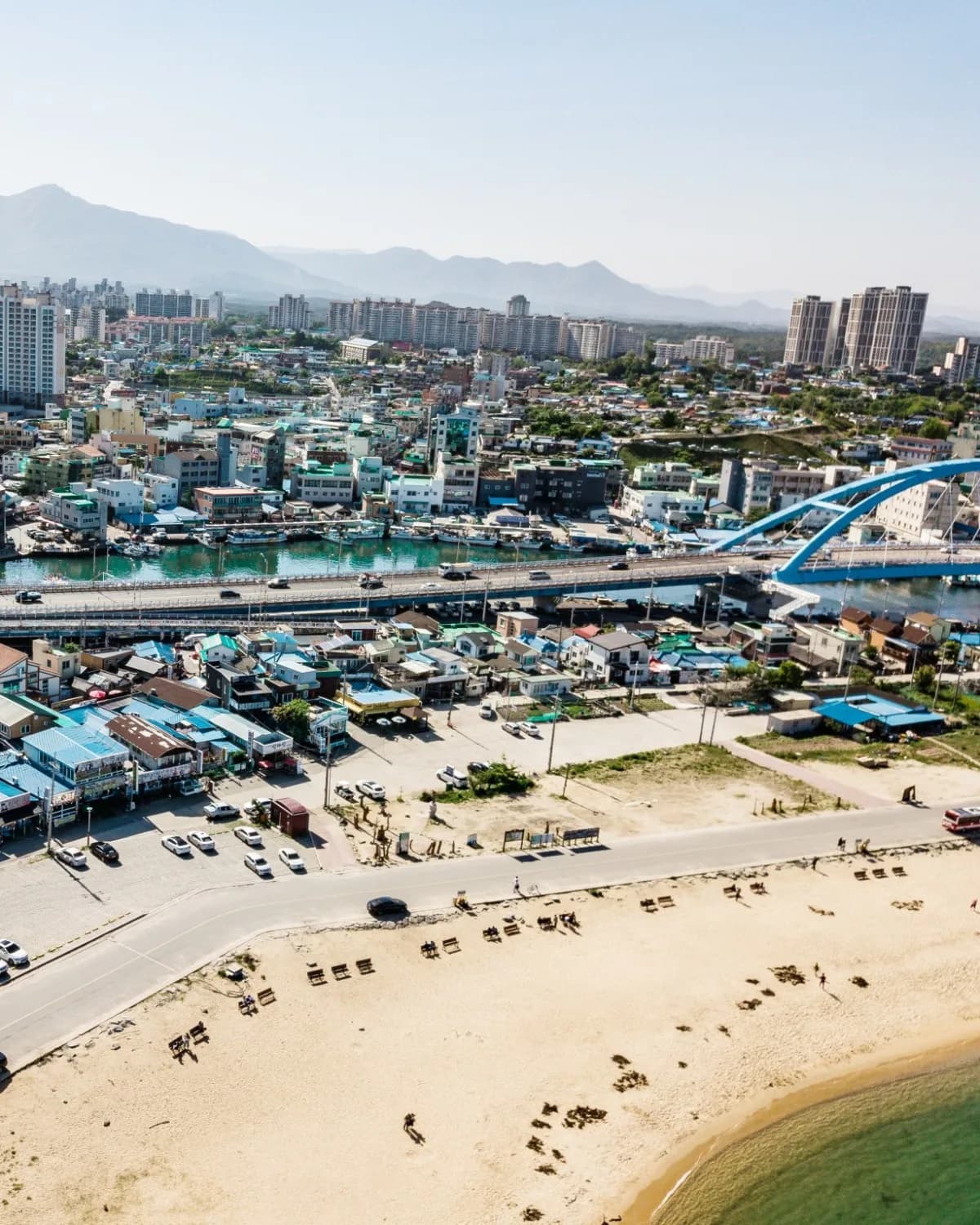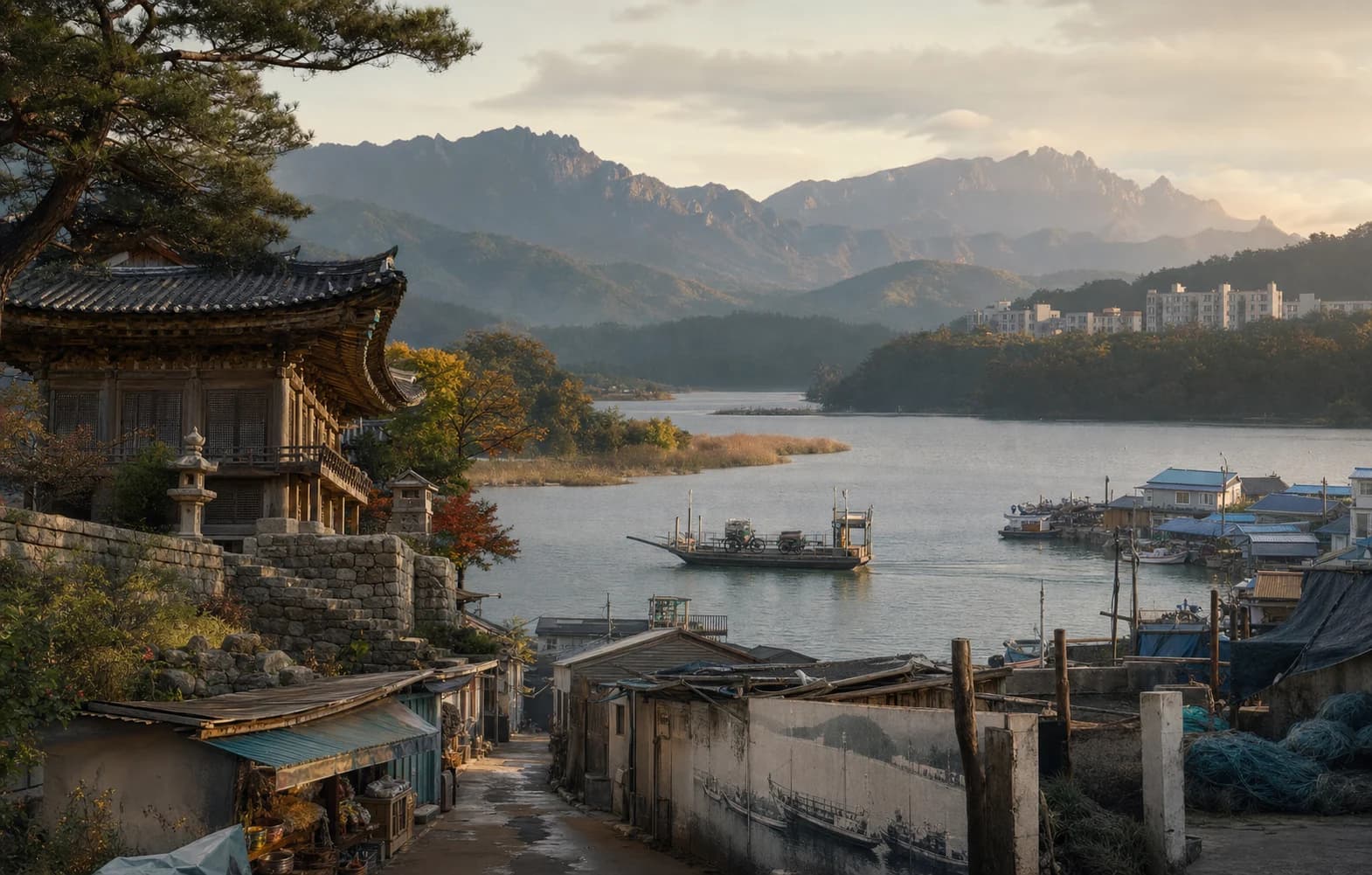
The best Sokcho history itinerary for foreign travelers is a full-day route that starts at Sinheungsa Temple in Mt. Seorak, continues to Sokcho Museum & Displaced People Folk Village, crosses the Gaetbae ferry into Abai Village, and ends around Sokcho Tourist & Fishery Market and chilsungboatyard. This order works because it moves from older Buddhist heritage to modern displacement history, then into food, ferry culture, and working waterfront memory.
This collection is for travelers who want Korean history beyond palaces in Seoul or DMZ tours. It keeps the day practical while explaining why Sokcho is not just mountain, sea, lake, and food.
Contents
- Sokcho history itinerary at a glance
- Why this Sokcho history itinerary works
- Step-by-step Sokcho heritage route
- How to read Abai Village history respectfully
- Where Sokcho Tourist & Fishery Market fits
- How to shorten the route
Quick take
| Need | Best choice |
|---|---|
| Best pace | 7 to 9 hours with taxi or car between the mountain and downtown |
| Best season | Spring and autumn for Mt. Seorak light, winter for clearer sea-and-mountain views |
| Best food moment | Abai sundae or ojingeo sundae after the mural walk, not before |
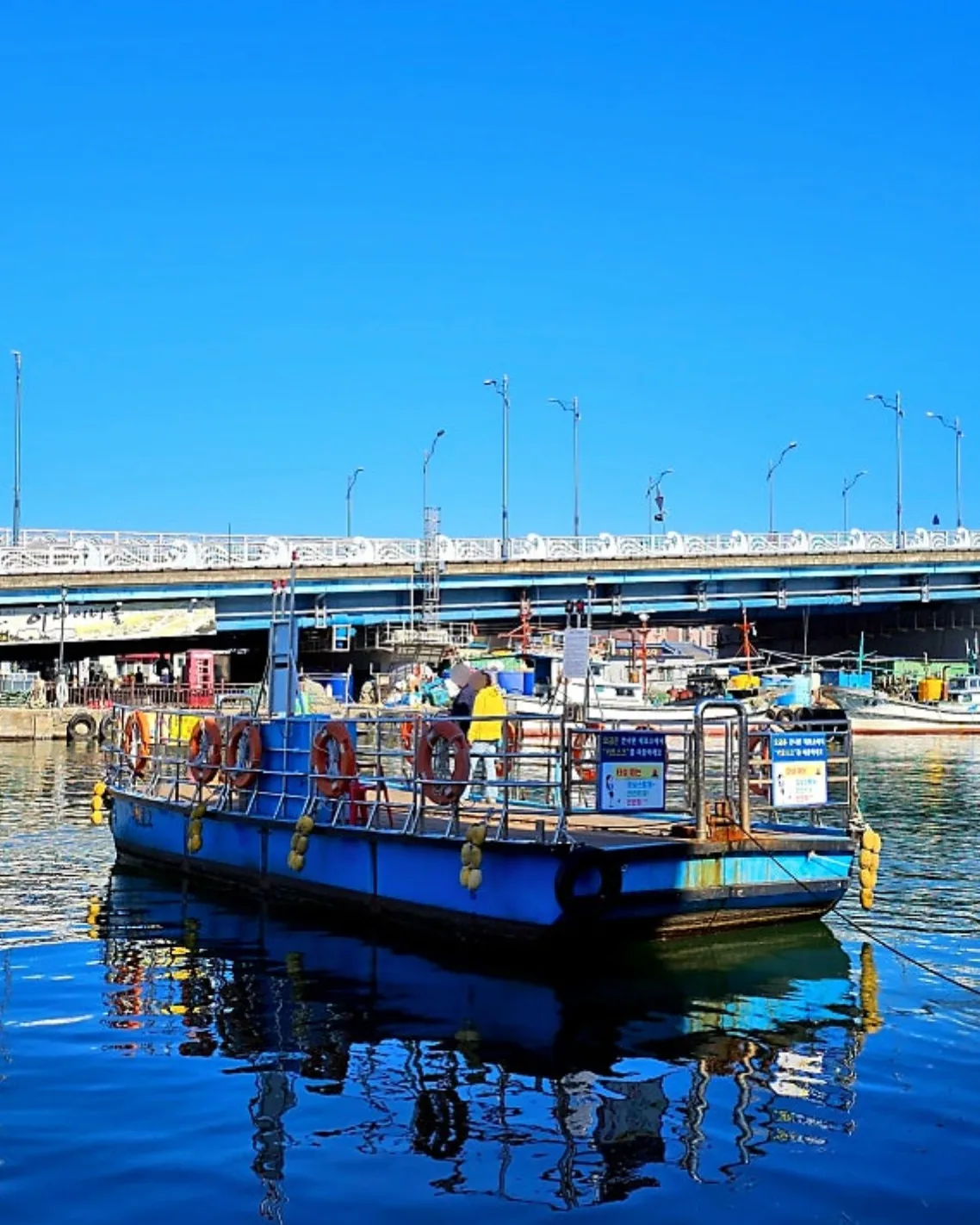
| Ferry note | KRW 500, card kiosk or cash — the kiosk is on the Abai side, so from the market you board and pay when you land |
| Main risk | Treating the day as a list of attractions instead of one connected story |
Sokcho history itinerary at a glance
| Time | Stop | Why it matters |
|---|---|---|
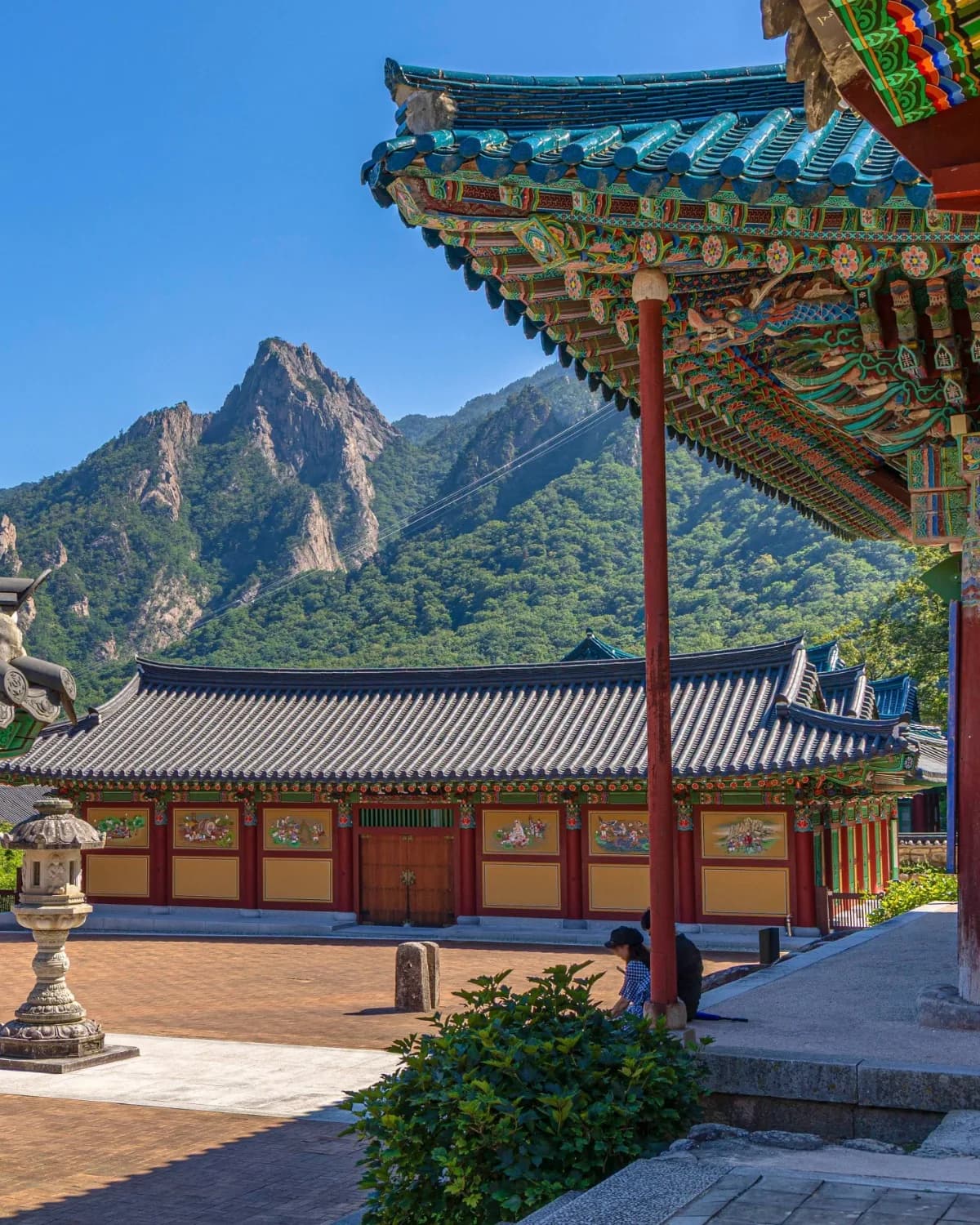
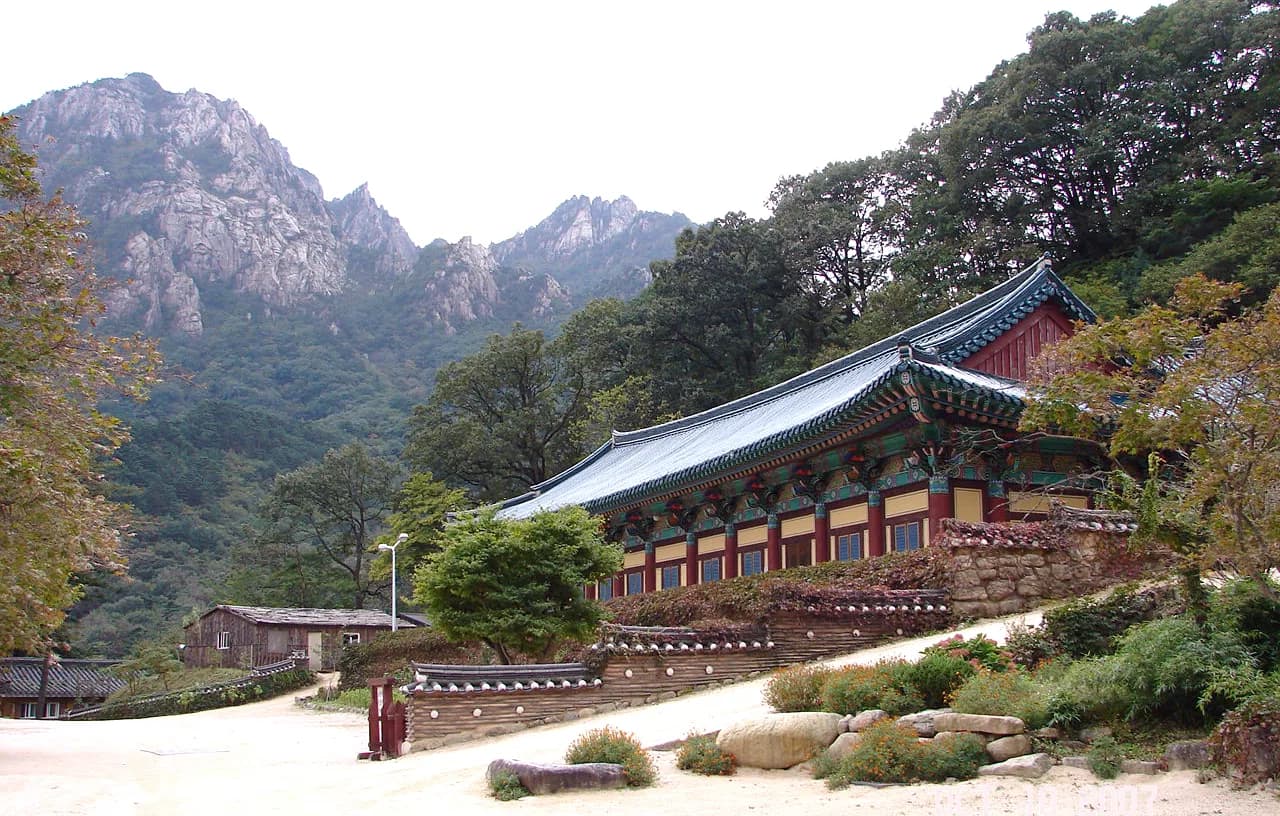
| 09:00 | Sinheungsa Temple | Silla-period Buddhist origin, Joseon architecture, Mt. Seorak setting |
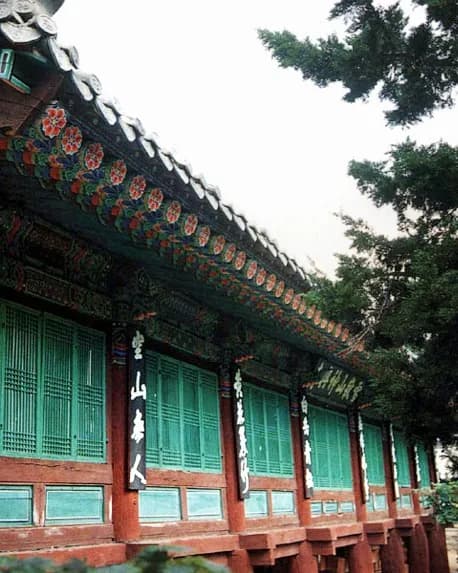
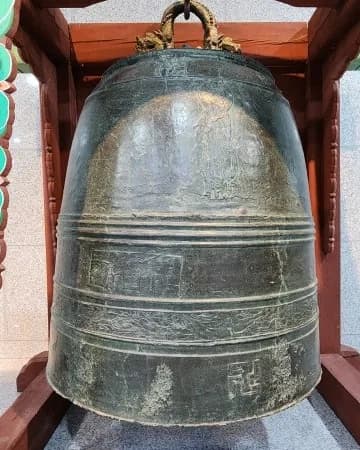
| 09:45 | Bojeru Pavilion and bronze bell | Close-looking temple heritage before leaving the precinct |
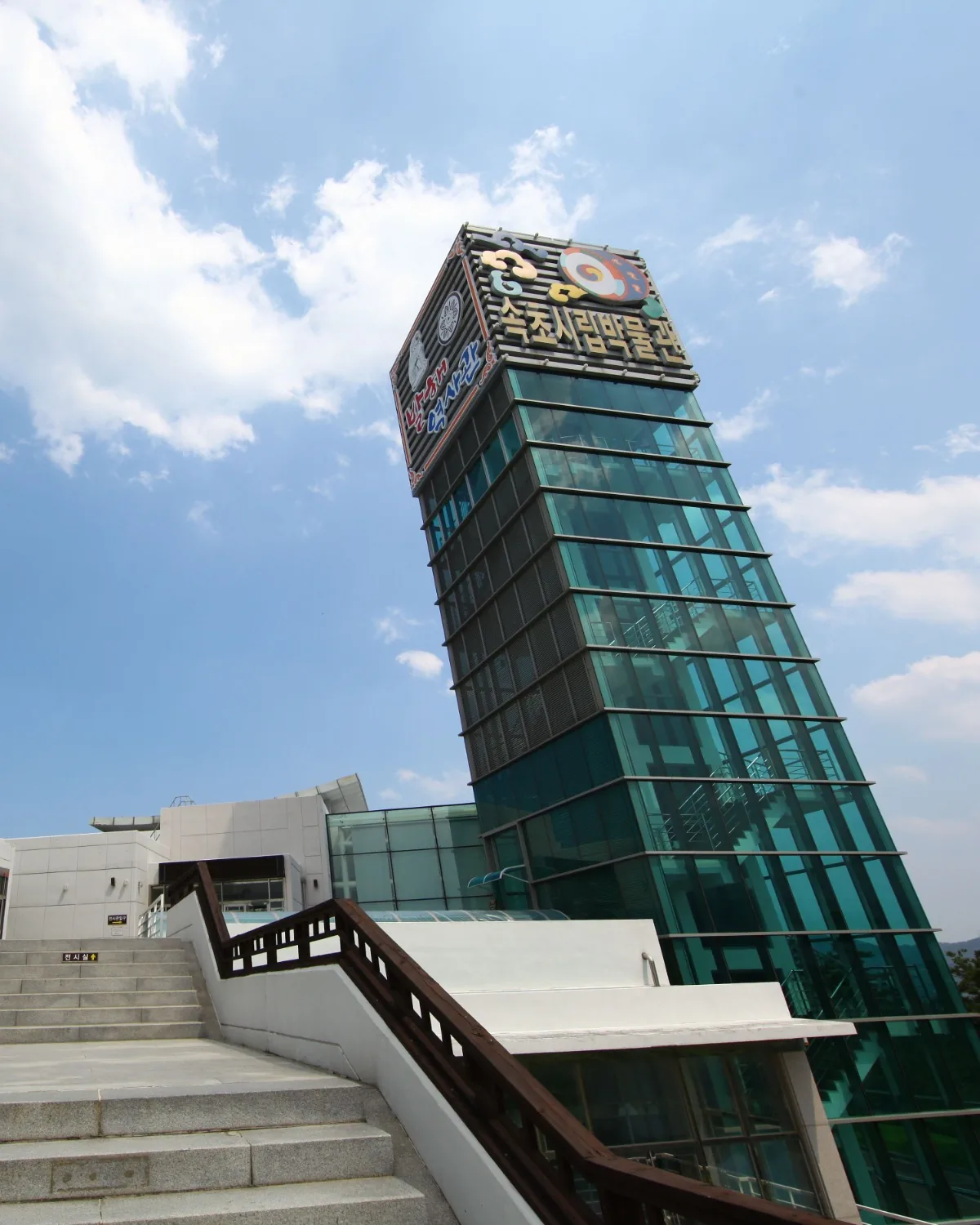
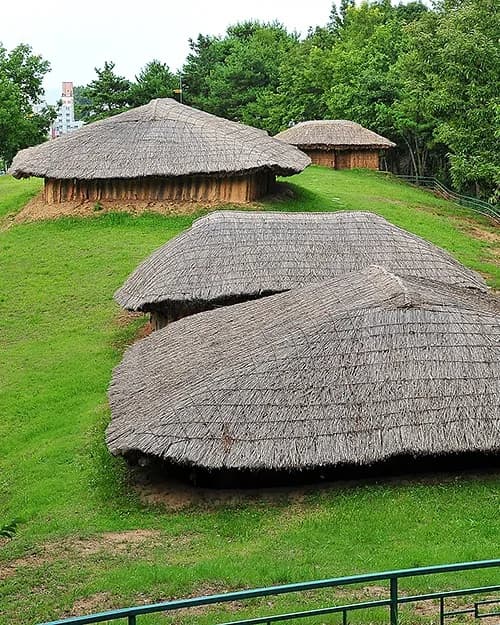
| 11:30 | Sokcho Museum & Displaced People Folk Village | Korean War refugee history, reconstructed Cheongho-dong alley, fishing culture |
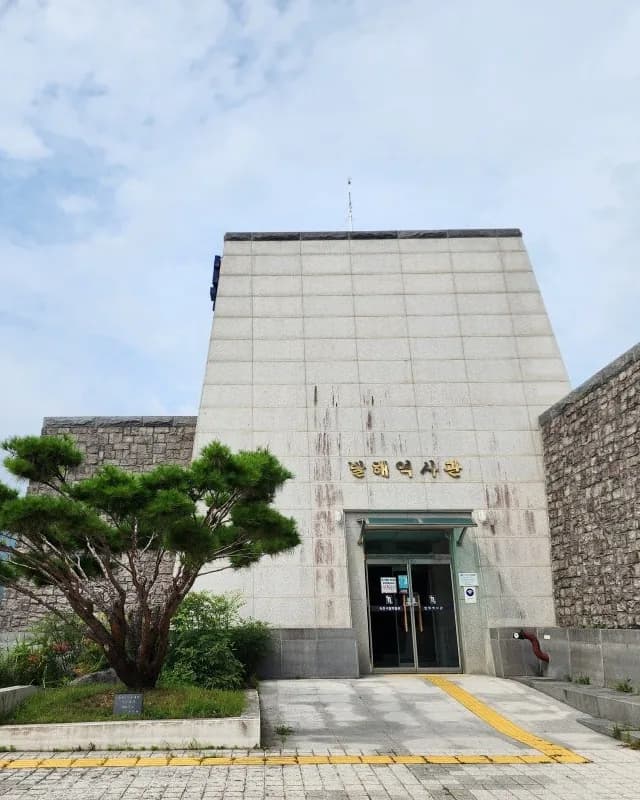
| 12:20 | Balhae History Hall | Northeast Asian history layer inside the museum complex |
| 13:20 | Joyang-dong Archaeological Site | Optional Bronze Age context if you have a car or taxi |
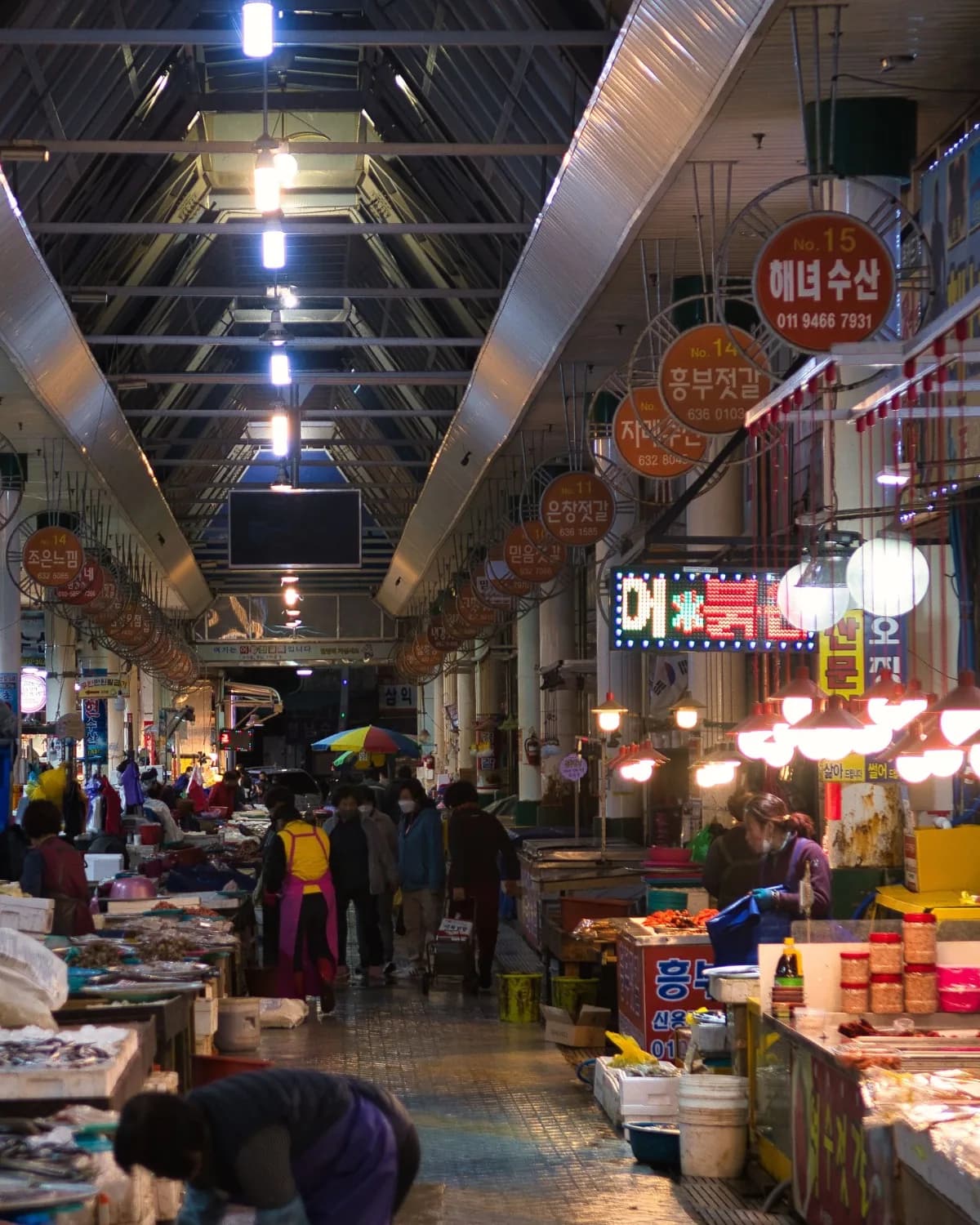
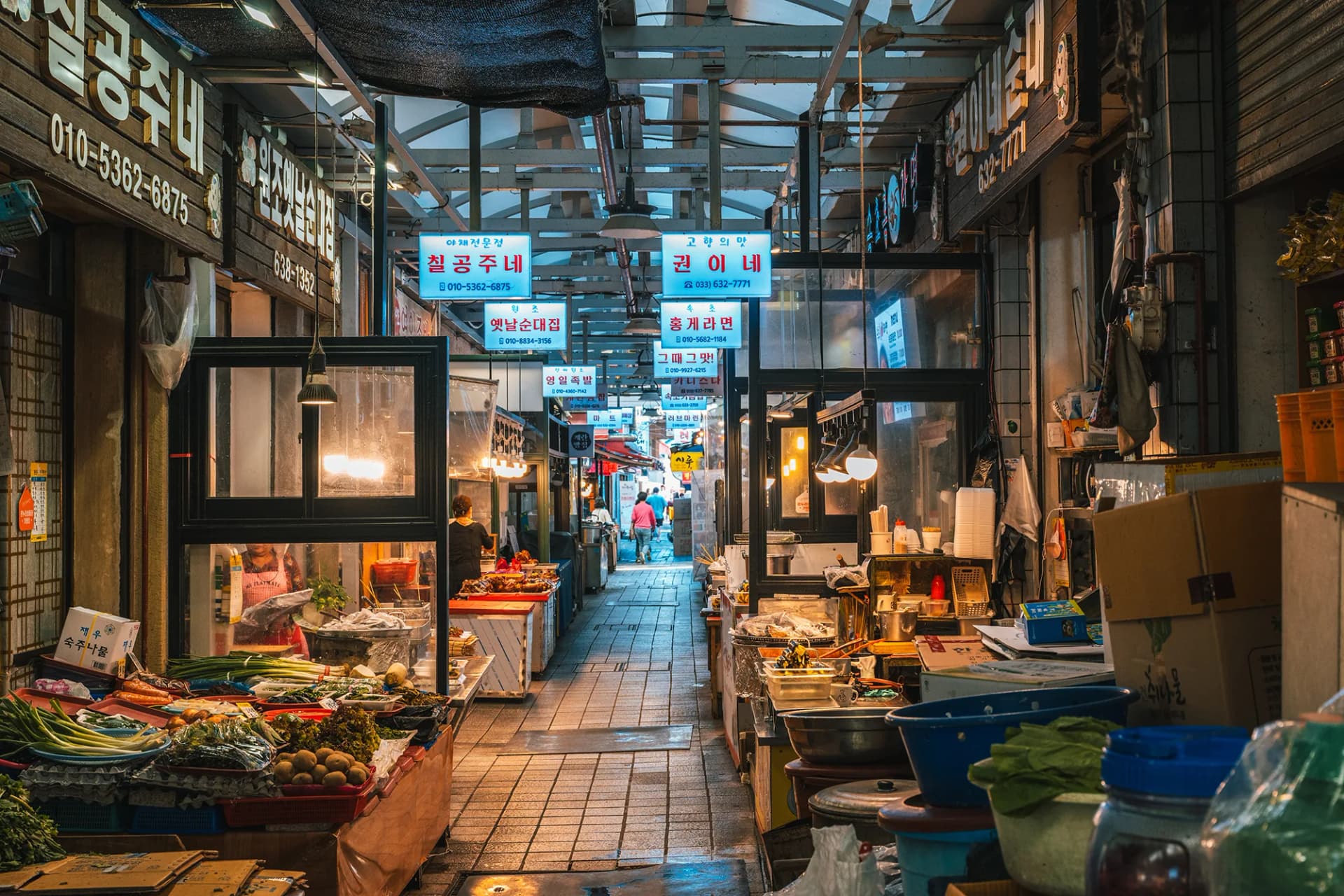
| 14:00 | Sokcho Tourist & Fishery Market | Postwar market life, seafood, sundae alleys, tourist commerce |
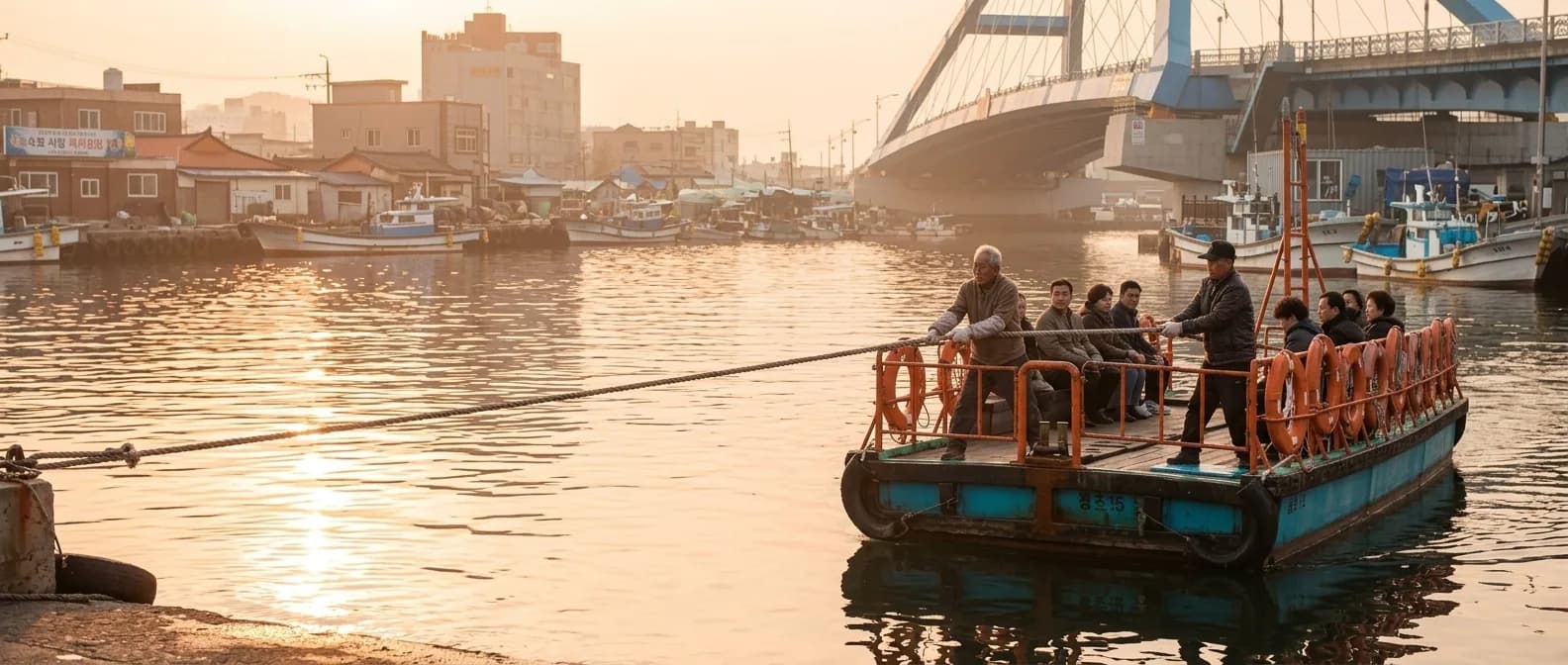
| 14:45 | Gaetbae ferry | Hand-pulled crossing that connects downtown with Abai Village |
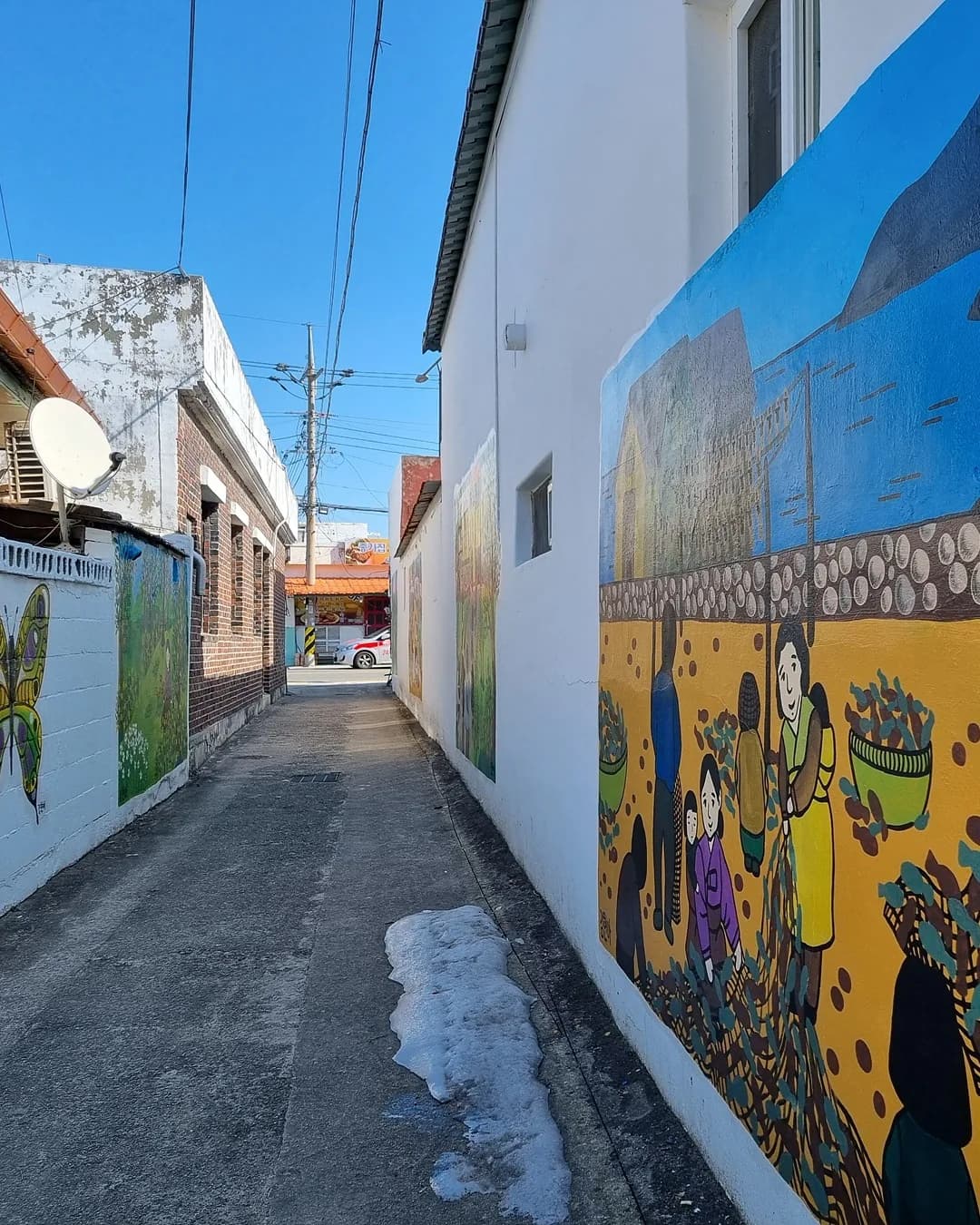
| 15:00 | Abai Village and mural street | Living neighborhood shaped by refugees from northern Korea |
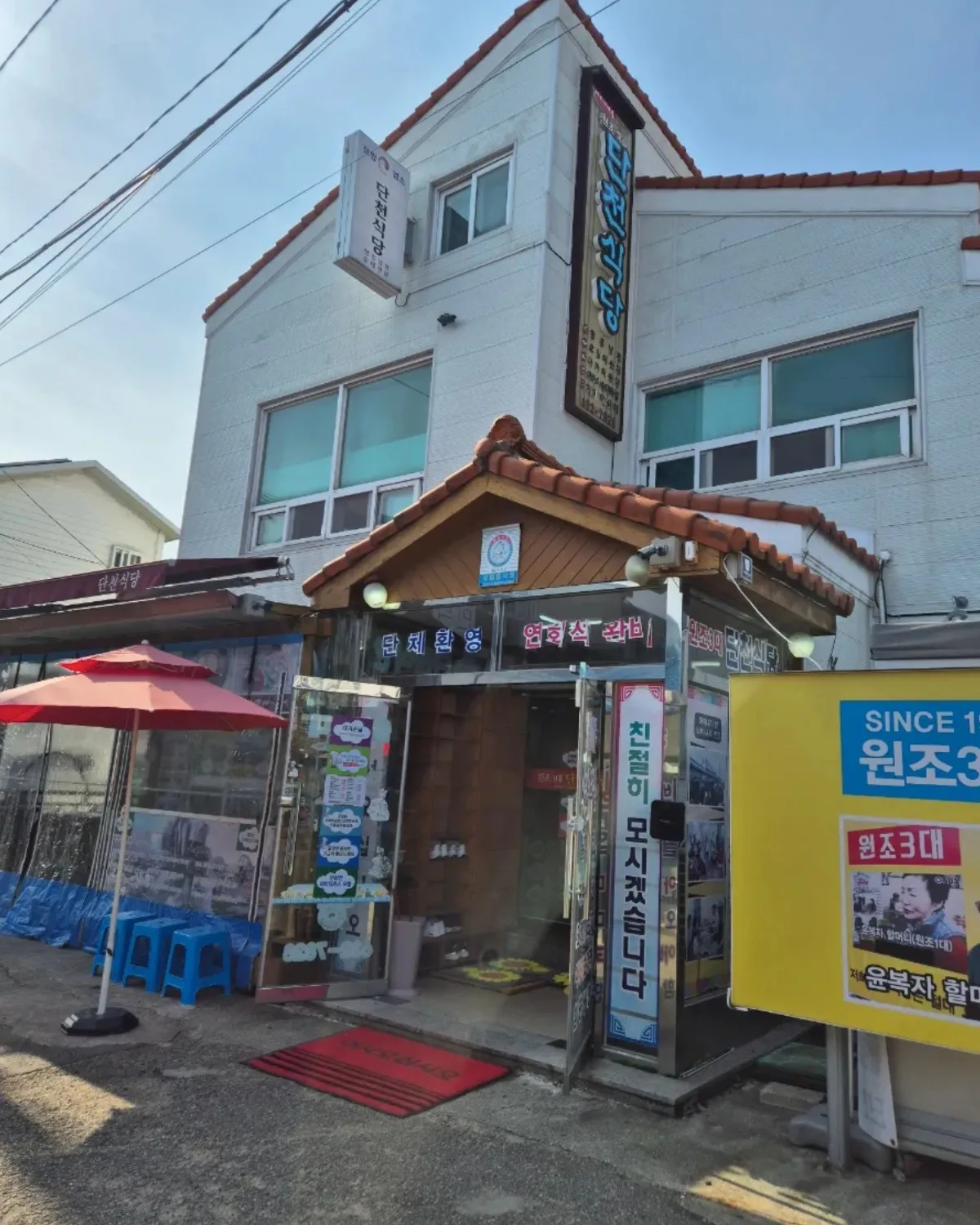
| 16:00 | Dancheon Sikdang | Abai sundae and ojingeo sundae as food memory |
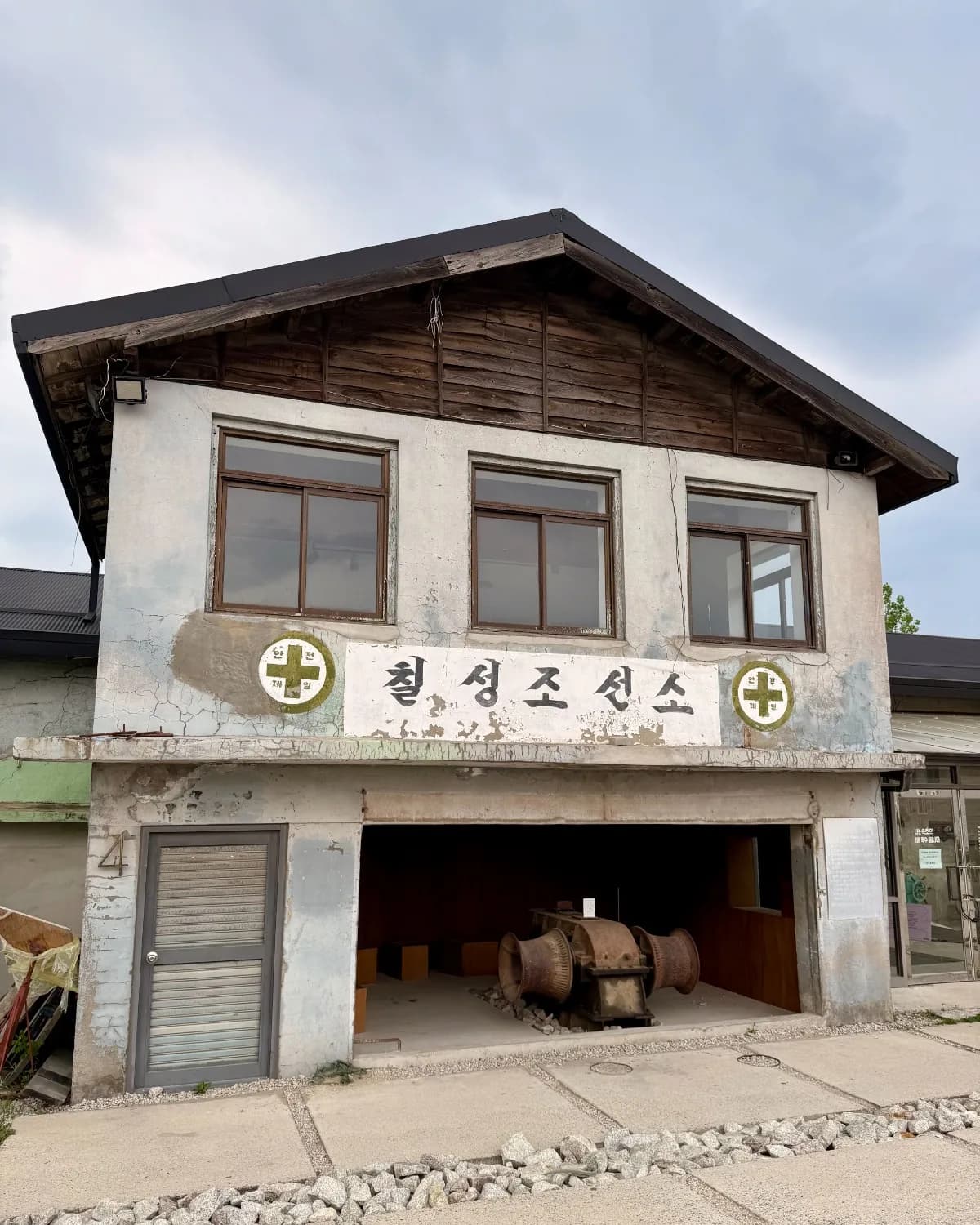
| 17:15 | chilsungboatyard | Former boatyard turned cafe and cultural space on Cheongchoho Lake |
Use the full version if you have 7 to 9 hours. If you only have half a day, keep Sinheungsa, Sokcho Museum, the market, the ferry, and Abai Village.
Why this Sokcho history itinerary works
Sokcho is unusual because its cultural heritage is not only old. It is layered. The morning begins with Sinheungsa Temple, whose tradition is traced to A.D. 652 and whose heritage sequence includes Geungnakbojeon Hall, Hyangseongsa temple-site pagoda heritage, and Templestay culture. That gives the day the deep-time layer: Buddhist practice, mountain geography, and architecture.
Then the route turns current. On November 14, 2025, The Metropolitan Museum of Art announced the return of The Tenth King of Hell to Sinheungsa Temple. The painting, dated 1798, is believed to have left while the temple was under United States Army control during the Korean War. For a foreign visitor, that single story makes Sinheungsa more than a beautiful old temple. It becomes a place where Buddhist art, war, provenance research, local civic effort, and cultural-property restitution meet.
The middle of the day belongs to Sokcho Museum. Its visitor-facing story covers Sokcho's natural environment, local culture, fishing culture, Korean War refugee life, a reconstructed Cheongho-dong alley, and Balhae History Hall. That is exactly the bridge this route needs. It explains why Abai Village is not just a lunch area and why Sokcho's identity cannot be reduced to beaches.
Step-by-step Sokcho heritage route
- Start at Sinheungsa Temple. Do not rush the temple precinct. The Great Unification Buddha is visually obvious, so most visitors stop there too long and miss the quieter heritage sequence. Walk into the temple area, pass Bojeru Pavilion slowly, look for the bell and sound instruments, then give Geungnakbojeon Hall the attention you would normally save for a palace in Seoul.
- Move to Sokcho Museum & Displaced People Folk Village. This is where the route turns from national heritage into Sokcho-specific history. Exhibition Hall 2 and the reconstructed Cheongho-dong alley make the Korean War refugee story concrete before you walk the real neighborhood later.
- Add Balhae History Hall or Joyang-dong Archaeological Site only if time allows. Balhae History Hall is the deeper Korean and Northeast Asian history layer. Joyang-dong Archaeological Site gives Sokcho a prehistoric layer, but the museum gives most first-time visitors enough context.
How to read Abai Village respectfully
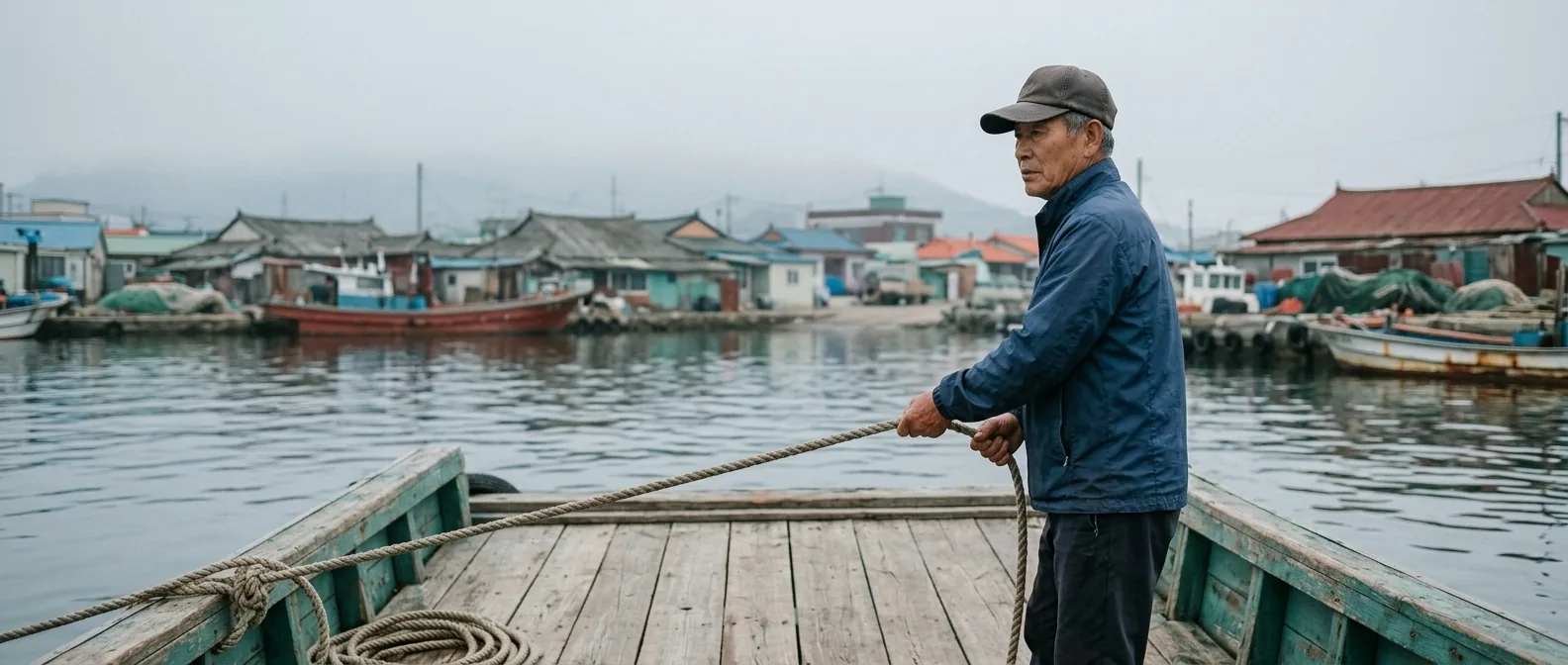
Abai Village should come after context, not before it. Cross from the market side by the Gaetbae ferry, then walk before you eat. The ferry is short, cheap, and easy to misunderstand as a novelty ride. It is better read as infrastructure created because displaced residents needed a daily link between the sandbar settlement and downtown Sokcho.
That is why the mural street matters. It slows the visit down before the food segment. The narrow lanes, memorial feeling, and images of displacement make it harder to reduce the village to a plate of sundae.
Food is still essential. Abai sundae and ojingeo sundae are not just "local dishes"; they are survival foods that carried northern memories into a southern port city. Eat them after the walk, when the story has somewhere to land.
Where the market fits
Sokcho Tourist & Fishery Market is often treated as the easy snack stop. On this route it has a second role: postwar economic heritage. The official market site lists 30 fishery shops, 26 jeotgal shops, 24 sashimi shops, 25 dried-seafood shops, 13 chicken shops, and 29 restaurants, which is why the market works as both a food stop and a living-commerce stop. In route terms, it is also the best hinge between downtown Sokcho and Abai Village because the ferry dock sits close enough to make the crossing natural.
Do not overeat here if Abai food is part of the plan. The market works best as snack, orientation, and atmosphere. Let the sit-down meal happen across the water.
End at chilsungboatyard, not a generic cafe
The final stop should feel lighter without becoming meaningless. That is why chilsungboatyard works. The site is remembered as a former boatyard that operated from 1952 to 2017 and reopened as a cafe-cultural space in 2018, with spaces called Salon, Museum, Playscape, and Open Factory. It is not a temple and it is not a war-history site, but it preserves a different Sokcho: repair work, lake edges, boats, tools, and the city adapting old industrial space for public culture.
Use it as the place to sit down and let the day settle. You have moved from mountain heritage to displacement memory to food and waterfront work. A normal cafe would flatten that. chilsungboatyard keeps the final hour connected to the city's material past.
How to shorten the route
- Keep: Sinheungsa Temple, Sokcho Museum, Sokcho Tourist & Fishery Market, Gaetbae ferry, Abai Village, one Abai food stop.
- Cut first: Joyang-dong Archaeological Site, Balhae History Hall, and the extra close-looking heritage stops inside Sinheungsa.
- Move to another day: chilsungboatyard, if your hotel or dinner is far from Cheongchoho Lake.
For a 4-hour version, use Half-Day in Sokcho for the faster market-and-water route. For a narrower temple route, use Sinheungsa Temple Guide. For a focused refugee-history route, use Abai Village History Walk. For transport planning, pair this with Sokcho Without a Car.
Conclusion
A good Sokcho history itinerary should not treat heritage as one more category chip. It should show how the mountain temple, displaced-people museum, ferry, Abai Village, market, and boatyard explain one city from different angles. Start with Sinheungsa for depth, use Sokcho Museum for context, walk Abai Village slowly, and end by the lake where Sokcho's working waterfront history is still visible.
Sources and update notes
Checked on May 3, 2026, then refreshed to remove outbound tourism-site dependencies. Core place facts are kept inline for Sinheungsa Temple, Sokcho Museum, Sokcho Tourist & Fishery Market, and chilsungboatyard. The Sinheungsa restitution section uses the November 14, 2025 public announcement about the return of The Tenth King of Hell. Ferry and Abai Village details should still be checked on site in bad weather because a short hand-pulled crossing can change faster than static tourism pages.