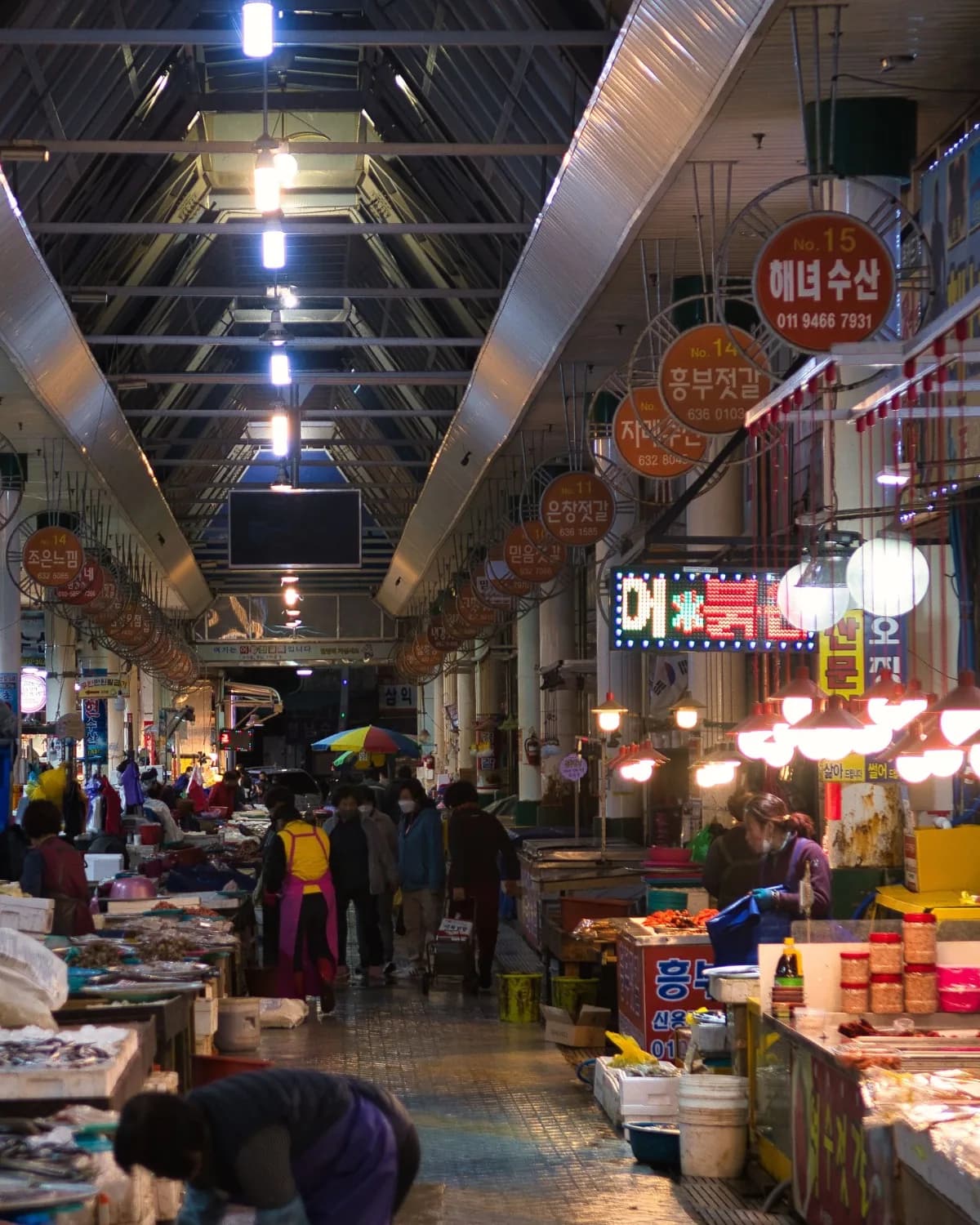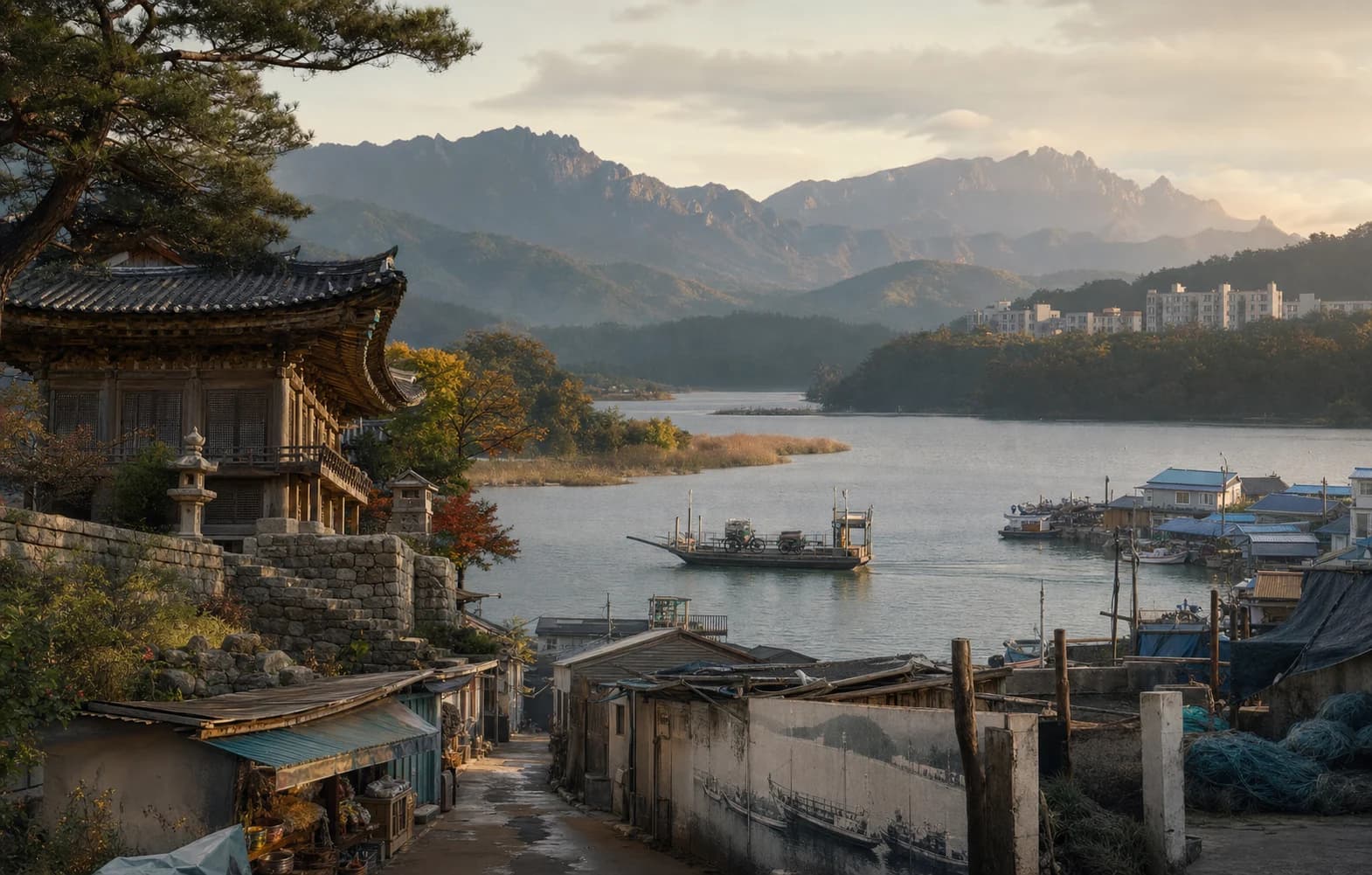
Abai Village in Sokcho is one of Korea's clearest places to understand the civilian afterlife of the Korean War. It is not only a ferry, a mural street, or a plate of Abai sundae. The best Abai Village history walk starts at Sokcho Tourist & Fishery Market, crosses the hand-pulled Gaetbae ferry, slows down in the Cheongho-dong lanes, reads the mural street respectfully, and then eats the food as memory rather than novelty.
This collection is for foreign travelers who want the story behind the photo stop. Keep it compact, walk it slowly, and leave room for context.
Contents
- Abai Village walk at a glance
- Why Abai Village matters
- The best order to walk it
- How to read the Gaetbae ferry
- Where food fits into the story
- How to deepen the route
Abai Village walk at a glance
| Need | Best answer |
|---|---|
| Best pace | 2 to 3 hours |
| Start | Sokcho Tourist & Fishery Market |
| Core route | Market -> Gaetbae ferry -> Abai Village -> mural street -> food |
| Best time | Daylight, especially late morning or late afternoon |
| Budget | KRW 500 ferry (card kiosk or cash, paid on the Abai side) plus KRW 10,000 to 25,000 per person for food |
| Main risk | Treating a lived-in neighborhood as a photo backdrop |
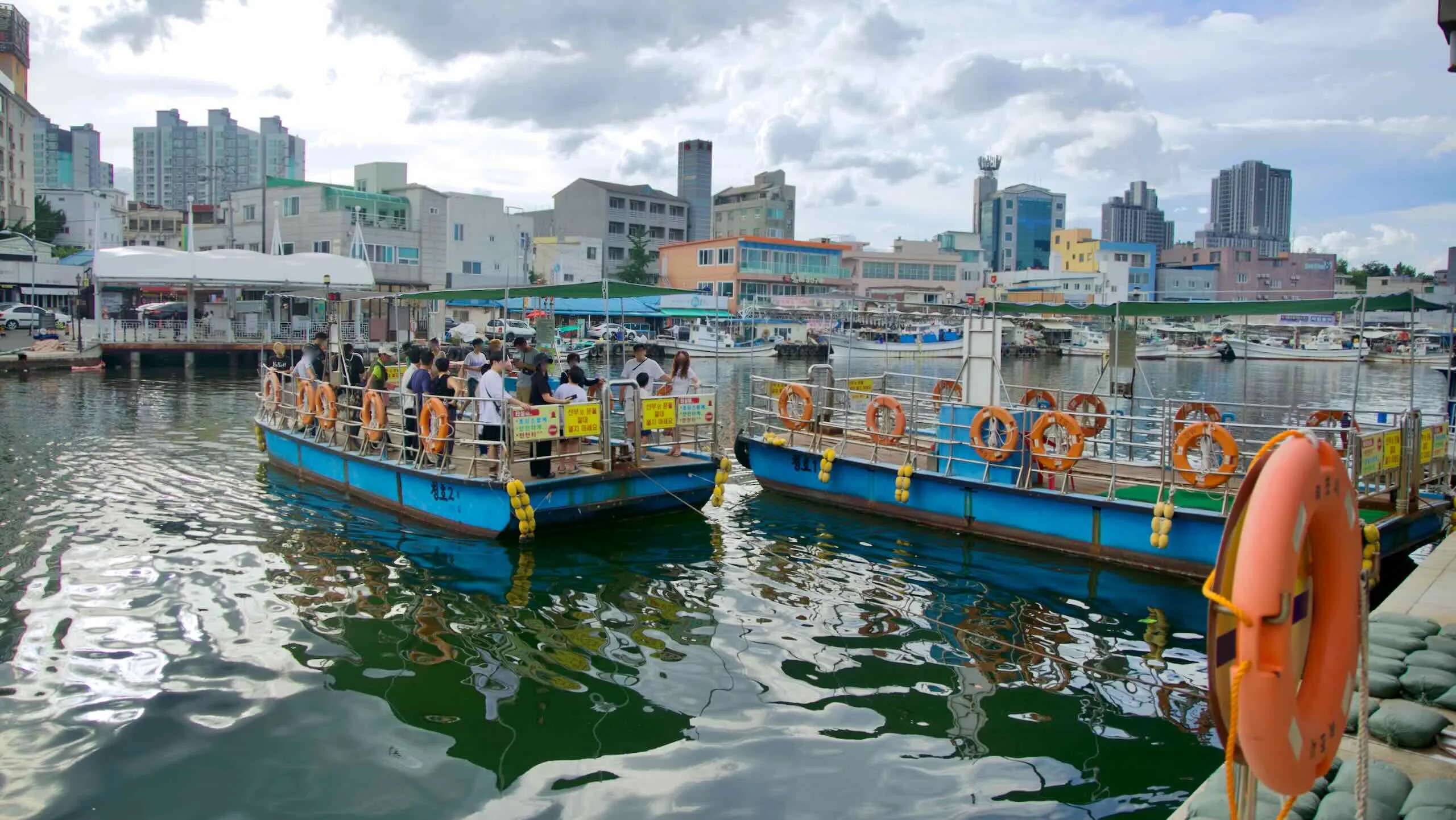
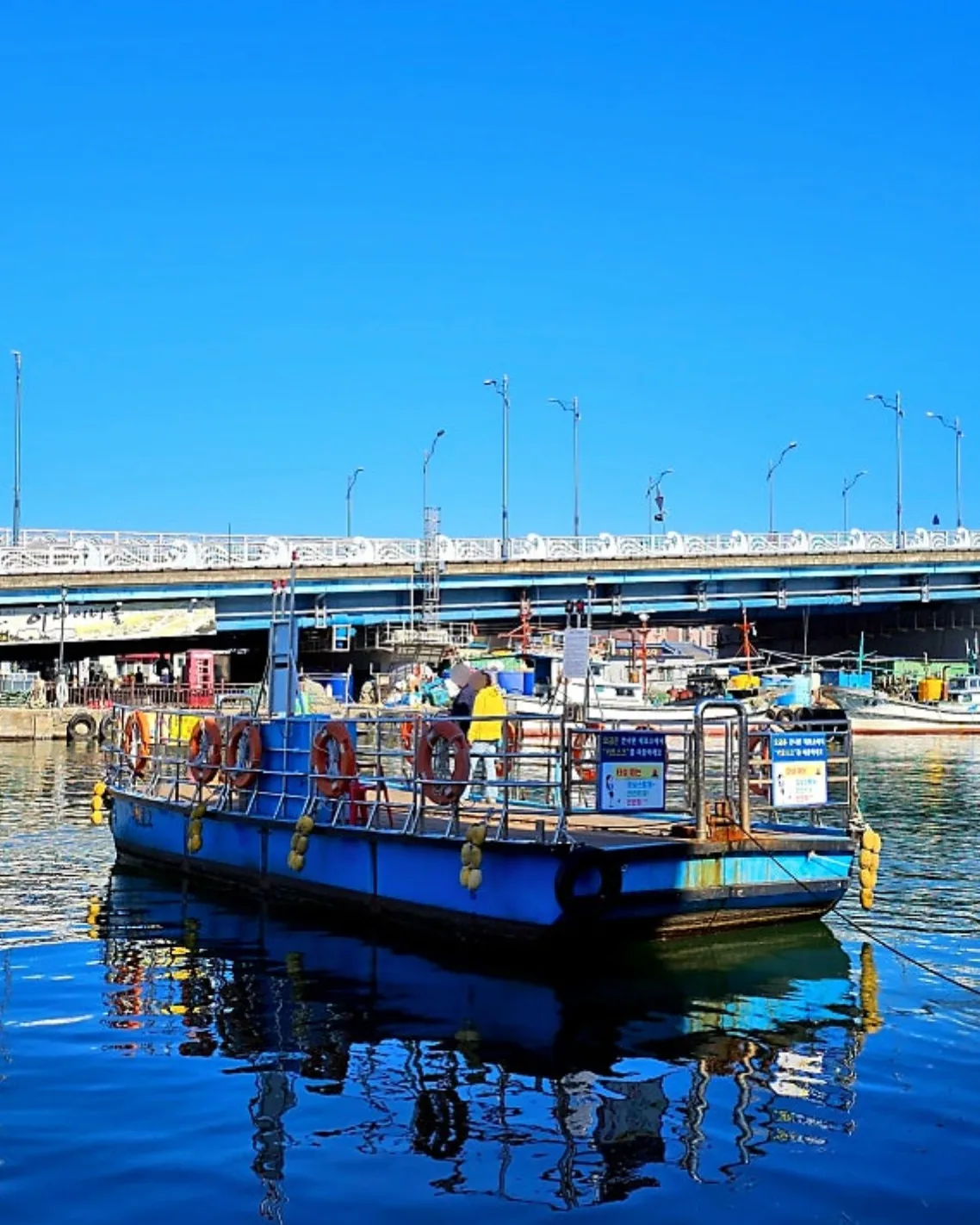
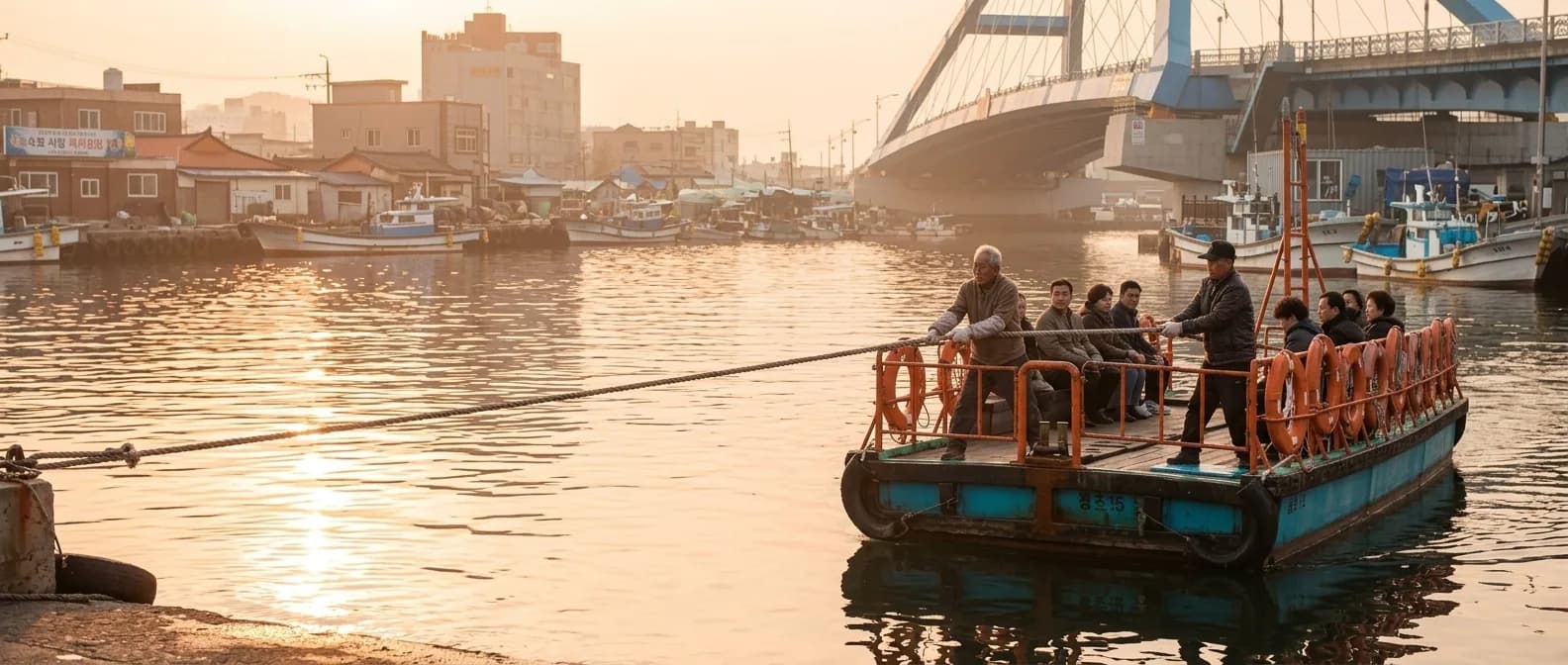
The Gaetbae ferry is the route's clearest lived-history object: short, practical, and still tied to the village's geography.
Why Abai Village matters
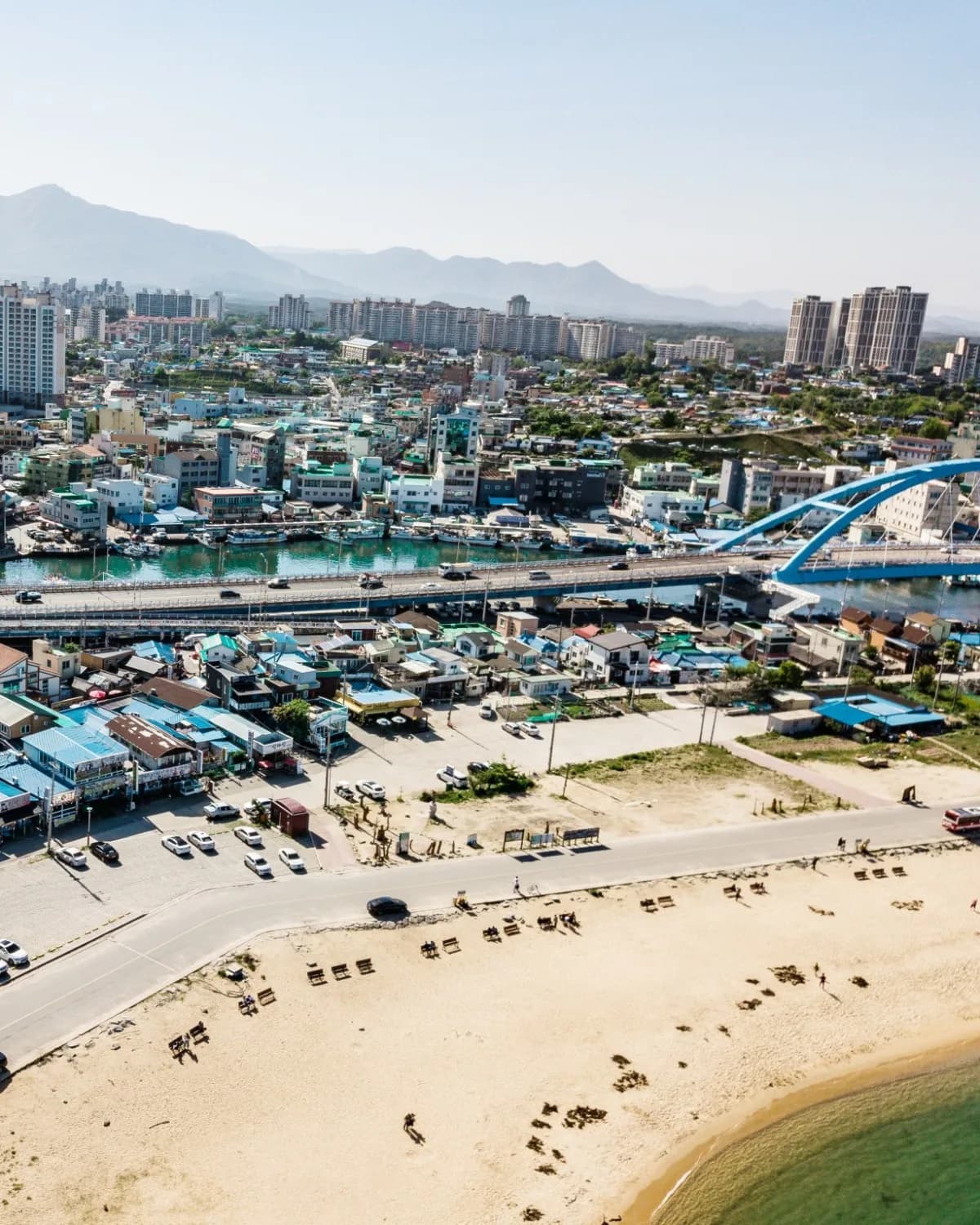
Abai Village is a Cheongho-dong village formed by refugees of the Korean War from northern Korea, mainly Hamgyeong-do. The name "abai" is a Hamgyeong dialect word used for an older man or grandfather. That naming detail matters. It shows why the village should be visited with respect: it is a community shaped by displacement, not a stage built for tourists.
The route also works because it is easy to understand on foot. Market commerce, water crossing, residential lanes, murals, and food sit close together. You do not need a lecture first. You need a clear walking order and enough time not to rush.
The best order to walk it
| Order | Stop | Why it belongs here |
|---|---|---|
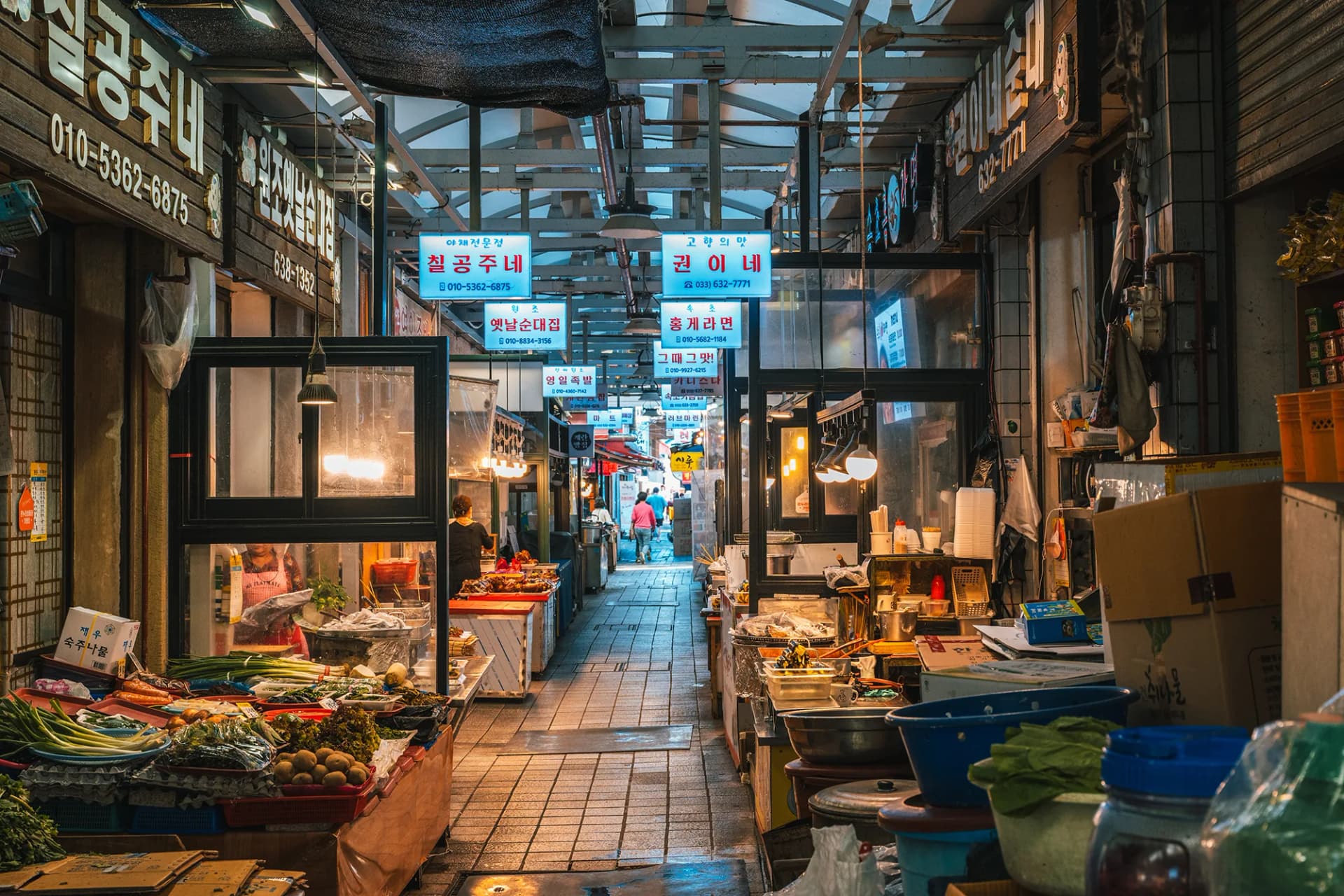
| 1 | Sokcho Tourist & Fishery Market | Practical start, snacks, cash, and the city-side approach |
| 2 | Abai Village Ferry | The short crossing turns history into movement |
| 3 | Abai Village | The lived-in Cheongho-dong neighborhood behind the name |
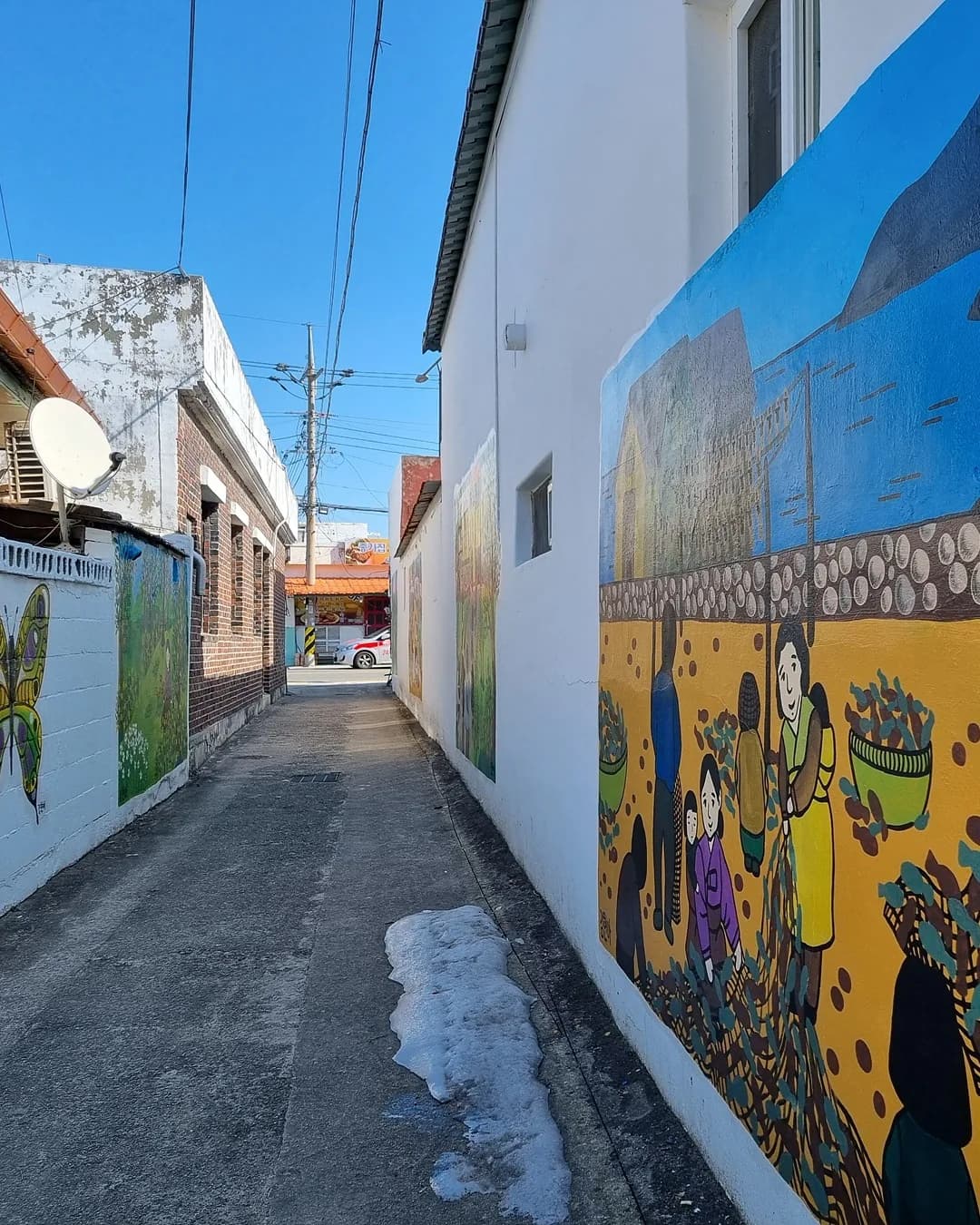
| 4 | Mural Street | A slow visual archive of displacement and longing |
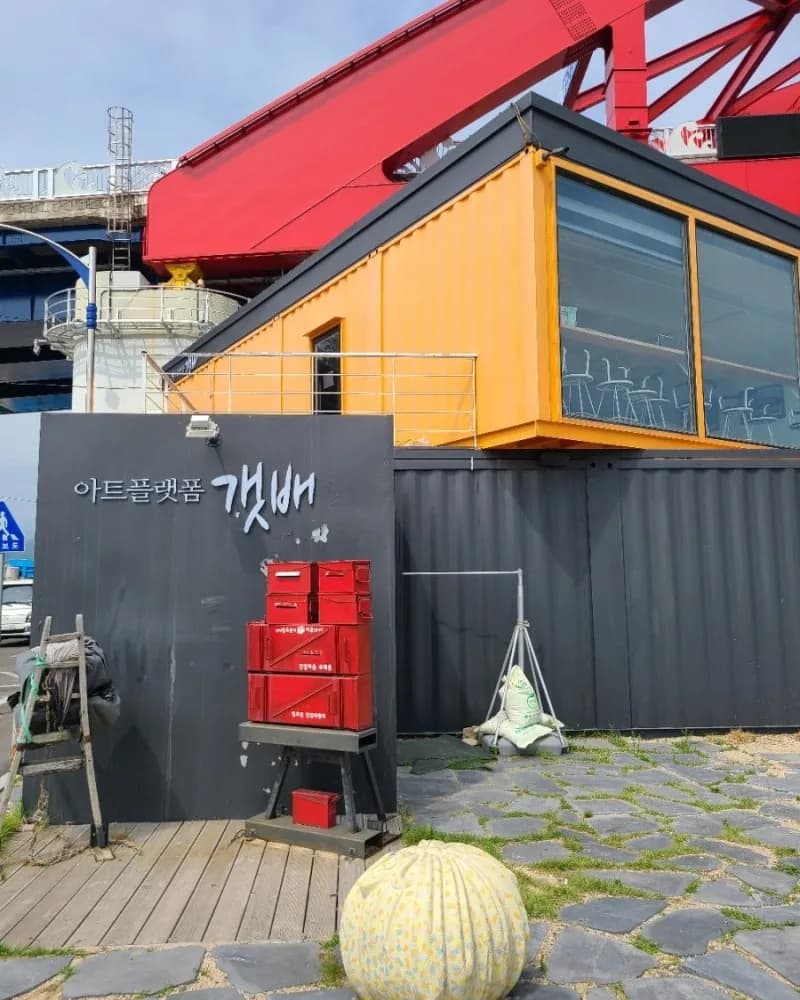
| 5 | Art Platform Gaetbae | A named interpretation stop before the meal |
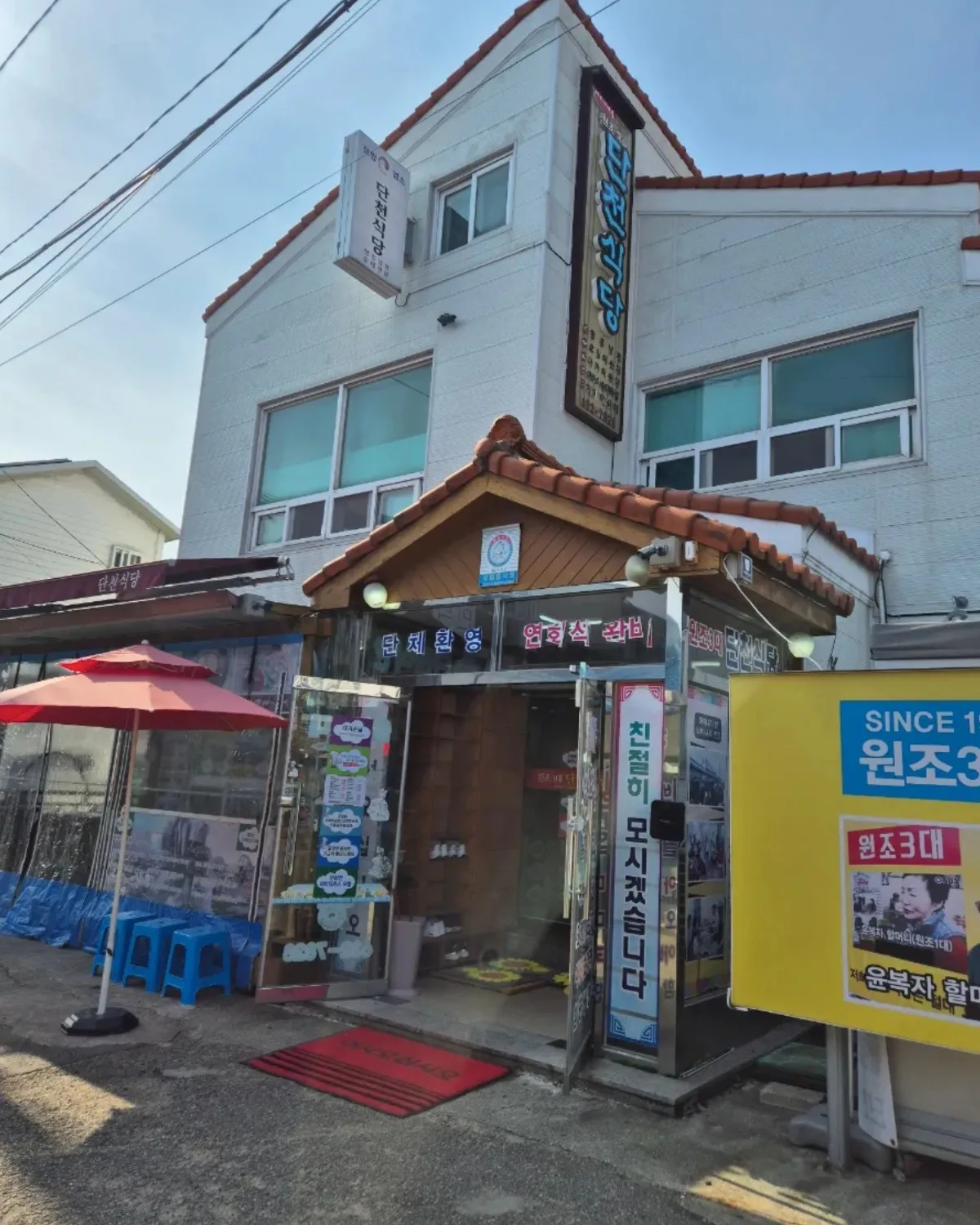
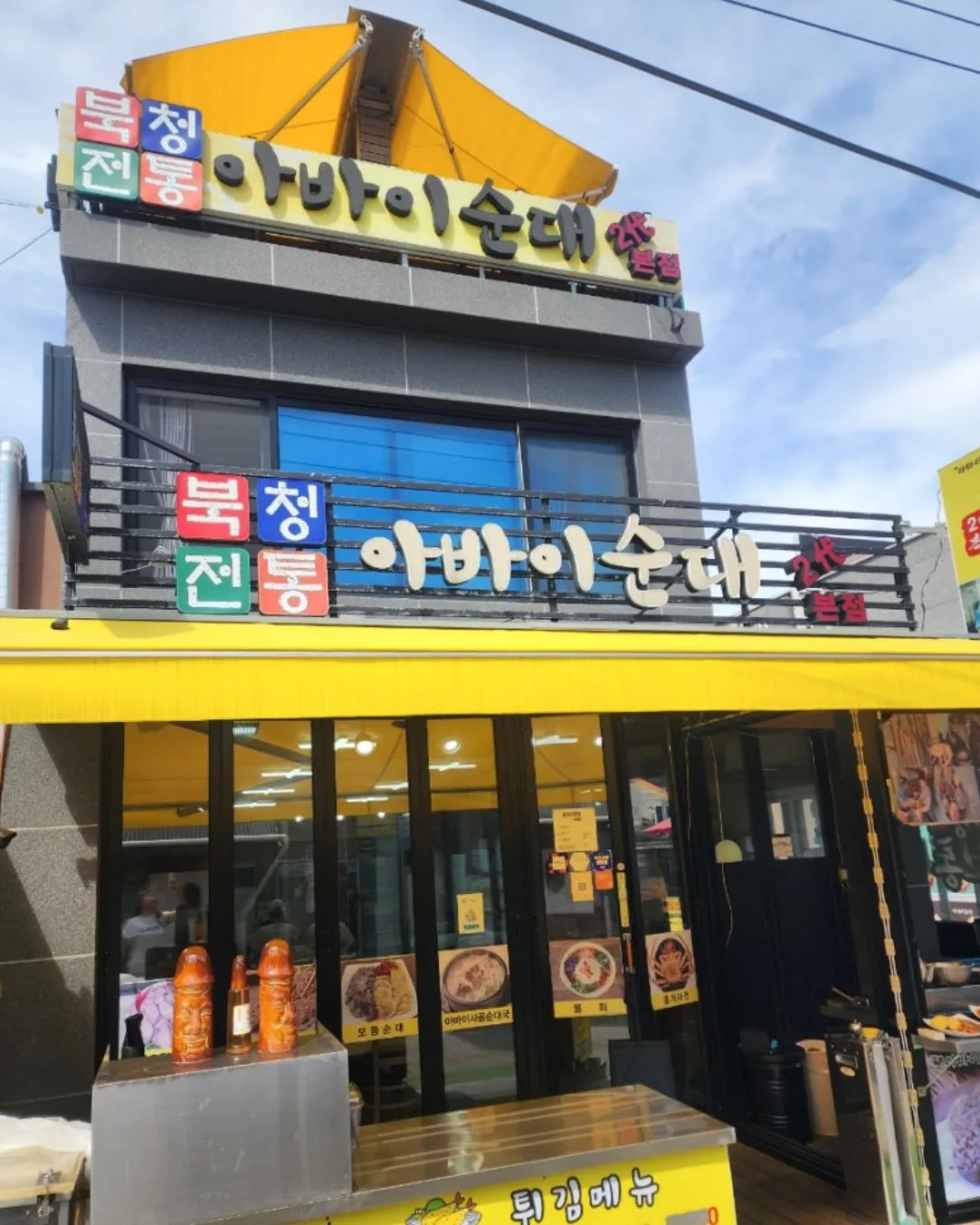
| 6 | Dancheon Sikdang or Bukcheong Abai Sundae | Food memory, not just lunch |
Do not overbuild the walk. A strong Abai route is simple because the geography does the teaching. Start where visitors already gather, cross the waterway, walk the neighborhood, then eat.
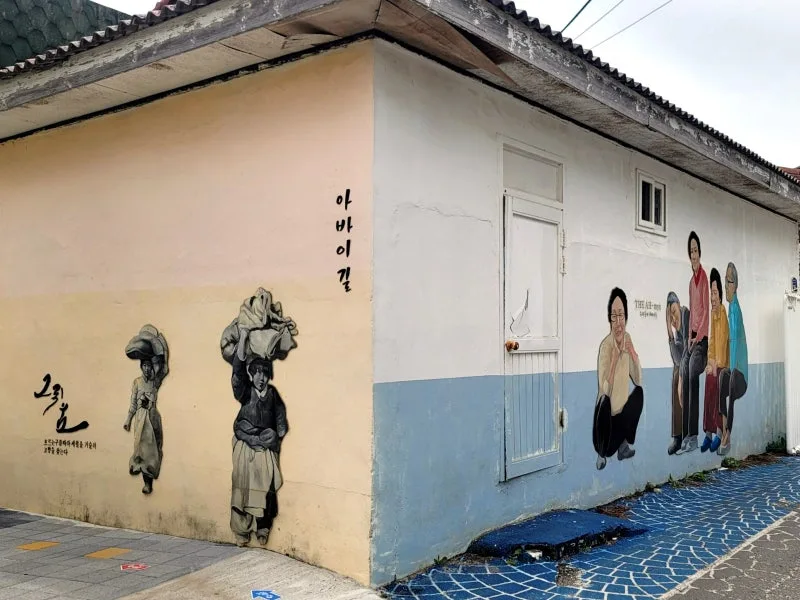
The mural street gives visitors a slower way to read displacement, memory, and everyday life before turning the walk into a meal.
How to read the Gaetbae ferry
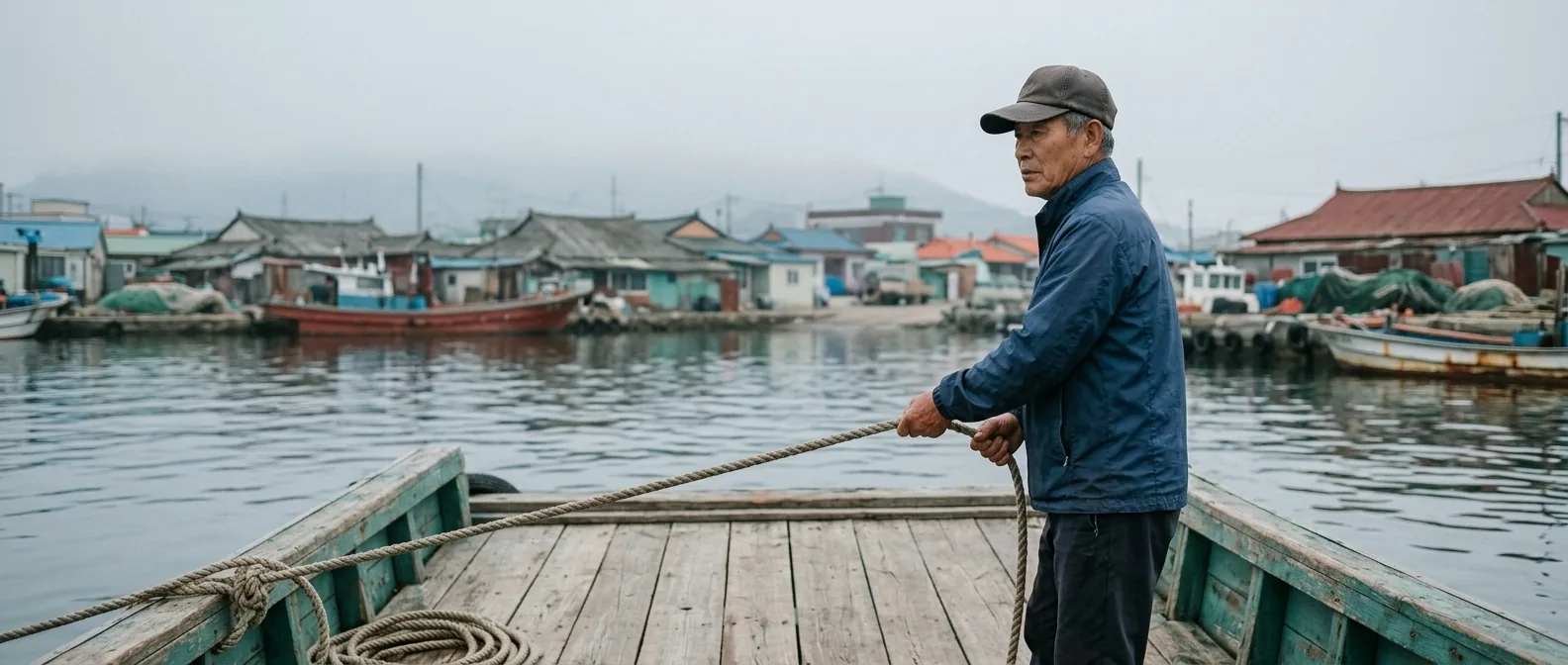
The Abai Village ferry is a small barge-style boat without an engine. It crosses the roughly 50 m waterway by fixed steel cables, and passengers move it by pulling with a hook. It takes only a few minutes, which is why many visitors underestimate it.
Read it as infrastructure. Before bridge access made movement easier, the ferry was a daily connector between the sandbar community and downtown Sokcho. That is the UX reason it belongs near the beginning of the collection. It makes the route physical before it becomes historical.
If the ferry is not operating because of weather or local conditions, use the bridge route and keep the same order concept: market side first, village second, food after context.
Where food fits into the story
Abai sundae and ojingeo sundae are the most useful dishes here because they make the refugee story edible. Abai sundae points toward Hamgyeong-style food memory. Ojingeo sundae shows adaptation: a northern-style filling logic meeting Sokcho's East Sea seafood setting.
The food tastes better when it has context. Walk first if you can. After the ferry and mural street, a bowl of sundae-gukbap or a shared plate of ojingeo sundae stops being a checklist item and becomes part of the route's meaning.
For a broader food layer, continue with What to Eat in Sokcho.
How to deepen the route
If you want more context, add Sokcho Museum & Displaced People Folk Village before or after this walk. The museum connects Sokcho's natural environment, local culture, fishing culture, Korean War refugee life, a reconstructed Cheongho-dong alley, and Balhae History Hall. It is the best indoor companion to Abai Village when the weather is bad or when you want the history explained before seeing the living neighborhood.
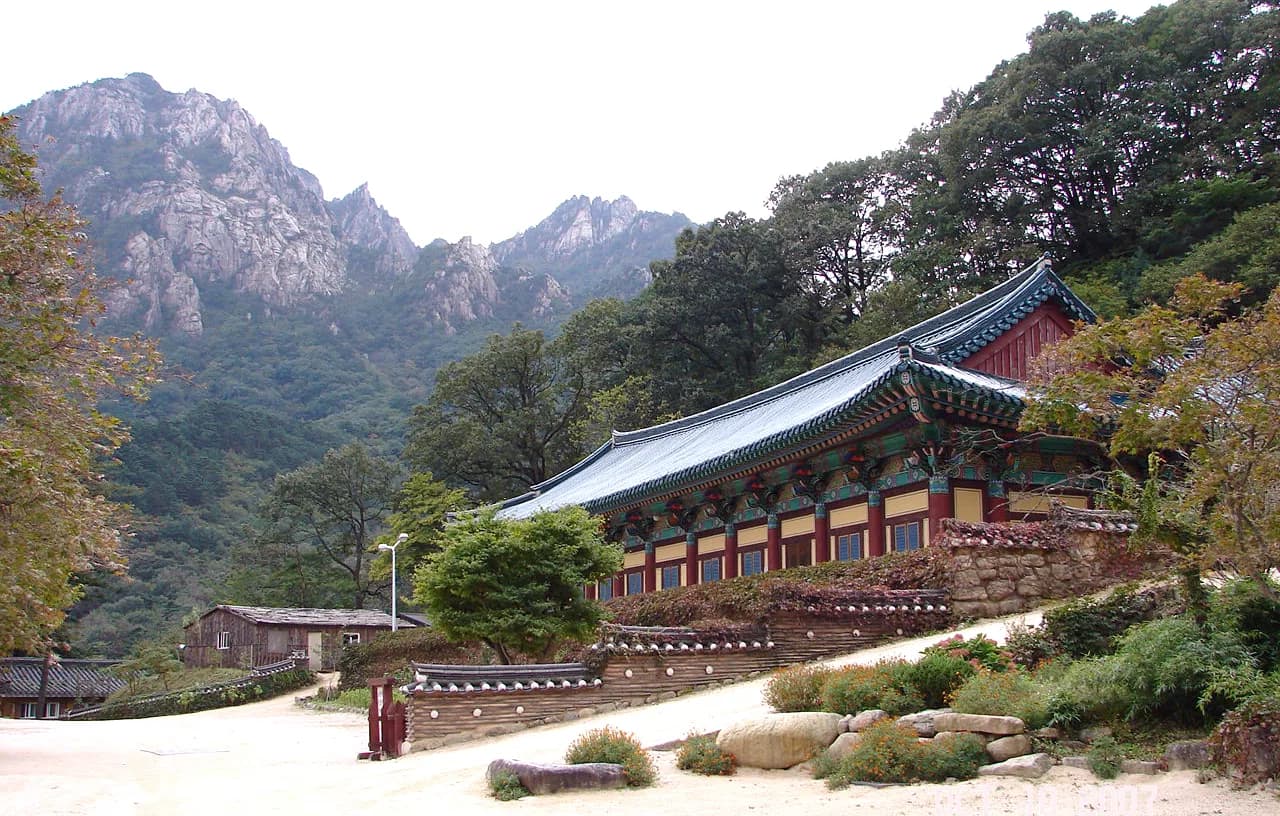
For a full day, use Sokcho History Itinerary. That collection connects Sinheungsa Temple, Sokcho Museum, the market, Gaetbae ferry, Abai Village, and chilsungboatyard into one historical route. For a shorter downtown-only plan, pair this with Half-Day in Sokcho or Sokcho Without a Car.
The key is respect. Abai Village is still a lived-in neighborhood. Walk during daylight, stay quiet in residential lanes, do not block doors, and let the history make the food more meaningful rather than using the history as a backdrop for the meal.