HeySeorakHeySeorak
SpotsCollectionsSeoraksanJournalContact
  1. HeySeorak
  2. /Collections
  3. /Sinheungsa Temple Guide
Sinheungsa Temple Guide
πŸ›•

Sinheungsa Temple Guide

A focused Sinheungsa Temple guide for Sokcho visitors, linking Seoraksan, Bojeru Pavilion, Geungnakbojeon Hall, Buddhist treasures, and the 2025 painting return.

  • 2-3 hours
  • From Seoraksan Sogongwon
  • 8 picks

Collection freshness

Last reviewed on May 3, 2026

Reviewed by HeySeorak editorial team

Sinheungsa Temple is the best Sokcho temple guide for foreign travelers who want Korean culture beyond a mountain photo. In one compact visit, you can read Seoraksan scenery, Silla-period Buddhist origin, Joseon architecture, ritual objects, and a recent cultural-property restitution story. The strongest route is not "see the big statue and leave." It is a slow sequence from Sogongwon into Bojeru Pavilion, Geungnakbojeon Hall, the Amitabha triad, the bronze bell, and the older Hyangseongsa stone-pagoda layer.

This collection is for visitors who have 2 to 3 hours in Seoraksan and want the temple to make sense as heritage, not just scenery.

Contents

  • Sinheungsa Temple at a glance
  • Why Sinheungsa matters now
  • The best order to walk Sinheungsa
  • How to read the temple without prior Buddhist knowledge
  • Practical planning notes
  • How to pair Sinheungsa with the rest of Sokcho

Sinheungsa Temple at a glance

NeedBest answer
Best forCulture-first Seoraksan visitors, history travelers, slow photographers
Ideal time2 to 3 hours
StartSeoraksan Sogongwon
Core routeSogongwon -> Sinheungsa -> Bojeru -> Geungnakbojeon -> bell -> pagoda
Budget noteVisitKorea lists temple admission as free; parking and Templestay costs vary
Main mistakeTreating Sinheungsa as a quick stop before a hike

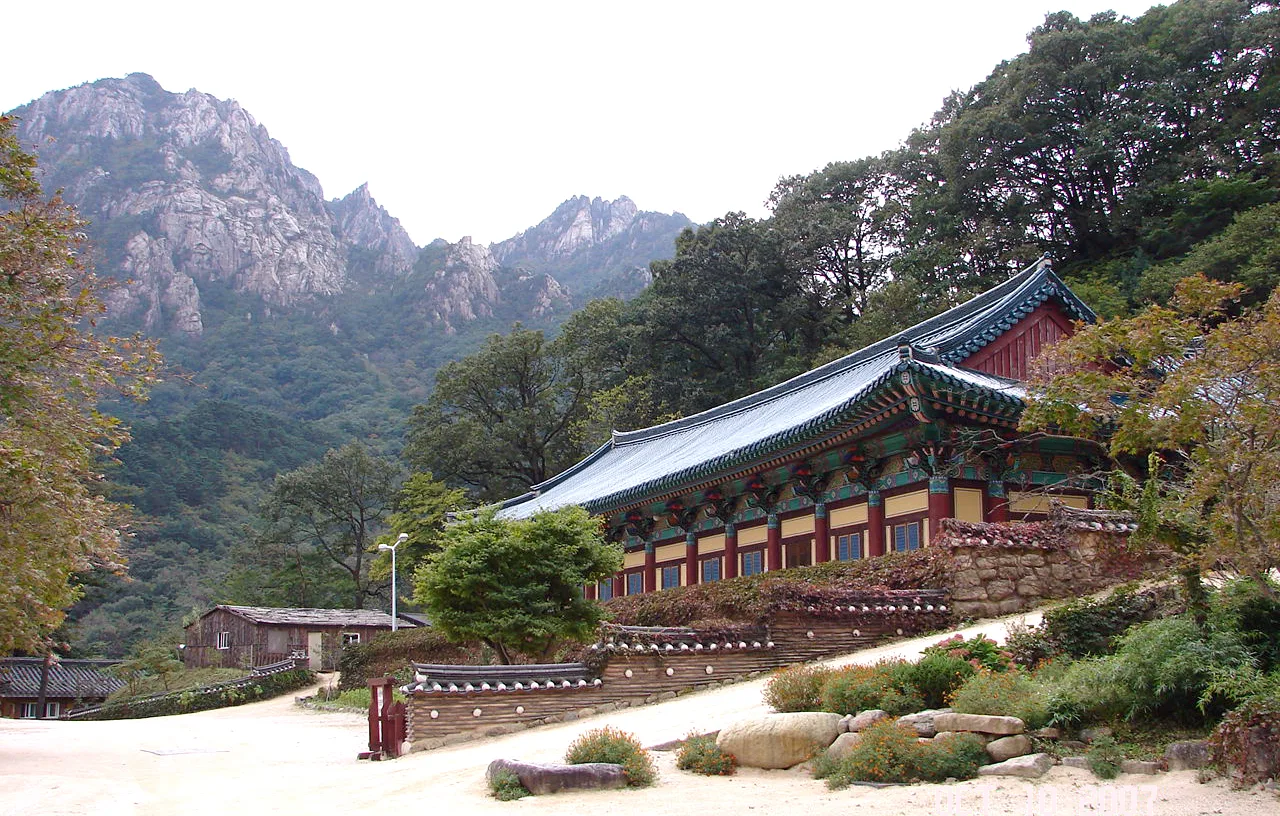
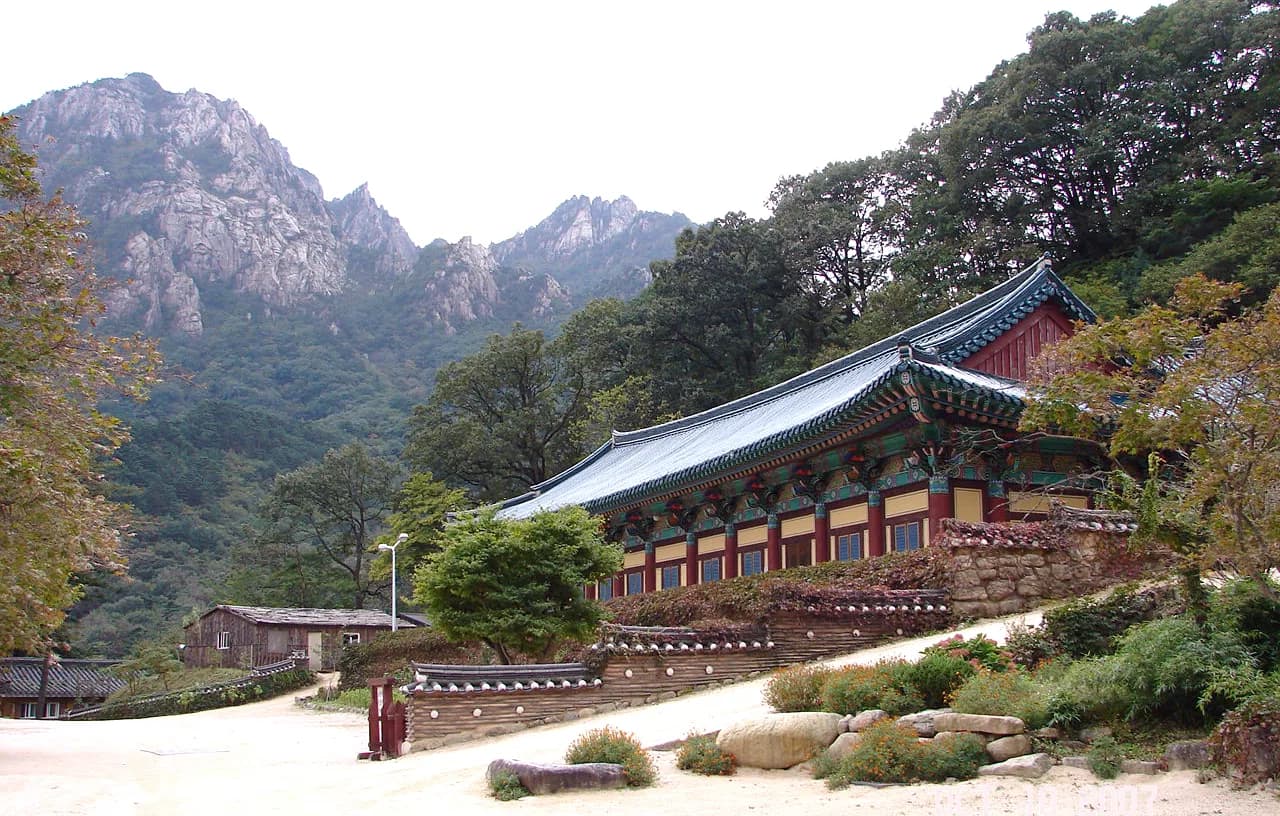
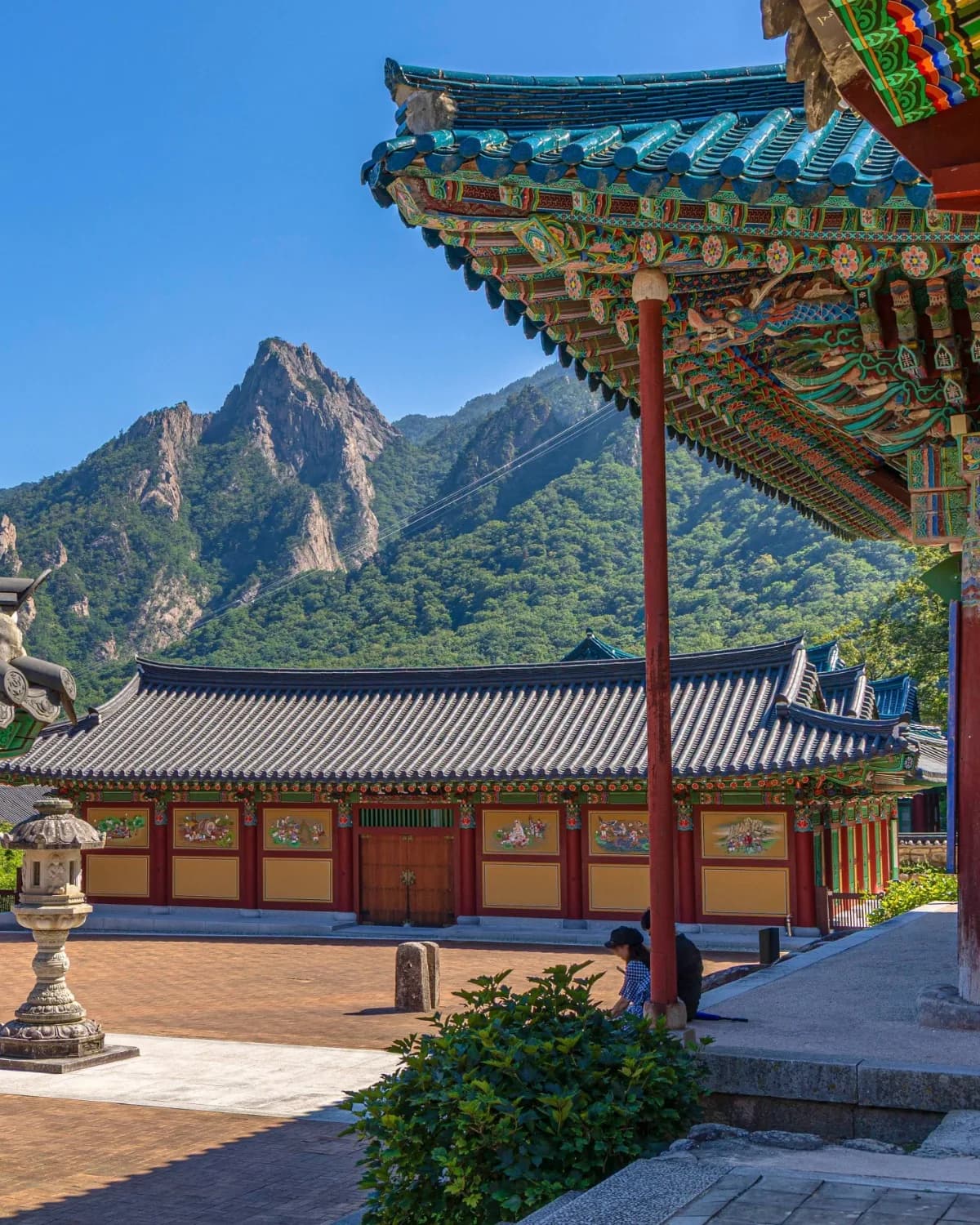
Sinheungsa Temple buildings below Seoraksan mountain ridges

Sinheungsa is most legible when you see the temple buildings and Seoraksan ridges in the same frame.

πŸ’‘
Pro Tip
If this is your first Korean Buddhist temple, do less. Skip the urge to photograph everything. Walk the approach, stand under Bojeru Pavilion, look at Geungnakbojeon Hall from the front and side, then step back before moving on.

Why Sinheungsa matters now

VisitKorea describes Sinheungsa Temple as a Jogye Order temple in Seoraksan near Sokcho, originally founded as Hyangseongsa by the monk Jajang in A.D. 652. That origin matters because the temple gives Sokcho a deep heritage layer before the city becomes about fish markets, beaches, and Korean War refugee history.

The temple also has a current story. On November 14, 2025, The Metropolitan Museum of Art announced the return of The Tenth King of Hell to Sinheungsa Temple. The Met identified the 1798 Joseon Buddhist painting as a work believed to have been taken while the temple was under United States Army control during the Korean War. For visitors, that makes Sinheungsa a rare place where mountain tourism, Buddhist art, war history, provenance research, and cultural-property return all meet.

This is why Sinheungsa should not be hidden inside a generic Seoraksan hiking day. It deserves its own visit logic.
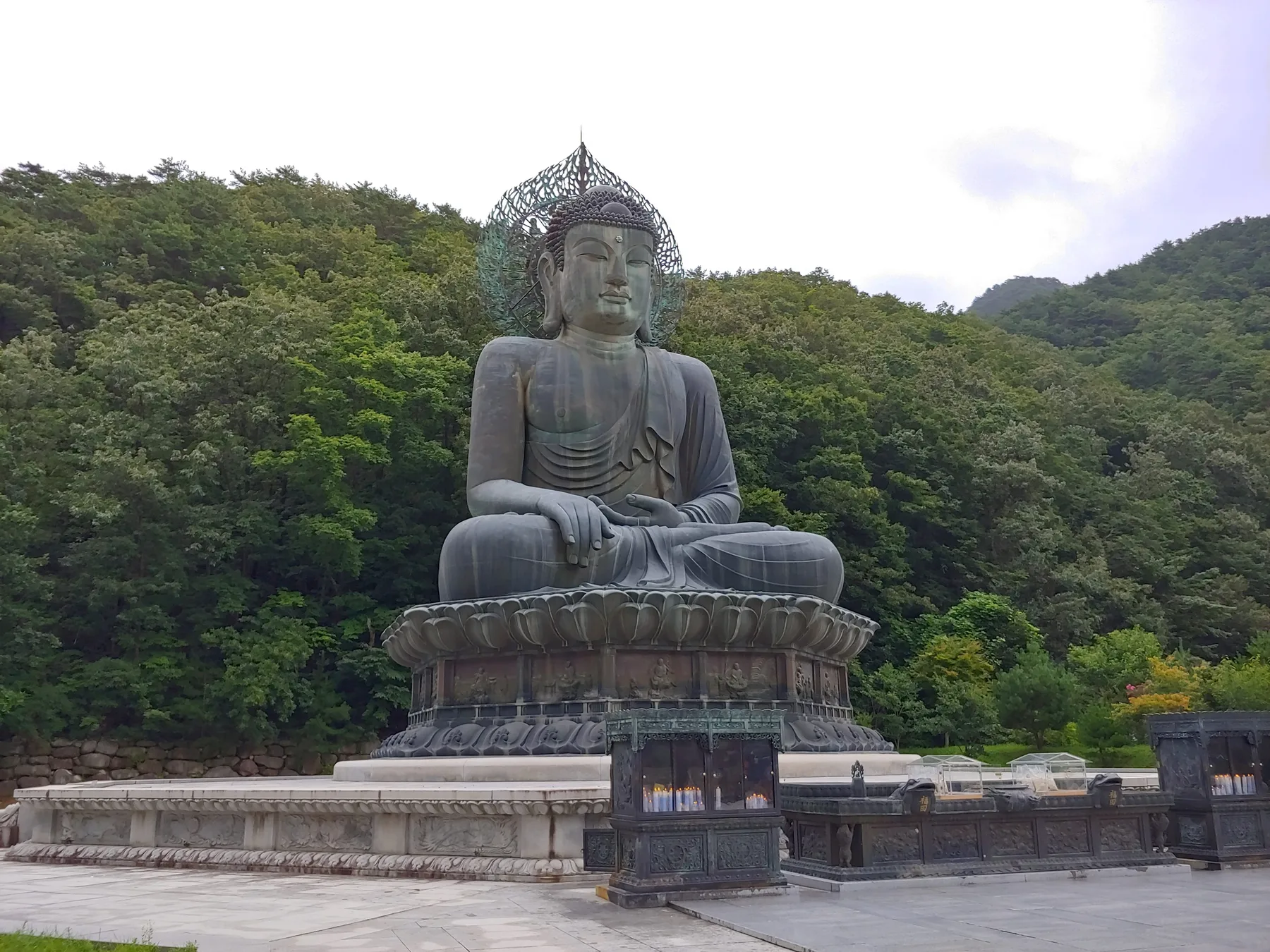
Great Unification Buddha at Sinheungsa Temple

The Great Unification Buddha is the obvious visual landmark, but use it as orientation before moving into the quieter heritage sequence.

The best order to walk Sinheungsa

OrderStopWhat to notice
1Seoraksan SogongwonThe practical gateway: buses, parking, food stalls, cable-car crowds
2Sinheungsa approachThe shift from park traffic into temple rhythm
3Bojeru PavilionThe framed entrance into the main worship area
4Geungnakbojeon HallJoseon wooden architecture, stairs, lattice doors, and altar space
5Wooden Seated Amitabha TriadThe devotional center inside the hall
6Bronze BellRitual sound and metalwork, not just an object in a corner
7Hyangseongsa pagodaThe older Silla Buddhist landscape behind today's temple story

Start at Sogongwon because it is the UX reality of the day. Visitors arrive through buses, cars, cable-car traffic, restrooms, snack stalls, and park signage. Once you leave that flow and approach Sinheungsa, the pace should change.

Bojeru Pavilion is the hinge. Passing through it makes the temple feel ordered instead of random. After that, treat Geungnakbojeon Hall as the main reading stop. Look at the foundation, stone stairs, floral lattice doors, roof line, and how the hall frames the sacred interior.

The bronze bell and Hyangseongsa pagoda are easy to underuse. Do not. The bell adds ritual sound to the route, while the pagoda connects the present temple precinct to the older Hyangseongsa story.
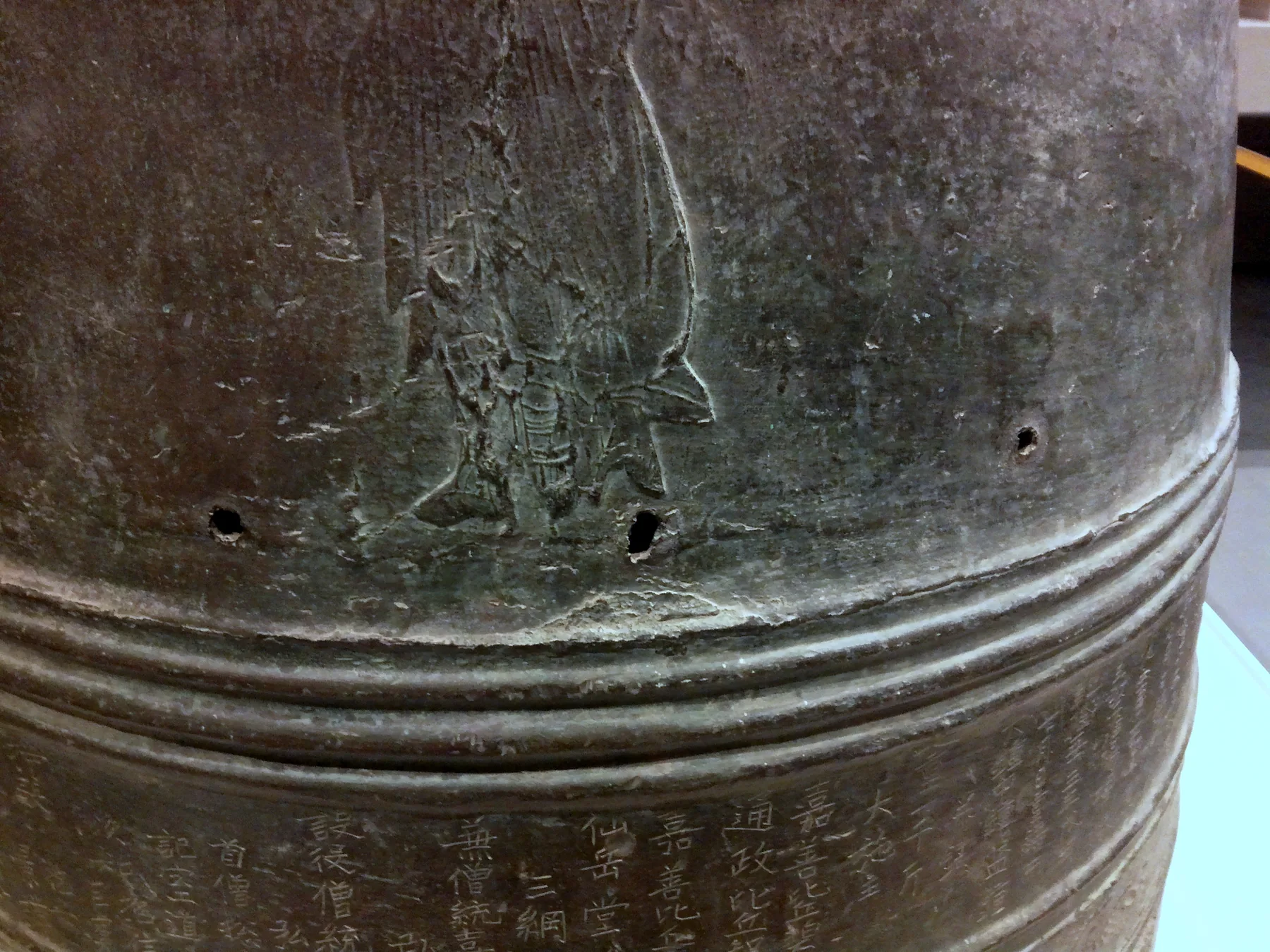
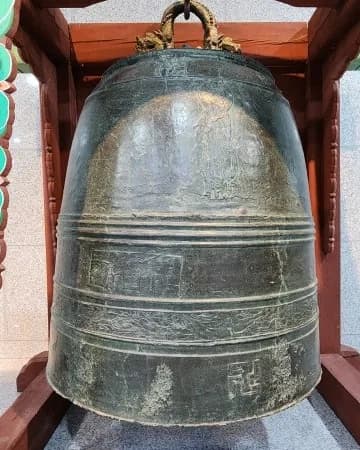
Bronze Bell of Sinheungsa Temple close detail

The bronze bell makes the temple's ritual layer visible through metalwork, inscription, and sound.

How to read the temple without prior Buddhist knowledge

You do not need to be Buddhist to understand Sinheungsa. Read it through three simple ideas.

First, movement matters. Korean temples are not experienced only from the front. The approach, gate-like pavilion, courtyard, hall, and inner image create a spatial sequence.

Second, the building and the image work together. Geungnakbojeon Hall is not just a beautiful wooden structure. It frames the Amitabha-focused devotional space inside. The Wooden Seated Amitabha Buddha Triad gives the hall its religious center.

Third, objects carry memory. A bell is not decoration. A pagoda is not just a stone tower. A returned painting is not only an art-world headline. Together, they show how Buddhist practice, material craft, local identity, and history survive in a mountain temple.

Practical planning notes

VisitKorea lists Sinheungsa as open 24 hours, open year-round, and free for general admission. Treat that as general visitor information, not a promise that every hall, object, program, or interior viewing moment is available at all times. Ceremonies, preservation needs, weather, and temple rules come first.

Parking is available around the Seoraksan visitor area, and VisitKorea lists seasonal parking fees. If you are using public transport, pair this guide with Sokcho Without a Car before assuming a late return will be easy.

Photography is best handled conservatively. Outdoor temple scenes are usually fine, but people praying, monks, interiors, and protected objects need restraint. If a sign says no photography, follow it.

How to pair Sinheungsa with the rest of Sokcho

Use this collection when Sinheungsa is the main cultural stop. Use Sokcho History Itinerary when you want the full day: Sinheungsa, Sokcho Museum, Sokcho Tourist & Fishery Market, Gaetbae ferry, Abai Village, and chilsungboatyard.

If your interest is modern Korean history, continue with Abai Village History Walk. That route moves from refugee settlement and ferry infrastructure into food memory. Together, the two collections explain why Sokcho is more than a pretty base for Seoraksan. It is a city where ancient Buddhist heritage and modern displacement history sit within one practical travel day.
The route

Walk it

The picks

Where to go, in order

  1. 1

    Arrival

    Seoraksan Sogongwon

    μ„€μ•…μ‚°μ†Œκ³΅μ›

    Park

    Use Sogongwon as the practical start. It gathers buses, parking, ticketing flow, food stalls, cable-car traffic, and the walking approach toward Sinheungsa.

    View spot→
  2. 2

    Temple anchor

    Sinheungsa Temple

    μ‹ ν₯사

    TempleEnglish menu

    Start with Sinheungsa as a living temple, not a single photo stop. Read it as Silla-period origin, Seoraksan landscape, Joseon Buddhist architecture, and a 2025 cultural-property return story.

    View spot→
    Sinheungsa Temple
  3. 3

    Approach

    Bojeru Pavilion at Sinheungsa Temple

    μ‹ ν₯μ‚¬λ³΄μ œλ£¨

    HeritageEnglish menu

    Pause at Bojeru Pavilion before entering the main courtyard. This is where the temple visit becomes a sequence: pass below, slow down, then look up at the ritual space.

    View spot→
    Bojeru Pavilion at Sinheungsa Temple
  4. 4

    Main hall

    Geungnakbojeon Hall of Sinheungsa Temple, Sokcho

    μ‹ ν₯사 극락보전

    Heritage

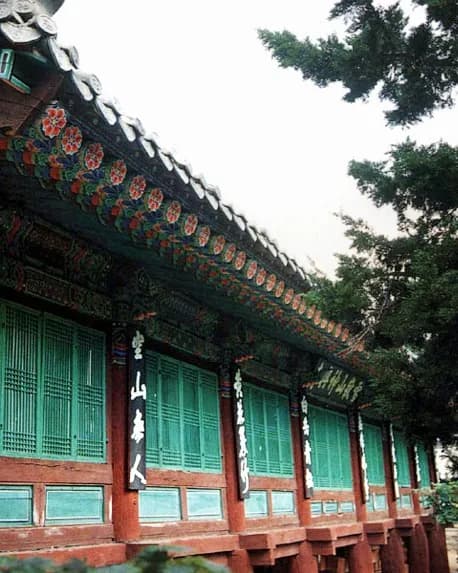
    Give Geungnakbojeon Hall the slowest look. The foundation, stone steps, floral lattice doors, ceiling, and altar setting explain Korean Buddhist architecture better than a rushed wide shot.

    View spot→
  5. 5

    Inside the hall

    Wooden Seated Amitabha Buddha Triad of Sinheungsa Temple, Sokcho

    μ‹ ν₯사λͺ©μ‘°μ•„λ―Ένƒ€μ—¬λž˜μ‚Όμ‘΄μ’Œμƒ

    Heritage

    Look quietly inside Geungnakbojeon for the 1651 Wooden Seated Amitabha Buddha Triad. Keep voices low and follow any posted photography rules.

    View spot→
  6. 6

    Ritual sound

    Bronze Bell of Sinheungsa Temple, Sokcho

    μ‹ ν₯사동쒅

    HeritageEnglish menu

    Use the bronze bell as the sound layer of the route. Temple heritage is not only buildings; it is also metalwork, inscription, ritual timing, and acoustic memory.

    View spot→
    Bronze Bell of Sinheungsa Temple, Sokcho
  7. 7

    Older layer

    Three-story Stone Pagoda at Hyangseongsa Temple Site, Sokcho

    μ†μ΄ˆ ν–₯성사지 삼측석탑

    Heritage

    End with the Hyangseongsa Temple Site pagoda if you have time and weather is good. It connects today's Sinheungsa visit back to the older Silla Buddhist landscape.

    View spot→
  8. 8

    Optional deeper stay

    Seoraksan Sinheungsa Templestay

    μ„€μ•…μ‚°μ‹ ν₯사 ν…œν”ŒμŠ€ν…Œμ΄

    Tour

    If you want the temple to become an experience rather than a sightseeing stop, check the Templestay program separately before planning the day around it.

    View spot→

Frequently Asked Questions

Is Sinheungsa Temple worth visiting in Sokcho?
Yes. Sinheungsa is the strongest single cultural heritage stop in Sokcho because it combines Seoraksan scenery, a temple tradition traced by VisitKorea to A.D. 652, Joseon-era architecture, designated Buddhist treasures, and the 2025 return of The Tenth King of Hell from The Met.
How long do I need at Sinheungsa Temple?
Allow 2 to 3 hours if you want the temple approach, Bojeru Pavilion, Geungnakbojeon Hall, the Amitabha triad, the bronze bell, and a quiet look around the heritage precinct. A rushed 45-minute stop usually misses the architectural sequence.
Can I visit Sinheungsa Temple without hiking Seoraksan?
Yes. Sinheungsa sits inside the Seoraksan visitor flow and can work as a cultural visit even if you do not hike. Pair it with Sogongwon, the temple approach, and optionally Gwongeumseong Cable Car if weather and queues are manageable.
What should foreign visitors look for inside Sinheungsa?
Look for movement first: Sogongwon, the approach path, Bojeru Pavilion, Geungnakbojeon Hall, then the inner Buddhist sculpture and ritual objects. This order makes the temple easier to understand than jumping straight to the largest statue or the busiest photo point.
Is photography allowed at Sinheungsa Temple?
Outdoor photography is usually possible, but halls, ceremonies, monks, worshippers, and heritage objects require more care. Follow posted signs, avoid flash, keep voices low, and treat the temple as an active religious space rather than a set built for travel photos.

Context

Places and trails behind this route

πŸ”οΈ

πŸ”οΈSeoraksan

μ„€μ•…μ‚°

Trail guides, park context, and mountain-day planning for the Seoraksan side of the Seorak region.

  • National park
  • Trail guides

Keep exploring

Related collections

Sokcho History Itinerary

πŸ›οΈSokcho History Itinerary

A full-day Sokcho history itinerary linking Sinheungsa Temple, Sokcho Museum, Abai Village, the Gaetbae ferry, market, and chilsungboatyard with route tips.

  • Full day
  • 12 picks
Abai Village History Walk

πŸ›ΆAbai Village History Walk

An Abai Village Sokcho history walk linking the Gaetbae ferry, mural street, refugee food, market, and museum context for foreign travelers.

  • 2-3 hours
  • 7 picks
Sokcho Without a Car

🚌Sokcho Without a Car

A genuinely car-free Sokcho itinerary using buses, short taxis, and walking instead of pretending you need a rental for a compact coastal city.

  • Full day
  • 4 picks

Read next

  • Seoraksan Guideβ†’
  • Gwongeumseong Cable Car Guideβ†’
  • Sokcho Without a Carβ†’
πŸ’¬

Not sure where to start?

Ask HeySeorak anything about spots, trails, or local places. We'll build a perfect itinerary.

Start PlanningBrowse Destinations
HeySeorakHeySeorak

Your AI-powered English guide to Sokcho & Seoraksan, South Korea.

Guides

  • Must-Try Dishes
  • Seafood Market Guide
  • Street Food Tour
  • Seoraksan Hiking
  • Beaches & Coast

Explore

  • Collections
  • Places
  • Luggage Storage
  • Hidden Gems
  • Seasonal Guide
  • From Seoul

About

  • About HeySeorak
  • For Businesses
  • Contact
  • Privacy Policy
  • Terms of Service
Β© 2026 NomadLab. All rights reserved.
Privacy·Terms·Made with ❀️ in Sokcho