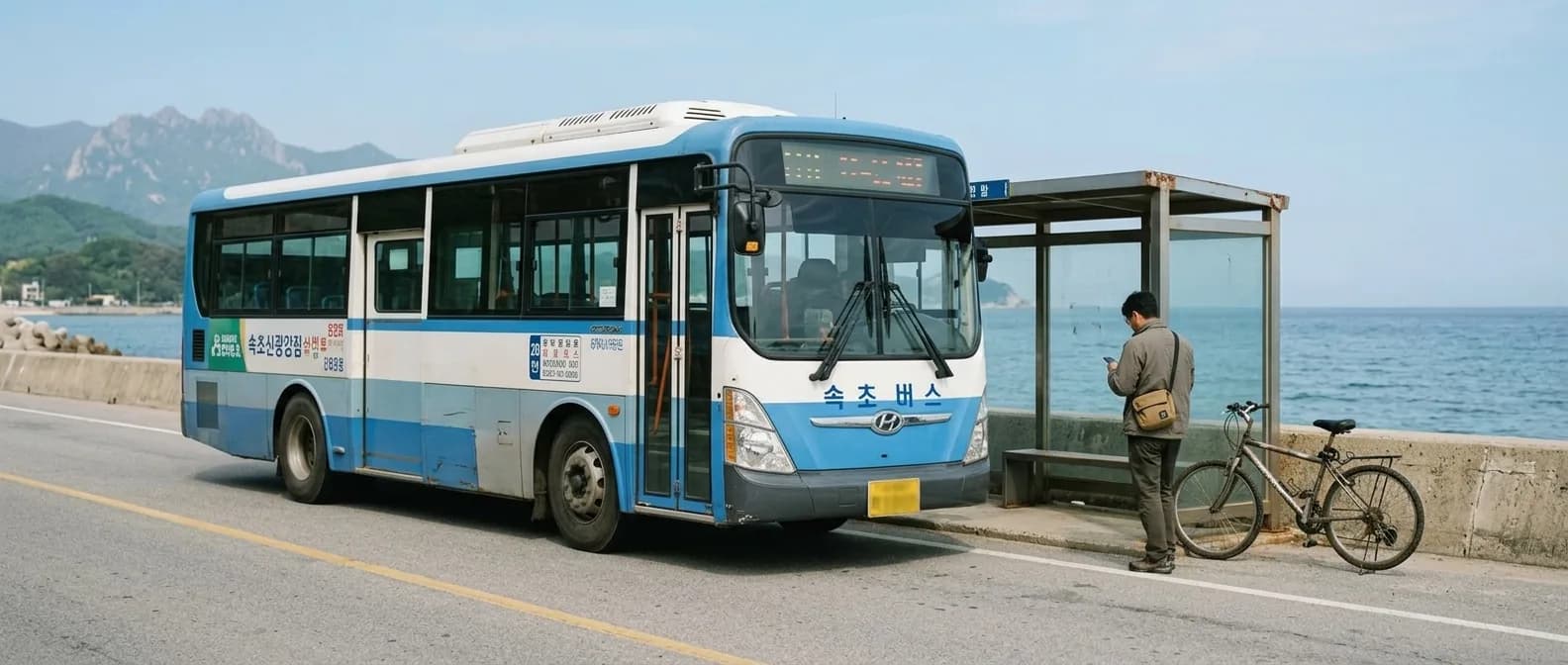
You do not need a rental car for this version of Sokcho. The official Sokcho bus information system currently lists in-city adult fare at KRW 1,530 by card and KRW 1,700 in cash, with one free transfer within 90 minutes. The catch is that routes 1, 1-1, 1-2, 9, and 9-1 are excluded from the transfer system, which is exactly the kind of detail older travel posts usually skip.
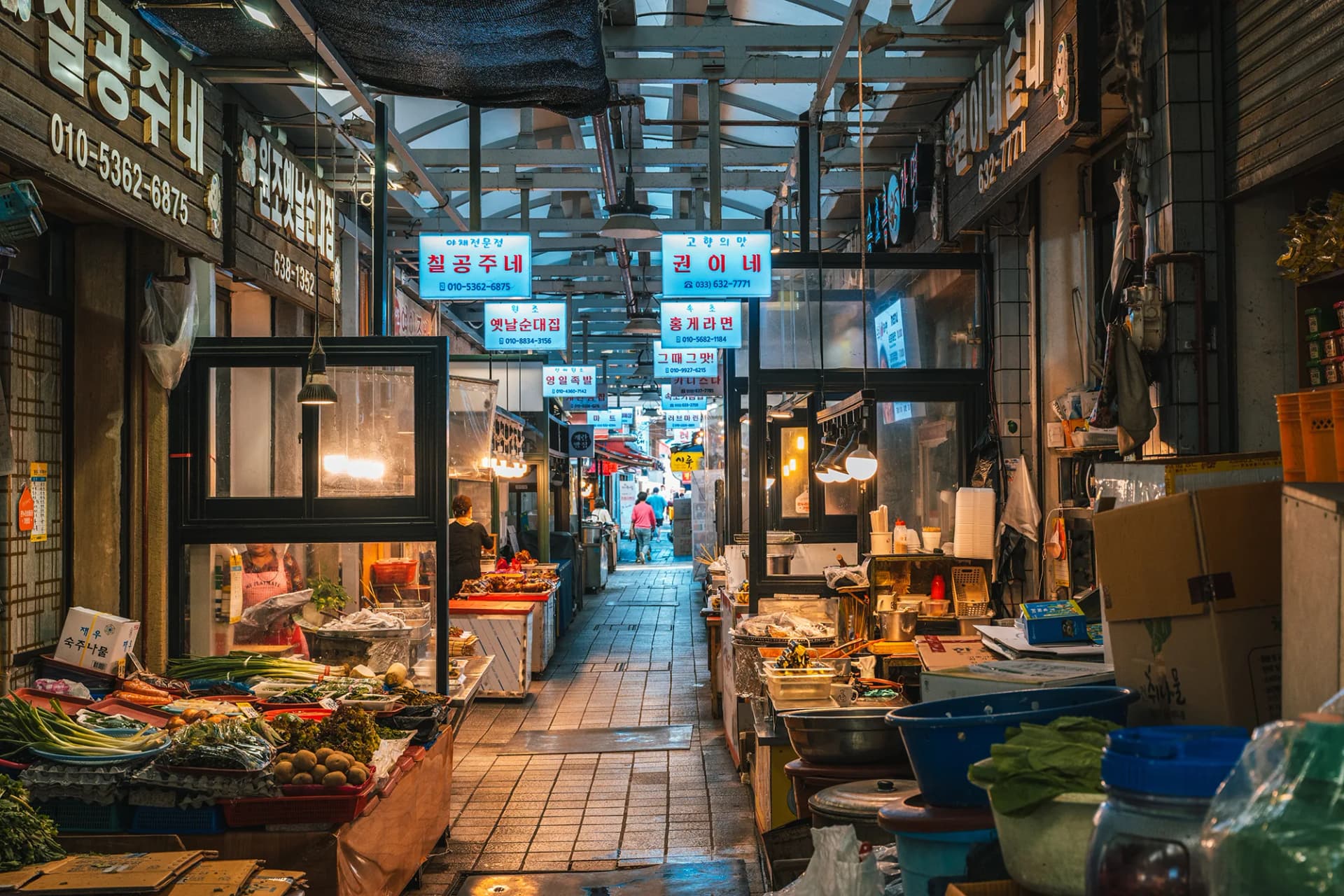
The bigger point is spatial, not just financial. In Sokcho's 2025 third-quarter tourism data, the Tourist & Fishery Market and Sokcho Beach were the city's top two navigation targets. Those are precisely the places easiest to connect on foot, by bus, or with one smart taxi.
Quick take
- Best for: bus travelers from Seoul, solo travelers, couples, and anyone who wants to stay flexible instead of parking
- Transport budget: often KRW 5,000 to 20,000 total for the whole day
- Smart-car-free rule: use the bus when it is direct, use the taxi when it saves you a bad transfer, and never romanticize dragging luggage around
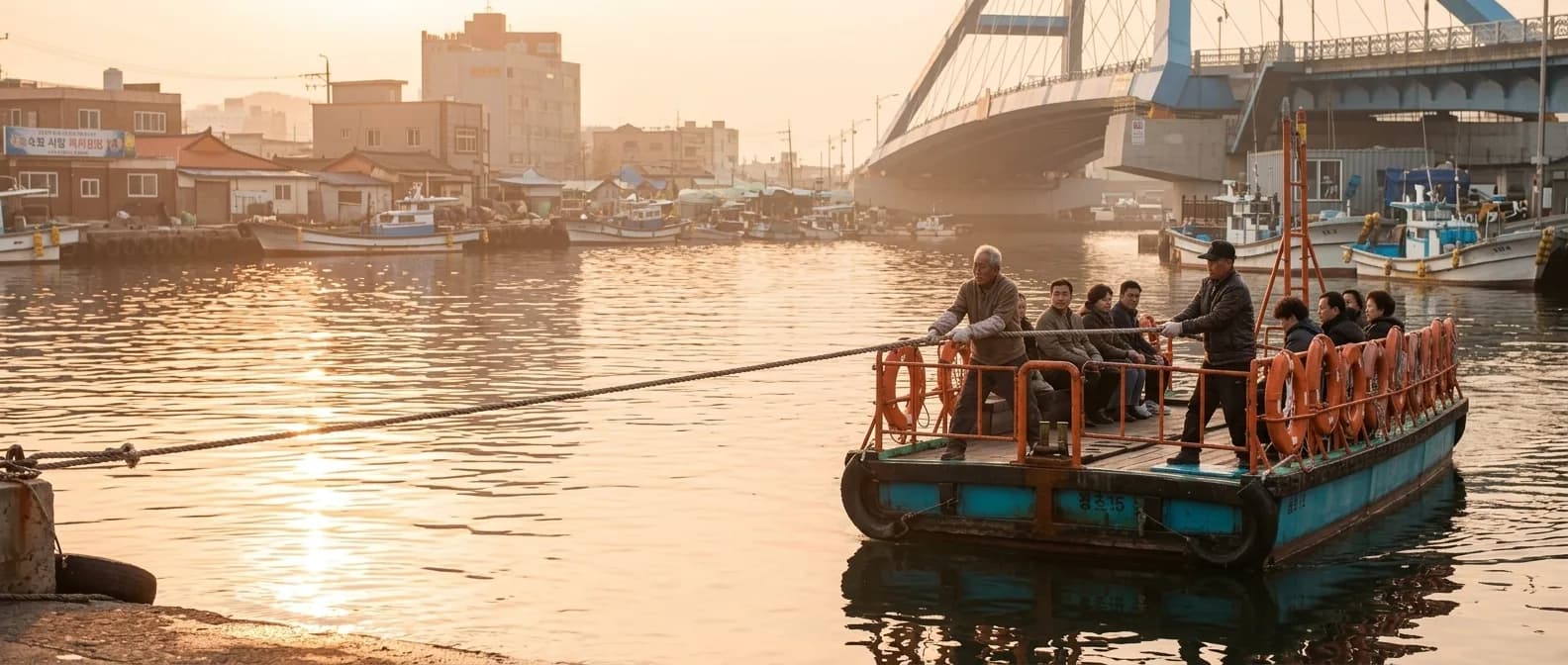
- One current fare to remember: the Abai Village gaetbae is KRW 500 for adults and KRW 300 for children and youth, card at the kiosk or cash — the kiosk is on the Abai Village side, so crossing from the market you board and pay when you land
Why no-car Sokcho works
Sokcho is compact enough that a rental often creates more friction than it removes. You pay for pickup, parking, and the mental overhead of driving in a place where the main visitor zones are already clustered.
The city bus network is not glamorous, but it is useful. A short taxi is even more useful when it replaces a transfer, a luggage problem, or a rain problem. That combination is the winning pattern: not purity, just efficient movement.
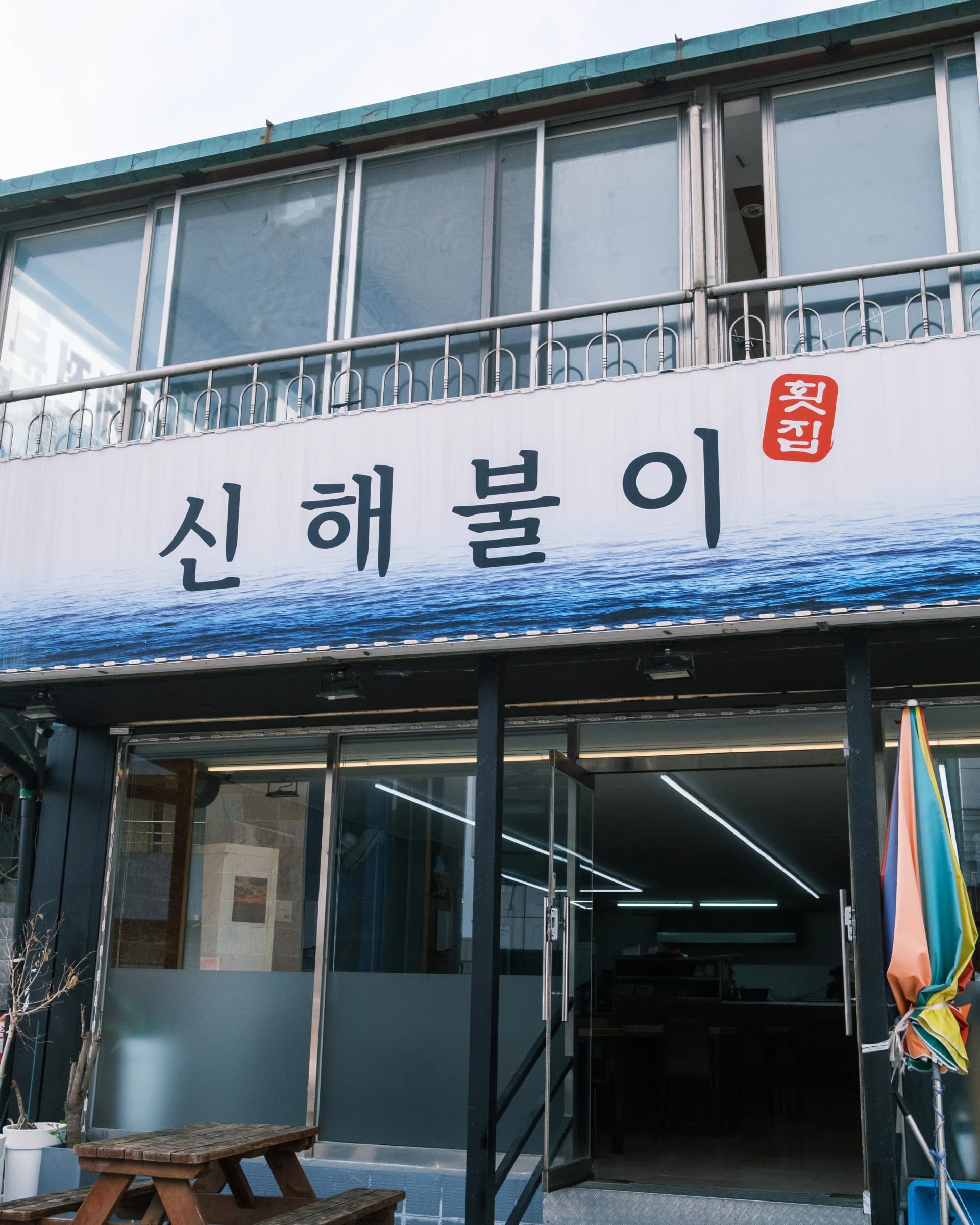
Daepo Port is a good stress test. Bus 9 or 9-1 from the terminal drops you directly on 대포항길, and the common tourist mistake is getting off and eating at whichever stall calls loudest. 신해불이횟집 — family-run since 2012, open 10:00 to 22:00 every day — built its reputation on the opposite instinct: a strict "live-only" rule, every fish killed to order, no pre-sliced trays sitting in a case. Tourists who ride the bus straight there skip the trap entirely.
The one place people still overcomplicate
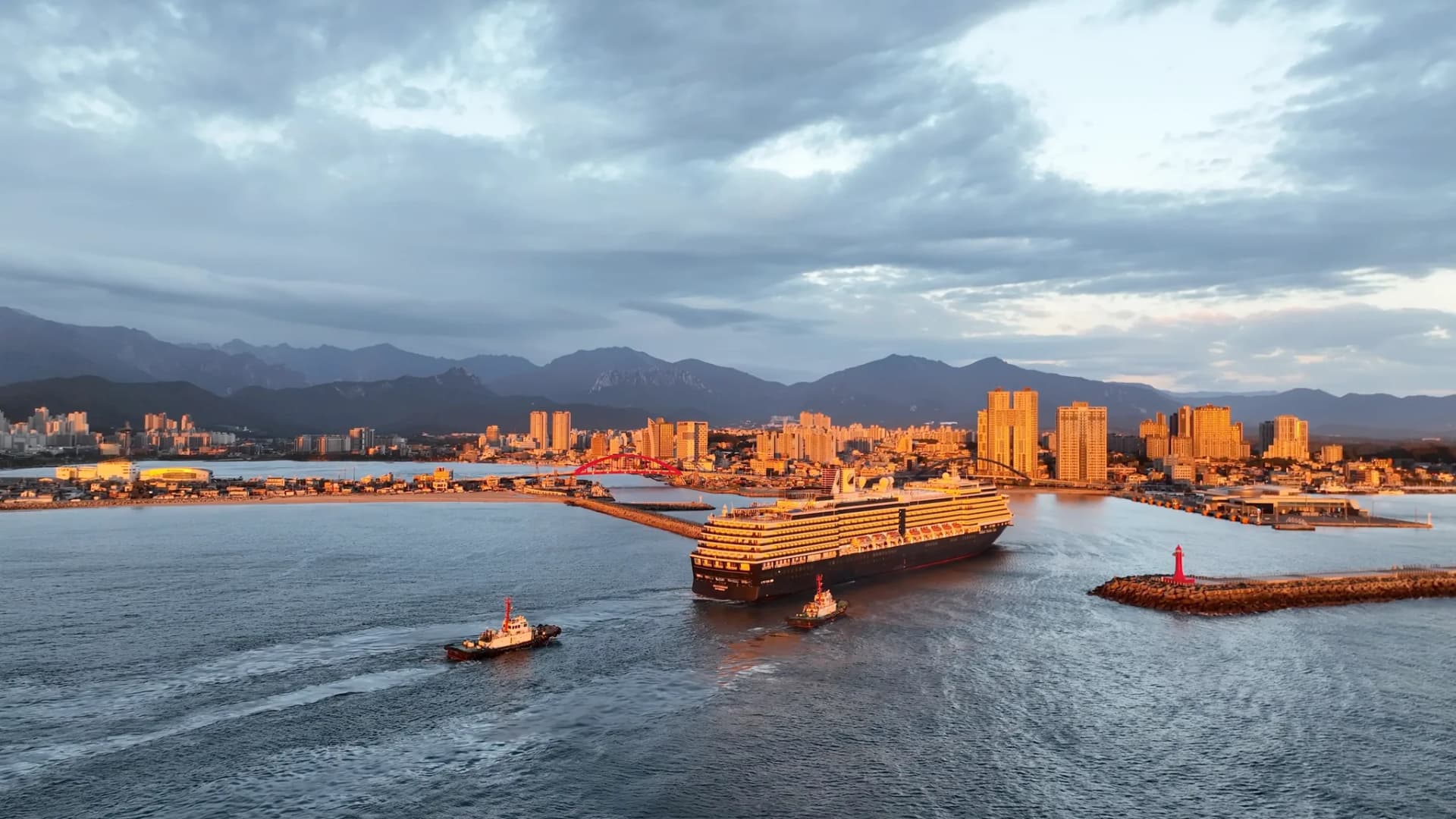
Mt. Seorak is the exception. The mountain can still justify a direct taxi or a dedicated bus because the destination is singular and the day is built around it. But this collection is not about the mountain. It is about the part of Sokcho where a car mostly slows you down: market, ferry, coastline, and short viewpoint hops.
That is why one taxi or two is not cheating. It is usually still far cheaper than a rental, and it keeps the day from collapsing into waits.
Mistakes that quietly waste time
- Paying cash on every bus and then wondering why the transfers are not working
- Booking a remote stay and then blaming public transport for the problem
- Refusing short taxis on principle, even when a KRW 5,000 ride saves 30 minutes
- Assuming old ferry prices are still current
For the route-level transport detail, keep Sokcho Local Bus Guide and Taxi Tips open. If you are still choosing the base, Where to Stay in Sokcho matters more than the car question itself.