Wooden Seated Amitabha Buddha Triad of Sinheungsa Temple, Sokcho
신흥사목조아미타여래삼존좌상
The Wooden Seated Amitabha Buddha Triad of Sinheungsa Temple, Sokcho is Treasure No. 1721 and one of the most important Buddhist sculptures inside Sinheungsa. Made in 1651, the triad places Amitabha Buddha at the center with Avalokitesvara, the Bodhisattva of Great Compassion, and Mahasthamaprapta, the Bodhisattva of Wisdom and Strength, on either side.
Verified by HeySeorak on 📖 Owner story included
Best For
History, culture, scenic context, and first-time orientation
Area
Seoraksan
Price
₩ Budget-friendly
Info
Inside Geungnakbojeon Hall, Sinheungsa Temple, 170 Seorak-dong, Sokcho-si, Gangwon-do
강원특별자치도 속초시 설악동 170 신흥사 극락보전 내
Sokcho Tourism lists the heritage object as always available, open year-round, and free. It is inside Geungnakbojeon Hall, so actual viewing depends on temple access, ceremonies, preservation rules, and posted photography restrictions.
The Story
Korea Heritage Service records the triad as a wooden Buddhist sculpture, three figures in total, located inside Geungnakbojeon Hall at Sinheungsa Temple and designated as Treasure No. 1721 on September 5, 2011.
Behind the Signature
HeritageWiki explains that the triad was made in 1651 by Monk Muyeom, a renowned monk sculptor active in the early and mid-17th century. Because the date and sculptor are known, the work is a strong reference point for understanding mid-17th-century Joseon Buddhist sculpture.
Local Tip
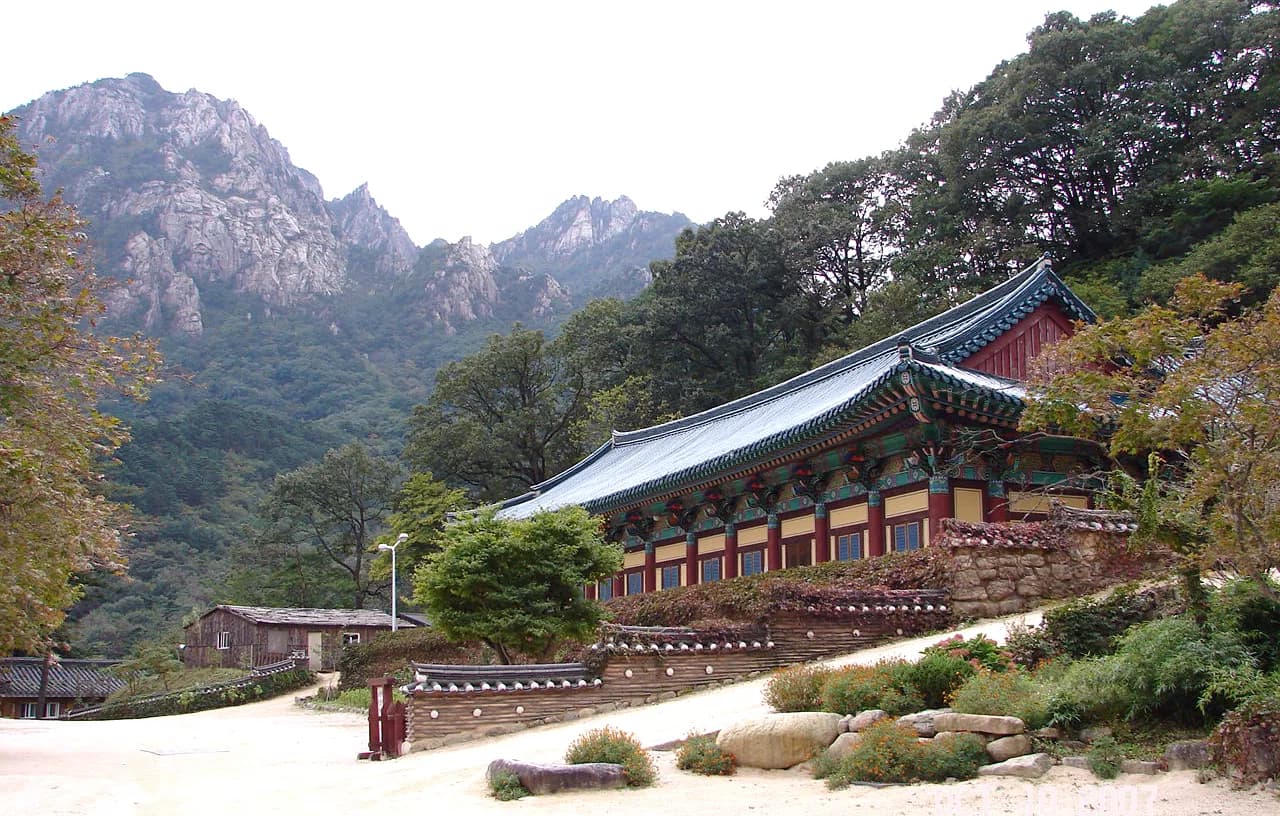
Do not isolate it from the temple setting. Bojeru controls the approach, Geungnakbojeon frames the sacred space, and this triad is the core image inside the hall.
Seasonal Note
Indoor viewing can feel different during busy hiking seasons, Buddhist events, or large tour-group arrivals. If the hall is crowded, step aside and return after the flow clears.
For Travelers
For international visitors, this spot clarifies who Amitabha is in Korean Pure Land Buddhist practice and why a temple visit is not just architecture. The figures represent a Buddhist promise of rebirth in the Western Paradise, compassion, and wisdom.
How to visit
A quick guide for first-time visitors.
Step 1
Start with the context
Read the short history first so the stop is more than a photo point. The story usually explains why this place matters in Sokcho.
Step 2
Walk the key point
Use the map pin as your anchor, then give yourself a few extra minutes for nearby signs, views, side paths, or linked monuments.
Step 3
Connect the next stop
This works best as part of a route. Pair it with a nearby village, museum, market, ferry, temple, or lake walk rather than visiting in isolation.
Helpful guides
Practical reads to help you make the most of your visit.
Plan around this stop
Curated routes and visitor situations where this place fits naturally.
You might also like
Nearby picks with a different category first, then backup options in the same area or city.