
Sokcho history is easiest to understand through food. The city looks simple at first: Mt. Seorak behind you, the East Sea in front of you, a busy market, a beach, and a short ferry to Abai Village. But the reason Sokcho tastes different is deeper. Its food culture carries mountain Buddhism, fishing work, Korean War displacement, borderland memory, and the practical habits of families who rebuilt life after 1950.
This guide is for foreign travelers who want the story behind Abai sundae, ojingeo sundae, the Gaetbae ferry, Sokcho Tourist & Fishery Market, and the villages around Cheongchoho Lake. Use it as a cultural reading guide first, then follow the route at the end when you are ready to walk and eat.
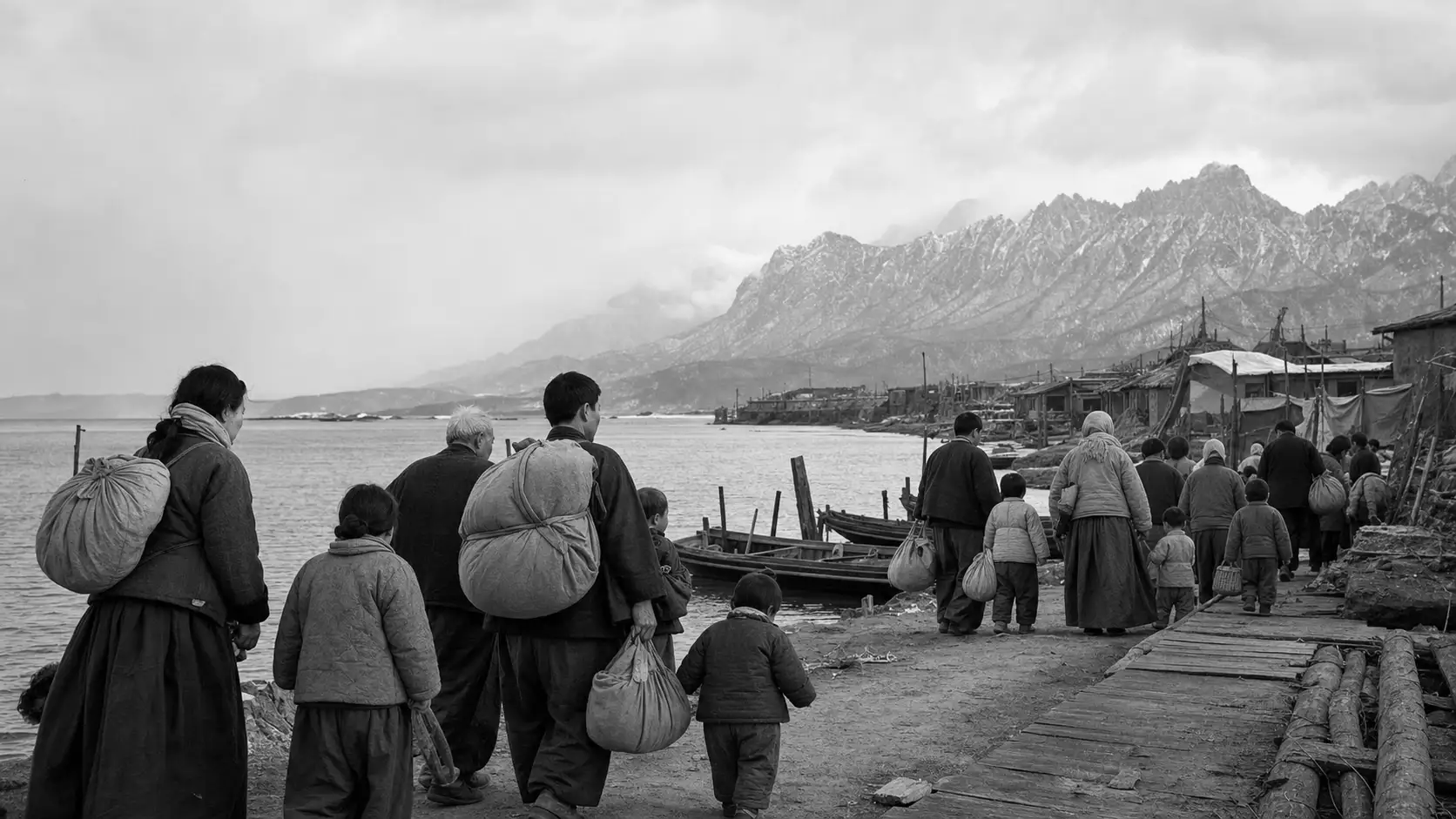
Hero image note: this black-and-white scene is an AI-generated editorial reconstruction inspired by Sokcho's displaced-people history, not an archival photograph.
Quick answer: why Sokcho history tastes different
Sokcho's food culture is shaped by four layers: Mt. Seorak's temple culture, East Sea fishing and market trade, Korean War refugees from northern Korea, and the borderland geography of Gangwon's northeast coast. That is why the best Sokcho history route should not separate museums, ferries, markets, and restaurants. In Sokcho, the route is the explanation.
Contents
- Sokcho history at a glance
- Start with Mt. Seorak, not the market
- How the Korean War changed Sokcho
- Why Abai Village matters
- The food that carries the history
- The best Sokcho history and food route
- Optional second day: Goseong DMZ and pollock country
- FAQ
Sokcho history at a glance
| Layer | What to see | What to eat or notice |
|---|---|---|
| Mountain heritage | Sinheungsa Temple, Mt. Seorak | Temple rhythm, mountain setting, cultural-property stories |
| City memory | Sokcho Museum & Displaced People Folk Village | Fishing village culture, refugee exhibits, Cheongho-dong alley reconstruction |
| Market life | Sokcho Tourist & Fishery Market | Dakgangjeong, mulhoe, ojingeo sundae, jeotgal, seafood stalls |
| Refugee neighborhood | Abai Village, Gaetbae ferry | Abai sundae, ojingeo sundae, Hamheung-style noodles, mural street |
| Borderland extension | Goseong DMZ Museum, Unification Observatory, Goseong pollock | Pollock, hwangtae, divided-landscape context |
Start with Mt. Seorak, not the market
Many visitors treat Sokcho as a food town with a mountain nearby. Historically, it is better to reverse that order. Mt. Seorak gives Sokcho one of its oldest cultural anchors, and Sinheungsa Temple is the clearest place to begin.
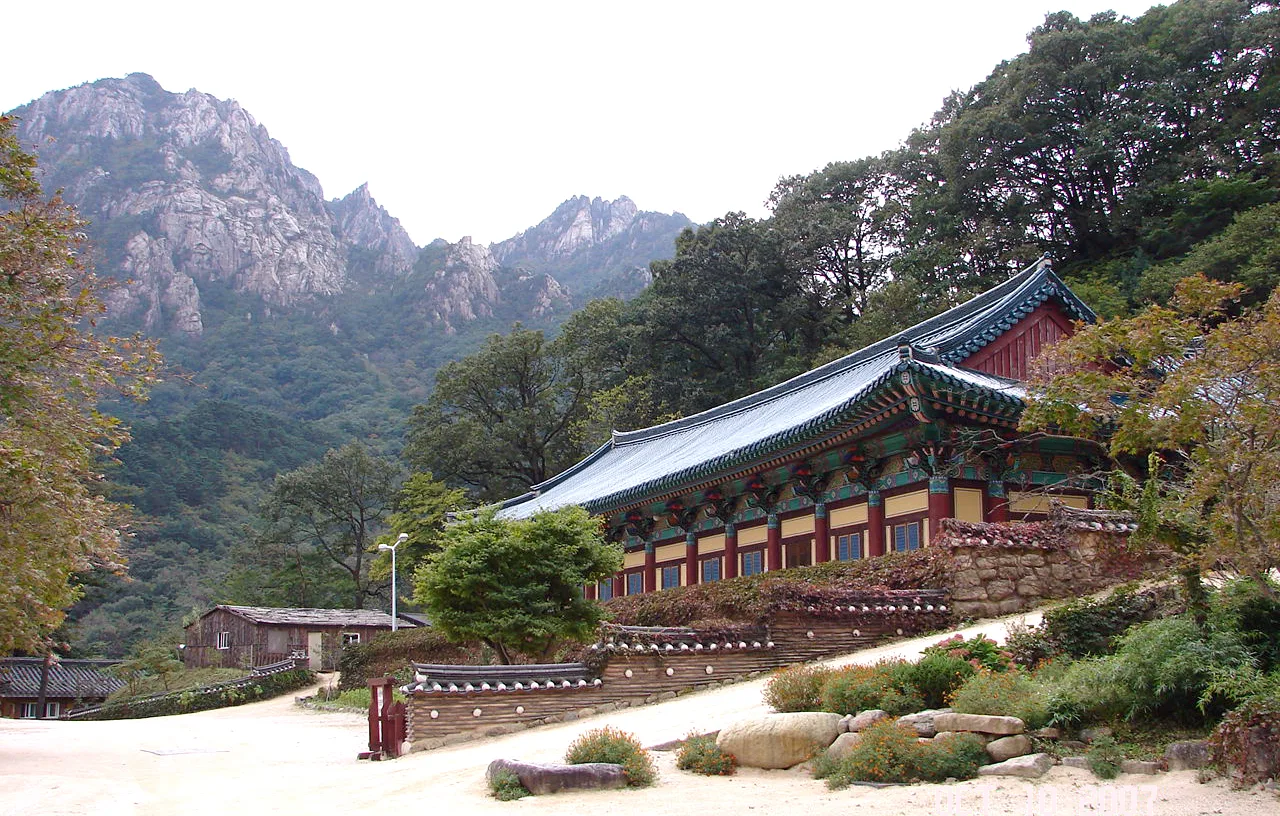
VisitKorea describes Sinheungsa as a Jogye Order temple in Seoraksan Mountain near Sokcho, with a tradition traced to Hyangseongsa Temple, founded by the monk Jajang in A.D. 652. The site also holds heritage layers such as Geungnakbojeon Hall and the Three-story Stone Pagoda at Hyangseongsa Temple Site. For a foreign visitor, that means Sinheungsa is not just a quiet stop before hiking. It is the old mountain layer of Sokcho.
The modern hook is just as strong. On November 14, 2025, The Metropolitan Museum of Art announced the return of The Tenth King of Hell, a 1798 Joseon Buddhist painting, to Sinheungsa Temple in Sokcho. The Met's release says the work is believed to have been taken while the temple was under United States Army control during the Korean War.
That one story gives the whole article its logic. In Sokcho, the Korean War is not only in memorials. It touches temple art, museum exhibits, neighborhood names, ferry infrastructure, restaurant menus, and family memory.
How the Korean War changed Sokcho
The Korean War, often called 6.25 in Korea because it began on June 25, 1950, turned Sokcho into a city of arrivals. Families came south from northern provinces expecting displacement to be temporary. Many never returned. Some settled near the water in Cheongho-dong, where Abai Village became the best-known neighborhood associated with that history.
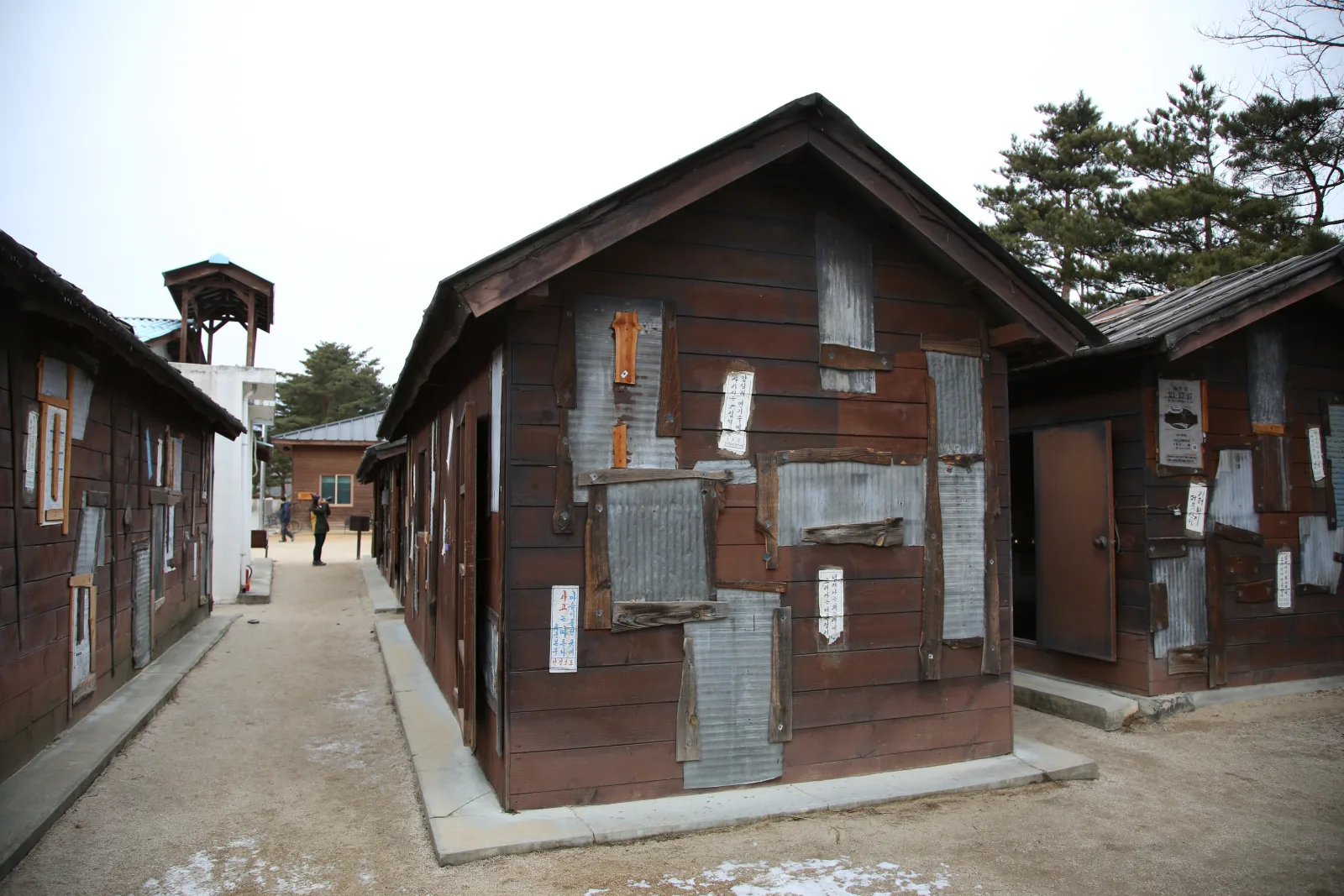
The most useful first stop for understanding this is Sokcho Museum. VisitKorea describes Sokcho Museum as covering Sokcho's history, culture, and natural environment from prehistoric times to the modern period, with displays on regional tradition, fishing village culture, and displaced people who took refuge during the Korean War. Its second exhibition hall focuses on fishing village life and Korean War refugees, and the museum includes a reproduction of Cheongho-dong Alley.
This matters because refugee history can become abstract very quickly. A museum label about "displaced people" is hard to feel if you have not seen the geography. But in Sokcho, the geography is compact:
- Cheongho-dong sits across the water from the old downtown side.
- The market and ferry dock sit close enough to turn food and movement into one route.
- Abai Village still has residential lanes, food streets, murals, and memory sites in the same walkable area.
- The museum preserves versions of early refugee housing and alley life that the present-day neighborhood can no longer show in the same form.
Use the museum to learn the terms before walking the place. Then cross the water.
Why Abai Village matters
Abai Village is the emotional center of this route. VisitKorea explains that the Cheongho-dong village was formed by Korean War refugees from North Korea, mainly from Hamgyeong-do Province, and that "abai" is a Hamgyeong-do dialect word meaning a friendly older man or grandfather. The same page notes mural paintings expressing nostalgia and difficult daily life, and food streets serving Hamheung-style cold noodles, stuffed squid, and North Korean-style sausage soup.
That is why the village should not be treated as a lunch shortcut. It is a lived-in neighborhood where tourism, memory, food, and ordinary daily life sit very close together.
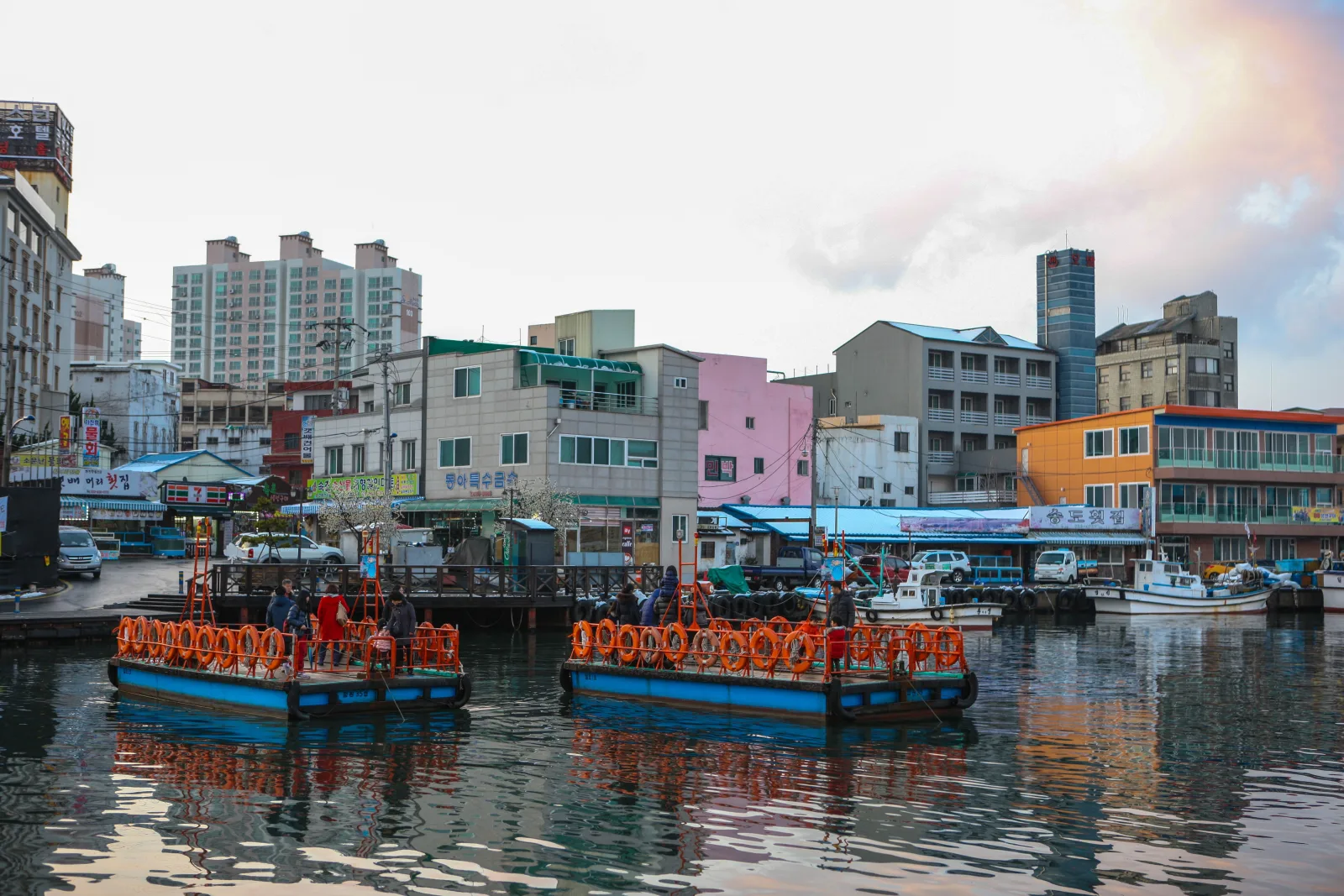
The Gaetbae ferry is the best physical object for understanding that closeness. Sokcho Facilities Management Corporation explains that the ferry carried people and goods between downtown Sokcho and Cheongho-dong Abai Village. It is a non-powered boat moved by passengers pulling hooks along fixed steel cables. The official page also links the current ferry form to 1955, after the disruption of the Korean War, and lists a 32-person capacity with a KRW 500 adult one-way fare.
Read the ferry as infrastructure before reading it as nostalgia. It is short, almost playful, and easy to photograph, but its meaning is practical: people needed a way to cross.
The food that carries the history
Food is where Sokcho's history becomes easiest for foreign visitors to understand. The dishes are not museum objects, and they are not pure relics. They are living foods that adapted to a port city.
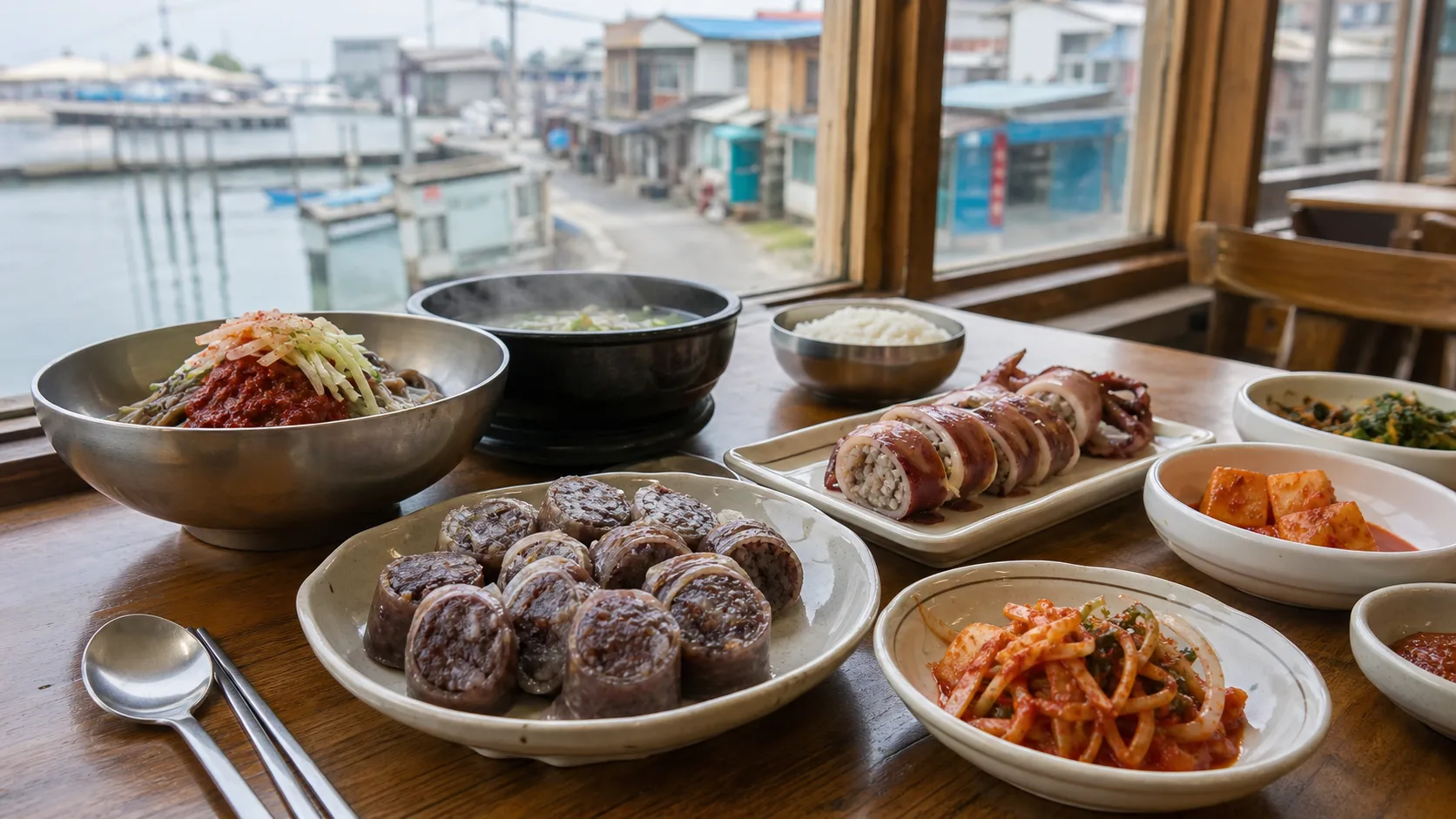
Abai sundae and ojingeo sundae make the route easier to read because food, ferry, market, and neighborhood memory sit close together in Sokcho.
Abai sundae: Hamgyeong memory in a Sokcho bowl
Dancheon Sikdang is a strong first stop because it makes the Abai food story clear. VisitKorea describes the restaurant as specializing in abai sundae, a Hamgyeong-do style North Korean sundae, and says the restaurant is currently operated by the third generation. Its menu also includes abai sundae gukbap, ojingeo sundae, myeongtae hoe naengmyeon, and gajami sikhae.
For travelers, the important point is not that abai sundae is "strange" or "old." The point is that food carried hometown memory when hometown itself became unreachable. Sticky rice, blood sausage, fermented fish, cold noodles, soup, and shared plates became a way to keep northern regional identity present in a southern coastal city.
Use Dancheon Sikdang as the practical baseline. Use Bukcheong Abai Sundae as the alternate if you want another Abai Village sundae stop. Do not force both into one short walk.
Ojingeo sundae: northern form, East Sea material
Ojingeo sundae, or stuffed squid, is the dish that best explains adaptation. It keeps the logic of a filled sausage-like food, but the wrapper is squid, a natural fit for an East Sea port. It is one of the clearest examples of how refugee food culture met local seafood geography.
This is also where the article should be careful. It is tempting to call every dish a "survival food." That can flatten real families into a tourism story. Better language is: food memory, refugee-family cooking, or Hamgyeong-style food adapted to Sokcho's coast.
Hamheung-style noodles, sikhae, and pollock
The wider food pattern is not only sundae. Abai Village and related Sokcho food streets also point toward Hamheung-style cold noodles, gajami sikhae, myeongtae hoe naengmyeon, and pollock dishes.
This is where Sokcho connects naturally to nearby Goseong and Inje. Goseong-gun's English page frames pollock as a deeply rooted regional fish, while also being clear that modern Goseongtae can involve pollock caught off Russia and dried in Goseong. That distinction matters. Do not imply that every modern pollock dish is locally caught off Sokcho today. The safer framing is that pollock belongs to the regional memory and processing culture of the northeast coast and mountain passes.
The market: not just snacks
Sokcho Tourist & Fishery Market is where the route turns from memory into daily commerce. Korea's policy magazine K-공감 notes that the market began in 1953, later used the name Sokcho Jungang Market, and became Sokcho Tourist & Fishery Market in the 2000s. The same article highlights dakgangjeong, mulhoe, ojingeo sundae, seafood, jeotgal, and the growing presence of foreign visitors.
In route terms, the market is the hinge:
- It gives first-time visitors an easy food entry point.
- It sits close to the city-side approach to the Gaetbae ferry.
- It shows postwar commerce rather than only museum history.
- It connects snack culture, seafood, sundae alleys, and the Abai Village crossing.
For exact dishes and current restaurant choices, use the broader Sokcho food guide after this article.
The best Sokcho history and food route
This is the practical route for a first-time foreign visitor who wants history, culture, and food in one day. If you want the route-only version, use the full Sokcho History Itinerary. If you want the shorter downtown version, use Abai Village History Walk.
| Time | Stop | What to do | Food note |
|---|---|---|---|
| 09:00 | Sinheungsa Temple | Read the mountain and Buddhist layer before entering the city story | Eat later, not here |
| 11:30 | Sokcho Museum | Focus on displaced people, fishing culture, Cheongho-dong reconstruction | Save the food story for after context |
| 13:30 | Sokcho Tourist & Fishery Market | Walk the market, snack lightly, get ferry-side orientation | Dakgangjeong, mulhoe, ojingeo sundae, jeotgal |
| 14:30 | Gaetbae ferry | Cross from the market side toward Cheongho-dong | Board first, pay on the Abai side (card kiosk or cash) |
| 14:45 | Abai Village | Walk before eating; include mural street if daylight is good | Do not reduce the village to lunch |
| 15:30 | Dancheon or Bukcheong | Eat abai sundae, ojingeo sundae, or sundae gukbap | This is the route's core meal |
| 17:00 | chilsungboatyard | End around Cheongchoho with waterfront memory, not a generic cafe | Coffee or dessert works here |
If you only have half a day
Keep the route compact:
- Sokcho Museum or Sokcho Tourist & Fishery Market
- Gaetbae ferry
- Abai Village mural street
- One Abai food stop
If you skip the museum, read Abai Village History Walk before you go. Without context, the ferry and food are too easy to underestimate.
If you are food-led
Start at the market, but do not stay there too long. Have one snack, cross by ferry, walk the village, then sit down for Abai food. Afterward, read the museum or full history route if the story caught you.
If you are history-led
Start at Sinheungsa and Sokcho Museum. Eat late. This is the strongest order because the meal becomes the conclusion rather than the opening.
Optional second day: Goseong DMZ and pollock country
Sokcho is not technically the DMZ, but it belongs to a wider borderland geography. If you have a second day, nearby Goseong gives the story a sharper edge.
Goseong-gun's tourism page describes Goseong DMZ as a place symbolizing Korea's division and notes that the ceasefire line divided Goseong itself. The Unification Observatory and Goseong DMZ Museum are useful for travelers who want to understand the regional consequences of division beyond one neighborhood.
Use this extension only if you can handle the logistics. Some DMZ-related sites require registration, security procedures, vehicle access, or timing checks. This is not a casual walk from Sokcho Market.
For food, Goseong and Inje add the pollock and hwangtae layer. Goseong's pollock page links the fish to regional livelihood and processing history, while VisitKorea's Yongdaeri Hwangtae Festival page shows how Inje's Yongdae area uses hwangtae as a local identity. Treat these as supporting context, not as proof that every Sokcho meal is a direct DMZ story.
How to write the story respectfully
If you are visiting or writing about this route, keep the tone careful:
- Say Korean War refugees or displaced families, not "theme village."
- Say Abai Village is a lived-in neighborhood, not only a tourist attraction.
- Use food memory rather than making hardship sound exotic.
- Do not enter residential alleys just for photos.
- Do not block doorways, windows, ferry queues, or restaurant entrances.
- When explaining food, connect it to place and family history, not only novelty.
The goal is not to make lunch heavier. The goal is to let lunch carry meaning.
Recommended places to pair with this article
| Need | Best HeySeorak page |
|---|---|
| Full history route | Sokcho History Itinerary |
| Short Abai route | Abai Village History Walk |
| Museum planning | Sokcho Museum Guide |
| Temple context | Sinheungsa Temple Guide |
| Food choices | Sokcho Food Guide |
| Market planning | Sokcho Market Guide |
| Exact food stops | Dancheon Sikdang, Bukcheong Abai Sundae, Abai Gonggal Bread |
Source notes for historical claims
These are the main sources used for factual grounding:
- VisitKorea: Sinheungsa Temple for the temple's Seoraksan location, Jogye Order affiliation, A.D. 652 founding tradition, and heritage context.
- The Metropolitan Museum of Art for the November 14, 2025 return of The Tenth King of Hell to Sinheungsa Temple.
- VisitKorea: Sokcho Museum for the museum's coverage of prehistoric-to-modern Sokcho, fishing culture, refugee exhibits, Balhae History Hall, and Cheongho-dong Alley reproduction.
- VisitKorea: Abai Village for Abai Village's Korean War refugee history, Hamgyeong-do context, murals, and North Korean food restaurants.
- Sokcho Facilities Management Corporation: Gaetbae ferry for ferry history, operation method, current fare, and capacity.
- VisitKorea: Dancheon Sikdang for abai sundae, Hamgyeong-do food context, third-generation operation, and menu items.
- K-공감: Sokcho Tourist & Fishery Market for the market's 1953 origin, food lanes, foreign visitor context, and route connection toward Abai Village.
- Goseong-gun: Travel to DMZ for the Goseong DMZ, Unification Observatory, and divided-landscape context.
- Goseong-gun: Goseong Pollock and VisitKorea: Yongdaeri Hwangtae Festival for wider pollock and hwangtae context.
FAQ
Why is Sokcho history connected to food?
Sokcho history is connected to food because Korean War refugees, East Sea fishing culture, mountain temple culture, and market commerce all shaped what visitors eat today. Abai sundae, ojingeo sundae, Hamheung-style noodles, pollock dishes, and market seafood make the city's history easier to understand.
What is Abai Village in Sokcho?
Abai Village is a Cheongho-dong neighborhood formed by Korean War refugees from North Korea, especially Hamgyeong-do. VisitKorea explains that "abai" is a Hamgyeong-do dialect word for an older man or grandfather, which is why the village should be read as living history, not only a food stop.
What should I eat to understand Sokcho food culture?
Start with abai sundae or ojingeo sundae in Abai Village, then add a light stop at Sokcho Tourist & Fishery Market. If you have more time, connect the wider borderland food story through pollock or hwangtae dishes in nearby Goseong or Inje.
What is the best Sokcho history route for first-time visitors?
The strongest route starts at Sinheungsa Temple, continues to Sokcho Museum & Displaced People Folk Village, moves downtown to Sokcho Tourist & Fishery Market, crosses the Gaetbae ferry, walks Abai Village, and ends with a heritage food meal.
Is Goseong DMZ worth adding to a Sokcho history trip?
Yes, if you have a car, tour, or second day. Goseong DMZ Museum and the Unification Observatory extend Sokcho's refugee and borderland story into the divided-landscape context. Check registration, security, and access rules before going because some areas cannot be entered casually.
Conclusion
The best Sokcho history route is not a museum-only day and not a food crawl. It is a sequence: mountain temple, city museum, market, ferry, village, meal. Follow that order and Sokcho becomes much clearer. The Abai sundae is not just a local specialty. The Gaetbae ferry is not just a ride. The market is not just a snack stop. Together, they explain a borderland city where history stayed close to the table.
For the practical version, continue with Sokcho History Itinerary. For the compact walking version, use Abai Village History Walk.