
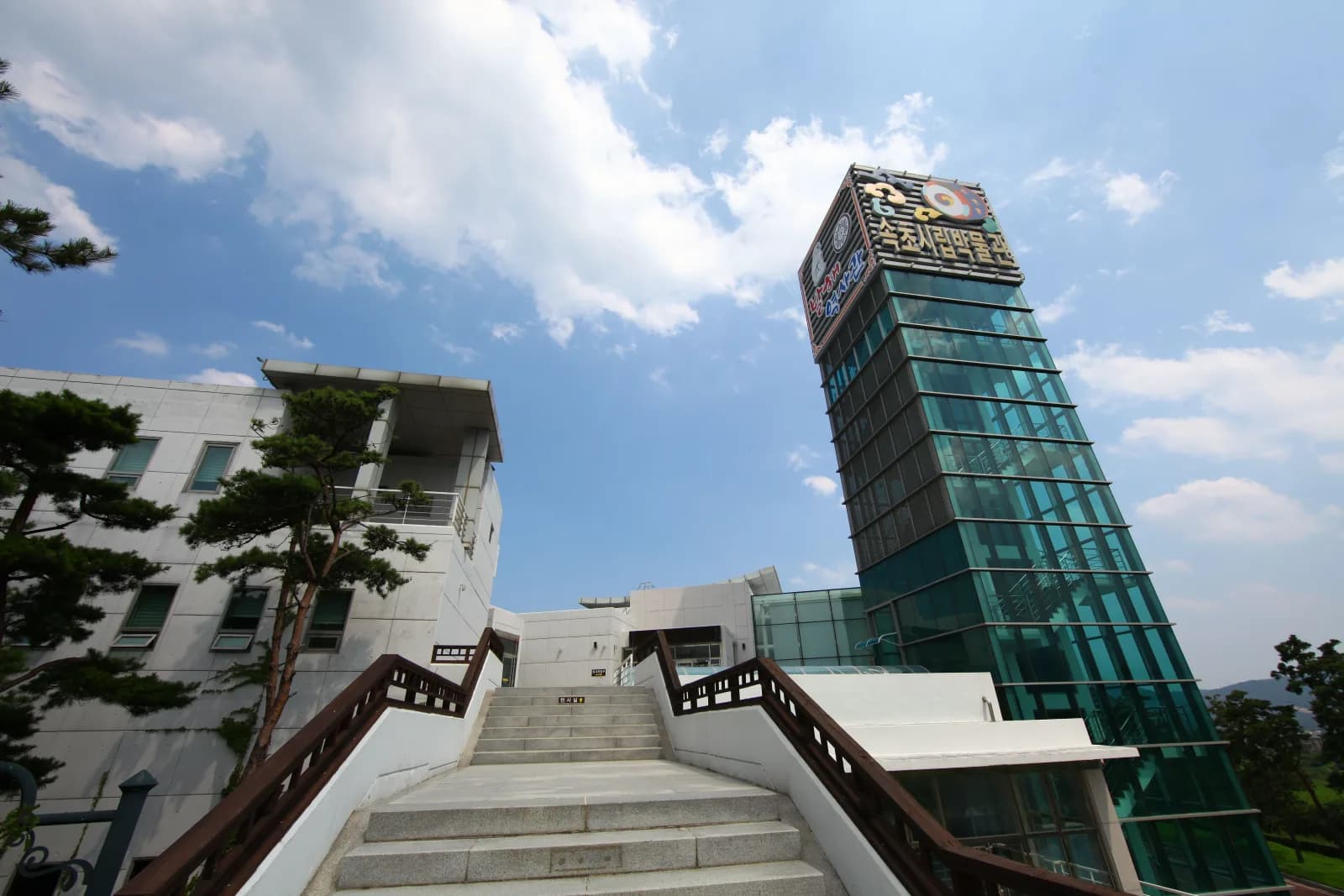
Sokcho Museum — also shown as Sokcho City Museum or Sokcho Museum & Displaced People Folk Village — is the most useful first stop for travelers who want Abai Village to feel like history, not just a food street. The museum explains why Sokcho has North Korean-style food, refugee memory, fishing culture, Balhae context, and mountain-coast identity in one compact city.
This 2026 Sokcho Museum guide is for foreign visitors, English-speaking residents, and history-curious travelers planning a cultural route in Sokcho. It puts hours, admission, bus access, and route order above the fold, then explains how to read the museum before you walk the living streets of Abai Village.
Quick answer: Sokcho Museum hours, admission, and route
Sokcho Museum is open 09:00-18:00 from March through October and 09:00-17:00 from November through February. It is closed on Mondays and January 1. Adult admission is ₩2,000, with lower prices for adolescents, military visitors, children, and groups. The official visitor page lists city buses 3 and 3-1. Plan 90 minutes, then pair it with Abai Village History Walk or the full Sokcho History Itinerary.
Sokcho Museum key takeaways
- Best for: Korean War civilian history, displaced-people culture, rainy-day planning, and Abai Village context
- Search name: Sokcho Museum, Sokcho City Museum, or Sokcho Museum & Displaced People Folk Village
- Time needed: 60 minutes minimum, 90 minutes ideal, 2 hours if you add Balhae History Hall slowly
- Hours: March-October 09:00-18:00; November-February 09:00-17:00
- Closed: Mondays; plan around January 1 as a likely holiday closure
- Adult admission: ₩2,000
- Best pairing: Sokcho History Itinerary or Abai Village History Walk
Quick Facts
| Detail | Info |
|---|---|
| Official name | Sokcho Museum / Sokcho City Museum (속초시립박물관·속초실향민문화촌) |
| Visitor-facing focus | City history, fishing culture, Korean War refugees, reconstructed folk village, Balhae history |
| Address | 16 Sinheung 2-gil, Sokcho-si, Gangwon-do |
| Hours | Mar-Oct 09:00-18:00; Nov-Feb 09:00-17:00 |
| Closed | Mondays; plan around January 1 as a likely holiday closure |
| Admission | Adults ₩2,000; adolescents/military ₩1,500; children ₩700 |
| Bus access | City bus 3 or 3-1, per Sokcho Museum visitor information |
| Good weather plan | Pair with Mt. Seorak or Abai Village |
| Bad weather plan | Pair with a cafe, market meal, or rainy-day route |
What Is Sokcho Museum?
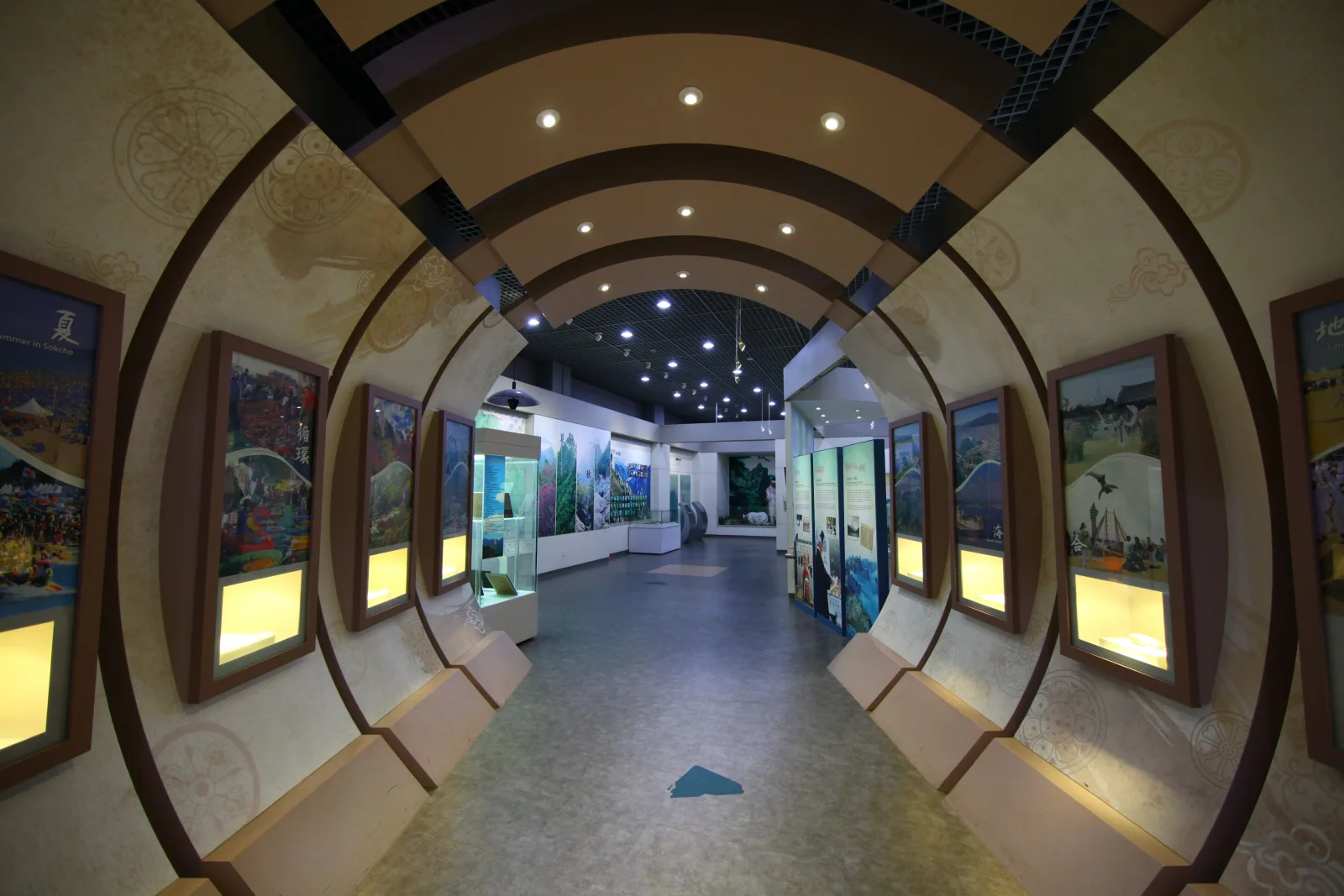
Sokcho Museum, also called Sokcho City Museum on some English pages, is a city-history museum and open-air folk-village complex that explains Sokcho from prehistoric settlement to modern refugee culture. The visitor-facing focus is Sokcho's natural environment, regional tradition, fishing village culture, and people displaced during the Korean War.
That range matters. Sokcho is not only a beach-and-mountain destination. It is a city shaped by Mt. Seorak, the East Sea, wartime displacement, and families who expected their move south to be temporary. The museum makes those layers visible before you walk into the places where the story still lives.
Why Visit Before Abai Village?
Abai Village is emotional but easy to under-read. Without context, a foreign visitor may see the Gaetbae ferry, mural streets, sundae restaurants, and narrow alleys as separate tourist details. Sokcho Museum gives those details a common source.
The museum's strongest visitor value is this: it turns Abai Village from "a famous food neighborhood" into a living extension of Korea's division history. After seeing the exhibits on refugees from northern provinces, the reconstructed Cheongho-dong alley, and fishing livelihoods, the ferry and food make more sense.
If you only have one history day, use this order:
- Sinheungsa Temple Guide in Mt. Seorak for the older Buddhist layer
- Sokcho Museum & Displaced People Folk Village for city context
- Sokcho Tourist & Fishery Market for the post-war commercial layer
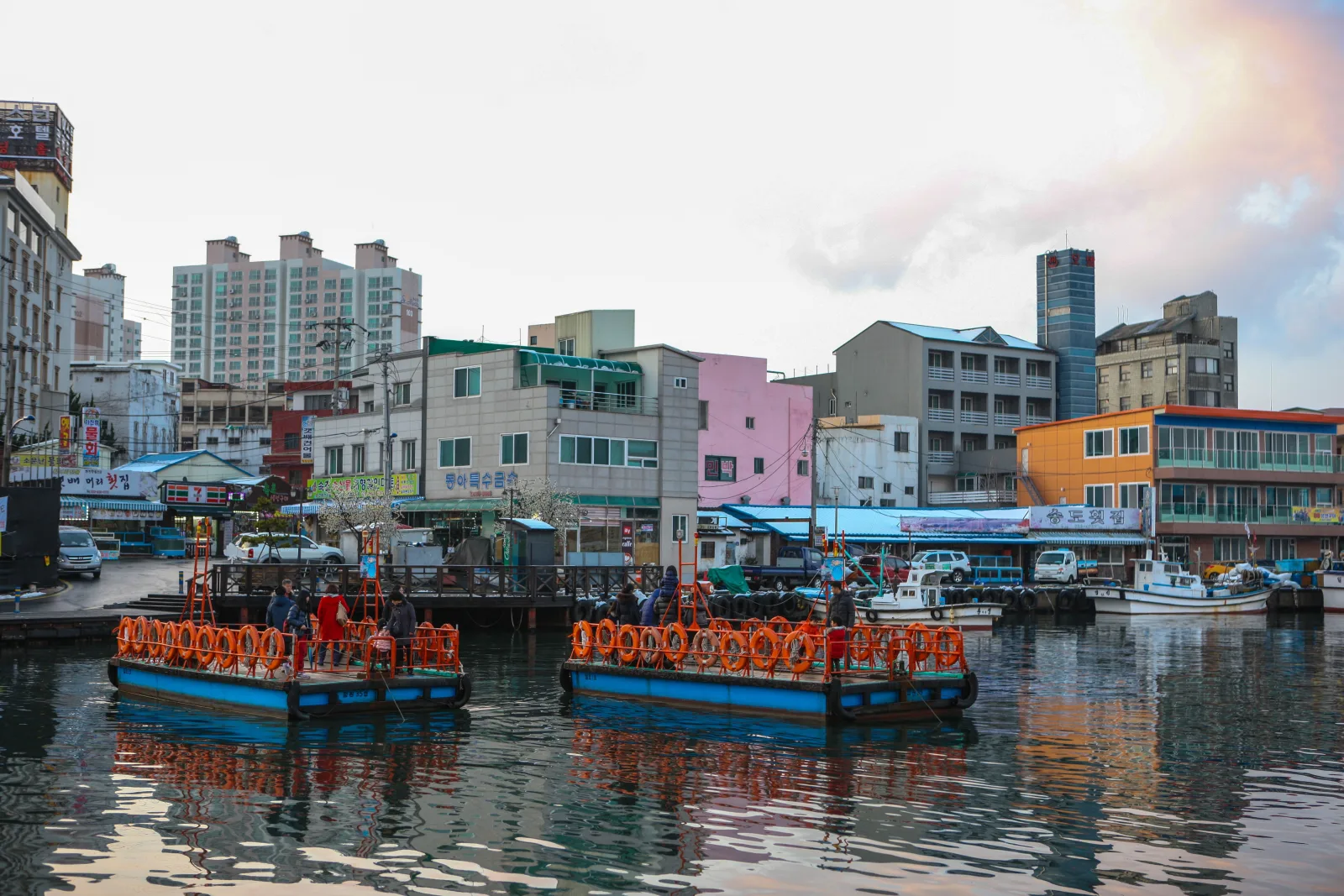
- Gaetbae ferry and Abai Village History Walk for the living neighborhood
Best Route Inside Sokcho Museum
The museum complex can be read in different orders. The official Sokcho Tourism page recommends moving through Balhae History Hall, the Displaced People Folk Village, and the museum area as a broad campus route. For foreign visitors who are specifically interested in Sokcho's refugee history, this is the clearest order:
1. Start With the City-History Context
Begin with the main museum halls so Sokcho's geography lands first. The first layer is not war; it is place. Sokcho sits between Mt. Seorak and the East Sea, so the museum's natural-environment and local-culture material explains why the city developed around both mountain and fishing economies.
This matters because the displaced-people story did not happen in an empty setting. Refugee families arrived in a real coastal city with its own food systems, boats, markets, and mountain-edge communities.
2. Spend the Most Time in Exhibition Hall 2
The second exhibition hall is the core for this guide. Sokcho Museum's exhibition page frames this section around fishing villages and Korean War refugees, including the life of people from Hamgyong Province and northern-province culture preserved through film and donated artifacts.
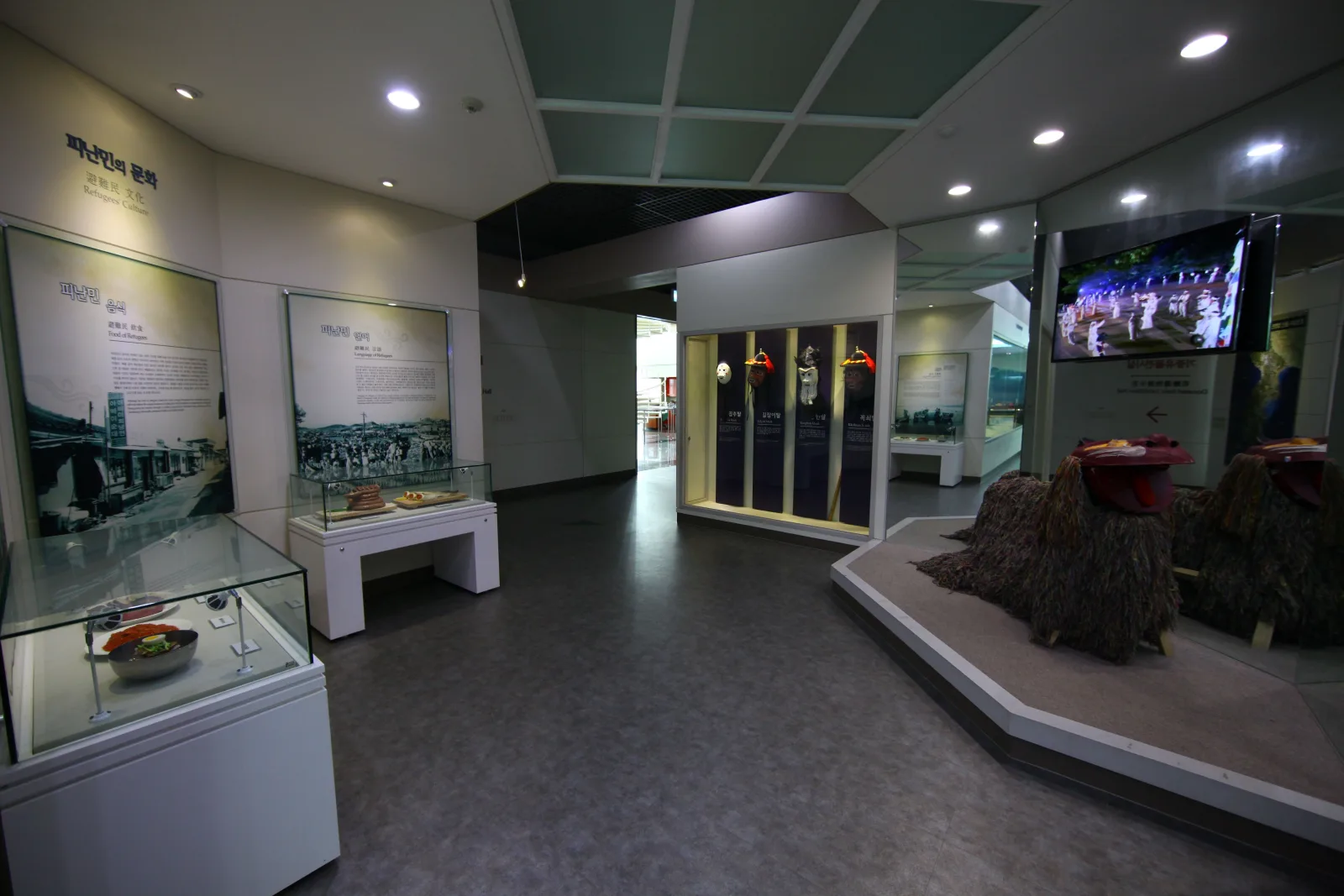
Read this section slowly. The point is not only what people lost; it is how they rebuilt daily life with boats, markets, food, dialect, household objects, and remembered hometowns.
3. Walk the Reconstructed Cheongho-dong Alley
Cheongho-dong is the neighborhood associated with Abai Village. The museum's reconstructed alley helps visitors picture the early settlement pattern more clearly than the present-day commercial streets can.
This is the part to remember before taking the Gaetbae ferry. The ferry is not just a novelty crossing; it belongs to a neighborhood shaped by water, distance, work, and improvised access.
4. Use the Folk-Village Houses as a Map of Memory
The Displaced People Folk Village is not a theme park version of North Korea. It is a way to make regional difference legible: house forms, household layouts, room scale, and cultural references from northern provinces become visible in three dimensions.
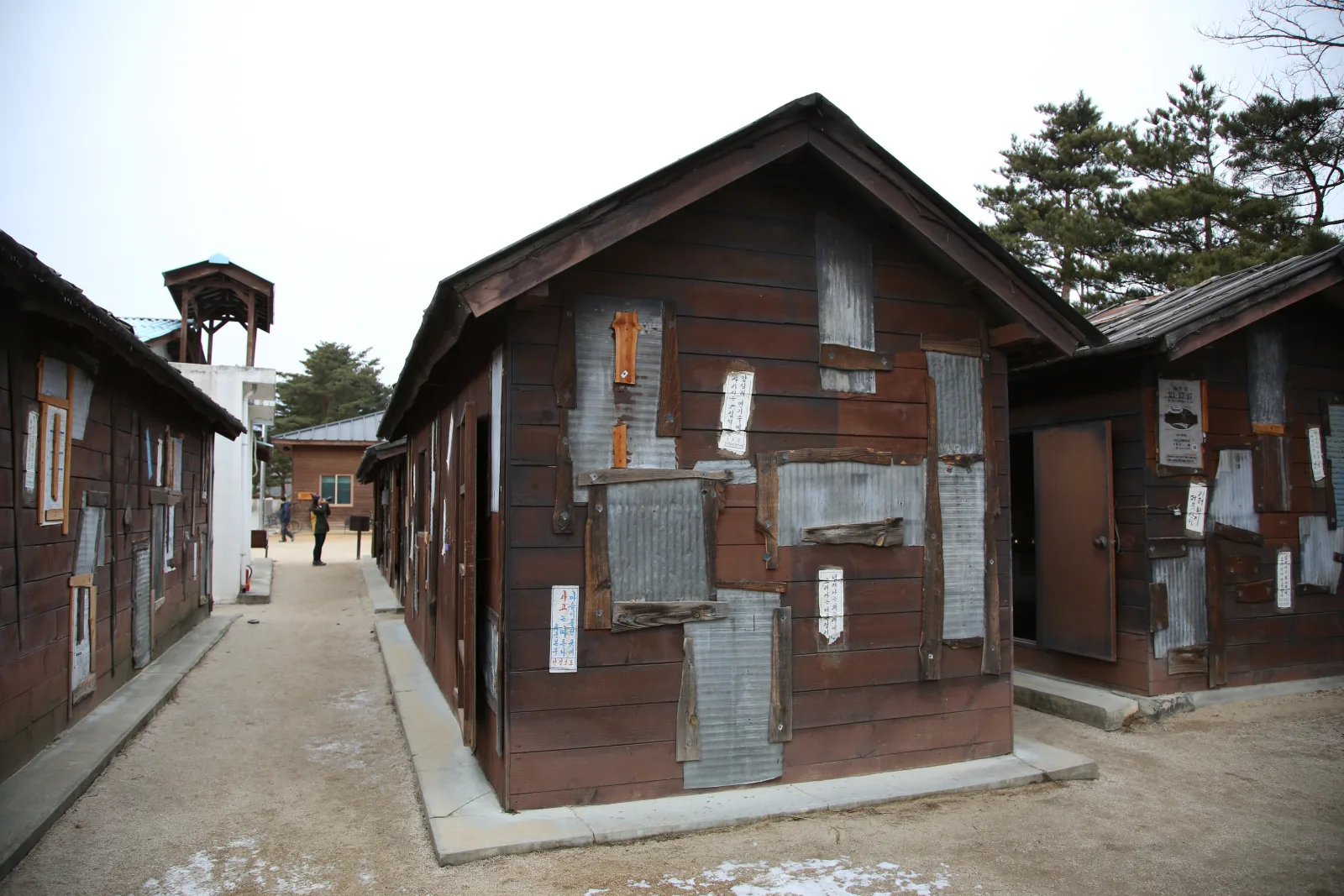
Move through it like a memory map. Ask what needed to be recreated, what could only be approximated, and what survived in food or ritual rather than architecture.
5. Add Balhae History Hall if You Have Time
Balhae History Hall broadens the visit beyond the 20th century. It is part of the same museum complex and gives Sokcho a longer Northeast Asian historical layer. If your main interest is Korean War history, keep it as the final section. If your main interest is archaeology and old kingdoms, start there.
How Much Time Do You Need?
| Visit style | Time | Best for |
|---|---|---|
| Fast context stop | 60 minutes | Visitors pairing the museum with Mt. Seorak and Abai Village in one day |
| Balanced visit | 90 minutes | Most first-time travelers |
| Deep museum visit | 2 hours | History travelers, families, rainy days, and anyone adding Balhae History Hall |
For a one-day route, 90 minutes is the practical target. It gives you enough time to read the refugee-history material, walk the folk-village area, and still move downtown before lunch or late afternoon.
Getting There Without a Car
Sokcho Museum is not on the Abai Village waterfront. It sits inland on the Mt. Seorak side of the city, so treat it as a planned stop rather than a casual walk from downtown.
The official museum visitor page lists city buses 3 and 3-1 for public transportation. For most foreign visitors, the simplest approach is:
- Use a taxi if you are moving between Mt. Seorak, the museum, and downtown on the same day.
- Use bus 3 or 3-1 if your timing is flexible and you are comfortable checking live routing in Naver Map or KakaoMap.
- Avoid walking from Abai Village unless you specifically want a long city walk.
See Sokcho Without a Car if you are building a full no-car day.
The Best Pairings
| Pairing | Why it works |
|---|---|
| Museum + Abai Village | Context first, living neighborhood second |
| Museum + Sinheungsa | Older Buddhist heritage plus modern division history |
| Museum + Sokcho Tourist & Fishery Market | Refugee/fishing history plus the market economy that grew after the war |
| Museum + rainy-day cafe | The most reliable indoor cultural plan when Mt. Seorak weather changes |
| Museum + Balhae History Hall | Best for visitors who want a longer historical timeline |
For most travelers, the strongest route is still the full Sokcho History Itinerary. It connects the museum to Sinheungsa, the market, the Gaetbae ferry, Abai Village, and chilsungboatyard in one story.
Common Mistakes
Treating the Museum as Only a Rainy-Day Backup
It is a good rainy-day stop, but that undersells it. Sokcho Museum is one of the few places in the city where a foreign visitor can understand the link between Korean War displacement, North Korean regional culture, fishing livelihoods, and present-day food.
Going to Abai Village Only for Lunch
The food is important, but lunch alone flattens the neighborhood. If you want abai sundae, squid sundae, or Hamheung-style noodles to mean something, give yourself the museum context first or afterward.
Trying to Walk Every Segment
Sokcho looks compact on a map, but the museum is not downtown. Use one taxi segment if you are connecting Mt. Seorak, Sokcho Museum, and Abai Village in a single day. Saving that transfer time usually improves the whole route.
Skipping the Folk-Village Area
Do not leave after the main halls. The reconstructed alley and folk-village houses are the easiest parts for non-Korean visitors to understand physically, even when exhibit labels are limited.
FAQ
What is Sokcho Museum?
Sokcho Museum is a city-history museum and folk-village complex in Nohak-dong. It explains Sokcho's natural environment, fishing culture, Korean War displaced-people history, reconstructed Cheongho-dong alley life, and Balhae history in one campus.
How long should I spend at Sokcho Museum?
Plan 90 minutes for a balanced visit. A fast stop takes about 60 minutes; a slower visit with the refugee-history material, folk-village houses, and Balhae History Hall takes about 2 hours.
Should I visit Sokcho Museum before or after Abai Village?
Visit before Abai Village if you want context first. Visit after Abai Village if your day is food-led and you want the ferry, alleys, and North Korean-style dishes to make more sense afterward.
What are Sokcho Museum's opening hours?
Sokcho Museum is open 09:00-18:00 from March through October and 09:00-17:00 from November through February. The official visitor page lists Mondays as the regular closure; plan around January 1 as a likely holiday closure too.
How much is admission to Sokcho Museum?
Adult admission is ₩2,000. Adolescents and military visitors are ₩1,500, children are ₩700. Group prices are lower: adults ₩1,500, adolescents/military ₩1,000, and children ₩500.
Source Notes
The practical details in this guide were rechecked on June 17, 2026 against:
- Sokcho Museum visitor information for official hours, admission categories, group prices, and bus access
- Sokcho Museum exhibition information for Exhibition Hall 2's fishing-village and Korean War refugee focus
- Sokcho local tourism context for campus routing between Balhae History Hall, the folk village, and the main museum area
Plan the Visit
The simplest way to use this Sokcho Museum guide is to give the museum one focused block, then let it change how you read the rest of the city. Visit the museum before Abai Village if you want context first. Visit after if you already walked the ferry and food streets and want the deeper explanation.
Either way, do not isolate it. Sokcho Museum works best as the interpretive center for a larger route: mountain temple, museum, market, ferry, village, and waterfront culture. That is the Sokcho story most visitors miss when they only chase a beach view and one famous meal.