Abai Village Mural Street
아바이마을 벽화거리
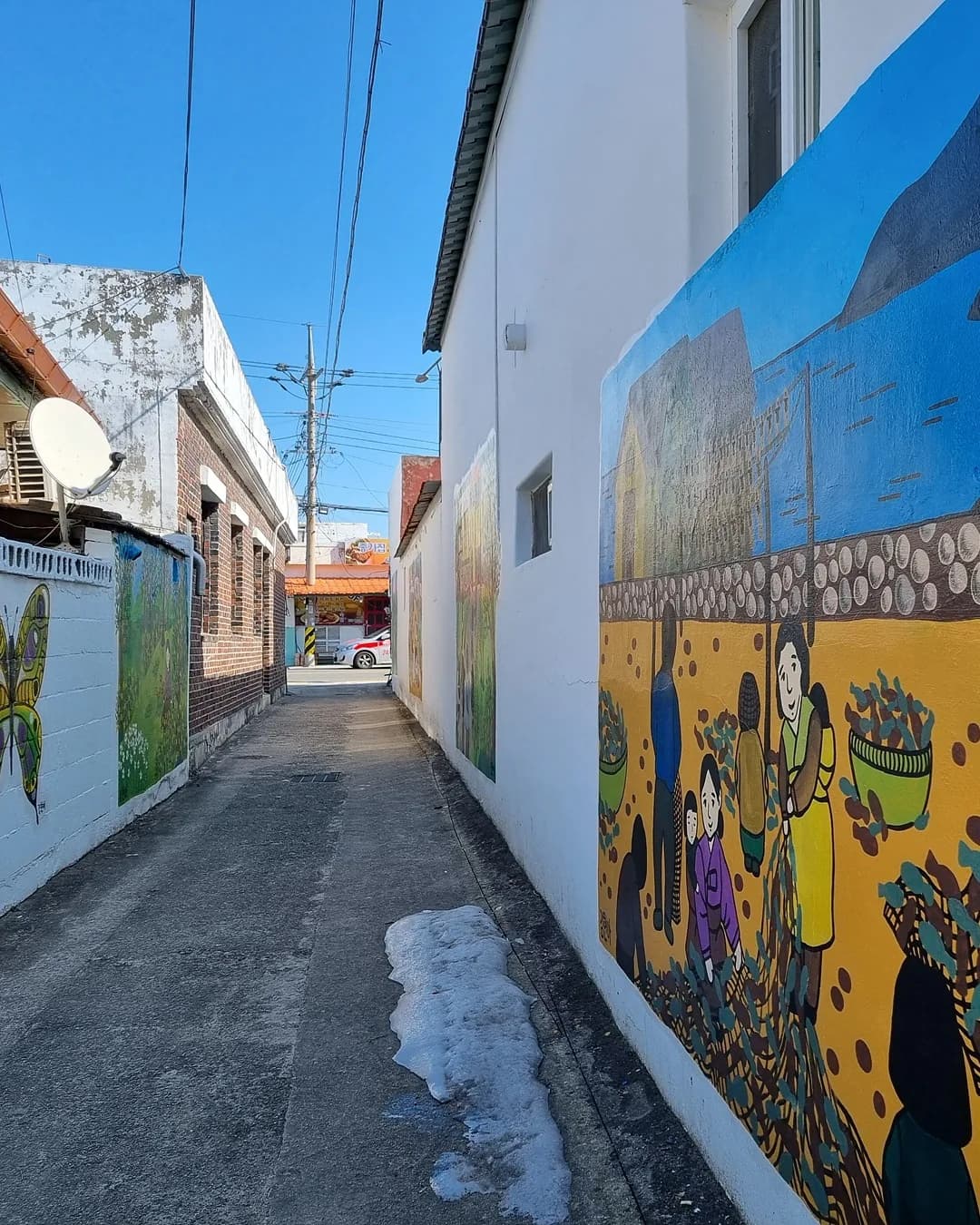
Abai Village Mural Street turns the refugee settlement's narrow lanes into a quiet visual archive. The murals focus on the journey, longing, and everyday life of displaced people from northern Korea, helping visitors understand Abai Village beyond food and photo stops.
4 travelers viewed this
Best For
History, culture, scenic context, and first-time orientation
Area
Abai
Price
₩ Budget-friendly
Reviewed by HeySeorak Editorial · Updated
Info
122 Cheongho-ro, Sokcho-si, Gangwon-do
강원특별자치도 속초시 청호로 122
Sokcho Tourism lists the street as always open with no admission fee. Visit during daylight because this is a lived-in residential area, not an enclosed attraction.
Is this info still accurate?
Hours, prices, closures — one tap keeps it fresh for the next traveler.
The Story
The mural street sits inside Abai Village, the Cheongho-dong community shaped by people who fled from northern Korea during the Korean War and rebuilt everyday life on a sandbar near Sokcho's harbor.
Behind the Signature
Sokcho Tourism frames the murals around refugees' longing for home and the journey of displacement. That makes the street one of the most accessible ways to feel the emotional layer of Sokcho's divided-family history.
Local Tip
Do not rush visitors straight from the ferry to the restaurants. Give the mural street a separate map pin so the route encourages walking, reading, and respectful observation before eating.
Seasonal Note
Summer afternoons can be hot with little shade. Early morning and late afternoon are better for walking quietly through the lanes.
For Travelers
For international visitors, the street helps translate the word 'displaced people' into daily images: homes, boats, food memories, and the unresolved feeling of a hometown across the border.

How to visit
A quick guide for first-time visitors.
Step 1
Start with the context
Read the short history first so the stop is more than a photo point. The story usually explains why this place matters in Sokcho.
Step 2
Walk the key point
Use the map pin as your anchor, then give yourself a few extra minutes for nearby signs, views, side paths, or linked monuments.
Step 3
Connect the next stop
This works best as part of a route. Pair it with a nearby village, museum, market, ferry, temple, or lake walk rather than visiting in isolation.
Notes from travelers
No stars, no scores — just what people who stood here wished they’d known.
Be the first to leave a note
Passed through Abai Village Mural Street? One line about what to do or when to come helps whoever comes next — no account needed.
Questions travelers ask
The practical things people ask our local guide about Abai Village Mural Street — answered from verified details.
When is Abai Village Mural Street open?
Fri: Open 24 hr • Mon: Open 24 hr • Sat: Open 24 hr • Sun: Open 24 hr • Thu: Open 24 hr • Tue: Open 24 hr • Wed: Open 24 hr
How do I get to Abai Village Mural Street?
Do not rush visitors straight from the ferry to the restaurants. Give the mural street a separate map pin so the route encourages walking, reading, and respectful observation before eating.
What is Abai Village Mural Street known for?
Sokcho Tourism frames the murals around refugees' longing for home and the journey of displacement. That makes the street one of the most accessible ways to feel the emotional layer of Sokcho's divided-family history.
Helpful guides
Practical reads to help you make the most of your visit.
Plan around this stop
Curated routes and visitor situations where this place fits naturally.

Sokcho History Itinerary
A full-day Sokcho history itinerary linking Sinheungsa Temple, Sokcho Museum, Abai Village, the Gaetbae ferry, market, and chilsungboatyard with route tips.
- Full day
- 12 picks

Abai Village History Walk
An Abai Village Sokcho history walk linking the Gaetbae ferry, mural street, refugee food, market, and museum context for foreign travelers.
- 2-3 hours
- 7 picks
You might also like
Nearby picks with a different category first, then backup options in the same area or city.