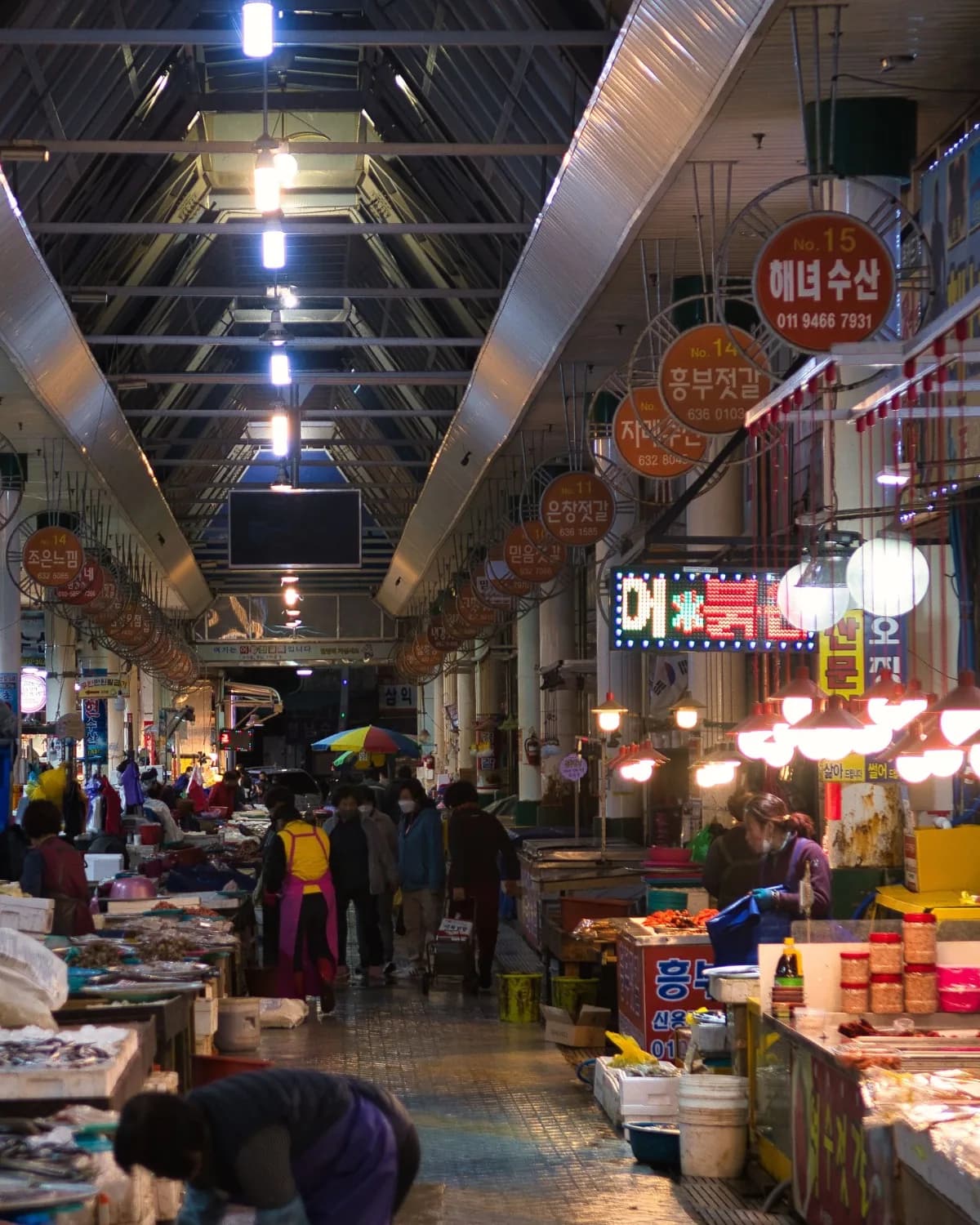
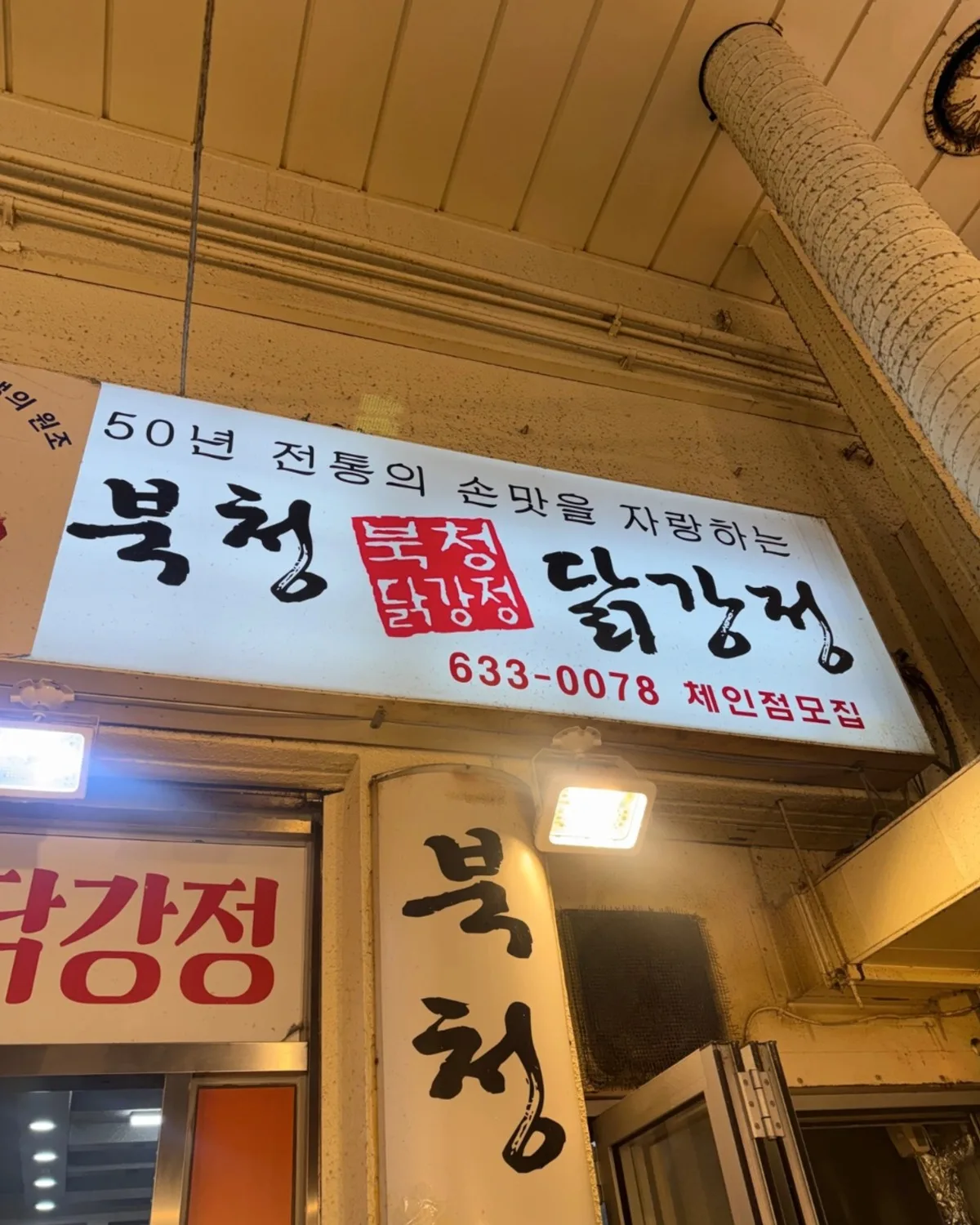
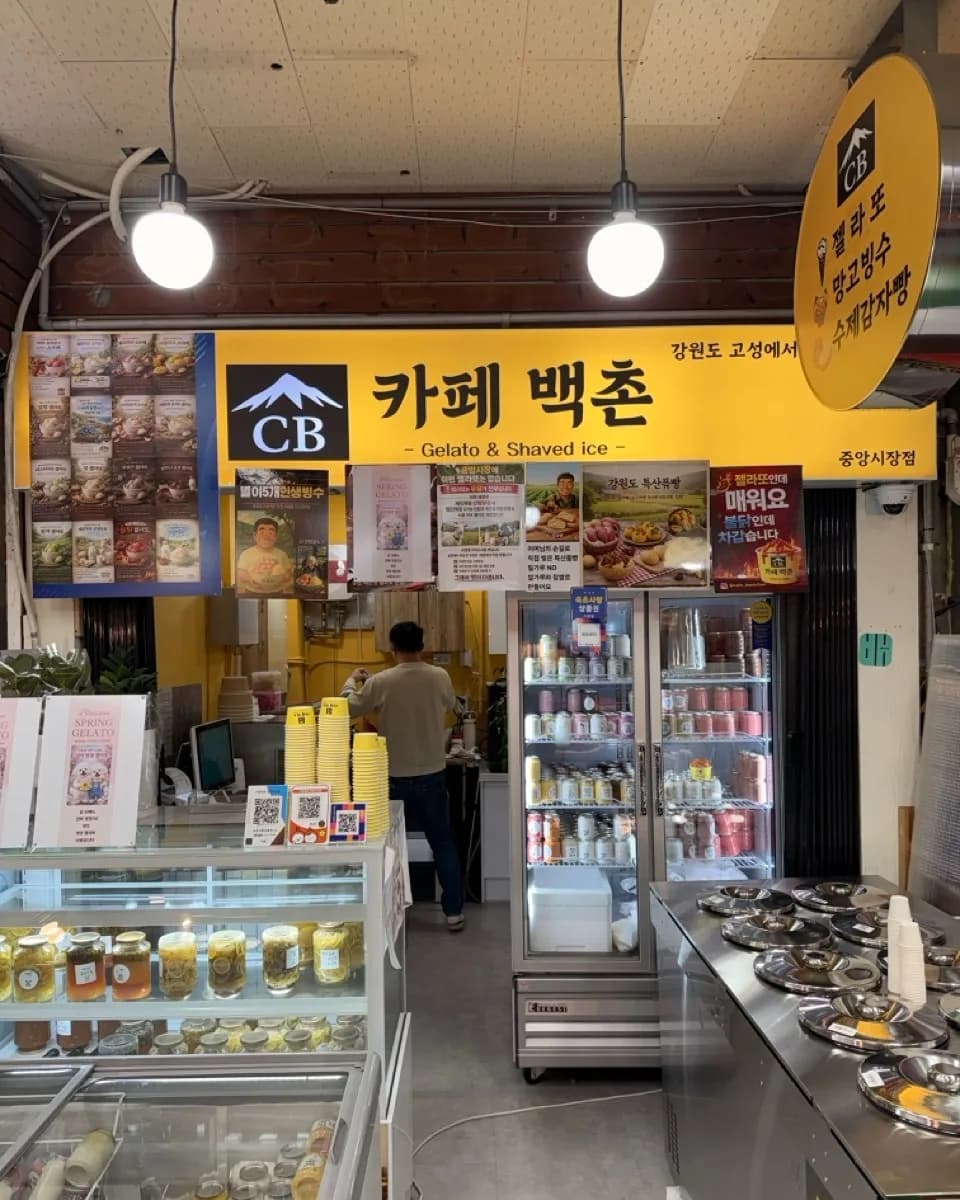
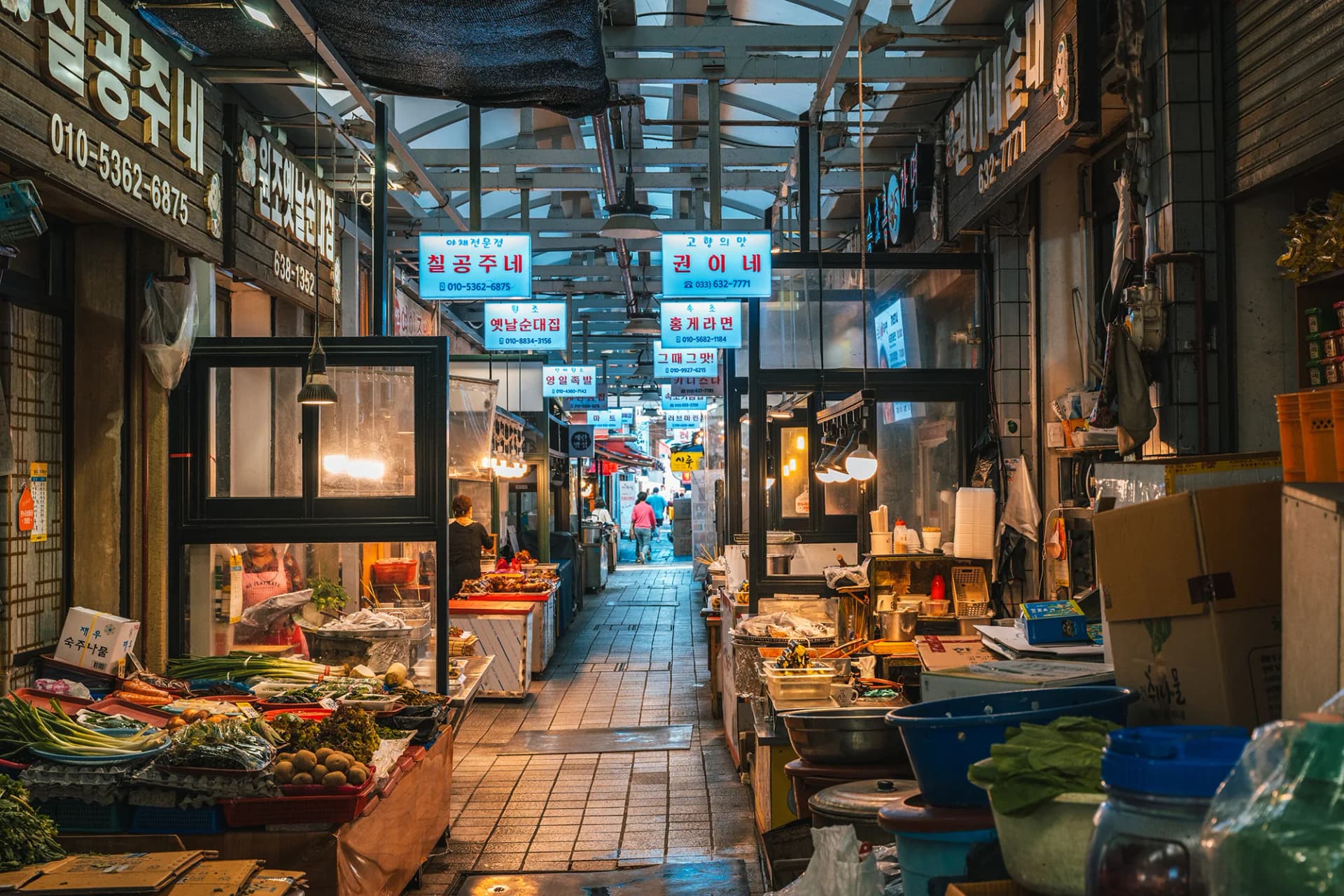
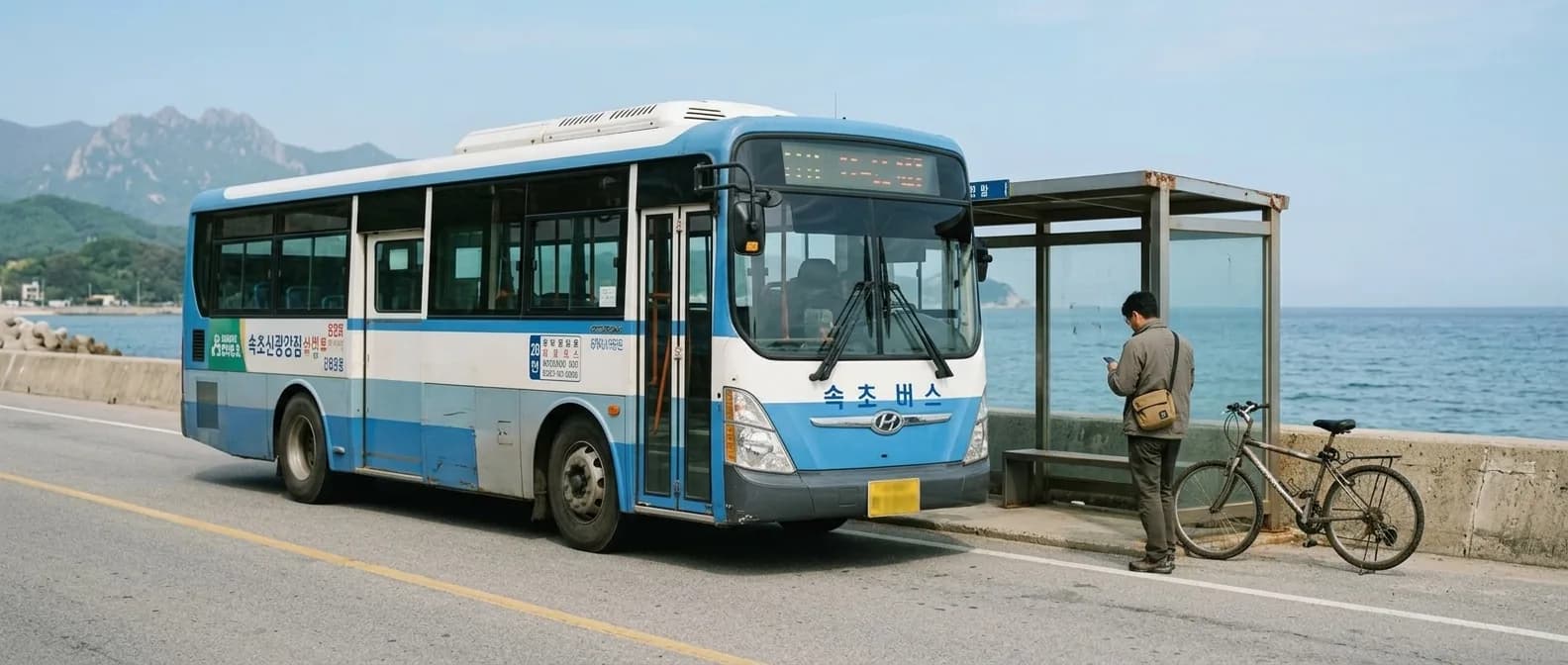
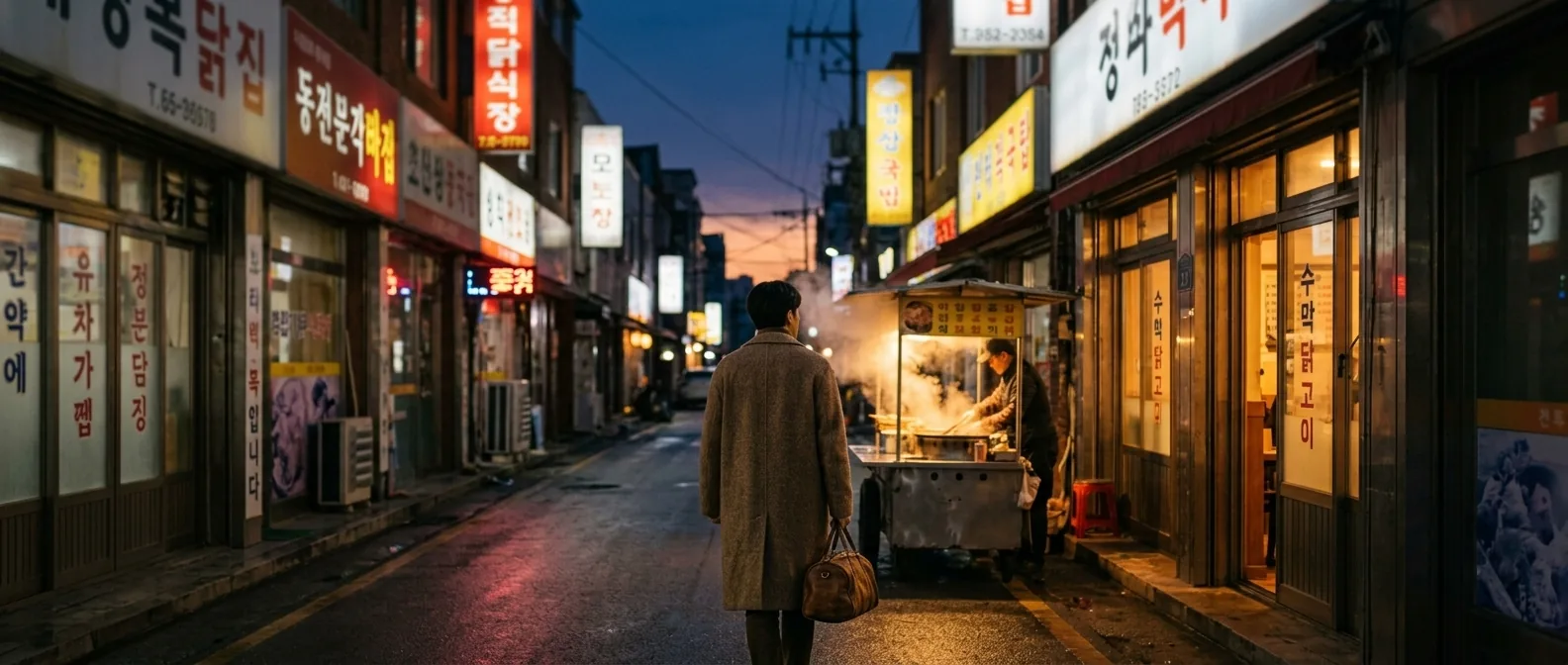
This is not a settlement guide yet. It is the MVP version of long-stay travel: one week in Sokcho where the first goal is not to see everything, but to make the city usable without a rental car.
The difference is small but important. A three-day visitor can tolerate a bad transfer, a noisy cafe, or one confusing meal. A one-week visitor needs a base that supports repeatable life: easy food, simple errands, a work block, a short walk, and backup choices when the weather turns.
The week should start with the base, not the route
Choose the stay first. For a no-car week, a slightly less scenic but more walkable base usually beats a prettier room that needs taxis for every small errand.
Good first-week base signals:
- Walkable food within 10 to 15 minutes
- A taxi pickup point that drivers understand
- At least one cafe that works for planning or light work
- Market, convenience store, or grocery option nearby
- Laundry and pharmacy options checked before you need them
- A rain backup that does not require crossing the whole city
For now, HeySeorak treats laundry, pharmacy, clinic, grocery, and work-cafe details as "confirm before depending on it" infrastructure. They are included as decision signals, not as promises.
A simple seven-day rhythm
Day 1 is arrival and orientation. Keep dinner easy, learn the taxi pickup point, and save the market on your map. Do not schedule the mountain or a distant port meal on the first night.
Day 2 is the practical day. Walk the base area, find the closest convenience store, pharmacy, and laundry option, then pick one cafe for planning. If you are remote-working, test one short block before assuming a cafe can carry a full day.
Day 3 is the first real outing. This is where a no-car Sokcho route works well: market, Abai Village, the ferry, beach, and a short taxi only when it removes a bad transfer.
Day 4 is a recovery or work day. Long-stay travel fails when every day becomes an itinerary. Keep one day deliberately boring: cafe, walk, light meal, laundry check.
Day 5 is the weather-flex day. If the forecast is good, use it for Seoraksan or a coast route. If it rains, switch to covered market food, cafes, and shorter taxis.
Day 6 is the local-context day. Revisit one place instead of adding three new ones. This is how a tourist week starts to feel like a temporary base.
Day 7 is exit day. Keep luggage and transfer friction low. If you have a late bus, use the market or beach zone rather than committing to a far stop.
What to ask the AI concierge
Use the chatbot for adaptation, not generic search. Good prompts are concrete:
- "I am staying near Sokcho Beach for one week without a car. Build a first two-day rhythm."
- "Find a low-effort work cafe and dinner plan near my stay."
- "It is raining tomorrow. Keep the plan walkable and avoid long transfers."
- "I need laundry, pharmacy, and an easy meal near my base. What should I check first?"
The useful answer is not a longer list. It is a smaller next choice that fits your current constraint.