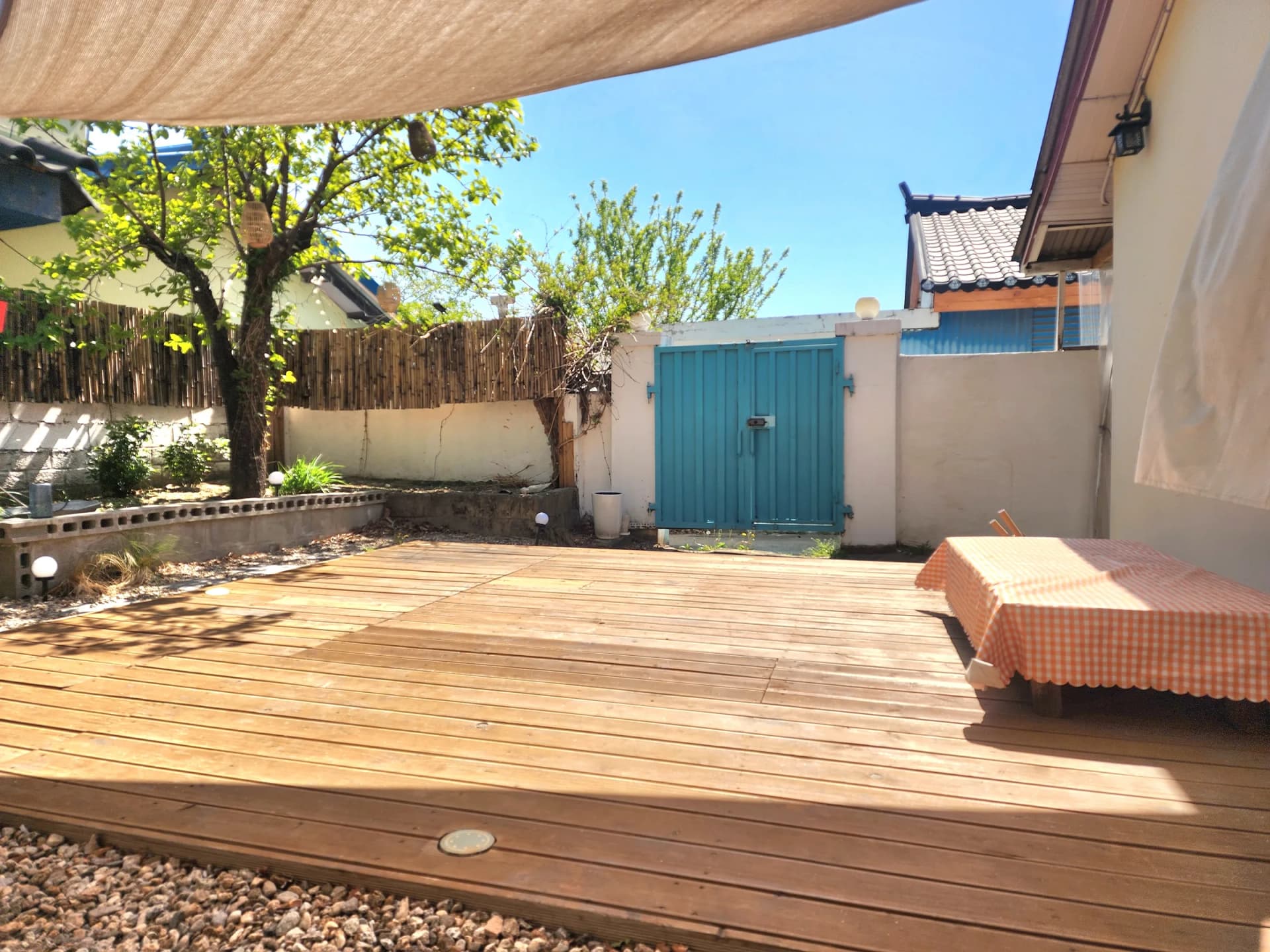
The house is fifty years old. Before the host bought it, no one had lived in it for a long time — it had crossed the line from "house someone owns" to "house someone needs to bring back." She did the work herself, room by room. The plan was to live in it alone. The plan changed when the space turned out to be more interesting with other people in it.
The host trained as a neurological physiotherapist for six years, then taught Pilates for fifteen. Burnout pushed her into meditation, and from there into somatic movement — a body-first lineage that asks you to feel something specific, in a specific muscle, before it asks you to think about anything. She runs a 90-minute session on the garden deck when the weather cooperates, and at her indoor studio next to Yeongnangho Lake when it doesn't. Mats and props are provided. Beginners are welcomed in directly; longtime meditators get a teacher who teaches differently than the one they're used to.
There is no TV in the house. The neighborhood is quiet on purpose. The tea setup on the kitchen counter is not a decoration — it's the suggestion. So is the deck, and the garden, and the long pause between when you arrive and when you decide what to do next.
Bookings are through Airbnb, with two-night minimums on weekdays. Pricing climbs gently into July and August. Sessions are arranged with the host directly after you book. Whole house, up to five people, all the rooms.
The line she wants you to come away with is in her own words: an opportunity to reflect on yourself from an existential perspective. Most stays in Sokcho don't ask that of you. This one does, gently, and gives you the room to answer it.