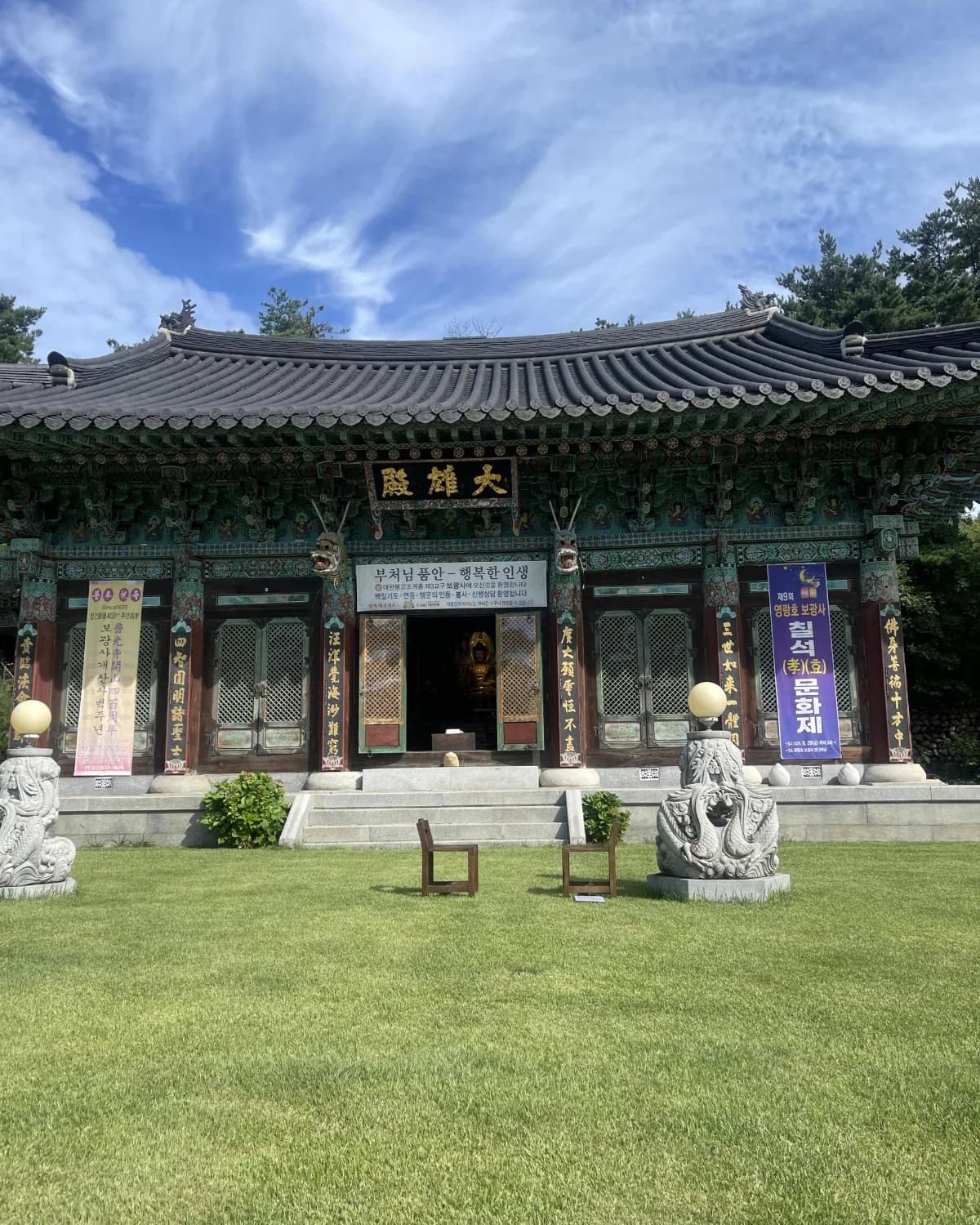
Bogwangsa Temple at Yeongnangho Lake
보광사(영랑호)
Bogwangsa Temple is a small lakeside temple on one of the most scenic edges of Yeongnangho Lake. Founded in 1937, it adds a quieter Buddhist stop to Sokcho's lake route, with stories of a carved 'Gwaneum' rock behind the temple, a jade reclining Buddha made by Burmese monk-sculptors, and a wooden Ksitigarbha Bodhisattva connected to an unusually personal 17th-century devotional story.
Verified by HeySeorak on 📖 Owner story included
Best For
History, culture, scenic context, and first-time orientation
Area
Yeongnangho
Price
₩ Budget-friendly
Info
69-2 Yeongnanghoban-gil, Sokcho-si, Gangwon-do
강원특별자치도 속초시 영랑호반길 69-2
Sokcho Tourism lists the site as always available. Temple halls, services, and visitor etiquette can differ from open outdoor access.
The Story
Sokcho Tourism dates Bogwangsa to 1937 and places it on the scenic side of Yeongnangho Lake. The temple's location matters: the visit is as much about lake-and-temple atmosphere as it is about a single monument.
Behind the Signature
The temple is noted for two unusual Buddhist images. One is a jade reclining Buddha made on site by Burmese monk-sculptors because moving the finished sculpture to Korea was considered too risky. The other is a wooden Ksitigarbha Bodhisattva whose internal document connected it to a 1654 prayer by a wife for her late husband.
Local Tip
For a collection route, pair it with the nearby Song Si-yeol inscription rock. Together they let visitors read Yeongnangho as more than a lake: it holds Buddhist devotion, classical literati memory, and local scenery.
Seasonal Note
Spring blossoms and autumn lake light make the approach softer. Summer heat is easier here than on exposed viewpoints, while winter can make the lakeside feel quiet and contemplative.
For Travelers
For international visitors, Bogwangsa is a good reminder that Sokcho's heritage is layered: famous Seoraksan temples draw the crowds, but small lakeside temples preserve local stories that are easy to miss.
How to visit
A quick guide for first-time visitors.
Step 1
Start with the context
Read the short history first so the stop is more than a photo point. The story usually explains why this place matters in Sokcho.
Step 2
Walk the key point
Use the map pin as your anchor, then give yourself a few extra minutes for nearby signs, views, side paths, or linked monuments.
Step 3
Connect the next stop
This works best as part of a route. Pair it with a nearby village, museum, market, ferry, temple, or lake walk rather than visiting in isolation.
Helpful guides
Practical reads to help you make the most of your visit.
You might also like
Nearby picks with a different category first, then backup options in the same area or city.