Chilsung Boatyard
칠성조선소
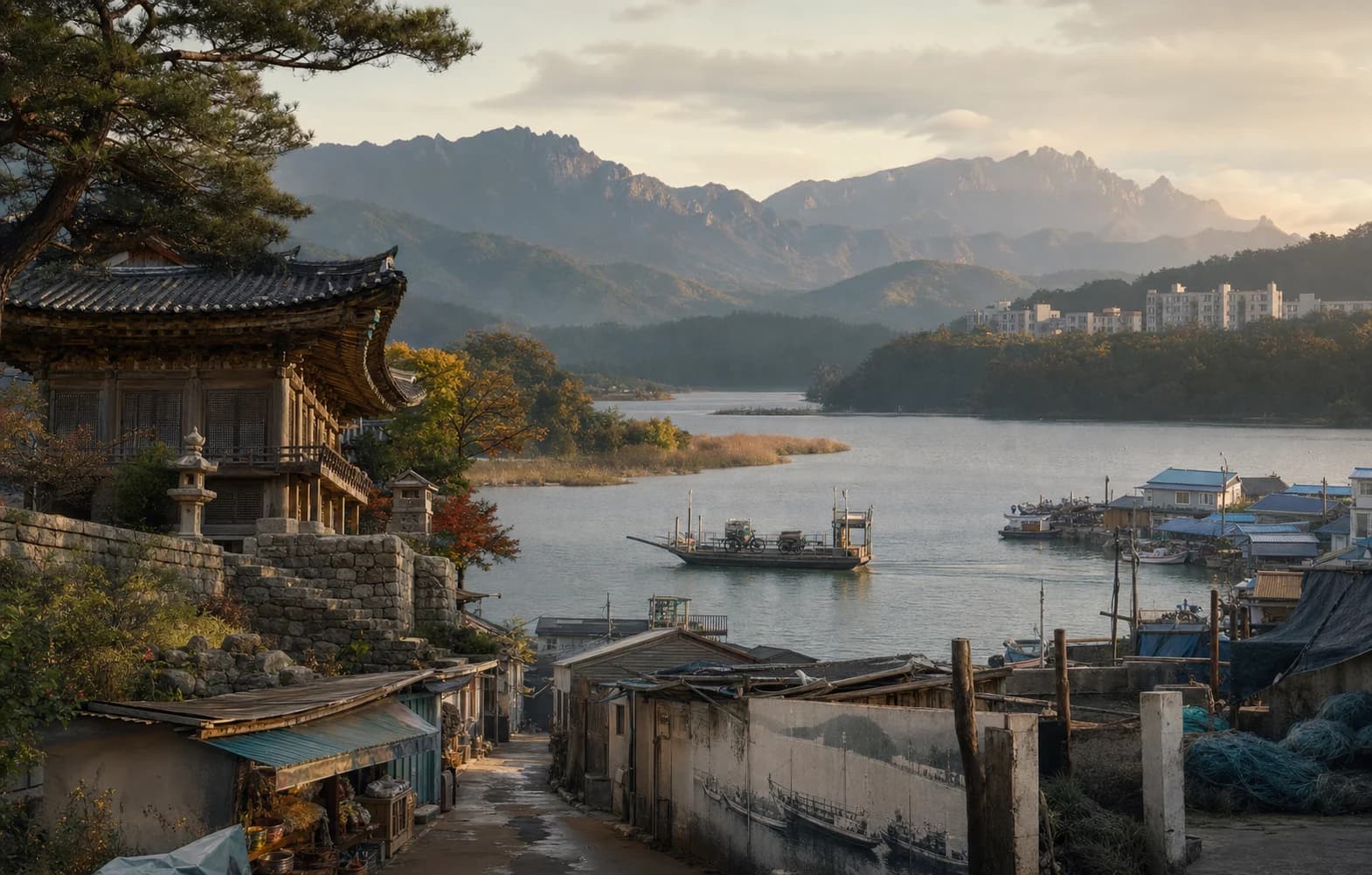
At first glance, Chilsung Boatyard looks like a beautiful cafe by Cheongchoho Lake. Stay a little longer and it becomes something much rarer: a family shipyard learning how to live on. Coffee is the invitation, but the reason to come is the yard itself — the rails, the old winch path, the weathered rooms, the handwritten sign, and the feeling that Sokcho's boatbuilding memory is still breathing here. Climb to the second floor and that memory opens onto an unhurried view of Cheongchoho.
308 travelers viewed this
Interviewed by HeySeorak on 📖 Owner story included
Best For
History, culture, scenic context, and first-time orientation
Area
Cheongchoho
Price
₩₩ Mid-range
Menu from ₩3,500
Reviewed by HeySeorak Editorial · Updated
Info
45 Jungang-ro 46beon-gil, Sokcho-si, Gangwon-do
강원특별자치도 속초시 중앙로46번길 45
Last order 18:30.
Is this info still accurate?
Hours, prices, closures — one tap keeps it fresh for the next traveler.
The Story
Chilsung began in 1952, when the owner's grandfather, a boat carpenter, settled beside Cheongchoho and opened a yard where boats were built, named, repaired, and sent back to the water. For the owner's father, this was not just a workplace — it was the place where he was born and raised. The current owner came back at the end of 2013, hoping to steer the family business toward leisure boats, but the old industry was already hard to sustain. Little by little, the question changed: not 'How do we build more boats?' but 'How do we keep this place from disappearing?' The cafe came from that question.
“There are stories tucked into every corner here.”
— Owner, Chilsung Boatyard
What They Stand For
This is not a theme cafe designed to look old. It is an actual shipyard that had to find a new way to stay open. Coffee became the most practical thing to sell, but the real work is quieter: keeping enough of the buildings, rails, winch, handwriting, records, books, and exhibitions in place so visitors can still sense what happened here. After the 2024 fire, that idea of preservation became more honest and less romantic. Not everything can be held in place forever. What matters is choosing, again and again, what to care for next.
Behind the Signature
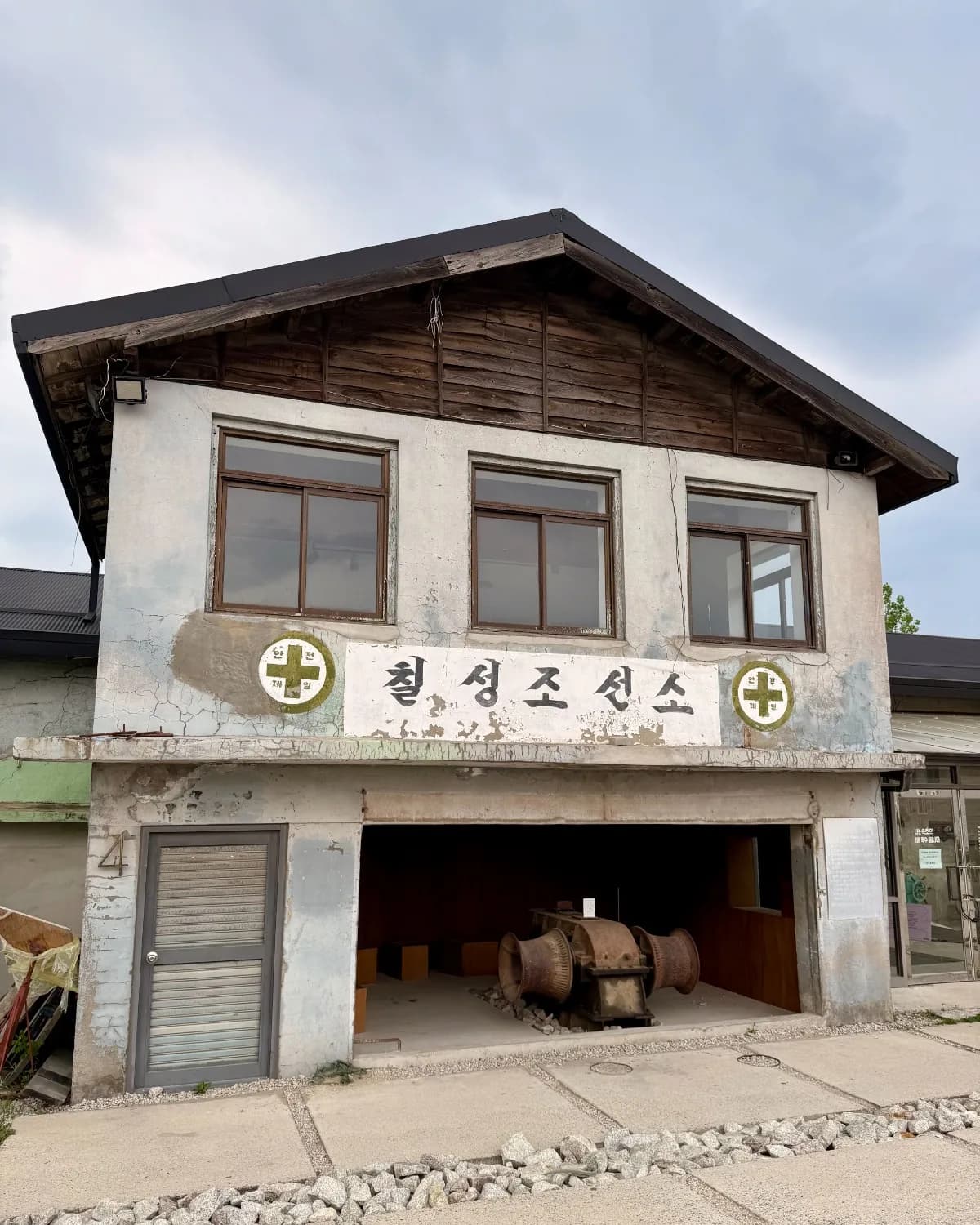
The most intimate doorway into the place is the lettering. In the boatyard days, the owner's father, Choi Seung-ho, painted boat names by hand, often high on a ladder, one vessel at a time. When the site reopened as Chilsung Boatyard, he painted the name on the building again in the winter cold. Seeing that handwork — and realizing it might one day be gone — led the owner to preserve his father's letters as the Sandoll Chilsung Boatyard typeface. The sign is not just branding. It is family memory made visible.
Local Tip
Do not make this a ten-minute cafe stop. Before taking photos, ask what each corner used to do: where boats moved, where tools and timber would have been, why the rails remain, and why the lettering feels so handmade. The best visit is simple — a slow walk through the yard, a look inside the museum-like rooms, then coffee in the 2F room that opens onto Cheongchoho. There is no dedicated parking, so use nearby public parking and arrive unhurried.
Seasonal Note
Clear afternoons give you the lake light everyone photographs, but rainy days can be even better for the story — the old rooms, rough textures, signage, and exhibitions feel closer. Because this is a living space rather than a frozen set, performances, repairs, art fairs, and exhibitions can change the layout. Check the current Instagram or Naver listing if you are coming late or for a specific event.
For Travelers
If you only know Sokcho through Seoraksan, seafood, or Abai Village, this place adds another layer. You are standing in a former working waterfront, not a built-for-tourism set. Even without Korean, follow the material clues: rails, winch path, lake edge, hand-painted letters, rooms that still feel used. Note that ordering happens at a Korean-only kiosk and the staff speak little English — keep the HeySeorak menu page open as you order, and pay at the counter for RTD bottles or gift sets. It is a rare cafe where the drink is not the destination, but the permission to spend time with the place.
Start with these dishes
The best first order for understanding what makes this place worth visiting.
Americano
아메리카노
House espresso pulled long with hot water — the beans are the reason. Choose one of three single-origin beans at the kiosk: PORT (balanced, nutty, sweet finish), STAR BOARD (floral, light acidity, crisp), or TAO (decaf, balanced and nutty).
Vanilla Bean Cafe Latte
바닐라빈 카페라떼
Latte built around Chilsung's house-blended vanilla bean syrup — gently sweet, with real vanilla seed flecks.
Omija Tea
오미자 티
Hot tea brewed with omija — Korea's five-flavor berry. Tart, lightly floral, deeply local.
How to order here
A simple flow for first-time visitors who want to order confidently.
Step 1
Start with the context
Read the short history first so the stop is more than a photo point. The story usually explains why this place matters in Sokcho.
Step 2
Walk the key point
Use the map pin as your anchor, then give yourself a few extra minutes for nearby signs, views, side paths, or linked monuments.
Step 3
Connect the next stop
This works best as part of a route. Pair it with a nearby village, museum, market, ferry, temple, or lake walk rather than visiting in isolation.
More from the menu
View full English menu →RTD Cold Brew
RTD 콜드브루
Bottled cold brew to take home. Pay at the counter, not the kiosk.
Cold Brew
콜드브루
Slow-extracted cold brew, low acidity and clean. Served over ice only.
Notes from travelers
No stars, no scores — just what people who stood here wished they’d known.
Be the first to leave a note
Passed through Chilsung Boatyard? One line about what to order or when to come helps whoever comes next — no account needed.
Questions travelers ask
The practical things people ask our local guide about Chilsung Boatyard — answered from verified details.
What should I order at Chilsung Boatyard?
The signature dishes are Americano (아메리카노), Vanilla Bean Cafe Latte (바닐라빈 카페라떼), Omija Tea (오미자 티). Treat this as a working shipyard, not a coffee stop. Walk the yard first — the rails, the winch path, the museum-like rooms, and the hand-painted Chilsung lettering — then take the stairs to the 2F room where the seats face Cheongchoho. Ordering is kiosk-only and Korean-only, and the staff speak little English, so keep this HeySeorak menu page open before you tap. Drinks come back to the table; pay at the counter for RTD bottles and gift sets.
When is Chilsung Boatyard open?
Fri: 11:00-19:00 • Mon: 11:00-19:00 • Sat: 11:00-19:00 • Sun: 11:00-19:00 • Thu: 11:00-19:00 • Tue: 11:00-19:00 • Wed: 11:00-19:00
How do I get to Chilsung Boatyard?
Do not make this a ten-minute cafe stop. Before taking photos, ask what each corner used to do: where boats moved, where tools and timber would have been, why the rails remain, and why the lettering feels so handmade. The best visit is simple — a slow walk through the yard, a look inside the museum-like rooms, then coffee in the 2F room that opens onto Cheongchoho. There is no dedicated parking, so use nearby public parking and arrive unhurried.
What is Chilsung Boatyard known for?
The most intimate doorway into the place is the lettering. In the boatyard days, the owner's father, Choi Seung-ho, painted boat names by hand, often high on a ladder, one vessel at a time. When the site reopened as Chilsung Boatyard, he painted the name on the building again in the winter cold. Seeing that handwork — and realizing it might one day be gone — led the owner to preserve his father's letters as the Sandoll Chilsung Boatyard typeface. The sign is not just branding. It is family memory made visible.
Helpful guides
Practical reads to help you make the most of your visit.
Plan around this stop
Curated routes and visitor situations where this place fits naturally.
You might also like
Nearby picks with a different category first, then backup options in the same area or city.