The story
The owner spent thirteen years in Seoul's Hongdae and Yeonnam food scene, running everything from jokbal and kimchi stew to casual bunsik. Yeonnam changed around him: a neighborhood that once welcomed early small restaurants became expensive enough that a 14-pyeong space could climb to 7 million won in monthly rent. In Sokcho, he took over a larger 40-pyeong restaurant and chose an independent space where the food could have its own color rather than disappearing into a row of identical storefronts.
“제철 해산물과 정성으로 건강하고 맛있는 음식을 만들고 싶습니다. - 'I want to make healthy, delicious food with seasonal seafood and care.'”
Owner, Sokcho Haemul Kkot Jang Kalguksu
What they stand for
The kitchen is built around seasonal seafood, patience, and a healthier bowl. The broth is simmered deeply, then seasoned with the nutty makjang flavor Gangwon people know well. The noodles include sanghwang mushroom powder, and the table can finish with a nutrition porridge instead of stopping at noodles. The owner wants the food to feel restorative, not just heavy: generous seafood, clean broth, and enough care that travelers leave warmer than when they came in.
Behind the signature
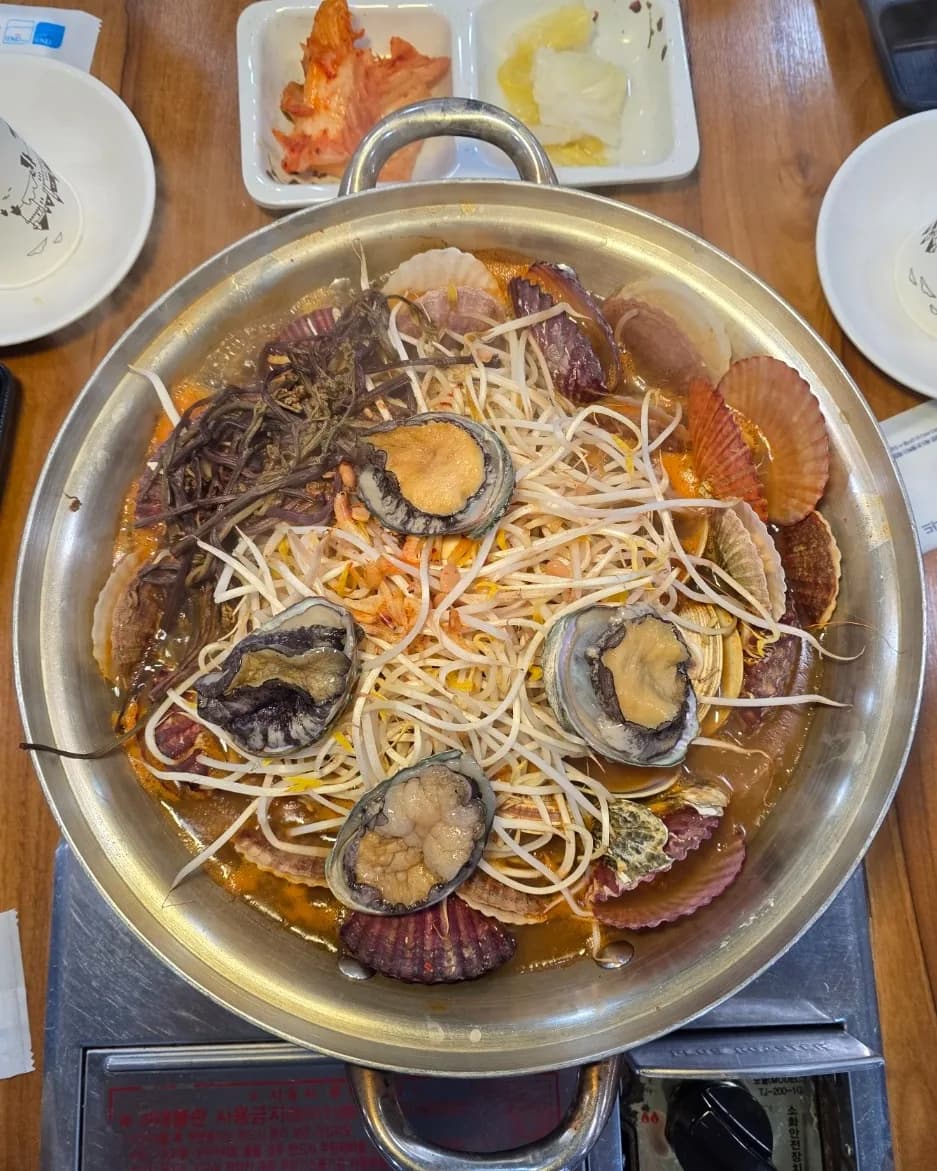
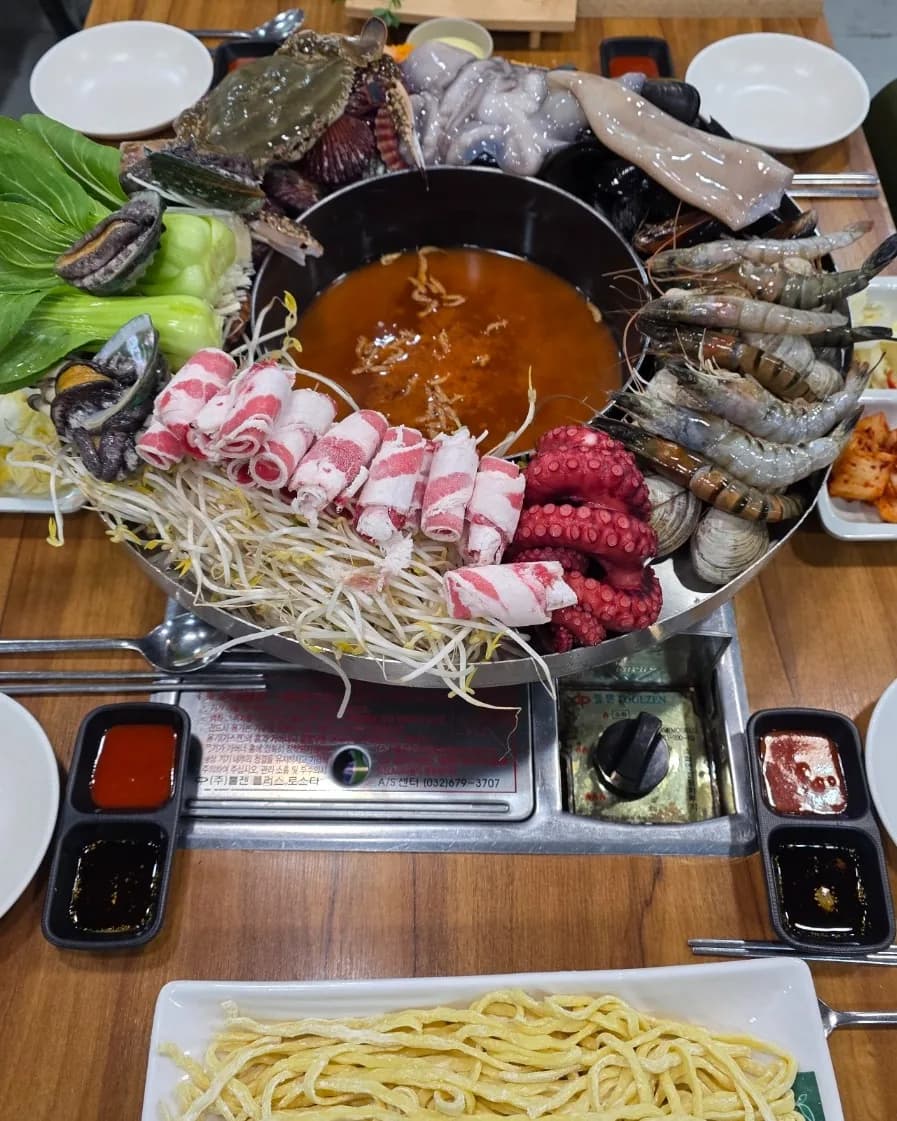
The dish began with memory. The owner's maternal grandmother was a displaced person, and jang-kalguksu was one of the foods she made in childhood. This restaurant takes that grandmother's hand taste and reinterprets it for modern Sokcho: the old jang flavor remains, but the pot now carries the sea through clams, octopus, squid, shrimp, crab, and seasonal shellfish. It is less a simple noodle shop than a small table ritual - seafood first, noodles second, porridge if you want to stay a little longer.
Local tip
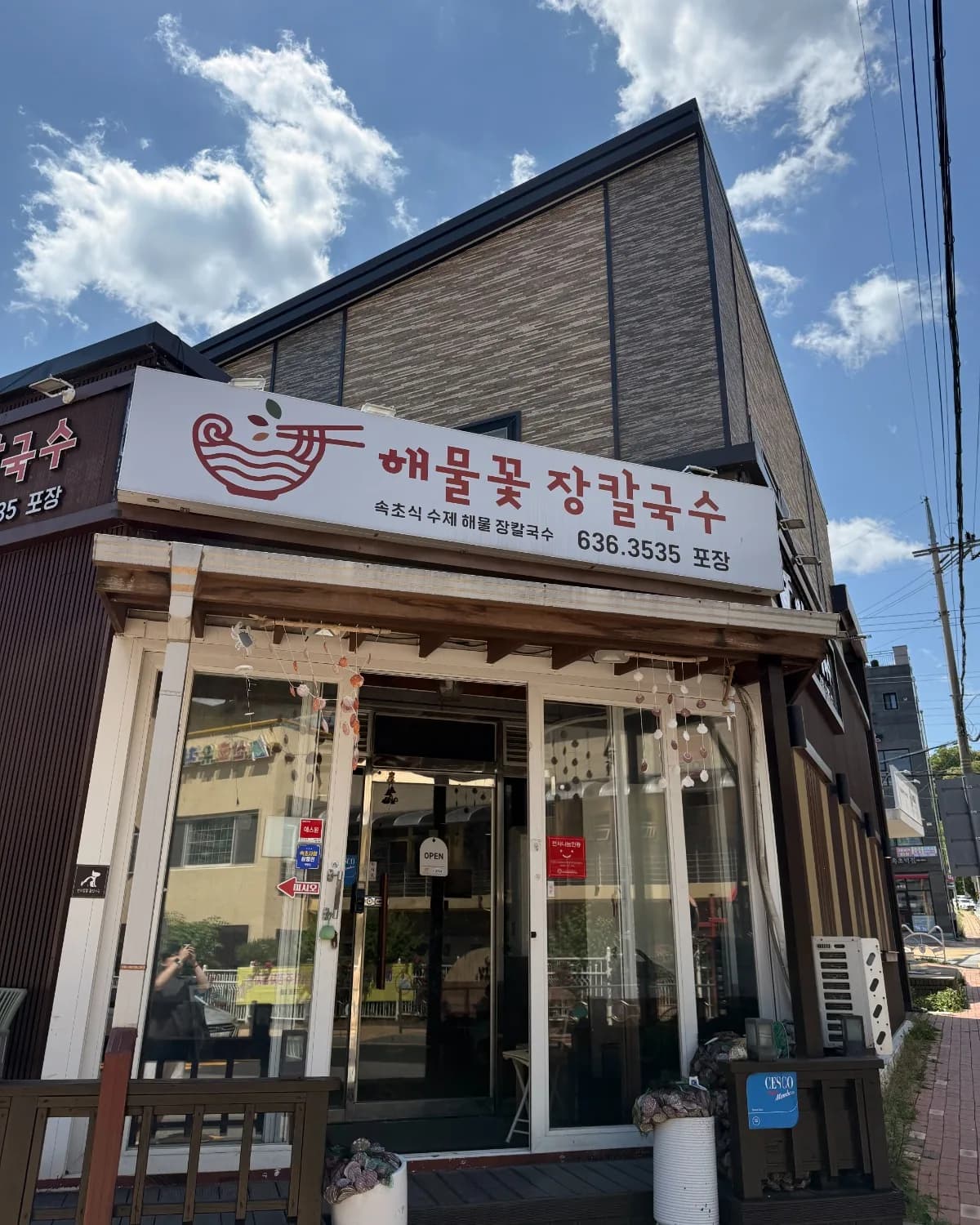
The restaurant sits in Joyang-dong near Cheongcho Lake and the Expo area, close enough for travelers moving between Sokcho Beach, central Sokcho, and the busier hotel side of town. It has its own parking area in public listings, and the menu works well for families because the spice level is mild and a children's set is available.
Seasonal note
The owner tries to change the shellfish with the season, using whatever is freshest and most useful for the broth. Expect clams, mussels, scallops, octopus, squid, shrimp, and crab as the core direction, but the exact shellfish mix can change with supply.
For travelers
Foreign guests from the United States, Russia, China, and other countries already find their way here by tour bus and on foot. The dish is easy to enjoy once the eating order is explained: cook the seafood, eat it like shabu-shabu, then add noodles to the broth. In winter, the owner has given hand warmers to walking guests, and one Chinese guest once gave a seed craft used by their community as a thank-you gift.