The story
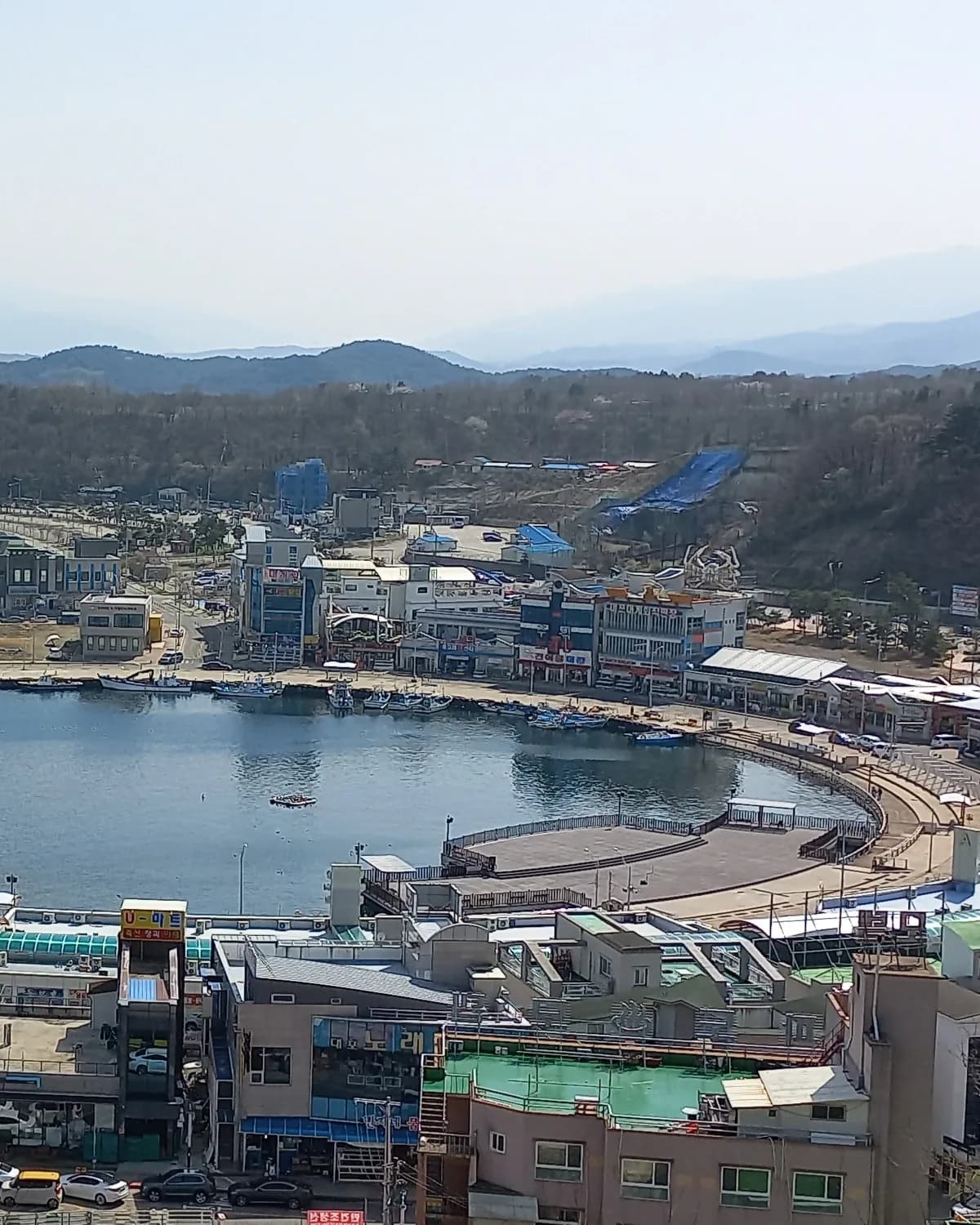
The family started in Naksan, Yangyang — a seaside town where tour buses rolled in and the tables filled themselves. Then the land got rezoned, rents spiked, and tenants like them were pushed out. Five years ago they packed up and moved to a vacant storefront on Daepo Port. The son had been studying in college when his mother asked him to help. He never went back. What started as a bus-tour fish house reinvented itself as a walk-in destination for families and repeat visitors who drive down from Seoul.
“활어 — 살아있는 생선만 씁니다. 죽은 생선은 절대 안 나갑니다. 'Live fish only. Dead fish never leaves this kitchen.'”
Owner, Sinhaeburi Raw Fish
What they stand for
One rule: every fish dies to order. The owner watched too many places on the port cut corners — pre-sliced trays sitting in cases, dead fish dressed up as fresh. He wanted to break that reputation. So every platter starts with a live fish pulled from the tank, killed in front of the kitchen, and sliced within minutes. If a fish looks off — sluggish, discolored, anything — it gets thrown out, not served. The portions are bigger than most neighbors offer, because the family still cooks with the Gangwon-do generosity they learned in Naksan.
Behind the signature
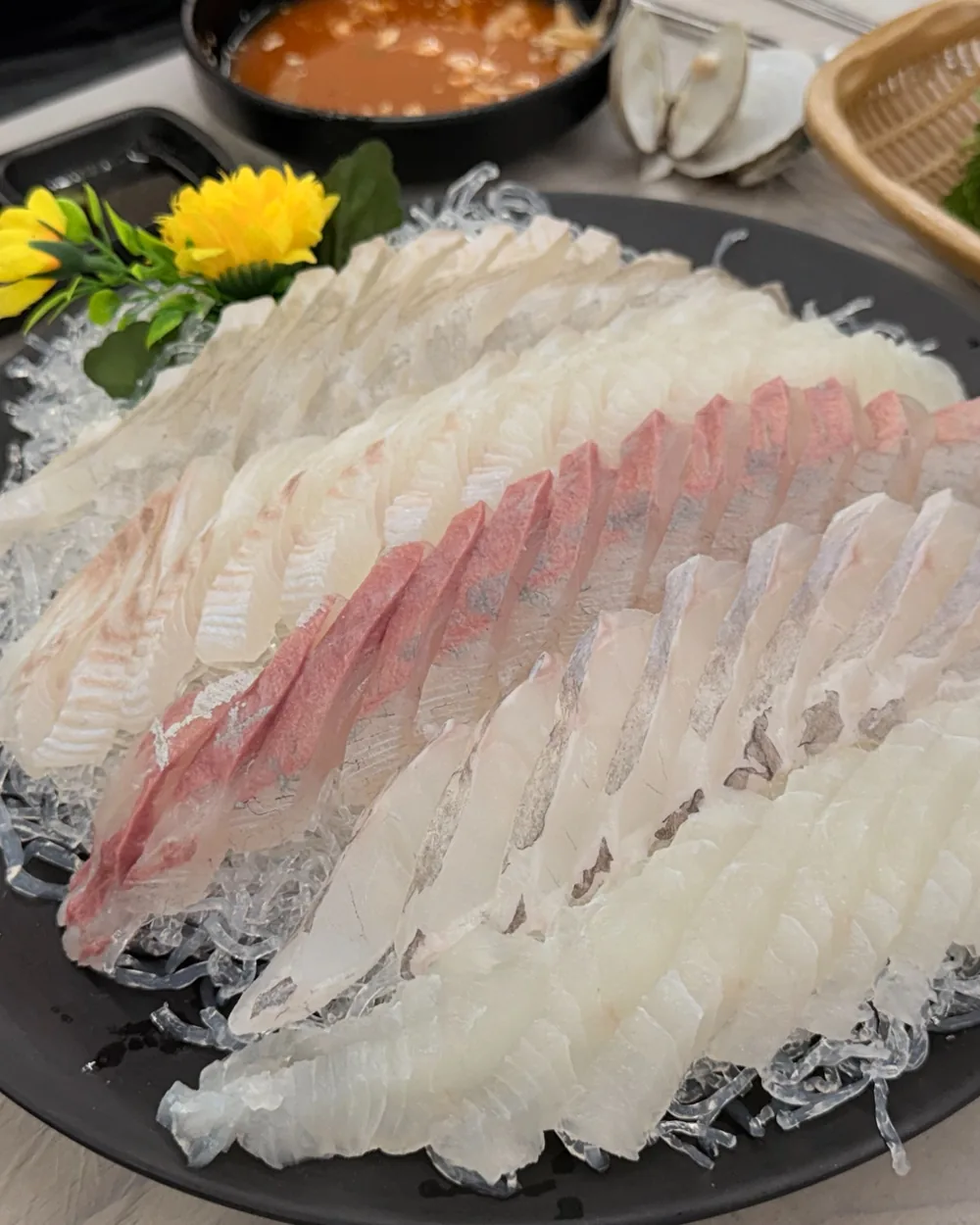
The assorted sashimi platter is the dish the owner stakes his name on. It always starts with flatfish and rockfish — the reliable base — then rotates in whatever the dawn auction at Daepo Port brought in that morning: sea bream, flounder, sea bass, depending on the season. No two platters are identical. The family buys farmed flatfish and rockfish from the southern coast for consistency, but everything wild comes from the Daepo morning bid. It's the one dish where you taste both the kitchen's standards and the sea's mood that day.
Local tip
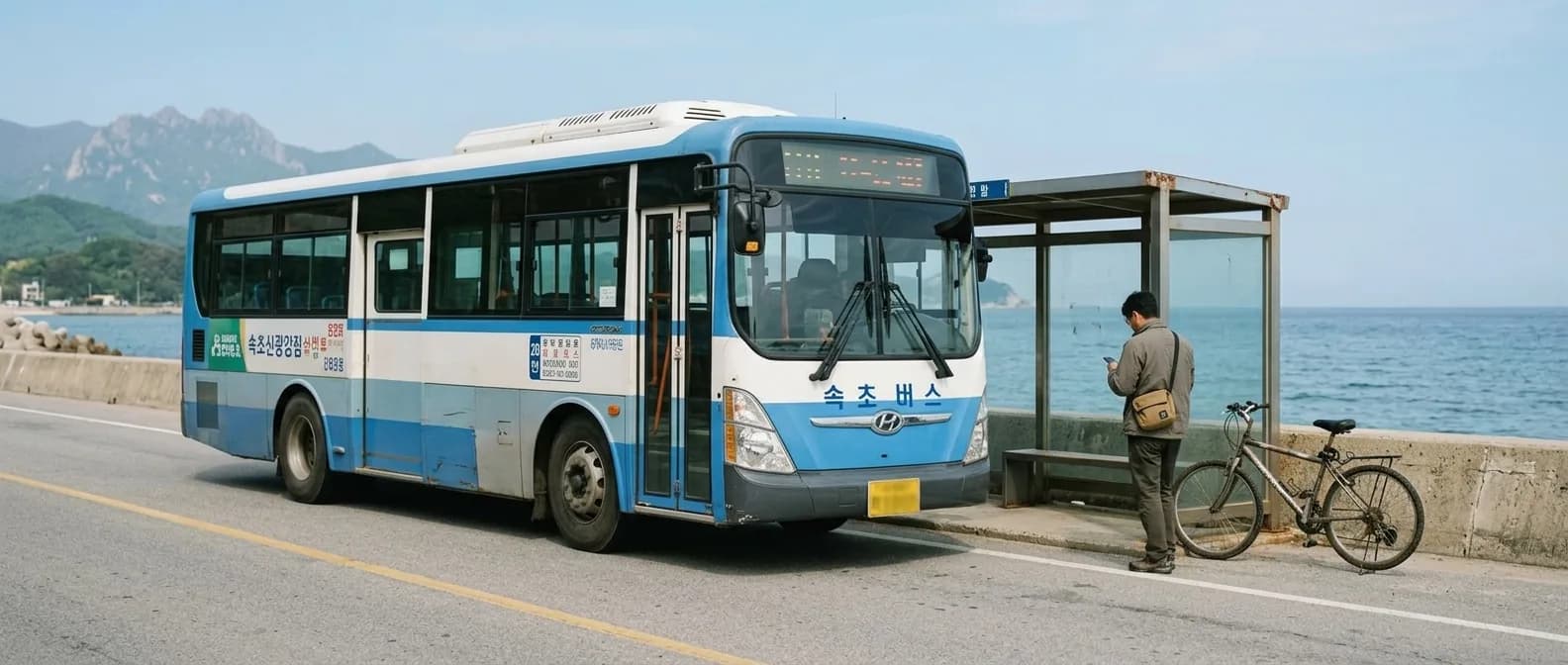
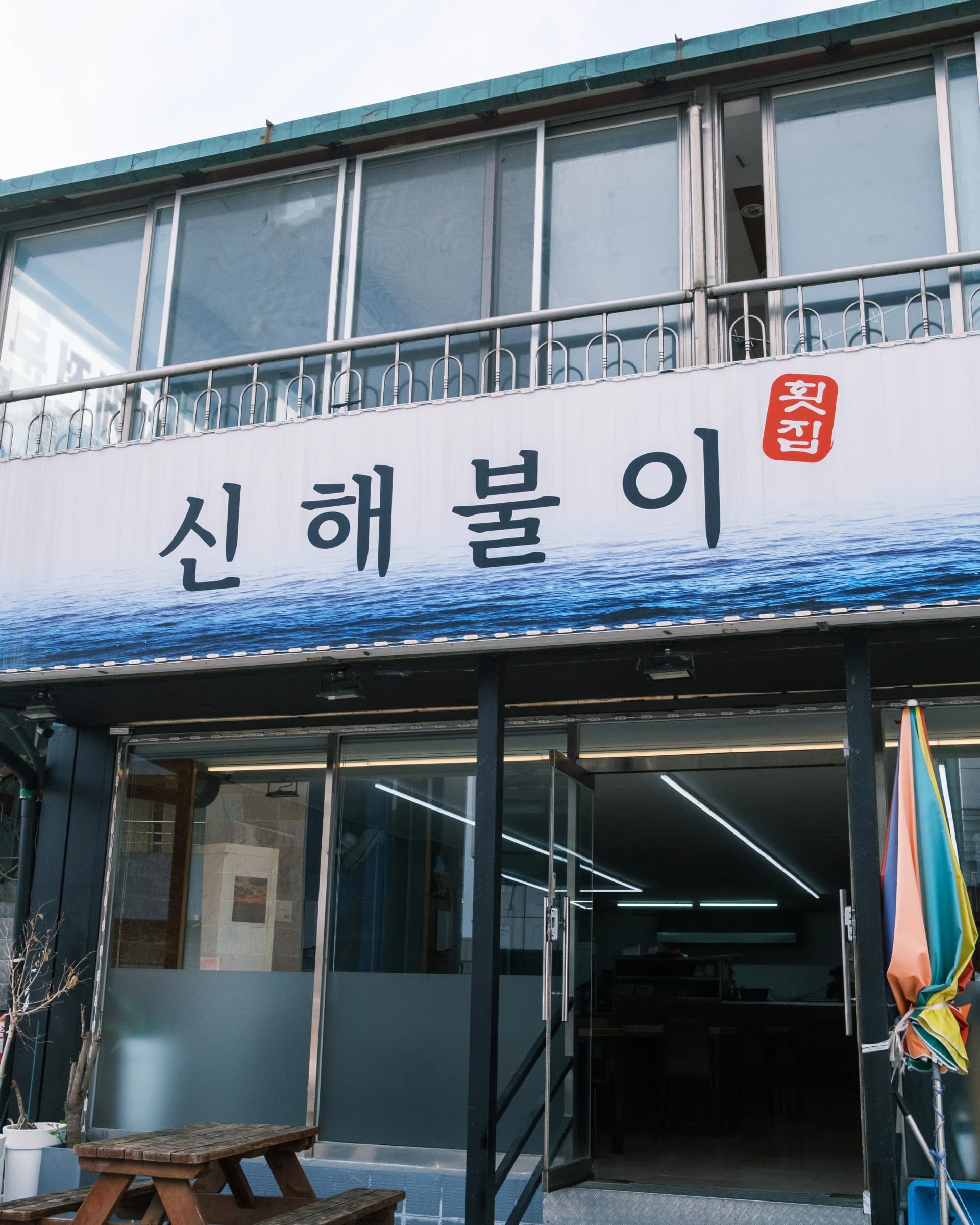
Sinhaeburi sits right on Daepo Port's main drag — Daepohang-gil — facing the harbor. Daepo Port is about 10 minutes south of downtown Sokcho by car or bus. Take bus 9 or 9-1 to the Daepo Port stop. Parking is easy along the port road. If you're hiking Seoraksan, Daepo is on the way back — a natural post-hike seafood stop.
Seasonal note
Snow crab peaks in winter and spring — that's when the crab sets shine. In summer, seasonal catches like squid and sea bream rotate into the sashimi platter. The menu frame stays the same year-round, but the fish inside the modumhoe changes with what the boats bring in.
For travelers
The language barrier is real — the owner admits most tourists who don't speak Korean glance at the menu and walk out. But when someone stays, it works: one Western couple used Papago to order live sashimi, spicy stew, and chojang dipping sauce, ate everything with chopsticks, and cleaned every plate. The owner says foreigners who commit to the experience tend to love the maeuntang (spicy fish stew) more than expected — and the fried dishes are a safe hit for everyone.