The story
Thirty years ago, the owner's father was fishing the East Sea out of Daepo Port and started selling what he caught from a small stall on the harbor. The son grew up in that kitchen — watching his parents work, learning the rhythms of the sea and the restaurant at the same time. When he took over, the menu was still built around daily catch: fermented skate roe soup, freshwater snail stew, fresh cod broth, squid sundae, mulhoe. Ten years ago, he built his own building at the current location and expanded into the premium crab-and-course format that Daepo Port now runs on.
“매일 아침 어촌계 위판장에서 싱싱한 걸 사고, 주문 들어와야 손질을 시작해요. 미리 작업해 놓은 건 없어요. — 'Every morning I buy fresh at the fishery co-op, and I don't start cutting until the order comes in. Nothing is prepared ahead.'”
Owner, Meoguri Live Fish
What they stand for
The operation runs on a single discipline: buy in the morning, cut on order. Every day before the restaurant opens, the owner is at the Daepo Port fishery co-op purchasing through a middleman — whatever came off the boats. Nothing is pre-cut. When an order lands, that's when the fish is handled. The snow crab comes from an East Sea import supplier; the red crab from a boat operator who reserves supply on a profit-sharing arrangement to keep it local. The banchan and skidashi — the baseline quality that regulars measure a sashimi house by — come from the head kitchen staff and her accumulated knowhow.
Behind the signature
The VIP 람품 세트 is the capstone of twenty years of menu evolution: three snow crabs, live sashimi, Sokcho flatfish sashimi, a full seafood spread, snow crab leg tempura, twelve pieces of handmade sushi, grilled flatfish, spicy fish stew, and crab roe rice — the whole ocean on one table, ₩500,000 for four or more. The set exists because Daepo Port now serves a different visitor than the father's fishing stall served: guests who come specifically for premium crab and want to eat everything at once. The size variants (A through C, plus the owner's own recommendations) let the kitchen match the table size without compromising freshness.
Local tip
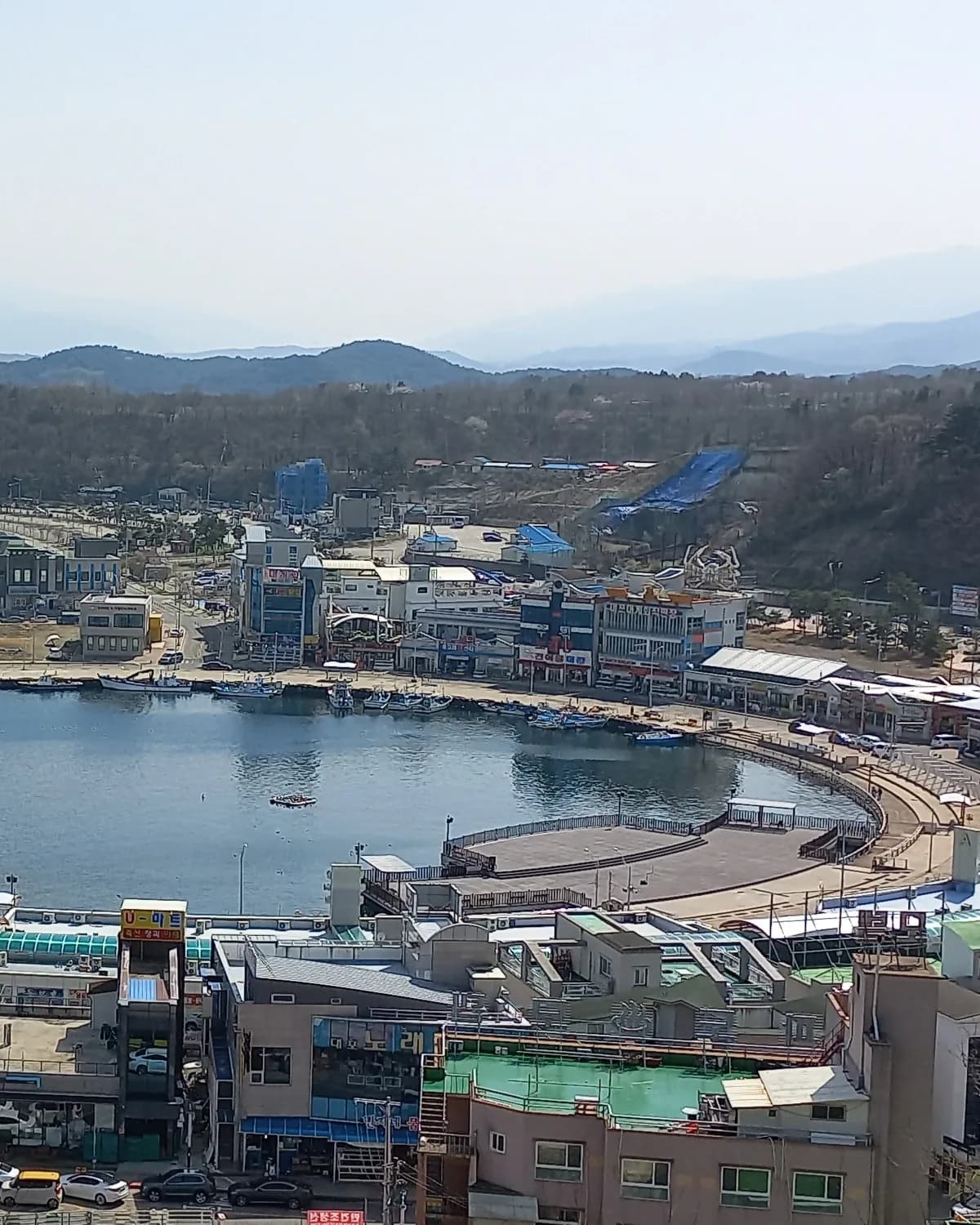
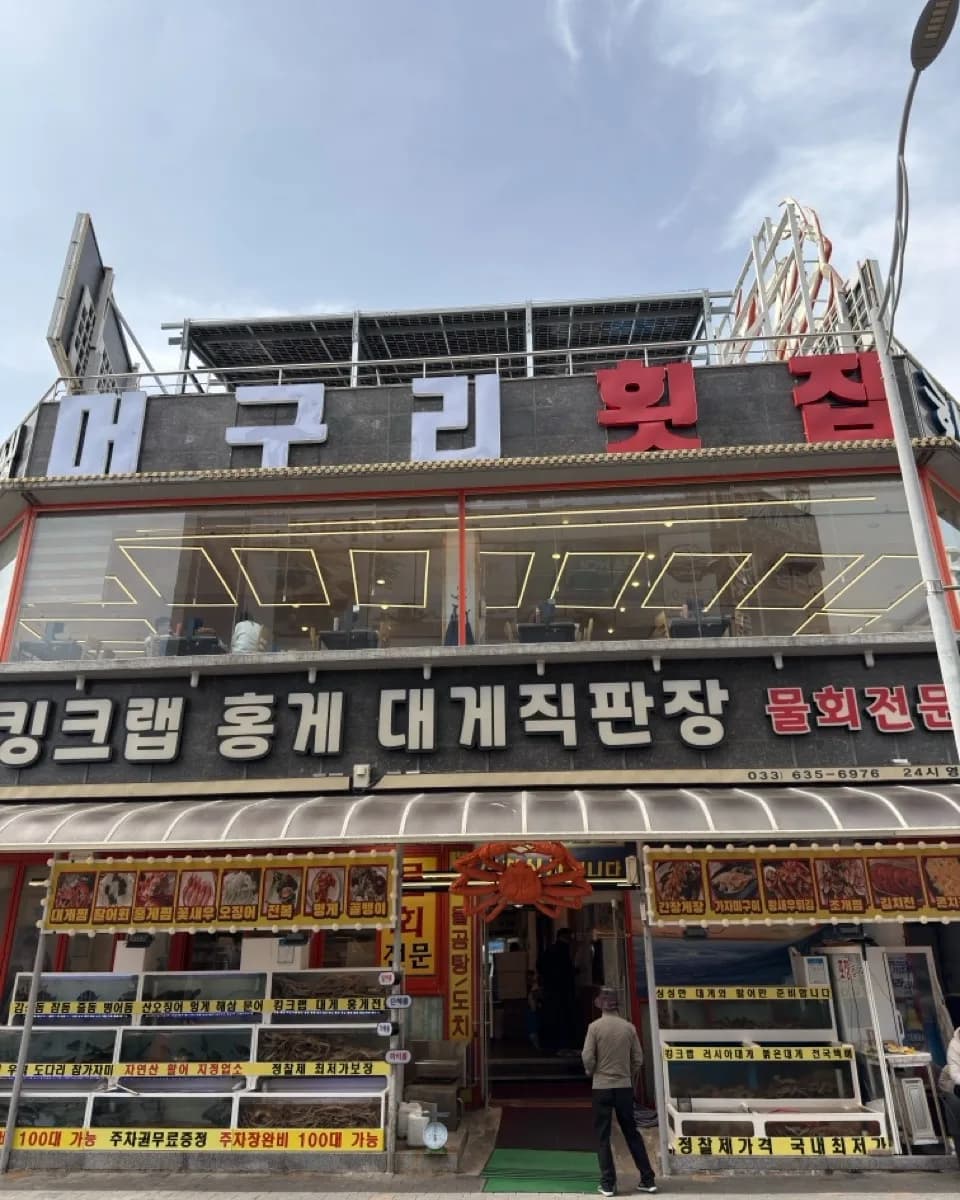
머구리횟집 is inside Daepo Port's main restaurant strip, facing the harbor — a 10-minute drive south of Sokcho's downtown. Take bus 9 or 9-1 to the Daepo Port stop, or park at the Daepo 1st Public Parking Lot and walk in. The building has two floors; the second floor runs a table-order system with a tablet. Daepo Port connects naturally to a Seoraksan day trip — the drive from the mountain to the port takes about 30 minutes.
Seasonal note
Daepo Port peaks from late spring through fall; summer weekends see queues on the harbor strip. Snow crab availability from the East Sea tightens in summer — the C-course can be swapped for three red crabs instead. Wild-caught fish (자연산) varies with the morning auction; the most variety comes in spring and fall. Come on a weekday morning for the freshest selection and shortest wait.
For travelers
Foreign guests are a growing part of the clientele at Daepo Port, and this kitchen has noticed a clear pattern: cooked and grilled food first, raw second. The crab courses, grilled flatfish, and spicy fish stew are the natural orders for visitors who want bold flavor without a taste for raw fish. The kitchen has a special service for foreign guests — fresh scallops from Sokcho's local scallop farm, steamed (가리비찜, ₩50,000), which are a guaranteed crowd-pleaser. The second-floor table-order tablet makes ordering easy without Korean. An English-friendly menu focused on cooked preparations is in development.