
Jeotgal Fishery Alley
젓갈어시장골목
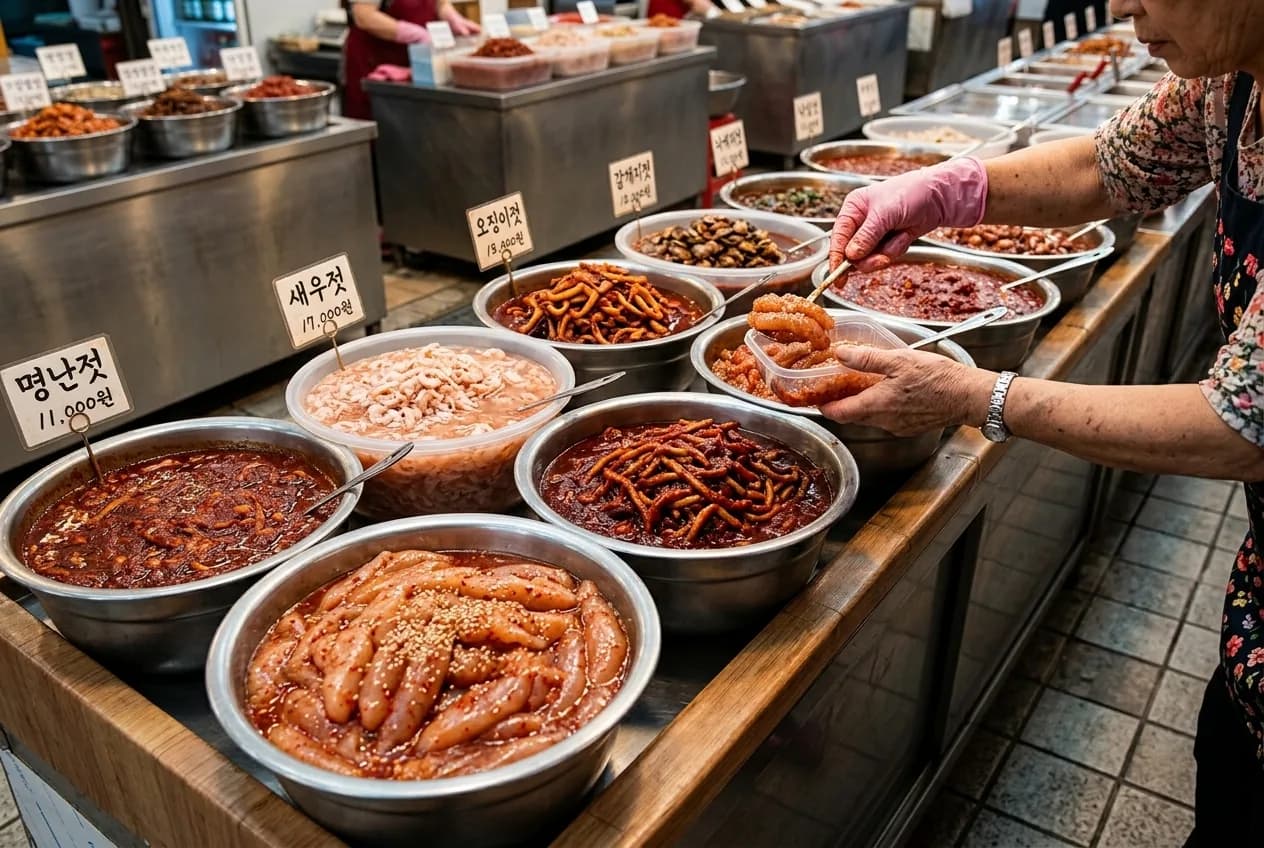
26 stalls of Korean salted and fermented seafood — myeongnanjeot (pollock roe), gajami-sikhae (flatfish), myeongtae-hoe-muchim, changnanjeot. The alley where Sokcho's refugee food lineage became the East Sea's most exported flavor.
- Stalls
- ~26
- Signature
- Myeongnanjeot · Gajami-sikhae
- Tasting
- Free samples · expected
- Festival
- October · 젓갈축제
Place guide freshness
Last updated on
Why Sokcho is the jeotgal city
Jeotgal — salted, fermented seafood — exists across every Korean coast. But two things made Sokcho the country's jeotgal capital, and both show up the moment you step into this alley.
The pollock. The East Sea off Sokcho was, for centuries, Korea's richest pollock ground. Where there was pollock, there were pollock roe and pollock intestines — which became myeongnanjeot (명란젓) and changnanjeot (창난젓). Sokcho merchants perfected both. By 1959 Sokcho myeongnanjeot was being exported to Japan, and by 1962 to the United States. The recipes in these tubs are the ones Japanese tarako (たらこ) descends from.
The refugees. During the Korean War, families from Hamgyeong Province — Korea's northeastern corner, now in North Korea — fled south and settled here. They brought a north-eastern salting tradition that was richer, spicier, and more herbaceous than what the south knew. Sokcho's jeotgal alley is the last place where that Hamgyeong-inflected lineage is still sold at working-class prices, one tub at a time, by families who've been here for 40+ years.
What to look for in the tubs
Most stalls sell a mix, but learn to recognize these six before you walk in — you'll taste better and pay fairer:
- 명란젓 (Myeongnanjeot) — salted pollock roe. Deep orange-red when chili-seasoned; pale pink when baekmyeongnan (저염 백명란, low-salt, no chili). The first is classic; the second is the one Japanese visitors quietly fill a suitcase with.
- 창난젓 (Changnanjeot) — salted pollock intestines. Mahogany brown, strand-like texture, strongly fermented. Not a starter — but if you grow to like it, no other banchan comes close.
- 가자미식해 (Gajami-sikhae) — fermented flatfish with millet and red pepper. A Hamgyeong signature. Mildly tangy, warming. Probably the dish here that locals eat daily.
- 명태회무침 (Myeongtae-hoe-muchim) — dried-then-rehydrated pollock in a sweet-spicy sauce. Sharper and more chewable than the wet jeotgals; good as a standalone snack with makgeolli.
- 오징어젓 (Ojingeojeot) — salted squid in chili. Sokcho's version runs leaner on chili than Busan's — lets the squid's sweetness come through.
- 새우젓 (Saeujeot) — tiny salted shrimp. The pale pink tub. You're not eating it here — it's the cooking seasoning everyone in the alley takes home in a small container.
Two stalls with the longest track record
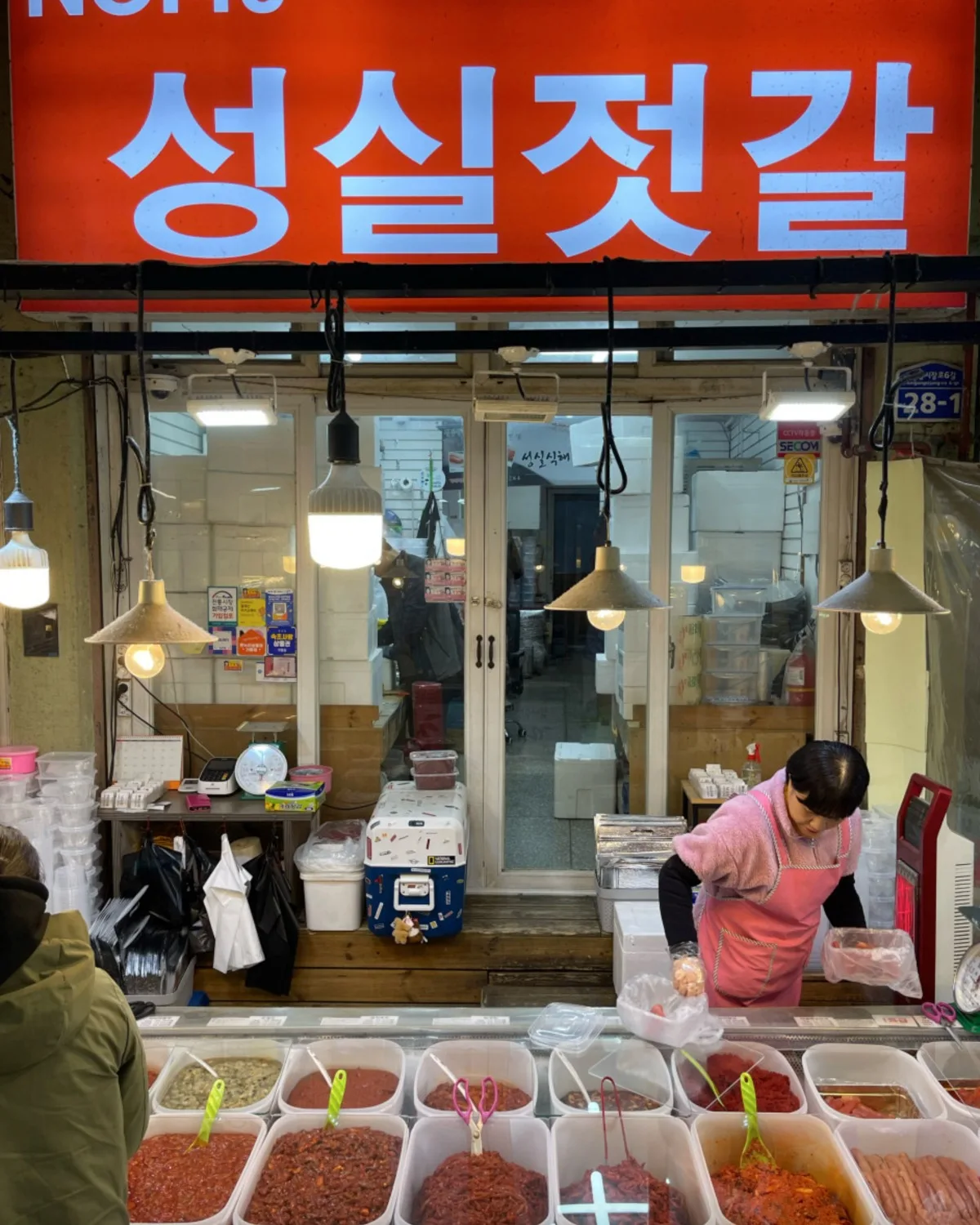
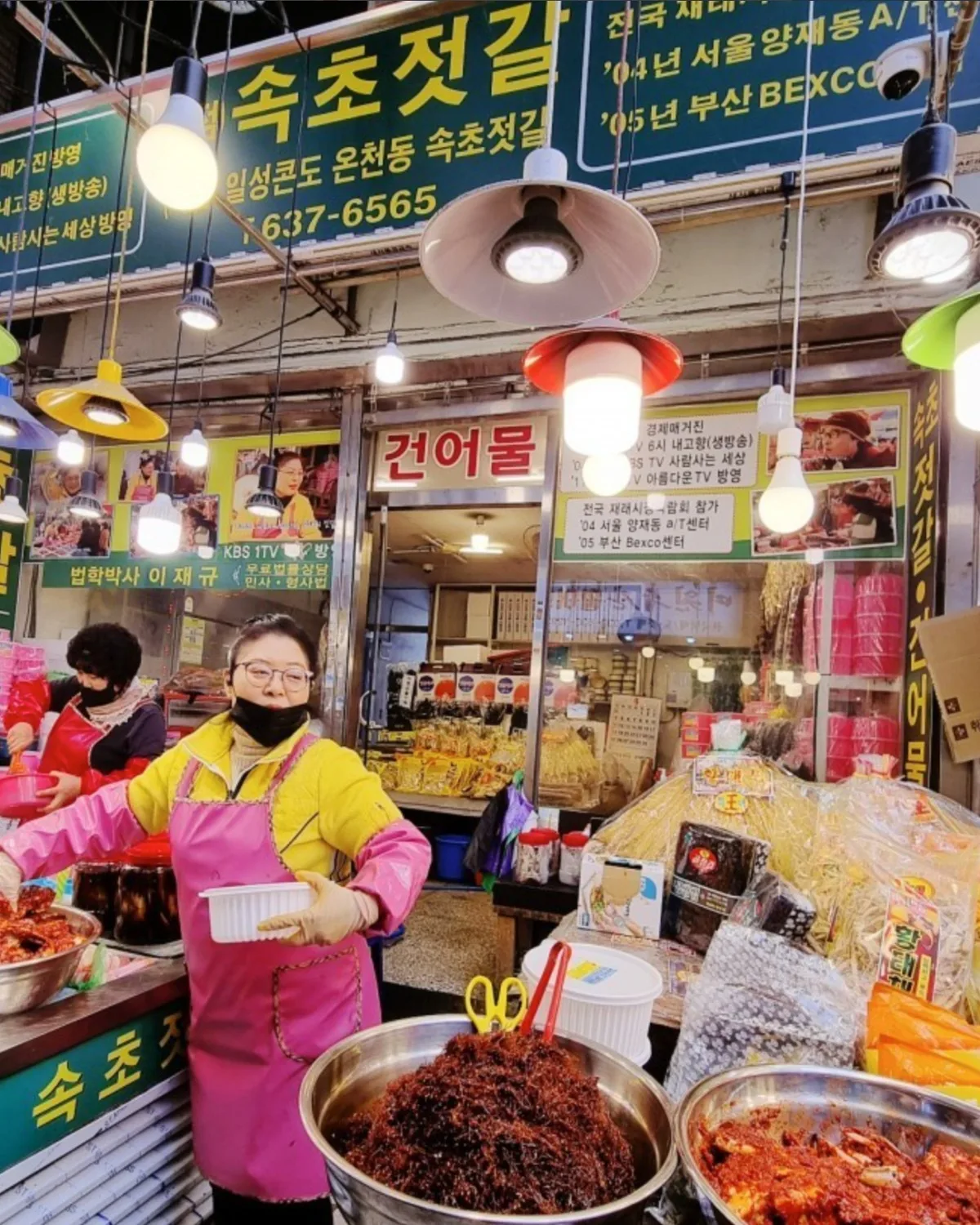
The alley is dense — 26 stalls in a short stretch — and every tub looks good. These two are the ones with decades of name recognition and staff who'll patiently walk you through five varieties without pressuring the sale. (Note: the famous 오마니젓갈 Omani brand is made in Daepo-dong by 동화푸드 and sold through e-commerce + select resellers inside the alley, not a single branded storefront — ask multiple stalls.)
How to buy
- Tasting etiquette
- Vendors expect you to try 3–5 varieties before deciding. The phrase is 시식 가능해요? (shi-shik ga-neung-hae-yo — 'can I taste?'). Saying yes to a taste doesn't obligate purchase — but blocking 10 tubs then walking away is poor form.
- Salt level
- Ask for 저염 (jeo-yeom, low-salt) if you plan to eat within a week — it's milder but spoils faster. Standard salt level keeps 3+ weeks refrigerated.
- Taking it home
- Every stall vacuum-seals (진공포장) for free, which is airline carry-on legal in most countries — but check your return flight's rules. International mail-order is also common; ask about 택배.
- Price anchor
- Myeongnanjeot runs roughly 30,000–60,000 KRW per 500g depending on grade. Gajami-sikhae is cheaper (~15,000 KRW/500g). Bargaining on single small purchases is unusual; on multi-jar sets, politely asking for a small discount works.
- Best time
- Mornings before 11am — tubs are freshly topped up, samples are generous, and the alley hasn't yet filled with cruise-day tour groups.
- October festival
- During the Seorak Festival (설악제) each October, the alley hosts a dedicated jeotgal festival (젓갈축제) with tastings, demonstrations, and discounted multi-jar sets. Best time to buy if you're already going to be here.
- Payment
- Most stalls accept card; a few older ones still prefer cash. ATMs are inside the main market building. No need to carry 100,000 KRW in cash.
Pair with a plan
Related collections
Rainy Day in Sokcho: Museum X, Pinodia & Hot Noodles
Rainy-day Sokcho route with hot noodles, Museum X, Pinodia, Seodam Ssalguksu, Alive Heart, and Happy Owl House, updated with 2026 hours and ticket checks.
- Half to full day
- 7 picks

Abai Village History Walk
An Abai Village Sokcho history walk linking the Gaetbae ferry, mural street, refugee food, market, and museum context for foreign travelers.
- 2-3 hours
- 7 picks
First Night in Sokcho
What to do on your first night in Sokcho if you arrive tired and hungry: one local dinner, one short walk, and zero wasted effort.
- Evening
- 3 picks