
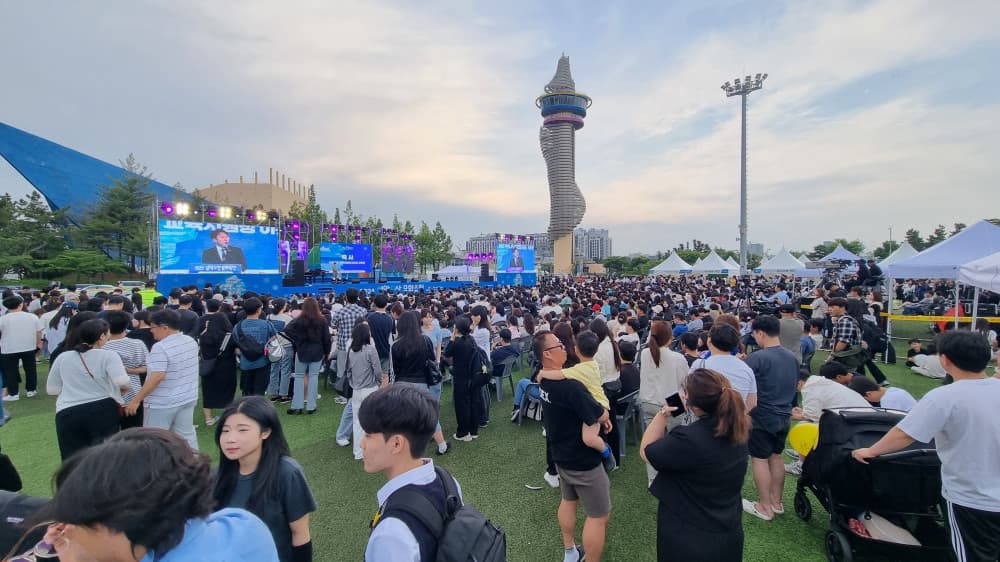
The 2026 Seorak Musan Cultural Festival (설악무산문화축전) ran Friday, May 15 through Sunday, May 17 at the Sokcho Expo Park in central Sokcho. It was one of the more distinctive items on the city's May calendar — less a typical regional fair than a three-day civic and cultural event tied to the spiritual legacy of Venerable Musan Jo Oh-hyun (무산 조오현), the Buddhist monk whose decades on Mt. Seorak shaped much of modern Sokcho's cultural identity.
This guide is written for foreign visitors and English-reading residents who want to understand why this festival exists, not just when it happens. The 2026 edition is now an archive and planning reference: use it to understand the format, scale, and likely rhythm of future editions.
Key Takeaways
- Dates: Friday, May 15 – Sunday, May 17, 2026 (3 days)
- Venue: Sokcho Expo Park, Jo-yang-dong
- Admission: Free
- What it is: A civic-and-cultural festival commemorating Musan Jo Oh-hyun (1932–2018), Zen master and sijo poet of Mt. Seorak
- Sub-festivals: 4th Seorak Youth Culture Festival + 3rd Seorak Food Culture Festival (separate guide)
- Organizer: Seorak-Manhae Thought Practice Promotion Foundation
- 2026 result: Local reporting put the festival at about 80,000 visitors, 830 youth participants, 26 food vendors, and 50+ free culture booths over the three days.
Quick Facts
| Detail | Info |
|---|---|
| Dates | Friday, May 15 – Sunday, May 17, 2026 |
| Venue | Sokcho Expo Park (속초 엑스포타워 광장 일대) |
| Admission | Free |
| Organizer | Seorak-Manhae Thought Practice Promotion Foundation (설악만해사상실천선양회) |
| Sub-festivals | 4th Seorak Youth Culture Festival · 3rd Seorak Food Culture Festival |
| 2026 result | About 80,000 visitors, 830 youth participants, 26 food vendors, 50+ free culture booths |
As of June 17, 2026, the 2026 event has closed. Use this page as an archive and route-planning reference rather than a live timetable.
What the Festival Is For
The festival's official purpose is to commemorate the spirit of harmony and coexistence associated with Musan Jo Oh-hyun, and to use that legacy as a framework for civic culture in Sokcho. The foundation behind it — the Seorak-Manhae Thought Practice Promotion Foundation — is a cultural arts organization supported by the 3rd District of the Jogye Order of Korean Buddhism, established to promote both Musan's teaching and the earlier literary legacy of Manhae Han Yong-un.
In plain terms: this is an interfaith, community-facing event that uses a Seorak-specific spiritual tradition as a reason to bring Gangwon residents, Sokcho citizens, youth participants, and visitors into the same square for three days. The foundation describes its goals as civic harmony, regional cultural development, and local economic vitality — so while the roots are Buddhist, the programming is intentionally public and secular-friendly.
Who Musan Was
Venerable Musan Jo Oh-hyun (1932–2018) spent much of his life on Mt. Seorak and is remembered in Korea both as a Zen master and as a sijo poet whose work reshaped the form. The "Musan" in the festival's name is not branding — it anchors the event to an actual cultural figure with a long Mt. Seorak history and a body of poetry still read in Korean literature departments.
That matters for visitors because it changes what the festival is. A "Musan Cultural Festival" is closer in spirit to a literary-and-civic memorial weekend than to a tourism-driven regional fair. The food, performances, and markets are wrapped around a commemorative core.
2026 Schedule and Confirmed Programs
The 3-day structure runs across the Expo Lawn Plaza, with separate zones for youth programs, food-culture programming, performances, and experiential booths.
Seorak Youth Culture Festival (4th edition)
Four national-level youth programs anchor the youth side of the festival:
| Day | Program | Status |
|---|---|---|
| Saturday, May 16 | National Children's Drawing Contest | Competition |
| Saturday, May 16 | National Children's Choir Competition | Competition |
| Sunday, May 17 | National Youth Writing Contest (청소년 백일장 / Cheongsonyeon Baegiljang) | Competition |
| Sunday, May 17 | National Youth Street Dance Festival | Performance |
Pre-registration for the youth programs was accepted by the organizers through late April, per Sokcho City's recruitment blog post. Spectators do not need to register.
Seorak Food Culture Festival (3rd edition)
Open-air food programming runs across all three days on the lawn plaza: regional food stalls, tastings tied to local Sokcho producers, and cooking-related events meant to extend the festival's civic function into the market economy. Specific vendor lists for 2026 are typically posted close to the event date on the organizer's channel.
Post-event status
Local post-event reporting said the 2026 festival drew about 80,000 visitors over three days. The same reporting counted 830 youth participants, 26 food vendors, and more than 50 free culture booths, with five parking areas operated for the event and no reported safety accidents. That is the useful planning signal for future visitors: this is a city-scale weekend event, not a small temple-side program.
Why This Festival Matters for Sokcho
Most visitors come to Sokcho for the obvious trio — mountain, sea, seafood. A festival like this one is useful because it shows something the trio doesn't: the city's effort to build a distinctive cultural identity that is not reducible to scenery.
By tying a regional festival to Musan's legacy, adding national-level youth competitions, and folding in a food-culture program, the organizers keep the weekend from collapsing into a generic spring event. That makes it one of the more interesting weekends to be in Sokcho if you want to see the city in civic mode — not just as a tourism backdrop, but as a small coastal community actively shaping what it wants to be known for.
For context on the broader spring calendar in Sokcho, see Yeongrang Lake Cherry Blossom Festival 2026.
Who This Weekend Is For
The festival is especially worth timing for:
- Families with children — the youth programs and lawn-plaza format are participatory rather than spectator-focused.
- Literature and culture readers — the Musan / Manhae connection gives the event narrative depth beyond a tourist draw.
- Slow-travel visitors — three days of programming a short walk from Sokcho Beach makes for an unhurried itinerary.
- First-time visitors to Sokcho in May — it is the largest cultural event on the city's May calendar and pairs naturally with Mt. Seorak hiking the day before or after.
The Expo Lawn Plaza is a 15-minute walk from Sokcho Beach and the city's Sea of Light media art installation runs Friday and Saturday evenings. If you plan a festival day, you can close the loop with a beach-side walk and the light installation the same night.
Getting There
From Seoul by bus: Express bus from Seoul Express Bus Terminal (Gangnam) or Dong Seoul Terminal to Sokcho — about 2h 20min. From Sokcho Express Bus Terminal, the Expo Park and its Lawn Plaza are a 10-minute taxi ride or a 25-minute walk along the coastal path.
By city bus: Sokcho city bus lines that serve the Expo / Jungang-dong / Jo-yang area stop within a short walk of the Lawn Plaza. Check the Naver Map or KakaoMap app for current routing.
By car: Sokcho Expo Park, Sokcho-si, Gangwon Province. Paid parking is available at Sokcho Expo Park. Weekends during the festival fill early — public transport is the more reliable option.
For a full transport primer, see Getting to Sokcho from Seoul and Sokcho Without a Car.
Pair It With the Rest of Your Weekend
The Expo Park sits next to some of Sokcho's highest-concentration tourist stops. A full weekend around the festival might look like:
| Stop | Why |
|---|---|
| Expo Tower | 73.4 m observation deck across the plaza (W1,500–2,500) |
| Cheongchoho Lake | Walkable loop on the Expo Park's southern edge |
| Sokcho Tourist & Fishery Market | 15-minute walk west — street food, dakgangjeong, sashimi basement |
| Sokcho Beach | Short walk north — Sea of Light media art on Fri/Sat evenings |
| Mt. Seorak National Park | Bus 7/7-1 to Ulsanbawi or Biryong Falls the day before or after |
For a full two-day route built around these anchors, see our Sokcho Weekend Trip guide.
What's New for 2026
- Musan-themed programming expanded into the Food Culture Festival's tasting events — positioning Sokcho's regional food identity inside the festival's civic frame.
- Youth festival at edition #4 — the street dance and writing contest tracks have grown into national-scale draws, with larger entry counts than prior years.
- Food Culture Festival at edition #3 — still comparatively new, so program details typically land close to event dates.
A Note on Sources
Dates, venue, and the youth-program structure were checked against organizer and city context before the event. Post-event visitor, booth, participant, parking, and safety figures were refreshed from local reporting after the May 15-17 festival closed.
Details that change year-to-year — stage timetable, MC/guest lineup, vendor list, and traffic plan — should be treated as edition-specific. For future editions, use this page to understand the 2026 scale and then confirm that year's final timetable close to May.
Plan Around the Festival
Sokcho's May weekends are among its better value — mild weather, peak Mt. Seorak foliage already past, and the city's cultural calendar at its widest. The 2026 Seorak Musan Cultural Festival gives you a reason to land in Sokcho that is not the usual seafood-plus-mountain pitch, and it pairs cleanly with the rest of the city in a single weekend.
If you want a personalized route that sits the festival alongside a Mt. Seorak trail, a seafood market meal, and a specific restaurant window, ask the HeySeorak chat on the homepage — it can fold the event schedule into a concrete plan tailored to your dates and fitness.