
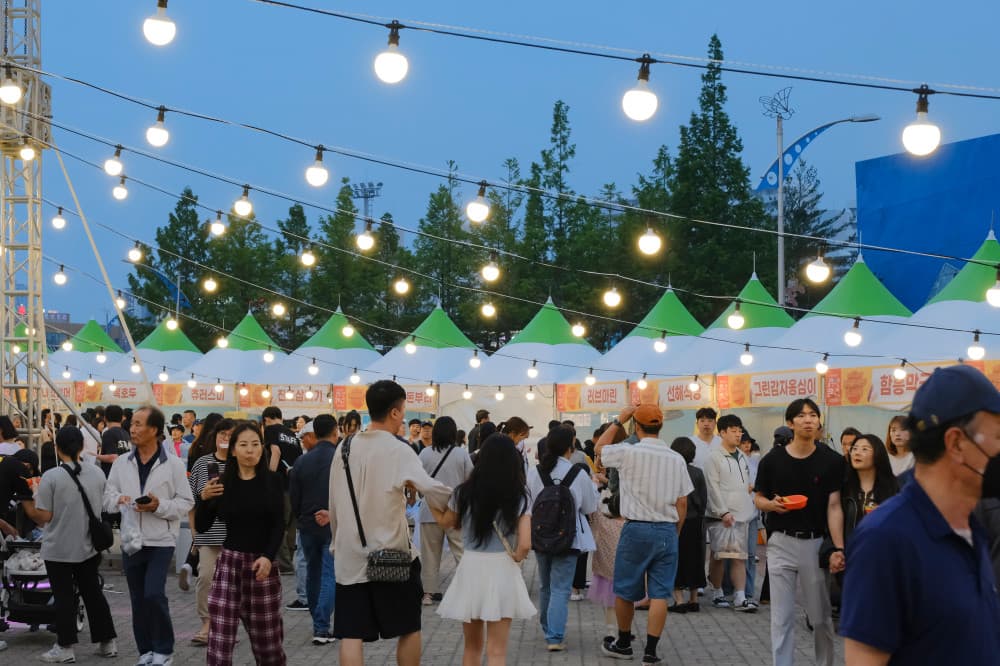
The 2026 Seorak Food Culture Festival — officially titled Daedongje · Seorak Food Culture Festival (2026 대동제_설악음식문화페스티벌) — was the food-focused half of Sokcho's biggest cultural weekend in May. It ran Friday, May 15 through Sunday, May 17 at Sokcho Expo Park, part of the broader Seorak Musan Cultural Festival, and in 2026 arrived at its 3rd edition.
The word Daedongje (대동제, roughly "great gathering festival") is a traditional Korean community-festival designation that signals harmony and collective celebration. For the food programming, that translates into a three-day open-air food zone built around Sokcho's mountain-and-sea geography, with a curated lineup of regional ingredients rather than generic fair food.
This guide is for foreign visitors and English-reading residents using the 2026 edition as an archive and planning reference. Below you'll find the hours, the food, the prices, and how to pair this kind of festival weekend with the rest of the city.
Key Takeaways
- Dates: Friday, May 15 – Sunday, May 17, 2026 (3rd edition)
- Hours: Fri 15:00–20:00 · Sat–Sun 11:00–20:00
- Venue: Sokcho Expo Park (Expo Tower Plaza area)
- Admission: Free (food is pay-per-item, ~W5,000–15,000/dish)
- Booths: 26 vendor booths across meals, dessert/snacks, coffee, and beer
- Menu guide: English smart map in the Seorak Musan Festival collection
- Parent event: Seorak Musan Cultural Festival (separate guide)
- 2026 result: The parent festival reported about 80,000 visitors over three days, with the food zone accounting for 26 food vendors.
Quick Facts
| Detail | Info |
|---|---|
| Official program name | Daedongje · Seorak Food Culture Festival (2026 대동제_설악음식문화페스티벌) |
| Dates | Friday, May 15 – Sunday, May 17, 2026 |
| Venue | Sokcho Expo Park — Expo Tower Plaza area |
| Edition | 3rd Seorak Food Culture Festival |
| Food booths | 26 final vendor booths |
| Admission | Free (pay-per-item at booths, typically W5,000–15,000/dish) |
| Parent event | 2026 Seorak Musan Cultural Festival |
| Post-event scale | Parent festival reported about 80,000 visitors across three days |
Operating Hours
| Day | Time |
|---|---|
| Friday, May 15 | 15:00 – 20:00 |
| Saturday, May 16 | 11:00 – 20:00 |
| Sunday, May 17 | 11:00 – 20:00 |
Friday's shorter window (opening at 15:00) is typical of day-one fair operations in Korea — vendors set up in the morning, opening ceremonies begin mid-afternoon, and the food zone runs into the evening. Saturday and Sunday open at 11:00 in time for lunch traffic. All three days close at 20:00.
As of June 17, 2026, the 2026 food festival has closed. Use the schedule and price bands below as a record of the 2026 edition and as a practical signal for future May planning.
Why Sokcho Is the Right Place for a Food Festival
Sokcho's food identity has two hard-to-separate halves. Mt. Seorak gives the region wild greens (산나물), mushrooms, buckwheat, and tofu-making traditions shaped by a cold inland climate. The East Sea gives it pollack, snow crab, squid, flounder, and the mulhoe cold raw-fish soup the coast is known for. Very few Korean cities sit close enough to both for the two halves of their cuisine to coexist on a single menu, let alone a single market stall.
That geography is what the festival is actually about. The organizer's public framing makes this explicit — the event is meant to foreground the region's ingredient base, not to be a generic spring food market. In 2026, the explicit vendor expectation was that participating booths build menus around Gangwon regional specialties or locally meaningful ingredients, not off-the-shelf fair food. That is the detail that sets this event apart from the dozens of other spring food festivals on the Korean calendar.
For background on Sokcho's broader food culture, see 11 Must-Try Dishes in Sokcho and the Sokcho Tourist & Fishery Market Guide.
What the Food Culture Festival Is For
The event operates on three purposes at once:
- Regional food identity — making Sokcho's mountain-and-sea cuisine legible to visitors in one walkable zone, rather than spreading it across multiple restaurants, markets, and neighborhoods.
- Local vendor platform — giving small food businesses and producers direct access to festival-scale foot traffic. The final 2026 food map lists 26 vendor booths — a size that makes the food zone a destination in its own right, not an incidental snack stall.
- Festival-scale civic purpose — extending the Seorak Musan Cultural Festival's commemorative frame into the region's economy, so that the weekend supports small producers as well as cultural programming.
What Visitors Can Expect to Eat
The final 2026 vendor PDF confirms a practical festival-food mix: full meals, seafood bowls, noodles, snacks, dessert, coffee, and beer. For English readers, the best way to read the menu is pronunciation-first. The name should preserve the Korean food word where possible, while the explanation tells you what it is and whether it is spicy, seafood-heavy, alcoholic, cold, shareable, or a full meal.
| Category | Confirmed examples | Typical price |
|---|---|---|
| Meals | Bibimbap, haemul deopbap, hongge ramyeon, ssal-guksu, donkkaseu, kalguksu | W8,000–15,000 |
| Sokcho seafood | Hongge rice noodles, saeu gunmandu, myeongtae chicken, saeu gangjeong, hongge egg tart | W5,000–15,000 |
| Snacks | Tteokbokki, hotteok, gim bugak, dakgangjeong, churros, gamja twigim | W1,500–10,000 |
| Dessert and drinks | Hodu-gwaja, gelato, jjondeuk cookie, latte, ade, sikhye, craft beer | W1,000–14,000 |
The full booth-by-booth English menu is in the Seorak Musan Festival smart map. It keeps names like Gim Bugak, Hotteok, Hongge Ramyeon, and Memil Jeonbyeong in Korean pronunciation, then explains the dish in plain English.
For festival-goers who want to compare what is on the Expo Tower Plaza with what is in the city, the Sokcho Tourist & Fishery Market is a 15-minute walk west — which makes a back-to-back tasting afternoon reasonable.
Festival food stalls do not usually take cards for every transaction. Bring W50,000–70,000 per person in cash if you want to graze widely. ATMs are clustered near the bus terminal and Jungang-dong, not on the Expo grounds.
How the Food Zone Is Structured
Based on the final 2026 map, the food zone holds 26 booths around the central dining zone, with booth numbers arranged in three visible runs: 1-13 along the bottom, 14-24 along the left side, and 25-26 near the top-left beer area. Recruitment guidance emphasized two requirements worth knowing as a visitor:
- Menu suitability — vendors were asked to choose dishes appropriate for outdoor festival service (prep speed, holding quality), not plated restaurant courses.
- Regional character — menus should draw from Gangwon or Seorak-area ingredients where possible.
The combined effect is a food zone that reads closer to a curated regional food court than to an open-call street market. For a city whose food economy already has national brand recognition, that curation matters.
Why This Festival Deserves Its Own Visit
Even though the Food Culture Festival sits inside the larger Seorak Musan Cultural Festival, it has a fundamentally different audience than the youth programs and literary commemorations on the other side of the lawn. A parent showing up for the national children's choir on Saturday will probably walk through the food zone on the way out. A traveler arriving specifically for the food can ignore the stage schedule entirely and still leave with the best one-hour tasting cross-section of Sokcho's cuisine available in public that weekend.
That split is the reason this post exists separately from the Musan festival post. The food festival stands up on its own logic — Sokcho's ingredients, the region's geography, the city's interest in protecting its food identity — and it rewards a focused visit rather than a tacked-on stop.
Who This Weekend Is For
- Food travelers who want to sample Sokcho's cuisine without booking five restaurants in three days.
- Families who want a walkable, affordable, outdoor meal environment tied to a larger cultural event.
- Writers, photographers, and food creators — the lineup is small enough to cover cleanly and specific enough to be interesting.
- Visitors coming in from Seoul for the weekend who want a single civic event to anchor their Saturday before Mt. Seorak on Sunday.
For a full two-day route that pairs the festival with a Mt. Seorak hike and the coast, see our Sokcho Weekend Trip guide.
Getting There
From Seoul by bus: Express bus to Sokcho Express Bus Terminal (2h 20min from Gangnam or Dong Seoul), then a 10-minute taxi or 25-minute walk along the coastal path to the Expo Park.
By city bus: Multiple Sokcho lines serve the Jo-yang / Expo area. Check Naver Map or KakaoMap for current routing.
By car: Sokcho Expo Tower area, Sokcho-si. Paid parking is available at Sokcho Expo Park, but fills fast during the three-day festival. Public transport is faster most of the weekend.
Full transport primer: Getting to Sokcho from Seoul · Sokcho Without a Car.
Pair It With the Rest of Sokcho
The Expo Tower Plaza is central enough that a half-day food visit leaves time for almost anything else in Sokcho on the same trip:
| Add-on | Why |
|---|---|
| Cheongchoho Lake walk | Loops the Expo Park's south edge — good post-meal walk |
| Expo Tower | 73.4 m observation deck, W1,500–2,500 admission |
| Sokcho Tourist & Fishery Market | 15-minute walk — compare the festival's Seorak-region menu with the city's standing seafood scene |
| Sokcho Beach | 20-minute walk — Sea of Light media art Fri/Sat nights |
| Mt. Seorak National Park | Bus 7/7-1 to Ulsanbawi or Biryong Falls |
Notes on Sources
Dates, the 3-day structure, booth count, menu names, and prices were refreshed from organizer/event materials and then reflected in the Seorak Musan Festival smart map. Post-event scale was refreshed from local reporting after the May 15-17 festival closed.
Day-of details that can still change — sold-out items, temporary booth pauses, payment behavior, and last orders — should be checked at the festival ground.
Plan Around It
Sokcho in mid-May is one of the better weekends for visitors who care about food: the weather is mild, the restaurant scene is in spring stride, and for three days the Seorak Food Culture Festival pulls the region's cuisine into a single open-air space. If you want the food festival built into a route that also includes a Mt. Seorak trail, a seafood market meal, and a specific restaurant window, ask the HeySeorak chat on the homepage — it can fold the weekend into a concrete plan tied to your dates.