The story
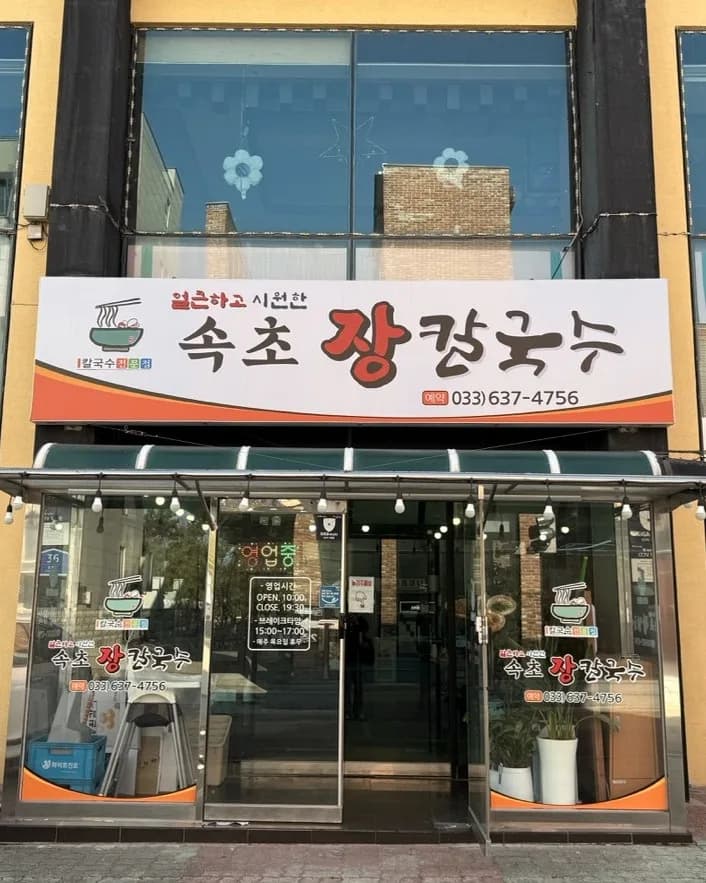
The recipe goes back roughly twenty years to the owner's mother-in-law, who ran the original jang-kalguksu shop. The family has moved three times within Sokcho — from the express bus terminal to Johyang-dong to Gyo-dong — each time because the crowds grew unmanageable. Rather than expand, they downsized and rebranded. The current Sokcho Jang Kalguksu opened on April 3, 2025, in a clean new building near the Expo tower, chosen for its parking, foot traffic from nearby attractions, and a hygienic kitchen the owner could design from scratch.
“위생이 제일 중요해요 — 'Hygiene comes first. That's the one thing we'll never compromise on.'”
Owner, Sokcho Jang Kalguksu
What they stand for
Hygiene and cleanliness are non-negotiable — the owner chose this specific building partly for its brand-new kitchen. The husband cooks every bowl of noodles al dente, firm and chewy, never letting them go soft the way his mother-in-law used to. If an older guest asks for softer noodles, he'll boil a separate batch just for them. The seafood is all Sokcho-sourced: clams, squid, scallops pulled from local waters.
Behind the signature
Two dishes define this place. The jang-haemul-kalguksu is a spicy gochujang broth swimming with Sokcho clams, squid, and scallops — 'eolkeun' (얼큰), the Korean word for that throat-warming, sinus-clearing heat that still feels clean. The son-mandutguk was added when they reopened: handmade dumplings filled with domestic kimchi, pork, and vegetables, each one folded by hand every morning.
Local tip
The shop is tucked in the alley just in front of the Expo landmark tower — look for the sign at street level. Free parking available, which is rare for Sokcho restaurants. The Expo park and Cheongchoho Lake are a short walk away.
Seasonal note
Kongguksu (chilled soy milk noodles) and bibim-kalguksu (spicy mixed noodles with plenty of vegetables) appear only in summer when the weather turns hot.
For travelers
Foreign guests visit regularly, often with Korean friends who handle the ordering. The owner communicates with simple English — 'spicy,' 'seafood,' 'vegetable' — and there's a picture menu on the wall. Most foreigners eat the jang-kalguksu without trouble; those who can't handle heat switch to the plain son-kalguksu and enjoy it just as much.