The story
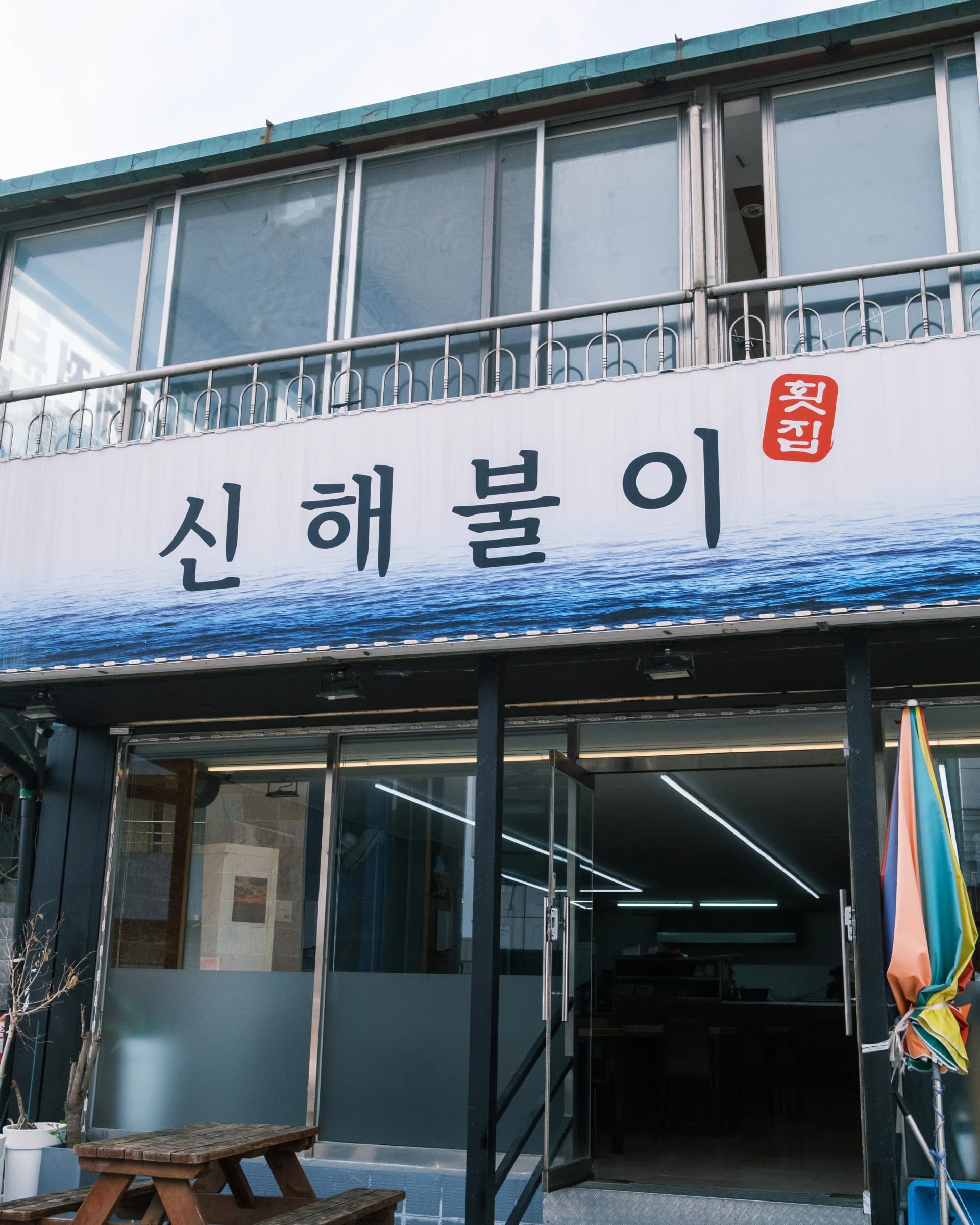
Before the knives and tanks, the owner was running a business with his father in Seoul. It failed. He went home and waited. In 2014 his father-in-law drew an allocation from the Daepo Port fishing cooperative — a permit to open a raw fish house in the newly rebuilt market — and asked him to come help. He moved to Sokcho to help, and eventually bought the shop outright from his father-in-law. The first three years ran until three or four in the morning and never broke even. The fourth year finally tipped into profit. Covid turned Sokcho into Korea's hottest domestic tourist town, which was good for a while and then wasn't. Today he runs two neighboring units on the port — the original cooperative stall and the one he bought across from it.
“제 기준에 퀄리티를 유지하려면 게 수율이 75에서 80퍼센트는 나와줘야 돼요. 그 밑이면 원가 5-6만 원짜리 게도 그냥 버립니다. — 'To hold my quality standard, a crab has to yield at least 75 to 80 percent meat. Anything less, I throw it out — even if it cost me fifty or sixty thousand won.'”
Owner, Hanseongho
What they stand for
He came into the business in his thirties — late by industry standards — and spent his first years watching what the older hands did and quietly deciding to do the opposite. No more reusing fish-handling towels; his kitchen runs on disposable kitchen paper. Every surface gets scrubbed like a home kitchen, not a port stall. He earned a blowfish-handling license so fugu could appear in almost every assorted sashimi platter, year-round, barring a month or two when it isn't available. His margin runs 30–40% while the industry average is 50–60%. His rule on quality is simple and expensive: if a fish doesn't clear 75–80% of his own standard, it gets thrown out, even if the cost was ₩50,000 or ₩60,000.
Behind the signature
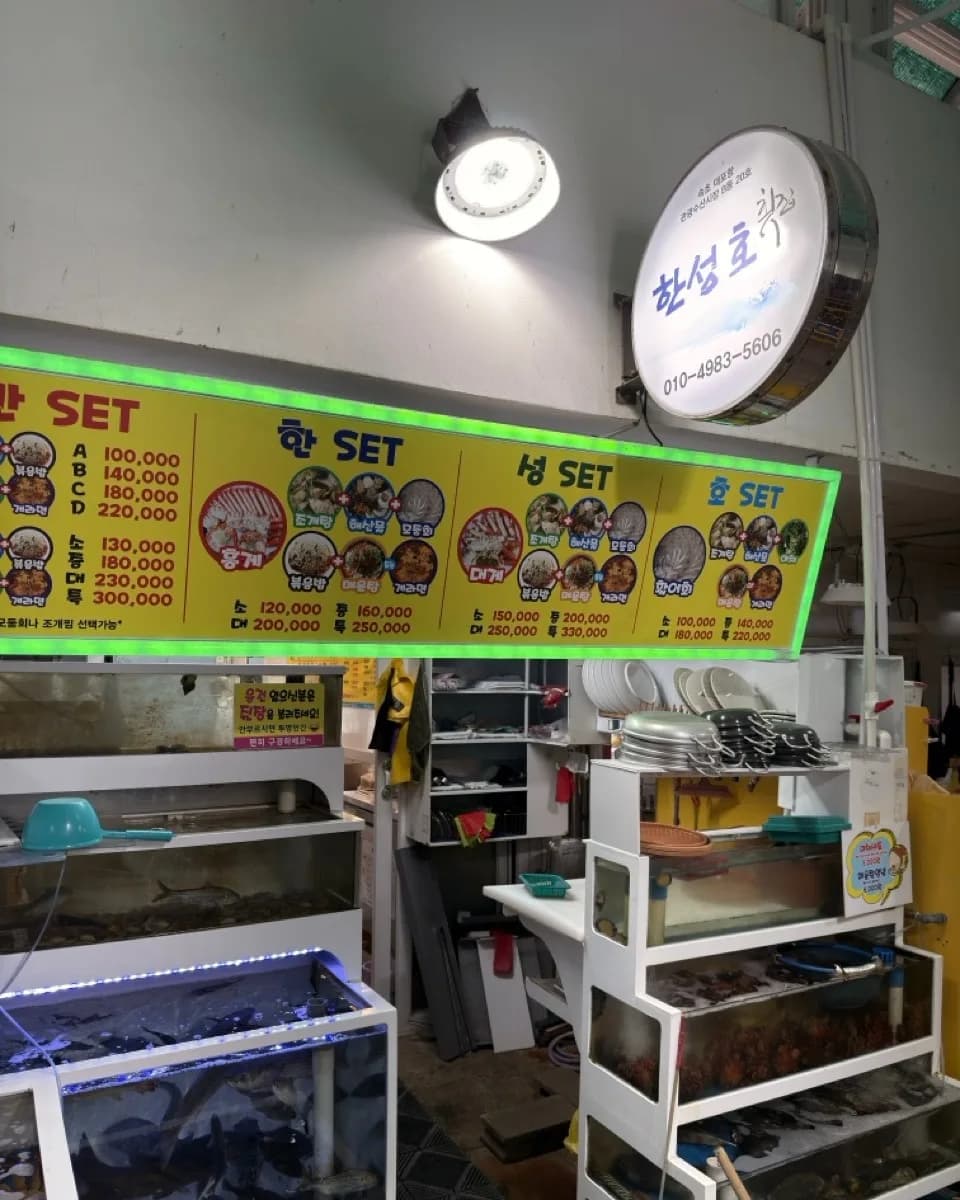
The house sets are built from the owner's own name — 한 (Han), 성 (Seong), 호 (Ho) — one character per course. Han is the red-crab set, the friendly entry point. Seong is the snow-crab set, the mid-premium option. Ho is the pure-sashimi set, for tables that want to taste what came in that morning without the crab spectacle. Every assorted platter, whatever the set, leans on seasonal wild fish first — the kind of fish most diners never get to try unless they're at a port. And thanks to the blowfish license, fugu is almost always in the mix. Ninety percent of what goes out is a set, and seventy percent of guests are repeat customers who learned the sets by heart and bring friends.
Local tip
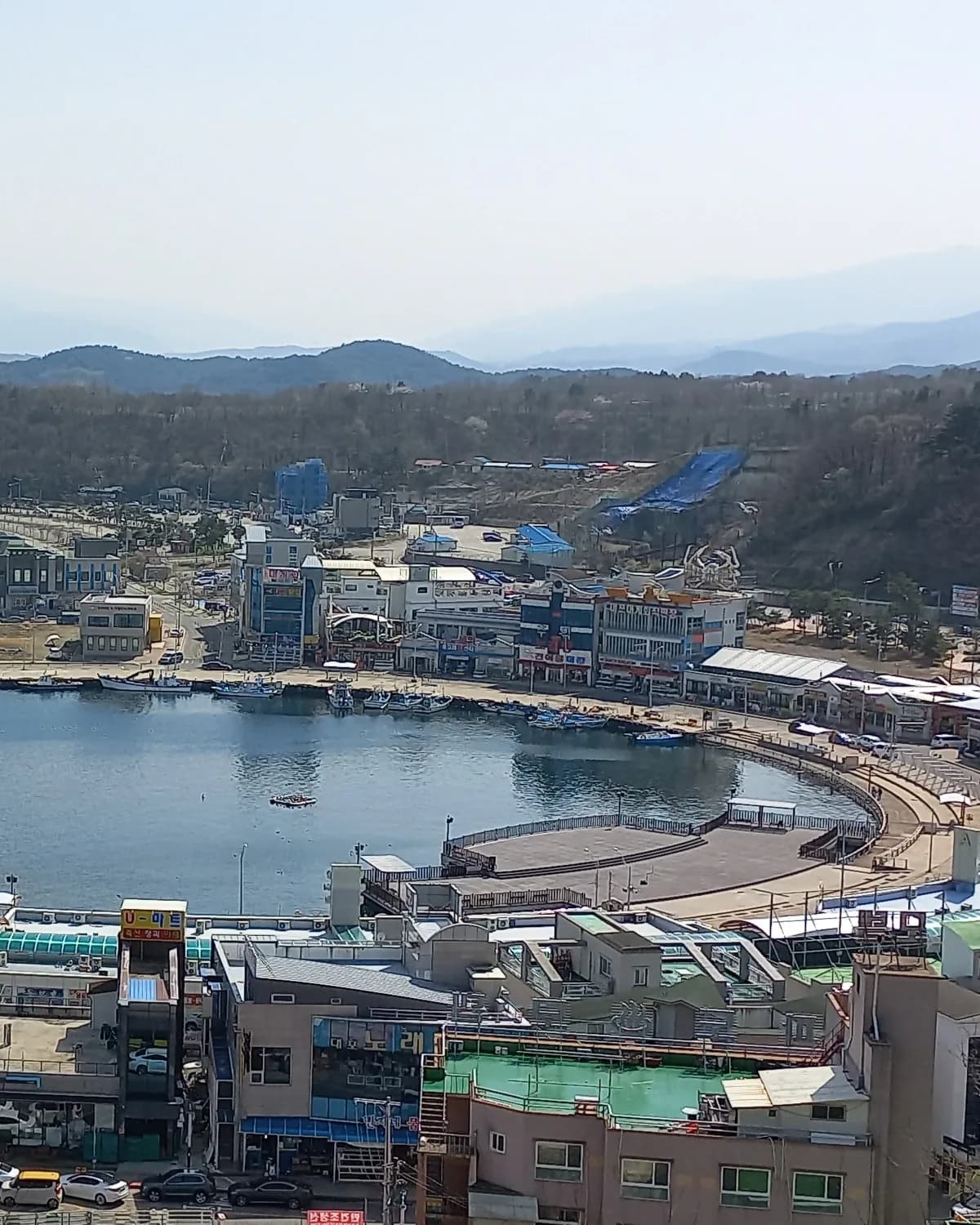
Hanseongho sits inside the Daepo Fishery Market complex on Daepo Port, about ten minutes south of downtown Sokcho. The restaurant occupies two neighboring units — the original fishing-cooperative stall and the one bought across from it. Take bus 9 or 9-1 to the Daepo Port stop, or park in the Daepo 1st Public Parking Lot and walk in. If you're driving back from Seoraksan, it's on the way.
Seasonal note
Red snow crab (hong-ge) is off-limits during the July–August closed season, so the hong-ge ramyeon gets swapped for abalone ramyeon during those two months. The assorted sashimi always leans on whatever wild fish is running — it shifts month to month, which is the point.
For travelers
Over the past ten years a handful of foreign guests have made it through the door, and the owner has gotten through the language barrier the same way everyone does — a translator app and patience. One memorable table taught him something new: they took everything in front of them, including the sea squirt (meongge), and dropped it into the clam-broth hot pot to cook it. Every plate was cleaned. He realized he could offer the whole menu cooked, not just raw, for anyone who wasn't sure about sashimi — and he's been happy to do it since. Most foreign guests, it turns out, eat the sashimi just fine. There hasn't been a dish yet that anyone refused.