The story
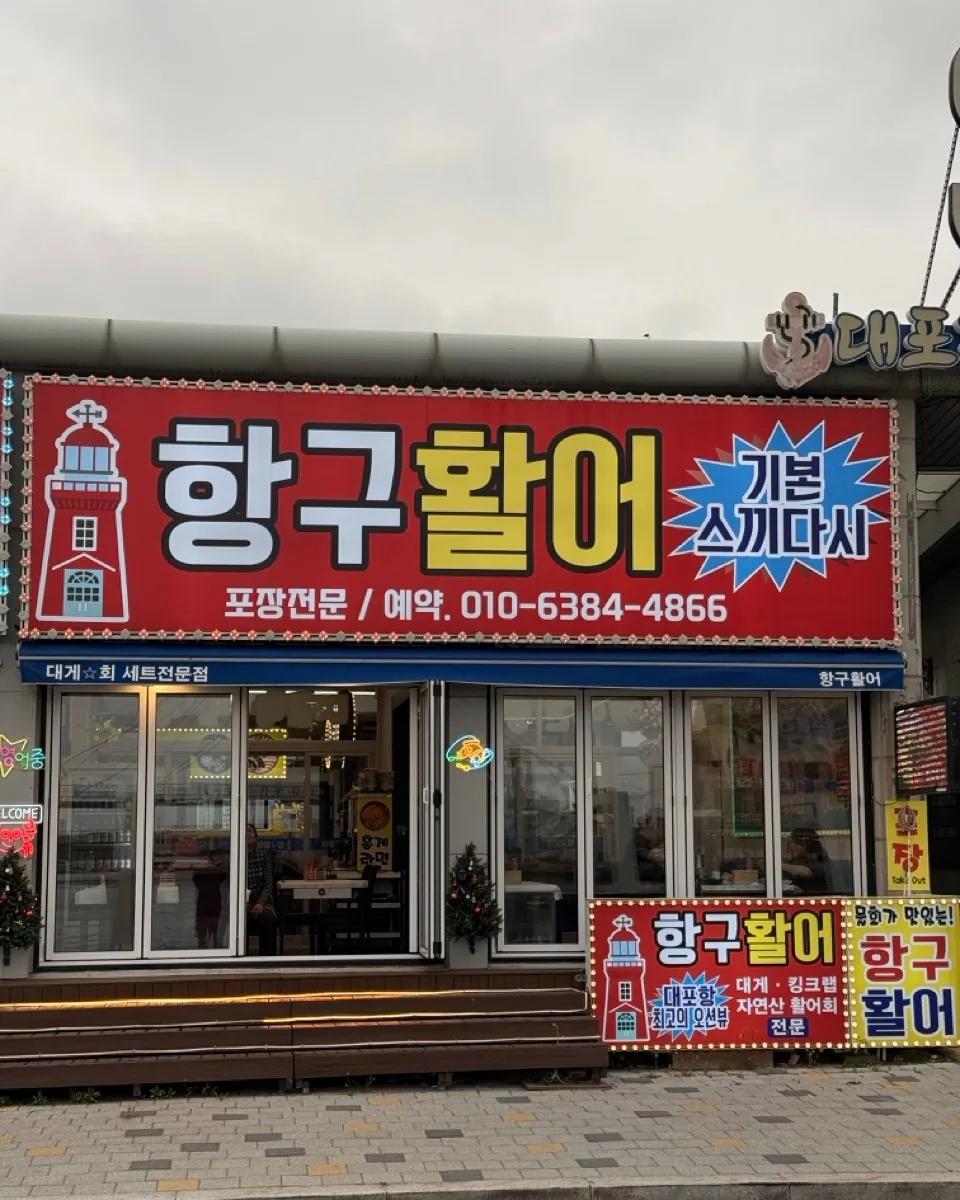
Thirty years ago, the current owner's mother set up a stall in Daepo Port's old nanjeon — the open-air raw fish market that used to line the harbor in plywood-and-tarp buildings. When the port was reclaimed and rebuilt about a decade ago, long-time vendors were given allocation rights in the new structures. The family moved into this smaller, permanent building. The daughter has been running it for over twenty years now; what the new space lost in scale, it gained in family rhythm — two generations, one kitchen, regulars who have been coming since before the port was paved.
“세트 메뉴 말고 드시고 싶은 거 말씀해 주세요. 저희가 맞춰 드릴 수 있어요. — 'Don't feel stuck with the sets. Tell me what you want to eat, and we'll put it together for you.'”
Owner, Hanggu Live Fish
What they stand for
Freshness is the line they refuse to cross. The owner says she has almost never received a complaint about her sashimi — and she means it as a standard, not a boast. Fish rotates daily through vendors and the Daepo Port auction depending on the season: farmed for consistency, wild when the boats bring in something worth serving. Snow crab comes from Russia when the domestic haul is short, but nothing frozen goes out. The side dishes change with the weather — warm ones in winter, chilled mulhoe spreads in summer — because the owner thinks what you eat alongside the fish matters as much as the fish itself.
Behind the signature
The spicy fish stew (maeuntang) is the dish regulars drive from Seoul for. There is no secret recipe — the owner is the first to admit this — but something about the balance of broth, bone, and just-killed fish makes it consistently beat the stews at neighboring places. The kimchi pancake, a throwaway side dish at most sashimi houses, has become its own quiet signature: thin, blistered, and good enough that customers ask what's in it. The answer is nothing fancy; just made fresh, every day.
Local tip
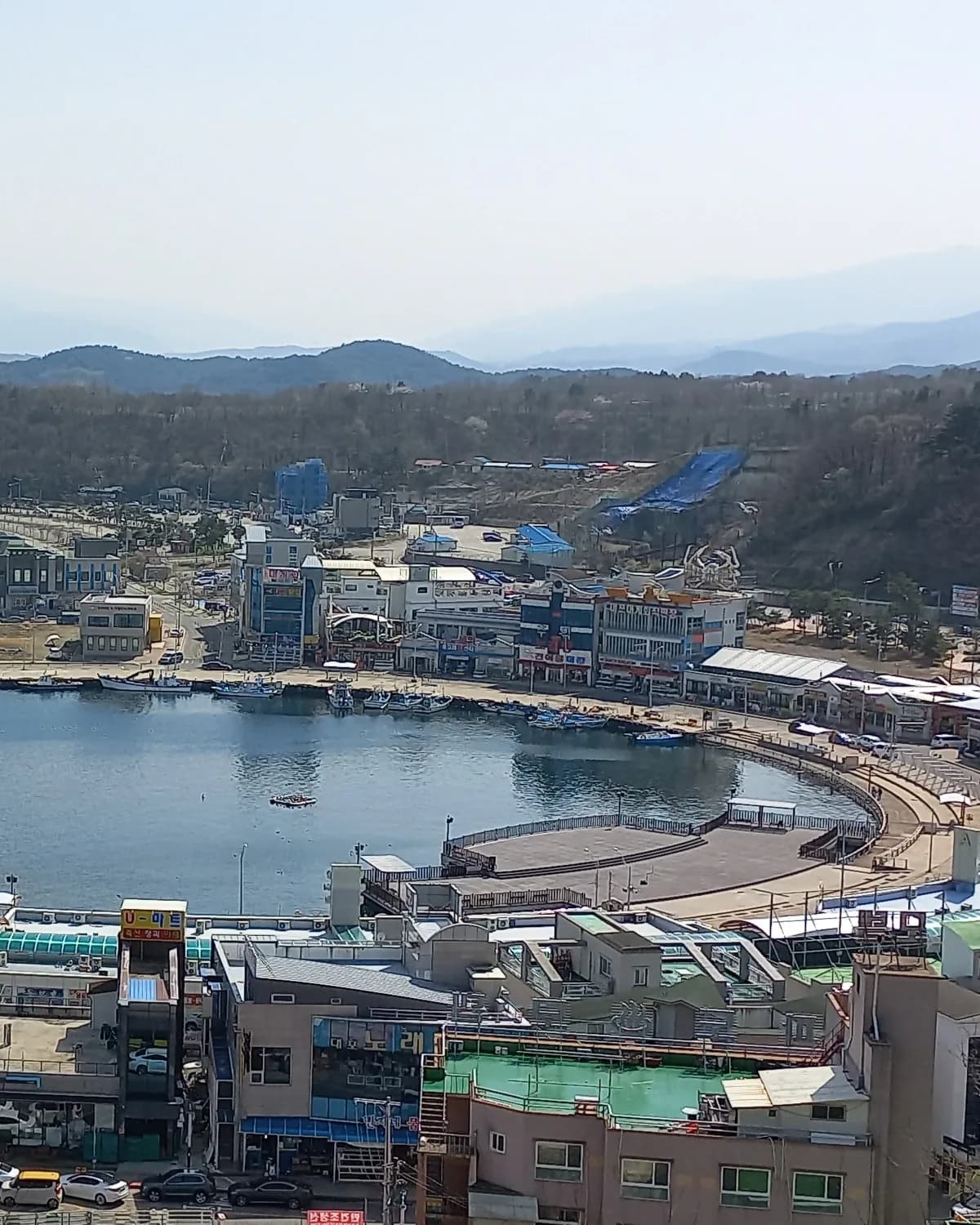
Hanggu Live Fish is inside Daepo Port's main dining strip on Daepohang-gil, a 10-minute drive south of downtown Sokcho. Take bus 9 or 9-1 to the Daepo Port stop, or park in the Daepo 1st Public Parking Lot and walk in. The restaurant has an ocean view — ask for a window table if you can. It's on the way back from Seoraksan, which makes it a natural post-hike stop for dinner.
Seasonal note
The side dish spread rotates with the season: hot stews and warm banchan in winter, chilled mulhoe and cold seafood platters in summer. Wild-caught fish varies by what the morning auction brings in — rockfish, sea bream, olive flounder, depending on the month. Traffic spikes during Sokcho's fall foliage season and when cruise ships dock at Sokcho Port.
For travelers
The owner's family lived in the US, so English is not a problem here — a rare thing on Daepo Port. She's happy to customize: grilled fish instead of raw, steamed crab pre-cracked so you don't have to wrestle the shell, milder side dishes for kids. One group of guests from Singapore came in holding a translator app, trying to ask if they could skip the set menus and order à la carte; the owner answered in English, they built their own spread piece by piece, and left raving. Most foreign visitors here love the grilled fish and steamed crab, and are usually happiest when someone walks them through the banchan spread — the free side dishes that come with every table still surprise people.