Kitchen Ohmu
키친 오뮤
A reservation-only Japanese dining room near Sokcho's central market, where a chef with nearly a decade of sushi omakase experience serves a seasonal six-course meal that blends Japanese technique with French touches. The menu rotates every three months — built around whatever the local boats and market auctions bring in that morning. No sushi counter theatrics, just a quiet room and a meal you won't find twice.
29 travelers viewed this
Interviewed by HeySeorak on 📖 Owner story included
Best For
Date nights and refined flavors
Area
Downtown
Price
₩₩₩ Premium
Reviewed by HeySeorak Editorial · Updated
Info
111-4 Jungang-ro, Sokcho, Gangwon
강원특별자치도 속초시 중앙로 111-4
Reservation only. Two seatings per night. One drink minimum per person. Closed every Tuesday.
The Story
He spent eight or nine years behind the counter at sushi omakase restaurants, learning to read fish the way some people read weather. When it came time to open his own place, he chose Sokcho over Seoul — his wife grew up here, and he wanted a kitchen near the water, not a basement in Gangnam. He opened Kitchen Ohmu on November 27, 2022, just as COVID was loosening its grip, in a quiet spot he picked for three reasons: no key money, easy parking, and walking distance to the market where he buys his fish every morning.
“새롭지만 익숙한 맛 — 'New, but familiar.' That's the line I cook toward every night.”
— Owner, Kitchen Ohmu
What They Stand For
He calls it 'new but familiar' — a six-course meal that starts with Japanese foundations and borrows from French technique wherever it makes the dish better. The courses move from cold (chawanmushi, sashimi) through warm (papillote, soba) to a finishing rice pot and dessert. He sources everything from the local markets — Sokcho Tourist & Fishery Market, the wholesale seafood market, the Daepo Port auction — and builds menus around what's best that week. His secret, he says, isn't a secret at all: recipes anyone could follow, but that demand so much time and patience that most kitchens give up.
Behind the Signature
The dish that defines Kitchen Ohmu is the cheong-eo rillettes — herring mashed with potato, spread on bread, a French bistro move executed with Japanese precision. It shows up in spring and summer when herring is at its peak. Come fall, the kitchen pivots to mackerel and yellowtail. Right now the seasonal anchor is a mackerel soba — buckwheat noodles in a broth that changes with whatever the boats brought in. The menu rotates roughly every three months, and regulars plan return trips around it.
Local Tip
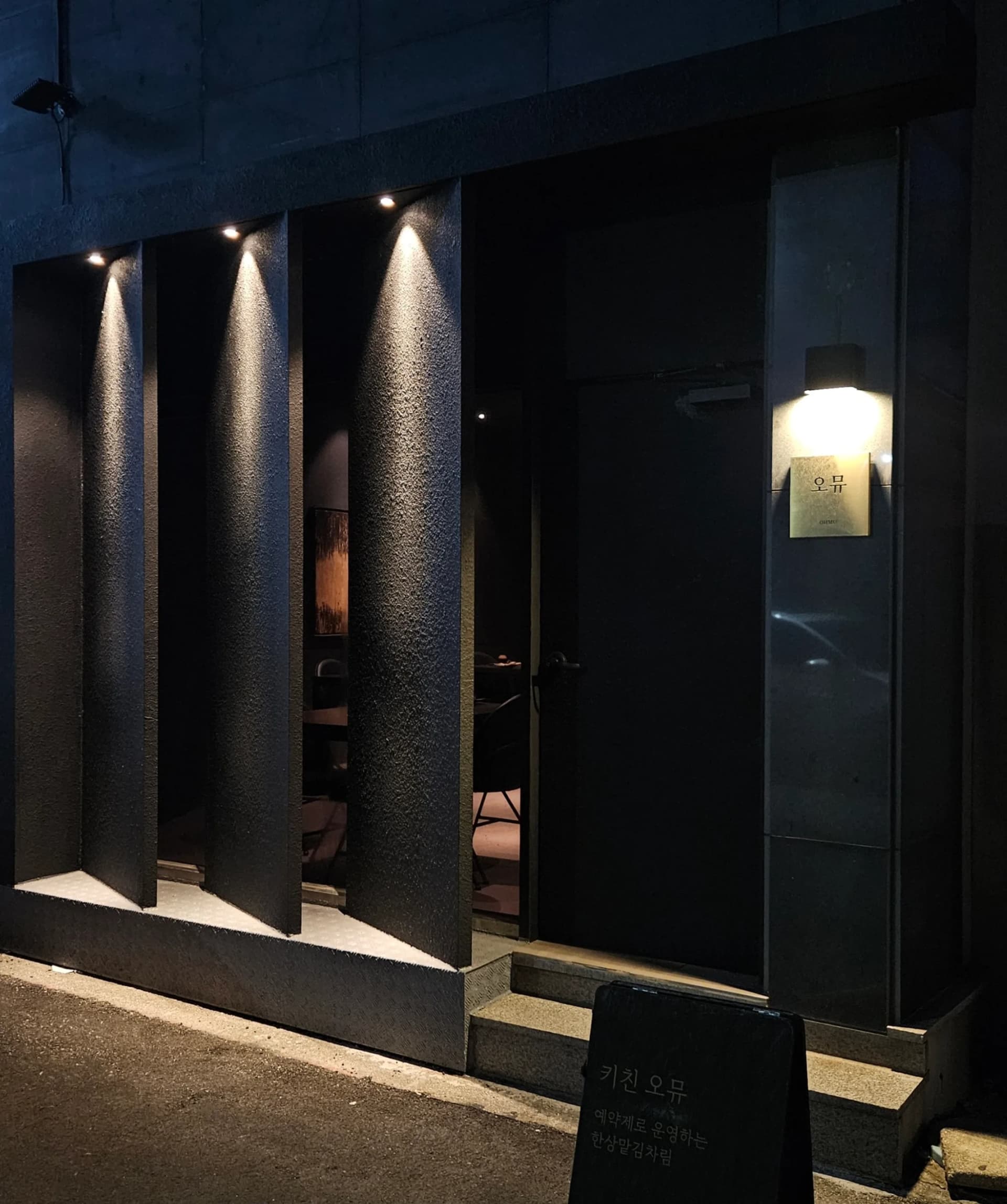
The restaurant sits on Jungang-ro, the main road through downtown Sokcho, about a 5-minute walk south of the Tourist & Fishery Market. Street parking is easy. It's a residential stretch — no neon, just a wooden sign that reads 'Japanese Dining.' Look for it across from the Lotte Cinema area.
Seasonal Note
The omakase menu rotates every three months. Current season (spring 2026): chawanmushi, sashimi, mackerel soba, papillote, clay pot rice, and dessert. The herring rillettes — the chef's signature — return in late spring when herring peaks.
For Travelers
The chef handles English service himself — not fluent, but enough to explain each course as it lands. One night, an Italian chef visiting from Rome tasted the papillote and started asking for recipes, recognizing the French and Italian influences hiding inside a Japanese framework. The papillote — fish baked in parchment with vegetables, finished with brown butter — is consistently the dish foreign guests remember most. No one has ever refused a course.
Start with these dishes
The best first order for understanding what makes this place worth visiting.
Omakase Course (6 Courses)
오마카세 코스 (6코스)
A six-course seasonal meal: chawanmushi, sashimi, a warm main (currently mackerel soba), papillote, clay pot rice, and dessert. Menu rotates every three months.
How to order here
A simple flow for first-time visitors who want to order confidently.
Step 1
Order one signature first
If it is your first visit, start with Omakase Course (6 Courses). It is the easiest way to understand what this place is known for.
Step 2
Add a second dish for balance
a side or second dish usually rounds out the meal well, especially if your table wants both a safe choice and something more local.
Step 3
Use the menu as a script
Open the English menu and point to the exact item names if ordering feels awkward.
More from the menu
View full English menu →Sawaya Matsumoto Ultra — Junmai Daiginjo
사와야 마츠모토 ULTRA
ALC 19%. Kyoto. A rare, premium junmai daiginjo with elegant depth and subtle effervescence.
Yamahoushi Bakurai — Namagenshu
야마호우시 바쿠라이 나마겐슈
ALC 18–19%. Yamagata. A unique sparkling dry sake — the driest in Japan, with high acidity and amino richness.
Helpful guides
Practical reads to help you make the most of your visit.
You might also like
Nearby picks with a different category first, then backup options in the same area or city.