
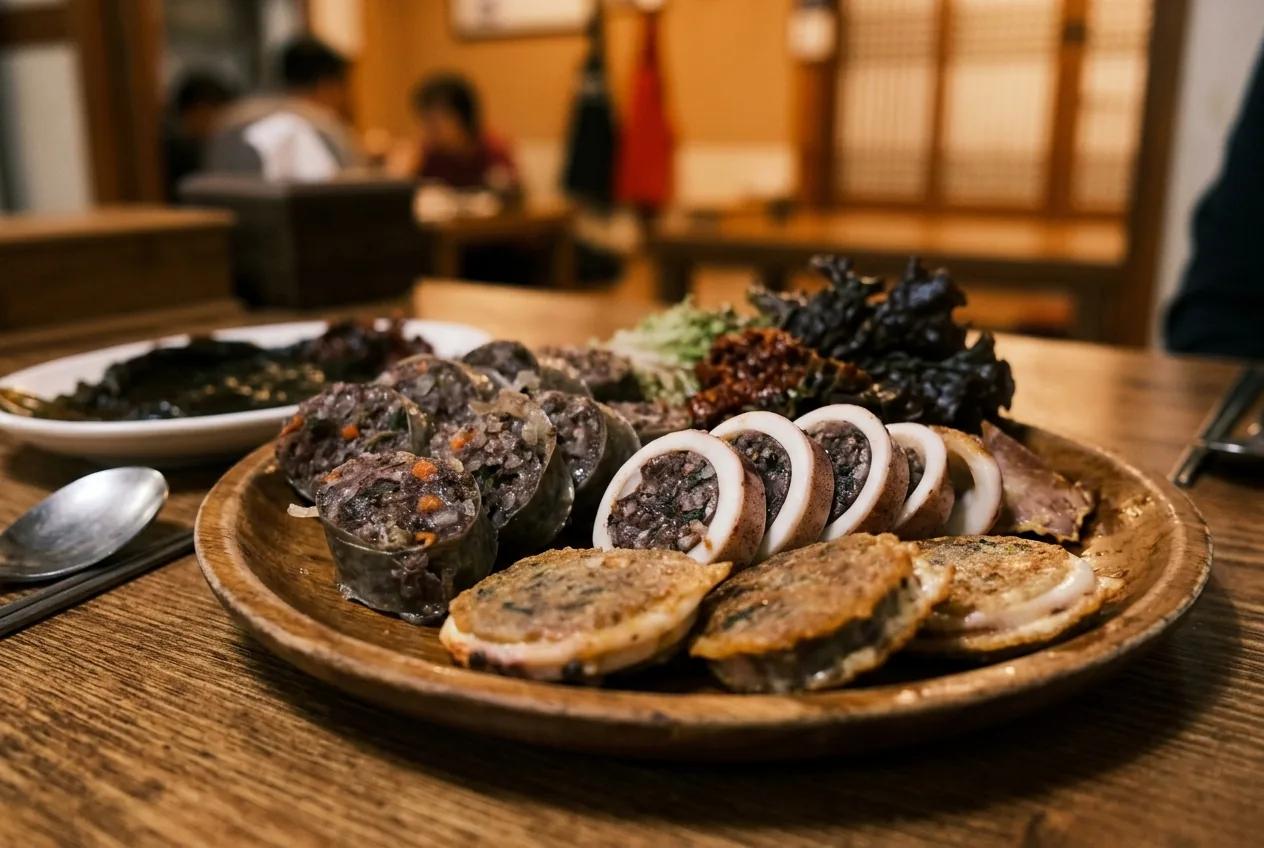
Sundae Alley
순대골목
Abai-sundae (Hamgyeong-style blood sausage) and ojingeo-sundae (stuffed squid) — refugee food that became Sokcho's signature. Smoky, peppery, unapologetically regional.
- Stalls
- ~12
- Signature
- Abai-sundae · ojingeo-sundae
- Typical plate
- 10,000–15,000 KRW
Place guide freshness
Last updated on
Why sundae is a Sokcho thing
Sundae — blood sausage — exists across Korea. But the Hamgyeong-style sundae (아바이순대) you find in Sokcho has a specific origin: families from North Korea's Hamgyeong province who settled here as refugees during the Korean War brought their recipes with them, and the Abai Village down the coast became the first place to cook and sell it commercially. This alley is where it diffused into the broader market.
Abai-sundae is fatter, more peppery, and more herbaceous than the Seoul or Daegu versions most Korean visitors grow up with. Ojingeo-sundae — where the sausage mixture is stuffed into a whole squid instead of pork intestine — is a Sokcho invention, and the single most regionally distinctive dish in the entire market.
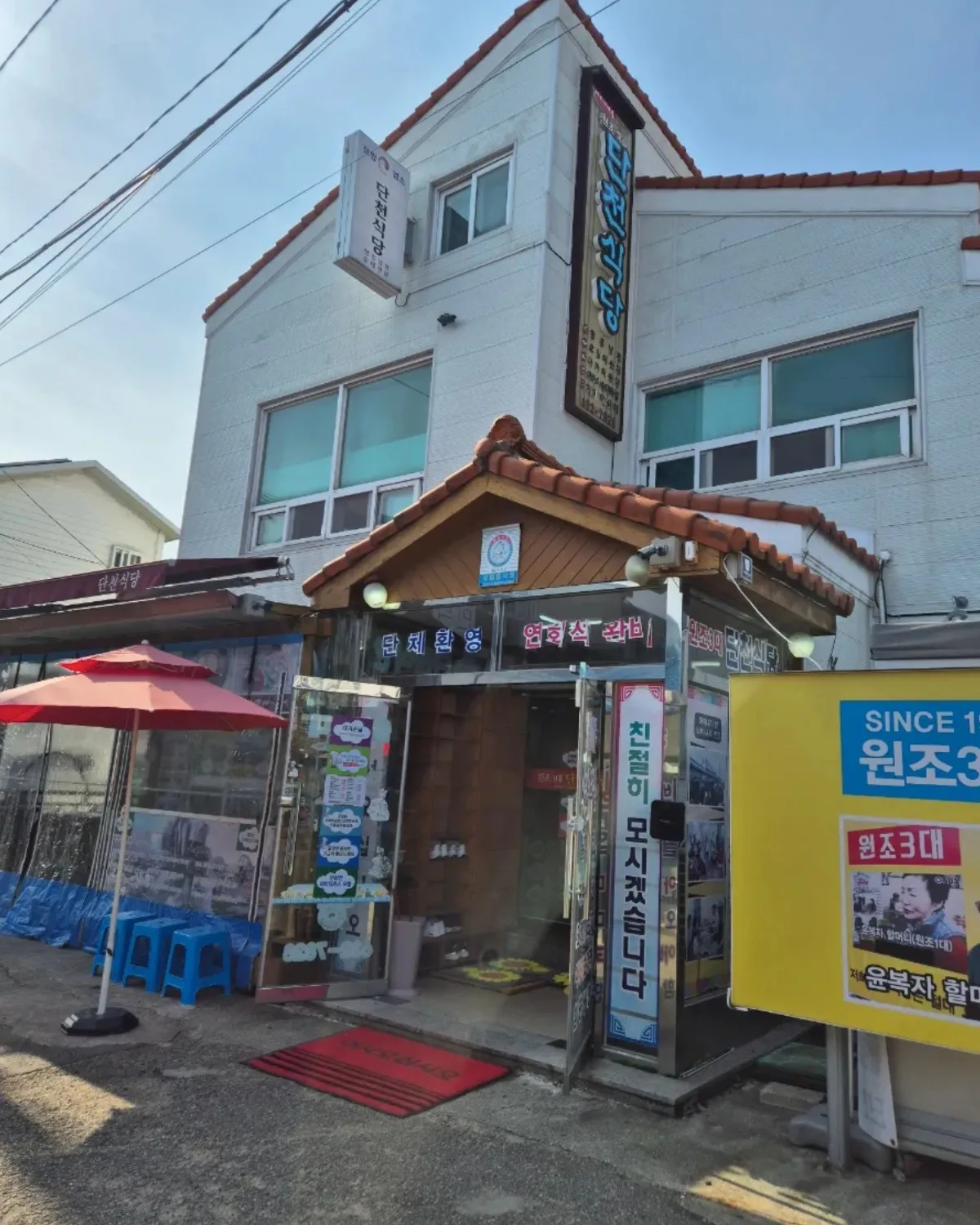
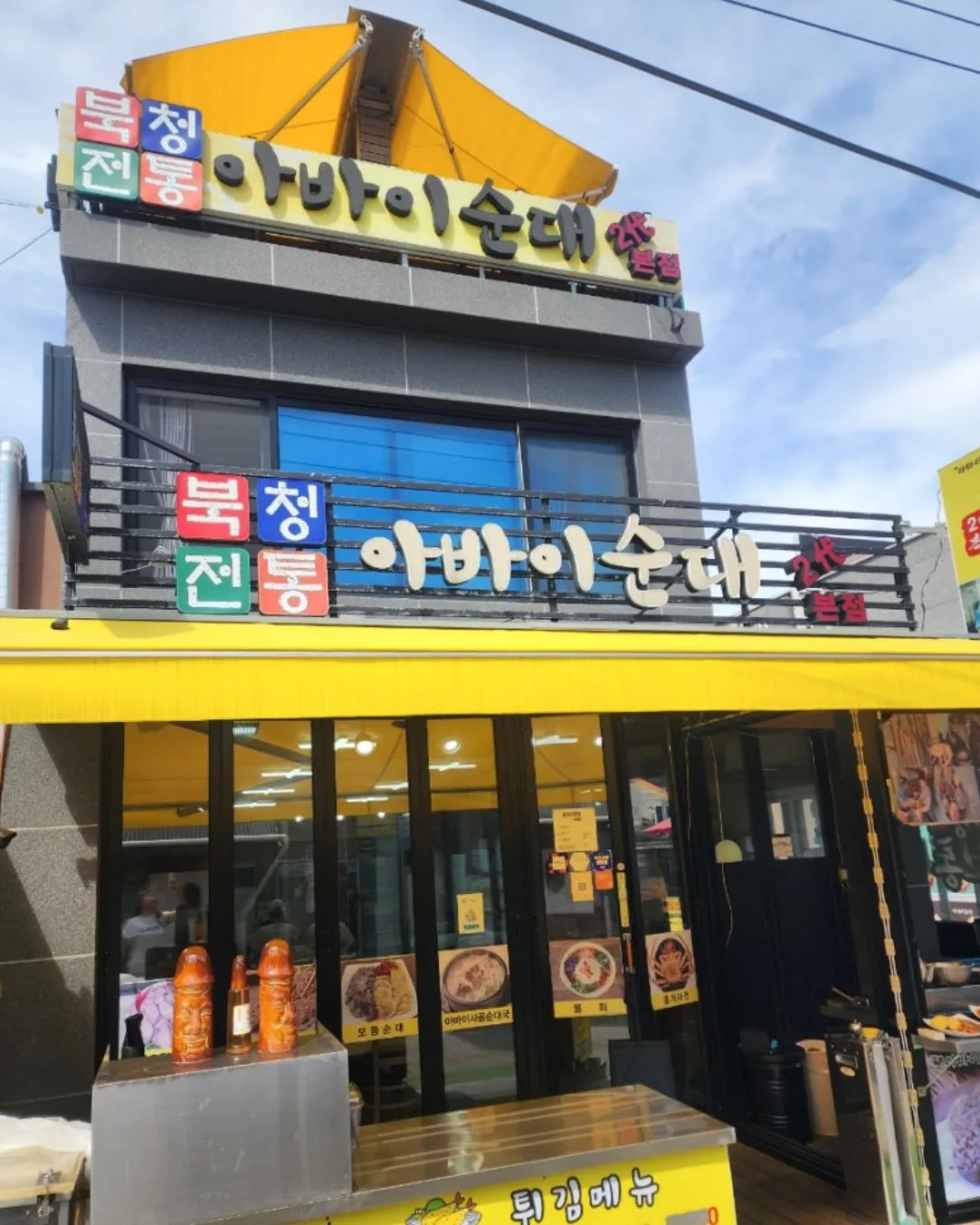
The destination shops — across the ferry
A practical note: the market's own sundae alley is ~12 mostly-unnamed quick-snack stalls. The famous Hamgyeong-style sundae destinations — TV-featured, multi-generation — are in **Abai Village itself**, a 4-minute gaetbae ride south across the estuary. For the market's convenience-grade 오징어순대 you can graze the alley; for the full experience, cross.
Tips
- First-timer order
- Ask for a combo plate — half abai-sundae + half ojingeo-sundae — so you experience both textures without over-ordering.
- Dipping
- The provided salt-pepper mix (후추소금) is the right move. Skip the soy sauce some tables default to — it overwhelms the herbs.
- Vegetarian?
- No vegetarian equivalent here. Head to the dakgangjeong alley for potato-pancakes (감자전), or skip this alley entirely.
- Drinks
- Pairs best with makgeolli (rice wine), not soju or beer. Most stalls stock a local Sokcho makgeolli in small brass kettles.