
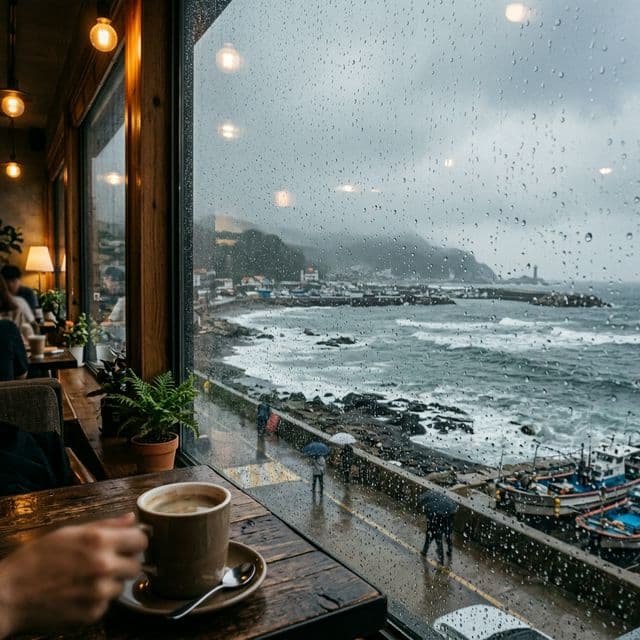
There is a particular quality to Sokcho under rain. The fishing boats bob harder in the harbor. Steam rises from every kitchen vent along the coast road. The mountains vanish behind a wall of cloud, and the whole city contracts into something warmer, closer, more interior.
A rainy day here is not a ruined day. It is a different day — one that trades panoramic views for covered alleys, windswept beaches for bowls of searingly hot broth, and ambitious itineraries for the kind of slow, well-fed afternoon that you actually remember six months later.
Here is how to do it well.
The Shape of a Wet Day
Forget your sunny-weather plan. The single biggest mistake visitors make when it rains in Sokcho is trying to salvage the original itinerary with an umbrella. Instead, reorganize around three principles:
- Stay in one district. Minimize taxi rides and bus transfers in the wet.
- Anchor to covered food. The market, a sit-down restaurant, a long cafe session — these become the day, not filler between sights.
- Build in one deliberate pause. A two-hour cafe window in the middle of the day is not laziness. On a gray afternoon, it is the move.
Morning: Start Under the Market Roof
The Sokcho Tourist & Fishery Market is the single best rainy-day anchor in the city. The main corridors are fully covered, the food stalls fire up early, and the energy of a working market cuts through any weather-induced lethargy.
Arrive around 10:00. Walk the full length once without buying anything — get your bearings, note what looks freshest, watch which stalls have the longest local queues. Then loop back. A bowl of something hot, a skewer of something grilled, and you have already won the morning.
If you want to know what to prioritize once you are inside, the 10 Must-Try Dishes in Sokcho guide is the right starting point.
The market works better as a first stop than a last stop on rainy days. Energy is higher in the morning, the crowds are thinner, and you set a warm, well-fed baseline for the rest of the day instead of chasing it later.
Midday: One Real Meal, Not Three Snacks
This is where rainy-day Sokcho gets genuinely great. The city's sit-down restaurants are built for exactly this kind of weather — hot, substantial, no-nonsense cooking that exists to warm you from the center outward.
Three excellent rainy-day lunches:
- Gyodong Jjambbong — A bowl of fiery jjambbong (spicy seafood noodle soup, ~W10,000) is the definitive gray-sky meal. The broth is volcanic, the noodles are springy, and you will emerge feeling restored.
- Seodam Ssalguksu — Whole crab rice noodle soup (~W16,000). They make only about 20 bowls a day, so arrive before noon or risk missing it. Worth every won on a cold, damp afternoon.
- Cheongchosu Mulhoe — If you still want something raw, their haejeon mulhoe (~W27,000) is excellent, and the lakefront setting gives you a moody view of Cheongchoho even through the rain.
Pick one. Sit down. Order something that steams when it arrives at the table. This is not a day for speed-eating between attractions.
Afternoon: The Long Cafe Window
The temptation on a rainy afternoon is to hop between three or four small indoor stops — a museum here, a gallery there, a quick coffee in between. Resist it. Every transfer in the rain costs you comfort and momentum.
Instead, commit to one extended cafe session.
Chilsung Boatyard is the best option. A converted lakeside space open roughly 11:00 to 20:00, it works as more than a quick coffee stop. The views across the water are atmospheric in rain, the seating is comfortable enough for an hour or two, and the whole experience feels distinctly Sokcho rather than generically Korean-cafe.
Bossa Nova Coffee is the alternative — a multi-floor roastery with an English menu, good for a longer session if you are closer to the beach district.
Either way, give yourself at least 90 minutes. Bring something to read. Watch the rain on the water. This is the part of the day that will feel most like a deliberate choice rather than a concession.
Mt. Seorak: Be Honest With Yourself
Rain in town does not automatically mean the mountain is off. But it does mean you need to stop pretending the hiking plan is still automatic.
The east coast and Gangwon mountains can swing between drizzle at sea level and genuine snow or fog higher up. That is exactly the kind of day where a rigid mountain-first plan becomes miserable.
A simple rule: if Mt. Seorak was the entire reason for the trip, check conditions that morning and go only if they are clearly favorable. If it was one nice option among several, cut it early and protect the rest of the day. The full Mt. Seorak guide has the detail you need to make that call.
Evening: Keep Dinner Simple and Close
A wet evening is not the moment for an elaborate cross-town seafood market expedition. Stay in whatever district you have been in all afternoon and eat within walking distance of your accommodation.
If you are near the coast, the Best Restaurants Near Sokcho Beach guide is the easiest filter. If you are central, keep it near the Tourist & Fishery Market or Abai Village — both offer strong dinner options without a long, damp transfer.
The Rainy-Day Template
For visitors who want a single printable shape:
| Time | What to do |
|---|---|
| 10:00 | Sokcho Tourist & Fishery Market — covered, warm, immediate food |
| 12:00 | Sit-down lunch: Gyodong Jjambbong, Seodam Ssalguksu, or Cheongchosu Mulhoe |
| 14:00 | Long cafe session at Chilsung Boatyard or Bossa Nova Coffee |
| 16:30 | Optional short walk if the rain eases; otherwise, stay put |
| 18:30 | Easy dinner in the same district |
The real rainy-day win in Sokcho is not finding hidden indoor attractions. It is reducing the number of times you get in and out of a taxi. One district, three or four stops, and a willingness to sit still — that is the formula.