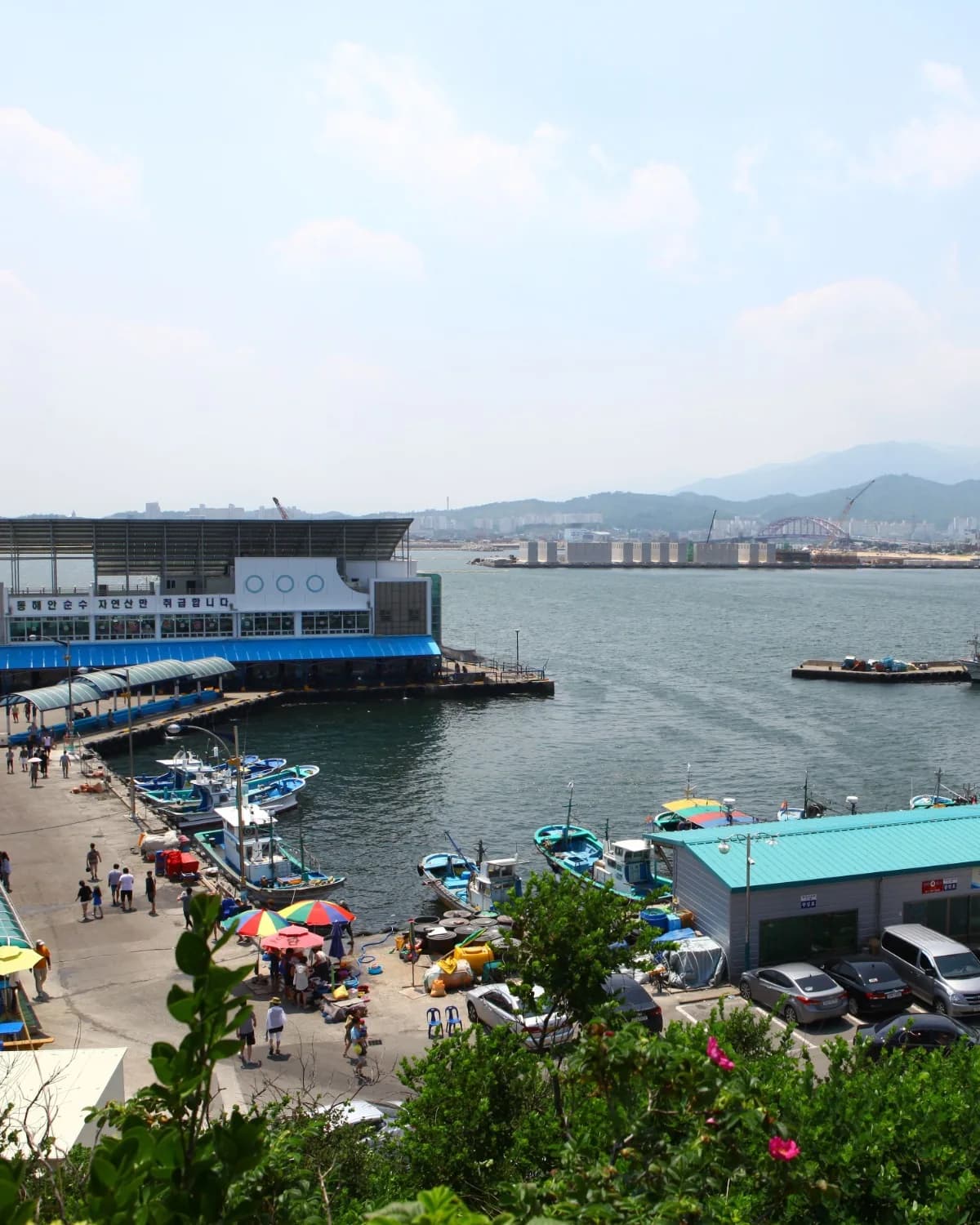
Subok Memorial Tower
수복기념탑
Subok Memorial Tower is a Korean War and displaced-family memorial near Dongmyeong-dong and Sokcho Port. Built on May 10, 1954, it was created to comfort the hope and grief of people displaced by the Korean War and to express a wish for reunification. Its mother-and-child sculpture, facing north with belongings in hand, makes Sokcho's refugee history visible in a single public image.
Verified by HeySeorak on 📖 Owner story included
Best For
History, culture, scenic context, and first-time orientation
Area
Dongmyeong
Price
₩ Budget-friendly
Info
374-2 Dongmyeong-dong, Sokcho-si, Gangwon-do
강원특별자치도 속초시 동명동 374-2
Sokcho Tourism lists the memorial as always available. It is an outdoor roadside memorial, so daylight is better for reading and respectful viewing.
The Story
Sokcho Tourism dates the tower to May 10, 1954, shortly after the Korean War. It was built for displaced people who could see the north emotionally and geographically, but could not return home.
Behind the Signature
Unlike more abstract war memorials, this one centers civilians: a mother carrying a bundle and a child pointing toward the northern sky. That image condenses Sokcho's displaced-family grief into an accessible public sculpture.
Local Tip
For collection routing, connect the memorial to Abai Village and the Abai Village Ferry. Together they explain the city's living refugee culture better than a food-only Abai Village visit.
Seasonal Note
The memorial is outdoors and brief. Add it when the weather is comfortable for walking between port-side stops, and avoid making visitors stand long in exposed winter wind.
For Travelers
For international travelers, this is a concise entry point into why Sokcho's modern identity is inseparable from the Korean War, divided families, and the hope of return.
How to visit
A quick guide for first-time visitors.
Step 1
Start with the context
Read the short history first so the stop is more than a photo point. The story usually explains why this place matters in Sokcho.
Step 2
Walk the key point
Use the map pin as your anchor, then give yourself a few extra minutes for nearby signs, views, side paths, or linked monuments.
Step 3
Connect the next stop
This works best as part of a route. Pair it with a nearby village, museum, market, ferry, temple, or lake walk rather than visiting in isolation.
Helpful guides
Practical reads to help you make the most of your visit.
You might also like
Nearby picks with a different category first, then backup options in the same area or city.