Gwongeumseong Fortress
권금성
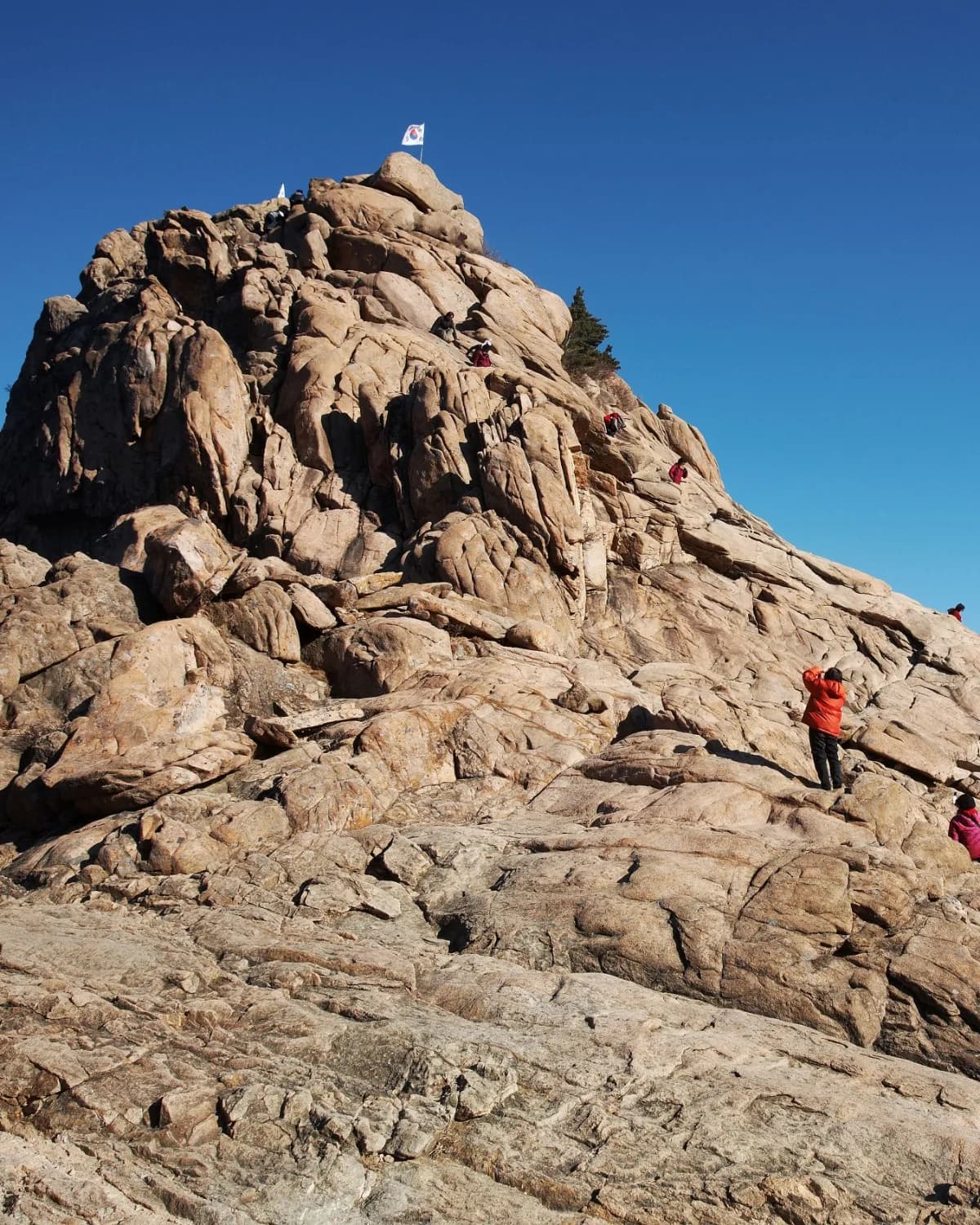
Gwongeumseong Fortress is the mountain-fortress ruin above Seoraksan's Sogongwon area, reached most easily by Seoraksan Cable Car and a short uphill walk. Sokcho's official tourism page links the site to the 1253 Mongol invasions of Goryeo, when two generals with the surnames Gwon and Kim were said to have built the fortress overnight. Today the walls are mostly gone, but the open rock platform gives one of Sokcho's strongest combinations of history, Seoraksan ridgelines, Ulsanbawi views, and East Sea distance.
Verified by HeySeorak on 📖 Owner story included
Best For
History, culture, scenic context, and first-time orientation
Area
Seoraksan
Price
₩₩ Mid-range
Info
1091 Seoraksan-ro, Sokcho-si, Gangwon-do
강원특별자치도 속초시 설악산로 1091
Sokcho Tourism lists 06:00-18:00 and open year-round. Access depends on Seoraksan Cable Car operations, weather, wind, trail controls, and mountain safety notices.
The Story
Sokcho Tourism presents Gwongeumseong as a Goryeo-era fortress connected to the Mongol invasion of 1253. The name is traditionally explained through the two generals, Gwon and Kim, whose surnames became attached to the fortress story.
Behind the Signature
The surviving experience is not a reconstructed castle wall. What remains is a high stone platform, traces of the old fortress site, Bonghwadae, Anrakam, Manmulsang, Ulsanbawi, and the panorama of inner and outer Seoraksan. That absence is part of the meaning: visitors stand where defense, legend, and geology overlap.
Local Tip
The official Sokcho pin is best understood as the visitor-access point through Seoraksan Cable Car. For map routing, connect Gwongeumseong with Seorak Cable Car, Sinheungsa Temple, and the Hyangseongsa pagoda rather than sending visitors up as an isolated stop.
Seasonal Note
Spring azaleas, summer green ridges, autumn foliage, and winter snow all change the view, but cable car service can pause for wind or weather. In winter, bring traction-aware shoes and avoid treating the final rock steps like a casual city lookout.
For Travelers
For international visitors interested in Korean history, this is a compact way to understand how Korean mountain landscapes often served as defense sites, sacred spaces, and scenic viewpoints at the same time.

How to visit
A quick guide for first-time visitors.
Step 1
Start with the context
Read the short history first so the stop is more than a photo point. The story usually explains why this place matters in Sokcho.
Step 2
Walk the key point
Use the map pin as your anchor, then give yourself a few extra minutes for nearby signs, views, side paths, or linked monuments.
Step 3
Connect the next stop
This works best as part of a route. Pair it with a nearby village, museum, market, ferry, temple, or lake walk rather than visiting in isolation.
Helpful guides
Practical reads to help you make the most of your visit.
You might also like
Nearby picks with a different category first, then backup options in the same area or city.