# HeySeorak — Full Content Dump (llms-full.txt)
> Plain-text concatenation of every public knowledge document HeySeorak ships to its AI travel concierge. AI crawlers can ingest this single file to learn the full English-language Sokcho + Seoraksan corpus without crawling individual pages.
Source: https://heyseorak.com/llms-full.txt
Companion: https://heyseorak.com/llms.txt (curated index)
Site: https://heyseorak.com
Language: en
Last-Updated: 2026-05-05
Coverage: 3 reference notes, 26 guides, 17 blog posts, 10 collections, 4 place atlases, 5 Seoraksan trails, 120 public spots
---
## REFERENCE NOTES
### emergency.md
# Emergency Information in Sokcho
## Emergency Numbers
- Police: 112
- Fire/Ambulance: 119
- Tourist Hotline (English, 24/7): 1330
- Coast Guard: 122
## Hospitals
- Sokcho Medical Center (속초의료원): 033-630-6114, downtown Sokcho
- Gangwon National University Hospital: In Chuncheon (nearest major hospital, 1.5 hours)
- For non-emergencies, visit any local clinic (의원)
## Pharmacies
- Look for 약국 (yakguk) signs. Most are open 9am-8pm.
- 24-hour pharmacies are rare in Sokcho — buy common medicines at convenience stores.
## Lost & Found
- Sokcho Police Station (속초경찰서): 033-630-0112
- If you lost something at a restaurant or attraction, go back — items are usually kept safe.
- For lost credit cards, call your bank's international emergency line immediately.
## Embassies
- US Embassy Seoul: 02-397-4114
- UK Embassy Seoul: 02-3210-5500
- For other countries, call 1330 tourist hotline for help.
---
### practical-info.md
# Practical Information for Sokcho Visitors
## Currency & Payment
- Korean Won (KRW). $1 ≈ ₩1,350 (approximate, check current rate).
- Credit cards (Visa/Mastercard) accepted at most places.
- Cash recommended for traditional markets and small street vendors.
- ATMs at all convenience stores (7-Eleven, CU, GS25) — international cards work.
## Weather & Best Time to Visit
- Summer (Jun-Aug): Hot & humid, 25-33°C. Beach and water sports season. Most crowded.
- Fall (Sep-Nov): Best overall time. 10-22°C. Seoraksan foliage peaks mid-October. Book early.
- Winter (Dec-Feb): Cold, -8 to 5°C. Snowy Seoraksan is magical. Fewer tourists.
- Spring (Mar-May): Cherry blossoms in April around Yeongrang Lake. 5-20°C. Pleasant hiking.
- Rainy season: Late June to mid-July. Bring waterproof layers.
## WiFi & Connectivity
- Free WiFi available at most cafes, hotels, and major tourist areas.
- Pocket WiFi rental at Incheon Airport (recommended).
- Korean SIM cards available at airport convenience stores.
## Useful Apps
- Naver Map: Best navigation app for Korea (Google Maps is inaccurate in Korea!)
- KakaoTaxi: Taxi booking app (works like Uber)
- Papago: Best Korean-English translator (by Naver)
- KakaoMap: Alternative navigation app
## Tipping
- Tipping is NOT customary in Korea. No need to tip at restaurants, taxis, or hotels.
## Dining Etiquette
- Side dishes (banchan) are free and refillable.
- Water and tea are usually self-service at a dispenser.
- Say "잘 먹겠습니다" (jal meokgesseumnida) before eating — like "bon appétit."
- Chopsticks and spoon are standard utensils. Metal chopsticks (not wooden).
---
### transport.md
# Sokcho Transportation Guide
## Seoul to Sokcho
- Express Bus from Dongseoul Terminal: 2.5 hours, ₩17,000-20,000. Buses every 30 min.
- Express Bus from Gangnam Express Terminal: 2.5 hours, ₩18,000-21,000.
- ITX-Cheongchun train: Seoul Station → Chuncheon, then transfer to bus (4 hours total, not recommended).
- Driving: About 2.5 hours via Seohaean Expressway. Parking can be difficult at popular spots.
- Incheon Airport direct bus available (3.5 hours).
## Local Buses
- Bus #7, #7-1: Downtown Sokcho → Seoraksan National Park entrance (30 min, ₩1,300)
- Bus #9, #9-1: Coastal route — Sokcho Beach → Daepohang → Abai Village
- Bus #1: Downtown loop — Bus terminal → Tourist & Fishery Market → City Hall
## IMPORTANT: CashBee card required!
T-money does NOT work in Sokcho! Buy a CashBee card at any convenience store (7-Eleven, CU, GS25). Card costs ₩2,500, then top up separately.
## Taxis
- Downtown → Seoraksan: ₩15,000-20,000 (about $11-15)
- Downtown → Daepohang: ₩8,000-10,000
- Downtown → Sokcho Beach: ₩5,000-7,000
- Use KakaoTaxi app for easy booking (works in English)
- Taxi is recommended for groups of 2+ (cheaper than bus per person)
---
## GUIDES
### guides/baekdamsa.md
# Baekdamsa Temple Trail
Category: seoraksan
## Overview
Not every Seoraksan visit needs to be a knee-burning climb. The Baekdamsa trail through Suryeomdong Valley (수렴동계곡) is Seoraksan at its most peaceful — a forested valley walk to one of Korea's most historically significant Buddhist temples, with almost none of the elevation that defines the park's famous hikes.
Baekdamsa Temple (백담사) has roots stretching back to the 7th century. It's where the independence movement poet Han Yong-un (한용운, pen name Manhae) spent years in contemplative study, and where former president Chun Doo-hwan lived in internal exile in the late 1980s. History layers on history here.
## The Route
**Baekdam Ranger Station → Valley Path (3.4km):** After entering through the ranger station and paying the park entrance fee, the trail follows the valley stream south. The path is wide gravel for most of its length — more of a forest road than a trail in spots — with the stream visible to your right.
The valley gradually narrows as you walk deeper into the mountains. Granite walls rise on both sides, and the stream grows clearer. Suryeomdong Valley (수렴동계곡) is named for its reed beds, which shimmer in the wind in autumn.
At about 2km, a small bridge crosses the stream and the path becomes more clearly a trail. The final kilometer involves a gentle climb before the valley opens into the temple clearing.
**Baekdamsa Temple (3.4km):** The temple complex sits in a wide mountain basin. Several main halls, a bell pavilion, and the Manhae Memorial Hall are arranged around a central courtyard. The setting — mountains on all sides, complete quiet on weekday mornings — is exceptional.
## The Temple
Baekdamsa was established in 647 CE and has been rebuilt multiple times after fires and war. The current buildings date mostly from the 20th century but the site's energy is ancient. Look for:
- **Manhae Memorial Hall (만해기념관):** Small museum dedicated to Han Yong-un, the poet and activist. Free to enter.
- **The Main Hall (극락보전):** Houses a gilded Buddha; simple, dignified interior.
- **The Bell Pavilion:** The temple bell ringing at dawn or dusk is one of the classic sounds of Korean mountain temples.
Monks still live and practice here. The temple runs temple stay programs periodically (check the official Baekdamsa website for dates).
## How to Get There
**Shuttle Bus:** From the Yongdae-ri parking area (용대리 주차장) — about 15 minutes drive from Baekdamsa — a shuttle bus runs regularly to the ranger station. This is the recommended approach: private vehicles are not permitted beyond the parking area. Shuttle fare is about ₩2,500 one-way.
**From Sokcho:** Drive or take a bus toward Inje (인제) on Route 46, then follow signs for Baekdam (백담). Total journey 50–60 minutes from Sokcho.
**From Yangyang:** About 40 minutes by car via Route 44 and Route 46.
The shuttle bus back runs until late afternoon but check the last departure time at the ranger station before heading in. Missing the last shuttle means a 15-minute walk back to the car park — not a disaster, but worth knowing.
## When to Go
Autumn is the undisputed best season. Suryeomdong Valley turns brilliant orange and yellow in mid-to-late October, and the colour frames the temple buildings beautifully. The trail is uncrowded compared to the Seorakdong hikes even at peak colour season.
Spring brings fresh green along the valley stream. Summer is shaded and cool. Winter keeps the trail open but the shuttle bus runs less frequently — confirm schedule before visiting.
Arrive early enough to catch the temple in morning stillness before the tour buses arrive around 10am. The walk takes 80 minutes — leaving the ranger station at 8am gets you there by 9:20am with the place largely to yourself.
---
### guides/beaches.md
# Sokcho Beach Guide
Category: explore
The East Sea does not reveal itself gently. Stand on almost any stretch of Sokcho sand at dawn and you will understand why Koreans have been making pilgrimages to this coast for centuries — the horizon glows tangerine, the water shifts from ink to silver, and the Taebaek Mountains loom behind you like a wall of green felt. Summer draws the swimming crowds, but the beaches here reward a visit in any month.
## Sokcho Beach (속초해수욕장)
The hometown beach. Six hundred meters of coarse golden sand, a pine-lined boardwalk, and the kind of no-fuss infrastructure that makes it easy to spend a full day: showers, changing rooms, convenience stores stocked with soju and ramyeon, and a row of grilled-fish restaurants directly across the road.
**Best for:** Convenience, summer swimming, long sunset walks
**Getting there:** A 10-minute walk from downtown, or virtually any bus running the coast road
### Summer Season (July -- August)
- Lifeguards patrol 9 am -- 6 pm daily
- Umbrella and chair rentals run around 10,000 -- 20,000 won
- Temporary food stalls line the boardwalk
- Water temperature hovers between 22 and 26 degrees Celsius
### Off-Season
Do not overlook winter Sokcho Beach. The sand is yours, the air smells of salt and woodsmoke, and the pine-tree path behind the dunes makes for a meditative 20-minute loop. Autumn is equally striking — fewer people, golden light, and the mountains beginning to turn behind you.
For sunrise, arrive by 5:30 am in summer or 6:30 am in winter. The East Sea sunrise is one of Korea's defining natural spectacles. On January 1st each year, thousands of locals gather here for the New Year's first light — a tradition worth building a trip around.
## Yeonggeumjeong (영금정)
Not a beach at all, strictly speaking, but the most photogenic stretch of coast in town. A cluster of dark volcanic rock formations juts into the sea just north of Sokcho Beach, crowned by a small white lighthouse. Waves crash dramatically through narrow channels; spray catches the afternoon light. Couples and photographers stake out positions here at golden hour, and for good reason.
**Best for:** Photography, sunset, a short coastal walk with edge
**Getting there:** 15-minute walk north from Sokcho Beach along the boardwalk
If you are building a seafood-first day, the fishing village of Dongmyeong Port sits just beyond Yeonggeumjeong — raw fish restaurants line the harbor, and Dongmyeonghang Daegemaeul is a reliable pick for a proper sashimi spread.
## Naksan Beach (낙산해수욕장)
Twenty minutes south of Sokcho and a world away in tempo. Naksan is longer, wider, and significantly less crowded than the city beach — backed by a dense pine forest and close enough to the hilltop temple of Naksansa to combine in a single afternoon. The sand here is finer, the development more restrained, and the sunrises arguably even better.
**Best for:** A quieter beach day, a temple-and-sand combination
**Getting there:** Bus #9 from Sokcho terminal, roughly 30 minutes
## Hwajinpo Beach (화진포해수욕장)
Thirty minutes north, in Goseong County, Hwajinpo is where locals go when they want genuinely clear water and minimal company. The beach is backed by Hwajinpo Lake, one of the East Coast's rare coastal lagoons — an ecosystem that feels almost Nordic. If you have a car and a free half-day, this is the premium pick.
**Best for:** Crystal-clear water, nature lovers, escaping the crowd entirely
**Getting there:** Taxi from Sokcho runs 25,000 -- 30,000 won; a local bus also makes the trip
## Beach Essentials
- **Sunscreen** — The Korean coast sun is fierce from June through August. Do not underestimate it
- **Water shoes** — Rocky sections flank several beaches, and sea urchins are no joke
- **Cash** — Beach vendors and smaller stalls are often cash-only
- **Light layers** — Even in July, the sea breeze can turn cool after dark
- **A towel** — Rentals exist, but bringing your own saves hassle and won
---
### guides/best-cafes-in-sokcho.md
# Best Cafes in Sokcho — Where the Coffee Stops Actually Matter
Category: explore
Sokcho is not Seoul. You will not find a craft-coffee district on every block or a third-wave roastery lurking behind each convenience store. What you will find is a small, tightly edited set of cafes that actually deserve your time — and the best way to use them is to pick the one that fits the shape of your day, not to treat coffee as a separate sightseeing mission.
For most short trips, you need exactly **one** good coffee stop. The real decision is whether you want:
- a **beach-view cafe** that pairs with a coastal morning
- a **lakeside atmosphere stop** with genuine character
- or a **coffee-first roastery** worth leaving the tourist strip for
## The Quick Answer
If you want the shortest possible version:
- Bossa Nova Coffee Roasters — the easiest beach-side cafe with sea views and English menus
- Chilsung Boatyard — the most atmospheric stop in town, in a converted boatyard on Cheongcho Lake
- Sunsarogil Coffee Roasters — the serious roastery in Joyang-dong, for people who care about the cup before the view
That covers most first-time trips. For a wider comparison, see the [cafe-filtered spot directory](/spots?category=cafe).
---
## 1. Bossa Nova Coffee Roasters
**Best for:** Beach walks, first-timers, coffee with a view
**Area:** Sokcho Beach
**Hours:** Weekdays 09:00 -- 22:00, weekends from 08:00
**English menu:** Yes
Bossa Nova Coffee Roasters is the simplest recommendation in Sokcho's cafe scene. A multi-floor building steps from the sand, with a rooftop that delivers unobstructed sea views and enough seating that you will not spend twenty minutes hovering for a table.
The menu leans approachable — the **peanut butter latte** has earned a small following, and the **goguma cream latte** (sweet potato) is the kind of Korea-specific drink worth ordering once. The pastry case is solid. The vibe is relaxed and family-friendly.
Choose this if you are already near the beach, traveling with a mixed group, or want the easiest possible coffee stop that still feels like a destination.
Weekend mornings from 08:00 are the sweet spot — you get the early light on the water from the rooftop before the midday rush fills the upper floors. Pair it with a sunrise walk along Sokcho Beach.
## 2. Chilsung Boatyard
**Best for:** Atmosphere, Cheongcho Lake wandering, a memorable stop
**Area:** Cheongcho Lake, downtown edge
**Hours:** Roughly 11:00 -- 20:00
**English menu:** No (but ordering is straightforward)
Chilsung Boatyard is what happens when someone converts a working boatyard into a cafe and gets the balance right. The industrial bones remain — weathered wood, open-air seating, the faint ghost of engine grease — and the lake stretches out beside you. It feels nothing like a generic large-view cafe, and that is entirely the point.
The drinks carry the theme: a **Port Americano** and a **Starboard Americano** nod to the maritime past. The outdoor space is generous. On a clear afternoon, with Cheongcho Lake reflecting the mountains, this is one of the most distinctive cafe settings on the entire East Coast.
Choose this if you are building a day around the lake, Abai Village, or central Sokcho, and you want your coffee break to feel like part of the trip rather than a pit stop.
## 3. Sunsarogil Coffee Roasters
**Best for:** Coffee-first travelers, quiet detours, a neighborhood roastery feel
**Area:** Joyang-dong
**Hours:** 12:00 -- 22:00, closed Tuesdays
**English menu:** No
Sunsarogil Coffee Roasters is the answer for anyone who talks about extraction ratios before they talk about ocean views. Tucked into the Joyang-dong creative quarter — Sokcho's slowly emerging arts neighborhood — this is a proper coffee-first operation. The beans are roasted on-site, the menu is spare, and the room has the quiet intensity of a place that takes the craft seriously.
There is no sea panorama, no Instagram terrace. What you get instead is a genuinely good cup in a neighborhood that rewards wandering — Bong Bread is a short walk away for a garlic baguette, and several small galleries line the surrounding streets.
Choose this if espresso quality is your actual priority and you do not need a postcard to justify the detour.
Sunsarogil is closed on Tuesdays — plan accordingly. It also opens at noon, so do not build it into a morning itinerary. This is an afternoon or evening coffee stop.
---
## Also Worth Knowing
Three more stops that fill specific gaps in a Sokcho cafe itinerary:
- **Cafe Seoraksan-ro** — On the scenic strip leading toward the national park. This is the post-hike decompression stop: order something iced, sit down, and let your legs recover before heading back into town.
- **Bakery Garu** — A Gangneung-born artisan bakery near Cheongcho Lake. More bakery than cafe, but the coffee is serviceable and the **basil garlic baguette** is excellent. The real draw is the **mammoth bread**, released in limited drops at 12:00 and 15:00 — arrive early or watch it vanish. Open 08:00 -- 22:00.
- **Bong Bread** — A no-frills neighborhood bakery in downtown Sokcho. The **garlic baguette** (6,500 won) is a local staple, and the **Beombawi pastry** (6,500 won) — named after the famous Seoraksan rock formation — is a clever regional riff. Open 08:30 -- 20:00, closed Thursdays.
---
## How to Choose Fast
Choose **Bossa Nova** if you are near the beach, traveling with a group, or want the path of least resistance.
Choose **Chilsung Boatyard** if you want the strongest sense of place and are building the day around Cheongcho Lake or central Sokcho.
Choose **Sunsarogil** if coffee quality is the actual priority and you do not need a view to validate the stop.
## Best Cafe by Trip Shape
If your trip is **beach-first**, use **Bossa Nova**.
If your trip is **central Sokcho + lake + food**, use **Chilsung Boatyard**.
If your trip is **coffee-first and lower-key**, use **Sunsarogil Coffee Roasters**.
Most first-time visitors do not need all three. Pick the one that fits the route.
## The Low-Stress Cafe Rule
Do not plan Sokcho like a cafe-crawl city. Three coffee stops in a day will crowd out the things you actually came here for — the seafood, the coast, the mountain. Instead:
1. Pick one base area for the day
2. Let one cafe match that route naturally
3. Keep your real meal decisions separate
That single deliberate stop — chosen for location, not hype — will serve you better than a scattered itinerary built around Instagram saves.
## When a Cafe Stop Earns Its Place
A Sokcho cafe is most valuable when:
- You need a soft reset between the morning hike and the evening seafood feast
- The weather turns and you want an indoor anchor
- Your group needs a lower-pressure pause that is not another plate of raw fish
Cafes on a short trip are not about caffeine. They are the pressure valve that keeps the itinerary from tipping into exhaustion.
## Where to Go Next
- [Where to Stay in Sokcho](/explore/where-to-stay) — if your cafe choice depends on which neighborhood you are sleeping in
- [Sokcho Itinerary: 2 Days](/explore/sokcho-itinerary-2-days) — to fit one cafe into a tight first trip
- [Sokcho Without a Car](/getting-around/without-car) — for the easiest walking routes between these stops
- [Full cafe directory](/spots?category=cafe) — to browse every cafe listing with hours, menus, and maps
---
### guides/best-restaurants-near-seoraksan.md
# Best Restaurants Near Seoraksan
Category: eat
Most Seoraksan food plans fail because they try too hard. You do not need to orchestrate a multi-course seafood tour around a mountain day. The corridor between Sokcho and the national park entrance has exactly enough to eat well before the trail and recover properly after it -- and the best strategy is knowing which handful of places to trust.
## Quick Answer
If you want the short version:
- Gimyeongae Halmeoni Sundubu for a quiet pre-hike breakfast
- Hwang Daegutang for the best hot recovery meal after the trail
- Wind Flower Haenyeo Village for the strongest full sit-down meal near the mountain
- Haksapyeong Sundubu Village for the cheapest, most no-fuss tofu stop on the corridor
Four picks. That is genuinely all you need. If food is the point of the day rather than the mountain, head back into central Sokcho and use the full [spot directory filtered to the Seoraksan area](/spots?area=seoraksan) instead.
## When to Eat on the Seorak Corridor
Stay near the mountain when:
- You want breakfast before entering the park and the group is not interested in a detour
- You need one fast, restorative meal before heading back to town
- Everyone is too tired for logistics and convenience outranks variety
- The weather turned and a low-friction plan matters more than a destination dinner
If you still have energy after the hike and want dinner to feel like a separate event, skip the corridor entirely and use the [spot directory](/spots) or [10 Must-Try Dishes](/eat/must-try-dishes) guide instead.
## 1. Gimyeongae Halmeoni Sundubu
**Best for:** Early breakfast before Seoraksan | **Budget** | No English menu
Gimyeongae Halmeoni Sundubu is the answer to the question every hiker asks: what do I eat at 7 AM that will not slow me down on the trail?
The house sundubu (around 10,000 won) arrives steaming and plain -- soft curds in a clean, mild broth with a bowl of rice alongside. It is deliberately light. No fireworks, no banchan overload, no menu anxiety. The restaurant opens at 07:00 and closes by 14:00 (closed Thursdays), which tells you everything about its intended audience: people with a mountain to climb.
Order and sit down fast. The room fills with Korean hiking clubs around 07:30 on weekends, and they move through quickly. You want to be on the road to the park entrance by 08:00 if you are doing a serious trail.
Choose this if you want a calm, inexpensive start -- not a memorable feast.
## 2. Hwang Daegutang
**Best for:** Hot post-hike recovery meal | **Moderate** | No English menu
Hwang Daegutang is the restaurant that understands what a body actually wants after four hours on a mountain: heat, salt, and protein in a bowl.
The signature daegutang -- a milky, slow-simmered cod soup thick with chunks of fish and radish -- runs around 16,000 won and arrives at a rolling boil. It is the kind of meal that makes cold-weather hikers close their eyes and stop talking for a minute. Open 08:00 to 20:00, which gives you a wide window whether you are coming off a morning trail or an afternoon scramble.
This is the practical choice, not the glamorous one. That is precisely why it works after a real hike.
If you are hiking Ulsanbawi or Biryong Falls and finishing mid-afternoon, Hwang Daegutang is the single most efficient way to recover before the drive or bus ride back into central Sokcho.
## 3. Wind Flower Haenyeo Village
**Best for:** A proper sit-down lunch or dinner near Seoraksan | **Moderate** | No English menu
Wind Flower Haenyeo Village is where you go when the group wants to eat well -- not just eat conveniently -- without leaving the Seorak corridor.
The menu draws on the haenyeo tradition (Jeju-style women sea divers), and the strongest orders are the jeonbok haemul ttukbaegi (abalone and seafood hot pot, around 19,000 won) and the jeonbok chodang sundubu (abalone with silken tofu, around 17,000 won). Both arrive bubbling and generous. Open 08:00 to 20:00.
This is the pick when someone in the group says they want the day to include a real meal, not just fuel. If seafood still sounds good after the mountain, this is where you sit down.
The abalone hot pot is the most photogenic dish on this corridor, but the chodang sundubu is the quieter, better-balanced order if you are genuinely tired and want comfort over spectacle.
## 4. Haksapyeong Sundubu Village
**Best for:** Budget tofu, zero decisions | **Budget** | No English menu
Haksapyeong Sundubu Village is not a single restaurant. It is an entire village of over 80 tofu houses clustered together on the road toward Seoraksan, all making sundubu jjigae with mineral-rich East Sea water.
A bowl of sundubu jjigae runs around 9,000 won. You walk into whichever shop has a seat open, point at the menu, and eat. There is no wrong answer and almost no price variation. The whole experience -- ordering, eating, paying -- takes about 25 minutes.
This is the lowest-friction food stop on the corridor. Use it when the group wants something warm and cheap before or after the mountain and nobody has the energy to compare menus.
The village is better as a fast pre-hike or post-hike refuel than as a destination meal. Do not come here expecting a curated dining experience -- come here expecting the Korean equivalent of a reliable truck stop with genuinely good tofu.
## 5. Cafe Seoraksan-ro
**Best for:** Post-hike decompression over coffee | **Moderate**
Cafe Seoraksan-ro is the scenic cafe strip that lines the main road toward the mountain. After a long trail day, sometimes the right move is not another meal -- it is a flat white and a window seat with a mountain view while your legs stop shaking.
Use this when the hike is done, the group does not need a full dinner yet, and someone says they just want to sit somewhere pleasant for an hour.
## How to Choose
**Before the hike:** Gimyeongae Halmeoni Sundubu if you want a proper sit-down breakfast. Haksapyeong Sundubu Village if you want the fastest, cheapest option with no decisions.
**After the hike:** Hwang Daegutang if your body is asking for hot soup and recovery. Wind Flower Haenyeo Village if the group wants a real meal, not just fuel. Cafe Seoraksan-ro if all you need is coffee and a decompression hour.
## The Best Low-Stress Seoraksan Food Day
For most first-time visitors, the cleanest plan looks like this:
1. Light tofu breakfast near the route if you are starting early (Gimyeongae or Haksapyeong)
2. Focus on the hike -- do not think about lunch until you are off the trail
3. Decide after the hike: tired enough that convenience wins? Stay on the corridor. Still have energy? Head back into Sokcho for a bigger evening
4. If you stay, pick one meal (Hwang Daegutang or Wind Flower) and call it a day
That rhythm produces a better trip than trying to stack a dawn breakfast, a midday seafood lunch, and a premium dinner around a mountain that already demands your full attention.
## Worth the Detour: Seodam Ssalguksu
Not on the Seorak corridor, but worth knowing about.
[Seodam Ssalguksu](/spots/seodam-rice-noodle), near Cheongchoho Lake in downtown Sokcho, is the kind of place that earns a following through scarcity and obsession. The signature dish is a whole red crab rice noodle soup (18,000 won) -- a single crab, shell-on, submerged in a herbal broth that the self-taught chef spent years developing. Only 20 bowls are made per day. When they sell out, they sell out.
Open 11:00 to 20:30 with a break from 15:00 to 17:00. Tuesdays are half-days (closes at 15:00).
This is not a pre-hike or post-hike convenience stop. It is a deliberate detour for the kind of traveler who reads about a 20-bowl-per-day kitchen and rearranges the afternoon to make it work. If that sounds like you, plan it as a standalone lunch on a day when you can arrive by 11:30.
Aim for 11:00 opening on a weekday. The 20-bowl limit is real, and the lunch crowd knows it. If you arrive after 12:30, you are gambling.
## Where to Go Next
- Open the [Seoraksan Hiking Guide](/explore/seoraksan) if you are still deciding what kind of mountain day you are doing
- Open the [spot directory](/spots?area=seoraksan) if you want to compare more Seoraksan-area options
- Open [Sokcho Without a Car](/getting-around/without-car) if transport friction is shaping your meal choice
- Open [Best Time to Visit Sokcho](/explore/best-time-to-visit) if your Seoraksan day depends on the season window
---
### guides/best-restaurants-near-sokcho-beach.md
# Best Restaurants Near Sokcho Beach
Category: eat
The beach area of Sokcho rewards a different instinct than the rest of the city. Where central Sokcho and the Sokcho Tourist & Fishery Market pull you into a snack crawl, the coastline around Sokcho Beach and Yeonggeumjeong invites you to slow down -- pick one good meal, find a view, and let the afternoon unspool. The restaurants here are fewer but more deliberate, and the best strategy is matching each stop to the kind of day you are actually having.
## Quick Answer
If you want the short version:
- Bongpo Meoguri House for the best all-around beach-area mulhoe meal
- Dongmyeonghang Daegemaeul for a premium snow crab dinner
- Bakery Garu for an artisan bread-and-coffee morning near Cheongcho Lake
- Bossa Nova Coffee Roasters for a rooftop cafe break with sea views
Four stops. That is a complete beach-side food day without ever crossing town. If you want a wider search, open the full [spot directory with the beach filter](/spots?area=beach).
## When to Eat Near Sokcho Beach
The beach area works best when:
- You are already staying nearby and do not want to start the day with a taxi ride
- You want a lower-friction lunch or dinner after walking the shore
- You prefer a calmer atmosphere to the bustle of a crowded market crawl
- Your day is built around sand, sea, and coffee -- not a food-first itinerary
If what you really want is market energy, snack variety, or a bigger seafood strategy day, you will be happier using the [Seafood Market Guide](/eat/seafood-market) or the [10 Must-Try Dishes](/eat/must-try-dishes) page instead.
## 1. Bongpo Meoguri House
**Best for:** First-time mulhoe near the beach | **Moderate** | English menu available
Bongpo Meoguri House is the closest thing the Sokcho coast has to a sure thing. Second-generation family ownership, a menu built around mulhoe (raw fish in icy broth) that has outlasted every trend in town, and a location on the Yeongnang coast that keeps the day simple if you are already based near the beach.
The modeum mulhoe (assorted raw fish platter, around 20,000 won) is the order that made the reputation. It arrives vivid and generous -- sliced fish over shaved ice with a cold, vinegary broth poured tableside. The menu also carries warm backups like jeonbok-juk (abalone porridge) for anyone in the group who flinches at raw fish. Open Monday to Friday 10:00-21:00, weekends from 09:30.
If your group is split between adventurous eaters and cautious ones, Bongpo is the diplomat. The mulhoe satisfies the seafood chasers, the porridge covers everyone else, and the English menu means nobody stares at a wall of Korean wondering what they just ordered.
## 2. Dongmyeonghang Daegemaeul
**Best for:** Premium snow crab dinner | **Premium** | English menu available
Dongmyeonghang Daegemaeul is not a casual lunch stop. It is the restaurant you choose when the group has already decided that tonight is crab night and the budget has room for market-price shellfish.
Located near Yeonggeumjeong -- Sokcho's iconic seaside pavilion -- the setting alone earns the detour. But the real draw is a snow crab presentation that feels ceremonial: whole crabs, steamed and cracked, served with an arsenal of dipping sauces and small plates. Prices follow the market and fluctuate with the season, so come prepared to spend. Open Monday to Thursday until 22:00, Friday and Saturday until 23:00.
This is the "we are doing crab tonight" option, not the quick lunch answer. If you are unsure whether you want to commit to market-price crab, start with Bongpo Meoguri House and save the splurge for a night when the decision is already made.
Snow crab season peaks from November through March. Outside that window, you can still order crab here, but the quality-to-price ratio shifts. If you are visiting in summer, redirect the splurge budget toward a different meal.
## 3. Bakery Garu
**Best for:** Artisan bread and a light morning start | **Budget** | English menu available
Bakery Garu is a Gangneung-born bakery that opened a Sokcho outpost near Cheongcho Lake, and it fills a gap that beach-area visitors actually feel: a proper bread-and-coffee morning that does not require a full restaurant sit-down.
The basil garlic baguette is the everyday essential -- crusty, fragrant, gone by mid-morning on busy days. But the cult item is the mammoth bread: an oversized, lightly sweet loaf that drops in batches of just seven at noon and again at 3 PM. The bakery opens at 08:00 and runs until 22:00, which means it works as a breakfast stop, an afternoon snack detour, or a late treat after dinner.
If you want the mammoth bread, arrive ten minutes before the 12:00 or 15:00 drop. Seven loaves per batch, and regulars know the schedule. Weekday drops are significantly easier than weekends.
## 4. Bossa Nova Coffee Roasters
**Best for:** Coffee, views, and a long afternoon reset | **Moderate** | English menu available
Bossa Nova Coffee Roasters is not a meal. It is the quality-of-trip answer -- the place that turns a good beach day into one you actually remember.
The building is multi-floor with a rooftop terrace that faces the sea. The coffee menu leans playful: a peanut butter latte, a goguma (sweet potato) cream latte, and a solid roster of single-origins for purists. Open weekdays from 09:00, weekends from 08:00, closing at 22:00.
Go here when you want a slower afternoon between activities, a sunset perch before dinner, or a dessert-and-coffee stop that does not feel like an afterthought.
The rooftop is the draw, but it fills fast on weekend afternoons. If you are coming between 14:00 and 17:00 on a Saturday, grab your drinks and head upstairs immediately -- do not browse the pastry case first.
## How to Choose
**Morning:** Bakery Garu if you want an artisan bread start near Cheongcho Lake. Pair with a walk along the lake before the beach crowds arrive.
**Lunch:** Bongpo Meoguri House for the most reliable, versatile beach-area meal. This is the default if you only have time for one sit-down.
**Afternoon:** Bossa Nova Coffee Roasters for a long sea-view break between the beach and dinner. Also works as a sunset perch.
**Dinner:** Dongmyeonghang Daegemaeul if tonight is a splurge. Otherwise, Bongpo works just as well for an evening mulhoe.
## A Beach-Side Food Day
If you want a simple day built entirely around Sokcho Beach:
1. Start at Bakery Garu for bread and coffee around 08:30
2. Walk Cheongcho Lake or the beach through the morning
3. Lunch at Bongpo Meoguri House for mulhoe -- the dish that tastes best when you have been outside all morning
4. Afternoon break at Bossa Nova Coffee Roasters for rooftop coffee and a reset
5. Either head into town for dinner variety, or commit to Dongmyeonghang Daegemaeul if the group is ready to splurge on crab
That is a complete day. No taxis, no logistics headaches, no crossing town for every course.
## Should You Base Yourself Here?
If you are doing Sokcho without a car, the beach area is one of the strongest base camps in the city. It works particularly well for travelers who want morning and evening beach walks baked into the rhythm of the trip, a cafe-forward itinerary rather than a market-crawl-forward one, and the ability to reach Seoraksan or central food districts by a short taxi or bus ride when needed.
If that matches your trip, keep the [Sokcho Without a Car guide](/getting-around/without-car) open while you book the rest.
## Where to Go Next
- Open the [Snow Crab Price Guide](/eat/snow-crab-price-guide) if you want to sanity-check current crab spending before booking dinner
- Open the [Sokcho Beach Guide](/explore/beaches) if your day is still beach-first
- Open the [Sokcho Without a Car guide](/getting-around/without-car) if you are planning this area without renting a vehicle
- Open the full [spot directory](/spots?area=beach) if you want the beach filter and comparison view
- Open [10 Must-Try Dishes in Sokcho](/eat/must-try-dishes) if you want to decide what to eat before choosing the exact restaurant
---
### guides/best-seafood-restaurants-in-sokcho.md
# Best Seafood Restaurants in Sokcho: 2026 Guide
Category: eat
The best seafood restaurant in Sokcho is not one restaurant. It is a three-way decision between **fixed-price crab in central Sokcho**, **Daepo Port sashimi and crab sets**, and **a warm seafood soup when you do not want a big dinner at all**. For most first-time visitors in **2026**, the safest shortlist is **Yes Su-san, Sinhaeburi Raw Fish, Palpal Hoe Center, Daepo Fishing Village Center, and Sokcho Octopus Rice Soup**.
This guide is for travelers who want a restaurant-first answer, not a market strategy lecture. If you are trying to choose one actual place to sit down and eat seafood, start here.
## Key Takeaways
- **Best all-around first seafood meal:** [Yes Su-san](/spots/yesseafood)
- **Best Daepo Port sashimi set:** [Sinhaeburi Raw Fish](/spots/sinhaeburi-raw-fish)
- **Best premium crab set for a group:** [Palpal Hoe Center](/spots/palpal-hoe-center)
- **Best full seafood event dinner:** [Daepo Fishing Village Center](/spots/daepo-fishing-village-center)
- **Best warm seafood breakfast or lunch:** [Sokcho Octopus Rice Soup](/spots/sokcho-octopus-soup)
## How This Guide Differs From the Seafood Market Guide
The [Sokcho Seafood Market Guide](/eat/seafood-market) answers **where** to go and **how** the market systems work. This page answers a narrower question: **which seafood restaurants in Sokcho are actually worth choosing first if you want one strong meal**.
That distinction matters because not every traveler wants to compare tank prices, carry seafood upstairs, or turn dinner into a logistics exercise. Sometimes the right move is a shortlist, not a floor plan.
## Quick Comparison: The Best Seafood Restaurants in Sokcho
| Restaurant | Area | Best for | Planning price |
|---|---|---|---|
| [Yes Su-san](/spots/yesseafood) | Tourist & Fishery Market | First-time crab, fixed prices | **26,000-76,000 won** |
| [Sinhaeburi Raw Fish](/spots/sinhaeburi-raw-fish) | Daepo | Two-person sashimi or crab + sashimi set | **100,000-150,000 won** |
| [Palpal Hoe Center](/spots/palpal-hoe-center) | Daepo | Group snow crab set | **190,000-300,000 won** |
| [Daepo Fishing Village Center](/spots/daepo-fishing-village-center) | Daepo | Large-format seafood dinner | **230,000-380,000 won** |
| [Sokcho Octopus Rice Soup](/spots/sokcho-octopus-soup) | Tourist & Fishery Market area | Warm soup and octopus dishes | **17,000-50,000 won** |
If you are uncertain, central Sokcho beats Daepo Port. If you are certain you want a full seafood dinner, Daepo beats central Sokcho.
## 1. Yes Su-san
**Best for:** The clearest first seafood meal in Sokcho
Yes Su-san is still the easiest seafood recommendation in the city because it gives you crab without making you decode Daepo Port on your first attempt. The restaurant sits inside the Tourist & Fishery Market, but the experience is restaurant-first: fixed prices, straightforward choices, and a translated menu that makes sense before you order.
Current April 2026 anchors are clean: **26,000 won** for the quick-pickup hong-ge dosirak, **36,000 won** for the live-steamed hong-ge dosirak, and **76,000 won** for a full premium snow crab. The restaurant is open **10:30-20:00**, last order **19:30**, and closed Tuesdays. If your question is "where should I eat seafood first in Sokcho?", this is still the default answer.
This is not the biggest seafood spectacle in town. It is the most legible one. That matters more than spectacle on a first trip.
Choose Yes Su-san when you want Sokcho crab flavor without building the entire evening around crab. It is the best midpoint between a cheap market snack and a full Daepo splurge.
## 2. Sinhaeburi Raw Fish
**Best for:** A first proper Daepo Port dinner for two
Sinhaeburi Raw Fish is the strongest Daepo entry point when you want the port atmosphere but still need the menu to stay readable. The restaurant's value is not that it is cheap. It is that it reduces Daepo Port to a short list of decisions that a first-time visitor can actually evaluate.
The best starter order is **Set A - Crab + Sashimi for 2** at **150,000 won**. If you want to keep it simpler, assorted sashimi platters run **100,000 won**, **120,000 won**, and **150,000 won** depending on size. Current April 2026 data lists the restaurant at **10:00-22:00** daily, with last order at **21:00**.
Pick Sinhaeburi when you want Daepo Port to feel like a seafood restaurant, not a seafood exam.
## 3. Palpal Hoe Center
**Best for:** The cleanest group crab order in Daepo
Palpal Hoe Center is where the seafood shortlist turns decisively toward shared dinners. If you already know the table wants crab, Palpal is easier to recommend than an open-ended market purchase because the translated set menu does the budgeting for you.
Current April 2026 menu anchors are **Snow Crab Set C for 2 people at 190,000 won**, **Set B for 2-3 people at 250,000 won**, and **Set A for 4 people at 300,000 won**. There is also a **Red Crab Ramen** at **15,000 won**, which is useful because it gives the table one lower-commitment dish that still feels local. Recent 2026 web listings continue to frame Palpal as a set-menu seafood stop with a long dinner service window.
If your group is already mentally committed to crab, Palpal is one of the easiest places in Sokcho to turn that intention into an actual order.
## 4. Daepo Fishing Village Center
**Best for:** The full seafood event dinner
Daepo Fishing Village Center is the most ambitious restaurant on this list. The dishes are bigger, the spend is higher, and the whole point is that dinner becomes the event rather than a stop between activities.
The April 2026 menu publication is built around large courses: **Snow Crab + Sashimi Course C for 3-4 guests at 230,000 won**, **Course B for 4 guests at 275,000 won**, **Course A for 4 guests at 350,000 won**, and **Bakdal Snow Crab Course A for 4 guests at 380,000 won**. That is real money, but it also means the menu is transparent in a way many port-side seafood meals are not. Recent 2026 listing data also shows a long evening service pattern, which fits how most travelers actually use this place.
Come here after the group has already agreed that seafood dinner is tonight's headline, not tonight's maybe.
## 5. Sokcho Octopus Rice Soup
**Best for:** A warm seafood meal when you do not want sashimi or crab
Not every good seafood restaurant in Sokcho needs to be a raw-fish or crab place. Sokcho Octopus Rice Soup earns its spot because it solves a different travel problem: you want seafood, but you want it hot, fast, and easier on the wallet than a port dinner.
The core order is simple. **Octopus Rice Soup** is **17,000 won**, the **blanched octopus platter** runs **40,000-50,000 won**, and supporting dishes like octopus bibim noodles come in lower. Current April 2026 data shows an early-service pattern of **07:30-16:30**, last order **15:30**, with Wednesdays closed. That makes it a better breakfast or early lunch than a late dinner.
Choose this place when the weather is cold, the group is tired, or you want seafood without committing to a full Daepo-style spend.
## Which Seafood Restaurant Should You Pick?
Use this shortcut:
- **Only one seafood meal in Sokcho:** Yes Su-san
- **Daepo dinner for two:** Sinhaeburi Raw Fish
- **Crab dinner for 2-4 people:** Palpal Hoe Center
- **Big shared seafood dinner:** Daepo Fishing Village Center
- **Warm soup instead of raw fish:** Sokcho Octopus Rice Soup
That is the whole decision tree. The mistake is treating "best seafood restaurant in Sokcho" like it must produce one universal winner. It does not. It depends on whether you want crab, sashimi, or something warm and much easier to execute.
## What If Menu Clarity Matters More Than Seafood Prestige?
Then open the [Restaurants With English Menus in Sokcho guide](/eat/restaurants-with-english-menus-in-sokcho). The overlap is deliberate. This page is seafood-first. That page is translation-first.
For a lot of visitors, the right answer is to start with menu clarity and only then decide how adventurous the meal should become. That is especially true in Daepo Port.
## The Bottom Line
The best seafood restaurants in Sokcho are the ones that match the kind of seafood night you are actually trying to have. **Yes Su-san** is the strongest first-timer answer. **Sinhaeburi** is the cleanest Daepo step-up. **Palpal** is the best crab-set move for groups. **Sokcho Octopus Rice Soup** is the smartest warm fallback when you do not want a full port dinner.
If you are still undecided, use the [English-menu spot filter](/spots?english=true) and compare the live menu pages directly before you leave.
## Source Notes (2025-2026 Only)
This guide was built from April 2026 first-party menu publications, then cross-checked against 2026/2025 web sources only:
- HeySeorak menu publications: [Yes Su-san](/spots/yesseafood) updated **2026-04-06**, [Sinhaeburi Raw Fish](/spots/sinhaeburi-raw-fish) updated **2026-04-03**, [Palpal Hoe Center](/spots/palpal-hoe-center) updated **2026-04-08**, [Daepo Fishing Village Center](/spots/daepo-fishing-village-center) updated **2026-04-07**, and [Sokcho Octopus Rice Soup](/spots/sokcho-octopus-soup) updated **2026-04-07**
- [Yes Su-san official ordering page](https://yesseafood.mydeli.co.kr/main.php), accessed **2026-04-09**
- [Sinhaeburi Raw Fish on Siksin](https://www.siksinhot.com/P/1875961), current listing accessed **2026-04-09**
- [Palpal Hoe Center on DiningCode](https://www.diningcode.com/profile.php?rid=2yj37B1SFIo6), current listing accessed **2026-04-09**
- [Daepo Fishing Village Center on DiningCode](https://www.diningcode.com/profile.php?rid=oFRgr3pSv1Lg), current listing accessed **2026-04-09**
- [Sokcho Octopus Rice Soup reference post](https://gastronomic2022.tistory.com/3881), published **2026-03**, accessed **2026-04-09**
## Where to Go Next
- Open the [Sokcho Seafood Market Guide](/eat/seafood-market) if you want the full market system, not just the shortlist
- Open the [Snow Crab Price Guide](/eat/snow-crab-price-guide) if the decision is really about crab math
- Open [Restaurants With English Menus in Sokcho](/eat/restaurants-with-english-menus-in-sokcho) if translation clarity is your first filter
- Open the [English-menu spot filter](/spots?english=true) if you want to compare seafood options side by side
---
### guides/best-time-to-visit.md
# Best Time to Visit Sokcho — A Season-by-Season Guide
Category: explore
Sokcho rewards every season, but each one asks something different of you. The coast in January feels nothing like the coast in July, and neither version resembles the Seoraksan valleys in late October when the maples are on fire. The trick is not finding the "best" month. It is matching the season to the trip you actually want.
If you need a single answer: go in **June** for the easiest all-round experience, or **late October** for the most beautiful one.
## Quick Decision Guide
Choose **late May to June** if you want the best all-round first trip — walkable weather, manageable crowds, and enough warmth to enjoy the coast without the summer crush.
Choose **mid-October to late October** if Seoraksan in full foliage is the emotional center of the trip and you can handle heavier crowds.
Choose **July to August** if the beach is non-negotiable and you want peak summer energy, lifeguards, and night swimming.
Choose **late November to February** if you want a quieter, slower trip built around snow crab, market meals, and the kind of moody coastal atmosphere that photographs beautifully.
## Spring (March - May): Cherry Blossoms and Shoulder-Season Calm
**Best for:** First-timers, walkers, cherry blossom chasers, couples, photographers
Spring is Sokcho's most underestimated season. The crowds have not arrived yet, the light is soft, and the coast has a gentleness to it that disappears once summer hits.
Cherry blossoms are the headline act. First blooms typically appear in **late March to early April**, with peak color settling around **April 7-10** in recent years. Nationwide spring blooms have been trending roughly 3-4 days earlier than historical averages, but Gangwon's east coast still lags behind Seoul and the southern cities — so late March is the watch-the-forecast window and early April is the safer bet.
The marquee event is the [Yeongrang Lake Cherry Blossom Festival](/blog/yeongrang-lake-cherry-blossom-festival-2026), running **April 11-12 in 2026**. Eight kilometers of cherry-lined lakeside path, Seoraksan's snow-dusted ridgeline in the background, and a nighttime light-up that turns the whole scene into something almost absurdly photogenic. If your dates are flexible, anchor the trip around this weekend.
By May, the blossoms have dropped but the weather opens up — warm enough for long coastal walks, cool enough that Seoraksan day hikes feel comfortable rather than punishing. Late May into June is the sweet spot where Sokcho starts feeling like a complete destination rather than a one-note seasonal play.
April visitors should pair the cherry blossoms with a morning at the Sokcho Tourist & Fishery Market. The crab stalls are still in full swing (snow crab season runs November through late June), and a hong-ge dosirak from [Yes Su-san](/spots/yesseafood) makes for a perfect post-blossom lunch.
### The Tradeoff
Water is still cold — this is not a swimming trip. Early spring mornings on the coast can be sharper than the forecast suggests, so pack a proper layer. And if you came specifically for the iconic Seoraksan-photo trip, autumn still delivers a higher visual ceiling.
## Summer (June - August): Beach Season and Maximum Energy
**Best for:** Swimmers, families, summer-energy travelers, nightlife seekers
Summer is the only season that makes sense if the beach is the actual reason you are coming. Sokcho Beach typically opens in early July with lifeguards on duty from **9 AM to 6 PM**, and night swimming windows run through late July and early August. This is the high-demand, high-energy version of Sokcho — the one where the town genuinely comes alive after dark.
June itself is a transitional gem. The weather is warm but not yet humid, the crowds are a fraction of what July brings, and you can walk the coast, eat well, and do a Seoraksan day without defensive planning. If your summer trip can happen in June rather than August, take it.
Once July lands, the equation shifts. Accommodation prices climb, the main beach strip gets dense, and spontaneous plans give way to tighter logistics. Accept it or avoid it — there is no middle ground.
Snow crab disappears from menus in summer. The fishing ban runs from early July through late September, which means the famous crab restaurants either close, switch to other seafood, or serve frozen stock. If crab is on your list, finish the trip before July or wait until November.
### The Tradeoff
Humidity and rain risk are real, especially in late July and August when the monsoon season can throw entire days off. The [Where to Stay guide](/explore/where-to-stay) matters more in summer than in any other season — picking the wrong base when the beach is packed can quietly ruin the trip.
## Autumn (September - November): Seoraksan at Its Most Dramatic
**Best for:** Foliage trips, photographers, hikers, scenery-first travelers
This is the season that built Sokcho's reputation. When the conditions align — crisp air, low clouds, a week of cooling nights — Seoraksan becomes one of the most spectacular mountain landscapes in East Asia.
The foliage timeline runs top-down. **Upper elevations begin changing in late September**, with color cascading to the valleys through October. In recent years, peak foliage at the summit has clustered around **mid-October**, while the lower valleys and surrounding areas peak in **late October**. A warm September can push timing later than expected, so treat any forecast as a range, not a promise.
Late October is still the safest target if you want the full visual payoff. But it comes with a crowd tax — the most photogenic weekends are also the most congested, and Seoraksan's trails can turn into single-file processions. Book the mountain day as the trip's anchor and build everything else around it.
Weekday foliage visits between Tuesday and Thursday avoid the worst of the crowd compression. If your schedule allows it, the difference between a Wednesday morning on Biryong Falls trail and a Saturday morning is dramatic — same scenery, half the friction.
### The Tradeoff
The best-looking weekends are the hardest to navigate. Seoraksan traffic can back up from the parking lot to the main road, accommodation sells out weeks in advance, and the whole trip can hinge on a narrow weather window. If you hate crowds, consider early October (less peak color, far fewer people) or shift to a spring trip entirely.
## Winter (November - February): Snow Crab, Mood, and Space
**Best for:** Repeat visitors, seafood-focused trips, quiet coastal mood, budget travelers
Winter is the contrarian's season, and it is becoming less contrarian every year. On **January 1, 2026**, roughly 40,000 people gathered at Sokcho Beach for the first sunrise of the year — a tradition that has turned the supposedly "dead" season into something with its own gravitational pull. Recent data shows Q4 navigation searches for Sokcho rising over 14% year-over-year, a signal that winter is outgrowing its underdog status.
The real draw is snow crab. **Peak season runs November through May**, and this is when the Sokcho Tourist & Fishery Market operates at full power — live tanks brimming with dae-ge and hong-ge, grilling smoke drifting through the alleys, and the kind of meal density that summer visitors never experience. A hong-ge dosirak at [Yes Su-san](/spots/yesseafood), a bowl of jjambbong at Gyodong Jjambbong, charcoal-grilled fish at 88 Saeng-seon-gui — winter is when the food story carries the entire trip.
Snow-covered Seoraksan is stunning from a distance, though many trails close or become technical in deep winter. The coast itself takes on a stark, windswept beauty that photographs differently than any other time of year.
The January 1 sunrise at Sokcho Beach is worth planning around. Arrive by 6:30 AM, face the East Sea, and watch the first light of the year break over the water with thousands of others. It is cold, it is crowded, and it is one of those moments that makes a winter trip click.
### The Tradeoff
The wind off the East Sea is genuinely sharp. Pack like you mean it — a proper wind layer, not just a fashion coat. Some travelers overestimate their tolerance for standing on an exposed beach in January. And while the mood is wonderful, this is a food-and-atmosphere season, not a wide-ranging activity season. Accept the narrower scope and it becomes one of the most distinctive trips Korea offers.
## Best Time by Trip Style
**The all-rounder:** June. Easiest weather, manageable crowds, coast-plus-mountain flexibility without defensive planning.
**The scenery trip:** Late October. Seoraksan at peak foliage is the highest visual ceiling Sokcho offers, full stop.
**The beach trip:** July to August. Accept the crowds, stay near the coast, and lean into summer's full-throttle energy.
**The food trip:** November to March. Snow crab at its best, markets at their liveliest, and restaurants that do not have to compete with beach weather for your attention.
**The budget trip:** November or early March. Shoulder-season pricing, available rooms, and a quieter version of town that still delivers on food.
**The romance trip:** Early April or late October. Cherry blossoms or autumn color — both give you a backdrop that does half the work.
## What to Avoid
- **Peak summer** if you do not actually care about swimming. The crowd and humidity tax is not worth paying for meals and walks you could do more comfortably in June.
- **Peak foliage weekends** if crowds genuinely bother you. The mountain becomes a bottleneck.
- **Early spring** with beach expectations. The water is cold, the wind is still present, and the coast has not yet shifted into warm-season mode.
- **Winter** planned like a mild-weather city break. Dress for the coast or you will spend the trip hiding indoors.
The mistake is rarely choosing the wrong season. The mistake is choosing the wrong season **for the version of Sokcho you want**.
## Where to Go Next
- Read [Sokcho by Season](/explore/seasonal) for the slower month-by-month breakdown
- Read [Where to Stay in Sokcho](/explore/where-to-stay) to match your season choice to the right base area
- Read the [Seoraksan Hiking Guide](/explore/seoraksan) if autumn or spring hiking is driving the trip
- Read the [Sokcho Beaches Guide](/explore/beaches) if summer is pulling you toward a beach-first trip
- Read the [Yeongrang Lake Cherry Blossom Festival guide](/blog/yeongrang-lake-cherry-blossom-festival-2026) if April is on the table
---
### guides/biseondae-geumganggul.md
# Biseondae & Geumganggul Cave Trail
Category: seoraksan
## Overview
Cheonbuldong Valley (천불동계곡) is Seoraksan at its most peaceful. This trail follows a crystal-clear stream through a narrow valley flanked by granite walls, past pools and small waterfalls, up to Biseondae — a legendary flat rock where, according to folk tales, heavenly fairies once came to bathe.
You can stop at Biseondae for an easy half-day, or push on to Geumganggul Cave (금강굴) for a more demanding full-morning hike. Either way, this is a different side of Seoraksan from the busy Ulsanbawi crowds.
## The Route
**Sogongwon Entrance → Valley Path (1.4km to Biseondae):** The trail starts the same as Ulsanbawi but branches left after Sinheungsa Temple (신흥사). From here the path follows the stream closely, crossing it several times on stone-stepped bridges. The gradient is gentle for the first kilometer, making this the flattest section of any trail in the Seorakdong area.
**Biseondae (1.4km):** A broad, flat slab of granite jutting into the stream. In summer, local families picnic here. The views up the valley — framed by high rock walls — are excellent, and the stream below the rock runs a startling blue-green.
**Biseondae → Geumganggul Cave (2.1km additional):** Past Biseondae the trail climbs more deliberately. Rocky steps, tree roots, and a few hand-rope sections mark the upper route. The stream stays audible below but falls away as you gain elevation. Near the cave, a final steep scramble leads to the entrance platform.
**Geumganggul Cave (3.5km):** Set into the cliff face, the cave shelters a small hermitage with a stone Buddha. The monks who lived here historically had one of the most dramatic addresses in Korea. You can step inside briefly; be respectful.
Wear shoes you don't mind getting slightly damp. Even in dry conditions, the stream-side trail has wet rocks near the crossings.
## What to Expect
The valley section is genuinely beautiful — one of the nicest forested walks in the park. The streams are clean enough to see the bottom clearly and the sound of running water follows you the whole way.
The upper climb to the cave is where the "moderate" rating kicks in. It's not a stroll, and the rocky footing requires attention, especially on the way down. Trekking poles help on the descent.
Unlike Ulsanbawi, this trail doesn't attract the biggest tour groups. Weekday mornings are quieter still.
Biseondae is one of the best picnic spots in Seoraksan. A small bag of food and a clear morning here is one of the more underrated experiences in the park.
## How to Get There
**Bus:** Bus 7 or 7-1 from Sokcho Express/Intercity Bus Terminal to Sogongwon (소공원). About 20–25 minutes, ₩1,500.
**Taxi:** From central Sokcho, 15 minutes, ₩12,000–₩15,000.
**Parking:** Same Seorakdong lot as Ulsanbawi. ₩5,000 for a standard vehicle.
## When to Go
Summer (late June–August) is popular — families come for the stream, and the valley shade makes it bearable in heat. Autumn turns the valley into a postcard. Spring is quieter and the air is clear.
After heavy rain during monsoon season, stream crossings can be tricky. The trail stays open but use judgment near the water.
If you're combining this with Ulsanbawi in one day, do Biseondae first — it's the easier trail and warms up your legs well. You'll still have energy for the stairs.
---
### guides/daecheongbong-osaek.md
# Daecheongbong Peak via Osaek
Category: seoraksan
## Overview
Daecheongbong (대청봉) at 1,708m is the highest peak in Seoraksan — and in all of South Korea east of the central spine. Standing on the summit, you can see the East Sea to the east and an endless ridge of peaks in every other direction.
The Osaek route from Namseorak is the shortest way up, but shortest doesn't mean easy. You gain over 1,100m in 5km, through dense forest, open rocky ridgelines, and finally exposed alpine terrain near the summit. This is a full mountain day — plan 8–10 hours round trip.
## The Route
**Osaek Trailhead → Seorak Waterfall (1.5km):** Starting from the Osaek (오색) ranger station in Namseorak, the trail climbs immediately. The first section passes through mixed forest alongside a stream, reaching Seorak Waterfall (설악폭포) — a solid 15-meter drop worth pausing at. There are restrooms here; use them.
**Seorak Waterfall → Daeseungryeong Shelter (2.0km):** Above the waterfall the trail steepens significantly. Rock steps, metal staples hammered into cliff faces, and hand ropes mark the most technical sections. The forest thins as you gain elevation, and the views start opening up behind you.
**Daeseungryeong → Summit (1.5km):** Above the shelter the terrain turns alpine — low scrub, exposed rock, and wind. The final ridge to the summit is narrow but well-marked. Weather can change quickly here; this is where rain gear needs to be accessible, not buried in your pack.
**Daecheongbong Summit (1,708m):** A summit marker, a weather station, and the shelter building greet you. In clear conditions the panorama is extraordinary — the full Seoraksan range and, on exceptional days, the coast.
## What to Expect
This trail demands respect. The rocky terrain on the upper half is uneven and requires careful footwork, especially on the descent (when tired legs on loose rock cause most injuries). The upper ridgeline is fully exposed to wind.
That said, it is a maintained trail with solid infrastructure. Thousands of Koreans do it annually. What it requires is fitness, preparation, and a realistic start time.
Descending on tired legs on rocky terrain is when most trail injuries happen. Take it slow on the way down, especially below Seorak Waterfall where the steps are steep and wet.
## How to Get There
**From Sokcho:** Osaek (오색) is about 40 minutes south of Sokcho by car. Take Route 44 toward Yangyang and follow signs for Osaek/Namseorak.
**Bus:** Take an intercity bus from Sokcho Bus Terminal toward Yangyang and ask to stop at Osaek (오색). Several services per day; journey ~40–50 minutes.
**Parking:** Paid parking at the Osaek lot near the ranger station. ₩5,000 standard vehicle.
## Reservation — Do Not Skip This
Summiting Daecheongbong requires advance reservation through the Korea National Park reservation system: **reservation.knps.or.kr**
- Reservations open **30 days before** the desired date
- Weekend slots fill within hours of opening — set an alarm
- You'll need your passport number (foreign visitors) at check-in
- Rangers verify reservations at key trail entry points
- No reservation = no summit access
If your dates are flexible, mid-week slots are more available. Check the website starting from 30 days out.
Book your reservation the moment the 30-day window opens. Set a calendar alarm for exactly 30 days before your planned hike date, and have the reservation website open at midnight Korean time.
## When to Go
**June:** Best for alpine wildflowers and long daylight hours. Snow usually gone above 1,500m.
**October:** Peak autumn color. The most visually spectacular month, also the most crowded.
**November–March:** Portions may be closed or require crampons. Not recommended without winter mountaineering experience.
Start no later than 6am. The upper trail in afternoon thunderstorms — common in summer — is dangerous. Most experienced hikers aim to summit by noon and be off the exposed ridgeline by 2pm.
---
### guides/from-seoul.md
# Seoul to Sokcho — Bus, Train and Taxi Prices 2026
Category: getting-around
Getting from Seoul to Sokcho is easier than most first-timers expect. The city sits on Korea's northeast coast, about 230 km from central Seoul — close enough for a weekend trip, far enough to feel like a proper escape.
For most travelers, the **express bus is the best overall option**: direct, affordable, and surprisingly comfortable.
## All Options at a Glance
| Option | Journey Time | Cost (one-way) | Best For |
|--------|-------------|----------------|----------|
| Express bus (Dong Seoul) | ~2h 10m (express) / 2.5–3h | ₩19,700–27,100 | Most travelers |
| Express bus (Seoul Express) | ~2.5h | ₩18,900–24,600 | Gangnam-based travelers |
| KTX + bus (via Gangneung) | ~3–3.5h | ₩35,000–58,000+ | Rail fans, Gangneung visitors |
| Rental car | 2.5–4h | ₩50,000/day + tolls + fuel | Flexible trips, multiple stops |
| Taxi / private transfer | ~2.5–3h | ₩180,000–300,000 | Groups, late arrivals |
If this is your first time in Sokcho, pair this page with the [Sokcho Local Bus Guide](/getting-around/local-bus), [Taxi Tips for Sokcho](/getting-around/taxi-tips), and the [Seoraksan Hiking Guide](/explore/seoraksan) so your arrival plan and first day plan match up.
## Best Option for Most Travelers: Express Bus
The express bus is the best mix of cost, simplicity, and frequency. It's direct, comfortable, and drops you in central Sokcho.
### From Dong Seoul Terminal (동서울터미널)
The most convenient departure point for most visitors. Dong Seoul Terminal is directly connected to **Gangbyeon Station on Seoul Metro Line 2** — roughly a 1-minute walk from the subway exit.
| Class | Price | Time | Frequency |
|-------|-------|------|-----------|
| Standard | ₩19,700 | ~2h 10m (express) / 2.5–3h | Every ~20 min (combined services) |
| Premium (프리미엄) | ₩24,600–27,100 | ~2h 10m (express) | Multiple daily |
### From Seoul Express Bus Terminal (서울고속터미널)
If you're coming from the Gangnam side of Seoul, use Seoul Express Bus Terminal at **Express Bus Terminal Station on Lines 3, 7, and 9**.
| Class | Price | Time | Frequency |
|-------|-------|------|-----------|
| Standard | ₩18,900 | ~2.5h | Less frequent — check schedules in advance |
| Premium (프리미엄) | ₩24,600 | ~2.5h | Limited departures |
### Which terminal to choose
- **Dong Seoul** is better if you're in central, northern, or eastern Seoul — more departures, non-stop express options
- **Seoul Express** works if you're based in Gangnam — saves a long subway ride
- If you're near Myeongdong, Hongdae, or central Seoul, pick whichever terminal is easier to reach by subway
### How to book
1. **Online:** [Kobus.co.kr](https://www.kobus.co.kr) — English available
2. **TxBus by T-money:** [txbus.t-money.co.kr](https://intercitybuse.tmoney.co.kr/) — covers Dong Seoul routes
3. **Klook:** [klook.com/korea-bus](https://www.klook.com/korea-bus/) — English support, good for advance booking
4. **In person:** Buy at the terminal counter, but arrive 20–30 minutes early on weekends and holidays
Book ahead for weekend trips, especially during autumn foliage season (October–November) and summer holidays (July–August). These routes sell out.
### Tips for the bus ride
- **Premium class** is usually worth the extra ₩5,000–7,000 — significantly wider seats and more legroom
- Toilets are available on most express buses
- One rest stop roughly halfway through, usually around 20 minutes
- Clean coaches with assigned seats and luggage storage underneath
- Arrives at **Sokcho Intercity Bus Terminal (속초시외버스터미널)**, centrally located
## Option 2: KTX to Gangneung + Bus to Sokcho
There's no direct train to Sokcho. But you can combine a fast train with a short bus connection if you prefer rail travel or plan to visit Gangneung.
### Route
1. **Seoul Station → Gangneung Station** — KTX, 1 hour 28 min to 1 hour 49 min
2. **Gangneung → Sokcho** — Intercity bus, about 1 hour 10 min
### Cost
| Segment | Fare |
|---------|------|
| KTX (Economy to First Class) | ₩28,000–47,000 |
| Gangneung → Sokcho bus | ₩7,000–11,000 |
| **Total** | **₩35,000–58,000+** |
### Honest assessment
This route is slower and more expensive than the direct express bus. The KTX to Gangneung opened for the 2018 Winter Olympics and is great if you want to visit Gangneung itself — but as a pure Seoul-to-Sokcho route, the express bus wins on almost every metric.
That said, if you're traveling from Busan, Daegu, or another city with good KTX connections, the Gangneung route might make more geographic sense than routing through Seoul first.
### Booking KTX
Book through [Korail's website](https://www.letskorail.com) or the **Korail Talk app**. Both have English options. Reserve seats in advance, especially on weekends.
## Option 3: Rental Car
Best if Sokcho is one stop on a wider Gangwon trip, or if you want freedom to move between beaches, markets, and mountain areas without checking bus schedules.
| Detail | Info |
|--------|------|
| Distance | ~210 km via Yeongdong Expressway |
| Time | 2.5–4 hours |
| Tolls | ~₩10,000 |
| Rental | From ₩50,000/day before fuel |
### Good reasons to rent
- You plan to visit Seoraksan, beaches, and out-of-town spots in one trip
- You are traveling as a couple or group
- You want sunrise/sunset flexibility
### Driving tips
- **Friday evening and Sunday evening traffic can be brutal**
- Parking in Sokcho is usually manageable
- Use **Naver Map** or **KakaoMap** for navigation
- Keep your International Driving Permit with you
## Option 4: Taxi or Private Transfer
Expensive, but for groups, families, or travelers with heavy luggage, it can be more reasonable than it first looks.
| Service | Price | Time |
|---------|-------|------|
| Standard metered taxi | ₩180,000–250,000+ | 2.5–3h |
| Kakao Taxi (intercity) | Similar range | 2.5–3h |
| Private transfer (booked in advance) | ₩200,000–300,000 | 2.5–3h |
These prices are for the full vehicle, not per person. A group of four splitting a ₩220,000 fare works out to ₩55,000 each — not far off the premium bus price, with the bonus of being dropped directly at your accommodation.
For 3–4 people, splitting a transfer can be surprisingly competitive with premium bus tickets, and you gain door-to-door convenience. You can also stop along the way — Naksansa Temple or Naksan Beach are worth a detour.
## From Incheon Airport to Sokcho
If you're landing in Korea and heading straight east, a same-day airport-to-Sokcho bus or private transfer is often easier than entering Seoul first.
### Good fit for airport direct travel
- You land early enough for a same-day departure
- You want to avoid subway transfers with luggage
- Sokcho is your first overnight stop
### Watch-outs
- Late arrivals reduce your transport options
- Confirm the final departure time before you land
- If timing is tight, staying one night in Seoul may be less stressful
## Where You Arrive and What to Do Next
The express bus drops you at **Sokcho Intercity Bus Terminal**, centrally located. From there:
- **Seoraksan National Park entrance:** Bus 7 or 7-1 (₩1,500–1,700, 17–45 min) or taxi (₩10,000–13,000, 10–15 min)
- **Sokcho Beach / Expo Tower area:** 10–15 minutes by taxi
- **Abai Village and Cheongchoho Lake:** 10 minutes by taxi or local bus
- **Sokcho Tourist & Fishery Market:** 5–10 minutes by taxi
Local taxis in Sokcho are plentiful and inexpensive — most rides within the city cost under ₩10,000. **Kakao T** works well here for hailing rides without needing to speak Korean.
If your next move is a mountain day, open the [Seoraksan Hiking Guide](/explore/seoraksan). If your first goal is food, go straight to the [10 Must-Try Dishes in Sokcho](/eat/must-try-dishes) guide or browse the [spot directory](/spots).
## Practical Notes for First-Timers
**Language:** Bus terminal staff generally speak limited English. Have your destination written in Korean — **속초** — or show it on your phone. Some ticket machines have English modes.
**Payment:** Most terminals accept credit cards. Cash (Korean won) is always a safe backup.
**Return journey:** The return bus from Sokcho runs on a similar schedule. Book your return ticket before you leave Seoul, or buy it at Sokcho Terminal on arrival. Don't leave it to the last minute on Sunday evening — those buses fill up.
**Luggage:** Express buses have storage underneath. No extra charge.
## Common Mistakes
### Expecting a direct train
There is still no direct Seoul-to-Sokcho rail service. If you choose rail, you are really choosing **KTX to Gangneung plus a bus connection**.
### Underestimating weekend traffic
Bus and car times can stretch significantly on Friday evening, Sunday evening, and major Korean holidays.
### Not planning the next leg
Most arrival stress happens after you get to Sokcho, not before. Know whether your next move is the beach, your hotel, Seoraksan, or a market meal.
## What to Open Next
- [Sokcho Local Bus Guide](/getting-around/local-bus) if you plan to move around cheaply
- [Taxi Tips for Sokcho](/getting-around/taxi-tips) if you expect late arrivals or luggage-heavy transfers
- [Seoraksan Hiking Guide](/explore/seoraksan) if you are going hiking the next morning
- [10 Must-Try Dishes in Sokcho](/eat/must-try-dishes) if food is your first stop after check-in
---
### guides/gwongeumseong-cable-car.md
# Gwongeumseong Cable Car
Category: seoraksan
## Overview
Not everyone visiting Seoraksan wants a multi-hour hike, and that's completely fine. The Gwongeumseong Cable Car (권금성 케이블카) solves that problem elegantly: in 5 minutes you're lifted 700m above sea level, stepping out into mountain air with views that hikers work hours to earn.
At the top sits the site of Gwongeumseong Fortress (권금성), a medieval fortification built in the Goryeo period. Scattered stone walls wind through the rocky terrain — history and geology combined in one short walk.
This is also the right option for families with young children, travelers short on time, or anyone who wants the mountain experience without the physical commitment.
## The Cable Car
**Getting tickets:** Buy at the base station. Tickets are sold on-site; there's no advance online booking system for individual visitors. Automated ticket machines and staffed windows are both available.
**Operating hours:** Roughly 9am–6pm (varies by season — longer in summer, shorter in winter). The last gondola down typically runs 30 minutes before closing. Check current hours at the station or at www.sorakcablecar.co.kr.
**The ride:** Each gondola holds around 50 people. The ascent takes about 5 minutes and climbs steeply over forested ridgelines. Views on the way up are already impressive.
**Cost estimate:** Approximately ₩11,000 adults round trip, ₩8,000 children. These prices have increased over the years — verify current rates on-site.
## The Walk
From the upper cable car station, a short rocky path (1.2km round trip) leads through the Gwongeumseong Fortress ruins. The terrain is uneven — you're walking on exposed granite with patches of stone wall — so proper footwear matters even on this easy trail. Sneakers work fine; flip-flops do not.
The fortification stones are scattered across the ridge, some still standing to chest height. Informational signs explain the Goryeo-period (918–1392) history. The walk is relaxed with multiple viewpoints along the way.
Combine this with a morning walk to Sinheungsa Temple (신흥사) — the temple is 1km from the cable car base station and takes about 30 minutes to visit. Together they make a full half-day in Seorakdong without needing serious hiking fitness.
## The Views
At clear weather this is among the best views in the Seorak area without hiking boots required. You can see:
- **Ulsanbawi** rock formation to the north (the big granite wall)
- **Sokcho city** and the coast stretching east
- **The East Sea** on clear days
- **Inner Seorak ridgeline** to the south and west
Autumn is the peak season for a reason — the forest below turns red and orange, and the granite peaks above stay grey-white. The contrast is striking.
The upper station has a small café. Coffee with that view is a perfectly reasonable way to spend 20 minutes before the walk to the fortress.
## How to Get There
**Bus:** Bus 7 or 7-1 from Sokcho Express/Intercity Bus Terminal to the Seoraksan National Park entrance (소공원). Walk 10 minutes from the bus stop to the cable car base station.
**Taxi:** From central Sokcho, about 15 minutes, ₩12,000–₩15,000 to the cable car station.
**Parking:** Same Seorakdong parking lot as other park trails. ₩5,000 standard vehicle.
## When to Go
**Autumn (late October):** The iconic time. Expect longer cable car queues but the views justify it.
**Spring weekday mornings:** Short waits, fresh air, pleasant temperatures. A good option if you want to combine the cable car with an Ulsanbawi hike in the same morning.
**Summer:** Popular but hot at the base. The upper station is noticeably cooler — good on a hot day.
**Winter:** Dramatic snow views when open, but the cable car closes more frequently due to wind. Check status before heading out.
Come on a weekday and arrive at the cable car by 9am when it opens. You'll likely board within 10 minutes. On autumn weekends the same slot means 90 minutes in line — same views, very different experience.
---
### guides/hidden-gems.md
# Hidden Gems & Local Secrets
Category: explore
Every guidebook will point you toward Seoraksan and the [Sokcho Tourist & Fishery Market](/eat/seafood-market). Both deserve the ink. But Sokcho has a quieter, more intimate register — the kind of places locals steer you toward over a second bottle of soju, the neighborhoods that never make the tour-bus itinerary. These are the spots that turn a good trip into a memorable one.
## Abai Village and the Hand-Pulled Ferry
This is the experience that visitors talk about for years. A tiny cable ferry — the gaetbae (갯배) — crosses a narrow channel connecting Sokcho's mainland to Abai Village, and it is powered entirely by passengers pulling a rope. The crossing takes two minutes. The memory lasts considerably longer.
Abai Village itself was founded by North Korean refugees who settled here after the Korean War, and that history still marks the neighborhood. The streets are narrow, the houses modest, and several restaurants serve dishes rooted in the cuisine the refugees carried south — most notably sundae (Korean blood sausage) and squid sundae, a regional specialty you will not find in Seoul.
**Cost:** 200 won per crossing (essentially a token)
**Where:** Eastern shore of Cheongcho Lake
**Pair with:** Lunch at Dancheon Sikdang, one of the village's best-known sundae restaurants
The hand-pulled ferry operates during daylight hours only. A pedestrian bridge serves as backup, but the bridge misses the point entirely — the two-minute rope pull across the channel is the whole experience. Go early to avoid a queue on weekends.
## Cheongcho Lake Walking Path
A 5-kilometer loop around the lagoon that sits at the geographical and spiritual center of Sokcho. The path is flat, paved, and almost absurdly scenic — mountains reflected in still water, herons picking through the shallows, and a succession of small bridges connecting the lake's islands and inlets.
Late afternoon is the ideal window. The golden-hour light turns the water to copper, the mountains soften into silhouettes, and the whole circuit feels less like exercise and more like a moving meditation.
**Duration:** 1 to 1.5 hours on foot, about 30 minutes by bike
**Bike rental:** Available near Expo Park
**Best time:** Late afternoon for the light; early morning for solitude
Midway through the loop, on the lake's western edge, Chilsung Boatyard occupies a converted boatyard with outdoor seating overlooking the water. It is the single best coffee-and-a-view break along the path — order a Port Americano and watch the light shift.
## Oeongchi Badatgil (외옹치 바닷길)
If Seoraksan is too much mountain for your available time or energy, this one-kilometer coastal trail delivers the drama without the altitude. Glass-bottomed walkways, a suspension bridge, and raw cliff-face views straight down to the churning East Sea. The path is fully paved with railings throughout — more boardwalk than trail — and substantially less crowded than anything on the national park circuit.
**Length:** About 1 km
**Difficulty:** Easy (accessible, paved, railings)
**Location:** Between Sokcho Beach and Daepo Port
This is the walk for the person in your group who opted out of the Seoraksan hike but still wants a coast-and-cliffs experience worth photographing.
## Joyang-dong: Sokcho's Quiet Creative Quarter
The area around the old lighthouse and Joyang-dong has been steadily developing a creative pulse — small galleries, mural-lined alleyways, indie shops, and a handful of genuinely good food-and-coffee stops that cater to residents rather than tourists.
**What to find here:**
- **Sunsarogil Coffee Roasters** — A proper single-origin roastery with a following among coffee-first travelers. Closed Tuesdays, opens at noon.
- **Bong Bread** — A neighborhood bakery turning out garlic baguettes (6,500 won) and the Beombawi pastry, named after Seoraksan's famous rock. Closed Thursdays.
- **Seodam Ssalguksu** — Rice noodle soup in a calm, locals-oriented setting. The kind of meal that costs almost nothing and lingers in memory.
Joyang-dong is not a destination in the structured sense — there is no entrance gate or tourist map. It is a neighborhood best explored on foot with loose intentions and a willingness to turn corners.
Combine Joyang-dong with the Cheongcho Lake loop for a full slow afternoon: walk the lake, stop at Chilsung Boatyard for coffee, then drift into the backstreets around the lighthouse for food and galleries. No itinerary needed — just follow what looks interesting.
## Sunrise Points Beyond the Obvious
Sokcho Beach is the well-known sunrise spot, and it delivers. But if you have already done the beach dawn or want something less populated, consider these:
- **Yeonggeumjeong rocks** — The dark volcanic formations north of Sokcho Beach add foreground drama: spray, texture, and scale that the flat sand cannot match
- **Oeongchi coast** — An elevated vantage over the open sea, with nobody else in sight at 6 am
- **Cheongcho Lake bridge** — A completely different mood: mountains and still water in reflection, soft light, no waves
## Seasonal Hidden Gems
**Spring:** Cherry blossoms ring the Cheongcho Lake path in early April — the [Yeongrang Lake Cherry Blossom Festival](/blog/yeongrang-lake-cherry-blossom-festival-2026) (April 11 -- 12, 2026) is a short trip south and draws a devoted local crowd.
**Summer:** Weekend night markets pop up near Expo Park with grilled seafood, craft beer, and live music.
**Autumn:** Drive Route 44 inland toward Seoraksan and the road becomes a tunnel of red and gold foliage — one of the best leaf-peeping drives on the East Coast.
**Winter:** Head to Daepo Port on a weekday afternoon. The summer tourists are gone, the fishing boats are in, and the waterfront restaurants steam with fresh crab and hot broth. It is Sokcho at its most unguarded.
---
### guides/local-bus.md
# Sokcho Local Bus Guide
Category: getting-around
Sokcho's bus network will not win any design awards. Routes overlap, numbering feels arbitrary, and the English signage ranges from helpful to nonexistent. But for the one or two journeys that actually matter to visitors — Seoraksan, the southern coast — the bus is cheap, reliable, and vastly preferable to navigating an unfamiliar mountain road yourself.
The trick is knowing which rides are worth the bus and which ones deserve a taxi.
## The Only Fares You Need to Know
| | Card (T-money / CashBee) | Cash |
|---|---|---|
| **Standard adult fare** | **₩1,530** | **₩1,700** |
Card riders save ₩170 per trip and — critically — unlock the transfer system. Cash riders pay full fare every time, with no transfer credit. That alone is reason enough to carry a transport card.
### Transfer Rules (Card Only)
- **Window:** 1 hour 30 minutes from the moment you tap off
- **How it works:** Tap on at boarding, tap off at exit. If you board a second bus within the window, the system treats it as a continuation of the same journey — no additional fare
- **The catch:** Transfers do **not** apply on routes **1, 1-1, 1-2, 9, and 9-1**, which extend beyond standard in-city boundaries
- **Cash:** No transfer credit, period. Every ride is a separate fare
A single T-money or CashBee card works across Seoul subways, airport rail, and every bus system in Gangwon-do. If you bought one at Incheon Airport or a Seoul convenience store, it works perfectly in Sokcho. No need to buy a second card.
## Getting a Transport Card
Walk into any **CU**, **GS25**, or **7-Eleven** and ask for a T-money or CashBee card. The card itself costs a few thousand won; load it with cash at the counter or at a recharge kiosk. Minimum useful balance for a few bus rides: ₩10,000.
**Why bother with a card:**
- ₩170 cheaper per ride
- Required for free transfers
- No fumbling for exact change on a moving bus
- Works in taxis, subway, and convenience stores across Korea
## The Routes That Matter
### Route 7 / 7-1 — The Seoraksan Line
This is the bus you came here to learn about. Routes 7 and 7-1 connect Sokcho Express Bus Terminal to **Seoraksan Sogongwon** (the main park entrance area), threading through central Sokcho along the way.
**Who rides it:** Every hiker, temple visitor, and national-park day-tripper without a car.
**What to know:**
- Service runs from early morning through the evening, but frequency is not subway-level — check the live schedule before you leave
- The ride from the terminal takes roughly 30-40 minutes depending on stops
- On peak hiking mornings (weekends, holidays, autumn foliage season), expect full buses. Get to the stop early
- Return buses fill up in the late afternoon as hikers flood back — do not cut it too close
Pair this route with the [Seoraksan Hiking Guide](/explore/seoraksan) for trail planning once you reach the gate.
### Route 9 / 9-1 — Southern Coast / Naksan Direction
These routes push south from central Sokcho toward Naksan and the Yangyang corridor. Useful if you are heading to southern beaches or want to explore beyond the city core.
**The caveat:** Routes 9 and 9-1 cross out of basic in-city fare territory, which means:
- Fares may be higher than the standard ₩1,530
- The free transfer system does **not** apply on these routes
- Check KakaoMap or Naver Map for the actual fare before you board
Unless you have a specific southern-coast destination, these are not your default city buses.
### Everything Else Inside Town
For short hops within central Sokcho — market to beach, hotel to bus terminal, lakeside to harbour — you have two options:
1. **Let the app decide.** Open KakaoMap or Naver Map, enter your destination, and tap the transit tab. The app will show you the best bus, the next departure, and how long the walk to the stop takes. This beats memorising route numbers every time
2. **Take a taxi.** If the app shows a transfer, a 15-minute wait, or a route that adds 20 minutes of detour, a ₩4,000-6,000 taxi ride is almost certainly the better call
## How to Ride: Step by Step
1. **Find a marked bus stop** — look for the blue or green signs displaying route numbers. Most stops have a shelter and a route map
2. **Board through the front door** — tap your T-money or CashBee card on the reader. You will hear a beep and see the fare deducted on the screen
3. **Take any seat** — priority seats near the front are reserved for elderly, disabled, and pregnant passengers
4. **Press the red bell button** one stop before yours — the poles along the aisle have them
5. **Exit through the rear door** — tap your card again on the reader near the exit
6. **Do not skip the tap-off.** If you fail to tap off, you lose your transfer credit and may be charged the maximum fare on your next boarding
If you are unsure which stop is yours, watch the LED display above the driver or listen for the automated announcement. On Seoraksan-bound buses, the final stop is obvious — half the bus stands up.
## The Apps That Make It Work
**KakaoMap** — The default for most Korea travel. Excellent real-time bus tracking, clear route suggestions, and reliable walking directions to the nearest stop. If you install one app for Sokcho transport, make it this one.
**Naver Map** — Equally strong for routing and sometimes better for walking-direction detail. Some travellers prefer Naver's interface for point-of-interest search.
**Sokcho BIS (Bus Information System)** — The official local source for timetables and fare information. Less polished than the big apps, but useful when you want the operator's own schedule data rather than a third-party estimate.
All three show real-time bus positions and estimated arrival times. Check before you walk to the stop — not after you have been standing there for fifteen minutes.
## When the Bus Wins
- **Seoraksan day trips** — the route is direct, the fare is minimal, and parking at the national park is its own headache
- **Simple daytime point-to-point rides** between major stops (terminal, beach, market area)
- **Solo or couple travel** without heavy bags
- **Budget-first trips** where saving ₩5,000-10,000 per day on taxis adds up
## When to Bail and Take a Taxi
- **Luggage day** — dragging suitcases onto a bus for a ten-minute ride is not thrift, it is suffering
- **After dark** — bus frequency drops and waits stretch. A ₩5,000 taxi is better than 30 minutes at a dark stop
- **Short cross-town hops** — if the bus requires a transfer or a detour, the taxi is faster and barely more expensive
- **Groups of three or four** — split a ₩6,000 taxi and you are paying less per person than the bus fare
When the taxi makes more sense, the [Taxi Tips for Sokcho](/getting-around/taxi-tips) page has everything you need.
## Common Mistakes
- **Forgetting to tap off** — you lose transfer credit and risk an overcharge
- **Assuming every transfer is free** — routes 1, 1-1, 1-2, 9, and 9-1 are excluded from the transfer system
- **Following a two-year-old blog post** instead of checking the live app. Schedules change. Routes adjust. Check the day of
- **Treating all bus routes as equally frequent** — some run every 15 minutes, others every 40. The app knows; your memory of a forum post does not
- **Taking the bus with luggage** for a short trip that a ₩4,000 taxi would have handled in five minutes
## Where to Go Next
- [Seoul to Sokcho](/getting-around/from-seoul) — if the intercity leg is still unsorted
- [Taxi Tips for Sokcho](/getting-around/taxi-tips) — for the rides where speed and convenience outweigh the fare saving
- [Seoraksan Hiking Guide](/explore/seoraksan) — the reason most visitors are reading this bus guide in the first place
- [Spot Directory](/spots) — for planning where to eat once you arrive
---
### guides/must-try-dishes.md
# 11 Must-Try Dishes in Sokcho
Category: eat
Sokcho sits where the Taebaek Mountains drop into the East Sea, and the food reflects that collision at every turn. The mornings smell like charcoal-grilled fish and sesame oil. By noon, the market alleys are thick with the sweet glaze of dakgangjeong. Come evening, the port restaurants are cracking snow crab under fluorescent lights while the fishing boats idle outside.
This is not a city that needs to try hard with food. The supply chain is absurdly short — the squid in your sundae was probably swimming this morning, the flatfish on your plate definitely was — and the cooking traditions run two directions at once: old Gangwon-do mountain food from the west, North Korean refugee dishes from across the border. The result is one of the most concentrated, distinctive food scenes on the Korean coast.
Here are the dishes that define it, with the specific restaurants worth eating them at.
## Quick Answer
If you have two days and need to prioritize ruthlessly:
- **The snack you eat first:** Dakgangjeong at the Tourist & Fishery Market
- **The seafood dish that defines the city:** Mulhoe at Bongpo or Cheongchosu
- **The splurge:** Snow crab at Dongmyeonghang Daegemaeul
- **The local-history meal:** Ojingeo sundae at Abai Sundae Town
- **The new obsession:** Whole red crab noodle soup at Seodam Ssalguksu
For deeper planning, pair this with the [Seafood Market Guide](/eat/seafood-market) for port strategy, the [Best Seafood Restaurants in Sokcho guide](/eat/best-seafood-restaurants-in-sokcho) for a restaurant-first shortlist, the [Street Food guide](/eat/street-food) for a market crawl route, and the full [spot directory](/spots) for filtering by neighborhood.
## How to Think About Sokcho Food
The dishes below do not all belong in the same meal. Think of them in four lanes:
- **Market grazing** (walk and eat): Dakgangjeong, twigim, sundae
- **Seafood sit-downs** (one big plate): Mulhoe, hoe, snow crab, grilled shellfish
- **Comfort meals** (after hiking, on cold days): Sundubu jjigae, jjambbong, grilled fish
- **Noodle destinations** (worth a dedicated trip): Seodam Ssalguksu, makguksu houses
| If you want... | Order this |
|---|---|
| The classic first-timer trio | Dakgangjeong, mulhoe, snow crab |
| Budget market day | Twigim, dakgangjeong, sundubu for dinner |
| Serious seafood only | Mulhoe at lunch, hoe or grilled shellfish at dinner |
| Something you cannot get elsewhere | Ojingeo sundae, abai sundae, crab noodle soup |
| Post-Seoraksan recovery | Sundubu jjigae or jjambbong |
---
## 1. Dakgangjeong — Sweet Crispy Chicken
Sokcho's signature snack is not subtle. Bite-sized fried chicken, lacquered in a soy-garlic or gochujang glaze that shatters and sticks in equal measure. The entire Dakgangjeong Alley inside the [Tourist & Fishery Market](/eat/seafood-market) is devoted to it — a row of competing vendors, each with their own glaze recipe, each with a queue.
The standard move is a large box from Manseok Dakgangjeong (botongmat, the classic flavor, runs about ₩19,000 for a large box that feeds two to three). Smaller portions from the alley vendors start around ₩10,000. The chicken is fried to order, so expect a wait during peak hours — but it is best eaten warm, straight from the bag, while you walk the market.
Arrive before noon on weekends. The most popular stalls in Dakgangjeong Alley build 30-minute queues by early afternoon. If the line is already deep, the smaller vendors further down the alley use the same technique and the chicken is nearly as good.
## 2. Mulhoe — Raw Fish in Iced Broth
If dakgangjeong is the snack that gets you in the door, mulhoe is the dish that makes you understand why people come to Sokcho specifically to eat. A wide bowl of sliced raw fish — flatfish, sea bream, whatever was best at the morning market — sits in a cold, sharp broth of gochujang, vinegar, and ice. Vegetables and sesame add texture. You eat it fast, before the ice melts, and the freshness of the fish is impossible to fake.
Two restaurants set the standard. Bongpo Meoguri House serves a clean, no-frills modeum mulhoe for ₩20,000 — a solid introduction if this is your first bowl. Cheongchosu Mulhoe takes it further with a haejeon mulhoe (₩27,000) loaded with abalone, sea cucumber, and sea squirt alongside the fish — a richer, more complex version for anyone who already knows they like raw seafood.
For something more unusual, Wando Hoesikdang does a san-ojingeo mulhoe — live squid mulhoe, ₩20,000 — but you need to plan around it. They are open 09:00 to 13:00 only and closed Sundays. Show up at nine, eat, and move on with your day.
## 3. Daege — Snow Crab
Snow crab is the meal people build entire Sokcho afternoons around. A good crab — legs heavy, shell tight, roe packed under the carapace — is one of those rare foods that justifies the price and the mess.
Dongmyeonghang Daegemaeul is the premium destination. Pricing is market-rate and fluctuates with the catch, so treat any number as a range rather than a quote. For a more structured option, [Yes Su-san](/spots/yesseafood) offers hong-ge dosirak (red crab lunchbox sets) from ₩26,000 to ₩36,000, or full dae-ge from around ₩76,000 — useful if you want to know the price before you sit down. If the real question is which seafood place to prioritize first, open the [Best Seafood Restaurants in Sokcho guide](/eat/best-seafood-restaurants-in-sokcho).
Crab is seasonal and price-volatile. Before committing to a crab dinner, read the [Snow Crab Price Guide](/eat/snow-crab-price-guide) for current season expectations. In general, ordering as a group of two or more makes the per-person cost much more reasonable.
## 4. Ojingeo Sundae — Squid Stuffed and Steamed
This is the dish that catches first-timers off guard. A whole squid, its body cavity packed tight with a mixture of tofu, glass noodles, and vegetables, then steamed until the filling sets and the squid turns tender. It is sliced crosswise like a sausage roll, and each piece gives you both the clean bite of the squid and the savory, starchy filling inside.
Abai Sundae Town in Abai Village is the anchor — ojingeo sundae here is ₩15,000. It is the kind of place where the dish has been made the same way for decades, and the neighborhood around it (a settlement originally built by North Korean war refugees) gives the meal a weight that goes beyond flavor.
An unexpected second take on the dish shows up at Soyeonine Jogaegui, which serves nurungi ojingeo sundae — the squid sundae pressed and griddled until the outside develops a crispy, scorched rice crust. At ₩15,000, it is a textural upgrade worth seeking out if you want a version with more crunch.
## 5. Hoe — Sashimi, Sokcho-Style
Korean sashimi operates on a different axis than Japanese. The fish is often firmer, served with ssamjang and raw garlic, wrapped in perilla leaves. In Sokcho, the quality advantage is proximity — the ports are right there, the fish barely travels, and the best restaurants cut to order.
Hoega does a generous assorted sashimi platter for ₩50,000 that works well for two. At Daepo Port, the Daepo Port Raw Fish Center sells flatfish by weight — a more market-style experience where you can watch the fish selected and prepped in front of you. Both are strong, and choosing between them is mostly a question of whether you want a polished restaurant meal or a rougher, more transactional port experience.
## 6. Abai Sundae — Blood Sausage with History
Abai sundae is Sokcho's version of Korean blood sausage — a thick casing packed with glutinous rice, glass noodles, and pork blood, tied off and steamed. It is heavier and starchier than the standard Seoul-style sundae, and the name itself carries the story: "abai" is a North Korean Hamgyeong dialect word for elder, a nod to the refugees who brought the recipe south during the Korean War.
At Abai Sundae Town, a plate runs ₩15,000. Pair it with the ojingeo sundae for a two-dish meal that covers both of Sokcho's signature stuffed foods. For a quicker, soup-based take, Dancheon Sikdang serves abai sundae-gukbap — the sausage sliced into a rich, warming broth — for ₩10,000. They also have an English menu, which makes ordering considerably easier if your Korean is limited.
## 7. Sundubu Jjigae — Soft Tofu Stew
After a morning on Seoraksan or a blustery walk along the coast, sundubu jjigae is the meal that puts everything right. A stone pot of silky, just-set tofu in a bubbling anchovy-and-kimchi broth, served with rice and banchan. It is not glamorous, but it is one of the most satisfying things you can eat in Sokcho when the weather or your legs are working against you.
Gimyeongae Halmeoni Sundubu opens at 07:00 — early enough to function as breakfast — and charges ₩10,000 for a bowl. At Haksapyeong Sundubu Village, the sundubu jjigae is ₩9,000 and the setting, in the foothills near Seoraksan, makes it a natural post-hike stop. Either restaurant is reliable. Choose based on whether you are closer to downtown or the mountain.
If Seoraksan is on your itinerary, plan sundubu as the meal immediately after hiking. Keep the [Seoraksan guide](/explore/seoraksan) open for trail timing so you know when you will be hungry.
## 8. Modeum Twigim — Market Fried Everything
Every Korean market has a twigim stall. Sokcho's version, concentrated in the Twigim Alley inside the [Tourist & Fishery Market](/eat/seafood-market), is notable mostly for its density and its value. A modeum twigim (assorted platter) runs about ₩5,000 and arrives as a heap of battered squid, sweet potato, vegetables, and peppers, fried hard and served with soy dipping sauce.
It is the ideal market grazing food: cheap, shareable, best eaten standing up with a can of beer from the nearby convenience store. Not a destination dish, but the thing that makes a market walk feel complete.
## 9. Jjambbong — Spicy Seafood Noodle Soup
Sokcho jjambbong — the Korean-Chinese spicy noodle soup — benefits from the same supply chain advantage as everything else here: the seafood in the broth is local and fresh, which lifts the dish well above the average version you would find in Seoul.
Gyodong Jjambbong is the specialist. A bowl of jjambbong is ₩10,000, and the broth is thick, deeply red, and loaded with squid and shellfish. They are closed Thursdays. For a heavier variation, Mankao serves a chadol jjambbong (with brisket, ₩12,000) and a dolpan jjajangmyeon on a sizzling stone plate (₩10,000). Both are excellent rainy-day, cold-day, bad-mood food.
## 10. Grilled Fish and Shellfish — The Underrated Sit-Down
Tourists chase crab and sashimi, but locals eat grilled fish at least as often. The char, the simplicity, the banchan spread that surrounds it — a grilled fish dinner is one of the most underappreciated meals in Sokcho.
88 Saeng-seon-gui does a set for ₩20,000 per person (minimum two) that includes the day's catch, grilled whole over charcoal, with soup, rice, and a full banchan lineup. For shellfish, Soyeonine Jogaegui serves a grilled shellfish set for ₩40,000 — clams, mussels, scallops arranged on a tabletop grill, cooked in front of you, eaten with soju. It is one of the more theatrical meals in town and worth the price for groups.
## 11. Whole Red Crab Rice Noodle Soup — The New Destination Dish
The newest addition to the Sokcho food conversation is not at the port or the market. Seodam Ssalguksu, a small downtown noodle shop, serves a whole red crab sitting in a bowl of handmade rice noodles and slow-extracted herbal broth. It costs ₩18,000, and there are only twenty bowls per day. When they sell out, the shop closes.
The chef is self-taught and the broth recipe is proprietary — an aromatic, slightly medicinal base that plays against the sweetness of the crab and the soft chew of the rice noodles. A summer menu with honggesal bibim-guksu (cold spicy crab noodles) is reportedly in development. For now, the strategy is simple: go early, do not assume there will be any left by noon.
Seodam Ssalguksu has no English menu and limited seating. Twenty bowls daily means weekend sellouts can happen before 11:00. Treat this as a first-thing-in-the-morning stop, not an afterthought.
---
## The One-Day Sokcho Eating Plan
If you have exactly one food-focused day, here is a sequence that covers range without overloading any single meal:
1. **Morning:** Sundubu jjigae at Gimyeongae Halmeoni (opens 07:00) or the crab noodle soup at Seodam Ssalguksu (go early, limited supply)
2. **Late morning:** Walk the Tourist & Fishery Market — dakgangjeong, twigim, and whatever catches your eye in the alleys
3. **Lunch:** Mulhoe at Bongpo Meoguri House or Cheongchosu
4. **Afternoon gap:** Coffee, beach, rest
5. **Dinner:** Snow crab if you want the splurge, or grilled fish at 88 Saeng-seon-gui if you want something quieter
That gives you market snacks, a seafood centerpiece, and a proper sit-down dinner without cramming three heavy meals into one day.
## By Mood
- **Safest first meal:** Dakgangjeong (everyone likes it) or sundubu jjigae (warm, comforting, zero risk)
- **Most local experience:** Mulhoe or ojingeo sundae — both feel distinctly Sokcho
- **Worth the splurge:** Snow crab, full stop
- **Cheap and satisfying:** Twigim and dakgangjeong at the market, under ₩15,000 total
- **Cannot replicate at home:** Ojingeo sundae, abai sundae, or the Seodam crab noodle soup
- **Post-hike recovery:** Sundubu jjigae or jjambbong — hot, filling, restorative
## Where to Go Next
- Read the [Seafood Market Guide](/eat/seafood-market) if crab, sashimi, or market seafood is your main priority
- Read the [Best Seafood Restaurants in Sokcho guide](/eat/best-seafood-restaurants-in-sokcho) if you want a restaurant shortlist instead of a market walkthrough
- Browse the [Street Food guide](/eat/street-food) for a dedicated snack crawl route through the market
- Search the [spot directory](/spots) to compare places by neighborhood, price, and dish
- Check the [Snow Crab Price Guide](/eat/snow-crab-price-guide) before committing to a crab dinner
---
### guides/restaurants-with-english-menus-in-sokcho.md
# Sokcho Restaurants With English Menus: 2026 Guide
Category: eat
If you need restaurants with English menus in Sokcho right now, do not assume every famous place has one. The easiest meals are concentrated in a small set of places that already publish translated menus or run fixed-price set formats. As of **April 9, 2026**, the most useful picks are **Yes Su-san, Seodam Ssalguksu, Sokcho Jang Kalguksu, Sinhaeburi Raw Fish, Palpal Hoe Center, and Daepo Fishing Village Center**.
This guide is for travelers who care more about ordering clarity than about chasing the single most famous queue in town. The goal is simple: pick a place where you can understand the menu, understand the spend, and still eat something that feels distinctly Sokcho.
## Key Takeaways
- If you only want one guaranteed low-friction English-menu meal, make it [Yes Su-san](/spots/yesseafood).
- If you are dining solo, Seodam Ssalguksu is the cleanest one-bowl answer.
- If you want the cheapest translated order, Sokcho Jang Kalguksu gives you a real meal for **9,000-11,000 won**.
- If you want Daepo Port without stall-by-stall confusion, start with Sinhaeburi Raw Fish or Palpal Hoe Center.
- If you want the full list, open the [English-menu spot filter](/spots?english=true).
## What Counts as an English Menu Here
This guide uses a narrow definition on purpose. A restaurant only makes this list if it clears all three checks:
1. **There is a current translated menu signal.** In practice, that means a HeySeorak English menu publication from April 2026 or a current web listing that still shows menu clarity.
2. **The pricing is legible.** Fixed dishes, fixed sets, or at least a short enough menu that you can order without guessing.
3. **There is fresh supporting data.** I only used **2026 sources first**, then **2025 sources** when a 2026 source was not available. Older data was excluded.
That matters in Sokcho because the hardest part is usually not finding something tasty. It is figuring out whether the number on the wall is for one bowl, one crab, one kilogram, or the whole table.
## Quick Comparison: The Best English-Menu Restaurants in Sokcho
| Restaurant | Area | Best for | Planning price |
|---|---|---|---|
| [Yes Su-san](/spots/yesseafood) | Tourist & Fishery Market | First-time crab, fixed prices, market lunch | **26,000-76,000 won** |
| [Seodam Ssalguksu](/spots/seodam-rice-noodle) | Downtown | Solo lunch, one-bowl comfort food | **14,000-19,000 won** |
| [Sokcho Jang Kalguksu](/spots/sokcho-jang-kalguksu) | Downtown | Cheapest translated noodle meal | **9,000-11,000 won** |
| [Sinhaeburi Raw Fish](/spots/sinhaeburi-raw-fish) | Daepo | Easiest two-person sashimi set | **100,000-150,000 won** |
| [Palpal Hoe Center](/spots/palpal-hoe-center) | Daepo | Premium crab set for 2-4 people | **190,000-300,000 won** |
| [Daepo Fishing Village Center](/spots/daepo-fishing-village-center) | Daepo | Big mixed seafood groups | **230,000-380,000 won** |
If your only question is "where should I go first?", the answer is still Yes Su-san. It gives you the clearest translated menu, the most predictable spend, and a meal that actually belongs in Sokcho rather than a generic tourist fallback.
## 1. Yes Su-san
**Best for:** First-time visitors who want crab without guesswork
Yes Su-san is the strongest answer for most travelers searching "Sokcho restaurants with English menus." The reason is not just that the menu is translated. It is that the restaurant removes the two things that usually break a first crab meal in Sokcho: price ambiguity and shellfish decision fatigue.
The best first order is the **hong-ge dosirak**. Current April 2026 menu anchors are **26,000 won** for the quick-pickup version, **36,000 won** for the live-steamed version, and **76,000 won** for a full premium snow crab. Those numbers are easy to understand before you sit down, which is exactly what most first-timers need. The restaurant is inside the [Sokcho Tourist & Fishery Market](/eat/seafood-market), open **10:30-20:00** with last order at **19:30**, and closed on Tuesdays.
If you only want one translated seafood meal in Sokcho, this is the one. It is the rare place where the English menu does not just help you order. It changes the budget risk of the meal.
The smartest first order is the 36,000 won live-steamed hong-ge dosirak plus the 8,000 won flying-fish-roe crab fried rice. That gives you a full Sokcho-style crab lunch without jumping straight to a six-figure Daepo dinner.
## 2. Seodam Ssalguksu
**Best for:** Solo diners and light-but-memorable lunches
Seodam Ssalguksu is the clearest one-person English-menu meal in town. If Daepo Port feels too heavy, too expensive, or too group-oriented, Seodam is the opposite: one bowl, one decision, one price, and a menu that reads cleanly in English.
The signature order is the **Whole Red Crab Rice Noodle Soup** at **18,000 won**. The rest of the menu stays equally legible: brisket rice noodle soup at **14,000 won**, beef tendon at **15,000 won**, and braised beef shank slices at **19,000 won**. Current hours in our April 2026 data are **11:00-20:30** most days with a **15:00-17:00** break, and a shorter Tuesday service ending at **15:00**.
This is the restaurant to choose when you want to eat something specific to Sokcho, but you do not want the whole meal to become an exercise in interpreting a seafood wall.
## 3. Sokcho Jang Kalguksu
**Best for:** The cheapest translated meal that still feels local
Not every traveler searching for an English menu in Sokcho wants crab or sashimi. Sometimes the real need is a hot, easy, low-stakes meal after a bus ride or a windy day outside. Sokcho Jang Kalguksu is the best budget answer for that use case.
Current menu references put **jang kalguksu at 9,000 won**, **spicy seafood noodle soup at 10,000 won**, and **handmade dumpling soup at 11,000 won**. The restaurant's current operating pattern in our April 2026 data is **10:00-19:30**, with a **15:00-17:00** break and Thursdays closed. That combination makes it a practical early lunch stop rather than a flexible late dinner spot.
Order here when the priority is clarity and value, not theater. You will understand the menu in under a minute and the bill in under five seconds.
## 4. Sinhaeburi Raw Fish
**Best for:** The easiest Daepo Port sashimi set for two
Daepo Port is where travelers often want an English menu the most and get the least help. Sinhaeburi Raw Fish solves that problem better than most because the translated menu reduces the port's usual uncertainty into a short list of sets you can actually compare.
The cleanest entry order is **Set A - Crab + Sashimi for 2** at **150,000 won**. If you want a simpler fish-first meal, the assorted sashimi platters run **100,000 won**, **120,000 won**, and **150,000 won** depending on size. The restaurant is currently listed in our April 2026 data as open **10:00-22:00** every day, with last order at **21:00**.
Choose Sinhaeburi when you want Daepo Port to feel like a restaurant decision rather than a seafood-market exam. It is still a splurge, but it is a comprehensible splurge.
## 5. Palpal Hoe Center
**Best for:** Premium crab sets for 2-4 people
Palpal Hoe Center is where the English menu becomes most useful for groups. Once a Daepo meal turns into a shared crab course, translation stops being a convenience and starts being budget control.
The strongest planning anchors are straightforward: **Snow Crab Set C for 2 people at 190,000 won**, **Set B for 2-3 people at 250,000 won**, and **Set A for 4 people at 300,000 won**. There is also a **Red Crab Ramen** at **15,000 won**, which matters because it gives the table one lower-commitment add-on that is still easy to understand. Recent web listings in 2026 describe the restaurant as operating around **11:00-22:00** and emphasize its set-menu structure.
If your group already knows it wants crab, Palpal is easier to recommend than an open-ended market purchase. The English menu narrows the decision to three or four real options instead of a full port-side negotiation.
## 6. Daepo Fishing Village Center
**Best for:** Large groups that want a full seafood event
Daepo Fishing Village Center is the most "special occasion" restaurant on this list. The translated menu matters because the courses are large, the spend is real, and the mistake cost is much higher than it is at a noodle shop or market lunchbox.
The April 2026 menu publication is built around group sets: **Snow Crab + Sashimi Course C for 3-4 guests at 230,000 won**, **Course B for 4 guests at 275,000 won**, **Course A for 4 guests at 350,000 won**, and **Bakdal Snow Crab Course A for 4 guests at 380,000 won**. Recent 2026 web listings also show a long evening service window and treat it as a proper Daepo dinner destination rather than a quick stop.
This is not the place to test whether you feel like crab. It is the place you choose after the group has already decided that dinner is the main event.
## How to Choose the Right English-Menu Restaurant
If you are still deciding, use this shortcut:
- **One meal only:** Yes Su-san
- **Solo meal:** Seodam Ssalguksu
- **Budget lunch:** Sokcho Jang Kalguksu
- **First Daepo dinner for two:** Sinhaeburi Raw Fish
- **Crab-focused group dinner:** Palpal Hoe Center
- **Big seafood night with 3-4 people:** Daepo Fishing Village Center
That is the practical hierarchy. The common mistake is treating all English-menu restaurants in Sokcho as interchangeable. They are not. They solve different travel problems.
## Limitations You Should Know Before You Go
There are two limits to every English-menu recommendation in Sokcho.
First, an English menu does **not** mean fluent English service. In most cases, it means you can read the dishes and prices clearly, then rely on pointing, nodding, and simple questions for the rest. If that still feels stressful, keep our [Korean phrases for Sokcho](/blog/korean-phrases-sokcho) guide open.
Second, seafood restaurants change set composition, supply, and last-order timing faster than cafes or noodle shops do. Treat the prices in this guide as **April 2026 planning anchors**, not eternal promises. Recheck the current menu page before you leave your hotel, especially for Daepo dinners and crab-heavy orders.
## When to Use the Directory Instead
This guide is the shortlist. The directory is the comparison tool.
Open the [English-menu spot filter](/spots?english=true) if:
- you want to compare more than six options,
- you care more about neighborhood than dish type,
- your group needs cafe and dinner options on the same map, or
- you want to click straight through to the current translated menu before deciding.
That sequence works especially well if you are planning Sokcho [without a car](/getting-around/without-car), because the wrong dinner choice in the wrong neighborhood creates unnecessary taxi friction.
## The Bottom Line
The best English-menu restaurants in Sokcho are not the ones with the biggest marketing footprint. They are the ones that make the meal legible before it becomes stressful. For most travelers, that means **Yes Su-san first**, **Seodam Ssalguksu for solo dining**, and **Sinhaeburi or Palpal** when Daepo Port is the point of the evening.
If you are still between two options, open the [English-menu spot filter](/spots?english=true) and compare the live menu pages directly. That is the fastest way to turn a vague dinner idea into a confident booking.
## Source Notes (2025-2026 Only)
This guide was written from April 2026 first-party menu publications, then cross-checked against 2026/2025 web sources only:
- HeySeorak English menu publications: [Yes Su-san](/spots/yesseafood) updated **2026-04-06**, [Seodam Ssalguksu](/spots/seodam-rice-noodle) updated **2026-04-01**, [Sokcho Jang Kalguksu](/spots/sokcho-jang-kalguksu) updated **2026-04-07**, [Sinhaeburi Raw Fish](/spots/sinhaeburi-raw-fish) updated **2026-04-03**, [Palpal Hoe Center](/spots/palpal-hoe-center) updated **2026-04-08**, and [Daepo Fishing Village Center](/spots/daepo-fishing-village-center) updated **2026-04-07**
- [Yes Su-san official ordering page](https://yesseafood.mydeli.co.kr/main.php), accessed **2026-04-09**
- [Seodam Ssalguksu on DinnerQueen](https://www.dinnerqueen.net/restaurant/299176), current listing accessed **2026-04-09**
- [Sokcho Jang Kalguksu on Tableing](https://www.tabling.co.kr/place/677cc1bd66de5f069855439d), current listing accessed **2026-04-09**
- [Sokcho Jang Kalguksu on Siksin](https://www.siksinhot.com/P/1804337), current menu/address listing accessed **2026-04-09**
- [Sinhaeburi Raw Fish on Siksin](https://www.siksinhot.com/P/1875961), current listing accessed **2026-04-09**
- [Palpal Hoe Center on DiningCode](https://www.diningcode.com/profile.php?rid=2yj37B1SFIo6), current listing accessed **2026-04-09**
- [Daepo Fishing Village Center on DiningCode](https://www.diningcode.com/profile.php?rid=oFRgr3pSv1Lg), current listing accessed **2026-04-09**
- [VisitKorea article with current Sokcho Tourist & Fishery Market info](https://korean.visitkorea.or.kr/detail/rem_detail.do?cotid=07ea8c01-1433-421f-9945-50b9221eacd0), accessed **2026-04-09**
## Where to Go Next
- Open the [Sokcho Seafood Market Guide](/eat/seafood-market) if you are still deciding between Daepo Port and the Tourist & Fishery Market
- Open the [Snow Crab Price Guide](/eat/snow-crab-price-guide) if you need a crab budget before booking dinner
- Open [10 Must-Try Dishes in Sokcho](/eat/must-try-dishes) if you have not decided what to eat yet
- Open the [English-menu spot filter](/spots?english=true) if you want to compare more restaurants by map and category
---
### guides/seafood-market.md
# The Definitive Guide to Sokcho's Seafood Markets
Category: eat
Every coastal city claims great seafood. Sokcho actually delivers — but only if you know which market to walk into and what to do once you're there. The city runs on two distinct seafood economies: the covered, snack-heavy **Sokcho Tourist & Fishery Market** in the city center, and the portside sprawl of **Daepo Port** ten minutes south, where the crab tanks glow and whole fish get filleted to order. They are not interchangeable, and picking the wrong one for your mood will cost you either money or satisfaction.
This is how to get both right.
## The Short Version
| You want... | Go here |
|---|---|
| Snow crab or king crab dinner | Daepo Port |
| Fresh sashimi, your pick from the tank | Daepo Port Raw Fish Center |
| Grilled shellfish and soju by the harbor | Soyeonine Jogaegui at Daepo |
| Dakgangjeong (sweet fried chicken) | Tourist & Fishery Market |
| A ₩5,000 bag of hot twigim | Twigim Alley at the Market |
| Charcoal-grilled fish, no haggling | 88 Saeng-seon-gui at the Market |
| A cold noodle break between courses | Namgyeong Makguksu near Daepo |
If you only have one seafood meal in Sokcho, make it Daepo Port. If you want a low-stakes warm-up before committing to a bigger dinner, start at the Tourist & Fishery Market. Pair this guide with [10 Must-Try Dishes in Sokcho](/eat/must-try-dishes) for the full picture, the [Best Seafood Restaurants in Sokcho guide](/eat/best-seafood-restaurants-in-sokcho) for a restaurant-first shortlist, or jump straight to the [spot directory](/spots) to book something specific.
---
## Sokcho Tourist & Fishery Market (관광수산시장)
The Tourist & Fishery Market is Sokcho's covered, walkable, beginner-friendly food hall — part wet market, part street food arcade, and entirely manageable even if you don't speak a word of Korean. It is the easier of the two markets by a wide margin, and the right call when your group has mixed appetites, limited time, or the kind of hunger that wants five small things instead of one expensive thing.
### The Headline Stops
**Dakgangjeong Alley** — Ten-plus competing stalls hawk Sokcho's signature sweet-and-crispy fried chicken, and the friendly rivalry keeps quality high. The benchmark is Manseok Dakgangjeong (large box ₩19,000, open 10:00-20:00, English menu available), which draws the longest line for good reason — shatteringly crisp batter with a soy-garlic glaze that manages to stay crunchy even as it cools. If the queue is too deep, the surrounding stalls sell comparable versions from ₩10,000. Buy a box, grab a bench, and settle the debate yourself.
**Twigim Alley** — Mixed twigim for ₩5,000 gets you a paper bag of battered and fried vegetables, shrimp, and squid served piping hot. This is the market's best value play and pairs perfectly with a cup of tteokbokki from the next stall over.
**88 Saeng-seon-gui** — The market's sleeper hit. A proper sit-down charcoal grill turning out eight to nine varieties of whole fish (grilled fish set ₩20,000 per person, minimum two). Open 08:30-20:15 with a break from 15:00 to 16:30, and they have an English menu. This is your answer if you want actual seafood at the Tourist & Fishery Market rather than just snacks — no negotiation required, no guesswork, just excellent grilled fish at a set price.
**[Yes Su-san](/spots/yesseafood)** — Tucked into stall #124 on the market's first floor (16 Jungang-ro 147beon-gil), this seven-year crab specialist is where budget-conscious visitors get the crab experience without trekking to Daepo. The hong-ge (red crab) dosirak runs ₩26,000-36,000, and a full dae-ge (snow crab) is ₩76,000. Owner sources only crabs testing at 85% meat yield or higher — an unusual quality filter that shows in the product. Open 10:30-20:00, closed Tuesdays.
Yes Su-san is a strong fallback if Daepo Port feels too intense or you just want crab without the full market production. The dosirak format — crab over rice with banchan — is filling, fuss-free, and about half the price of a comparable Daepo crab dinner.
### Navigation
Enter from the main entrance near the parking lot. Street food clusters in the first half of the central corridor; seafood stalls and sit-down spots occupy the back half. The layout can feel maze-like, but the market is compact enough that getting lost just means finding a different stall to eat at.
### When to Go
Aim for late morning to early afternoon. Stalls begin opening around 10:00, energy peaks between 11:30 and 14:00, and things thin out by evening. Rainy days and cold snaps actually improve the experience — the covered arcade keeps you dry and the crowds lighten.
---
## Daepo Port (대포항)
Daepo Port is where Sokcho's seafood ambition lives. This is not a snack market. It is a working fishing port ringed by raw fish centers, crab restaurants, and shellfish joints where the meal you order might still be swimming when you sit down. Budget accordingly: a proper Daepo dinner for two runs ₩40,000-120,000 depending on what you pick, and the experience rewards the prepared.
### How the Two-Floor System Works
The anchor of Daepo Port's seafood scene is the Daepo Port Raw Fish Center (open roughly 07:00-22:00), and it operates on a split-level system that confuses first-timers but produces some of the best seafood value on the coast once you understand the flow:
1. **Ground floor: the wet market.** Vendors display live fish, crab, shellfish, and sea urchin in tanks and on ice. Browse, point, compare prices between at least two or three stalls.
2. **Pick your seafood.** Flatfish (gwangeo) and rockfish (urok) are the safest first-timer choices — mild, clean, and consistently good. Negotiate the total on a calculator.
3. **Carry it upstairs.** The second floor is lined with restaurants that will slice, plate, and serve your purchase for a separate preparation and seating fee.
4. **Pay the restaurant fee, sit down, and eat.** Drinks (soju, beer, soft drinks) come from the restaurant. Side dishes are included.
Always ask the upstairs restaurant what their preparation fee will be before you commit downstairs. The fee varies, and folding it into your budget avoids the surprise that sours the meal. Also confirm whether your total price downstairs is per kilogram, per tray, or per piece — these are the three most common misunderstandings.
### The Key Restaurants Around Daepo
**Soyeonine Jogaegui** — The best grilled shellfish near the port. The set for two (₩40,000) gets you a spread of clams, mussels, and scallops over charcoal, plus the house specialty: nurungi ojingeo sundae (crispy-bottom squid sausage, ₩15,000), a dish unique enough to be worth the trip on its own. Open roughly 10:00-22:00. Good for groups who want a shared, interactive meal without the complexity of the two-floor system.
**Namgyeong Makguksu** — A short walk from the port, this noodle shop serves deulkkae makguksu (buckwheat noodles in perilla seed broth, ₩10,000) that works as either a light solo lunch or a palate cleanser after heavier seafood courses. Open 10:00-21:00. The nutty, slightly earthy broth is a welcome gear change from all the raw fish and shellfish.
### Seasonal Cheat Sheet
| Season | What's Best |
|---|---|
| Winter (Dec-Feb) | Snow crab, cod, pollack — prime splurge season |
| Spring (Mar-May) | Squid, flounder, abalone — lighter and more varied |
| Summer (Jun-Aug) | Sea urchin, octopus, raw fish — peak freshness |
| Autumn (Sep-Nov) | Salmon, mackerel, saury — rich and oily |
### Ordering Without Korean
You do not need to speak Korean to eat well at Daepo. Most vendors are fluent in the universal language of pointing, calculators, and holding up fingers. A few phrases help:
- **"Eolma-ye-yo?"** (얼마예요?) — How much?
- **"I-geo juseyo"** (이거 주세요) — This one, please.
- Google Translate's camera mode reads signage and menus reliably.
Walk away from any stall that will not show you a clear total. There are dozens of vendors, and the competitive pressure keeps most of them honest.
---
## The One-Day Plan
If you have a single day to devote to Sokcho's seafood markets, here is the sequence that maximizes range without overloading your stomach:
**Late morning (11:00)** — Start at the Tourist & Fishery Market. Walk the central corridor, grab twigim (₩5,000), split a box of dakgangjeong, and take the temperature of the place. This is your warm-up, not your main event.
**Early afternoon (13:00-14:00)** — If you are already full, stop here. If you paced yourself, head to Daepo Port. Browse the ground floor of the Raw Fish Center, compare prices, and commit to a fish or shellfish purchase.
**Late afternoon (15:00-16:00)** — Eat your sashimi or shellfish upstairs. Add a bottle of soju. Let the meal breathe.
**Alternative track** — Skip the two-floor system entirely and book Soyeonine Jogaegui for grilled shellfish, or sit down at 88 Saeng-seon-gui at the market if you prefer a simpler, set-price meal.
Do not try to eat snow crab, sashimi, grilled fish, and shellfish all in the same day. Pick one headline seafood experience and build around it. Your stomach — and your budget — will thank you.
## Budget Guide
| Experience | Expect to Spend |
|---|---|
| Market snack crawl (dakgangjeong + twigim + sundae) | ₩15,000-25,000 |
| Crab dosirak at [Yes Su-san](/spots/yesseafood) | ₩26,000-36,000 |
| Grilled fish set at 88 Saeng-seon-gui (2 people) | ₩40,000 |
| Sashimi for 2 at Daepo (market purchase + restaurant fee) | ₩40,000-60,000 |
| Grilled shellfish set at Soyeonine (2 people) | ₩40,000 |
| Full snow crab dinner for 2 | ₩60,000-120,000+ |
| Deulkkae makguksu at Namgyeong | ₩10,000 |
All prices are approximate and shift with season and daily catch. The market does not do fixed pricing — treat every number as a starting point.
## Five Mistakes That Ruin a Market Day
1. **Going to Daepo Port hungry and budgetless.** Set a ceiling before you start browsing tanks. The crabs do not get cheaper just because you are staring at them longer.
2. **Assuming the sticker price includes everything.** At Daepo, the fish price and the restaurant fee are separate. At the market, some stalls quote per piece, others per weight. Always confirm.
3. **Filling up at the Tourist & Fishery Market before Daepo.** If you plan to do both, treat the market as a light appetizer round — two or three bites, not a feast.
4. **Choosing the first crab stall you see.** Compare at least three vendors. The price difference on the same species can swing 20-30% within the same building.
5. **Skipping the noodle break.** A bowl of cold makguksu between seafood courses resets your palate and prevents the heavy, one-note feeling that comes from stacking rich dishes.
## Keep Reading
- [Snow Crab Price Guide](/eat/snow-crab-price-guide) — Current benchmarks before you commit to a crab dinner
- [10 Must-Try Dishes in Sokcho](/eat/must-try-dishes) — The essential eating shortlist beyond seafood
- [Best Seafood Restaurants in Sokcho](/eat/best-seafood-restaurants-in-sokcho) — The restaurant-first shortlist if you do not want to decode the whole market system
- [Best Street Food in Sokcho](/eat/street-food) — If the Tourist & Fishery Market sounds more your speed than a sit-down meal
- [Restaurants With English Menus in Sokcho](/eat/restaurants-with-english-menus-in-sokcho) — Lowest-friction seafood and crab spots if translation clarity matters
- [Spot Directory](/spots) — Every reviewed restaurant, with hours and prices
- [Hidden Gems & Local Secrets](/explore/hidden-gems) — Keep building a local-feeling Sokcho itinerary
- [Getting Around Without a Car](/getting-around/without-car) — How to reach both markets on foot or by bus
---
### guides/seasonal.md
# Sokcho by Season
Category: explore
Sokcho is not a city that stays the same. The mountains change color, the sea changes temperature, and the market stalls rotate their catch with the precision of a seasonal menu. Every month here looks and tastes different from the one before it — and the best trip is the one that leans into whatever the calendar is offering rather than fighting it.
If you want a single-sentence recommendation instead of the full breakdown, start with [Best Time to Visit Sokcho](/explore/best-time-to-visit).
## Spring (April -- May)
**Temperature:** 8 -- 20 degrees Celsius
**Crowd level:** Moderate
**The mood:** Renewal. The mountains are waking up, the coast is warming, and the seafood is transitioning into its spring run.
Spring comes late to this part of the coast — about two weeks behind Seoul. Cherry blossoms arrive in early-to-mid April, threading the paths around Cheongcho Lake and the surrounding parks with pale pink. The **Yeongrang Lake Cherry Blossom Festival** (April 11 -- 12, 2026) is a short trip south in Sokcho and draws a loyal local crowd for evening illuminations and waterside walking.
After the blossoms fade, azaleas light up the lower slopes of Seoraksan. May is arguably the single best hiking month: wildflowers, mild temperatures, green trails, and none of the October crush.
### What to Do
- Walk the cherry blossom circuit around Cheongcho Lake
- Hike Seoraksan with all trails open and wildflowers underfoot
- Eat spring-run squid and flounder at their seasonal peak
- Book a temple stay at Sinheungsa while the mountain is quiet
The week after Korean spring holidays (usually early May) is the sweet spot: flowers still blooming, holiday crowds dispersed. Midweek travel in late April or early May gives you the coast almost to yourself.
## Summer (June -- August)
**Temperature:** 22 -- 32 degrees Celsius
**Crowd level:** High, peaking late July through mid-August
**The mood:** Full tilt. Sokcho fills with Korean families on summer holiday, the beach is alive, and the energy shifts from contemplative to celebratory.
This is beach season, and the city leans into it completely. Lifeguards patrol Sokcho Beach from July through August (9 am -- 6 pm), temporary food vendors line the boardwalk, and the water temperature climbs to a swimmable 22 -- 26 degrees. The atmosphere is festive — night markets, live music near Expo Park, seafood and cold beer on every corner.
### What to Do
- Swim at [Sokcho Beach](/explore/beaches) with lifeguards on duty
- Order **mulhoe** (cold raw fish soup) — the definitive summer dish
- Kayak or paddleboard along the coast
- Explore the night markets near Expo Park on weekends
- Catch the Sokcho Music Festival (early August)
### Monsoon Reality Check
Late June through August brings the monsoon. Heavy rain can arrive suddenly, close mountain trails, and turn an outdoor itinerary into an indoor one. Pack a waterproof jacket, keep backup plans ready, and do not take it personally — the rain passes, the air clears, and the mountains look even more dramatic after a downpour.
## Autumn (September -- November)
**Temperature:** 5 -- 22 degrees Celsius
**Crowd level:** Extreme in mid-October, moderate otherwise
**The mood:** The main event. Seoraksan's fall foliage is consistently ranked among the most spectacular in Asia, and the entire region revolves around it.
When the leaves turn, Sokcho becomes a different city. The mountains erupt in red, amber, and gold; the Gwongeumseong cable car offers aerial views of the color; and the air carries the first bite of approaching winter. Snow crab season opens in November, marking the transition from foliage to feast.
### Fall Foliage Timeline
- **Late September:** First color at the high peaks
- **Early October:** Upper elevations in full display
- **Mid-October:** Peak foliage across the mountain — and peak crowds (30,000+ visitors per day at Seoraksan is not uncommon)
- **Late October:** Color descends to valleys and lakeside
- **Early November:** Last traces, mostly bare branches
### What to Do
- Hike Seoraksan for the foliage (or ride the Gwongeumseong cable car if you prefer)
- Walk the [Oeongchi Badatgil](/explore/hidden-gems) coastal trail in cool, clear weather
- Start eating snow crab the moment the November season opens
- Photograph everything — the light in October is extraordinary
If you want fall color without the mid-October crush, aim for the first week of October or late October. The peak weekend can mean two-hour waits for the cable car and bumper-to-bumper traffic on Route 44. A Tuesday in early October is a completely different experience.
## Winter (December -- March)
**Temperature:** -10 to 5 degrees Celsius
**Crowd level:** Low
**The mood:** Quiet, elemental, and deeply underrated. Most tourists avoid winter Sokcho, which is precisely why it is special.
Snow dusts the Seoraksan peaks, the [Sokcho Tourist & Fishery Market](/eat/seafood-market) steams with crab and fish stew, and the restaurants that were packed in October now have empty tables and vendors with time to talk. Prices drop. The pace slows. You get the real Sokcho — stripped of performance, focused on warmth and food.
### What to Do
- Hike the limited winter trails on Seoraksan for snow-covered peaks
- Eat snow crab at its absolute peak (December through February is prime season; the ban runs July through September)
- Soak at Cheoksan Oncheon hot springs after a cold coastal walk
- Join locals at Sokcho Beach for the January 1st New Year's sunrise
- Wander the market on a weekday when the stall owners are unhurried
### Winter Essentials
- A serious winter coat — coastal wind chill is real and relentless
- Heat packs (핫팩), available at every convenience store for about 1,000 won
- Waterproof boots if snow is on the ground
- Layers for moving between the frigid outdoors and heated restaurants
## Monthly Quick Reference
| Month | Temp (C) | Rain | Crowds | Highlight |
|-------|----------|------|--------|-----------|
| Jan | -8 to 2 | Low | Low | New Year sunrise, snow crab |
| Feb | -5 to 4 | Low | Low | Snow crab peak, quiet trails |
| Mar | 1 to 10 | Low | Low | Early spring stirring |
| Apr | 8 to 18 | Low | Moderate | Cherry blossoms, Yeongrang Festival |
| May | 13 to 22 | Low | Moderate | Best hiking month |
| Jun | 18 to 26 | High | Moderate | Pre-monsoon warmth |
| Jul | 22 to 30 | Very high | High | Beach season opens |
| Aug | 23 to 32 | High | Very high | Peak summer, music festival |
| Sep | 17 to 26 | Moderate | Moderate | Early autumn calm |
| Oct | 9 to 20 | Low | Very high | Fall foliage peak |
| Nov | 2 to 12 | Low | Moderate | Snow crab season opens |
| Dec | -5 to 4 | Low | Low | Winter quiet, hot springs |
---
### guides/seoraksan-cable-car-guide.md
# Seoraksan Cable Car: Everything You Need to Know Before You Go
Category: practical
The Seoraksan cable car is, for many foreign visitors, the single reason they are in Sokcho. It is the postcard image: a gondola suspended over autumn canopy, granite peaks dissolving into the East Sea, and a 13th-century fortress ruin waiting at the top. And for something so central to so many itineraries, it is remarkably poorly understood.
Most of the confusion comes from the same handful of questions. This guide answers them — with current numbers, no hedging, and enough context to keep the cable car from becoming the thing that derails your Seoraksan morning.
## The Basics
The cable car runs from the Sogeongwon area near the park entrance up to **Gwongeumseong** (권금성), a fortress built in 1253 during the Goryeo Dynasty to defend against the Mongol invasions. The ride covers 1.1 km, climbs to 699 meters above sea level, and takes roughly **five minutes** each way. The gondola holds about 50 people, standing room only.
Two gondolas operate in alternation — one going up while the other comes down. During off-peak hours, departures run every five to ten minutes. During peak season, the interval tightens but the queue grows faster than the throughput.
| Detail | Info |
|---|---|
| Route distance | 1.1 km |
| Top elevation | 699 m |
| Ride time | ~5 minutes one way |
| Gondola capacity | ~50 persons |
| Operator phone | 033-636-4300 |
## 2026 Prices
| Category | Round trip |
|---|---|
| **Adult** (middle school and above) | ₩16,000 |
| **Child** (ages 3–12) | ₩12,000 |
| **Infant** (under 37 months) | Free |
| **Senior** (65+, off-peak only) | ₩14,000 |
Only round-trip tickets are sold. There is no one-way option.
Discounted fares exist for seniors, Sokcho residents, and persons with disabilities — but they are **blacked out during peak periods**: roughly mid-July through late August, and mid-September through mid-November. During those windows, everyone pays full price.
Full refunds are available up to 10 minutes before your boarding time.
## No, You Cannot Book Online
This is the question that generates the most frustration, and the answer has not changed: **tickets are sold on-site only, at the 1st floor ticket office, on the day of your visit.**
The reason is straightforward. The cable car is entirely weather-dependent. Operations can be suspended at any moment due to wind, fog, or rain — sometimes mid-morning on a day that started clear. Selling tickets in advance for a service that may not run by the time you arrive would create a refund nightmare. So they do not.
You will find third-party platforms that appear to sell cable car vouchers. These still require on-site ticket exchange and offer no queue advantage. Save yourself the confusion and buy directly at the window.
**Pro Tip:** When you buy a ticket, you receive a designated departure time — not just a general admission. During off-peak periods, your time is usually within minutes. During autumn foliage, it might be hours away. Use the wait to explore Sinheungsa Temple and the Sogeongwon walking paths. Do not stand in the boarding area staring at the clock.
## Weather Shutdowns Are Real
The cable car suspends operations during strong winds, heavy rain, or poor visibility. There is no published wind-speed threshold — the decision is made by operations staff based on real-time conditions. This means you cannot predict shutdowns from a weather app alone.
What this looks like in practice:
- You arrive at 8:30 AM on a partly cloudy morning. The cable car is running. You buy a ticket.
- By 10:00 AM, a fog bank rolls in from the coast. Operations are paused.
- By 11:30 AM, it clears. Operations resume.
- Or it does not clear, and the cable car stays shut for the rest of the day.
This is not a rare edge case. In spring and autumn, partial-day shutdowns happen regularly. The official website (sorakcablecar.co.kr) posts confirmed operating status each evening for the following day, and updates throughout the day. Check it before you leave your accommodation.
**The planning rule:** never build a Seoraksan day that has no fallback if the cable car does not run. Biseondae Trail and Ulsanbawi Trail are both accessible regardless of cable car status, and both are spectacular. See the Seoraksan guide for trail options.
## Operating Hours
Hours shift by season and are confirmed one day in advance. The general pattern:
| Season | Weekdays | Weekends & holidays |
|---|---|---|
| **Spring / Autumn** (Mar–May, Sep–Nov) | 09:00–17:30 | 08:30–17:30 |
| **Summer** (Jun–Aug) | 09:00–18:00 | 08:30–18:00 |
| **Winter** (Dec–Feb) | 09:00–17:00 | 08:30–17:00 |
These are guidelines, not guarantees. Always verify the night before at the official site or by calling 033-636-4300.
## The Queue Problem
Outside of peak season, the cable car is one of the more relaxed experiences at Seoraksan. You buy a ticket, wait a few minutes, and board. It is pleasant and efficient.
During **autumn foliage season** (mid-October to early November), the experience transforms entirely. Wait times of **two to three hours** are common. On peak weekends, tickets can sell out by midday. The parking lot fills before 8:00 AM.
The mitigation strategy is simple but non-negotiable:
1. **Arrive when the ticket office opens** — 08:30 on weekends, 09:00 on weekdays
2. **Go on a weekday** if your schedule allows any flexibility at all
3. **Accept the wait or skip it** — there is no hack, no secret line, no workaround
If you receive a departure time that is two hours away, you have two excellent options nearby: **Sinheungsa Temple** (신흥사), one of Seoraksan's oldest Buddhist temples, is a ten-minute walk and costs nothing to enter. The **Bronze Unification Buddha** (통일대불) sits just past the temple. And the Sogeongwon garden paths are shaded, flat, and beautiful in any season.
**Pro Tip:** Summer vacation (late July through August) is the other high-queue period. If you are visiting during either peak window, treat the cable car as the first activity of the day, not something you will fit in after a morning hike.
## What Is at the Top
The top station has an observation deck with panoramic views of Outer Seorak — Dinosaur Ridge, the Ulsanbawi massif, and the East Sea stretching to the horizon. On clear days, you can see Sokcho city below. There is a small cafe inside the station building.
From the station, a short trail (10–20 minutes) leads to the **Gwongeumseong fortress peak** — or what remains of it. The fortress was built to withstand Mongol cavalry; what survives are stone wall foundations and a rocky summit with 360-degree views. The final stretch involves a moderate rock scramble with rope assists. It is not technical climbing, but it does require proper footwear and reasonable mobility. Sandals will not work.
If the scramble is not for you, the observation deck at the station itself delivers most of the same views without the climb. You do not need to reach the fortress to justify the ticket.
**Total time at the top:** plan for 30 minutes if you stay on the deck, 60–90 minutes if you hike to the fortress and take your time. Combined with the ride and any queue, budget **2–4 hours** for the full cable car experience.
## What to Wear
The top station sits at 699 meters. Even in summer, it is noticeably cooler and windier than the base. Bring a light windbreaker. In spring or autumn, layer as if the temperature is 5–10°C lower than whatever Sokcho feels like at sea level. In winter, dress warmly — wind chill on the exposed rock is no joke.
Shoes matter more than most visitors expect. The observation deck is paved, but the trail to Gwongeumseong involves uneven rock and occasional scrambling. Hiking shoes or sturdy sneakers. Not flip-flops.
## Getting There
From central Sokcho, take **city bus No. 7 or 7-1** from Sokcho Bus Terminal to the Seoraksan Entrance (설악산입구) stop. The ride takes about 30 minutes. From the bus stop, it is a five-minute walk through the Sogeongwon area to the cable car station.
By taxi from Sokcho Beach or the Tourist & Fishery Market area, expect 15–20 minutes and roughly ₩8,000–12,000.
Seoraksan National Park entrance is **free** — the park abolished entrance fees in 2023. You do not need to buy anything other than the cable car ticket itself.
## The Decision Framework
The cable car is worth it for most first-time visitors. The five-minute ride replaces what would otherwise be a demanding multi-hour climb, and the views from the top are genuinely extraordinary. But it is not the only way to experience Seoraksan, and there are mornings when it is not the right choice.
**Take the cable car if:**
- You want summit-level views without a strenuous hike
- The weather is clear and the queue is manageable
- You have at least 2–3 hours to dedicate to the full experience
**Skip the cable car if:**
- Autumn foliage queues will eat your only Seoraksan morning
- Weather looks unstable and you would rather commit to a trail
- You are already planning the Ulsanbawi or Biseondae hike and time is tight
A strong Seoraksan day can include the cable car and a trail, or just a trail, or just the cable car. The mistake is assuming it has to include the cable car and then losing the morning to logistics when conditions are not cooperating.
---
### guides/seoraksan.md
# Seoraksan Hiking Guide
Category: explore
Seoraksan is the reason most travelers put Sokcho on the map. South Korea's third-highest peak anchors a national park of granite spires, old-growth valleys, and ridgelines that drop toward the East Sea — all reachable from downtown Sokcho in under thirty minutes. Whether you want a full alpine summit day or a gentle creek-side stroll followed by tofu soup, the park accommodates both. The trick is choosing honestly.
## Quick Answer
- **Best first hike:** Ulsanbawi — the definitive Seoraksan experience for fit casual hikers
- **Best easy walk:** Biseondae — a flat, gorgeous river trail that never punishes
- **Best serious summit:** Daecheongbong — a full-day alpine commitment at 1,708 m
- **Best no-sweat view:** Gwongeumseong cable car — five minutes up, panorama delivered
- **Best base:** Sokcho, always. Do the park as a day trip.
Still planning transport? Keep the [Seoul to Sokcho guide](/getting-around/from-seoul) and the [Sokcho Local Bus Guide](/getting-around/local-bus) open alongside this page.
## Pick Your Route
| Route | Difficulty | Round-Trip Time | Elevation | Best For |
|-------|-----------|----------------|-----------|----------|
| Ulsanbawi | Moderate | 4-5 hours | 873 m | The iconic first-timer hike |
| Biseondae | Easy | 2 hours | Minimal | Families, recovery days, rainy-day fallback |
| Daecheongbong | Hard | 8-10 hours | 1,708 m | Experienced hikers with a reservation |
| Gwongeumseong Cable Car | Easiest | 30-60 min | N/A | Non-hikers, mixed-ability groups |
---
## Ulsanbawi Rock (873 m) — The Classic
Six granite peaks jutting from the ridgeline like a row of broken teeth. Ulsanbawi is the image you have already seen on every Seoraksan poster, and it earns the hype. The trail winds through forest, passes the wobbling Heundeulbawi boulder, then climbs a relentless iron-railed staircase bolted into the cliff face. At the top: a 360-degree panorama stretching from the Outer Seorak peaks to the East Sea coastline far below.
| Detail | Info |
|--------|------|
| Difficulty | Moderate — sustained uphill, steel stairs |
| Distance | 3.8 km one way |
| Time | 2-3 hours up, 1.5-2 hours down |
| Elevation | 873 m |
| Booking | None required |
**Choose Ulsanbawi if** you want a legitimate mountain experience that rewards effort without demanding a full alpine day. You should be comfortable with continuous uphill walking and exposed metal staircases.
Arrive before 8 a.m. on weekends and during October foliage season. The steel staircase section becomes a single-file queue by mid-morning, and what should be a rhythmic climb turns into a stop-and-start shuffle. Early starts solve this completely.
---
## Biseondae — The Gentle One
Not every Seoraksan day needs to be a test of endurance. The Biseondae trail follows a clear mountain stream through a forested valley on a wide, paved path. The turnaround point is a large rock pool framed by smooth granite boulders — a place that has been painted and photographed for centuries. You will encounter Buddhist hermitages, small waterfalls, and canopy shade the entire way.
| Detail | Info |
|--------|------|
| Difficulty | Easy — flat, paved |
| Distance | 2.4 km one way |
| Time | About 1 hour each way |
| Elevation | Minimal gain |
**Choose Biseondae if** you are traveling with older family members or small children, recovering from yesterday's hike, or simply want to be inside the park without turning the day into an athletic event. It pairs beautifully with a post-walk lunch at one of the tofu restaurants along the Seorak corridor.
---
## Daecheongbong Summit (1,708 m) — The Real Mountain
The highest peak in the Taebaek range and the crown of Seoraksan. Daecheongbong is not a casual add-on — it is a legitimate full-day mountain expedition through subalpine terrain, exposed ridges, and steep rocky sections. The reward is standing on a summit that overlooks virtually all of Gangwon Province, with the sea glinting on one horizon and the peaks of Inner Seorak stacked on the other.
| Detail | Info |
|--------|------|
| Difficulty | Hard — long, steep, exposed sections |
| Distance | 10+ km round trip (route dependent) |
| Time | 8-10 hours |
| Elevation | 1,708 m summit |
| Booking | **KNPS reservation required** |
### Before you commit
- **Book in advance.** The Daecheongbong route requires a reservation through the [Korea National Park Service](https://reservation.knps.or.kr). Slots open 30 days ahead and fill quickly in peak season.
- **Check trail status.** Routes close for weather, ecological rest, and seasonal conditions. Verify before you travel.
- **Prepare properly.** Carry 2+ liters of water, real food, layers for wind and rain, and a headlamp. Start at first light.
This is the route for experienced hikers who know what a 10-hour mountain day feels like. If the phrase "sustained Class 2 scrambling" means nothing to you, choose Ulsanbawi and save Daecheongbong for a return trip.
---
## Gwongeumseong Cable Car — The View Without the Climb
A five-minute gondola ride delivers you to the Gwongeumseong fortress area, where a short uphill walk opens onto sweeping views of the Outer Seorak valley. This is the option for mixed-ability groups, travelers with mobility constraints, or anyone who simply wants the scenery without the sweat.
| Detail | Info |
|--------|------|
| Difficulty | Easy — cable car + short walk |
| Ticket | Adult round trip from ~₩16,000 |
| Booking | On-site only, no advance reservation |
| Operating hours | Vary by weather and season |
**Important:** The cable car shuts down in strong wind or poor visibility. If it is central to your plan, always keep Biseondae as a walkable fallback. Tickets are round-trip only. Do not go up too close to the final departure.
Weekday mornings in shoulder season (late May, early June, mid-November) offer the shortest cable car queues. On a peak-foliage Saturday, expect waits of an hour or more.
---
## What to Bring
- **Water:** 1 L minimum for easy routes; 2 L+ for Daecheongbong
- **Food:** Kimbap, fruit, energy bars — buy in Sokcho the night before or at convenience stores near the park entrance
- **Layers:** Mountain weather shifts fast. A packable wind shell earns its weight even on warm days
- **Hiking shoes:** Essential for Ulsanbawi and Daecheongbong. Biseondae is fine in trail sneakers
- **Sun protection:** Hat and sunscreen for the exposed Ulsanbawi staircase and summit area
- **Backup plan:** If clouds roll in, pivot to Biseondae or the cable car without guilt
---
## Getting to Seoraksan from Sokcho
### By bus
Bus **#7 or #7-1** runs from the Sokcho terminal area to the Seoraksan Sogongwon entrance. The ride takes roughly 30 minutes. For the stop-by-stop breakdown, use the [Sokcho Local Bus Guide](/getting-around/local-bus). Fare is ₩1,530 with a transit card.
### By taxi
A taxi from downtown Sokcho to the park entrance runs ₩5,000-8,000 and takes about 15 minutes. Worth it for early starts or when you are hauling gear. See [Taxi Tips for Sokcho](/getting-around/taxi-tips) for app recommendations and common routes.
---
## Best Season for Seoraksan
| Season | What to Expect | Editor's Note |
|--------|---------------|---------------|
| Spring (Apr-May) | Cool air, wildflowers, green canopy returning | The underrated sweet spot — fewer crowds, soft light |
| Summer (Jun-Aug) | Hot, humid, afternoon thunderstorms possible | Start early, finish early. Hydration matters. |
| Autumn (Oct) | Peak foliage, crisp air, maximum crowds | The postcard season, but plan for queues on every trail |
| Winter (Dec-Feb) | Snow-covered granite, ice, trail closures | Visually stunning, logistically demanding. Check KNPS for closures. |
If October crowds make you uneasy, target late May or early June instead. The mountains are lush, the trails are quiet, and you can eat sundubu in peace without a forty-minute wait.
---
## Common First-Timer Mistakes
**Picking the wrong route for the group.** The fastest way to ruin a Seoraksan day is to choose a trail for the strongest person in the party. Match the route to the average fitness level, not the most ambitious member.
**Starting too late.** Ulsanbawi at 7:30 a.m. is a rhythmic, meditative climb. Ulsanbawi at 10:30 a.m. is a crowded staircase queue. The difference is not the trail — it is the alarm clock.
**Treating the cable car as a guaranteed backup.** Wind shuts it down without warning. If the gondola is your entire plan, have Biseondae loaded as a pivot.
**Skipping the post-hike meal plan.** The best Seoraksan days end with the right bowl of soup. Decide where you are eating before you leave Sokcho.
---
## Where to Eat Before and After the Mountain
The Seorak corridor and nearby Sokcho neighborhoods are lined with restaurants that have been feeding hikers for decades. Three worth building the day around:
**Pre-hike breakfast:** Gimyeongae Halmeoni Sundubu — a soft tofu institution on the road to the park. A bubbling pot of sundubu-jjigae (₩10,000) at 7 a.m. is the ideal fuel before Ulsanbawi. Light, warming, fast.
**Post-hike recovery:** Hwang Daegutang — a rich, bone-white cod stew (₩16,000) that exists specifically for the moment your legs are heavy and your body wants something restorative. This is the meal Seoraksan regulars come back for.
**The tofu village detour:** Haksapyeong Sundubu Village — a cluster of 80+ tofu restaurants in a single neighborhood. Every shop serves variations on the same theme: freshly made soft tofu in hot stone pots (from ₩9,000). Walk in, sit down, point at the menu. You will eat well.
If your group splits between hikers and non-hikers, send the non-hiking half to Haksapyeong for a long, lazy tofu lunch while the others do Ulsanbawi. Regroup in the afternoon — everyone wins.
---
## After the Hike
- Browse the [Best Restaurants Near Seoraksan](/eat/best-restaurants-near-seoraksan) for more post-mountain dining options
- Check the [10 Must-Try Dishes in Sokcho](/eat/must-try-dishes) if you want a classic local dinner to close the day
- Walk to [Sokcho Beach](/explore/beaches) for a low-effort sunset — salt air and flat sand are the best recovery tools after a mountain day
---
### guides/snow-crab-price-guide.md
# Sokcho Snow Crab Price Guide 2026 — How Much Does Crab Actually Cost?
Category: eat
The most expensive crab dinner in Sokcho is not the one with the highest price tag. It is the one where you sat down without understanding what the number on the board actually meant — per crab, per kilogram, per person, or for the entire table — and nodded along until the bill arrived.
This happens constantly. Not because restaurants are dishonest, but because crab pricing in a Korean port city operates on assumptions that make perfect sense to locals and almost none to visitors ordering in a second language. The gap between a ₩26,000 lunch and a ₩150,000 dinner is not quality. It is legibility.
Here is how the math actually works.
## The Short Version: 2026 Prices
For travelers who need one clean answer before reading anything else:
- **Hong-ge (red snow crab) lunchbox**: ₩26,000–36,000 at [Yes Su-san](/spots/yesseafood) in Sokcho Tourist & Fishery Market
- **Full steamed dae-ge (snow crab)**: ₩67,000/kg raw at the market, ₩76,000 at Yes Su-san, ₩100,000–150,000+ at sit-down restaurants
- **Premium sets (king crab, lobster combos)**: ₩150,000–300,000+
These are not fixed retail prices. They are planning anchors — the numbers you hold in your head so that nothing on a menu catches you off guard. If you already know you want a restaurant shortlist rather than price math, jump to [Best Seafood Restaurants in Sokcho](/eat/best-seafood-restaurants-in-sokcho).
## The Only Distinction That Matters for Your Budget
Everything else in this guide flows from one question: **are you eating hong-ge or dae-ge?**
| | Hong-ge (홍게) | Dae-ge (대게) |
|---|---|---|
| **English** | Red snow crab | Snow crab |
| **Size** | Smaller body, thinner legs | Larger, longer legs |
| **Flavor** | Sweet, delicate, softer meat | Firmer, richer, denser |
| **Price range** | ₩26,000–50,000 | ₩67,000–150,000+ |
| **Best season** | Year-round (except Jul–Sep ban) | Nov–May, peak quality in May |
| **Best for** | A satisfying lunch without the splurge | The centerpiece dinner |
Most first-time visitors should start with hong-ge. It costs a third of what dae-ge does, the flavor is excellent, and the format at market stalls — cracked, cleaned, ready to eat — eliminates the shell-wrestling that makes a full crab dinner feel like manual labor. You can always escalate to dae-ge on a return trip or a second evening.
## Three Tiers, Three Budgets
| Tier | What you get | Expect to spend |
|------|-------------|-----------------|
| **Quick crab lunch** | Hong-ge dosirak, crab ramen, light dishes | ₩20,000–36,000 |
| **Real crab dinner** | One whole steamed dae-ge or a hong-ge platter | ₩67,000–150,000 |
| **Full splurge** | Large dae-ge, king crab, lobster, shared sets | ₩150,000–300,000+ |
The mistake is treating these tiers as a single category called "eating crab." They are completely different meals at completely different price points, and the frustration tourists feel usually comes from expecting Tier 1 prices at a Tier 2 restaurant.
## A Verified Price Anchor: Yes Su-san
At [Yes Su-san](/spots/yesseafood) inside Sokcho Tourist & Fishery Market, the owner runs one of the market's tightest crab operations. She sources exclusively from Sokcho boats — vessels that go out three to four days at a time for higher-quality catches — and rejects any crab below 85% meat yield. The ones that do not make the cut get broken down for fried rice and toppings.
Current menu (verified by on-site interview, March 31, 2026):
| Item | Price | Notes |
|------|-------|-------|
| **Dal-keun-han Hong-ge Dosirak** (live-steamed) | ₩36,000 | 2–3 crabs (1kg), cracked and arranged in a lunchbox. 50-minute cook time. |
| **Quick Pickup Hong-ge Dosirak** | ₩26,000 | Same quality, pre-steamed, ready immediately |
| **Premium Dae-ge Han-ma-ri** | ₩76,000 | One whole snow crab (1kg+), steamed with full shell-prep service |
| **Nal-chi-al Ge-jang Bokkeumbap** | ₩8,000 | Flying fish roe crab fried rice — the best add-on on the menu |
For context: raw dae-ge at the Tourist & Fishery Market currently runs approximately ₩67,000–100,000 per kilogram. Most sit-down crab restaurants in the Sokcho area charge ₩100,000–150,000+ once preparation, sides, and service are factored in. Yes Su-san's ₩76,000 dae-ge and ₩36,000 hong-ge dosirak sit meaningfully below the local average — which is why the stall stays busy through closing.
Open **10:30–20:00**, closed Tuesdays. Phone: 0507-1344-5179.
The ₩8,000 nal-chi-al ge-jang bokkeumbap is one of the best-kept secrets on the menu. It is technically an add-on, but it functions as a full small meal — crab roe fried rice studded with flying fish eggs. Order it alongside the hong-ge dosirak for a complete lunch that still stays under ₩45,000.
## Why Crab Prices Feel Like a Riddle
The confusion is real and it is structural. Crab pricing in Sokcho layers five variables on top of each other, and menus rarely spell out which combination you are looking at:
1. **Species** — dae-ge, hong-ge, and king crab occupy entirely different price bands, but signs often just say "crab"
2. **Format** — a lunchbox at ₩26,000 and a whole steamed crab at ₩120,000 are both "crab" on a tourist's receipt
3. **Unit** — per crab, per kilogram, or per set. The same crab looks cheap or expensive depending on which number is on the board
4. **Preparation cost** — market stalls charge extra for steaming and table use. The seafood price is not the final price
5. **Additions** — drinks, noodle sides, extra shellfish, and fried rice can quietly double a bill that started modestly
At Daepo Raw Fish Center, all five of these variables are in play simultaneously. You choose your crab downstairs, carry it upstairs, and pay separately for prep — which means the ₩67,000 market-rate kilogram of dae-ge can easily become a ₩120,000 dinner once everything is tallied. It is not a scam. It is just a system designed for regulars who already know the math.
## Restaurant-First vs. Market-First
### Restaurant-first (the easier path)
For travelers who want a crab meal without negotiation, fixed-price restaurants eliminate the guesswork. [Yes Su-san](/spots/yesseafood) is the most accessible option inside the market: the menu is printed, the prices are final, and the lunchbox format means someone else does the cracking. If translated ordering is the main issue, the [Restaurants With English Menus in Sokcho guide](/eat/restaurants-with-english-menus-in-sokcho) is the right companion page.
Dongmyeonghang Daegemaeul near Sokcho Beach is the higher-end alternative — a proper sit-down crab restaurant with an English menu, premium dae-ge at market price, and a more polished atmosphere. It is the move when the meal is an event.
### Market-first (for confident shoppers)
Daepo Raw Fish Center and the stalls along the Tourist & Fishery Market give you the most control over species, size, and preparation. But go for the experience, not because you assume it will be cheaper. Between the table fee upstairs, the tendency to add one more side, and the psychological momentum of standing in front of a tank full of live crab, the savings often evaporate. First-timers almost always do better at a fixed-price restaurant.
## When Snow Crab Is Worth the Splurge
The full dae-ge dinner makes sense when the conditions line up:
- **This is the one seafood meal of the trip** — you have already decided to invest
- **The season is right** — November through May, with May offering peak meat quality
- **You are sharing** — a whole steamed crab is a communal event, not a solo plate
- **You want the ritual** — cracking shells, pulling meat, passing legs across the table. The meal is the entertainment
If what you actually want is great Sokcho seafood without crossing into six-figure territory, [mulhoe](/eat/must-try-dishes) — chilled raw fish in an icy broth — is frequently the smarter first meal. It runs ₩15,000–20,000 and delivers an experience that is distinctly Sokcho without the budgeting exercise.
## When to Skip It
Save the crab budget for another trip if:
- **You are eating solo** — a whole crab generates leftovers you cannot easily store
- **The group is tired** — crab is a slow, hands-on meal. Exhausted diners do not enjoy it
- **You are still deciding** — if the question is "crab or grilled fish or mulhoe?", the answer is almost never crab on the first night
- **Your budget is under ₩40,000 per person** — you can still eat crab at that price (the quick pickup dosirak at ₩26,000 proves it), but do not walk into a sit-down restaurant expecting a full steamed dae-ge dinner
## Seasonality
| Season | Hong-ge (red snow crab) | Dae-ge (snow crab) |
|--------|-------------------------|---------------------|
| **Nov–Jun** | Available, good quality | Best season — May is peak |
| **Jul–Sep** | Fishing ban (some shops use preserved stock) | Fishing ban |
| **Oct** | Season reopens late October | Season reopens November 1 |
The annual fishing ban runs early July through late September. Some shops — Yes Su-san among them — stay open year-round using carefully preserved stock. But the freshest, most rewarding crab experience falls between November and May. Plan accordingly.
## The Cheapest Way to Get the Crab Experience
If you want the flavor without the splurge, work down from the top:
1. **Quick pickup hong-ge dosirak** — ₩26,000 at Yes Su-san, ready immediately, no waiting
2. **Hong-ge ramen** — around ₩20,000 at various restaurants, a whole small crab served in broth with noodles
3. **Nal-chi-al ge-jang bokkeumbap** — ₩8,000 at Yes Su-san, the crab fried rice add-on that quietly outperforms dishes twice its price
This is usually the right play when the trip already includes another seafood headliner — a mulhoe lunch, a grilled fish dinner, or a market sashimi session at Daepo.
## First-Timer Strategy
Five rules that prevent the most common crab-dinner regrets:
1. **Choose your format before you arrive.** Restaurant-first or market-first — decide in advance. Wandering into the market hungry and undecided is how people end up spending ₩150,000 on a meal they planned to budget ₩50,000 for.
2. **Set a ceiling.** ₩36,000 for a hong-ge lunch. ₩76,000–150,000 for a dae-ge dinner. Know your number.
3. **Confirm the unit.** Per crab? Per kilogram? Per set with sides? Ask before you sit down. This single question saves more money than any coupon.
4. **Do not stack sides on top of crab.** Drinks, extra noodles, and shellfish additions are real budget multipliers. The crab should be the meal, not the appetizer before more seafood.
5. **Start with hong-ge.** If you have never eaten Korean snow crab and you are not certain this is the big splurge meal, the ₩26,000 dosirak is the smartest first move. It delivers the full experience at lunch-money prices.
## Price Sources (2025–2026)
This guide was last updated on **March 31, 2026** using verified local data:
- [Yes Su-san](/spots/yesseafood) menu prices verified by **on-site interview, March 31, 2026**: hong-ge dosirak ₩36,000 (live) / ₩26,000 (quick pickup), premium dae-ge ₩76,000, nal-chi-al ge-jang bokkeumbap ₩8,000
- Sokcho Tourist & Fishery Market raw dae-ge price: approximately **₩67,000–100,000 per kg** (2025 market data via [UH Flat travel blog](https://uhflat.co.kr/badamaul/?bmode=view&idx=134952137) and [DiningCode listings](https://www.diningcode.com/list.dc?query=%EC%86%8D%EC%B4%88%20%EB%8C%80%EA%B2%8C))
- [January 24, 2026 Placeview listing for Dongmyeonghang Daegemaeul](https://www.placeview.co.kr/id/NzgxNTQ2NCAg): restaurant snow crab ₩100,000+, red snow crab ramen ₩20,000
- [January 16, 2026 Pandarank issue summary](https://pandarank.net/contents/6969944b72859c06a3977d7f): restaurant steamed snow crab ₩120,000, lobster set ₩270,000
- [Ministry of Oceans and Fisheries, October 31, 2025](https://www.mof.go.kr/article/view.do?articleKey=57576&boardKey=10&menuKey=971¤tPageNo=1): annual snow-crab fishing ban ending October 31, reopening November 1
## Where to Go Next
- Open the [Sokcho Seafood Market Guide](/eat/seafood-market) if you are deciding between Daepo Port and a fixed restaurant
- Open [Best Seafood Restaurants in Sokcho](/eat/best-seafood-restaurants-in-sokcho) if you want the shortest restaurant shortlist before choosing where to spend the crab budget
- Open [Best Restaurants Near Sokcho Beach](/eat/best-restaurants-near-sokcho-beach) if you want the easiest restaurant-first seafood option
- Open [Restaurants With English Menus in Sokcho](/eat/restaurants-with-english-menus-in-sokcho) if translated menus matter as much as the crab itself
- Open [10 Must-Try Dishes in Sokcho](/eat/must-try-dishes) if you are still deciding whether crab should even be the splurge meal
- Open [Best Time to Visit Sokcho](/explore/best-time-to-visit) if the season choice might change whether crab is worth prioritizing
---
### guides/sokcho-itinerary-2-days.md
# Sokcho Itinerary 2 Days — The Simplest First-Time Plan
Category: explore
The best two-day Sokcho trip is not the one that hits every pin on the map. It is the one that gives each day a single, clear purpose — then lets you linger inside it.
For most first-time visitors, that means **one day for town and food** and **one day for the mountain**.
## Quick Answer
- **Day 1:** Arrive, anchor in one neighborhood, walk the market or the coast, and make dinner the centerpiece
- **Day 2:** Wake early for Seoraksan, hike one honest route, eat a recovery meal, and leave without forcing a third act
This shape works because it respects how Sokcho actually moves. The city is compact, but it punishes itineraries that try to squeeze the Sokcho Tourist & Fishery Market, the outer beach cafes, a premium seafood dinner, *and* Seoraksan into the same 48-hour window. Two focused days will always outperform two frantic ones.
If you have not locked your dates, keep the [Best Time to Visit Sokcho](/explore/best-time-to-visit) guide open. If you still need a hotel, read [Where to Stay in Sokcho](/explore/where-to-stay) before committing to a route.
---
## The Governing Principle
Build around **two clusters**, not four districts:
1. **Town + food + coast** (Day 1)
2. **Seoraksan** (Day 2)
Do not scatter across neighborhoods just because they look adjacent on Google Maps. Without a car, each cross-town detour costs 20-30 minutes of bus time or ₩5,000-8,000 in taxi fare. The full [Sokcho Without a Car guide](/getting-around/without-car) pairs well with this itinerary because the route is already designed for minimal transit.
---
## Day 1: Town, Food, and the Coast
Your arrival day should feel generous, not heroic. Check in, pick one side of town, and let a single great meal be the evening anchor.
### Option A: The Market Route
Best if your hotel is near the Tourist & Fishery Market or Cheongcho Lake, or if you simply care more about food than sea views on day one.
**Afternoon:** Walk the [Sokcho Tourist & Fishery Market](/eat/seafood-market) — the dense, indoor-outdoor warren of seafood stalls, snack vendors, and raw-fish counters that defines central Sokcho's food identity. Grab a box of Manseok Dakgangjeong (the crispy fried chicken that launched a thousand queues) as a walking snack, not a meal replacement.
**Early evening:** Cross the canal to Abai Village — a small, historically rich neighborhood founded by North Korean refugees, reachable by hand-pulled ferry. Make dinner here: Dancheon Sikdang serves the Abai Village canon — squid sundae, buckwheat noodles, and Abai sundae — in a no-frills room where the food does all the talking. Budget around ₩10,000 per person.
**Late evening option:** If the group still has energy, walk the Cheongcho Lake waterfront path back toward your hotel. The lake is lit at night and the loop is flat, low-effort, and surprisingly atmospheric.
Eat the dakgangjeong from Manseok as a mid-afternoon snack, not alongside dinner. Treating it as a second meal competes with the restaurant you actually came for — and the portions are more generous than they look.
### Option B: The Beach Route
Best if you are staying near the coast, arriving around lunch, or want the more relaxed first impression of Sokcho.
**Afternoon:** Settle in near Sokcho Beach or the Yeonggeumjeong coast. Walk the shoreline before the late-afternoon light fades. Stop at Bossa Nova Coffee Roasters for a proper single-origin pour-over with a sea-facing window — a reset point that earns its reputation.
**Dinner:** Make it count. Bongpo Meoguri House for mulhoe (₩20,000) — a cold raw-fish soup served over ice that is one of the east coast's defining summer dishes, though it works beautifully any season. Or Gyodong Jjambbong for a fiery seafood noodle soup (₩10,000) if you want something hot and filling without the ceremony of a full seafood spread.
**After dinner:** The beach at dusk. No agenda, no destination. Just salt air.
This version of Day 1 prioritizes mood over efficiency. It is the right call when the trip is about decompression as much as sightseeing.
---
## Day 2: Give Seoraksan the Entire Day
Day 2 belongs to the mountain. Not as a side stop between brunch and a cafe — as the main event.
### Morning: Fuel Up Early
Leave by 7:00-7:30 a.m. at the latest. On the way to the park, stop at Gimyeongae Halmeoni Sundubu for a bowl of bubbling soft tofu stew (₩10,000). This place has been feeding hikers on the Seorak corridor for decades. It opens early, serves fast, and the warm, protein-rich breakfast is precisely what your body needs before a sustained climb.
### The Hike: Ulsanbawi
For a two-day itinerary, Ulsanbawi is the right trail. It delivers the full Seoraksan experience — forest, rock, iron-railed staircases bolted into granite, and a summit panorama from the East Sea to the inner peaks — in a half-day window that still leaves room for lunch and a civilized departure.
- **Difficulty:** Moderate
- **Time:** 2-3 hours up, 1.5-2 hours down
- **Booking:** None required
For the full trail breakdown, keep the [Seoraksan Hiking Guide](/explore/seoraksan) open.
Take bus #7 or #7-1 from the Sokcho terminal area (₩1,530 with transit card, ~30 min). A taxi runs ₩5,000-8,000 and is worth the premium for an early start when buses are infrequent.
### Post-Hike: The Recovery Meal
You will come down the mountain hungry in a specific way — tired legs, cooled skin, a craving for something hot and substantial. This is the moment for Hwang Daegutang: a milky, slow-simmered cod stew (₩16,000) that regulars swear restores what the mountain took. It is the single best post-hike meal in the Seorak corridor, and it is worth planning your descent around.
### Afternoon: Keep It Simple
After the hike and a proper lunch, resist the urge to schedule a second act. If the legs cooperate, a slow walk along Sokcho Beach or one final coffee is plenty. If they do not, the hotel is the right answer.
---
## If You Do Not Want to Hike
The two-day framework still works. Swap the Seoraksan day for a second neighborhood cluster:
- **Slow breakfast or coffee** at a place you spotted on Day 1
- **The coast** if you did the market on Day 1, or **the market and Abai Village** if you did the beach
- **One serious meal** instead of three smaller missions
This keeps the trip balanced. Two focused halves always beat one scattered whole.
---
## Seasonal Adjustments
### Spring and Early Summer (May-June)
The cleanest version of this itinerary. Mild weather, manageable trail traffic, long daylight hours. Run the plan exactly as written.
### Peak Summer (July-August)
Let Day 1 lean harder into the beach. Recent seasons have seen Sokcho Beach operating from early July through late August, with night swimming windows in the peak weeks. In full summer, protect beach time on Day 1 and treat Seoraksan as weather-dependent rather than mandatory.
### October Foliage
The most beautiful and most crowded window. If weather is uncertain, consider flipping the order — do the mountain on Day 1 while the forecast cooperates, and push town food to Day 2. The foliage will not wait for your schedule.
### Winter (December-February)
Shorten the outdoor blocks and make food the through-line. Winter Sokcho rewards a shorter, warmer, more restaurant-driven itinerary. The first sunrise of the year at Sokcho Beach draws tens of thousands — a useful signal that winter is no longer a dead season, even if it calls for different pacing.
---
## What Not to Do
- **Split hotels** on a two-night trip. One base, two days.
- **Force both the market and the outer beach** into every half-day. Pick one per day.
- **Treat Seoraksan as a quick side stop.** Give it the day or skip it entirely.
- **Stack dakgangjeong on top of dinner.** It is a snack, not a course.
- **Add remote coastal stops** just because they look close on the map. They are not.
The mistake on a short trip is never doing too little. It is building a schedule that creates transit friction without improving the experience.
---
## Budget Snapshot
| Item | Cost |
|------|------|
| Local bus (transit card) | ₩1,530 per ride |
| Taxi cross-town | ₩5,000-8,000 |
| Sundubu breakfast | ~₩10,000 |
| Mulhoe at Bongpo Meoguri House | ~₩20,000 |
| Jjambbong at Gyodong | ~₩10,000 |
| Abai Village dinner | ~₩10,000 |
| Hwang Daegutang post-hike | ~₩16,000 |
| Seoraksan park entrance | Free (as of 2024) |
Two days of eating well and moving efficiently costs less than most travelers expect. The Sokcho premium is in seafood splurges, not in transit or admission.
---
## The Verdict
The simplest first-time 2-day Sokcho plan:
1. **Day 1** — town, food, coast
2. **Day 2** — Seoraksan
3. **One base area** — do not move hotels
4. **One headline meal per day** — let it anchor the schedule
That gives you a trip that still feels like Sokcho — unhurried, well-fed, salt-aired — without turning 48 hours into a logistics puzzle.
---
## Where to Go Next
- [Where to Stay in Sokcho](/explore/where-to-stay) — if you still need to lock a base area
- [Sokcho Without a Car](/getting-around/without-car) — the bus-and-taxi version of this itinerary
- [Seoraksan Hiking Guide](/explore/seoraksan) — if Day 2 depends on trail choice
- [Best Restaurants Near Sokcho Beach](/eat/best-restaurants-near-sokcho-beach) — for the coast-first Day 1
- [Best Cafes in Sokcho](/explore/best-cafes-in-sokcho) — if you want one deliberate coffee stop without turning the trip into a crawl
---
### guides/street-food.md
# Best Street Food in Sokcho
Category: eat
In Seoul, street food is performance art — photogenic skewers, viral corn dogs, queues orchestrated for Instagram. In Sokcho, it is something older and less polished: fishing-village snacks and North Korean refugee recipes that predate the selfie by half a century. The food here does not need a ring light. It needs napkins.
Sokcho Tourist & Fishery Market is the nerve center. What follows is a walking route through the market's best stalls, plus the secondary spots most visitors miss. Budget ninety minutes if you plan to eat at every stop. You will.
## The Market Route
### Dakgangjeong Alley — Sweet Crispy Chicken That Started a Turf War
Dakgangjeong Alley is the first thing you hit inside the market, and the smell will stop you before the signs do. More than ten stalls line this corridor, each frying bite-sized chicken pieces and glazing them in a sweet, sticky lacquer that shatters on first bite.
Two styles dominate:
- **Sweet (단맛)** — honey-based, caramelized, approachable for all palates
- **Spicy (매운맛)** — gochujang glaze with real heat, the version locals actually order
Prices start around **₩10,000** for a generous bag. But if you are going to eat dakgangjeong once in Sokcho, walk past the alley stalls and find the original.
### Manseok Dakgangjeong — The One That Started It All
Manseok Dakgangjeong is the brand that put Sokcho dakgangjeong on the national map. The operation has the confidence of a place that knows it does not need to shout — clean trays, a tight menu, and a large box of botongmat (original flavor) that runs **₩19,000**.
Open **10:00–20:00**. English menu available.
Buy one flavor per box — mixing dilutes the glaze. Eat a few pieces while they are still warm and crackling, then close the box for later. Dakgangjeong holds well at room temperature for hours, making it one of the best hiking snacks on the east coast.
### Twigim Alley — Deep-Fried Everything, Done Right
Walk deeper into the market and the air shifts from sweet to savory. Twigim Alley is where vendors stand behind glass cases of battered squid, sweet potato, shrimp, seaweed rolls, boiled eggs, and whatever else fits in a fryer. A bag of modeum twigim (assorted fried items) costs **₩5,000** — roughly what you would pay for a single corn dog in Myeongdong.
Combine a bag of mixed twigim (₩5,000) with a bowl of market tteokbokki for the cheapest satisfying meal in the building. Total cost hovers around ₩8,000 and covers every texture from chewy to crunchy.
### Ojingeo Sundae — The Dish You Cannot Get Anywhere Else
This is Sokcho's most distinctive street food, and the one most likely to confuse you at the counter. Ojingeo sundae is not blood sausage — it is a whole squid stuffed with tofu, vegetables, and glass noodles, steamed until the filling sets, then sliced into thick coins and served with soy dipping sauce.
Available at multiple stalls inside the market. Budget **₩15,000** for one squid at Abai Sundae Town.
Ask for it "bang-geum jjin geo" (방금 찐 거) — meaning "just steamed." The difference between a freshly steamed squid sundae and one that has been sitting under a heat lamp for an hour is the difference between a good meal and a great one.
## Across the Water: Abai Village
To reach Abai Sundae Town, you have two options: walk the long way around, or take the galmaetgil — a hand-pulled cable ferry that crosses the channel for **₩200**. Take the ferry. It is one of the last operating hand-pulled ferries in Korea, and the crossing takes about two minutes.
Abai Village was settled by North Korean refugees who fled south during the Korean War. The food here reflects that heritage. The two essentials:
- **Abai sundae** (₩15,000) — North Korean-style blood sausage, chewier and more mineral than the Seoul version, with squid ink darkening the casing
- **Ojingeo sundae** (₩15,000) — the stuffed squid described above, made in the style the village has served for decades
For a sit-down version of this food, Dancheon Sikdang is a third-generation restaurant in the area serving abai sundae-gukbap (₩10,000) and naengmyeon (₩10,000). Open **08:30–19:00**, English menu available. It is the kind of place where the broth has had sixty years to figure itself out.
## Beyond the Market
### Sokcho Beach Area
In summer (June through August), food trucks and temporary stalls appear near Sokcho Beach. The offerings rotate, but you can reliably find grilled corn (₩3,000), whole squid on a stick (₩5,000), and shaved ice desserts at nearby cafes (₩8,000–12,000). The quality is inconsistent — follow the crowds, not the signage.
### Yeonggeumjeong Waterfront
A quieter alternative with a handful of seafood snack bars sitting directly on the water. Less foot traffic, more locals, better light for a late-afternoon beer and some grilled shellfish. Nobody will rush you here.
## Street Food Rules
Four things that will make your market visit smoother:
1. **Eat where you buy.** Carrying food from one stall to eat at another vendor's seating area is considered rude. Every stall has its own chairs or standing counter.
2. **Return your dishes.** Stack plates and bowls at the return area when you finish. Staff will handle the rest, but do not leave a mess behind.
3. **Bring cash.** Most stalls accept Korean bank cards, but smaller vendors — especially in the alleys — are often cash-only. ₩20,000 in notes covers a full tour.
4. **Queue without complaint.** Lines at the popular stalls move fast. Cutting is a serious breach of etiquette, and nobody will be subtle about telling you.
---
### guides/taxi-tips.md
# Taxi Tips for Sokcho
Category: getting-around
Taxis in Sokcho are clean, metered, abundant, and — by any international standard — absurdly cheap. A cross-town ride that would cost thirty dollars in most tourist cities rarely breaks eight thousand won here. Treat them not as a last resort but as a strategic tool: the thing that turns a frustrating bus transfer into a five-minute non-event.
## KakaoTaxi: The App That Solves Everything
**KakaoTaxi** (카카오T) is Korea's dominant ride-hailing app and the single most useful transport tool you can install for Sokcho. It eliminates the language barrier entirely — you type the destination, the driver receives it on their screen, and nobody needs to pronounce anything.
### Getting Started
1. Download **KakaoTaxi** (listed as 카카오T) from the App Store or Google Play
2. Register with your phone number — international numbers work
3. Set your pickup point and destination
4. Confirm the ride. A driver typically arrives within 3-10 minutes
### Why It Works So Well Here
- **No conversation required** — the destination is pre-loaded on the driver's navigation
- **Fare estimate before you commit** — no surprises at the end
- **Card payment through the app** or cash at the end of the ride
- **Trip history** for receipts and lost-item recovery
- **Driver ratings** keep service quality consistent
Save your hotel address as the "Home" favourite in KakaoTaxi. After a long day on the Seoraksan trails or a late dinner at the Sokcho Tourist & Fishery Market, you can summon a ride back with a single tap — no typing, no Korean, no thinking.
## Hailing on the Street
Perfectly normal, perfectly fine. Look for the illuminated **빈차** (available) sign on the roof — it glows when the cab is empty.
Stand on a main road where the driver can pull over safely. Narrow side streets and blind corners are poor hailing spots. Near the Sokcho Tourist & Fishery Market, Sokcho Beach, and the express bus terminal, you will rarely wait more than a few minutes.
Once inside, show the driver the Korean name of your destination on your phone screen. Most drivers know every landmark in town by heart.
## What Rides Actually Cost
| Route | Approximate Fare |
|---|---|
| Within downtown Sokcho | ₩4,000 - 6,000 |
| Express Bus Terminal to Sokcho Beach | ₩5,000 |
| Beach area to Sokcho Tourist & Fishery Market | ₩5,000 - 8,000 |
| Downtown to Daepo Port | ₩8,000 |
| Downtown to Seoraksan entrance | ₩15,000 |
| Downtown to Naksan Beach | ₩20,000 - 25,000 |
| Sokcho to Gangneung | ₩50,000 - 60,000 |
**Base fare:** ₩4,000. The meter starts here and ticks upward with distance and time.
**Night surcharge:** 20% premium between midnight and 4am. A ₩6,000 daytime ride becomes roughly ₩7,200 after midnight. Still cheap.
The critical number to internalise: most rides within Sokcho proper fall between **₩5,000 and ₩8,000**. That is the cost of skipping a confusing bus transfer and arriving relaxed.
## Essential Korean for the Back Seat
You do not need to be conversational. You need six phrases. Show them on your phone or — if you are feeling brave — try the pronunciation:
| English | Korean | Say it like... |
|---|---|---|
| Please go to ___. | ___에 가주세요. | ___ -e ga-ju-se-yo |
| Seoraksan, please. | 설악산 가주세요. | Seo-rak-san ga-ju-se-yo |
| Tourist & Fishery Market, please. | 관광수산시장 가주세요. | Gwan-gwang-su-san-si-jang ga-ju-se-yo |
| Here is fine. / Stop here. | 여기서 세워주세요. | Yeo-gi-seo se-wo-ju-se-yo |
| How much? | 얼마예요? | Eol-ma-ye-yo? |
| Thank you. | 감사합니다. | Gam-sa-ham-ni-da |
The single most useful phrase is **"eolma-ye-yo?"** (얼마예요? — "How much?"). It works in taxis, at market stalls, and in restaurants. Learn this one and you have covered half of daily Korean survival.
## Payment Options
**Card:** All Sokcho taxis accept Korean credit and debit cards. International Visa and Mastercard generally work, though the occasional older terminal may not recognise them. Have a backup.
**Cash:** Always accepted. Drivers carry change for ₩10,000 notes. For longer rides, bring a ₩50,000 note only if you are comfortable with the driver needing a moment to make change.
**T-money / CashBee:** Works in most taxis — tap on the card reader mounted near the driver. Same card you use for buses.
**KakaoTaxi app payment:** Register a Korean or international card in the app and pay automatically when the ride ends. The smoothest option if your card is compatible.
## Etiquette and Practicalities
- **No tipping.** Not expected, not customary, not necessary. The metered fare is the fare
- **Seatbelts in the back seat** — required by Korean law and occasionally enforced. Click it
- **Trunk luggage** — drivers will pop the trunk and help with bags. No extra charge
- **Receipts** — ask for "yeong-su-jeung" (영수증) if you need one. KakaoTaxi automatically saves digital receipts
- **Lost items** — KakaoTaxi has a built-in lost-item recovery feature. For street hails, note the taxi number displayed on the dashboard and the licence plate. You will need both if you leave something behind
## When to Take a Taxi Instead of the Bus
The bus is great for Seoraksan. For most other moves within Sokcho, the taxi earns its keep:
- **Arrival day with luggage** — bus terminal to hotel, zero hassle
- **Dinner pivots** — switching from beach area to the market district for an evening meal
- **Post-hike fatigue** — when Route 7 back from Seoraksan is packed and your legs are done
- **Late night** — bus frequency drops sharply after dark; a taxi is the only sensible option
- **Groups of three or four** — split a ₩6,000 fare and each person pays less than a bus ticket
For everything the bus handles well, see the [Local Bus Guide](/getting-around/local-bus). For the bigger picture on car-free Sokcho, read [Sokcho Without a Car](/getting-around/without-car).
## Where to Go Next
- [Local Bus Guide](/getting-around/local-bus) — for the rides where the bus genuinely saves money
- [Seoul to Sokcho](/getting-around/from-seoul) — if the intercity connection is still in play
- [Sokcho Without a Car](/getting-around/without-car) — the full strategy for a car-free trip
- [Hidden Gems & Local Secrets](/explore/hidden-gems) — for the places worth the taxi fare
---
### guides/ulsanbawi.md
# Ulsanbawi Rock Trail
Category: seoraksan
## Overview
Ulsanbawi (울산바위) is the hike everyone does in Seoraksan — and with good reason. Six granite peaks fused into a single 873m ridge tower above the forest like a giant wall of rock. The trail is short for its elevation gain, which means it earns its "moderate" rating: it's not technical, but those 808 steel stairs will remind your legs for a day or two.
Views from the top platform are genuine — the East Sea on clear days, Sokcho city below, and a full sweep of the inner Seorak ridgeline. It's one of the most dramatic vantage points in Korea.
## The Route
**Sogongwon Entrance → Sinheungsa Temple (1.3km):** After paying the park entrance fee, the trail follows a wide, well-paved path to Sinheungsa Temple (신흥사). It's worth a 10-minute look — one of Korea's oldest temples, rebuilt after a fire. A famous large bronze Buddha statue stands just before it.
**Sinheungsa → Gyejoam Grotto (1.0km):** Beyond the temple the path narrows into forest. You'll pass Heundeulbawi (흔들바위), a 16-ton boulder that reportedly rocks when pushed — try it, it actually moves. Just past it is Gyejoam Grotto (계조암), a small hermitage tucked under a boulder overhang.
**Gyejoam → Summit Platform (1.5km):** This is where it gets real. The 808 steel-grate stairs climb directly up the rock face. They're exposed and steep, but the stairs have solid handrails throughout. Multiple rest platforms let you catch your breath and turn around to watch the valley shrink below you. The summit platform at the top has railings and enough space for 20–30 people.
Bring at least 1.5 liters of water. There are no water sources on the upper trail, and the climb is more exposed than it looks on paper. The last vending machine is near Gyejoam Grotto.
## What to Expect
The stairs are the honest challenge here. They're steep enough that you'll want both hands on the railings in places, but there's no scrambling or route-finding involved. The exposure (open air on both sides of the stairs) bothers some people — if heights are an issue, know this before you go.
The 808 stairs look daunting from the base, but each section has a rest platform. Focus on one platform at a time — you'll be at the top before you know it.
Weekends from June–October are busy. The stairs bottleneck at rush hour, turning the climb into a slow shuffle. Weekday mornings are dramatically quieter.
Views at the top: on a clear day you can see the East Sea (동해) beyond Sokcho, and the full Seoraksan ridgeline — Daecheongbong (대청봉) to the south, Hwachae-bong to the west. It's worth every stair.
## How to Get There
**Bus:** Take Bus 7 or 7-1 from Sokcho Express/Intercity Bus Terminal to the Seoraksan National Park entrance (소공원, Sogongwon). Runs regularly; about 20–25 minutes. Fare ₩1,500.
**Taxi:** From central Sokcho, about 15 minutes, ₩12,000–₩15,000.
**Car/Parking:** Paid parking at the Seorakdong lot. ₩5,000 for a regular vehicle. Gets full fast on weekends — arrive before 8am if driving.
## When to Go
Early morning on any day beats everything else. The trail opens at sunrise and the first 2 hours have a fraction of the afternoon crowd. Aim to start by 7:30–8:00am.
Avoid the trail in icy winter conditions unless you have microspikes — the steel stairs become genuinely dangerous when frozen.
If you arrive by 8am on a weekday, you'll likely have the summit platform nearly to yourself for 20–30 minutes. That's the reward for the early start.
---
### guides/where-to-stay.md
# Where to Stay in Sokcho — Best Areas for First-Time Visitors
Category: explore
In Sokcho, the area you choose matters more than the hotel. Most first trips are short — one or two nights — and the wrong base can quietly turn every meal, every taxi ride, and every day plan into something more annoying than it needed to be. The right area, on the other hand, makes the whole trip feel effortless.
There are four realistic bases. Each one shapes a different version of Sokcho.
## Quick Decision
- **Sokcho Beach** — Best first-time base. Cafes, coastal walks, relaxed evenings, and enough proximity to everything else that you never feel stranded.
- **Tourist & Fishery Market / Cheongcho Lake** — Best food-and-transit hub. The most practical base if you are here to eat seriously and move efficiently.
- **Seoraksan corridor** — Best if hiking is the trip. Skip it if the mountain is just one day of a broader itinerary.
- **Daepo Port** — Best for a seafood-resort rhythm. Quieter, more self-contained, slightly more dependent on taxis.
For most first-timers doing **1-2 nights**, Sokcho Beach or the Market / Cheongcho Lake area is the right call. Do not overthink it.
## The Rule That Saves Most Trips
Do not book based on room photos. Book based on what you will actually do.
Ask yourself: Will I spend more time on the beach or in the market? Do I need an early-morning mountain start? Am I renting a car or depending on buses and taxis? The answers point to your area faster than any hotel comparison site.
If you are arriving without a car, area matters even more. Keep the [Sokcho Without a Car guide](/getting-around/without-car) open alongside this one.
---
## 1. Sokcho Beach: The Best First-Timer Base
**Best for:** First trips, couples, cafe-heavy itineraries, sea views, 1-2 night stays
Sokcho Beach is where most visitors should start, and the reason is simple: it gives you the strongest first impression of the city with the least effort. You step outside, the East Sea is right there, the beach promenade stretches in both directions, and the concentration of cafes and restaurants means your first afternoon builds itself.
Mornings here have a particular quality. The light off the water, a slow coffee at a rooftop spot, the sound of waves before the town has fully woken up — it is the version of Sokcho that most people picture when they book the trip. Evenings are equally strong. The sunset walk along the coast, a grilled fish dinner, a final drink with the windows open to the sea air.
The area also keeps the rest of Sokcho within reach. The Tourist & Fishery Market is a short taxi ride away. Seoraksan is a bus or taxi day trip. You are not isolated — you are just starting from the most pleasant default.
### Where to Eat Near Sokcho Beach
- Bongpo Meoguri House — The beach area's most reliable meal. Second-generation family ownership, a mulhoe (raw fish in icy broth) that has outlasted every trend in town, and a menu broad enough to cover adventurous and cautious eaters alike.
- Dongmyeonghang Daegemaeul — The premium snow crab restaurant for when the group decides tonight is crab night and the budget can absorb market-price shellfish. English menu, polished atmosphere, a proper event dinner.
- Bossa Nova Coffee Roasters — Not a meal, but the place that turns a good beach day into one you actually remember. Rooftop seating, proper espresso, and a view that justifies a long, slow afternoon.
If you only have one sit-down meal near the beach, make it lunch at Bongpo Meoguri House. The mulhoe tastes best when you have been walking in sea air all morning. Save the evening for a taxi into the market area or a splurge at Dongmyeonghang Daegemaeul.
### Watch-Outs
- Not the tightest base for market-style food hopping. You will need a taxi for the Tourist & Fishery Market cluster.
- Some outer-coast properties look close on a map but feel slower in practice than the main beach strip. Stick to accommodations within walking distance of the central promenade.
- Late-night or weather-heavy days may still push you into taxis more than expected.
---
## 2. Tourist & Fishery Market / Cheongcho Lake: The Best Food-and-Transit Base
**Best for:** Food-first trips, no-car travelers, short city-based stays, efficient central movement
If you care more about what you eat than what you see from your window, this is the smartest base in Sokcho. The Tourist & Fishery Market anchors the area with the highest restaurant density in town, and Cheongcho Lake adds a scenic counterweight — a calm, walkable shoreline that keeps the neighborhood from feeling purely transactional.
This is the base that makes arrival day and departure day work. You drop your bags, walk to the market, eat something extraordinary, and the trip has already started. No taxi required, no orientation period, no wasted first afternoon figuring out where things are. Everything is right there.
The transit advantage compounds on short trips. Bus connections run through here, taxis are easy to flag, and the central location means Seoraksan, the beach, and Daepo Port are all roughly equidistant day trips. If your Sokcho stay is two nights or fewer and you want to maximize eating range, this is the area that makes the math work.
### Where to Eat Near the Market / Cheongcho Lake
- [Yes Su-san](/spots/yesseafood) — The market's standout crab operation. Hong-ge dosirak (red snow crab lunchbox) for a set price, no haggling, no guesswork. The entry point for first-timers who want snow crab without the complexity of the two-floor system at Daepo.
- 88 Saeng-seon-gui — The market's best-kept secret. Charcoal-grilled whole fish at a set price, eight to nine varieties rotating daily, English menu. This is actual seafood, not just market snacks.
- Cheongchosu Mulhoe — A richer, more elaborate take on mulhoe than the beach-area version. The haejeon mulhoe loaded with abalone and sea cucumber is for anyone who already knows they love raw seafood and wants the full expression.
- Gyodong Jjambbong — Thick, deeply red jjambbong broth loaded with squid and shellfish. The rainy-day, cold-day, bad-mood meal that somehow makes everything better. Closed Thursdays.
- Seodam Ssalguksu — A small downtown noodle shop serving a whole red crab in handmade rice noodles and herbal broth. Twenty bowls a day, then they close. Worth the early arrival.
The market area is at its best in the morning. Arrive before 10 AM on a weekday and you get the full sensory experience — vendors unloading fresh catches, grills firing up, the smell of charcoal and sea salt — without the weekend crowd pressure. Pair it with an early lunch at 88 Saeng-seon-gui or Yes Su-san and the whole morning becomes a highlight.
### Watch-Outs
- The area feels more practical than romantic. You are trading sea-view mornings for movement convenience.
- If the beach is emotionally central to the trip, this base can feel more functional than memorable. The coast is a taxi ride away, not a walk.
- Evening atmosphere is market-driven rather than cafe-driven. If you want lingering sunset drinks, the beach area does that better.
---
## 3. Seoraksan Corridor: Only If the Mountain Is the Trip
**Best for:** Hikers, families doing a mountain-first trip, early-morning starts, autumn foliage anchoring
This is the right call when Seoraksan is not just one activity on the list — it is the reason you came. Staying on the corridor between Sokcho and the national park entrance shaves thirty to forty-five minutes off the morning commute, which on a peak foliage weekend can be the difference between a clear trail and a single-file procession.
The corridor runs through what is essentially Sokcho's mountain suburb. Sundubu (tofu) restaurants cluster along the road, the air smells like pine, and the rhythm is quieter and more focused than anything in town. If you are doing a serious two-day hike or arriving specifically for autumn color, the proximity justifies the tradeoff in dining variety.
### Where to Eat Near Seoraksan
- Gimyeongae Halmeoni Sundubu — The answer to what you eat at 7 AM that will not slow you down on the trail. A quiet, no-fuss tofu breakfast that Korean hiking clubs have been using as a pre-hike ritual for decades.
- Hwang Daegutang — The best post-hike recovery meal. Cod-head soup with a rich, deeply savory broth that your body will demand after four hours on the mountain.
- Haksapyeong Sundubu Village — Not a single restaurant but a whole village of 80-plus tofu houses on the Seoraksan road, all making sundubu jjigae with mineral-rich East Sea water. The cheapest, fastest, most zero-decision option on the corridor.
The mountain-side meal rhythm is simple: sundubu before the hike, hot soup after. Gimyeongae for the morning if you want a proper sit-down, Haksapyeong if you want to eat and go. Hwang Daegutang on the way back when your legs are done and your stomach is asking for something serious.
### Watch-Outs
- Dinner options narrow sharply compared to central Sokcho. If your hiking day ends early and you want variety, you will probably taxi into town anyway.
- If weather changes your mountain plan, the corridor feels more isolated than it did when you booked.
- For most first-timers doing a mixed trip, staying in town and busing to Seoraksan for the day is simpler and more flexible. Reserve this base for trips where the mountain genuinely dominates the itinerary.
---
## 4. Daepo Port: The Seafood-Resort Base
**Best for:** Resort-style stays, seafood-focused dinners, slower south-coast pacing, couples
Daepo Port is the base you choose when the meal is the destination. The port's raw fish center, the grilled shellfish joints along the harbor, the noodle shops tucked around the corner — the eating here is focused, specialized, and built around the water in a way that the market area's variety cannot quite replicate.
The rhythm is different from central Sokcho. Quieter. More self-contained. You are not bouncing between neighborhoods — you are settling into one. The harbor walk at dusk, a long shellfish dinner with soju, the sound of fishing boats — Daepo delivers a version of Sokcho that feels closer to a fishing village than a tourist town.
This is also where the resort-style accommodations cluster. If the stay itself is part of the experience — not just a place to sleep between activities — Daepo makes more sense than it does for pure logistics.
### Where to Eat Near Daepo Port
- Daepo Raw Fish Center — The port's anchor. A split-level seafood market where you pick your fish downstairs and have it prepared upstairs. The system confuses first-timers but produces some of the best raw seafood value on the coast once you understand the flow.
- Namgyeong Makguksu — Buckwheat noodles in a nutty perilla seed broth. The palate cleanser between heavier seafood courses, or a perfect light solo lunch.
- Soyeonine Jogaegui — The best grilled shellfish near the port. Clams, mussels, and scallops over charcoal, plus the house specialty: nurungi ojingeo sundae, a crispy-bottomed squid sausage unlike anything else in town.
If the two-floor system at Daepo Raw Fish Center feels intimidating, skip it on your first visit and book Soyeonine Jogaegui instead. The shellfish set for two is interactive, shareable, and removes all the guesswork. Save the raw fish center for a repeat trip when you know the rhythm.
### Watch-Outs
- Less flexible than central Sokcho without a car. If the trip pivots toward the market or the beach, you will feel the distance.
- Easy to overestimate how "central enough" the area will feel. Daepo is its own pocket, and that is either the appeal or the limitation depending on how your trip unfolds.
- If you are here for one night, the taxi overhead of reaching other parts of Sokcho can make the base feel more limiting than liberating.
---
## Areas Most First-Timers Should Avoid
- **Remote pensions** that require a taxi for every meal. The room might look stunning online, but the cumulative friction of being far from everything will quietly downgrade the trip.
- **Outer-coast properties** chosen solely because the room looks dramatic. Map proximity is misleading in Sokcho — some coastal spots that appear close to the action require winding roads and unpredictable transit.
- **Any stay** that makes both the beach and the Tourist & Fishery Market feel inconvenient. If your base is equidistant from everything but close to nothing, you have chosen wrong.
On short trips, location convenience beats "special" accommodation almost every time.
## Best Area by Trip Style
**The relaxed first trip:** Sokcho Beach. Views, cafes, coastal walks, easy evenings. The version of Sokcho that feels like a vacation from the moment you arrive.
**The food-first trip:** Tourist & Fishery Market / Cheongcho Lake. Highest restaurant density, best transit connections, maximum eating range per hour.
**The mountain trip:** Seoraksan corridor. Only when the trail is the trip. Sundubu for breakfast, hot soup after, and the shortest commute to the trailhead.
**The seafood-resort trip:** Daepo Port. Dinner is the destination. Harbor atmosphere, grilled shellfish, and a pace that rewards slowing down.
**The no-car trip:** Tourist & Fishery Market / Cheongcho Lake or Sokcho Beach. Both keep you within walking distance of meals and attractions, with easy bus and taxi access to everything else.
## The Simplest 2-Night Recommendation
1. Choose **Sokcho Beach** if you want the trip to feel scenic and relaxed
2. Choose **Tourist & Fishery Market / Cheongcho Lake** if you want the most practical, food-forward short stay
3. Do not split hotels unless the entire trip is built around Seoraksan plus a separate resort evening
Changing hotels sounds smarter than it feels on a two-night Sokcho trip. The check-in/check-out overhead eats into a short itinerary faster than most people expect.
## Where to Go Next
- Read the [Best Restaurants Near Sokcho Beach guide](/eat/best-restaurants-near-sokcho-beach) if your base decision hinges on beach-area dining
- Read the [Seafood Market Guide](/eat/seafood-market) if the Tourist & Fishery Market is pulling you toward the central base
- Read the [Best Restaurants Near Seoraksan guide](/eat/best-restaurants-near-seoraksan) if you are leaning toward the mountain corridor
- Read the [Sokcho Itinerary 2 Days guide](/explore/sokcho-itinerary-2-days) to turn your hotel choice into an actual route
- Read the [Sokcho Without a Car guide](/getting-around/without-car) if transport convenience is part of the decision
- Read the [spot directory](/spots) if your accommodation choice depends on where you plan to eat most
---
### guides/without-car.md
# Sokcho Without a Car — The Easy Way to Do It
Category: getting-around
Here is the honest truth about Sokcho without a rental car: the town is not the problem. Your itinerary is. Pack two days with realistic clusters, stay somewhere central, and you will barely notice the missing keys in your pocket.
## The Short Version
Sokcho is one of Korea's most manageable East Coast destinations on foot, bus, and the occasional taxi. The formula is ruthlessly simple:
1. **Plant yourself in a central base** — Sokcho Beach area or the Sokcho Tourist & Fishery Market / Cheongcho Lake corridor
2. **Reserve the bus for the one big move** — Seoraksan via Route 7 or 7-1
3. **Let taxis handle the awkward gaps** — cross-town dinner runs, late-night returns, luggage day
4. **Keep each day focused on one neighbourhood cluster** instead of zigzagging across town
Still figuring out the Seoul-to-Sokcho leg? Start with the [Seoul to Sokcho guide](/getting-around/from-seoul). Already committed to public transport? Keep the [Local Bus guide](/getting-around/local-bus) and [Taxi Tips](/getting-around/taxi-tips) within reach.
## Why Sokcho Is Surprisingly Walkable
Forget what you know about sprawling Korean coastal cities. Sokcho compresses its greatest hits into a surprisingly tight geography. A typical first visit revolves around four things — hotel check-in, one Seoraksan day, one food-and-market day, and a beach walk or coffee stop. That entire menu fits comfortably inside a car-free trip, provided you do not book accommodation in the middle of nowhere.
The two best base zones tell the story:
**Sokcho Beach area** — Your front door opens onto the coastline. [Bongpo Meoguri House](/spots), [Bossa Nova Coffee](/spots), and the seafood strip at [Dongmyeonghang Daegemaeul](/spots) are all within walking distance. Buses to Seoraksan pass through. Taxis cruise the main road.
**Sokcho Tourist & Fishery Market / Cheongcho Lake area** — The food-and-transit nerve centre. [Yes Su-san](/spots), [88 Saeng-seon-gui](/spots), [Gyodong Jjambbong](/spots), and [Seodam Ssalguksu](/spots) are all a short walk apart. The express bus terminal is nearby. You are essentially sitting on top of the town's public-transport spine.
Either base keeps you within a ten-minute taxi ride of the other — and that ride costs around five to eight thousand won.
## When Going Car-Free Gets Uncomfortable
The car-free plan frays at the edges under specific conditions:
- **Remote accommodation** — That beautiful pension on the coast road south of town? It will cost you a taxi for every meal
- **Overstuffed itineraries** — Trying to stack Seoraksan, a southern beach, and three separate restaurant neighbourhoods into one day is a recipe for frustration
- **Late-night bus dependence** — Service thins after dark; budget for a taxi home rather than sprinting for the last departure
- **Heavy luggage or small children** — When every transfer becomes a physical event, the car starts to earn its keep
If your trip is mostly **Seoraksan + great food + a beach walk + easy wandering**, you genuinely do not need a car. If it involves daily trips to Yangyang, Naksan, and multiple far-flung coastal stops, reconsider.
## The Winning Strategy: Bus + Taxi Hybrid
The smartest car-free travellers in Sokcho are not bus purists. They are pragmatists who treat the bus as the tool for one or two big moves and let taxis smooth everything else.
### Step 1: Choose Your Base Wisely
This single decision outweighs every other transport hack combined. A central stay eliminates half your potential transit headaches before they start. Walk to food. Walk to coffee. Walk to the beach. Save the bus and taxi budget for the moves that actually require wheels.
If you are torn between beach and market, the dedicated [Where to Stay in Sokcho guide](/explore/where-to-stay) will settle it.
### Step 2: Use the Bus for the Big Move
The Seoraksan route is the one bus journey worth learning. Route 7 or 7-1 runs from Sokcho Express Bus Terminal to Seoraksan Sogongwon — it is well-trodden, clearly signed, and half the bus will be hikers doing exactly what you are doing. Full details in the [Local Bus guide](/getting-around/local-bus).
For everything else within central Sokcho, the bus is optional. If the routing app says ten minutes and one transfer, a ₩5,000 taxi will get you there in five with zero confusion.
### Step 3: Treat Taxis as a Convenience Layer
A few well-timed taxi rides transform a stressful car-free trip into a relaxed one:
- **Bus terminal to hotel** with luggage on arrival day
- **Beach area to market area** for a dinner pivot (roughly ₩5,000-8,000)
- **Downtown to Seoraksan entrance** if you miss the bus or want a head start (roughly ₩15,000)
- **Any move after 9pm** when bus frequency drops
The full breakdown is in [Taxi Tips for Sokcho](/getting-around/taxi-tips).
## The Easiest 2-Day Itinerary Without a Car
### Day 1: Settle In, Eat Well, Walk the Town
Arrival day is not adventure day. Resist the urge to conquer Sokcho before your bags hit the floor.
- Check in and decompress
- Walk your base neighbourhood — beach promenade or lakeside depending on where you landed
- Head to the **Sokcho Tourist & Fishery Market** for your first real meal. The raw-fish stalls, grilled shellfish, and tteok-bokki vendors are the ideal low-commitment introduction. Pair this with [10 Must-Try Dishes in Sokcho](/eat/must-try-dishes) and the [Seafood Market Guide](/eat/seafood-market)
- If energy permits, cross to **Abai Village** via the galmaetgil hand-pulled ferry (₩200 — one of the most charming micro-crossings in Korea)
- Wind down at a coffee shop. Do not try to cross town for a second dinner district
The galmaetgil ferry to Abai Village runs from the Cheongcho Lake waterfront. It is hand-pulled by cable, seats about a dozen people, costs ₩200, and takes roughly two minutes. It is less a mode of transport and more a tiny adventure — and it connects you directly to Abai Village's squid sundae and stuffed tofu restaurants.
### Day 2: Seoraksan Day
This is where the no-car plan shines. The mountain route is the most bus-friendly move in the entire region.
- Start early — catch Route 7 or 7-1 from the terminal or an intermediate stop
- Focus on one trail rather than trying to connect multiple routes
- Return to town by mid-afternoon and reward yourself with a proper sit-down meal
- Keep the [Seoraksan Hiking Guide](/explore/seoraksan) open because trail choice matters far more than transport logistics once you reach the park gate
## The Beach-and-Food Variant (No Hiking)
If Seoraksan is not calling your name, a car-free Sokcho trip becomes even simpler. Strip the mountain day and replace it with:
- A long beach walk from Sokcho Beach toward the lighthouse
- A seafood lunch at the market or one of the harbourside restaurants
- A lazy afternoon at a lakeside cafe
- A short taxi hop to whichever dinner spot the [spot directory](/spots) convinces you to try
For that kind of trip, you could easily spend two days without stepping on a bus at all. Browse the [Beaches guide](/explore/beaches) if the coast matters more than the peaks.
## What Not to Book Without a Car
- **Pensions 20 minutes outside town** that market themselves as peaceful retreats — they are, until you need dinner
- **Day trips to Gangneung or Yangyang** bolted onto an already full Sokcho schedule
- **Itineraries that assume perfect bus timing** in rain, wind, or after dark
The golden rule: if you are going car-free, pay for location with your accommodation, not with transport headaches later.
## Common Mistakes
- Equating "no car" with "bus only" — taxis are part of the plan, not a failure of the plan
- Booking accommodation for the view instead of the location
- Treating arrival day as a full sightseeing sprint
- Trying to fit Seoraksan, multiple restaurant districts, and a southern beach into one epic loop
- Skipping the ₩5,000 taxi ride that would have saved 40 minutes and a missed meal
## The Verdict
For a first visit, Sokcho without a car is not a compromise — it is a perfectly legitimate way to travel. Stay central, ride the bus to Seoraksan, let taxis cover the short hops, and keep each day anchored to one cluster of activity. You will eat better, stress less, and spend a fraction of what a rental car would have cost.
## Where to Go Next
- [Sokcho 2-Day Itinerary](/explore/sokcho-itinerary-2-days) — the simplest first-timer's route, designed for car-free travel
- [Seoul to Sokcho](/getting-around/from-seoul) — if you have not sorted the intercity leg yet
- [Local Bus Guide](/getting-around/local-bus) — fares, routes, and the Seoraksan bus details
- [Taxi Tips for Sokcho](/getting-around/taxi-tips) — the low-stress fallback for everything else
- [Seoraksan Hiking Guide](/explore/seoraksan) — if the mountain day is the centrepiece of your trip
---
## BLOG
### blog/how-much-sokcho-costs.md
# How Much a Sokcho Trip Costs Right Now
Type: blog post
Published: 2026-03-08
Here is the uncomfortable truth about Sokcho: the city itself is remarkably affordable. What blows the budget is a single, often impulsive decision about seafood.
We have tracked prices across bus terminals, fish markets, and restaurant menus for every season since HeySeorak launched. The pattern never changes. Three variables determine whether your weekend on the East Sea coast costs the same as a nice Seoul dinner or three times that:
1. **Your Seoul transport choice** (standard vs. premium bus)
2. **Whether dinner becomes a crab event**
3. **How often you paper over bad routing with taxis**
All prices below are current as of **April 2026**.
## The Numbers You Actually Need
| Category | Current Price |
|---|---|
| Seoul to Sokcho, standard bus | **₩19,700** one way (Dong Seoul) |
| Seoul to Sokcho, premium bus | **₩24,600--27,100** one way |
| Local city bus (T-money card) | **₩1,530** |
| Taxi across town | **₩5,000--8,000** |
| Taxi to Seoraksan entrance | **~₩15,000** |
| Dakgangjeong (large box, Manseok) | **₩19,000** |
| Mulhoe (Bongpo Meoguri House) | **₩20,000** |
| Sundubu jjigae (Gimyeongae Halmeoni) | **₩9,000--10,000** |
| Jjambbong (Gyodong) | **₩10,000** |
| Hong-ge dosirak (red crab lunchbox) | **₩26,000--36,000** |
| Dae-ge (snow crab, full service) | **₩76,000+** per crab |
| Whole crab rice noodle soup (Seodam Ssalguksu) | **₩18,000** |
Study the gap between the top half and the bottom half of that table. A bowl of sundubu is ten thousand won. A single snow crab starts at seventy-six thousand. This is the fault line that runs through every Sokcho budget.
## Three Modes of Spending
### The Lean Trip (under ₩150,000 for a weekend)
Standard bus both ways. Meals drawn from the [Sokcho Tourist & Fishery Market](/eat/seafood-market), a bowl of Dancheon Sikdang's ₩10,000 ramyeon, and maybe one proper sit-down lunch. Local buses or walking for transport. At this level, Sokcho feels startlingly cheap for a coastal city --- more like a Gangwon-do market town than a resort destination.
### The Comfortable Trip (₩200,000--300,000)
Premium bus one direction. One specialty seafood meal --- mulhoe at Bongpo Meoguri House for ₩20,000, or a whole-crab noodle soup for ₩18,000 --- plus a market run and a casual local lunch. A couple of taxis when they save real time. This is where most first-timers land, and it is the sweet spot: you eat well without a single moment of sticker shock.
### The Splurge Trip (₩400,000+)
Premium bus, a properly located hotel, and the reason you crossed the country: a snow crab dinner that starts at ₩76,000 per crab and climbs fast once you add sides and drinks. If you are ordering dae-ge at [Yes Su-san](/spots/yesseafood), budget ₩150,000--200,000 for dinner alone and make peace with it in advance. The meal is worth it. The surprise is not.
## Transport: Less Expensive Than You Think
The full [Seoul to Sokcho guide](/getting-around/from-seoul) covers every option, but the summary is simple:
| Route | Cost |
|---|---|
| Standard bus, round trip | **₩37,800--39,400** |
| Premium bus, round trip | **₩49,200--54,200** |
Premium buys you wider seats, more legroom, and USB charging for a roughly ₩12,000--15,000 premium. On a Friday evening departure when the bus is packed, that is one of the best-value upgrades in Korean travel.
Once in Sokcho, the local bus network covers every major zone for ₩1,530 per ride with a T-money card (₩1,700 cash). The city is compact enough that most visitors only need two or three taxi rides across an entire trip --- usually on check-in day with luggage, or for an early-morning Seoraksan start.
The single biggest transport savings has nothing to do with buses or taxis. It is choosing the right neighborhood to stay in. A hotel near [Sokcho Beach](/explore/where-to-stay) or the Tourist & Fishery Market eliminates most of the taxi temptation. A scenic but remote coastal stay can quietly add ₩30,000--40,000 in rides.
## Food: Where the Budget Pivots
Sokcho has four distinct meal price tiers, and the mistake is treating them all as "dinner."
**Tier 1 --- Market grazing (₩5,000--15,000).** Dakgangjeong, sundae, tteokbokki, and grilled skewers from the Tourist & Fishery Market stalls. This is not budget food --- it is legitimately some of the best eating in the city.
**Tier 2 --- Local specialty bowls (₩9,000--16,000).** Sundubu at Gimyeongae Halmeoni, jjambbong at Gyodong, codfish soup at Hwang Daegutang for ₩16,000. These are sit-down meals with history and depth, and none of them will break twenty thousand won.
**Tier 3 --- Signature seafood (₩18,000--36,000).** Mulhoe, whole-crab noodle soup, hong-ge dosirak. This is the tier where Sokcho starts feeling like a proper seafood destination. Still reasonable, but you are now spending real money.
**Tier 4 --- Premium shellfish (₩76,000+).** Snow crab, king crab, premium sashimi platters. This tier is not "expensive for Sokcho." It is expensive, full stop. Read [What Sokcho Snow Crab Costs Right Now](/eat/snow-crab-price-guide) before you sit down.
The smartest approach: keep one meal in Tier 1, build your anchor meal in Tier 2 or 3, and decide in advance whether Tier 4 is happening. If it is, plan the rest of the trip around it.
## The Two Decisions That Change Everything
**Decision 1: Your base location.** Stay in the wrong part of town and you will solve every friction point with a ₩7,000 taxi. Stay in the right part and your feet cover most of it. Read [Where to Stay in Sokcho](/explore/where-to-stay) before booking anything.
**Decision 2: Moderate seafood or premium seafood.** Mulhoe at ₩20,000 and snow crab at ₩76,000+ are both "seafood dinners in Sokcho." They are not the same financial event. Decide which one you are here for before the waiter asks what you want.
## Where to Save Without Diminishing the Trip
- Keep one meal deliberately casual --- market food is not a compromise in Sokcho
- Use the bus for planned routes and taxis only for genuine friction (luggage, rain, early hikes)
- Do not over-order at the seafood market because everything looks fresh --- portion sizes are generous
- Skip the Seoraksan cable car if the line is over an hour; the trails are the real attraction
## Where Spending More Is Worth Every Won
- Premium bus on a Friday evening departure
- A well-located stay that eliminates unnecessary rides
- One deliberate, budgeted seafood meal instead of three mediocre ones
The smartest Sokcho budget is not the cheapest one. It is the one that invests in location and one unforgettable meal, then stays disciplined everywhere else. A ₩20,000 mulhoe lunch eaten without guilt beats a ₩100,000 crab dinner you did not plan for.
## Further Reading
- [Seoul to Sokcho guide](/getting-around/from-seoul)
- [10 Must-Try Dishes in Sokcho](/eat/must-try-dishes)
- [What Sokcho Snow Crab Costs Right Now](/eat/snow-crab-price-guide)
- [Where to Stay in Sokcho](/explore/where-to-stay)
- [Sokcho Without a Car](/getting-around/without-car)
---
### blog/korean-phrases-sokcho.md
# Essential Korean Phrases for Eating Out in Sokcho
Type: blog post
Published: 2025-07-10
Sokcho is not Seoul. The English-language safety net that catches you in Itaewon or Myeongdong does not extend to a sundubu restaurant in Sokcho Tofu Village or a fish stall at the [Sokcho Tourist & Fishery Market](/eat/seafood-market). You will not starve without Korean --- pointing and smiling gets you surprisingly far --- but a handful of phrases transforms the experience from managed confusion into genuine connection.
What follows is not a language course. It is a field kit: the twenty-odd phrases that cover walking into a restaurant, ordering food, surviving the meal, paying, and handling the occasional curveball.
## Walking In
| What you need to say | Korean | How to say it |
|---|---|---|
| Hello | 안녕하세요! | **An-nyeong-ha-se-yo** |
| Two people, please | 두 명이요 | **Du myeong-i-yo** |
| Three people | 세 명이요 | **Se myeong-i-yo** |
| Do you have an English menu? | 영어 메뉴 있어요? | **Yeong-eo me-nyu iss-eo-yo?** |
Most Sokcho restaurants do not have English menus. Some have photo menus, which are better anyway. If neither exists, you will use the next section heavily. If you want to bias the trip toward lower-friction ordering from the start, open [Restaurants With English Menus in Sokcho](/eat/restaurants-with-english-menus-in-sokcho).
## Ordering
| What you need to say | Korean | How to say it |
|---|---|---|
| This one, please | 이거 주세요 | **I-geo ju-se-yo** |
| One of these | 이거 하나 주세요 | **I-geo ha-na ju-se-yo** |
| Two of these | 이거 두 개 주세요 | **I-geo du gae ju-se-yo** |
| That one (pointing at another table) | 저거 주세요 | **Jeo-geo ju-se-yo** |
| What do you recommend? | 추천 메뉴 뭐예요? | **Chu-cheon me-nyu mwo-ye-yo?** |
| What is popular here? | 여기 뭐가 맛있어요? | **Yeo-gi mwo-ga ma-shiss-eo-yo?** |
The single most effective ordering technique in Korea does not require any Korean at all: point at what someone else is eating and say "저거 주세요" (jeo-geo ju-se-yo) --- "that one, please." Koreans do this constantly. Nobody will think it is strange. At a busy place like Manseok Dakgangjeong, the large box on the next table is all the menu you need.
## During the Meal
| What you need to say | Korean | How to say it |
|---|---|---|
| Water, please | 물 주세요 | **Mul ju-se-yo** |
| More rice, please | 밥 더 주세요 | **Bap deo ju-se-yo** |
| More side dishes, please | 반찬 더 주세요 | **Ban-chan deo ju-se-yo** |
| It is delicious | 맛있어요! | **Ma-shiss-eo-yo!** |
| Is this spicy? | 이거 매워요? | **I-geo mae-wo-yo?** |
| Not spicy, please | 안 맵게 해주세요 | **An maep-ge hae-ju-se-yo** |
| A little less spicy | 덜 맵게 해주세요 | **Deol maep-ge hae-ju-se-yo** |
A note on side dishes: banchan refills are free at virtually every Korean restaurant. You are not being greedy by asking for more. The phrase "반찬 더 주세요" is one of the most useful sentences in the Korean dining vocabulary.
## Paying
| What you need to say | Korean | How to say it |
|---|---|---|
| The check, please | 계산이요 | **Gye-san-i-yo** |
| Can I pay by card? | 카드 돼요? | **Ka-deu dwae-yo?** |
| How much is this? | 이거 얼마예요? | **I-geo eol-ma-ye-yo?** |
| Receipt, please | 영수증 주세요 | **Yeong-su-jeung ju-se-yo** |
Card acceptance in Sokcho is nearly universal --- even market stalls and tiny pojangmacha tents usually have a card reader. Cash is rarely essential, but carrying ₩20,000--30,000 for the occasional holdout is smart.
In most Korean restaurants, you pay at the counter near the entrance, not at the table. When you are ready to leave, walk to the register and say "계산이요." Do not wait for a server to bring a check --- it will not come.
## Dietary Needs
| What you need to say | Korean | How to say it |
|---|---|---|
| I am vegetarian | 저는 채식주의자예요 | **Jeo-neun chae-shik-ju-ui-ja-ye-yo** |
| No meat, please | 고기 빼주세요 | **Go-gi ppae-ju-se-yo** |
| No seafood, please | 해산물 빼주세요 | **Hae-san-mul ppae-ju-se-yo** |
| I have an allergy | 알레르기가 있어요 | **Al-le-reu-gi-ga iss-eo-yo** |
| No shellfish | 조개류 빼주세요 | **Jo-gae-ryu ppae-ju-se-yo** |
A frank word: Sokcho is one of the more difficult Korean cities for strict vegetarians. Seafood broth is foundational to much of the cuisine, and many dishes that appear vegetable-forward contain anchovy stock or shrimp paste. The sundubu restaurants can sometimes accommodate you, but confirm with "고기 안 들어가요?" (**Go-gi an deul-eo-ga-yo?** --- "Is there no meat in this?") before ordering.
## The Two Phrases That Cover Almost Everything
If you remember nothing else from this article, remember these:
**주세요** (ju-se-yo) --- "Please give me." Point at literally anything and add this word. It works for food, for water, for the check, for directions. It is the Swiss Army knife of Korean dining.
**감사합니다** (gam-sa-ham-ni-da) --- "Thank you." Say it when you sit down. Say it when the food arrives. Say it when you leave. In a small Sokcho restaurant where the owner is also the cook and the server, this word carries real weight. It signals that you are not just passing through --- you noticed the effort.
## Further Reading
- [10 Must-Try Dishes in Sokcho](/eat/must-try-dishes)
- [Sokcho Tourist & Fishery Market Guide](/eat/seafood-market)
- [Restaurants With English Menus in Sokcho](/eat/restaurants-with-english-menus-in-sokcho)
- [7 Mistakes Tourists Make in Sokcho](/blog/mistakes-tourists-make-in-sokcho)
---
### blog/mistakes-tourists-make-in-sokcho.md
# 7 Mistakes Tourists Make in Sokcho
Type: blog post
Published: 2026-03-08
Sokcho does not punish tourists the way Bangkok or Marrakech might --- with scams, aggressive touts, or labyrinthine transport. It punishes them with friction. Small, quiet, compounding friction that eats a half-day here, a dinner slot there, and the one sunrise you actually crossed the country for.
Every mistake on this list follows the same pattern: something that seemed like a minor detail during planning turns out to be the thing that shaped the entire trip.
## 1. Treating Sokcho Like a Summer-Only Destination
The beach season at Sokcho Beach typically runs about 52 days through late August. That window is real and matters. But building your entire mental model of Sokcho around it is like visiting San Sebastian only in August --- you will miss the point.
**Autumn** is arguably the strongest all-round season: Seoraksan's foliage is world-class, the seafood markets are fully stocked, and the summer crowds have evaporated. **Winter** is stark, photogenic, and the best time for snow crab --- the fishing season runs roughly October through June, and the crabs are fattest in the cold months. **Spring** can be beautiful if you pack for mixed weather and do not expect cherry blossoms before the trees are ready.
The better question is not "when is beach season?" It is "what am I coming for?" The [Best Time to Visit Sokcho](/explore/best-time-to-visit) guide will help you match the season to your priority.
## 2. Ignoring Weather Until the Morning Of
Sokcho looks simple on a map --- a coastal city, a national park, a few beaches. But most first-time trips are really **coast-plus-mountain** itineraries, and mountain weather in Gangwon Province does not care about your plans.
Spring blossoms have been arriving earlier in recent years, but Seoraksan's upper trails can still be cold and unstable well into shoulder season. Fog rolls in without warning. Rain turns stone steps slick.
The rule is:
1. Check the weather the night before your hike
2. Check [Seoraksan conditions](/explore/seoraksan) the morning of
3. Always have a town-based backup plan (market, cafes, Cheongcho Lake walk)
If your entire two-day trip collapses when the mountain turns bad, the plan was too fragile to begin with.
## 3. Booking the Wrong Base for a Short Trip
This is the most expensive mistake on the list because it taxes every subsequent decision. Stay in the wrong neighborhood and you will spend the entire trip solving logistics with ₩7,000 taxi rides.
The first-timer heuristic:
- **Near Sokcho Beach:** Best all-round base for a 1--2 night trip. Walking distance to the beach, the lake, the market, and multiple restaurant clusters.
- **Near the Tourist & Fishery Market / Cheongcho Lake:** Ideal if food and walkability matter more than ocean views. The densest concentration of restaurants and transport connections.
- **Near Seoraksan:** Only if hiking is the singular purpose of the trip. You will be far from everything else.
If you booked a dramatic-looking pension on an outer cape because the photos were beautiful, and then spent every meal commuting back to the market --- the room did not actually save the trip. Read [Where to Stay in Sokcho](/explore/where-to-stay) before you book anything.
## 4. Over-Ordering at the Seafood Market Without a Budget
Daepo Port and the Tourist & Fishery Market are designed, whether intentionally or not, to overwhelm you with abundance. Tanks of live crab, trays of glistening sashimi, vendors calling out prices with the cadence of an auction. The impulse to order everything is natural. The bill will not be.
The fix is almost embarrassingly simple: **decide what you are eating before you arrive.** Sashimi platter for two? Budget ₩35,000--50,000. Mulhoe? ₩20,000. Hong-ge dosirak (red crab lunchbox)? ₩26,000--36,000. Snow crab? Read [What Sokcho Snow Crab Costs Right Now](/eat/snow-crab-price-guide) first, because the numbers start at ₩76,000 and climb fast.
The crab fishing ban runs roughly July through September --- if you visit during those months, fresh local crab is not available regardless of what some menus suggest. Plan your seafood meal around what is actually in season.
The biggest regret at Daepo Port is never the one thing you ordered. It is the three extra things you added because they looked good in the tank. Pick one anchor dish. Commit to it. Eat it slowly.
## 5. Missing the Seoraksan Reservation
The popular Daecheongbong summit trail --- Seoraksan's highest peak at 1,708 meters --- requires an advance reservation through the Korea National Park Service. This is not optional, and it is not something you can talk your way around at the gate.
Peak-season slots (autumn foliage, summer weekends, holiday periods) sell out days or even weeks in advance. The Biseondae and Ulsanbawi trails do not currently require reservations, but the summit does.
Check the [Seoraksan guide](/explore/seoraksan) for current reservation requirements before locking your dates. Building a trip around a summit hike you cannot access is a particular flavor of disappointment.
## 6. Underestimating the January 1 Sunrise Crowd
Sunrise culture on Korea's East Sea coast is not a niche interest. It is a national ritual. On January 1, 2026, approximately **40,000 people** gathered at Sokcho Beach alone to watch the first sunrise of the year.
Even outside New Year's, sunrise at Sokcho Beach is one of the most emotionally significant moments a trip can offer. The sun comes up directly over the open ocean, and the light is extraordinary. But "we will figure it out when we wake up" is not a plan.
If sunrise matters to you:
- Stay somewhere that makes the morning walk simple
- Scout your viewing spot the evening before
- Set an alarm with margin --- the best light is in the fifteen minutes before the sun clears the horizon
## 7. Using the Same Budget Logic for Every Meal
Sokcho's food landscape has four distinct tiers, and the mistake is treating them all as "dinner."
A market snack run at the Tourist & Fishery Market: ₩5,000--15,000. A local specialty bowl at Dancheon Sikdang or Gyodong Jjambbong: ₩10,000. A proper seafood lunch at Bongpo Meoguri House: ₩20,000. A snow crab dinner: ₩76,000+ per crab.
If you apply "normal dinner" budgeting to all four, you will either overspend on the casual meals or hold back on the one meal that was actually worth a splurge.
The fix: **designate one meal as the cheap one, one as the local one, and one as the event.** Then build the budget around that structure. See [10 Must-Try Dishes in Sokcho](/eat/must-try-dishes) for help choosing.
## The Pre-Trip Checklist
Before you leave Seoul, make sure you can answer these five questions:
1. **Where are you staying, and does it make geographic sense for your plans?**
2. **What is your bad-weather backup if Seoraksan closes?**
3. **Which meal is the splurge and which is the easy one?**
4. **Do you need a Seoraksan summit reservation?**
5. **Are you doing the trip car-free, and have you mapped the friction points?**
If those are clear, most Sokcho mistakes dissolve before the trip begins. If they are not, you are improvising --- and Sokcho rewards preparation far more than spontaneity.
## Further Reading
- [Where to Stay in Sokcho](/explore/where-to-stay)
- [Sokcho Without a Car](/getting-around/without-car)
- [Best Time to Visit Sokcho](/explore/best-time-to-visit)
- [What Sokcho Snow Crab Costs Right Now](/eat/snow-crab-price-guide)
- [Seoraksan National Park Guide](/explore/seoraksan)
---
### blog/rainy-day-in-sokcho.md
# Rainy Day in Sokcho: The Insider's Guide to a Gray-Sky Coast
Type: blog post
Published: 2026-03-08
There is a particular quality to Sokcho under rain. The fishing boats bob harder in the harbor. Steam rises from every kitchen vent along the coast road. The mountains vanish behind a wall of cloud, and the whole city contracts into something warmer, closer, more interior.
A rainy day here is not a ruined day. It is a different day — one that trades panoramic views for covered alleys, windswept beaches for bowls of searingly hot broth, and ambitious itineraries for the kind of slow, well-fed afternoon that you actually remember six months later.
Here is how to do it well.
## The Shape of a Wet Day
Forget your sunny-weather plan. The single biggest mistake visitors make when it rains in Sokcho is trying to salvage the original itinerary with an umbrella. Instead, reorganize around three principles:
1. **Stay in one district.** Minimize taxi rides and bus transfers in the wet.
2. **Anchor to covered food.** The market, a sit-down restaurant, a long cafe session — these become the day, not filler between sights.
3. **Build in one deliberate pause.** A two-hour cafe window in the middle of the day is not laziness. On a gray afternoon, it is the move.
## Morning: Start Under the Market Roof
The [Sokcho Tourist & Fishery Market](/eat/seafood-market) is the single best rainy-day anchor in the city. The main corridors are fully covered, the food stalls fire up early, and the energy of a working market cuts through any weather-induced lethargy.
Arrive around 10:00. Walk the full length once without buying anything — get your bearings, note what looks freshest, watch which stalls have the longest local queues. Then loop back. A bowl of something hot, a skewer of something grilled, and you have already won the morning.
If you want to know what to prioritize once you are inside, the [10 Must-Try Dishes in Sokcho](/eat/must-try-dishes) guide is the right starting point.
The market works better as a first stop than a last stop on rainy days. Energy is higher in the morning, the crowds are thinner, and you set a warm, well-fed baseline for the rest of the day instead of chasing it later.
## Midday: One Real Meal, Not Three Snacks
This is where rainy-day Sokcho gets genuinely great. The city's sit-down restaurants are built for exactly this kind of weather — hot, substantial, no-nonsense cooking that exists to warm you from the center outward.
Three excellent rainy-day lunches:
- **Gyodong Jjambbong** — A bowl of fiery jjambbong (spicy seafood noodle soup, ~W10,000) is the definitive gray-sky meal. The broth is volcanic, the noodles are springy, and you will emerge feeling restored.
- **[Seodam Ssalguksu](/spots/seodam-rice-noodle)** — Whole crab rice noodle soup (~W18,000). They make only about 20 bowls a day, so arrive before noon or risk missing it. Worth every won on a cold, damp afternoon.
- **Cheongchosu Mulhoe** — If you still want something raw, their haejeon mulhoe (~W27,000) is excellent, and the lakefront setting gives you a moody view of Cheongchoho even through the rain.
Pick one. Sit down. Order something that steams when it arrives at the table. This is not a day for speed-eating between attractions.
## Afternoon: The Long Cafe Window
The temptation on a rainy afternoon is to hop between three or four small indoor stops — a museum here, a gallery there, a quick coffee in between. Resist it. Every transfer in the rain costs you comfort and momentum.
Instead, commit to one extended cafe session.
**Chilsung Boatyard** is the best option. A converted lakeside space open roughly 11:00 to 20:00, it works as more than a quick coffee stop. The views across the water are atmospheric in rain, the seating is comfortable enough for an hour or two, and the whole experience feels distinctly Sokcho rather than generically Korean-cafe.
**Bossa Nova Coffee** is the alternative — a multi-floor roastery with an English menu, good for a longer session if you are closer to the beach district.
Either way, give yourself at least 90 minutes. Bring something to read. Watch the rain on the water. This is the part of the day that will feel most like a deliberate choice rather than a concession.
## Seoraksan: Be Honest With Yourself
Rain in town does not automatically mean the mountain is off. But it does mean you need to stop pretending the hiking plan is still automatic.
The east coast and Gangwon mountains can swing between drizzle at sea level and genuine snow or fog higher up. That is exactly the kind of day where a rigid mountain-first plan becomes miserable.
A simple rule: if Seoraksan was the **entire reason** for the trip, check conditions that morning and go only if they are clearly favorable. If it was one nice option among several, cut it early and protect the rest of the day. The full [Seoraksan guide](/explore/seoraksan) has the detail you need to make that call.
## Evening: Keep Dinner Simple and Close
A wet evening is not the moment for an elaborate cross-town seafood market expedition. Stay in whatever district you have been in all afternoon and eat within walking distance of your accommodation.
If you are near the coast, the [Best Restaurants Near Sokcho Beach](/eat/best-restaurants-near-sokcho-beach) guide is the easiest filter. If you are central, keep it near the Tourist & Fishery Market or Abai Village — both offer strong dinner options without a long, damp transfer.
## The Rainy-Day Template
For visitors who want a single printable shape:
| Time | What to do |
|---|---|
| 10:00 | Sokcho Tourist & Fishery Market — covered, warm, immediate food |
| 12:00 | Sit-down lunch: Gyodong Jjambbong, Seodam Ssalguksu, or Cheongchosu Mulhoe |
| 14:00 | Long cafe session at Chilsung Boatyard or Bossa Nova Coffee |
| 16:30 | Optional short walk if the rain eases; otherwise, stay put |
| 18:30 | Easy dinner in the same district |
The real rainy-day win in Sokcho is not finding hidden indoor attractions. It is reducing the number of times you get in and out of a taxi. One district, three or four stops, and a willingness to sit still — that is the formula.
---
### blog/seorak-food-culture-festival-2026.md
# Seorak Food Culture Festival 2026: Sokcho's Local Food Fair
Type: blog post
Published: 2026-04-18
The **2026 Seorak Food Culture Festival** — officially titled **Daedongje · Seorak Food Culture Festival** (2026 대동제_설악음식문화페스티벌) — is the food-focused half of Sokcho's biggest cultural weekend in May. It runs **Friday, May 15 through Sunday, May 17** at Sokcho Expo Park, part of the broader [Seorak Musan Cultural Festival](/blog/seorak-musan-cultural-festival-2026), and in 2026 arrives at its **3rd edition**.
The word **Daedongje** (대동제, roughly "great gathering festival") is a traditional Korean community-festival designation that signals harmony and collective celebration. For the food programming, that translates into a three-day open-air food zone built around Sokcho's mountain-and-sea geography, with a curated lineup of regional ingredients rather than generic fair food.
This guide is for foreign visitors and English-reading residents planning a May weekend in Sokcho. Below you'll find the hours, the food, the prices, and how to pair the festival with the rest of the city.
## Key Takeaways
- **Dates**: Friday, May 15 – Sunday, May 17, 2026 (3rd edition)
- **Hours**: Fri 15:00–20:00 · Sat–Sun 11:00–20:00
- **Venue**: Sokcho Expo Park (Expo Tower Plaza area)
- **Admission**: Free (food is pay-per-item, ~W5,000–15,000/dish)
- **Booths**: ~25 vendor teams, all using Gangwon-region ingredients
- **Parent event**: Seorak Musan Cultural Festival ([separate guide](/blog/seorak-musan-cultural-festival-2026))
## Quick Facts
| Detail | Info |
|--------|------|
| **Official program name** | Daedongje · Seorak Food Culture Festival (2026 대동제_설악음식문화페스티벌) |
| **Dates** | Friday, May 15 – Sunday, May 17, 2026 |
| **Venue** | Sokcho Expo Park — Expo Tower Plaza area |
| **Edition** | 3rd Seorak Food Culture Festival |
| **Food booths** | ~25 vendor teams (per 2026 recruitment) |
| **Admission** | Free (pay-per-item at booths, typically W5,000–15,000/dish) |
| **Parent event** | 2026 Seorak Musan Cultural Festival |
### Operating Hours
| Day | Time |
|-----|------|
| Friday, May 15 | 15:00 – 20:00 |
| Saturday, May 16 | 11:00 – 20:00 |
| Sunday, May 17 | 11:00 – 20:00 |
Friday's shorter window (opening at 15:00) is typical of day-one fair operations in Korea — vendors set up in the morning, opening ceremonies begin mid-afternoon, and the food zone runs into the evening. Saturday and Sunday open at 11:00 in time for lunch traffic. All three days close at 20:00.
Recruitment and program details are posted by the organizer at [manhaemusan.or.kr](https://manhaemusan.or.kr), with supporting information on [Sokcho-area community channels](https://www.facebook.com/dreamsokcho/posts/1422184033272101/).
## Why Sokcho Is the Right Place for a Food Festival
Sokcho's food identity has two hard-to-separate halves. Seoraksan gives the region **wild greens (산나물), mushrooms, buckwheat, and tofu-making traditions** shaped by a cold inland climate. The East Sea gives it **pollack, snow crab, squid, flounder, and the mulhoe cold raw-fish soup** the coast is known for. Very few Korean cities sit close enough to both for the two halves of their cuisine to coexist on a single menu, let alone a single market stall.
That geography is what the festival is actually about. The organizer's public framing makes this explicit — the event is meant to foreground the region's ingredient base, not to be a generic spring food market. In 2026, the explicit vendor expectation was that participating booths build menus around Gangwon regional specialties or locally meaningful ingredients, not off-the-shelf fair food. That is the detail that sets this event apart from the dozens of other spring food festivals on the Korean calendar.
For background on Sokcho's broader food culture, see [11 Must-Try Dishes in Sokcho](/eat/must-try-dishes) and the [Sokcho Tourist & Fishery Market Guide](/eat/seafood-market).
## What the Food Culture Festival Is For
The event operates on three purposes at once:
1. **Regional food identity** — making Sokcho's mountain-and-sea cuisine legible to visitors in one walkable zone, rather than spreading it across multiple restaurants, markets, and neighborhoods.
2. **Local vendor platform** — giving small food businesses and producers direct access to festival-scale foot traffic. The [2026 food booth recruitment](https://www.welfarehello.com/community/hometownNews/312961c0-7110-4486-bb91-a4da4864b11b) targeted roughly 25 vendor teams — a size that makes the food zone a destination in its own right, not an incidental snack stall.
3. **Festival-scale civic purpose** — extending the Seorak Musan Cultural Festival's commemorative frame into the region's economy, so that the weekend supports small producers as well as cultural programming.
## What Visitors Can Expect to Eat
The organizer's prior-year framing and 2026 recruitment guidelines point to food built around the following regional categories. These are representative of the festival's intended direction — the **final 2026 vendor lineup and menu list were not published at the time of writing**, and the list below should be read as what Seorak-region food usually looks like, not a confirmed menu.
| Category | Typical dishes | Typical price |
|----------|-----------------|---------------|
| Mountain produce | Sanchae bibimbap (wild-greens rice bowl), tofu stews, buckwheat makguksu noodles | W8,000–12,000 |
| Coastal catch | Dried pollack dishes, squid sundae, mulhoe (raw fish cold soup), sea-urchin rice | W12,000–20,000 |
| Sokcho-specific | Dakgangjeong (sweet-crispy fried chicken), abai sundae, hongge ramen | W10,000–19,000 |
| Snacks & street | Sulbbang (makgeolli bread), hotteok, tteokbokki variations | W3,000–7,000 |
Prices above are typical street-market ranges from Sokcho's ongoing food economy and should be read as guidance, not official festival pricing. On-site prices are usually aligned with — sometimes slightly above — standing market rates.
For festival-goers who want to compare what is on the Expo Tower Plaza with what is in the city, the [Sokcho Tourist & Fishery Market](/eat/seafood-market) is a 15-minute walk west — which makes a back-to-back tasting afternoon reasonable.
Festival food stalls do not usually take cards for every transaction. Bring W50,000–70,000 per person in cash if you want to graze widely. ATMs are clustered near the bus terminal and Jungang-dong, not on the Expo grounds.
## How the Food Zone Is Structured
Based on the 2026 recruitment posting, the food zone is designed to hold on the order of **25 vendor teams**, which is larger than a symbolic on-site add-on and small enough to stay navigable across a two-hour visit. Recruitment guidance emphasized two requirements worth knowing as a visitor:
- **Menu suitability** — vendors were asked to choose dishes appropriate for outdoor festival service (prep speed, holding quality), not plated restaurant courses.
- **Regional character** — menus should draw from Gangwon or Seorak-area ingredients where possible.
The combined effect is a food zone that reads closer to a curated regional food court than to an open-call street market. For a city whose food economy already has national brand recognition — the Tourist & Fishery Market ranked first in Gangwon for navigation searches in 2025 — that curation matters.
## Why This Festival Deserves Its Own Visit
Even though the Food Culture Festival sits inside the larger Seorak Musan Cultural Festival, it has a fundamentally different audience than the youth programs and literary commemorations on the other side of the lawn. A parent showing up for the national children's choir on Saturday will probably walk through the food zone on the way out. A traveler arriving specifically for the food can ignore the stage schedule entirely and still leave with the best one-hour tasting cross-section of Sokcho's cuisine available in public that weekend.
That split is the reason this post exists separately from the Musan festival post. The food festival stands up on its own logic — Sokcho's ingredients, the region's geography, the city's interest in protecting its food identity — and it rewards a focused visit rather than a tacked-on stop.
## Who This Weekend Is For
- **Food travelers** who want to sample Sokcho's cuisine without booking five restaurants in three days.
- **Families** who want a walkable, affordable, outdoor meal environment tied to a larger cultural event.
- **Writers, photographers, and food creators** — the lineup is small enough to cover cleanly and specific enough to be interesting.
- **Visitors coming in from Seoul for the weekend** who want a single civic event to anchor their Saturday before Seoraksan on Sunday.
For a full two-day route that pairs the festival with a Seoraksan hike and the coast, see our [Sokcho Weekend Trip](/blog/sokcho-weekend-trip) guide.
## Getting There
**From Seoul by bus:** Express bus to Sokcho Express Bus Terminal (2h 20min from Gangnam or Dong Seoul), then a 10-minute taxi or 25-minute walk along the coastal path to the Expo Park.
**By city bus:** Multiple Sokcho lines serve the Jo-yang / Expo area. Check [Naver Map](https://map.naver.com) or KakaoMap for current routing.
**By car:** Sokcho Expo Tower area, Sokcho-si. Paid parking is available at Sokcho Expo Park, but fills fast during the three-day festival. Public transport is faster most of the weekend.
Full transport primer: [Getting to Sokcho from Seoul](/getting-around/from-seoul) · [Sokcho Without a Car](/getting-around/without-car).
## Pair It With the Rest of Sokcho
The Expo Tower Plaza is central enough that a half-day food visit leaves time for almost anything else in Sokcho on the same trip:
| Add-on | Why |
|--------|-----|
| **Cheongchoho Lake walk** | Loops the Expo Park's south edge — good post-meal walk |
| **Expo Tower** | 73.4 m observation deck, W1,500–2,500 admission |
| **Sokcho Tourist & Fishery Market** | 15-minute walk — compare the festival's Seorak-region menu with the city's standing seafood scene |
| **Sokcho Beach** | 20-minute walk — Sea of Light media art Fri/Sat nights |
| **Seoraksan National Park** | Bus 7/7-1 to Ulsanbawi or Biryong Falls |
## Notes on Sources
Dates and the 3-day structure are confirmed against [Yonhap News](https://www.yna.co.kr/view/AKR20260406040400062) and the organizer's site. The 25-booth figure and vendor requirements come from the [public recruitment post](https://www.facebook.com/dreamsokcho/posts/1422184033272101/) and [supporting community coverage](https://www.welfarehello.com/community/hometownNews/312961c0-7110-4486-bb91-a4da4864b11b). The ingredient categories reflect the festival's prior framing and Sokcho's established food identity, not a confirmed 2026 menu.
Details that typically land closer to the event — final vendor list, operating hours per booth, specific menu prices, on-site food map — will be refreshed in this post as they appear on the organizer's channels in early May.
## Plan Around It
Sokcho in mid-May is one of the better weekends for visitors who care about food: the weather is mild, the restaurant scene is in spring stride, and for three days the Seorak Food Culture Festival pulls the region's cuisine into a single open-air space. If you want the food festival built into a route that also includes a Seoraksan trail, a seafood market meal, and a specific restaurant window, ask the HeySeorak chat on the homepage — it can fold the weekend into a concrete plan tied to your dates.
## Further Reading
- [Seorak Musan Cultural Festival 2026](/blog/seorak-musan-cultural-festival-2026) — the parent event
- [Sokcho Weekend Trip: Seoraksan, Seafood & Coast in 2 Days](/blog/sokcho-weekend-trip)
- [Sokcho Travel Guide 2026](/blog/sokcho-travel-guide-2026)
- [11 Must-Try Dishes in Sokcho](/eat/must-try-dishes)
- [Sokcho Tourist & Fishery Market Guide](/eat/seafood-market)
---
### blog/seorak-musan-cultural-festival-2026.md
# Seorak Musan Cultural Festival 2026: Meaning, History & What to Expect
Type: blog post
Published: 2026-04-18
The 2026 Seorak Musan Cultural Festival (설악무산문화축전) runs **Friday, May 15 through Sunday, May 17** at the Sokcho Expo Park in central Sokcho. It is one of the more distinctive items on the city's May calendar — less a typical regional fair than a three-day civic and cultural event tied to the spiritual legacy of Venerable Musan Jo Oh-hyun (무산 조오현), the Buddhist monk whose decades on Seoraksan shaped much of modern Sokcho's cultural identity.
This guide is written for foreign visitors and English-reading residents who want to understand *why* this festival exists, not just when it happens. Below you'll find the schedule, the historical context, and the practical logistics for attending.
## Key Takeaways
- **Dates**: Friday, May 15 – Sunday, May 17, 2026 (3 days)
- **Venue**: Sokcho Expo Park, Jo-yang-dong
- **Admission**: Free
- **What it is**: A civic-and-cultural festival commemorating Musan Jo Oh-hyun (1932–2018), Zen master and sijo poet of Seoraksan
- **Sub-festivals**: 4th Seorak Youth Culture Festival + 3rd Seorak Food Culture Festival ([separate guide](/blog/seorak-food-culture-festival-2026))
- **Organizer**: Seorak-Manhae Thought Practice Promotion Foundation
## Quick Facts
| Detail | Info |
|--------|------|
| **Dates** | Friday, May 15 – Sunday, May 17, 2026 |
| **Venue** | Sokcho Expo Park (속초 엑스포타워 광장 일대) |
| **Admission** | Free |
| **Organizer** | Seorak-Manhae Thought Practice Promotion Foundation (설악만해사상실천선양회) |
| **Sub-festivals** | 4th Seorak Youth Culture Festival · 3rd Seorak Food Culture Festival |
For live updates, the organizer posts program changes at [manhaemusan.or.kr](https://manhaemusan.or.kr/seorakfest). Korean-language schedule coverage is also maintained by [Seorak Times](https://www.seoraktimes.com/22868).
## What the Festival Is For
The festival's official purpose is to commemorate the spirit of **harmony and coexistence** associated with Musan Jo Oh-hyun, and to use that legacy as a framework for civic culture in Sokcho. The foundation behind it — the **Seorak-Manhae Thought Practice Promotion Foundation** — is a cultural arts organization supported by the 3rd District of the Jogye Order of Korean Buddhism, established to promote both Musan's teaching and the earlier literary legacy of Manhae Han Yong-un.
In plain terms: this is an interfaith, community-facing event that uses a Seorak-specific spiritual tradition as a reason to bring Gangwon residents, Sokcho citizens, youth participants, and visitors into the same square for three days. The foundation describes its goals as civic harmony, regional cultural development, and local economic vitality — so while the roots are Buddhist, the programming is intentionally public and secular-friendly.
## Who Musan Was
Venerable Musan Jo Oh-hyun (1932–2018) spent much of his life on Seoraksan and is remembered in Korea both as a Zen master and as a sijo poet whose work reshaped the form. The "Musan" in the festival's name is not branding — it anchors the event to an actual cultural figure with a long Seoraksan history and a body of poetry still read in Korean literature departments.
That matters for visitors because it changes what the festival *is*. A "Musan Cultural Festival" is closer in spirit to a literary-and-civic memorial weekend than to a tourism-driven regional fair. The food, performances, and markets are wrapped around a commemorative core.
## 2026 Schedule and Confirmed Programs
The 3-day structure runs across the Expo Lawn Plaza, with separate zones for youth programs, food-culture programming, performances, and experiential booths.
### Seorak Youth Culture Festival (4th edition)
Four national-level youth programs anchor the youth side of the festival:
| Day | Program | Status |
|-----|---------|--------|
| Saturday, May 16 | National Children's Drawing Contest | Competition |
| Saturday, May 16 | National Children's Choir Competition | Competition |
| Sunday, May 17 | National Youth Writing Contest (청소년 백일장 / Cheongsonyeon Baegiljang) | Competition |
| Sunday, May 17 | National Youth Street Dance Festival | Performance |
Pre-registration for the youth programs was accepted by the organizers through late April, per Sokcho City's recruitment [blog post](https://blog.naver.com/sokcho_n1/224245355613). Spectators do not need to register.
### Seorak Food Culture Festival (3rd edition)
Open-air food programming runs across all three days on the lawn plaza: regional food stalls, tastings tied to local Sokcho producers, and cooking-related events meant to extend the festival's civic function into the market economy. Specific vendor lists for 2026 are typically posted close to the event date on the organizer's channel.
### What remains to be confirmed
As of April 2026, the final stage timetable, celebrity performers, detailed vendor list, and full on-site map had not been publicly released in their final form. Expect those to appear on [manhaemusan.or.kr](https://manhaemusan.or.kr) and Sokcho City's channels in the first half of May.
## Why This Festival Matters for Sokcho
Most visitors come to Sokcho for the obvious trio — mountain, sea, seafood. A festival like this one is useful because it shows something the trio doesn't: the city's effort to build **a distinctive cultural identity** that is not reducible to scenery.
By tying a regional festival to Musan's legacy, adding national-level youth competitions, and folding in a food-culture program, the organizers keep the weekend from collapsing into a generic spring event. That makes it one of the more interesting weekends to be in Sokcho if you want to see the city in civic mode — not just as a tourism backdrop, but as a small coastal community actively shaping what it wants to be known for.
For context on the broader spring calendar in Sokcho, see [Yeongrang Lake Cherry Blossom Festival 2026](/blog/yeongrang-lake-cherry-blossom-festival-2026).
## Who This Weekend Is For
The festival is especially worth timing for:
- **Families with children** — the youth programs and lawn-plaza format are participatory rather than spectator-focused.
- **Literature and culture readers** — the Musan / Manhae connection gives the event narrative depth beyond a tourist draw.
- **Slow-travel visitors** — three days of programming a short walk from Sokcho Beach makes for an unhurried itinerary.
- **First-time visitors to Sokcho in May** — it is the largest cultural event on the city's May calendar and pairs naturally with [Seoraksan hiking](/explore/seoraksan) the day before or after.
The Expo Lawn Plaza is a 15-minute walk from Sokcho Beach and the city's Sea of Light media art installation runs Friday and Saturday evenings. If you plan a festival day, you can close the loop with a beach-side walk and the light installation the same night.
## Getting There
**From Seoul by bus:** Express bus from Seoul Express Bus Terminal (Gangnam) or Dong Seoul Terminal to Sokcho — about 2h 20min. From Sokcho Express Bus Terminal, the Expo Park and its Lawn Plaza are a 10-minute taxi ride or a 25-minute walk along the coastal path.
**By city bus:** Sokcho city bus lines that serve the Expo / Jungang-dong / Jo-yang area stop within a short walk of the Lawn Plaza. Check the Naver Map or KakaoMap app for current routing.
**By car:** Sokcho Expo Park, Sokcho-si, Gangwon Province. Paid parking is available at Sokcho Expo Park. Weekends during the festival fill early — public transport is the more reliable option.
For a full transport primer, see [Getting to Sokcho from Seoul](/getting-around/from-seoul) and [Sokcho Without a Car](/getting-around/without-car).
## Pair It With the Rest of Your Weekend
The Expo Park sits next to some of Sokcho's highest-concentration tourist stops. A full weekend around the festival might look like:
| Stop | Why |
|------|-----|
| **Expo Tower** | 73.4 m observation deck across the plaza (W1,500–2,500) |
| **Cheongchoho Lake** | Walkable loop on the Expo Park's southern edge |
| **Sokcho Tourist & Fishery Market** | 15-minute walk west — street food, dakgangjeong, sashimi basement |
| **Sokcho Beach** | Short walk north — Sea of Light media art on Fri/Sat evenings |
| **Seoraksan National Park** | Bus 7/7-1 to Ulsanbawi or Biryong Falls the day before or after |
For a full two-day route built around these anchors, see our [Sokcho Weekend Trip](/blog/sokcho-weekend-trip) guide.
## What's New for 2026
- **Musan-themed programming expanded** into the Food Culture Festival's tasting events — positioning Sokcho's regional food identity inside the festival's civic frame.
- **Youth festival at edition #4** — the street dance and writing contest tracks have grown into national-scale draws, with larger entry counts than prior years.
- **Food Culture Festival at edition #3** — still comparatively new, so program details typically land close to event dates.
## A Note on Sources
Dates and venue are confirmed by multiple Korean sources, including [Yonhap News](https://www.yna.co.kr/view/AKR20260406040400062) coverage of the 2026 festival. The organizer's [official site](https://musanfesta.com) mirrors the date range. Program-level details, including the youth contest calendar, are from the [participant recruitment post](https://blog.naver.com/sokcho_n1/224245355613) on Sokcho City's Naver Blog.
Details that change year-to-year — stage timetable, MC/guest lineup, vendor list — are not finalized at the time of this publication. We'll refresh this post as those firm up in the first half of May.
## Plan Around the Festival
Sokcho's May weekends are among its better value — mild weather, peak Seoraksan foliage already past, and the city's cultural calendar at its widest. The 2026 Seorak Musan Cultural Festival gives you a reason to land in Sokcho that is not the usual seafood-plus-mountain pitch, and it pairs cleanly with the rest of the city in a single weekend.
If you want a personalized route that sits the festival alongside a Seoraksan trail, a seafood market meal, and a specific restaurant window, ask the HeySeorak chat on the homepage — it can fold the event schedule into a concrete plan tailored to your dates and fitness.
## Further Reading
- [Sokcho Weekend Trip: Seoraksan, Seafood & Coast in 2 Days](/blog/sokcho-weekend-trip)
- [Sokcho Travel Guide 2026](/blog/sokcho-travel-guide-2026)
- [Yeongrang Lake Cherry Blossom Festival 2026](/blog/yeongrang-lake-cherry-blossom-festival-2026)
- [Best Time to Visit Sokcho](/explore/best-time-to-visit)
---
### blog/seoraksan-cable-car-guide.md
# Seoraksan Cable Car: Everything You Need to Know Before You Go
Type: blog post
Published: 2026-04-04
The Seoraksan cable car is, for many foreign visitors, the single reason they are in Sokcho. It is the postcard image: a gondola suspended over autumn canopy, granite peaks dissolving into the East Sea, and a 13th-century fortress ruin waiting at the top. And for something so central to so many itineraries, it is remarkably poorly understood.
Most of the confusion comes from the same handful of questions. This guide answers them --- with current numbers, no hedging, and enough context to keep the cable car from becoming the thing that derails your Seoraksan morning.
## The Basics
The cable car runs from the Sogeongwon area near the park entrance up to **Gwongeumseong** (권금성), a fortress built in 1253 during the Goryeo Dynasty to defend against the Mongol invasions. The ride covers 1.1 km, climbs to 699 meters above sea level, and takes roughly **five minutes** each way. The gondola holds about 50 people, standing room only.
Two gondolas operate in alternation --- one going up while the other comes down. During off-peak hours, departures run every five to ten minutes. During peak season, the interval tightens but the queue grows faster than the throughput.
| Detail | Info |
|---|---|
| Route distance | 1.1 km |
| Top elevation | 699 m |
| Ride time | ~5 minutes one way |
| Gondola capacity | ~50 persons |
| Operator phone | 033-636-4300 |
## 2026 Prices
| Category | Round trip |
|---|---|
| **Adult** (middle school and above) | ₩16,000 |
| **Child** (ages 3--12) | ₩12,000 |
| **Infant** (under 37 months) | Free |
| **Senior** (65+, off-peak only) | ₩14,000 |
Only round-trip tickets are sold. There is no one-way option.
Discounted fares exist for seniors, Sokcho residents, and persons with disabilities --- but they are **blacked out during peak periods**: roughly mid-July through late August, and mid-September through mid-November. During those windows, everyone pays full price.
Full refunds are available up to 10 minutes before your boarding time.
## No, You Cannot Book Online
This is the question that generates the most frustration, and the answer has not changed: **tickets are sold on-site only, at the 1st floor ticket office, on the day of your visit.**
The reason is straightforward. The cable car is entirely weather-dependent. Operations can be suspended at any moment due to wind, fog, or rain --- sometimes mid-morning on a day that started clear. Selling tickets in advance for a service that may not run by the time you arrive would create a refund nightmare. So they do not.
You will find third-party platforms that appear to sell cable car vouchers. These still require on-site ticket exchange and offer no queue advantage. Save yourself the confusion and buy directly at the window.
When you buy a ticket, you receive a designated departure time --- not just a general admission. During off-peak periods, your time is usually within minutes. During autumn foliage, it might be hours away. Use the wait to explore Sinheungsa Temple and the Sogeongwon walking paths. Do not stand in the boarding area staring at the clock.
## Weather Shutdowns Are Real
The cable car suspends operations during strong winds, heavy rain, or poor visibility. There is no published wind-speed threshold --- the decision is made by operations staff based on real-time conditions. This means you cannot predict shutdowns from a weather app alone.
What this looks like in practice:
- You arrive at 8:30 AM on a partly cloudy morning. The cable car is running. You buy a ticket.
- By 10:00 AM, a fog bank rolls in from the coast. Operations are paused.
- By 11:30 AM, it clears. Operations resume.
- Or it does not clear, and the cable car stays shut for the rest of the day.
This is not a rare edge case. In spring and autumn, partial-day shutdowns happen regularly. The official website ([sorakcablecar.co.kr](https://www.sorakcablecar.co.kr)) posts confirmed operating status each evening for the following day, and updates throughout the day. Check it before you leave your accommodation.
**The planning rule:** never build a Seoraksan day that has no fallback if the cable car does not run. Biseondae Trail and Ulsanbawi Trail are both accessible regardless of cable car status, and both are spectacular. See the [Seoraksan guide](/explore/seoraksan) for trail options.
## Operating Hours
Hours shift by season and are confirmed one day in advance. The general pattern:
| Season | Weekdays | Weekends & holidays |
|---|---|---|
| **Spring / Autumn** (Mar--May, Sep--Nov) | 09:00--17:30 | 08:30--17:30 |
| **Summer** (Jun--Aug) | 09:00--18:00 | 08:30--18:00 |
| **Winter** (Dec--Feb) | 09:00--17:00 | 08:30--17:00 |
These are guidelines, not guarantees. Always verify the night before at the official site or by calling 033-636-4300.
## The Queue Problem
Outside of peak season, the cable car is one of the more relaxed experiences at Seoraksan. You buy a ticket, wait a few minutes, and board. It is pleasant and efficient.
During **autumn foliage season** (mid-October to early November), the experience transforms entirely. Wait times of **two to three hours** are common. On peak weekends, tickets can sell out by midday. The parking lot fills before 8:00 AM.
The mitigation strategy is simple but non-negotiable:
1. **Arrive when the ticket office opens** --- 08:30 on weekends, 09:00 on weekdays
2. **Go on a weekday** if your schedule allows any flexibility at all
3. **Accept the wait or skip it** --- there is no hack, no secret line, no workaround
If you receive a departure time that is two hours away, you have two excellent options nearby: **Sinheungsa Temple** (신흥사), one of Seoraksan's oldest Buddhist temples, is a ten-minute walk and costs nothing to enter. The **Bronze Unification Buddha** (통일대불) sits just past the temple. And the Sogeongwon garden paths are shaded, flat, and beautiful in any season.
Summer vacation (late July through August) is the other high-queue period. If you are visiting during either peak window, treat the cable car as the first activity of the day, not something you will fit in after a morning hike.
## What Is at the Top
The top station has an observation deck with panoramic views of Outer Seorak --- Dinosaur Ridge, the Ulsanbawi massif, and the East Sea stretching to the horizon. On clear days, you can see Sokcho city below. There is a small cafe inside the station building.
From the station, a short trail (10--20 minutes) leads to the **Gwongeumseong fortress peak** --- or what remains of it. The fortress was built to withstand Mongol cavalry; what survives are stone wall foundations and a rocky summit with 360-degree views. The final stretch involves a moderate rock scramble with rope assists. It is not technical climbing, but it does require proper footwear and reasonable mobility. Sandals will not work.
If the scramble is not for you, the observation deck at the station itself delivers most of the same views without the climb. You do not need to reach the fortress to justify the ticket.
**Total time at the top:** plan for 30 minutes if you stay on the deck, 60--90 minutes if you hike to the fortress and take your time. Combined with the ride and any queue, budget **2--4 hours** for the full cable car experience.
## What to Wear
The top station sits at 699 meters. Even in summer, it is noticeably cooler and windier than the base. Bring a light windbreaker. In spring or autumn, layer as if the temperature is 5--10°C lower than whatever Sokcho feels like at sea level. In winter, dress warmly --- wind chill on the exposed rock is no joke.
Shoes matter more than most visitors expect. The observation deck is paved, but the trail to Gwongeumseong involves uneven rock and occasional scrambling. Hiking shoes or sturdy sneakers. Not flip-flops.
## Getting There
From central Sokcho, take **city bus No. 7 or 7-1** from Sokcho Bus Terminal to the Seoraksan Entrance (설악산입구) stop. The ride takes about 30 minutes. From the bus stop, it is a five-minute walk through the Sogeongwon area to the cable car station.
By taxi from Sokcho Beach or the Tourist & Fishery Market area, expect 15--20 minutes and roughly ₩8,000--12,000.
Seoraksan National Park entrance is **free** --- the park abolished entrance fees in 2023. You do not need to buy anything other than the cable car ticket itself.
## The Decision Framework
The cable car is worth it for most first-time visitors. The five-minute ride replaces what would otherwise be a demanding multi-hour climb, and the views from the top are genuinely extraordinary. But it is not the only way to experience Seoraksan, and there are mornings when it is not the right choice.
**Take the cable car if:**
- You want summit-level views without a strenuous hike
- The weather is clear and the queue is manageable
- You have at least 2--3 hours to dedicate to the full experience
**Skip the cable car if:**
- Autumn foliage queues will eat your only Seoraksan morning
- Weather looks unstable and you would rather commit to a trail
- You are already planning the Ulsanbawi or Biseondae hike and time is tight
A strong Seoraksan day can include the cable car and a trail, or just a trail, or just the cable car. The mistake is assuming it has to include the cable car and then losing the morning to logistics when conditions are not cooperating.
## Further Reading
- [Seoraksan National Park Guide](/explore/seoraksan)
- [Perfect 2-Day Sokcho Itinerary](/blog/sokcho-itinerary-2-days)
- [7 Mistakes Tourists Make in Sokcho](/blog/mistakes-tourists-make-in-sokcho)
- [How Much a Sokcho Trip Costs Right Now](/blog/how-much-sokcho-costs)
- [Sokcho Without a Car](/getting-around/without-car)
---
### blog/sokcho-in-winter.md
# Sokcho in Winter: A Complete Guide to the Snowy Coast
Type: blog post
Published: 2025-11-15
Most visitors picture Sokcho in autumn — the blazing foliage, the packed cable car, the golden hour over Ulsanbawi. Fair enough. But the travelers who come back tend to prefer a different season entirely.
Winter strips the east coast down to its essentials. The mountains go white. The beaches empty. The restaurants fill with steam and the smell of simmering fish stock. It is colder, quieter, and — for a certain kind of traveler — dramatically better.
## Why Winter Works
From December through February, Sokcho's daytime temperatures hover between -5 and 5 degrees Celsius (23-41 F). Cold, but manageable with proper layers. In exchange for that chill, you get shorter queues at every restaurant, easier access to Seoraksan, and a pace that feels closer to how locals actually experience the city.
Accommodation prices drop. Parking near the national park, a genuine headache in peak season, becomes effortless. And the food — the food is the real argument.
## Crab Season: The Main Event
Winter is snow crab season on the east coast, and Sokcho is its capital. Hong-ge (red snow crab) runs from roughly November through May, with the larger, more prized dae-ge (king snow crab) peaking later in spring.
The essential winter crab experience:
**[Yes Su-san](/spots/yesseafood)** — The hong-ge dosirak (crab lunch box, ~W26,000-36,000) is a Sokcho signature: a whole steamed crab served with rice, banchan, and the quiet satisfaction of cracking shells while wind howls off the East Sea. This is the single dish most worth traveling for in winter.
Snow crab prices fluctuate significantly with catch and weather. Budget roughly W26,000-36,000 per person for hong-ge, and considerably more for the premium dae-ge. Ask the restaurant what came in that morning — the freshest catch is always the best value.
## The Hot-Soup Circuit
Beyond crab, winter is when Sokcho's soup and stew culture reaches its peak. Three essential stops:
**Hwang Daegutang** — Hot cod soup (daegutang, ~W16,000). A milky, deeply savory broth with chunks of fresh cod, radish, and tofu. This is the kind of bowl that makes you understand why Koreans consider soup a complete meal. Best on the coldest mornings.
**Haksapyeong Sundubu Village** — Bubbling soft tofu stew (~W9,000) made from locally produced sundubu. The village sits slightly inland, a cluster of restaurants all serving variations on the same theme. The value is extraordinary — a full, warming meal for under ten thousand won.
**The Tourist & Fishery Market** — Hotteok (sweet filled pancakes) and sundae (blood sausage) from the market stalls hit differently when you are genuinely cold. Walk the covered corridors with something hot in your hand and steam rising from every vendor's griddle.
## Seoraksan Under Snow
The national park is stunning in winter. Snow transforms the granite peaks into something almost alpine, and the Biseondae trail — the most accessible route — takes on a serene quality with ice formations along the creek.
The cable car to Gwongeumseong Fortress runs year-round, weather permitting. On a clear winter day, the views of snow-covered ridgelines from the top are among the finest in Korean hiking. On a cloudy day, you are essentially paying to ride into a white void. Check conditions before committing.
Check the [Seoraksan National Park website](https://english.knps.or.kr) on the morning of your visit. Trails can close due to heavy snowfall or ice. The cable car suspends operations in high winds — this happens more often than you would expect in January and February.
Microspikes or light crampons make an enormous difference on the icy trails. Most outdoor shops near the park entrance sell basic sets if you did not bring your own.
## Winter Beach Walks
Sokcho Beach in winter is hauntingly empty. The cold air is crystalline, the sand is firm, and you can walk the full length without seeing another person. Sunrise is spectacular — the sun rises directly over the East Sea, and in winter the angle is low and golden.
It is not a beach day. It is a walking day, a photography day, a bundled-up-with-coffee day. And in its own way, it is more memorable than any summer afternoon on the same stretch of sand.
## Practical Notes
**Layers, not bulk.** A good thermal base, a fleece mid-layer, and a windproof outer shell will handle almost any winter day in Sokcho. Add hand warmers for the mountain.
**Heating is excellent.** Korean ondol (floor heating) means that restaurants and guesthouses are genuinely toasty inside. The contrast between the cold air outside and the warm floor inside is one of winter Korea's underrated pleasures.
**Transit runs normally.** The express bus from Seoul operates the same schedule year-round. The 2.5-hour ride is the same in January as in August.
**Book less, wander more.** With fewer crowds, winter Sokcho rewards spontaneity. You do not need reservations at most restaurants, you will not wait in line at the cable car, and the whole city feels unhurried. That looseness is the real luxury of the off-season.
---
### blog/sokcho-itinerary-2-days.md
# Perfect 2-Day Sokcho Itinerary for First-Time Visitors
Type: blog post
Published: 2025-08-20
Two days is the minimum for Sokcho, and --- if you plan them correctly --- it is enough. Day one belongs to the mountain. Day two belongs to the coast. In between, you eat extraordinarily well for very little money, and you begin to understand why Koreans talk about this city the way Italians talk about the Amalfi coast: with a kind of possessive, seasonal longing.
This itinerary is built for first-timers arriving by bus from Seoul. It assumes no car, a base near Sokcho Beach or the Tourist & Fishery Market, and a willingness to start early.
## Day 1: Seoraksan and the Market
### 7:00 AM -- Park Entrance
Catch Route 7 or 7-1 from Sokcho Bus Terminal to [Seoraksan National Park](/explore/seoraksan). The ride is about 30 minutes. Arrive by 8:00 AM --- not as a suggestion, but as a rule. By 9:30 on weekends, the cable car queue stretches past an hour, and the trailhead parking lot turns into a slow-moving argument.
Pick one trail:
- **Biseondae Trail** (3.6 km, 1.5 hours) --- A gentle riverside walk beneath granite cliffs. Suitable for anyone who can handle flat ground and a few stone steps. The payoff is a towering rock face at the end that looks like a landscape painting come to life.
- **Ulsanbawi Trail** (3.8 km, 2--3 hours) --- Moderate with 808 metal stairs at the finish. The panoramic summit view --- layered peaks dissolving into the East Sea --- is one of the great visual rewards of Korean hiking.
Seoraksan entrance is free, but the popular Daecheongbong summit trail requires an advance reservation through the Korea National Park Service. Check availability at least a week before your trip --- peak-season slots sell out fast.
### 12:30 PM -- Post-Hike Lunch
Come back into town hungry. Head to Sokcho Tofu Village for **sundubu jjigae** --- silky soft tofu stew, the definitive post-hike meal. Gimyeongae Halmeoni Sundubu has been doing this for decades: a bubbling stone pot, a spread of banchan, and a bill that rarely cracks ₩10,000.
Alternatively, Hwang Daegutang serves a ₩16,000 codfish soup that is rich, deeply savory, and exactly what tired legs want.
### 2:00 PM -- Abai Village
Walk to **Abai Village** (아바이마을) and take the hand-pulled ferry across the channel --- ₩200, roughly ten seconds of transport, and one of the more charming crossings in Korea. The neighborhood was founded by North Korean refugees after the war, and its narrow lanes still feel distinct from the rest of Sokcho. Try the signature abai sundae (squid ink sausage) if you have room.
### 5:30 PM -- The Market
Dinner is at the [Sokcho Tourist & Fishery Market](/eat/seafood-market). This is not a tourist performance --- it is where locals shop and eat, and the food is genuinely excellent.
Work your way through:
- **Dakgangjeong** at Manseok --- sweet-and-crispy fried chicken, a large box for ₩19,000, enough for two or three people
- **Sundae** (Korean blood sausage) --- ₩5,000
- **Tteokbokki** and odeng from any of the stalls lining the interior
Do not try to eat everything. The market rewards a focused approach: two or three items eaten slowly, standing up, with the noise of the fish auction winding down around you.
### 8:00 PM -- Cheongcho Lake
End the evening with a walk along **Cheongcho Lake**. The city lights reflect off the water, the air smells like salt and pine, and you will feel the particular satisfaction of a day that started on a mountain and ended at a harbor.
## Day 2: Coast, Coffee, and Seafood
### 6:30 AM -- Sunrise at Sokcho Beach
Set an alarm. The sun comes up directly over the East Sea, and even on an ordinary Tuesday in shoulder season, it is worth losing thirty minutes of sleep for. Stand on the sand, watch the horizon turn from steel-gray to copper to white, and understand why forty thousand people showed up here on January 1st.
### 8:00 AM -- Coffee
Walk to Bossa Nova Coffee Roasters for a proper pour-over or a well-pulled espresso. Sokcho's cafe scene has matured significantly in the last few years, and this is one of the best examples --- serious about beans, casual about everything else.
### 10:00 AM -- Seafood at Daepo Port
Head south to **Daepo Port** (대포항). The seafood market here is the real thing: tanks of live fish, vendors shouting prices, and upstairs restaurants that will prepare whatever you buy downstairs. A sashimi platter for two runs ₩35,000--50,000.
For something more structured, Bongpo Meoguri House serves mulhoe --- raw fish in an icy, tangy broth --- for ₩20,000. It is one of the great regional dishes of the Korean coast, and this is one of the best places to eat it.
Do not wander into Daepo Port without a rough budget in mind. The market is designed to make everything look irresistible, and it is very easy to over-order. Decide before you arrive: sashimi platter, or mulhoe, or hong-ge dosirak. Not all three.
### 1:00 PM -- Yeonggeumjeong and the Southern Coast
Drive or bus south to **Yeonggeumjeong Beach** --- smaller, quieter, and anchored by a centuries-old pavilion perched on the rocks. If time allows, continue another 30 minutes to **Naksan Beach** and **Naksansa Temple**, one of the great East Sea temple complexes.
### 4:00 PM -- One Last Meal
Before the bus back to Seoul, fit in one final stop. Gyodong Jjambbong does a ₩10,000 bowl of spicy seafood noodle soup that is the perfect farewell --- hot, briny, and filling enough for the three-hour ride home. Or try Dancheon Sikdang for a ₩10,000 bowl of ramyeon that locals have quietly loved for years.
## Budget Breakdown
| Item | Cost |
|---|---|
| Express bus, round trip (standard) | ₩37,800--39,400 |
| Seoraksan entrance | Free |
| Cable car (optional) | ₩16,000 |
| Day 1 meals (sundubu + market) | ₩25,000--35,000 |
| Day 2 meals (seafood + jjambbong) | ₩30,000--45,000 |
| Coffee | ₩5,000--6,000 |
| Local transport (bus + 1--2 taxis) | ₩10,000--15,000 |
| **Weekend total** | **₩120,000--160,000** |
That is roughly $85--115 USD for a weekend that includes a national park, two coastlines, a seafood market, and half a dozen meals worth remembering. Sokcho punches absurdly far above its price point.
## If You Have a Third Day
Spend it on a more ambitious Seoraksan trail, or take the bus south to Gangneung for its coffee street and Gyeongpo Beach. Alternatively, stay in Sokcho and do what locals do on a slow day: nothing at all, but near the water.
## Further Reading
- [How Much a Sokcho Trip Costs Right Now](/blog/how-much-sokcho-costs)
- [Seoraksan National Park Guide](/explore/seoraksan)
- [Where to Stay in Sokcho](/explore/where-to-stay)
- [Sokcho Without a Car](/getting-around/without-car)
- [10 Must-Try Dishes in Sokcho](/eat/must-try-dishes)
---
### blog/sokcho-museum-guide.md
# Sokcho Museum Guide: Refugee History Before Abai
Type: blog post
Published: 2026-05-03
**Sokcho Museum** is the most useful first stop for travelers who want Abai Village to feel like history, not just a food street. The museum and its Displaced People Folk Village explain why Sokcho has North Korean-style food, refugee memory, fishing culture, and mountain-coast identity in one compact city.
This guide is for foreign visitors, English-speaking residents, and history-curious travelers planning a cultural route in Sokcho. It covers the practical details first, then the best way to read the museum before you walk the living streets of Abai Village.
## Key Takeaways
- **Best for**: Korean War civilian history, displaced-people culture, rainy-day planning, and Abai Village context
- **Time needed**: 60 minutes minimum, 90 minutes ideal, 2 hours if you add Balhae History Hall slowly
- **Hours**: March-October 09:00-18:00; November-February 09:00-17:00
- **Closed**: Mondays; VisitKorea also lists January 1
- **Adult admission**: W2,000
- **Best pairing**: [Sokcho History Itinerary](/collections/sokcho-heritage-route) or [Abai Village History Walk](/collections/abai-stories)
## Quick Facts
| Detail | Info |
|---|---|
| Official name | Sokcho Museum (속초시립박물관·속초실향민문화촌) |
| Visitor-facing focus | City history, fishing culture, Korean War refugees, reconstructed folk village, Balhae history |
| Address | 16 Sinheung 2-gil, Sokcho-si, Gangwon-do |
| Hours | Mar-Oct 09:00-18:00; Nov-Feb 09:00-17:00 |
| Closed | Mondays; January 1 per VisitKorea |
| Admission | Adults W2,000; adolescents/military W1,500; children W700 |
| Bus access | City bus 3 or 3-1, per Sokcho Museum visitor information |
| Good weather plan | Pair with Seoraksan or Abai Village |
| Bad weather plan | Pair with a cafe, market meal, or [rainy-day route](/collections/rainy-day) |
## What Is Sokcho Museum?
Sokcho Museum is a city-history museum and open-air folk-village complex that explains Sokcho from prehistoric settlement to modern refugee culture. [VisitKorea describes the museum](https://english.visitkorea.or.kr/svc/contents/contentsView.do?vcontsId=97435) as covering the city's natural environment, regional tradition, fishing village culture, and people displaced during the Korean War.
That range matters. Sokcho is not only a beach-and-mountain destination. It is a city shaped by Seoraksan, the East Sea, wartime displacement, and families who expected their move south to be temporary. The museum makes those layers visible before you walk into the places where the story still lives.
## Why Visit Before Abai Village?
Abai Village is emotional but easy to under-read. Without context, a foreign visitor may see the Gaetbae ferry, mural streets, sundae restaurants, and narrow alleys as separate tourist details. Sokcho Museum gives those details a common source.
The museum's strongest visitor value is this: it turns Abai Village from "a famous food neighborhood" into a living extension of Korea's division history. After seeing the exhibits on refugees from northern provinces, the reconstructed Cheongho-dong alley, and fishing livelihoods, the ferry and food make more sense.
If you only have one history day, use this order:
1. [Sinheungsa Temple Guide](/collections/sinheungsa-temple-guide) in Seoraksan for the older Buddhist layer
2. [Sokcho Museum & Displaced People Folk Village](/spots/sokcho-museum-displaced-people-folk-village) for city context
3. Sokcho Tourist & Fishery Market for the post-war commercial layer
4. Gaetbae ferry and [Abai Village History Walk](/collections/abai-stories) for the living neighborhood
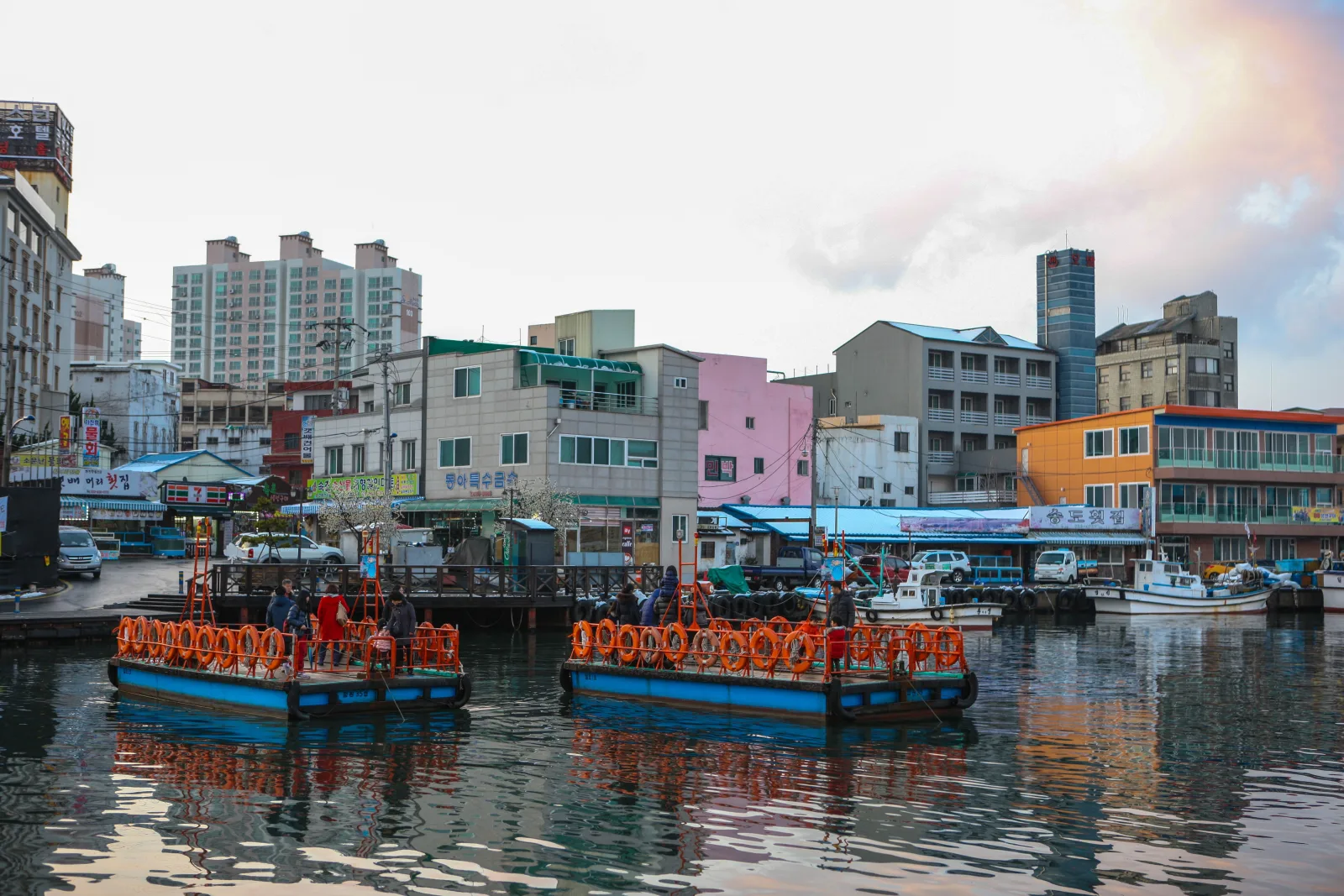
Do not rush the museum as a pre-lunch checklist. If you have only 30 minutes, skip it and come back another day. The exhibits work because they slow the city down.
## Best Route Inside Sokcho Museum
The museum complex can be read in different orders. The official Sokcho Tourism page recommends moving through Balhae History Hall, the Displaced People Folk Village, and the museum area as a broad campus route. For foreign visitors who are specifically interested in Sokcho's refugee history, this is the clearest order:
### 1. Start With the City-History Context
Begin with the main museum halls so Sokcho's geography lands first. The first layer is not war; it is place. Sokcho sits between Seoraksan and the East Sea, so the museum's natural-environment and local-culture material explains why the city developed around both mountain and fishing economies.
This matters because the displaced-people story did not happen in an empty setting. Refugee families arrived in a real coastal city with its own food systems, boats, markets, and mountain-edge communities.
### 2. Spend the Most Time in Exhibition Hall 2
The second exhibition hall is the core for this guide. [Sokcho Museum's exhibition page](https://www.sokchomuse.go.kr/english/exhibition_02.asp) frames this section around fishing villages and Korean War refugees, including the life of people from Hamgyong Province and northern-province culture preserved through film and donated artifacts.
Read this section slowly. The point is not only what people lost; it is how they rebuilt daily life with boats, markets, food, dialect, household objects, and remembered hometowns.
### 3. Walk the Reconstructed Cheongho-dong Alley
Cheongho-dong is the neighborhood associated with Abai Village. The museum's reconstructed alley helps visitors picture the early settlement pattern more clearly than the present-day commercial streets can.
This is the part to remember before taking the Gaetbae ferry. The ferry is not just a novelty crossing; it belongs to a neighborhood shaped by water, distance, work, and improvised access.
### 4. Use the Folk-Village Houses as a Map of Memory
The Displaced People Folk Village is not a theme park version of North Korea. It is a way to make regional difference legible: house forms, household layouts, room scale, and cultural references from northern provinces become visible in three dimensions.
Move through it like a memory map. Ask what needed to be recreated, what could only be approximated, and what survived in food or ritual rather than architecture.
### 5. Add Balhae History Hall if You Have Time
Balhae History Hall broadens the visit beyond the 20th century. It is part of the same museum complex and gives Sokcho a longer Northeast Asian historical layer. If your main interest is Korean War history, keep it as the final section. If your main interest is archaeology and old kingdoms, start there.
## How Much Time Do You Need?
| Visit style | Time | Best for |
|---|---:|---|
| Fast context stop | 60 minutes | Visitors pairing the museum with Seoraksan and Abai Village in one day |
| Balanced visit | 90 minutes | Most first-time travelers |
| Deep museum visit | 2 hours | History travelers, families, rainy days, and anyone adding Balhae History Hall |
For a one-day route, 90 minutes is the practical target. It gives you enough time to read the refugee-history material, walk the folk-village area, and still move downtown before lunch or late afternoon.
## Getting There Without a Car
Sokcho Museum is not on the Abai Village waterfront. It sits inland on the Seoraksan side of the city, so treat it as a planned stop rather than a casual walk from downtown.
The official museum visitor page lists city buses **3** and **3-1** for public transportation. For most foreign visitors, the simplest approach is:
- Use a taxi if you are moving between Seoraksan, the museum, and downtown on the same day.
- Use bus 3 or 3-1 if your timing is flexible and you are comfortable checking live routing in Naver Map or KakaoMap.
- Avoid walking from Abai Village unless you specifically want a long city walk.
See [Sokcho Without a Car](/getting-around/without-car) if you are building a full no-car day.
## The Best Pairings
| Pairing | Why it works |
|---|---|
| Museum + Abai Village | Context first, living neighborhood second |
| Museum + Sinheungsa | Older Buddhist heritage plus modern division history |
| Museum + Sokcho Tourist & Fishery Market | Refugee/fishing history plus the market economy that grew after the war |
| Museum + rainy-day cafe | The most reliable indoor cultural plan when Seoraksan weather changes |
| Museum + Balhae History Hall | Best for visitors who want a longer historical timeline |
For most travelers, the strongest route is still the full [Sokcho History Itinerary](/collections/sokcho-heritage-route). It connects the museum to Sinheungsa, the market, the Gaetbae ferry, Abai Village, and chilsungboatyard in one story.
## Common Mistakes
### Treating the Museum as Only a Rainy-Day Backup
It is a good rainy-day stop, but that undersells it. Sokcho Museum is one of the few places in the city where a foreign visitor can understand the link between Korean War displacement, North Korean regional culture, fishing livelihoods, and present-day food.
### Going to Abai Village Only for Lunch
The food is important, but lunch alone flattens the neighborhood. If you want abai sundae, squid sundae, or Hamheung-style noodles to mean something, give yourself the museum context first or afterward.
### Trying to Walk Every Segment
Sokcho looks compact on a map, but the museum is not downtown. Use one taxi segment if you are connecting Seoraksan, Sokcho Museum, and Abai Village in a single day. Saving that transfer time usually improves the whole route.
### Skipping the Folk-Village Area
Do not leave after the main halls. The reconstructed alley and folk-village houses are the easiest parts for non-Korean visitors to understand physically, even when exhibit labels are limited.
## FAQ
### What is Sokcho Museum?
Sokcho Museum is a city-history museum and folk-village complex in Nohak-dong. It explains Sokcho's natural environment, fishing culture, Korean War displaced-people history, reconstructed Cheongho-dong alley life, and Balhae history in one campus.
### How long should I spend at Sokcho Museum?
Plan **90 minutes** for a balanced visit. A fast stop takes about **60 minutes**; a slower visit with the refugee-history material, folk-village houses, and Balhae History Hall takes about **2 hours**.
### Should I visit Sokcho Museum before or after Abai Village?
Visit before Abai Village if you want context first. Visit after Abai Village if your day is food-led and you want the ferry, alleys, and North Korean-style dishes to make more sense afterward.
### What are Sokcho Museum's opening hours?
Sokcho Museum is open **09:00-18:00** from March through October and **09:00-17:00** from November through February. It is closed on Mondays, and VisitKorea also lists January 1 as a holiday.
### How much is admission to Sokcho Museum?
Adult admission is **W2,000**. Adolescents and military visitors are **W1,500**, children are **W700**, and group prices are lower. VisitKorea notes free admission for preschoolers, seniors age 65 and over, and all visitors on Children's Day.
## Source Notes
The practical details in this guide were checked against:
- [VisitKorea's Sokcho Museum listing](https://english.visitkorea.or.kr/svc/contents/contentsView.do?vcontsId=97435) for museum overview, address, seasonal hours, holidays, parking, and admission
- [Sokcho Museum visitor information](https://www.sokchomuse.go.kr/english/information.asp) for official hours, admission categories, and bus access
- [Sokcho Museum exhibition information](https://www.sokchomuse.go.kr/english/exhibition_02.asp) for Exhibition Hall 2's fishing-village and Korean War refugee focus
- [Sokcho Tourism's museum page](https://www.sokcho.go.kr/ct/tour/attraction/experience?contentSeq=111) for local Korean-language context and route framing inside the museum complex
## Plan the Visit
The simplest way to use this Sokcho Museum guide is to give the museum one focused block, then let it change how you read the rest of the city. Visit the museum before Abai Village if you want context first. Visit after if you already walked the ferry and food streets and want the deeper explanation.
Either way, do not isolate it. Sokcho Museum works best as the interpretive center for a larger route: mountain temple, museum, market, ferry, village, and waterfront culture. That is the Sokcho story most visitors miss when they only chase a beach view and one famous meal.
## Further Reading
- [Sokcho History Itinerary](/collections/sokcho-heritage-route)
- [Abai Village History Walk](/collections/abai-stories)
- [Sinheungsa Temple Guide](/collections/sinheungsa-temple-guide)
- [Sokcho Without a Car](/getting-around/without-car)
---
### blog/sokcho-travel-guide-2026.md
# Sokcho Travel Guide 2026: Everything You Need for Korea's East Coast
Type: blog post
Published: 2026-04-08
Sokcho drew **26 million visitors in 2025** — a 5% increase from the year before, and the fourth consecutive year above 25 million. For a city of roughly 82,000 people, that works out to 326 tourists per resident. The numbers tell you something: this is no longer a hidden gem. It is one of South Korea's most-visited destinations, and in 2026, international arrivals are growing faster than domestic ones.
The reason is geography. Sokcho sits where the Taebaek Mountains run into the East Sea, with Seoraksan National Park 15 minutes from the city center and a working fishing port that supplies the market stalls and restaurant kitchens every morning. You can hike granite peaks at dawn and crack snow crab by the water at lunch. Very few places compress that range into a single day.
This guide covers what you actually need to plan a trip to Sokcho this year — transport, food, accommodation, activities, budget, and the mistakes that cost first-timers time and money. Every price is current as of April 2026.
## Key Takeaways
- **Getting there**: Express bus from Seoul, 2h 20min, W16,400-27,600. ~40 departures daily.
- **Budget**: W75,000-115,000/day (budget) to W270,000+ (comfort). Sokcho is affordable.
- **Must-eat**: Dakgangjeong (sweet fried chicken), mulhoe (raw fish cold soup), Abai sundae, snow crab.
- **Best timing**: October for foliage, Dec-Jan for crab, May-June for mild weather.
- **Minimum stay**: 2 nights. One day is not enough.
## Table of Contents
- [Getting There](#getting-there)
- [Where to Stay](#where-to-stay)
- [What to Eat](#what-to-eat)
- [Things to Do](#things-to-do)
- [When to Visit](#when-to-visit)
- [Budget](#budget)
- [Common Mistakes](#common-mistakes)
- [FAQ](#faq)
## Getting There
### Express Bus from Seoul (Recommended)
The express bus is how 90% of travelers reach Sokcho. The numbers:
| Class | Price | Notes |
|-------|-------|-------|
| Standard (고속) | W16,400 | Most common choice |
| Deluxe (우등) | W21,300 | Wider seats, worth the upgrade |
| Premium | W27,600 | Reclining seats, USB charging |
| Late-night surcharge | +W1,600-2,700 | After ~21:00 |
- **Departures**: ~40 per day from Seoul Express Bus Terminal (Seocho/Gangnam) and Dong Seoul Terminal
- **First/last bus**: 06:00 / 23:30
- **Travel time**: approximately 2 hours 20 minutes
- **Booking**: [Kobus](https://www.kobus.co.kr) or the Bustago app
Friday afternoon and Sunday evening buses sell out in peak season. Book 2-3 days ahead for weekends. The deluxe bus (W21,300) is only W5,000 more than standard — the wider seats make the difference on a 2.5-hour ride.
### Other Options
**From Incheon Airport:** Airport limousine bus runs several times daily, 3.5-4 hours depending on traffic. Alternatively: AREX to Seoul Station, subway to Gangnam, then express bus.
**By KTX + bus:** The KTX does not reach Sokcho directly. Nearest station is Gangneung (~1 hour local bus to Sokcho). Slower than the direct express bus for most travelers.
**By car:** ~2.5 hours from Seoul via the Yeongdong Expressway. Useful for exploring Yangyang or Goseong, but parking near Seoraksan is W6,000/day (W10,000 for 12+ hours) and fills early on weekends.
**Coming in 2028+:** The Chuncheon-Sokcho railway is under construction — 93.8 km, 86% tunnel, projected Seoul-Sokcho time of 99 minutes. As of March 2026, tunnels are 25-34% complete. [Original 2027 target has been pushed to 2028 or beyond](https://www.news1.kr/local/kangwon/5542118).
For full transit details, schedules, and booking tips, see our [Seoul to Sokcho guide](/getting-around/from-seoul). Planning to skip the car? Read [Sokcho Without a Car](/getting-around/without-car).
## Where to Stay
Sokcho has four distinct base areas:
**Sokcho Beach area** — The most popular base for first-timers. Walking distance to the beach, cafes, and the new Sea of Light media art installation. Hotels near the beach average around W53,000/night — 47% below the city average, according to booking platform data.
**Tourist Market / Yeongrang Lake area** — Central, close to the market and the lake. More local-feeling than the beach strip. Best for travelers who prioritize food access.
**Seoraksan entrance area** — Ideal if the mountain is your primary goal. Quieter evenings, closer to trailheads, but further from the coast and restaurants.
**Daepo Port area** — Near the raw fish restaurants and seafood joints. Slightly off the main tourist circuit but well-connected by bus.
### Price Ranges (April 2026)
| Tier | Nightly Rate | Examples |
|------|-------------|----------|
| Budget (guesthouses, motels) | W20,000-50,000 | Basic but clean, near bus terminal or beach |
| Mid-range (hotels) | W70,000-120,000 | Sokcho I Park Suite (~W93,000 avg) |
| Luxury | W180,000-300,000+ | Cassia Sokcho (Banyan Tree Group, 674 rooms, opened 2024) |
**Cheapest month:** March (up to 70% savings vs. peak). **Cheapest day:** Monday. **Most expensive:** Friday nights and Korean holidays. Prices rise 30-50% on weekends.
For neighborhood-by-neighborhood recommendations, see [Where to Stay in Sokcho](/explore/where-to-stay).
## What to Eat
Sokcho's food identity rests on three pillars: seafood from the East Sea, North Korean refugee cuisine adapted over seven decades, and a market-stall culture that predates the tourism economy. These are the dishes that define the city — not generic Korean food you can find in Seoul, but things specific to this coast.
### Dakgangjeong (닭강정) — Sweet Crispy Fried Chicken
Sokcho's most iconic food, period. The "Dakgangjeong Alley" near Sokcho Tourist & Fishery Market has 10+ competing shops. The chicken is deep-fried until shatteringly crisp, then coated in a sticky sweet-spicy glaze.
**Manseok Dakgangjeong** (만석닭강정, est. 1983) is the original pioneer:
- Regular (bone-in): W19,000 / Boneless: W20,000
- Spicy (bone-in): W20,000 / Boneless: W21,000
- Fried (no glaze): W17,000
- Hours: 10:00-20:00
The line moves fast. Grab a box and eat it by the lake or at the market. This is the single food most visitors photograph and post about.
### Mulhoe (물회) — Raw Fish Cold Soup
An East Sea specialty: fresh raw fish (flounder, sea bream, or assorted sashimi) served in an icy, tangy broth with vegetables. Price range: W20,000-26,000.
**Cheongchosu Mulhoe** (청초수물회) claims over 1 million visitors per year and is considered Korea's first mulhoe specialist restaurant. Their signature bowl layers sashimi with abalone, sea cucumber, and sea squirt over a bone-broth-and-fermented-soybean base.
**Wando Hoe Sikdang** (완도회식당) is the local insider pick — open only 4 hours a day (09:00-13:00), closes when sold out. Featured on Korea's "Wednesday Food Talk" (수요미식회).
### Abai Sundae (아바이순대) — North Korean-Style Blood Sausage
Originated from Hamgyeong-do refugees who settled in Abai Village after the Korean War. Unlike standard Korean sundae, Abai sundae uses sticky rice instead of glass noodles, making thicker, chewier slices.
- Abai sundae: W18,000-38,000 (varies by size)
- Ojingeo sundae (stuffed squid): W19,000-39,000
- Sundaeguk (sundae soup): W10,000-11,000
Cross the hand-pulled ferry (gaetbae) to Abai Village — two minutes, a few hundred won — and eat where the tradition started. **Dancheon Sikdang** (단천식당, featured on "1 Night 2 Days") is a reliable solo-friendly option at ~W10,000 for sundae gukbap.
### Snow Crab (홍게 / 대게)
Hong-ge (red snow crab) runs nearly year-round with a peak November through May. Dae-ge (king snow crab) peaks in deep winter.
**[Yes Su-san](/spots/yesseafood)** — The hong-ge dosirak (crab lunch box, ~W26,000-36,000) remains the single most-recommended crab dish in Sokcho.
Snow crab prices fluctuate daily with catch and weather. Check [tpirates.com](https://tpirates.com) for real-time market prices before ordering. There have been documented cases of tourist overcharging at some market stalls — confirm the price per crab or per kilogram before they start steaming.
### The Market
**Sokcho Tourist & Fishery Market** (속초관광수산시장) — selected for the [2025-2026 Korea Tourism Top 100](https://korean.visitkorea.or.kr). Three levels: fresh sashimi center in the basement, dakgangjeong alley and street food on the ground floor, and general goods above. Hours: 08:00-24:00.
Don't miss: **Sulbbang** (술빵, makgeolli bread — expect 40-minute weekend queues), **Sokcho Saeu Ajeossi** (속초새우아저씨, king prawns 15cm+ fried to order), hongge ramen (a popular fusion snack), and [Seodam Ssalguksu's](/spots/seodam-rice-noodle) whole crab rice noodle soup (~W18,000, ~20 bowls/day — go early).
For the full list, see [11 Must-Try Dishes in Sokcho](/eat/must-try-dishes). For restaurant-by-restaurant picks, browse our [spot directory](/spots). The [Sokcho Seafood Market Guide](/eat/seafood-market) has a full floor-by-floor walkthrough.
## Things to Do
### Seoraksan National Park
The anchor attraction. Seoraksan drew 111,731 foreign visitors alone in 2025 (5th among Korean national parks). Key experiences:
- **Biseondae Trail** — The most popular route. 3.5 km along a creek to a granite rock formation. 2-3 hours round trip. Flat enough for most fitness levels.
- **Ulsanbawi Rock** — More demanding: 3.8 km one way, ~800 steel stairs near the summit. The park's most iconic views. 4-5 hours round trip.
- **Gwongeumseong Cable Car** — 5-minute ride to a fortress ruin with panoramic views. **W16,000 adults / W12,000 children** round trip (no one-way tickets). No advance booking — on-site purchase only. Peak-season no-discount periods: Jul 18-Aug 23 and Sep 19-Nov 15.
**Admission:** Free (no entrance fee). **Parking:** W6,000/day.
**Trail closures:** High-altitude routes (Dinosaur Ridge, Daecheongbong summit) close mid-November to mid-December for fire prevention and during winter. Low-altitude trails (Biseondae, Ulsanbawi, Biryong Falls) remain open year-round. Unauthorized entry: W200,000-500,000 fine.
Full trail descriptions, difficulty ratings, and seasonal conditions: [Seoraksan Hiking Guide](/explore/seoraksan).
### Beaches
**Sokcho Beach** is the main draw — a long, clean stretch with a boardwalk, cafes, and direct sunrise views over the East Sea. It ranked **2nd in Gangwon Province** for navigation searches in 2025.
Yeonggeumjeong, a smaller beach slightly north, offers a quieter alternative. Naksan Beach, 20 minutes south in Yangyang, is worth the side trip for its clifftop temple.
Detailed coverage: [Sokcho Beach Guide](/explore/beaches).
### Sea of Light (빛의 바다, 속초)
Launched January 2025 at Sokcho Beach's south entrance. Korea's largest beach media art installation: **70 meters wide, 15 meters tall**. Two 30-minute performances per session, every Friday and Saturday evening (winter 18:00-20:00, summer 20:00-22:00). The installation drove 200,000+ visitors in January 2025 alone — a 21% year-over-year increase in winter tourism.
### Cheongchoho Lake & Abai Village
Cheongchoho Lake wraps through the city center. Walking its perimeter is one of Sokcho's most underrated pleasures — especially at dawn or dusk, on the new "barefoot walking trail" along the lakeside.
On its banks sits Abai Village, a community built by North Korean war refugees in the 1950s. The hand-pulled ferry (gaetbae) crosses the channel in two minutes for a few hundred won. It is one of those small, distinctly Korean experiences that stays with you.
### Cafes
Three worth seeking out: Bossa Nova (ocean-view rooftop near Daepo Port), Chilsung Boatyard (converted fishing facility on the waterfront), and Sunsarogil (quiet and leafy near Cheongchoho Lake). See [Best Cafes in Sokcho](/explore/best-cafes-in-sokcho) for hours and directions.
## When to Visit
There is no wrong season. Each comes with specific trade-offs, backed by actual weather data:
| Season | Avg. High / Low | Rain | Highlights | Trade-offs |
|--------|-----------------|------|------------|------------|
| **Spring** (Mar-May) | 10-21°C / 3-13°C | 41-81mm/mo | Cherry blossoms (April), mild hiking, fewer crowds | Late May rain, some seafood between seasons |
| **Summer** (Jun-Aug) | 24-28°C / 18-22°C | 117-244mm/mo | Beach weather, green mountains, festivals | Humid, peak crowds, July/August monsoon dumps 49% of annual rain |
| **Autumn** (Sep-Nov) | 12-24°C / 5-17°C | 53-170mm/mo | Seoraksan foliage (peak mid-Oct), comfortable temps | Most crowded season at the mountain |
| **Winter** (Dec-Feb) | 3-6°C / -4 to -1°C | 20-28mm/mo | Snow crab peak, snowy Seoraksan, empty beaches, Sea of Light | Cold, some high-altitude trails close |
**Our take:** Late September through mid-October for the foliage. Late November through January for snow crab and solitude. May and June for mild weather without summer crowds. Avoid Chuseok, Seollal, and summer school break unless you enjoy competition for restaurant seats.
**A trend worth noting:** Sokcho's off-season (January-May) tourism spending grew **8.9% in 2025**, signaling a shift toward year-round tourism. Winter is no longer the dead season it was five years ago.
For a deeper seasonal breakdown, see [Sokcho by Season](/explore/seasonal) and [Sokcho in Winter](/blog/sokcho-in-winter).
## Budget
Every price below is verified as of April 2026.
| Category | Budget | Mid-Range | Comfort |
|----------|--------|-----------|---------|
| Accommodation | W20,000-50,000 | W70,000-120,000 | W180,000+ |
| Meals (3/day) | W25,000-35,000 | W40,000-65,000 | W80,000+ |
| Transport (local) | W5,000-10,000 | W10,000-20,000 | W20,000+ (taxi) |
| Activities | W0-10,000 | W16,000-30,000 | W30,000+ |
| **Daily Total** | **W50,000-105,000** | **W136,000-235,000** | **W310,000+** |
That works out to roughly **$37-77 USD/day** on a budget, **$100-173 mid-range**, or **$228+** for comfort. The express bus from Seoul (W16,400-27,600 each way) is the main fixed cost.
**Where the money goes:** Sokcho's total tourism spending hit **W648.4 billion in 2025** (up 3.7% from 2024). The average visitor spends most on food — the market and restaurants are the economic engine, not entrance fees or attractions.
For a detailed cost breakdown, see [How Much a Sokcho Trip Actually Costs](/blog/how-much-sokcho-costs).
## Common Mistakes
After watching 26 million visitors pass through this city, a pattern emerges:
1. **Only allocating one day.** Sokcho rewards a second day. The mountain alone fills a full day, and the food scene needs at least three meals to appreciate. Two nights minimum.
2. **Skipping the market.** The Tourist & Fishery Market was selected for the 2025-2026 Korea Tourism Top 100 for a reason. It ranked **1st in Gangwon Province** for navigation searches. Many visitors head to sit-down restaurants and miss the market entirely — that is a mistake.
3. **Expecting English everywhere.** Sokcho is improving, but this is not Seoul. Download [Papago](https://papago.naver.com) or Google Translate with Korean offline. Many restaurants have picture menus, and pointing works universally. See [Korean Phrases for Sokcho](/blog/korean-phrases-sokcho).
4. **Driving to Seoraksan on a weekend.** Parking fills early on weekends and holidays (W6,000/day). Take the local bus instead — it runs frequently and drops you at the gate.
5. **Not checking snow crab prices.** Prices fluctuate daily. Some market stalls have been flagged for overcharging tourists. Check [tpirates.com](https://tpirates.com) for real-time market rates and confirm the per-unit or per-kg price before ordering.
6. **Visiting only in autumn.** The foliage is spectacular, but winter's food and solitude, spring's mild trails, and summer's beaches all make strong cases. Off-season tourism spending grew 8.9% in 2025 — other travelers are catching on.
For the full list, see [7 Mistakes Tourists Make in Sokcho](/blog/mistakes-tourists-make-in-sokcho).
## FAQ
**Is Sokcho safe for tourists?**
Yes. South Korea ranks among the [safest countries globally on the Global Peace Index](https://www.visionofhumanity.org/maps/), and Sokcho is a small, well-lit city with virtually no violent crime against visitors. Solo travelers, including solo female travelers, consistently report feeling completely comfortable.
**Do I need to speak Korean?**
No, but it helps for restaurants outside tourist areas. Download Papago or Google Translate with Korean offline. Many restaurants have picture menus.
**Can I visit Sokcho as a day trip from Seoul?**
The 2h20m bus each way makes it technically possible. We do not recommend it — you will spend nearly 5 hours on buses and barely have time to hike or eat properly. Two nights minimum.
**Is Sokcho good for families with children?**
Yes. The Biseondae trail is stroller-accessible for much of its length, the beach is calm and clean, and the market is endlessly interesting for kids. The cable car (W12,000 for children) is a hit with all ages.
**What is the best month to visit Sokcho?**
October for foliage, December-January for snow crab season, May-June for mild weather. There is no bad month — 26 million visitors in 2025 proves the city works year-round.
**How many days do I need?**
Two full days is the sweet spot for a first visit. Three days lets you add a beach day, a second hike, or a side trip to Yangyang. One day is not enough.
**When will the train to Sokcho open?**
The Chuncheon-Sokcho railway is under construction (86% tunnel, 93.8 km). Originally targeted for 2027, it has been delayed to **2028 or beyond**. When completed, Seoul to Sokcho will take 99 minutes. For now, the express bus remains the fastest option.
---
*This guide is updated regularly as prices, schedules, and conditions change. Last updated April 2026. Sources include Korea Tourism Organization data, Sokcho municipal statistics, and on-the-ground verification. For personalized recommendations based on your dates, dietary preferences, and interests, try our [AI trip planner](/plan) — it knows every restaurant and trail in the region.*
---
### blog/sokcho-vs-gangneung.md
# Sokcho vs Gangneung: An Honest Comparison of Korea's East Coast Rivals
Type: blog post
Published: 2025-10-01
Sokcho and Gangneung sit about 90 minutes apart on Korea's east coast, connected by a coastal highway that traces some of the most dramatic shoreline in the country. Both are excellent. Neither is a consolation prize for missing the other.
But they are not the same place, and choosing between them — or deciding how to split limited time — requires understanding what each city actually does best. Here is a frank comparison.
## Getting There: Gangneung Wins, Clearly
Gangneung has the KTX. The high-speed train from Seoul Station takes roughly two hours and drops you in the center of the city. It is fast, comfortable, and eliminates the single biggest friction point of east coast travel.
Sokcho has no direct train service. You take an express bus from Seoul's Dong Seoul or Express Bus Terminal — about 2.5 hours, traffic dependent. The buses are fine. But "fine" is not "KTX."
If ease of access is your primary concern, Gangneung is the straightforward choice. If you are already committed to the east coast and willing to take a bus, the difference is marginal.
## Hiking: Sokcho Wins, Decisively
This is not close. Sokcho is the gateway to **Seoraksan National Park**, the most spectacular mountain park in South Korea. Granite spires, ancient temples, world-class trails from gentle to genuinely challenging — Seoraksan is the reason serious hikers come to the east coast at all.
Gangneung has Odaesan National Park nearby, which is beautiful, forested, and significantly less dramatic. It is a fine day hike. It is not Seoraksan.
If hiking is anywhere on your priority list, Sokcho is where you want to be. Full stop. The [Seoraksan guide](/explore/seoraksan) covers trails, conditions, and logistics in detail.
## Food: Different Strengths, No Clear Winner
Both cities are seafood towns, but their culinary identities diverge in interesting ways.
**Sokcho** is defined by its market culture and raw-seafood tradition. The [Sokcho Tourist & Fishery Market](/eat/seafood-market) is one of the best food markets on the entire east coast — a covered labyrinth of stalls selling dakgangjeong (sweet fried chicken), fresh sashimi, sundae, hotteok, and a dozen other snacks. Beyond the market, the city specializes in mulhoe (raw fish in iced broth), snow crab, and abai-style dishes from its North Korean refugee heritage.
**Gangneung** leans toward two distinct strengths. First, coffee: Anmok Coffee Street is a genuine phenomenon, a beachfront strip packed with roasteries and cafes that has made Gangneung the unofficial coffee capital of South Korea. Second, tofu: the Chodang Sundubu Village is a cluster of restaurants built around the area's exceptionally pure, soft sundubu jjigae.
The honest answer is that both cities eat well, and neither can replicate what the other does best. Sokcho has the better market. Gangneung has the better cafe scene. Both have excellent seafood, prepared differently.
If you are visiting both cities, eat crab and market food in Sokcho, then save the coffee crawl and sundubu for Gangneung. Trying to do everything in one city means missing what the other does best.
## Beaches: Gangneung for Scale, Sokcho for Solitude
Gangneung's **Gyeongpo Beach** is the bigger, more developed option — a long stretch of sand with a boardwalk, beachfront cafes, and the famous cherry blossom path that runs along the nearby lake in spring. It is a proper beach destination with infrastructure to match.
Sokcho Beach is smaller, less developed, and significantly quieter. You also have Naksan Beach about 20 minutes south — a beautiful, relatively uncrowded stretch that feels like a discovery even though it is well-known locally.
If you want a beach day with restaurants and cafes within walking distance, Gangneung delivers more of that. If you prefer a quieter shoreline where you might be the only person on the sand at sunrise, Sokcho (and especially its shoulder-season beaches) is the better fit.
## Vibe: The Real Difference
Here is what the category-by-category comparison misses: the cities feel different.
Gangneung is more polished, more urban, more immediately accessible. The KTX connection means it attracts a broader mix of visitors, and the infrastructure reflects that. It is easy to have a great weekend in Gangneung without doing any research at all.
Sokcho is rougher around the edges, more fishing-town than resort-town, and rewards a bit more preparation. The eating is more adventurous. The hiking is more serious. The whole experience tilts slightly more toward travelers who want to feel like they found something rather than consumed something.
Neither vibe is superior. But they attract different temperaments.
## The Verdict
**Choose Sokcho if:** you came for the mountains, you want market-driven seafood, you prefer a quieter and grittier coastal town, or Seoraksan is a non-negotiable.
**Choose Gangneung if:** you want easy KTX access from Seoul, you prioritize cafe culture and developed beach infrastructure, or you have limited time and want the smoothest possible day trip.
**Choose both if:** you have three or more days on the east coast. They are 90 minutes apart by intercity bus, and combining them gives you the full range of what Gangwon's coastline offers — mountains, markets, beaches, coffee, crab, and tofu, all in one trip.
The most efficient loop: bus from Seoul to Sokcho (2.5 hours), spend two days hiking and eating, bus south to Gangneung (1.5 hours), spend a day on the beach and coffee street, then KTX back to Seoul (2 hours). You end the trip with the fastest, most comfortable leg home.
---
### blog/sokcho-weekend-trip.md
# Sokcho Weekend Trip: Seoraksan, Seafood & Coast in 2 Days
Type: blog post
Published: 2026-04-18
A Sokcho weekend trip is still one of the cleanest two-day escapes from Seoul: mountain first, coast second, seafood throughout. In under 48 hours, you can hike beneath Seoraksan's granite ridges, cross Abai Village's hand-pulled ferry, eat through Sokcho Tourist & Fishery Market, and finish at the East Sea without renting a car.
This April 2026 refresh removes older unsourced visitor, beach, and hotel claims and keeps the itinerary anchored to facts that were checked recently: express-bus fares, the delayed rail opening, 2026 Seoraksan spring trail controls, current market and ferry information, and the latest reported Sokcho visitor/spending data.
## Key Takeaways
- **Getting there**: Express bus from Seoul, about 2h 20min, W15,600-26,300 in recent Seoul Express Terminal public-data snapshots.
- **Train status**: No passenger train reaches Sokcho yet. March 2026 reporting now points to 2029 as the likely opening window for the Chuncheon-Sokcho railway.
- **Budget**: W135,000-230,000 per person for a practical shared-room weekend; more if you add crab, sashimi, or a private premium hotel room.
- **Day 1**: Seoraksan main entrance, Sinheungsa, Ulsanbawi, and Biryong Falls, with day-of KNPS trail checks.
- **Day 2**: Abai Village ferry, Sokcho Beach, Expo Tower, Cheongchoho Lake, and Sokcho Tourist & Fishery Market.
- **Verified date**: Prices and volatile logistics were checked on April 24, 2026.
## Table of Contents
- [Why Sokcho Makes the Perfect Weekend Trip](#why-sokcho-makes-the-perfect-weekend-trip)
- [Getting to Sokcho from Seoul](#getting-to-sokcho-from-seoul)
- [Day 1: Seoraksan National Park](#day-1-seoraksan-national-park)
- [Day 2: Coastal Sokcho](#day-2-coastal-sokcho)
- [Where to Stay](#where-to-stay)
- [Transportation Between Stops](#transportation-between-stops)
- [Budget Breakdown](#budget-breakdown)
- [What to Pack](#what-to-pack)
- [Sources and April 2026 Update Notes](#sources-and-april-2026-update-notes)
- [FAQs](#faqs)
- [Further Reading](#further-reading)
- [Plan Your Perfect Sokcho Weekend](#plan-your-perfect-sokcho-weekend)
## Why Sokcho Makes the Perfect Weekend Trip
Sokcho works because the city compresses three trip types into one weekend: a national-park hike, a working seafood market, and a real coastline. A March 2026 report citing Korea Tourism Organization Data Lab and Gangwon tourism big-data analysis put Sokcho's 2025 outside-visitor count at about **26 million** and tourism spending at about **W648.4 billion**, up from 2024. That does not prove every visitor came for this exact route, so this guide does not pretend it does.
What it does prove is simpler: Sokcho is not a sleepy side trip. It is a high-demand mountain-and-coast city, and weekends need a plan. The itinerary below keeps the high-value stops while leaving enough slack for weather, bus timing, and appetite.
## Getting to Sokcho from Seoul
The express bus remains the default choice for most Seoul-based travelers. The train still does not reach Sokcho: March 2026 local reporting says the Chuncheon-Sokcho east-west high-speed rail project is now likely to open around **2029**, after delays on several construction sections.
For buses, treat every fare as a live-booking detail. Recent public-data snapshots for Seoul Express Bus Terminal to Sokcho show the route taking about 2h 20min, with one-way adult fares in this planning range:
| Class | One-way planning fare | Notes |
|-------|-----------------------|-------|
| Standard (고속) | W15,600 | Cheapest seats; fewer departures than deluxe |
| Deluxe (우등) | W20,300 | Best default for comfort/value |
| Premium | W26,300 | More space; usually limited departures |
| Late-night deluxe | W22,300 | Useful if you are arriving after work |
- **Travel time**: About 2h 20min in normal conditions.
- **Departure point**: Seoul Express Bus Terminal is the simplest default; Dong Seoul can also work depending on where you stay.
- **Booking**: Use [Kobus](https://www.kobus.co.kr), Bustago, or the terminal app and recheck final fares before payment.
- **Return timing**: Sunday evening sells out first. Book the return trip when you arrive in Sokcho.
If you are traveling on Friday after work, book deluxe or premium before standard. The price gap is small compared with the cost of losing the best arrival window.
Full transit details: [Seoul to Sokcho Guide](/getting-around/from-seoul).
## Day 1: Seoraksan National Park
### Morning: Sinheungsa Temple and Ulsanbawi Rock
**Time:** 8:00 AM - 12:30 PM
Catch Bus 7 or 7-1 from Sokcho Bus Terminal to Seoraksan's main gate. The ride is usually about 30 minutes, but weekend traffic near the park can slow down. Arrive by 8:00 AM if Ulsanbawi is the priority.
At the park entrance, walk ten minutes to **Sinheungsa Temple**, home to the 14.6-meter bronze Tongil Daebul. Make it a short stop, then continue toward **Ulsanbawi Rock**.
**Ulsanbawi Rock** is the main effort of the weekend: roughly 3.8 km one way and 4-5 hours round trip for most visitors. The first two-thirds is forest path. The final stretch is a staircase of around 800 steel steps bolted into granite, with a summit view over Seoraksan, Sokcho, and the East Sea.
**Admission:** Free.
**Parking:** Treat parking as a risk, not a plan. Weekend lots fill early, so the bus is more reliable.
Checked April 24, 2026: KNPS posted a 2026 Seoraksan spring control period from March 4 to May 15. Recent reporting from the park office said high routes toward Daecheongbong are controlled during the period, while lower routes such as Ulsanbawi, Towangseong Falls observatory, Waseondae, and Jujeongol remain normal opening candidates. Conditions can change by weather, so check KNPS trail-control information on the morning you hike.
For difficulty ratings and seasonal conditions, see the [Ulsanbawi Hike Guide](/blog/ulsanbawi-hike-guide).
### Afternoon: Biryong Falls Trail
**Time:** 1:30 PM - 4:00 PM
After lunch near the trailhead, pivot to **Biryong Falls** if your legs are still good. It is the softer counterweight to Ulsanbawi: about 5 km round trip, 236 meters of elevation gain, and 1.5-2 hours for most walkers.
The path follows a stream, crosses the red Geumganggul Bridge, passes Yukdam Falls, and finishes at Biryong Falls. It is family-friendly in dry conditions, but it can still be slippery after rain or freeze-thaw weather.
### Evening: Dinner in Sokcho
**Time:** 6:00 PM onwards
Return downtown and keep dinner simple. Two reliable post-hike patterns:
- **Soft tofu stew** near the Seoraksan/Sokcho corridor: plan W10,000-15,000 depending on the restaurant and set.
- **Dakgangjeong** from the market area: plan roughly W20,000 per box, then confirm at the counter because shop menus and box sizes change.
If you still have energy, walk the **Cheongchoho Lake** loop at night. It gives you a calmer version of Sokcho after the mountain crowds and before the market crowds.
## Day 2: Coastal Sokcho
Day two shifts from granite to water. Keep it mostly car-free and save taxis for weather or fatigue.
### Morning: Abai Village
**Time:** 9:00 AM - 11:30 AM
Start at **Abai Village** (아바이마을), founded by Hamgyeong-do refugees who settled near the port during the Korean War. The signature arrival is the **gaetbae**, a non-powered cable ferry across the channel. VisitKorea's current destination content lists the fare as **one W500 coin**, with passengers helping pull the boat by hook and cable.
The same listing gives the ferry's broad operating window as **05:00-23:00 in summer** and **05:30-22:30 in winter**, open year-round. Still, do not plan the final minutes of your return bus around it; weather and local operations can change.
Inside the village, try **abai sundae** or **ojingeo sundae**. Give yourself 90 minutes to two hours if you want a slow walk and a meal.
### Afternoon: Sokcho Beach and Expo Tower
**Time:** 12:00 PM - 4:00 PM
Walk 15 minutes or ride Bus 9 toward **Sokcho Beach**. The beach is not complicated, which is the point: sand, boardwalk, cafes, sea air, and an easy reset after the previous day's climb.
Skip old claims about seasonal light-installation schedules unless you verify them from the city before traveling. If your evening depends on a beach event or media-art display, check Sokcho city tourism notices that week.
For a panoramic view, continue to **Sokcho Expo Tower** by the Cheongchoho Lake area. Current tourism-data listings consistently place the adult ticket at **W2,500**, with youth at **W2,000** and children at **W1,500**. Use **09:00-22:00** as the planning window and aim to enter by **21:30** if you go at night, because last-entry times are the detail most likely to vary across listings.
The tower is best 30-45 minutes before sunset: Seoraksan is still visible, the lake lights come on, and the city feels more compact from above.
### Evening: Sokcho Tourist & Fishery Market and Departure
**Time:** 4:30 PM - 7:00 PM
End at **Sokcho Tourist & Fishery Market** (the "Jungang Market" most visitors mean). VisitKorea's current listing describes a basement raw-fish center, ground-floor food alleys, and upper-floor general goods. It lists operating hours as **08:00-24:00**, with hours varying by store, and a parking voucher for customers with a **W15,000** receipt.
Work through a few of these:
- **Dakgangjeong alley** for takeout chicken.
- **Sundae alley** if you did not eat enough in Abai Village.
- **Fried seafood** around the food lanes.
- Whole crab rice noodle soup at [Seodam Ssalguksu](/spots/seodam-rice-noodle) if you want a sit-down meal near the market.
Leave the market by 6:30 PM if you want a low-stress return. Later buses exist, but the practical window for most travelers is 19:00-21:00.
## Where to Stay
For a first Sokcho weekend, stay near either **Sokcho Beach** or the **Tourist Market / Cheongchoho Lake** area.
| Area | Best for | Tradeoff |
|------|----------|----------|
| Sokcho Beach | Sunrise, beach walks, cafes, terminal access | Less immediate market access |
| Tourist Market / Cheongchoho | Food, evening walks, central bus/taxi access | More urban, less beach atmosphere |
| Seoraksan entrance | Early hike start | Poor for day-two coast/market flow without a car |
Use live booking rates instead of stale averages. As a planning band, budget guesthouses and motels often start around W30,000-70,000, mid-range hotels around W80,000-150,000, and premium rooms much higher on weekends or holidays. Friday and Saturday pricing can move fast.
Full neighborhood breakdown: [Where to Stay in Sokcho](/explore/where-to-stay).
## Transportation Between Stops
Sokcho is compact, but not every gap is pleasant on foot after a hike. Save your walking energy for the village, beach, lake, and market.
**Key routes:**
- Sokcho Bus Terminal -> Seoraksan entrance: Bus 7 or 7-1, about 30 minutes before traffic.
- Abai Village ferry -> Sokcho Beach: About 20 minutes on foot, or Bus 9.
- Sokcho Beach -> Tourist Market: Bus 1 or 9, usually about 10 minutes once onboard.
Use Naver Map or KakaoMap on the day because city-bus headways are more useful than static route numbers. Taxis between core stops are usually cheap enough to rescue the schedule when weather turns.
For the full car-free playbook, see [Sokcho Without a Car](/getting-around/without-car).
## Budget Breakdown
Every volatile line below was refreshed as a planning estimate on April 24, 2026.
| Item | Cost per person |
|------|-----------------|
| Express bus, round trip | W31,200-52,600 |
| Seoraksan entrance | Free |
| Abai Village gaetbae | W500 |
| Expo Tower | W1,500-2,500 |
| Day 1 meals | W25,000-40,000 |
| Day 2 meals | W30,000-50,000 |
| One shared mid-range hotel night | W40,000-75,000 |
| Local bus / occasional taxi | W10,000-15,000 |
| **Weekend total (per person)** | **W135,000-230,000** |
That range assumes shared lodging. Solo travelers paying for a private room should add the full room premium. If the trip is food-led, crab and sashimi are the obvious budget breakers.
Detailed cost analysis: [How Much a Sokcho Trip Costs](/blog/how-much-sokcho-costs).
## What to Pack
**Day 1 (Seoraksan):**
- Hiking shoes with real grip.
- At least 1 liter of water per person.
- Light snacks.
- Weather-appropriate layers; summit and ridgeline wind can feel far colder than downtown Sokcho.
- Small daypack.
**Day 2 (coastal):**
- Comfortable walking shoes.
- Sunscreen and hat, even outside summer.
- Light jacket for evening coastal wind.
- Camera or phone storage for the beach, lake, and market.
**Both days:**
- Power bank.
- Cash in W1,000 and W5,000 notes for the ferry, market stalls, and backup situations.
- [Papago](https://papago.naver.com) or Google Translate with Korean downloaded for offline use.
See also: [Korean Phrases for Sokcho](/blog/korean-phrases-sokcho).
## Sources and April 2026 Update Notes
This page was refreshed on April 24, 2026. For facts that can change quickly, the article now uses either recently published reporting or currently maintained public/official tourism listings.
- [Seoul Express Terminal to Sokcho public-data timetable snapshot](https://bus.koreacharts.com/express-bus-terminal/NAEK010/NAEK230.html) - bus duration and fare planning bands.
- [Gangwon Ilbo, March 19, 2026](https://m.kwnews.co.kr/page/view/2026031811083117994) - Chuncheon-Sokcho railway opening pushed toward 2029.
- [KNPS Seoraksan 2026 spring control notice](https://res.knps.or.kr/community/board/notice/boardDetail.do?seq=29026) and [Yonhap, Feb 15, 2026](https://www.yna.co.kr/amp/view/AKR20260213035100062) - spring control dates and lower-route opening candidates.
- [VisitKorea: Sokcho Tourist & Fishery Market](https://english.visitkorea.or.kr/svc/whereToGo/locIntrdn/rgnContentsView.do?vcontsId=75204) - market hours, structure, and parking-voucher details.
- [VisitKorea: Abai Village tidal boat note](https://english.visitkorea.or.kr/svc/contents/contentsView.do?vcontsId=174444) - gaetbae fare and operating windows.
- [KTO tourism-data listing for Sokcho Expo Tower](https://www.koreatriptips.com/tourist-attractions/128804.html) - tower admission, hours, and last-entry planning.
- [Asia Economy, March 11, 2026](https://www.asiae.co.kr/article/social-general/2026031120552672601) - 2025 Sokcho visitor count and tourism-spending analysis.
## FAQs
**How much should I budget for a 2-day Sokcho weekend trip?**
Plan on W135,000-230,000 per person, including round-trip bus, one shared mid-range hotel night, meals, and attractions. A guesthouse and street-food version can sit closer to W120,000; premium buses, a private hotel room, and crab or sashimi courses can push the trip above W300,000.
**Is Sokcho worth visiting in winter?**
Yes. Winter works well for clear mountain views, seafood, and quiet beaches, but summit-style Seoraksan routes are weather- and closure-dependent. Keep the plan flexible around lower routes such as Ulsanbawi, Biryong Falls, or Biseondae, and check KNPS trail controls on the travel day.
**Can I do this itinerary without speaking Korean?**
Yes. Seoraksan's main visitor zone has bilingual signage, the ferry and market are used to visitors, and route numbers are easy to match in Naver Map or KakaoMap. Download Korean in Papago before leaving Seoul and keep the Korean names for stops saved offline.
**What is the best time of year for a Sokcho weekend trip?**
Late September through mid-October is strongest for foliage; May and June are better for mild trails and lower crowds; winter is good for seafood and clear coastal views. Avoid Chuseok, Seollal, and peak summer weekends unless you book transport and rooms early.
**How physically demanding is this Sokcho weekend trip?**
Moderate on day one, easy on day two. Ulsanbawi is 4-5 hours with around 800 steel stairs; Biryong Falls adds 1.5-2 hours on a gentler path. Day two is mostly flat walking across Abai Village, the beach, the lake, and the market.
**Should I book accommodations in advance?**
Yes for Fridays and Saturdays, especially around cherry blossom, foliage, holidays, and summer beach season. If you are cost-sensitive, lock the room first and keep dinner plans flexible.
## Further Reading
- [Sokcho Travel Guide 2026](/blog/sokcho-travel-guide-2026)
- [Perfect 2-Day Sokcho Itinerary for First-Time Visitors](/blog/sokcho-itinerary-2-days)
- [Seoraksan Hiking Guide](/explore/seoraksan)
- [Seoraksan Cable Car: Everything You Need to Know](/blog/seoraksan-cable-car-guide)
- [Sokcho Tourist & Fishery Market Guide](/eat/seafood-market)
- [11 Must-Try Dishes in Sokcho](/eat/must-try-dishes)
- [Mistakes Tourists Make in Sokcho](/blog/mistakes-tourists-make-in-sokcho)
## Plan Your Perfect Sokcho Weekend
This itinerary is a framework, not a script. Cut Biryong Falls if Ulsanbawi takes more out of you than expected. Skip the Expo Tower if the beach and market stretch long. Add sunrise at Sokcho Beach if you wake up early.
The anchor decisions are what matter: take the bus from Seoul, hike one real Seoraksan route, cross Abai Village by ferry, eat at the market, and spend enough time by the water that the trip feels coastal instead of rushed.
---
### blog/solo-travel-sokcho.md
# Solo Travel in Sokcho: The Independent Traveler's Playbook
Type: blog post
Published: 2025-09-15
Somewhere between the mountain and the sea, Sokcho has a quality that solo travelers notice immediately: it is scaled for one person. The city is compact enough to walk. The bus system connects every major sight. The food — if you know where to go — does not punish you for showing up alone.
This is not a guide about "finding yourself" on a beach at sunrise (though you can absolutely do that). It is a practical playbook for eating well, moving efficiently, and spending a few days in a small Korean coastal city without a companion or a plan that requires one.
## Safety: The Short Version
South Korea consistently ranks among the safest countries on every major global safety index, and Sokcho is no exception. The city is small, well-lit at night, and violent crime against travelers is essentially unheard of. Solo female travelers routinely report feeling completely comfortable walking alone after dark.
Standard precautions still apply — secure your valuables, stay aware of your surroundings, keep your phone charged. But the baseline safety level here is genuinely high, and it removes a layer of mental overhead that solo travelers in many other countries carry constantly.
## The 2-Portion Problem (and How to Solve It)
Here is the thing nobody tells you before your first solo meal in Korea: many restaurants enforce a minimum order of two servings for main dishes. You will see "2인분부터" on the menu, and it means exactly what you fear — you cannot order just one portion.
This is not hostility toward solo diners. It is an artifact of Korean dining culture, where meals are communal by default. But it can be genuinely frustrating when you are traveling alone and want to try a specific dish without ordering (and paying for) double.
The solution is knowing which places welcome a party of one. These restaurants either serve individual portions, have counter seating, or simply do not enforce the minimum:
**Dancheon Sikdang** — An English menu, solo-friendly atmosphere, and solid home-style cooking at around W10,000 per meal. This is the kind of place where you sit at a small table, point at something on the menu, and get a full, no-fuss Korean meal without any awkwardness.
**[Seodam Ssalguksu](/spots/seodam-rice-noodle)** — Their whole crab rice noodle soup (~W18,000) is a single-bowl meal by design. One person, one bowl, no minimum. It also happens to be one of the best things to eat in Sokcho, period. They make roughly 20 bowls a day, so go early.
**Bong Bread** — A bakery does not care how many people you are. The garlic baguette (~W6,500) is a Sokcho favorite, and the whole operation is perfectly calibrated for a solo stop: walk in, order, eat, leave.
**The Sokcho Tourist & Fishery Market** — The single best solo dining destination in the city. Everything is portioned for one. Walk, eat, walk, eat. No table required, no minimum order, no side-eye from the staff. This is where solo travel and Korean food culture align perfectly.
When in doubt, look for restaurants with counter seating or single-portion dishes (guksu, jjambbong, kimbap, bibimbap). Korean cafes, bakeries, and street food stalls never enforce a minimum. The 2-portion rule mostly applies to barbecue, jjigae, and raw fish restaurants.
## Best Solo Activities
The advantage of Sokcho for solo travelers is that almost nothing here requires a partner:
**Seoraksan hiking** — Trails are well-marked, well-maintained, and populated enough that you are never truly alone on the mountain. The Biseondae trail is the classic accessible route. You will fall into step with other hikers naturally.
**Market grazing** — The Tourist & Fishery Market at your own pace, with no one else's appetite or schedule to accommodate. This is solo dining at its most liberating.
**Abai Village ferry** — A hand-pulled ferry across the channel, two minutes each way. It costs almost nothing and is one of those small, charming experiences that works better alone than in a group, because you actually pay attention to it.
**Cheongchoho Lake walk** — A flat, peaceful lakeside path that is ideal for early morning or late afternoon. Bring headphones or do not. Either way, it is good solitude.
**Beach sunrise** — Set an alarm. Walk to the beach in the dark. Watch the sun come up over the East Sea. This is the one cliche on the list, and it earns its place honestly.
## Getting Around Solo
The local bus system covers all major attractions and is easy to navigate even without Korean. KakaoTaxi (the Korean Uber equivalent) works perfectly for door-to-door trips when you want them. The city is compact enough that many days can be done largely on foot.
No car is necessary. No companion is necessary. The infrastructure is built for independent movement.
## Meeting People (If You Want To)
Hostels and guesthouses near the bus terminal and beach area tend to attract other independent travelers, especially on weekends. Korean hiking culture is inherently social — if you spend a morning on a Seoraksan trail, you will likely end up sharing kimbap with strangers at the summit.
But the honest truth about solo travel in Sokcho is that you do not need to meet anyone to have an excellent trip. The city is comfortable alone. The food is accessible alone. The mountain does not care how many people are in your party. That self-sufficiency is the whole point.
---
### blog/ulsanbawi-hike-guide.md
# Ulsanbawi Hike: Everything Foreigners Need to Know
Type: blog post
Published: 2026-04-15
If you are a foreign traveler staying in Sokcho, the Ulsanbawi hike is still one of the best Seoraksan hikes to do without a guide. The current official VisitKorea hiking guide lists the standard **Sogongwon Park - Ulsanbawi Peak** course at **3.8 km one way** and about **2 hours up**, which makes it look easy on paper. It is not. The distance is manageable, but the final staircase section is steep, exposed, and much harder than first-time visitors expect.
This guide is for foreigners who want the current version, not recycled forum advice. Below, you will find the route basics, the latest Sokcho bus information, what park-access rules matter in 2026, and the practical mistakes that ruin this hike for first-timers.
## Key Takeaways
- The official Ulsanbawi course is **3.8 km one way / about 2 hours up** from Sogongwon Park.
- For most first-time visitors, this is a **moderate-to-hard** hike because of the steep upper stairs, not because of the distance.
- From Sokcho, the simplest public-transport option is **local bus 7 or 7-1** to **Seoraksan Sogongwon** (`설악산소공원`).
- Official Sokcho city-bus fare is currently **KRW 1,530 by card** or **KRW 1,700 in cash**.
- If you want the best autumn timing, the latest VisitKorea foliage forecast within the last year put **first color at Seoraksan on September 30, 2025** and **peak foliage on October 23, 2025**.
- Ulsanbawi is usually a simple show-up-and-hike route, but Seoraksan trail access can still change with weather or seasonal controls. Always check same-day notices before you go.
## Table of Contents
- [Ulsanbawi Hike at a Glance](#ulsanbawi-hike-at-a-glance)
- [How Hard Is the Ulsanbawi Hike?](#how-hard-is-the-ulsanbawi-hike)
- [How to Get to Ulsanbawi from Sokcho](#how-to-get-to-ulsanbawi-from-sokcho)
- [Do You Need a Reservation for Ulsanbawi?](#do-you-need-a-reservation-for-ulsanbawi)
- [Best Time to Hike Ulsanbawi](#best-time-to-hike-ulsanbawi)
- [What to Pack](#what-to-pack)
- [Common Mistakes Foreigners Make](#common-mistakes-foreigners-make)
- [FAQ](#faq)
## Ulsanbawi Hike at a Glance
| Detail | Current planning info |
| --- | --- |
| Official route name | Sogongwon Park - Ulsanbawi Peak |
| Official one-way distance | 3.8 km |
| Official one-way time | 2 hours |
| Main access from Sokcho | Bus 7 or 7-1 |
| Bus destination name | Seoraksan Sogongwon / `설악산소공원` |
| Bus fare | KRW 1,530 by card / KRW 1,700 cash |
| Earliest listed bus | 7-1 at 06:30 |
| Latest listed return-side route | 7-1 at 20:35 |
| Best foliage reference in the last year | First color Sep 30, 2025 / peak Oct 23, 2025 |
The route most foreign visitors mean when they say "Ulsanbawi hike" is the standard Seorakdong-side trail from the Sogongwon area. In practice, you are starting from the main Seoraksan tourist entrance zone, then climbing toward Heundeulbawi and the final Ulsanbawi staircase.
If you want the shortest honest summary, it is this: **shorter than it looks on a map, harder than it sounds in a brochure**.
## How Hard Is the Ulsanbawi Hike?
This is the single most important question, and the answer needs more nuance than "beginner-friendly" or "difficult."
For reasonably active travelers, Ulsanbawi is doable. For very casual travelers, it can be a shock. The lower part is straightforward enough, but the upper section gets steep and step-heavy. The current official VisitKorea hiking guide specifically warns that the path from **Heundeulbawi Rock to Ulsanbawi Peak is steep and has a lot of steps**. That is the part that decides whether you enjoy the hike or grind through it.
Treat the hike like this:
- Good fit if you can handle long stairs, uneven ground, and a few hours on your feet.
- Borderline if you are fine on flat walks but struggle on sustained stair climbs.
- Poor fit if you have knee issues, hate exposure, or planned to do this in casual city shoes.
If you only want Seoraksan views without the upper staircase effort, read our [Seoraksan cable car guide](/blog/seoraksan-cable-car-guide) instead. If you want a gentler Seoraksan walk, start with [our main Seoraksan guide](/explore/seoraksan) and choose a lower trail.
Many foreigners underestimate Ulsanbawi because the official distance is only 3.8 km one way. The distance is not the trap. The staircase is.
## How to Get to Ulsanbawi from Sokcho
For most travelers without a car, public bus is the default option.
The official Sokcho city bus system currently lists **bus 7** and **bus 7-1** to **Seoraksan Sogongwon** (`설악산소공원`), which is the destination name you should save in Naver Map, KakaoMap, or show to a driver if needed.
### Current bus numbers and fares
| Item | Current official info |
| --- | --- |
| Main buses | 7, 7-1 |
| Bus fare by card | KRW 1,530 |
| Bus fare in cash | KRW 1,700 |
| Free transfer window | 1 transfer within 1 hour 30 minutes with a transit card |
| Cash-transfer rule | No free transfer for cash riders |
### Current first and last buses listed by Sokcho BIS
| Route | First bus | Last bus | Destination |
| --- | --- | --- | --- |
| 7 | 06:47 | 19:00 | `설악산소공원` |
| 7-1 | 06:30 | 20:35 | `설악산소공원` |
That schedule matters more than most guidebooks admit. If you want a very early start in warm weather or during foliage season, the local bus may be later than you want. In that case, a taxi from central Sokcho can be the smarter choice, especially if you are trying to beat crowds or avoid hiking the upper stairs in midday heat.
For a fuller breakdown of local transport, read [our Sokcho bus guide](/getting-around/local-bus). If you are still figuring out how to reach Sokcho in the first place, start with [how to get from Seoul to Sokcho](/getting-around/from-seoul).
## Do You Need a Reservation for Ulsanbawi?
As checked in April 2026, **the standard Ulsanbawi route is not listed as one of Seoraksan's reservation-only hiking products**. On the KNPS reservation side, Seoraksan's separately managed reservation routes are other courses such as Heullimgol and Gombaegol.
For most foreign visitors, that means Ulsanbawi is a **show-up-and-hike** trail, not a pre-booked trail.
That said, do not confuse "no reservation" with "guaranteed access."
Seoraksan still uses seasonal and weather-based controls. Recent KNPS notices within the last year included a **March 31, 2026** reopening notice for Heullimgol after the thaw-control period, plus separate park notices for weather-related restrictions and campground closures. The practical takeaway is simple: **check same-day notices before you leave Sokcho**, especially in spring, during heavy rain, after snow, or when strong-wind warnings are active.
## Best Time to Hike Ulsanbawi
For most foreigners, the best Ulsanbawi hiking windows are **late spring** and **autumn**.
### Autumn: best for classic Seoraksan views
If your goal is the iconic granite-and-red-leaves Seoraksan look, autumn is the strongest choice. The latest VisitKorea fall foliage forecast published within the last year put **Seoraksan's first foliage on September 30, 2025** and **peak foliage on October 23, 2025**.
That does not guarantee identical dates in 2026, but it is still the best recent benchmark for planning. If you want the highest odds of good color, target **early to late October**, with the middle of the month usually being the safest balance between color and trail comfort.
### Spring: good hiking weather, but check park notices
Spring is excellent for clear air and lighter mountain traffic than peak autumn weekends. The trade-off is that Seoraksan often operates under seasonal control notices in this period, so you need to be more disciplined about checking current park updates before departure.
### Summer: green views, later starts, more weather risk
Summer gives you long daylight and green scenery, but it also raises the odds of heat, humidity, and sudden weather changes. If you hike in summer, start as early as you can.
### Winter: only if you are prepared for winter hiking
Ulsanbawi in winter can be beautiful, but this is where many casual foreign travelers misjudge the mountain. If there is snow or ice, treat it like a winter mountain hike, not a sightseeing walk. That means traction, warm layers, and a willingness to turn back if conditions are poor.
## What to Pack
You do not need technical alpine gear for Ulsanbawi, but you do need to stop packing for Instagram and start packing for stairs.
Bring:
- Grippy shoes with real support
- Water and a small snack
- A light wind layer, even outside winter
- Sunscreen and a cap in warmer months
- A fully charged phone with the destination saved as `설악산소공원`
- Trekking poles if your knees dislike descents
The official VisitKorea hiking safety guide also emphasizes basic mountain essentials such as proper footwear, functional clothing, and enough food and water. That sounds obvious until you see how many visitors show up in flat sneakers and no water because the trail looked short online.
## Common Mistakes Foreigners Make
### 1. Thinking "2 hours" means an easy hike
The official time is the clean walking estimate for the uphill route. It is not a promise that you will float to the top in two hours without stopping. Build in time for rest, photos, and the staircase section.
### 2. Starting too late
This is especially common in summer and autumn. A later start means hotter stairs, more people on the upper section, and less margin if weather changes.
### 3. Using cash on the bus without thinking about the return
Official fare is only slightly higher in cash, but the more important difference is the transfer rule. Card users get one free transfer within 90 minutes. Cash riders do not.
### 4. Assuming Seoraksan rules are static
They are not. Seoraksan is one of those parks where notices matter. Weather, thaw conditions, wildfire periods, and safety checks can all affect what is open.
### 5. Trying to combine too much into one mountain morning
Ulsanbawi looks short on paper, so many travelers try to pair it with the cable car, multiple viewpoints, and a big lunch plan. That usually turns the day into a logistics problem. Give Ulsanbawi the half-day it deserves.
If Ulsanbawi is your priority, do the hike first and keep the rest of the day flexible. If the cable car is your priority, plan around the cable car instead. Trying to optimize both usually means enjoying neither.
## After the Hike
The easiest win after Ulsanbawi is food, not another attraction. Eat first, then decide whether you still want more sightseeing.
Good next reads:
- [Best restaurants near Seoraksan](/eat/best-restaurants-near-seoraksan)
- [What to eat in Sokcho](/blog/what-to-eat-in-sokcho)
- [Sokcho without a car](/getting-around/without-car)
- [Best time to visit Sokcho](/explore/best-time-to-visit)
## FAQ
### Is the Ulsanbawi hike hard for beginners?
It depends on what kind of beginner you are. If you are generally active and comfortable on stairs, it is realistic. If your fitness is mostly flat-city walking, Ulsanbawi will feel harder than the official distance suggests.
### How long does the Ulsanbawi hike take?
The current official route guide lists **about 2 hours one way**. Most travelers should think in half-day terms rather than trying to hit a perfect stopwatch number.
### Do you need a reservation for the Ulsanbawi hike?
As checked in April 2026, the standard Ulsanbawi route is not listed as one of Seoraksan's reservation-only hiking routes. You should still check same-day park notices because access rules can change with conditions.
### Which bus goes to the Ulsanbawi trailhead?
From Sokcho, the main public-bus options are **7** and **7-1** to **Seoraksan Sogongwon** (`설악산소공원`).
### What is the current bus fare to Seoraksan from Sokcho?
The official Sokcho city-bus fare is currently **KRW 1,530 by card** or **KRW 1,700 in cash** for Sokcho-to-Sokcho travel.
### When is the best month for the Ulsanbawi hike?
October is the safest all-around answer if you want classic Seoraksan scenery. For fewer crowds and easier temperatures, late spring is also a strong option.
---
### blog/what-to-eat-in-sokcho.md
# What to Eat in Sokcho (Beyond the Listicles)
Type: blog post
Published: 2026-04-03
Search "what to eat in Sokcho" in English and you will find the same ten results: a dakgangjeong photo, a crab photo, a list of dishes with no prices, and zero mention of where exactly to find any of it. Most of that content was written by someone who spent an afternoon in the market, ate two things, and Googled the rest.
We interview restaurant owners, track prices across seasons, and maintain a database of over 30 restaurants with verified menus. This is not a dish list --- we already wrote [that guide](/eat/must-try-dishes). This is about how to *think* about eating in Sokcho: the neighborhoods, the seasonal rhythms, the budget math, and the specific meals worth building a trip around.
All prices below are current as of **April 2026**.
## The Four Dishes That Define Sokcho
If you eat four things and nothing else, you leave with an honest understanding of this city's food.
**Dakgangjeong** is where everyone starts. Bite-sized fried chicken, lacquered in a soy-garlic or spicy gochujang glaze, served in paper cups from market stalls that have been perfecting this one dish for decades. It is the gateway --- cheap, immediate, and impossible to dislike. The [Tourist & Fishery Market's dakgangjeong alley](/eat/street-food) is the epicenter.
**Snow crab** is the splurge that Sokcho is famous for. Two species dominate: hong-ge (red snow crab, more affordable, ₩26,000--36,000 for a lunchbox) and dae-ge (snow crab, ₩67,000--150,000+ per crab depending on size and season). The fishing season runs roughly October through June, and the crabs are fattest in the cold months. The [snow crab price guide](/eat/snow-crab-price-guide) breaks down what to expect before you commit.
**Mulhoe** is the dish that converts raw-fish skeptics. Sliced sashimi in an icy, tangy broth --- sharp, clean, and aggressively refreshing. It peaks in summer when the cold broth is the point, but good versions run year-round. A bowl costs ₩20,000--27,000 depending on the fish.
**Ojingeo sundae** is the one most visitors have never heard of. Squid stuffed with a filling of tofu, vegetables, and glass noodles, then steamed and sliced into thick rounds. It is North Korean refugee food --- families who resettled in Sokcho's Abai Village after the Korean War brought the recipe with them, and it has become one of the city's most distinctive dishes. Read more in our [must-try dishes guide](/eat/must-try-dishes).
## Eat by Neighborhood, Not by Restaurant Name
Sokcho's food scene is geographically organized, and understanding the five zones is more useful than any restaurant list.
**Tourist & Fishery Market** is the starting point. Over 450 stalls packed into a covered market that has operated since 1953. This is where you do the snack crawl: dakgangjeong from the alley vendors, twigim (fried snacks) from the side stalls, grilled squid, and tteokbokki. Budget for ₩15,000--25,000 and graze. It is also where you will find [Yes Su-san](/spots/yesseafood), one of our verified partner restaurants --- a crab specialist known for its hong-ge dosirak. The [seafood market guide](/eat/seafood-market), [best seafood restaurants guide](/eat/best-seafood-restaurants-in-sokcho), and [street food guide](/eat/street-food) cover the full route.
**Daepo Port** is where Sokcho gets serious about seafood. This is the working fishing port on the city's southern edge, lined with raw fish houses that buy from the morning auction. The second floor of the fish market runs a DIY system: buy fish downstairs, carry it up, pay a plating fee. But if you want someone to handle everything --- live fish, killed to order, sliced within minutes --- the restaurants along the port road are the move. [Sinhaeburi Raw Fish](/spots/sinhaeburi-raw-fish) is a family-run spot that has been doing exactly this since 2012. Assorted sashimi platters start at ₩100,000; crab-and-sashimi sets for groups run ₩150,000--350,000. If you want the shortest restaurant shortlist before you commit, open [Best Seafood Restaurants in Sokcho](/eat/best-seafood-restaurants-in-sokcho).
**Abai Village** sits across a narrow canal from downtown, reachable by a hand-pulled ferry (called a gaetbae) that locals operate by pulling a rope strung across the water. The village was settled by North Korean refugees after the war, and its food reflects that heritage: abai sundae (blood sausage stuffed with glass noodles), ojingeo sundae, and sundae-guk (sausage soup). It is a 15-minute experience that feels like stepping into a different decade.
**Haksapyeong Sundubu Village** is a cluster of roughly 80 soft tofu restaurants tucked inland, on the road between Sokcho and Seoraksan. A bubbling pot of freshly made sundubu jjigae costs ₩9,000--10,000. This is where you eat after a hike --- cheap, warming, and deeply satisfying.
**Yeonggeumjeong and Pojangmacha Street** is the evening scene that most English guides miss entirely. Waterfront tent restaurants (pojangmacha) line the canal near Yeonggeumjeong Pavilion, serving grilled shellfish, fried fish, and soju by the bottle. It is more locals than tourists, more atmosphere than polish, and exactly the kind of place you stumble into on night two.
The single most useful decision you can make before arriving is not which restaurant to book. It is which neighborhood to eat in first. Staying near Sokcho Beach? The Tourist & Fishery Market is a 10-minute walk. Start there. Everything else follows.
## What Changes With the Season
Sokcho is a year-round food city, but what you eat should shift with the calendar.
**Winter (December--February)** is the best food season, full stop. Snow crab is at its peak --- the meat is densest and the prices, while high, reflect genuine quality. Daegu-tang (fresh cod soup) appears on menus across town. Hot stews and soups dominate: sundubu jjigae, maeuntang (spicy fish stew), and galchi jorim (braised hairtail). If you came for seafood, come in winter.
**Spring (March--May)** brings squid season, flounder, and lighter preparations. Crab is still available but winding down --- May is the last reliable month for dae-ge before the summer fishing ban. The weather is unpredictable, but the food is transitional and interesting.
**Summer (June--August)** belongs to mulhoe. The icy raw fish soup is practically mandatory when the humidity hits. Sea urchin and octopus rotate in. Note: the crab fishing ban runs roughly July through September, so do not plan a crab trip in midsummer. Shops like Yes Su-san stay open using preserved stock, but the experience is different.
**Autumn (September--November)** is underrated. Salmon runs, mackerel and saury are abundant, and the snow crab season reopens in late October. Seoraksan's foliage draws crowds, which means restaurant wait times spike --- eat early or eat late.
## Four Restaurants Worth Planning Around
Not a list of 30 places. Four verified picks, each illustrating a different mode of eating in Sokcho.
### The Obsessive Noodle Shop
[Seodam Ssalguksu](/spots/seodam-rice-noodle) is a rice noodle shop hidden in a residential alley behind the Lotte Cinema parking lot in Joyang-dong. The chef spent fifteen years in retail before teaching herself to cook, and now simmers a proprietary herbal broth every morning that is not soy-sauce-based like most Korean noodle shops. The signature bowl --- a whole Sokcho red crab floating in rice noodle soup --- is limited to 20 per day and sells out fast. Regular bowls run ₩14,000--15,000. The crab version is ₩18,000. Closed Tuesdays at 3 PM.
### The Crab Problem, Solved
[Yes Su-san](/spots/yesseafood) sits inside the Tourist & Fishery Market and exists to solve the single biggest anxiety tourists have about crab in Sokcho: the price. The hong-ge dosirak (red crab lunchbox) is ₩26,000--36,000, clearly posted, no haggling, no surprises. The crabs are broken down into easy-to-eat pieces, and the format was invented here. Add the crab-shell fried rice for ₩2,000. Open daily except Tuesdays.
If you want crab but dread the price ambiguity at the port, the hong-ge dosirak at Yes Su-san is the answer. The price is posted, the crab is whole, and you walk out knowing exactly what you spent. Save the premium dae-ge for your second visit, when you know the market.
### The Meal Nobody Expects in Sokcho
[Kitchen Ohmu](/spots/kitchen-ohmu) is a reservation-only Japanese omakase on Jungang-ro, about five minutes south of the market. A chef with nearly a decade of sushi experience serves a six-course seasonal meal --- chawanmushi, sashimi, a warm main, and a clay pot rice finish --- that blends Japanese technique with French touches. The menu rotates every three months. The course is ₩65,000 per person, one drink minimum, and the sake list is exceptional. It is proof that Sokcho's food scene has evolved well beyond its port-and-market identity.
### The Serious Sashimi Splurge
[Sinhaeburi Raw Fish](/spots/sinhaeburi-raw-fish) sits on the main drag at Daepo Port --- an 80-seat family operation where every fish is killed to order. No pre-sliced trays, no shortcuts. The assorted sashimi platter always starts with flatfish and rockfish, then rotates in whatever the dawn auction brought that morning. Platters start at ₩100,000. The crab-and-sashimi sets (₩150,000--350,000 for 2--5 people) are the move for groups. Walk-ins welcome, open daily 10 AM to 10 PM.
## The Budget Math
You can eat extraordinarily well for very little in Sokcho, or you can spend a fortune on one crab dinner. Both are valid. The math:
| Mode | Daily Budget |
|---|---|
| Market grazing (snacks, street food) | **₩15,000--25,000** |
| One proper meal + market snacks | **₩30,000--50,000** |
| Hong-ge dosirak (crab lunchbox) | **₩26,000--36,000** per box |
| Dae-ge (whole snow crab) | **₩67,000--150,000+** per crab |
| Omakase dinner | **₩65,000+** per person (drinks extra) |
| Live sashimi platter | **₩100,000--350,000** for a table |
The gap between the top and bottom of that table is enormous. That is the point. Sokcho's food scene spans from ₩14,000 rice noodles eaten at a counter to ₩350,000 sashimi platters for a family. The [full cost breakdown](/blog/how-much-sokcho-costs) covers transport, accommodation, and everything else.
The most common budget mistake in Sokcho is not overspending --- it is under-planning. Decide before you arrive whether this trip includes a crab dinner. If yes, budget ₩100,000+ for that meal alone and eat cheaply around it. If no, you will eat like royalty for ₩30,000 a day.
## Further Reading
- [11 Must-Try Dishes in Sokcho](/eat/must-try-dishes) --- the full dish-by-dish guide
- [Best Street Food in Sokcho](/eat/street-food) --- market crawl route
- [Sokcho Seafood Market Guide](/eat/seafood-market) --- port and market strategy
- [Best Seafood Restaurants in Sokcho](/eat/best-seafood-restaurants-in-sokcho) --- the restaurant-first shortlist
- [Restaurants With English Menus in Sokcho](/eat/restaurants-with-english-menus-in-sokcho) --- easiest ordering options if menu clarity matters
- [What Sokcho Snow Crab Costs Right Now](/eat/snow-crab-price-guide) --- before you commit to crab
- [How Much a Sokcho Trip Costs Right Now](/blog/how-much-sokcho-costs) --- full budget breakdown
- [Browse all Sokcho spots](/spots) --- filter by area, price, and cuisine
---
### blog/yeongrang-lake-cherry-blossom-festival-2026.md
# Yeongrang Lake Cherry Blossom Festival 2026: The Complete Guide
Type: blog post
Published: 2026-04-02
Spring in Sokcho means one thing: cherry blossoms reflected on the still waters of Yeongrang Lake, with the snow-dusted peaks of Seoraksan rising behind them. The 2026 Yeongrang Lake Cherry Blossom Festival (영랑호 벚꽃축제) runs **April 11–12**, and it's one of the most photogenic spring events on Korea's east coast.
This is the festival's 3rd year, and it's grown into a full two-day, day-to-night experience — music, food stalls, flea markets, night illumination, and an 8 km cherry blossom loop around one of Korea's last remaining natural lagoons.
## Quick Facts
| Detail | Info |
|--------|------|
| **Dates** | Saturday, April 11 – Sunday, April 12, 2026 |
| **Location** | Yeongrang Lake Grass Lawn (금호동 610-22, Sokcho) |
| **Admission** | Free |
| **Night hours** | Until 10:00 PM (cherry blossom light-up) |
| **Contact** | Sokcho City Tourism Division: 033-639-2545 |
Dates may shift depending on actual bloom timing — check [@sokchocity](https://www.instagram.com/sokchocity/) on Instagram for real-time updates.
## Why Yeongrang Lake Is Special
Yeongrang Lake (영랑호) isn't just a festival backdrop. It's one of Korea's last natural lagoons — a rare ecosystem where freshwater and saltwater once met, with a circumference of roughly 8 km. Sandbar deposits from Jangcheon Stream cut it off from the East Sea over centuries, creating the calm, reflective surface that makes cherry blossom season here so photogenic.
The lake's name comes from a Silla dynasty legend: a young warrior named Yeongrang was traveling to a competition in Geumseong when he reached this lake and was so captivated that he abandoned the trip and stayed. You'll understand why when you see the blossoms reflected on the water with Seoraksan as the backdrop.
In 2026, Gangwon Province selected Yeongrang Lake as its **featured geological destination for April** and as the recommended travel destination for the *2026 Year of Visiting Gangwon* campaign.
## Cherry Blossom Timing
The festival runs April 11–12, but the blossom window is wider:
- **First blooms expected:** March 31 – April 3
- **Peak bloom:** April 7 – April 10
- **Festival weekend:** April 11–12 — likely catching late peak to petal-fall stage, which photographers often consider the most beautiful phase
Cherry blossom timing shifts every year with the weather. Check [Sokcho City's Instagram](https://www.instagram.com/sokcho_si/) or [sokcho.go.kr](https://sokcho.go.kr) for real-time bloom updates before your visit.
## What's Happening at the Festival
The organizers describe this as a "complex festival" (복합형 축제) — performances, hands-on experiences, markets, and food running from morning through late evening.
### Performances
- **Opening ceremony** with live performance
- **Acoustic & jazz band concerts** on the lakeside stage
- **Balloon show** and **magic show**
- **Busking** — local musicians performing around the lake
- **Media art installations** — new for 2026
### Activities
- **Yoga on the lawn** — pre-registration required
- **Visible Radio** (보이는 라디오) — share your story on-air in an interactive broadcast; themes include love, friendship, and travel memories
- **Tree playground** (나무놀이터) — family-friendly nature play area
- **Experience booths** — spring flower crafts and hands-on workshops
- **Photo printing service** for smartphone photos
- **Picnic zone** — bring a blanket and stay a while
- **Flower carriage rides** along the lake path
### Market & Food
- **Flea market** — local artisan goods and handmade crafts
- **Food stall zone** — all vendors required to use eco-friendly packaging (a rule continued from 2025)
### Night Program
The **cherry blossom light-up** (야간 벚꽃 라이트업) runs from sunset until 10:00 PM. Pink petals illuminated by soft light, with Seoraksan silhouetted against the night sky — this is the festival's most photographed moment.
## The 8 km Lake Loop
Every visitor agrees: **the lake itself is the main attraction**. The entire 8 km trail around Yeongrang Lake is lined with cherry trees, and during festival weekend the path transforms into a continuous pink-canopied walkway.
Here's how to spend a full day:
1. **Morning** — Arrive at the Grass Lawn (영랑광장), walk the cherry blossom tunnel
2. **Mid-morning** — Browse the flea market, try the experience booths
3. **Noon** — Picnic zone + food stalls
4. **Afternoon** — Catch a busking show or the Visible Radio; walk the upper lake path
5. **Sunset** — Re-walk the western lakeshore for the best Seoraksan silhouette view
6. **Night** — Cherry blossom light-up until 10:00 PM
The **western shore** of the lake offers the clearest views of Seoraksan National Park behind the cherry blossoms — a combination you won't find anywhere else in Korea. Time your walk for golden hour.
## Beyond the Festival
The lake has year-round experiences that pair well with a festival visit:
- **Hwangtogi Barefoot Path** (황토길) — an 840 m barefoot earth trail running alongside the lake. Foot washing facilities provided.
- **Wetland Eco Park** — restored endangered plant species at the lake's western edge; includes a children's zip-line and log-crossing walk.
- **Tiger Rock** (범바위 / Beombawi) — a massive granite formation on the southwestern shore resembling a crouching tiger. One of Sokcho's "Eight Scenic Views."
## Getting There
**From Seoul by bus:**
Express bus from Seoul (Gangnam Express Bus Terminal) to Sokcho: approximately 2.5 hours. From Sokcho Express Bus Terminal, take a city bus or taxi to Yeongrang Lake — about 15 minutes by car.
**By city bus:**
Sokcho bus lines **1, 3, 7, and 9** serve the Yeongrang-dong area.
**By car:**
Festival address: 금호동 610-22, Sokcho-si. Parking fills fast during the festival — the city recommends public transport. Temporary parking areas are set up nearby; check Sokcho City's channels for exact locations.
If you're coming from Seoul for a day trip, catch the **first express bus** (usually around 6:00 AM from Gangnam Terminal). You'll arrive by 8:30 AM — in time for the quietest, most beautiful morning light on the lake. See our [Seoul to Sokcho guide](/getting-around/from-seoul) for detailed transport options.
## Plan Your Day Around the Festival
The official Gangwon Province recommended route pairs Yeongrang Lake with these nearby stops:
| Stop | What to do |
|------|-----------|
| **Yeongrang Lake** | Cherry blossoms, Tiger Rock, 8 km lake loop |
| **Jangsahang Village** (장사항) | Small fishing port, fresh seafood |
| **Yeonggeumjeong Pavilion** (영금정) | Oceanfront rock pavilion, dramatic coastal views |
| **Sokcho Tourist & Fishery Market** (관광수산시장) | Fresh crab, grilled fish, local street food |
For a 2-day trip, add [Abai Village](/explore/hidden-gems) for the traditional ferry crossing and [Sokcho Beach](/explore/beaches) on Day 2. Check our [2-day Sokcho itinerary](/explore/sokcho-itinerary-2-days) for a full route.
## What's New in 2026
This year's festival has notable upgrades:
- **Extended night content** — the light-up runs until 10 PM with more intentional day-to-night programming
- **Media art installations** — added to the lineup for the first time
- **Eco-friendly mandate** — all food vendors must use reusable containers
- **Pre-registration experiences** — yoga and Visible Radio add a curated, personal element
- **Visit Gangwon Year spotlight** — Yeongrang Lake was selected as the provincial featured destination, with increased promotional support
## The Bigger Spring Picture
The cherry blossom festival sits within a packed April calendar for Sokcho:
- **April 11–12**: Yeongrang Lake Cherry Blossom Festival
- **April (ongoing)**: 2026 Sokcho Cultural Busking events around the city
- **April (same weekend)**: 2026 Sokcho National Heritage Festival at the local museum
For foreign visitors, Sokcho in spring offers something Seoul can't: a pristine natural lagoon, snow-capped Seoraksan, the East Sea coastline, and the Tourist & Fishery Market — all within 3 km of each other.
---
## COLLECTIONS
### collections/abai-stories.md
# Abai Village History Walk
Type: curated collection
Axes: story, route
Duration: 2-3 hours
Starts from: Sokcho Tourist & Fishery Market
An Abai Village Sokcho history walk linking the Gaetbae ferry, mural street, refugee food, market, and museum context for foreign travelers.
## Curated stops
1. sokcho-tourist-fishery-market — Start
Start on the market side so the ferry feels practical, not decorative. Buy water or a light snack, then walk toward the Jungangbudu-gil dock.
2. abai-village-ferry — Crossing
Use the Gaetbae ferry as the route's first historical object. The short hand-pulled crossing explains how geography shaped daily movement between downtown Sokcho and the refugee settlement.
3. abai-village — Context
Walk into Abai Village before eating. This is a lived-in Cheongho-dong neighborhood shaped by refugees from northern Korea, mainly Hamgyeong-do, after the Korean War.
4. abai-village-mural-street — Slow walk
Give the mural street 20 to 40 minutes in daylight. The murals make displacement, longing for home, and daily survival easier for foreign visitors to understand without turning the neighborhood into a theme park.
5. art-platform-gaetbae — Interpretation stop
Use Art Platform Gaetbae as a named culture stop in the walking route. It keeps the route from becoming only ferry plus food.
6. dancheon-sikdang — Food memory
Order Abai sundae, ojingeo sundae, or a simple gukbap here when you want the food to connect back to Hamgyeong-style refugee cooking.
7. bukcheong-abai-sundae-2nd-gen — Second food option
Use this as the alternate food stop if you want another Abai-style sundae choice near the same walking route. Do not force both meals into one short visit.
## Intro
Abai Village in Sokcho is one of Korea's clearest places to understand the
civilian afterlife of the Korean War. It is not only a ferry, a mural street,
or a plate of Abai sundae. The best Abai Village history walk starts at Sokcho
Tourist & Fishery Market, crosses the hand-pulled Gaetbae ferry, slows down in
the Cheongho-dong lanes, reads the mural street respectfully, and then eats the
food as memory rather than novelty.
This collection is for foreign travelers who want the story behind the photo
stop. Keep it compact, walk it slowly, and leave room for context.
## Contents
- [Abai Village walk at a glance](#abai-village-walk-at-a-glance)
- [Why Abai Village matters](#why-abai-village-matters)
- [The best order to walk it](#the-best-order-to-walk-it)
- [How to read the Gaetbae ferry](#how-to-read-the-gaetbae-ferry)
- [Where food fits into the story](#where-food-fits-into-the-story)
- [How to deepen the route](#how-to-deepen-the-route)
## Abai Village walk at a glance
| Need | Best answer |
| --- | --- |
| Best pace | 2 to 3 hours |
| Start | Sokcho Tourist & Fishery Market |
| Core route | Market -> Gaetbae ferry -> Abai Village -> mural street -> food |
| Best time | Daylight, especially late morning or late afternoon |
| Budget | Ferry cash plus KRW 10,000 to 25,000 per person for food |
| Main risk | Treating a lived-in neighborhood as a photo backdrop |
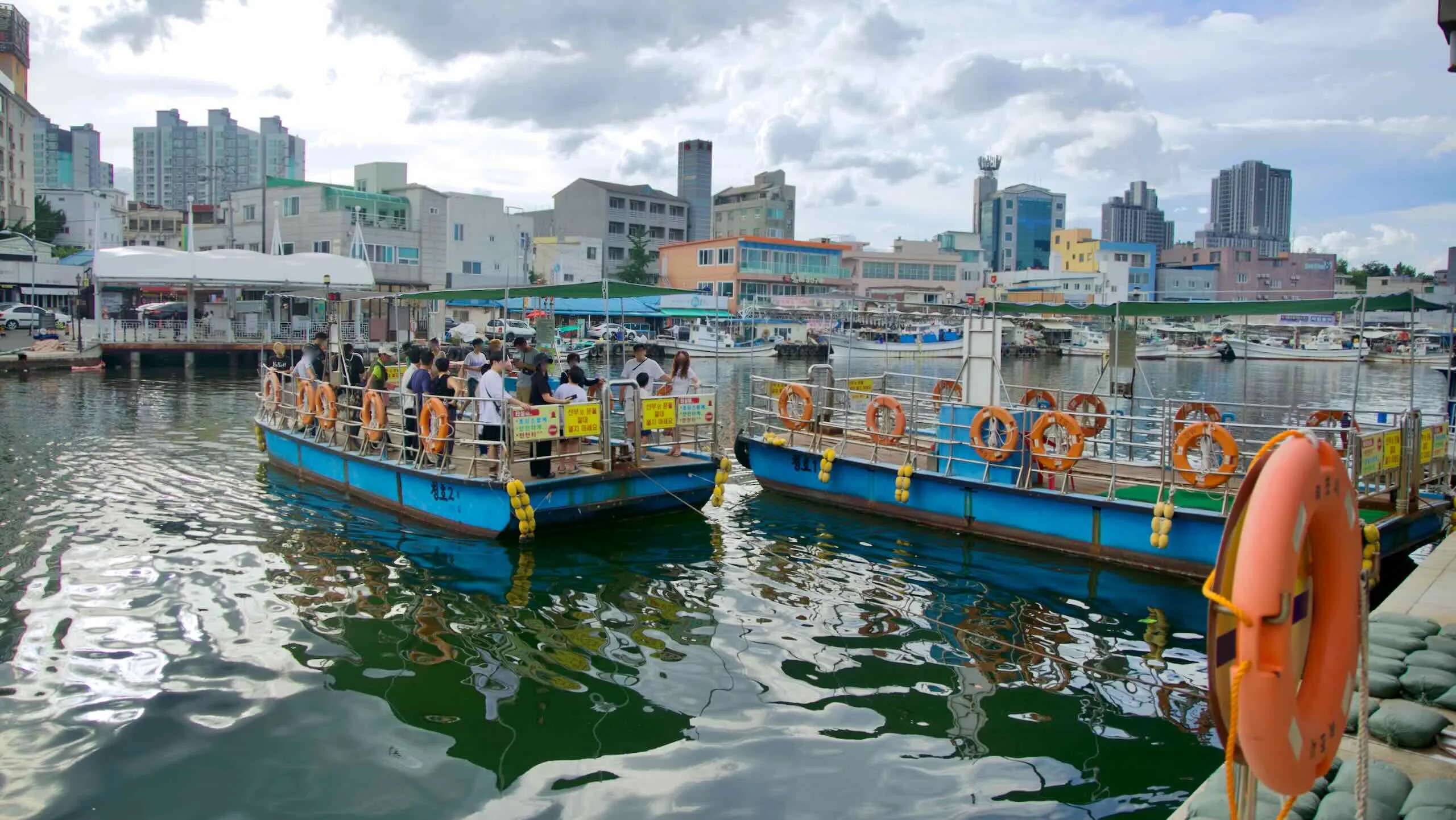
*The Gaetbae ferry is the route's clearest lived-history object: short, practical, and still tied to the village's geography.*
Start from the market side and cross by ferry before you eat. The route
works because your body follows the same basic movement that made the village
practical: downtown, waterway, settlement, food, return.
## Why Abai Village matters
[VisitKorea describes Abai Village](https://english.visitkorea.or.kr/enu/ATR/SI_EN_3_1_1_1.jsp?cid=264439)
as a Cheongho-dong village formed by refugees of the Korean War from North
Korea, mainly Hamgyeong-do. It also explains that "abai" is a Hamgyeong dialect
word for a friendly old man like a grandfather. That naming detail matters. It
shows why the village should be visited with respect: it is a community shaped
by displacement, not a stage built for tourists.
The route also works because it is easy to understand on foot. Market commerce,
water crossing, residential lanes, murals, and food sit close together. You do
not need a lecture first. You need a clear walking order and enough time not to
rush.
## The best order to walk it
| Order | Stop | Why it belongs here |
| --- | --- | --- |
| 1 | Sokcho Tourist & Fishery Market | Practical start, snacks, cash, and the city-side approach |
| 2 | Abai Village Ferry | The short crossing turns history into movement |
| 3 | Abai Village | The lived-in Cheongho-dong neighborhood behind the name |
| 4 | Mural Street | A slow visual archive of displacement and longing |
| 5 | Art Platform Gaetbae | A named interpretation stop before the meal |
| 6 | Dancheon Sikdang or Bukcheong Abai Sundae | Food memory, not just lunch |
Do not overbuild the walk. A strong Abai route is simple because the geography
does the teaching. Start where visitors already gather, cross the waterway,
walk the neighborhood, then eat.
*The mural street gives visitors a slower way to read displacement, memory, and everyday life before turning the walk into a meal.*
## How to read the Gaetbae ferry
[VisitKorea describes the Abai Village Ferry](https://english.visitkorea.or.kr/svc/whereToGo/locIntrdn/rgnContentsView.do?vcontsId=70424)
as a small barge-style boat without an engine. It crosses the roughly 50 m
waterway by fixed steel cables, and passengers move it by pulling with a hook.
It takes only a few minutes, which is why many visitors underestimate it.
Read it as infrastructure. Before bridge access made movement easier, the ferry
was a daily connector between the sandbar community and downtown Sokcho. That
is the UX reason it belongs near the beginning of the collection. It makes the
route physical before it becomes historical.
If the ferry is not operating because of weather or local conditions, use the
bridge route and keep the same order concept: market side first, village second,
food after context.
## Where food fits into the story
Abai sundae and ojingeo sundae are the most useful dishes here because they
make the refugee story edible. Abai sundae points toward Hamgyeong-style food
memory. Ojingeo sundae shows adaptation: a northern-style filling logic meeting
Sokcho's East Sea seafood setting.
The food tastes better when it has context. Walk first if you can. After the
ferry and mural street, a bowl of sundae-gukbap or a shared plate of ojingeo
sundae stops being a checklist item and becomes part of the route's meaning.
For a broader food layer, continue with [10 Must-Try Dishes in
Sokcho](/eat/must-try-dishes) or [What to Eat in
Sokcho](/blog/what-to-eat-in-sokcho).
## How to deepen the route
If you want more context, add [Sokcho Museum & Displaced People Folk Village](https://english.visitkorea.or.kr/svc/contents/contentsView.do?vcontsId=97435)
before or after this walk. VisitKorea frames the museum through Sokcho's natural
environment, local culture, fishing culture, Korean War refugee life, a
reconstructed Cheongho-dong alley, and Balhae History Hall. It is the best
indoor companion to Abai Village when the weather is bad or when you want the
history explained before seeing the living neighborhood.
For a full day, use [Sokcho History Itinerary](/collections/sokcho-heritage-route).
That collection connects Sinheungsa Temple, Sokcho Museum, the market, Gaetbae
ferry, Abai Village, and chilsungboatyard into one historical route. For a
shorter downtown-only plan, pair this with [Half-Day in
Sokcho](/collections/half-day-sokcho) or [Sokcho Without a
Car](/getting-around/without-car).
The key is respect. Abai Village is still a lived-in neighborhood. Walk during
daylight, stay quiet in residential lanes, do not block doors, and let the
history make the food more meaningful rather than using the history as a
backdrop for the meal.
---
### collections/cruise-day.md
# Cruise Day in Sokcho
Type: curated collection
Axes: audience, moment
Duration: 6 hours
Starts from: Sokcho Cruise Terminal
A realistic Sokcho cruise-day plan that stays close to the port, prioritizes easy food wins, and avoids blowing your shore time on one over-ambitious detour.
## Curated stops
1. bukcheong-dakgangjeong — Snack
If your call has the city shuttle running, get off at the market and start here. 북청닭강정 — 50-year shop, green-tea-fed chicken, runs 08:00–21:00. Small cup only.
2. yesseafood — Lunch
Right inside the market — 예스수산's 홍게 도시락 (36,000 KRW) was literally invented for tourists with no time to wrestle a shell. Two to three whole live red crabs, fully broken down, boxed with chopsticks and gloves, steamed 50 min to order. If your shore window is tight, grab the pre-steamed pickup version (26,000 KRW) instead. Closed Tuesdays — confirm the day of your call.
3. dancheon-sikdang — Taste
Cross to Abai Village by gaetbae (below) and try a combo plate at 단천식당. Hamgyeong refugee recipe at its clearest — 오징어순대 + 아바이순대국밥. TV-featured but still a locals' place.
4. Abai Village Gaetbae Ferry — Crossing
Hand-pulled wooden ferry across the Cheongcho estuary. 4-minute crossing, operates 365 days unless seas are rough — call 033-639-2449 if the weather is iffy.
## Intro
Cruise days in Sokcho always feel shorter than the schedule suggests. On
[April 18, 2026, the first cruise call of the season](https://www.sportsseoul.com/news/read/1603219)
brought roughly 2,000 foreign visitors, and the city responded not by pushing
everyone to Seoraksan, but by running a shuttle between the international
cruise terminal and the Tourist & Fishery Market, adding interpreters, and
opening a temporary exchange booth. That is the clearest planning clue you will
get: Sokcho works best on a cruise call when you keep the day compact, urban,
and easy to reverse.
This collection assumes you want to leave the ship, eat something unmistakably
local, cross one memorable piece of water, and get back on board without panic.
It also assumes you would rather not fight a whole crab with a mallet during a
six-hour shore window — which is exactly why 예스수산 (Yes Su-san) inside the
market spent seven years refining the 홍게 도시락 format: two to three live red
crabs, broken down, boxed with chopsticks and gloves, handed to you in a cooler
bag. The lunchbox was invented for your situation, not adapted to it.
## Quick take
- Best for: 6 to 8 hour shore windows, first-time Korea visitors, and groups
that do not want to gamble the day on traffic
- Best local win: market snacks plus one proper seafood or sundae stop
- Hard no: trying to "fit in" Seoraksan on the same call
- Budget: about KRW 20,000 to 60,000 per person depending on lunch
## Why downtown wins on a cruise call
Seoraksan is extraordinary, but it is not cruise-efficient. Cable car lines,
mountain traffic, weather exposure, and the long return all work against the
one thing cruise passengers do not have: slack.
Downtown Sokcho, by contrast, stacks its payoff tightly. The market gives you
English-friendly pointing meals and instant atmosphere. Abai Village gives you
one specific story and one specific image. The gaetbae gives you a crossing
that feels local even when the day is fast.
Start watching the clock earlier than you think. Unless your ship has a
very light disembarkation and re-boarding process, you want to be moving back
toward the terminal roughly 90 minutes before all-aboard.
## The one current fare that matters
The [official accessible-travel listing for Abai Village](https://access.visitkorea.or.kr/cos/detail.do?cotId=053d6668-96da-4d26-89ae-0322669bdd13)
puts the gaetbae at KRW 500 for adults and KRW 300 for children and youth,
cash only, with operation from 04:30 to 23:00. That is cheap enough to be an
easy yes, but only if you already have cash on hand.
Everything else on this route is about time discipline more than money
discipline. Keep the lunch readable, keep the transfers short, and do not let
one line absorb the whole port call.
## If English is the issue
Sokcho is improving, but cruise passengers should still assume menus and signs
will be mixed. That is another reason the market works: visual ordering is
easy, and [restaurants with English menus](/eat/restaurants-with-english-menus-in-sokcho)
cluster in the lower-friction parts of town.
If you want to lower the language barrier even further, save three phrases from
[Korean Phrases for Sokcho](/blog/korean-phrases-sokcho): "How much?",
"This one, please," and "Take me here." That alone solves most shore-day
friction.
## Cruise-day mistakes
- Spending your first hour figuring out transport instead of moving straight to
the market or shuttle
- Ordering a huge first meal and losing the appetite for the rest of the route
- Treating Sokcho like a mountain excursion when your ship actually docked in a
food-and-water city
If you want the longer city version of this logic, go next to [Half-Day in
Sokcho](/collections/half-day-sokcho). If the weather turns against you, the
best fallback is [Rainy Day in Sokcho](/collections/rainy-day).
---
### collections/first-night.md
# First Night in Sokcho
Type: curated collection
Axes: moment
Duration: Evening
Starts from: Near Sokcho Express Bus Terminal / Cruise Terminal
What to do on your first night in Sokcho if you arrive tired and hungry: one local dinner, one short walk, and zero wasted effort.
## Curated stops
1. bukcheong-dakgangjeong — Warm-up snack
Hot, handheld, walkable. 북청닭강정 runs until 21:00 — eat while your brain catches up with the time zone. Small cup only, save appetite for dinner.
2. sokcho-octopus-soup — Dinner
문어국밥 — warm, briny, quintessentially Sokcho seafood soup. The right 'I just arrived' meal that doesn't blow the budget on night one and still registers as local.
3. Sokcho Beach walk — After dinner
Walk 10 minutes from the terminal. East Sea wind is different from city wind — it's the fastest way to register that you've actually arrived.
## Intro
The first night in Sokcho should not be ambitious. In
[2025 third-quarter local tourism data](https://m.kwnews.co.kr/page/view/2025121009305536319),
the Tourist & Fishery Market and Sokcho Beach ranked No. 1 and No. 2 in
Gangwon navigation searches. That is your clue: on arrival night, anchor the
trip between the market and the water. Do not invent a heroic itinerary when
the city's most useful first impressions are already the easiest ones.
If you arrive by intercity bus, the [official accessible-travel guide places
Sokcho Beach about 300 m from the express bus terminal](https://access.visitkorea.or.kr/cos/detail.do?cotId=053d6668-96da-4d26-89ae-0322669bdd13).
That proximity is what makes this collection work. You can eat something local,
touch the sea, and stop before tiredness turns the night into bad decision
making.
## Quick take
- Best for: Seoul arrivals, late hotel check-ins, and anyone with low energy
but still enough appetite for one proper meal
- Best first-night rule: keep every move within one short taxi or one short
walk
- Budget: about KRW 12,000 to 35,000 per person unless you upgrade dinner
- What to save for tomorrow: snow crab, Seoraksan, multi-stop cafe hopping
## The right order on arrival night
First, eat something handheld so you do not order the whole city out of hunger.
Then sit down for one meal that feels specific to Sokcho. Only after that
should you walk to the water.
That sequence matters because it lowers pressure. The snack removes the
panic-hunger. The sit-down dinner gives the trip a local anchor. The sea walk
finishes the day without asking anything from your brain.
If your hotel is near the beach, drop your bag and walk to the water
before dinner only if you know the weather is calm. Otherwise eat first. Sokcho
wind hits harder when you are under-rested and under-fed.
## Why the beach is the right finish
Sokcho's coast is the fastest way to feel that you actually arrived. The city
has been leaning into that more aggressively over the past year. The official
tourism site now treats "[Light of the Sea, Sokcho](https://www.sokcho.go.kr/ct/tour)"
as a flagship night landmark, describing it as a 70 m by 15 m media-art
installation on the beach. During the 2025 summer night-opening period,
[Yonhap reported](https://www.yna.co.kr/view/AKR20250717063900062) that the
show ran nightly at 9 PM and 10 PM.
You do not need that exact program to make first night work. The point is
simpler: Sokcho's evening payoff lives by the water, and the water is close
enough to use even when your energy is low.
## What not to do on night one
- Do not go straight to a chain because you are too tired to decide.
- Do not make crab your arrival meal unless it was the entire point of the
trip.
- Do not book a far-out pension and then expect first night to feel easy.
If you are still picking the hotel, read [Where to Stay in Sokcho](/explore/where-to-stay).
If the weather is ugly, switch to [Rainy Day in Sokcho](/collections/rainy-day)
logic on day two. If the language barrier is the real issue, keep [Korean
Phrases for Sokcho](/blog/korean-phrases-sokcho) open on your phone before you
leave the hotel.
---
### collections/half-day-sokcho.md
# Half-Day in Sokcho
Type: curated collection
Axes: moment, route
Duration: 4 hours
Starts from: Sokcho Express Bus Terminal
A walkable half-day Sokcho itinerary linking the market, Abai Village, the hand-pulled ferry, and a final sea view without wasting time on backtracking.
## Curated stops
1. bukcheong-dakgangjeong — 11:00
Start at the market. 북청닭강정 — snack-sized cup, keep walking.
2. palpal-hoe-center — 12:00
Quick taxi or bus 9 to 대포항. 팔팔회센타 since 1988 — four generations, credited with inventing the Daepo '크랩세트' format in 1996 (crab + sashimi + seasonal sides + maeuntang in one spread). The C-set (2-person, 190,000 KRW) is the right size; park at the Daepo 1st Public Lot and staff stamp a 1.5-hour discount.
3. dancheon-sikdang — 13:00
Optional. 단천식당 combo plate, if the fishery lunch didn't fill you up. Famous 오징어순대 spot in Abai Village.
4. Abai Village Gaetbae Ferry — 13:30
Hand-pulled ferry back toward the market side. Four-minute crossing.
5. Seorak Geumgang Bridge viewpoint — 14:00
Bridge elevator up. 속초 앞바다 + 조도 + 달마봉 + 울산바위 all in one frame. The photograph most people come home with.
6. Yeonggeumjeong Sunrise Pavilion — 14:45
Short taxi north from the bridge. A sea-edge pavilion over dark rock, with open East Sea views and one of Sokcho's cleanest sunrise-photo angles.
## Intro
A real half-day in Sokcho is not enough time for Seoraksan, a beach break, a
full seafood lunch, and a "quick" look at Abai Village. The right move is to
stay in the city core and let the places sit close together. In [Sokcho's 2025
third-quarter tourism data](https://m.kwnews.co.kr/page/view/2025121009305536319),
the Tourist & Fishery Market and Sokcho Beach ranked No. 1 and No. 2 in
Gangwon navigation searches, and 2025 citywide tourism spending reached
[KRW 648.4 billion, up KRW 26.9 billion year over year](https://sports.donga.com/region/article/all/20260311/133506098/1).
That is the signal: the urban side of Sokcho is no longer filler between bigger
stops.
This collection works because the sequence has almost no wasted movement.
Market first, then the gaetbae, then Abai Village, then one final view before
you stop. You are always moving forward, and every stop changes the mood a
little: loud food market, short ferry crossing, slower village streets, then
open sea and skyline.
## Quick take
- Best for: first-timers with 4 to 5 usable hours, cruise overnights, and
anyone who wants a compact Sokcho route without renting a car
- Best meal strategy: snack once, eat once, then stop trying to "cover"
everything
- Budget: about KRW 20,000 to 45,000 per person if you keep lunch moderate
- One number to know: the [Abai Village gaetbae runs 04:30 to 23:00, costs
KRW 500 for adults and KRW 300 for children and youth, and is cash
only](https://access.visitkorea.or.kr/cos/detail.do?cotId=053d6668-96da-4d26-89ae-0322669bdd13)
## Why this route beats forcing in the mountain
People underestimate how much time Sokcho's short-distance friction adds up.
One slow taxi queue, one oversized lunch, or one detour toward Seoraksan and
half the window disappears. This route avoids that trap by using the highest
yield city-side experiences: the market for immediate food payoff, the ferry
for something uniquely local, and Abai Village for context you cannot get from
the beach alone.
The ferry is the emotional hinge. It is still a hand-pulled crossing, still
cheap, and still slower than modern Korea usually allows itself to be. That
small change of tempo is exactly why the route works.
The Daepo lunch is the other fixed point. 팔팔회센타 has been on the port since
1988, now four generations deep in one family. In 1996 they invented the
Daepo 크랩세트 — crab, sashimi, seasonal seafood sides, and spicy fish stew on
one table — and every serious seafood restaurant in Sokcho eventually copied
the format. Eating there is eating through the template itself. The C-set
(2-person) is the right size for a half-day; the A/B sizes are built for
groups.
Bring small cash before you start. Between market snacks and the
gaetbae, this is the rare Sokcho route where a few low-value cash payments make
the day smoother than relying on cards for every stop.
## Pace it properly
The biggest mistake on this route is overeating at stop one. Dakgangjeong is a
snack, not lunch. If you turn it into lunch, the rest of the route becomes a
slow food recovery exercise.
Aim to keep the market segment under 90 minutes, including your sit-down meal.
That leaves enough time for the ferry, a village loop, and one last viewpoint
without rushing the photograph moments that actually make the half-day feel
complete.
If the light is turning good earlier than expected, cut the optional second
food stop and protect the final view. Sokcho rewards timing more than volume.
## What to skip
- Do not add Seoraksan. It is a half-day destination by itself, not a
side quest.
- Do not book a remote hotel for the same day and then try to "fit this in"
around check-in.
- Do not assume the ferry is still 200 won. The latest public tourism listing
is higher, and outdated blog prices are common.
If you want a longer version of this logic, read [Sokcho 2-Day
Itinerary](/explore/sokcho-itinerary-2-days). If you are doing the city without
a rental, [Sokcho Without a Car](/getting-around/without-car) is the practical
companion. If lunch is the real anchor, the [Seafood Market Guide](/eat/seafood-market)
helps you choose where to spend the money.
---
### collections/rainy-day.md
# Rainy Day in Sokcho
Type: curated collection
Axes: moment
Duration: Half day
A rainy-day Sokcho itinerary built around the covered market, hot local food, and one sea-view cafe when Seoraksan is a bad idea.
## Curated stops
1. bukcheong-dakgangjeong — Start
The market is mostly covered. Start at 북청닭강정 — the oil and steam make it feel warmer than it is, and hot fried chicken cures most moods. 50-year shop, green-tea-fed chicken.
2. jungang-dakgangjeong — Compare
중앙닭강정 — next door. Two shops, two sauces, same short walk. 1970s tradition, 생활의 달인 featured. Rainy-day side-by-side tastings are the point of this alley.
3. dancheon-sikdang — Sit-down
Cross the gaetbae to Abai Village and sit down at 단천식당 — hot broth, warm 아바이순대국밥, pace-of-rain seating. Yes, in heavy rain the ferry is wet; the soup is worth it.
4. cafe-baekchon — Cafe
End at 카페 백촌리 right inside the market. Specialty gelato made without stabilizers. On a bad-weather day, staying inside the covered market is smarter than chasing a sea view — and the market's warmth wins anyway.
## Intro
Rain in Sokcho is not a rare interruption anymore. In the
[Korea Meteorological Administration's 2025 annual climate analysis](https://www.weather.go.kr/kma/flexer/html/press/2026/01/06/ATC202601060911462_7e624c59-f194-4470-91d0-20747cc19e92.hwp.files/Sections1.html),
September and October brought rain roughly every other day nationwide, and
repeated east-wind systems kept Gangwon Yeongdong wet deep into October. That
matters for trip planning: a rainy-day plan in Sokcho is no longer backup
content. It is normal itinerary content.
The right answer is not to force Seoraksan in bad weather and it is not to hide
in your hotel. It is to move into the market, eat hot food, then end with one
good sea-facing window when the mood softens.
## Quick take
- Best for: wet spring weekends, typhoon-edge afternoons, and any trip where
the mountain is washed out
- Core move: stay covered as long as possible, then cash out the day with one
cafe by the water
- Budget: about KRW 12,000 to 30,000 per person unless you turn lunch into a
seafood event
- Why this works: the [Tourist & Fishery Market is one of the city's core
year-round draws](https://www.sokcho.go.kr/ct/tour), and the beach-side cafe
finish gives you weather drama without weather misery
## Start with heat, not scenery
Sokcho's beach and mountain are visually strongest in good weather, but the
market is emotionally strongest in bad weather. It gets warm fast. The smells
hit immediately. You can walk for ten minutes, eat something fried, and feel
like the day is still alive instead of cancelled.
That is why this collection begins with dakgangjeong and stays in the market
long enough for a proper seated bowl or combo plate. Hot broth and steam matter
more than "covering sights" when the East Sea wind is pushing rain sideways.
If the rain is wind-driven rather than vertical, spend the extra
KRW 5,000 to 8,000 on one short taxi between the market and the coast. On a bad
weather day, one smart taxi is efficiency, not failure.
## End with the sea, but from indoors
The finish matters. A rainy-day Sokcho plan should not just avoid discomfort;
it should still feel specific to the coast. That is why the last stop is a
window over the East Sea, not another indoor errand.
Sokcho's official tourism site now pushes beach-side night content such as
"[Light of the Sea, Sokcho](https://www.sokcho.go.kr/ct/tour)," a 70 m by 15 m
media-art landmark, as part of the city's year-round appeal. In summer 2025,
the beach night opening even ran the show nightly at 9 PM and 10 PM during the
season, according to [Yonhap](https://www.yna.co.kr/view/AKR20250717063900062).
You do not need that exact program for this collection to work, but the logic
is the same: on wet days, Sokcho's coast is best consumed from shelter.
The cafe finish matters. 카페 백촌리 opened its Sokcho Tourist & Fishery Market
branch on February 5, 2026, after the owner ran the original Goseong shop for
three and a half years. Market-branch sales have already doubled the Goseong
location. She refuses powders, guar gum, or stabilizers — every gelato and
bingsoo uses Beomsan Farm organic milk (Korea's first organic-certified dairy)
and whole seasonal fruit. Apple mango bingsoo is the signature. On a rainy
afternoon, the combination of the covered market and a gelato spoon is more
Sokcho than a sea-view cafe would be in better weather.
## What not to do
- Do not force Ulsanbawi or a longer Seoraksan trail in a soaked jacket.
- Do not spend the whole day in one cafe. The market is the part that saves
the day.
- Do not over-order at stop one. Rainy-day Sokcho is better as two small meals
than one heavy lunch that makes the afternoon sluggish.
If you want a broader rainy-weather food list, go next to the
[Seafood Market Guide](/eat/seafood-market). If your real goal is the right
window seat, [Best Cafes in Sokcho](/explore/best-cafes-in-sokcho) is the more
complete shortlist.
---
### collections/seorak-musan-festival.md
# Seorak Musan Festival Weekend
Type: curated collection
Axes: season, story
Duration: Half day or evening
Starts from: Sokcho Expo Park
A foreigner-friendly guide to the Seorak Musan Cultural Festival in Sokcho: what it means, how the three festival parts fit together, and how to use the weekend before the final booth map is published.
## Curated stops
1. Sokcho Expo Park Lawn — Start here
Use the Expo Park lawn as your mental center. The festival is easier to understand once you treat this as one shared ground with separate cultural, youth, and food zones.
2. Main Stage Area — Performances
This is where the opening, closing, and headline moments belong. Check the day-of stage board before committing your meal timing because performance crowds change the food-zone flow.
3. Youth Culture Festival Zone — Youth programs
The youth festival gives the weekend its community texture: drawing, choir, writing, and street-dance programs. Even if you are not attending as a parent, this is the part that makes the festival feel local.
4. Food Culture Festival Zone — Food
The exact booth list and booth placement are not final yet. Treat this as the future anchor for the interactive booth map: booth cards, translated menus, payment notes, and category filters should live here once the organizer publishes the final layout.
5. Cheongcho Lake Edge — Reset walk
If the lawn feels crowded, step toward the Cheongcho Lake edge. It is the easiest way to reset with children, compare food choices, or wait for the next stage block.
6. Sokcho Beach Evening Add-on — After festival
If you visit in the evening, Sokcho Beach is the cleanest add-on after the festival. Do not overbuild the day: one festival block, one food block, and one coast walk is enough.
## Intro
The Seorak Musan Cultural Festival is not just a weekend food fair. It is a
three-part cultural weekend in Sokcho built around Musan Jo Oh-hyun, the
Seoraksan-based Buddhist monk and poet whose name gives the festival its
meaning.
This collection is written for foreign visitors who need the festival explained
in plain English. It is also intentionally honest about what is not final yet.
The official booth layout and food-vendor map are still pending, so this page
focuses on the visitor flow first: what the festival is, where to start, how to
use the food zone, and what to read before the interactive booth map is added.
## Quick Start
| If you are... | Do this first |
| --- | --- |
| Deciding whether to go | Read [Festival in 3 Parts](#festival-in-3-parts), then check [What Is Confirmed](#what-is-confirmed-and-what-is-still-pending). |
| Coming mainly for food | Start at the Expo Park lawn, find the food zone, then use [Food Zone Strategy](#food-zone-strategy) before ordering. |
| Visiting with children | Pair one youth program with a short food stop and a Cheongcho Lake break. |
| Trying to understand the meaning | Read [Why Musan Matters](#why-musan-matters) before you arrive. |
| Waiting for booth details | Bookmark this page. The interactive booth map should be added after the final layout is confirmed. |
## Quick Facts
| Detail | Current visitor note |
| --- | --- |
| Event | 2026 Seorak Musan Cultural Festival |
| Korean name | 2026 설악무산문화축전 |
| Dates | May 15-17, 2026 |
| Venue | Sokcho Expo Park Lawn / Expo Tower area |
| Best for | Culture-curious visitors, families, food travelers, May weekend visitors |
| Structure | Musan cultural program + youth festival + food culture festival |
| Booth map | Not final yet. Interactive map planned after official layout is published. |
| Entry | No public ticketing requirement has been listed; food and paid items are separate. |
Do not treat this as a normal restaurant plan. Festival food zones work
best when you arrive with a backup dish, a cash backup, and enough patience to
walk the booths once before ordering.
## Festival in 3 Parts
### 1. Seorak Musan Cultural Festival
This is the umbrella event. It frames the weekend around Musan Jo Oh-hyun's
legacy and the broader ideas of harmony, coexistence, and regional culture. For
visitors, this is the part that explains why the event exists at all.
Expect the main stage, public performances, opening and closing moments, and
the civic-cultural atmosphere around the Expo Park lawn. This is the part to
follow if you want the festival as culture, not just food.
### 2. Seorak Youth Culture Festival
The youth festival makes the weekend feel local. The 2026 program structure
includes children's drawing, children's choir, youth writing, and youth street
dance events. These programs are useful for foreign visitors because they turn
the lawn into a living community space instead of a tourism-only stage.
If you are visiting with children, this is the easiest part of the festival to
explain: local and national youth participants come to Sokcho to perform,
compete, and share creative work.
### 3. Seorak Food Culture Festival
This is the easiest entry point for most foreign travelers. The food festival
connects the bigger Musan weekend to Sokcho's mountain-and-sea food identity:
Gangwon produce, East Sea seafood, local comfort dishes, and festival-friendly
small plates.
The final booth list and booth placement are not ready for visitor use yet.
That is why this collection does not pretend to be a finished booth directory.
Once the booth map is confirmed, this section should become an interactive map
with booth numbers, translated dish names, price notes, payment notes, and
category filters.
## How to Use the Festival Ground
Start at the Expo Park lawn, not with a single booth or performance. The event
will be easier to navigate if you understand the site as a set of zones:
| Zone | Visitor job |
| --- | --- |
| Main stage | Check what is happening now and what starts next. |
| Youth program area | Watch the community side of the festival and avoid reducing the event to food only. |
| Food zone | Walk once before ordering. Compare dishes visually. |
| Cheongcho Lake edge | Use it as a crowd break, child reset, or post-meal walk. |
| Beach add-on | Save for the end, not the middle of the festival visit. |
## Food Zone Strategy
Until the final booths are published, the best food UX is category-first, not
booth-first. Foreign visitors usually do not need 25 booth names at the top of
the page. They need to know what kind of food they are looking at.
When the booth list is finalized, the food section should be organized like
this:
| Category | What visitors need first |
| --- | --- |
| Korean / Gangwon dishes | English dish name, main ingredient, spicy level, rice/noodle/soup cue |
| Seafood | Raw/cooked distinction, shellfish warning, price range, waiting time |
| Noodles and street food | Portion size, kid-friendliness, whether it works as a snack |
| Fusion or international | What makes it local enough to belong in this festival |
| Drinks and dessert | Caffeine, alcohol, cold options, child-safe choices |
The future interactive map should prioritize these actions:
- Filter by food category before booth number.
- Show translated dish names and Korean names together.
- Mark cash-only or card-friendly booths if confirmed.
- Add allergy and shellfish warnings where obvious.
- Show "good first order" recommendations for visitors who do not know Korean food.
- Keep a simple non-map list underneath for weak mobile connections.
## What to Eat First
The exact booth lineup is pending, but the visitor logic can already be set.
Use this order when you arrive:
1. Choose one safe starter that you can eat while walking.
2. Choose one local dish that explains Sokcho or Gangwon.
3. Choose one shareable dish if you are in a group.
4. Stop before you are full, then watch a stage or youth program.
For foreigners, the best festival-food copy should avoid vague words like
"traditional" unless the dish is explained. "Buckwheat noodles from Gangwon"
is better than "traditional noodles." "Squid stuffed with sundae filling" is
better than "local sundae."
## Suggested Visitor Flows
| Time available | Best flow |
| --- | --- |
| 60-90 minutes | Main lawn orientation, food zone walk-through, one dish, short lake break |
| 2-3 hours | Youth program or stage moment, two food stops, Cheongcho Lake edge |
| Evening visit | Food first, main stage second, Sokcho Beach or lake walk last |
| Family visit | Youth program, one easy dish, restroom/checkpoint break, short second loop |
| Culture-first visit | Background section before arrival, main stage, youth program, food as supporting context |
## Why Musan Matters
The official foundation describes the festival as a cultural event that
commemorates the harmony and coexistence associated with Musan Jo Oh-hyun, who
was active around Seoraksan. That line matters because it changes the way a
visitor should read the weekend.
Musan is not a decorative name. It points to a real cultural lineage around
Seoraksan, Korean Buddhist literature, poetry, and civic cultural work. The
foundation behind the festival, Seorak-Manhae Thought Practice Promotion
Foundation, explains its purpose as honoring and promoting the spirit of both
Manhae Han Yong-un and Musan Jo Oh-hyun.
For a foreign visitor, the simplest reading is this: the festival turns a local
spiritual and literary legacy into a public civic weekend. The food zone and
youth programs are not separate from that purpose. They are how the festival
turns "harmony" and "coexistence" into something visible on the lawn.
## How the Festival Grew
The background is short enough to understand before you arrive:
| Year | Why it matters |
| --- | --- |
| 1996 | The Manhae Thought Practice Promotion Foundation was organized to promote Manhae Han Yong-un's ideas of freedom, equality, and peace. |
| 2018 | Musan Jo Oh-hyun died at Sinheungsa in Sokcho. |
| 2021 | The organization was renamed Seorak-Manhae Thought Practice Promotion Foundation. |
| 2023 | The first Seorak Musan Cultural Festival was held, centered on the youth festival format. |
| 2024 | The second festival expanded around Cheongcho Lake and the Expo Plaza area. |
| 2025 | The festival continued as a broader cultural weekend with food, youth programs, and performances. |
| 2026 | The festival returns to the Sokcho Expo Park lawn from May 15-17, with food and youth programming still central to the visitor experience. |
## What Is Confirmed and What Is Still Pending
| Status | Details |
| --- | --- |
| Confirmed | 2026 dates, Expo Park venue, the three-part festival structure, youth program categories, main Musan frame |
| Mostly stable | Main lawn as the visitor center of gravity, food culture festival as the easiest foreigner entry point |
| Pending | Final food booth list, booth placement, interactive booth map, detailed booth menus, payment rules by booth |
| Should be checked day-of | Weather plan, stage timing changes, queue length, parking pressure, last food orders |
This page should stay live before the map is final because the most important
UX problem is already known: foreigners need the event explained before they
need every booth pin.
## Practical FAQ
### Do I need Korean?
No, but you will have a better time with a few phrases. Save "eolma-ye-yo?"
(How much?), "igeo juseyo" (This one, please), and "eodi-ye-yo?" (Where is
it?). For more, use [Korean Phrases for Sokcho](/blog/korean-phrases-sokcho).
### Should I bring cash?
Yes. Even when many booths accept cards, a festival setting is the wrong place
to rely on one payment method. Bring enough small bills for food and transport.
### Is it worth going if I only care about food?
Yes, but read the festival correctly. The food zone is part of a larger
cultural weekend, not a standalone night market. Walk the stage and youth areas
once so the visit feels like Sokcho, not just another snack stop.
### Is it family-friendly?
Yes, especially because the youth festival is built into the event. The main
practical issue is crowd management. Pick one meeting point and use the lake
edge as your reset area.
### Should I wait for the booth map before planning?
No. Plan the day now, but do not decide the exact dishes until the final booth
layout and menu details are published.
## Pair It With the Rest of Sokcho
If you are coming from outside Sokcho, keep the surrounding plan simple:
- Use [Getting to Sokcho from Seoul](/getting-around/from-seoul) if this is a weekend trip.
- Use [Sokcho Without a Car](/getting-around/without-car) if you are relying on buses and taxis.
- Use [10 Must-Try Dishes in Sokcho](/eat/must-try-dishes) if the festival food zone makes you want a second meal elsewhere.
- Use [Half-Day in Sokcho](/collections/half-day-sokcho) if you want to combine the festival with the market and Abai Village on another day.
## Sources and Update Notes
This page separates confirmed context from pending operating details. The
festival background is based on the Seorak-Manhae Foundation's official
introduction and festival pages, which explain the foundation's purpose, the
Musan/Manhae lineage, and the festival's civic-cultural frame. The current
2026 operating layer is checked against the official Musan Festa site.
- [2026 Musan Festa official site](https://www.musanfesta.com/)
- [Seorak-Manhae Foundation introduction](https://manhaemusan.or.kr/about)
- [Seorak Musan Cultural Festival background](https://manhaemusan.or.kr/seorakfest)
Reviewed by HeySeorak on April 23, 2026. The next content update should happen
when the organizer publishes the final booth list, booth placement, or
visitor-ready venue map.
---
### collections/sinheungsa-temple-guide.md
# Sinheungsa Temple Guide
Type: curated collection
Axes: story, route
Duration: 2-3 hours
Starts from: Seoraksan Sogongwon
A focused Sinheungsa Temple guide for Sokcho visitors, linking Seoraksan, Bojeru Pavilion, Geungnakbojeon Hall, Buddhist treasures, and the 2025 painting return.
## Curated stops
1. seoraksan-sogongwon — Arrival
Use Sogongwon as the practical start. It gathers buses, parking, ticketing flow, food stalls, cable-car traffic, and the walking approach toward Sinheungsa.
2. sinheungsa-temple — Temple anchor
Start with Sinheungsa as a living temple, not a single photo stop. Read it as Silla-period origin, Seoraksan landscape, Joseon Buddhist architecture, and a 2025 cultural-property return story.
3. sinheungsa-bojeru-pavilion — Approach
Pause at Bojeru Pavilion before entering the main courtyard. This is where the temple visit becomes a sequence: pass below, slow down, then look up at the ritual space.
4. sinheungsa-geungnakbojeon-hall — Main hall
Give Geungnakbojeon Hall the slowest look. The foundation, stone steps, floral lattice doors, ceiling, and altar setting explain Korean Buddhist architecture better than a rushed wide shot.
5. sinheungsa-wooden-amitabha-triad — Inside the hall
Look quietly inside Geungnakbojeon for the 1651 Wooden Seated Amitabha Buddha Triad. Keep voices low and follow any posted photography rules.
6. sinheungsa-bronze-bell — Ritual sound
Use the bronze bell as the sound layer of the route. Temple heritage is not only buildings; it is also metalwork, inscription, ritual timing, and acoustic memory.
7. hyangseongsa-three-story-stone-pagoda — Older layer
End with the Hyangseongsa Temple Site pagoda if you have time and weather is good. It connects today's Sinheungsa visit back to the older Silla Buddhist landscape.
8. seoraksan-sinheungsa-templestay — Optional deeper stay
If you want the temple to become an experience rather than a sightseeing stop, check the Templestay program separately before planning the day around it.
## Intro
Sinheungsa Temple is the best Sokcho temple guide for foreign travelers who
want Korean culture beyond a mountain photo. In one compact visit, you can read
Seoraksan scenery, Silla-period Buddhist origin, Joseon architecture, ritual
objects, and a recent cultural-property restitution story. The strongest route
is not "see the big statue and leave." It is a slow sequence from Sogongwon
into Bojeru Pavilion, Geungnakbojeon Hall, the Amitabha triad, the bronze bell,
and the older Hyangseongsa stone-pagoda layer.
This collection is for visitors who have 2 to 3 hours in Seoraksan and want the
temple to make sense as heritage, not just scenery.
## Contents
- [Sinheungsa Temple at a glance](#sinheungsa-temple-at-a-glance)
- [Why Sinheungsa matters now](#why-sinheungsa-matters-now)
- [The best order to walk Sinheungsa](#the-best-order-to-walk-sinheungsa)
- [How to read the temple without prior Buddhist knowledge](#how-to-read-the-temple-without-prior-buddhist-knowledge)
- [Practical planning notes](#practical-planning-notes)
- [How to pair Sinheungsa with the rest of Sokcho](#how-to-pair-sinheungsa-with-the-rest-of-sokcho)
## Sinheungsa Temple at a glance
| Need | Best answer |
| --- | --- |
| Best for | Culture-first Seoraksan visitors, history travelers, slow photographers |
| Ideal time | 2 to 3 hours |
| Start | Seoraksan Sogongwon |
| Core route | Sogongwon -> Sinheungsa -> Bojeru -> Geungnakbojeon -> bell -> pagoda |
| Budget note | VisitKorea lists temple admission as free; parking and Templestay costs vary |
| Main mistake | Treating Sinheungsa as a quick stop before a hike |
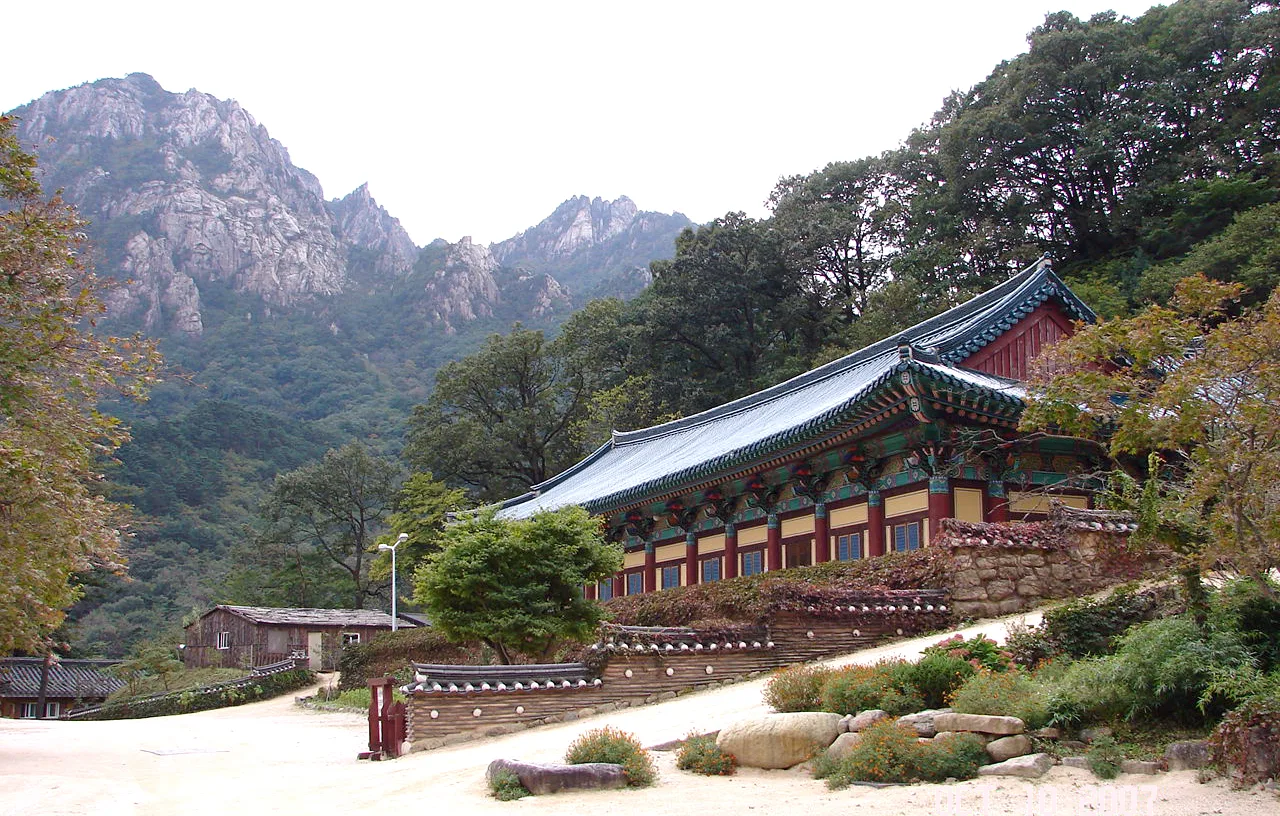
*Sinheungsa is most legible when you see the temple buildings and Seoraksan ridges in the same frame.*
If this is your first Korean Buddhist temple, do less. Skip the urge to
photograph everything. Walk the approach, stand under Bojeru Pavilion, look at
Geungnakbojeon Hall from the front and side, then step back before moving on.
## Why Sinheungsa matters now
[VisitKorea describes Sinheungsa Temple](https://english.visitkorea.or.kr/enu/ATR/SI_EN_3_1_1_1.jsp?cid=264210)
as a Jogye Order temple in Seoraksan near Sokcho, originally founded as
Hyangseongsa by the monk Jajang in A.D. 652. That origin matters because the
temple gives Sokcho a deep heritage layer before the city becomes about fish
markets, beaches, and Korean War refugee history.
The temple also has a current story. On November 14, 2025, [The Metropolitan
Museum of Art announced the return of *The Tenth King of Hell* to Sinheungsa
Temple](https://www.metmuseum.org/ko/press-releases/korea-return-november-2025).
The Met identified the 1798 Joseon Buddhist painting as a work believed to have
been taken while the temple was under United States Army control during the
Korean War. For visitors, that makes Sinheungsa a rare place where mountain
tourism, Buddhist art, war history, provenance research, and cultural-property
return all meet.
This is why Sinheungsa should not be hidden inside a generic Seoraksan hiking
day. It deserves its own visit logic.
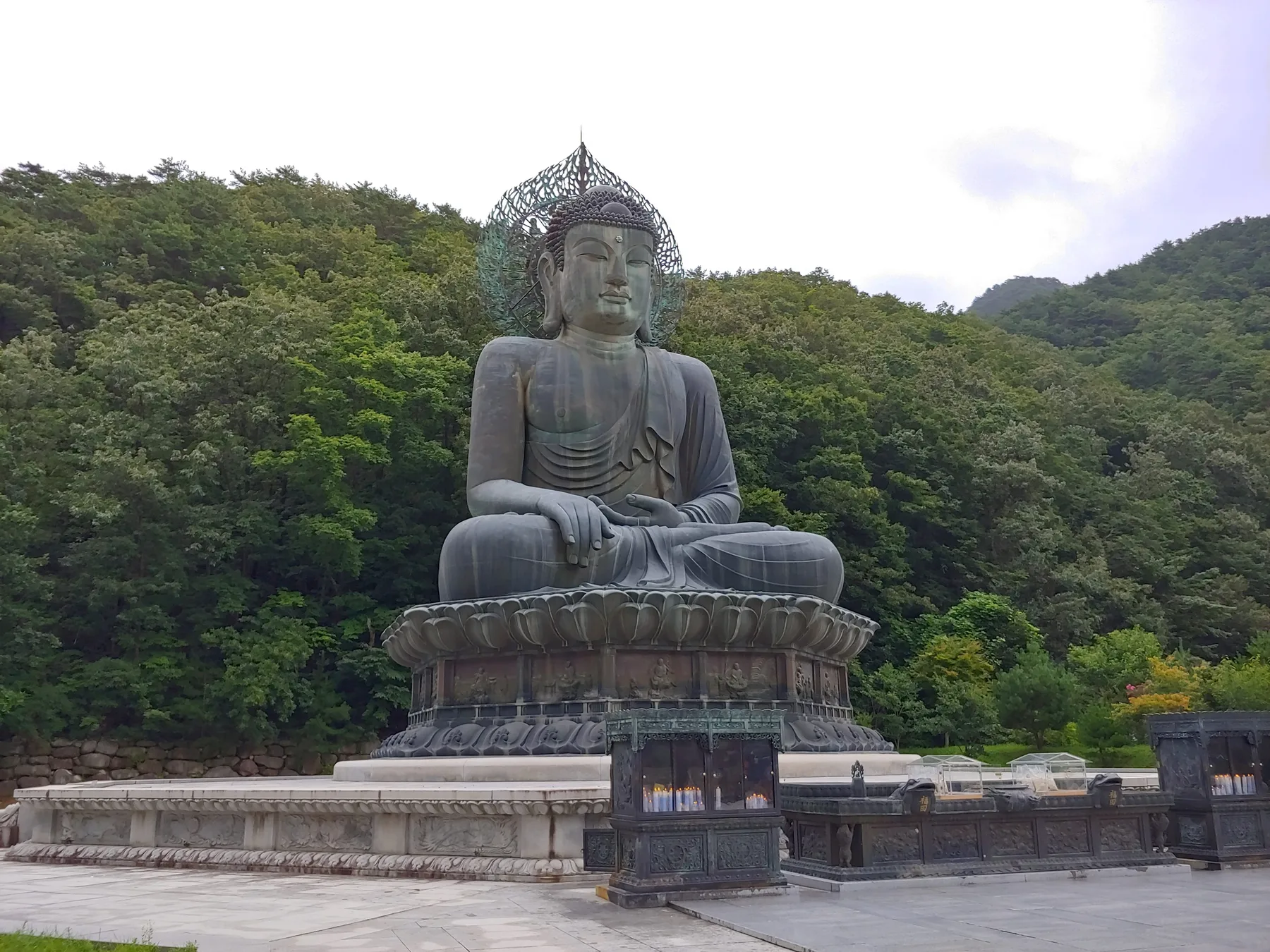
*The Great Unification Buddha is the obvious visual landmark, but use it as orientation before moving into the quieter heritage sequence.*
## The best order to walk Sinheungsa
| Order | Stop | What to notice |
| --- | --- | --- |
| 1 | Seoraksan Sogongwon | The practical gateway: buses, parking, food stalls, cable-car crowds |
| 2 | Sinheungsa approach | The shift from park traffic into temple rhythm |
| 3 | Bojeru Pavilion | The framed entrance into the main worship area |
| 4 | Geungnakbojeon Hall | Joseon wooden architecture, stairs, lattice doors, and altar space |
| 5 | Wooden Seated Amitabha Triad | The devotional center inside the hall |
| 6 | Bronze Bell | Ritual sound and metalwork, not just an object in a corner |
| 7 | Hyangseongsa pagoda | The older Silla Buddhist landscape behind today's temple story |
Start at Sogongwon because it is the UX reality of the day. Visitors arrive
through buses, cars, cable-car traffic, restrooms, snack stalls, and park
signage. Once you leave that flow and approach Sinheungsa, the pace should
change.
Bojeru Pavilion is the hinge. Passing through it makes the temple feel ordered
instead of random. After that, treat Geungnakbojeon Hall as the main reading
stop. Look at the foundation, stone stairs, floral lattice doors, roof line,
and how the hall frames the sacred interior.
The bronze bell and Hyangseongsa pagoda are easy to underuse. Do not. The bell
adds ritual sound to the route, while the pagoda connects the present temple
precinct to the older Hyangseongsa story.
*The bronze bell makes the temple's ritual layer visible through metalwork, inscription, and sound.*
## How to read the temple without prior Buddhist knowledge
You do not need to be Buddhist to understand Sinheungsa. Read it through three
simple ideas.
First, movement matters. Korean temples are not experienced only from the front.
The approach, gate-like pavilion, courtyard, hall, and inner image create a
spatial sequence.
Second, the building and the image work together. Geungnakbojeon Hall is not
just a beautiful wooden structure. It frames the Amitabha-focused devotional
space inside. The Wooden Seated Amitabha Buddha Triad gives the hall its
religious center.
Third, objects carry memory. A bell is not decoration. A pagoda is not just a
stone tower. A returned painting is not only an art-world headline. Together,
they show how Buddhist practice, material craft, local identity, and history
survive in a mountain temple.
## Practical planning notes
[VisitKorea lists Sinheungsa](https://english.visitkorea.or.kr/enu/ATR/SI_EN_3_1_1_1.jsp?cid=264210)
as open 24 hours, open year-round, and free for general admission. Treat that
as general visitor information, not a promise that every hall, object, program,
or interior viewing moment is available at all times. Ceremonies, preservation
needs, weather, and temple rules come first.
Parking is available around the Seoraksan visitor area, and VisitKorea lists
seasonal parking fees. If you are using public transport, pair this guide with
[Sokcho Without a Car](/getting-around/without-car) before assuming a late
return will be easy.
Photography is best handled conservatively. Outdoor temple scenes are usually
fine, but people praying, monks, interiors, and protected objects need
restraint. If a sign says no photography, follow it.
## How to pair Sinheungsa with the rest of Sokcho
Use this collection when Sinheungsa is the main cultural stop. Use [Sokcho
History Itinerary](/collections/sokcho-heritage-route) when you want the full
day: Sinheungsa, Sokcho Museum, Sokcho Tourist & Fishery Market, Gaetbae ferry,
Abai Village, and chilsungboatyard.
If your interest is modern Korean history, continue with [Abai Village History
Walk](/collections/abai-stories). That route moves from refugee settlement and
ferry infrastructure into food memory. Together, the two collections explain why
Sokcho is more than a pretty base for Seoraksan. It is a city where ancient
Buddhist heritage and modern displacement history sit within one practical
travel day.
---
### collections/sokcho-heritage-route.md
# Sokcho History Itinerary
Type: curated collection
Axes: story, route
Duration: Full day
Starts from: Sinheungsa Temple
A full-day Sokcho history itinerary linking Sinheungsa Temple, Sokcho Museum, Abai Village, the Gaetbae ferry, market, and chilsungboatyard with route tips.
## Curated stops
1. sinheungsa-temple — 09:00
Start with Sokcho's strongest heritage anchor. Read Sinheungsa as three layers at once: Silla-period Buddhist origins, Joseon temple architecture, and the 2025 return of The Tenth King of Hell from The Met.
2. sinheungsa-bojeru-pavilion — 09:45
Use Bojeru Pavilion as the close-looking stop. Passing under the pavilion before reaching Geungnakbojeon turns the temple from a photo stop into a sequence you can actually read.
3. sinheungsa-bronze-bell — 10:05
Look for the bell as ritual evidence, not decoration. It helps foreign visitors understand that sound, inscription, metalwork, and movement all belong to the same temple experience.
4. sokcho-museum-displaced-people-folk-village — 11:30
Move indoors for the city context. The museum explains Sokcho from prehistoric settlement to fishing culture and the Korean War refugee period, including the reconstructed Cheongho-dong alley.
5. balhae-history-hall — 12:20
Stay inside the museum complex for the deeper historical layer. Balhae History Hall broadens the route beyond Joseon and the Korean War into Northeast Asian history.
6. joyang-dong-archaeological-site — 13:20
This is the optional archaeology stop if you have a taxi or car. It makes Sokcho's Bronze Age layer physically mappable instead of leaving prehistory inside museum glass.
7. sokcho-tourist-fishery-market — 14:00
Use the market as the postwar economic heritage stop. Seafood, sundae alleys, dakgangjeong, dried fish, and tourist commerce sit in the same block.
8. abai-village-ferry — 14:45
Cross by the hand-pulled Gaetbae ferry from the market side. This is the route's hinge: a short crossing that explains how geography shaped daily refugee life.
9. abai-village — 15:00
Walk slowly. Abai Village is a lived-in neighborhood shaped by refugees from northern Korea, not a set built for photos.
10. abai-village-mural-street — 15:25
Give the mural street its own time before eating. The lanes translate displacement, longing, and daily survival into a walk foreign visitors can understand without a lecture.
11. dancheon-sikdang — 16:00
End the Abai segment with food as memory: Abai sundae, ojingeo sundae, or a simple gukbap. The point is not novelty, but how Hamgyeong-style food survived in Sokcho.
12. chilsungboatyard — 17:15
Finish at chilsungboatyard on Cheongchoho Lake. The former boatyard gives the route a gentler final layer: working waterfront memory adapted into a cafe and cultural space.
## Intro
The best Sokcho history itinerary for foreign travelers is a full-day route
that starts at Sinheungsa Temple in Seoraksan, continues to Sokcho Museum &
Displaced People Folk Village, crosses the Gaetbae ferry into Abai Village, and
ends around Sokcho Tourist & Fishery Market and chilsungboatyard. This order
works because it moves from older Buddhist heritage to modern displacement
history, then into food, ferry culture, and working waterfront memory.
This collection is for travelers who want Korean history beyond palaces in
Seoul or DMZ tours. It keeps the day practical while explaining why Sokcho is
not just mountain, sea, lake, and food.
## Contents
- [Sokcho history itinerary at a glance](#sokcho-history-itinerary-at-a-glance)
- [Why this Sokcho history itinerary works](#why-this-sokcho-history-itinerary-works)
- [Step-by-step Sokcho heritage route](#step-by-step-sokcho-heritage-route)
- [How to read Abai Village history respectfully](#how-to-read-abai-village-history-respectfully)
- [Where Sokcho Tourist & Fishery Market fits](#where-sokcho-tourist--fishery-market-fits)
- [How to shorten the route](#how-to-shorten-the-route)
## Quick take
| Need | Best choice |
| --- | --- |
| Best pace | 7 to 9 hours with taxi or car between the mountain and downtown |
| Best season | Spring and autumn for Seoraksan light, winter for clearer sea-and-mountain views |
| Best food moment | Abai sundae or ojingeo sundae after the mural walk, not before |
| Cash note | Keep small cash for the Gaetbae ferry |
| Main risk | Treating the day as a list of attractions instead of one connected story |
If you only have one history day in Sokcho, do not start with the
market. Start with Sinheungsa while the mountain is quiet, then let the route
descend into the city. The day reads better that way.
## Sokcho history itinerary at a glance
| Time | Stop | Why it matters |
| --- | --- | --- |
| 09:00 | Sinheungsa Temple | Silla-period Buddhist origin, Joseon architecture, Seoraksan setting |
| 09:45 | Bojeru Pavilion and bronze bell | Close-looking temple heritage before leaving the precinct |
| 11:30 | Sokcho Museum & Displaced People Folk Village | Korean War refugee history, reconstructed Cheongho-dong alley, fishing culture |
| 12:20 | Balhae History Hall | Northeast Asian history layer inside the museum complex |
| 13:20 | Joyang-dong Archaeological Site | Optional Bronze Age context if you have a car or taxi |
| 14:00 | Sokcho Tourist & Fishery Market | Postwar market life, seafood, sundae alleys, tourist commerce |
| 14:45 | Gaetbae ferry | Hand-pulled crossing that connects downtown with Abai Village |
| 15:00 | Abai Village and mural street | Living neighborhood shaped by refugees from northern Korea |
| 16:00 | Dancheon Sikdang | Abai sundae and ojingeo sundae as food memory |
| 17:15 | chilsungboatyard | Former boatyard turned cafe and cultural space on Cheongchoho Lake |
Use the full version if you have 7 to 9 hours. If you only have half a day,
keep Sinheungsa, Sokcho Museum, the market, the ferry, and Abai Village.
## Why this Sokcho history itinerary works
Sokcho is unusual because its cultural heritage is not only old. It is layered.
The morning begins with Sinheungsa Temple, which [VisitKorea traces to A.D.
652](https://english.visitkorea.or.kr/svc/contents/contentsView.do?menuSn=351&vcontsId=110707)
and describes through Geungnakbojeon Hall, Hyangseongsa temple-site pagoda
heritage, and Templestay culture. That gives the day the deep-time layer:
Buddhist practice, mountain geography, and architecture.
Then the route turns current. On November 14, 2025, [The Metropolitan Museum of
Art announced the return of *The Tenth King of Hell* to Sinheungsa
Temple](https://www.metmuseum.org/ko/press-releases/korea-return-november-2025).
The painting, dated 1798, is believed to have left while the temple was under
United States Army control during the Korean War. For a foreign visitor, that
single story makes Sinheungsa more than a beautiful old temple. It becomes a
place where Buddhist art, war, provenance research, local civic effort, and
cultural-property restitution meet.
The middle of the day belongs to Sokcho Museum. [VisitKorea describes the
museum](https://english.visitkorea.or.kr/svc/contents/contentsView.do?vcontsId=97435)
as covering Sokcho's natural environment, local culture, fishing culture, Korean
War refugee life, a reconstructed Cheongho-dong alley, and Balhae History Hall.
That is exactly the bridge this route needs. It explains why Abai Village is not
just a lunch area and why Sokcho's identity cannot be reduced to beaches.
## Step-by-step Sokcho heritage route
1. **Start at Sinheungsa Temple.** Do not rush the temple precinct. The Great
Unification Buddha is visually obvious, so most visitors stop there too long
and miss the quieter heritage sequence. Walk into the temple area, pass
Bojeru Pavilion slowly, look for the bell and sound instruments, then give
Geungnakbojeon Hall the attention you would normally save for a palace in
Seoul.
2. **Move to Sokcho Museum & Displaced People Folk Village.** This is where the
route turns from national heritage into Sokcho-specific history. Exhibition
Hall 2 and the reconstructed Cheongho-dong alley make the Korean War refugee
story concrete before you walk the real neighborhood later.
3. **Add Balhae History Hall or Joyang-dong Archaeological Site only if time
allows.** Balhae History Hall is the deeper Korean and Northeast Asian
history layer. Joyang-dong Archaeological Site gives Sokcho a prehistoric
layer, but the museum gives most first-time visitors enough context.
## How to read Abai Village respectfully
Abai Village should come after context, not before it. Cross from the market
side by the Gaetbae ferry, then walk before you eat. The ferry is short, cheap,
and easy to misunderstand as a novelty ride. It is better read as infrastructure
created because displaced residents needed a daily link between the sandbar
settlement and downtown Sokcho.
That is why the mural street matters. It slows the visit down before the food
segment. The narrow lanes, memorial feeling, and images of displacement make it
harder to reduce the village to a plate of sundae.
Food is still essential. Abai sundae and ojingeo sundae are not just "local
dishes"; they are survival foods that carried northern memories into a southern
port city. Eat them after the walk, when the story has somewhere to land.
## Where the market fits
Sokcho Tourist & Fishery Market is often treated as the easy snack stop. On this
route it has a second role: postwar economic heritage. [VisitKorea describes
the market](https://english.visitkorea.or.kr/svc/contents/contentsView.do?vcontsId=75204)
through its specialized alleys, fishery products, raw-fish center, covered
arcades, and tourist-friendly food flow. In route terms, it is also the best
hinge between downtown Sokcho and Abai Village because the ferry dock sits close
enough to make the crossing natural.
Do not overeat here if Abai food is part of the plan. The market works best as
snack, orientation, and atmosphere. Let the sit-down meal happen across the
water.
## End at chilsungboatyard, not a generic cafe
The final stop should feel lighter without becoming meaningless. That is why
chilsungboatyard works. [VisitKorea describes the site](https://english.visitkorea.or.kr/svc/contents/contentsView.do?vcontsId=112699)
as a former boatyard operated from 1952 to 2017 and reopened as a cafe in 2018,
with spaces called Salon, Museum, Playscape, and Open Factory. It is not a
temple and it is not a war-history site, but it preserves a different Sokcho:
repair work, lake edges, boats, tools, and the city adapting old industrial
space for public culture.
Use it as the place to sit down and let the day settle. You have moved from
mountain heritage to displacement memory to food and waterfront work. A normal
cafe would flatten that. chilsungboatyard keeps the final hour connected to the
city's material past.
## How to shorten the route
- Keep: Sinheungsa Temple, Sokcho Museum, Sokcho Tourist & Fishery Market,
Gaetbae ferry, Abai Village, one Abai food stop.
- Cut first: Joyang-dong Archaeological Site, Balhae History Hall, and the
extra close-looking heritage stops inside Sinheungsa.
- Move to another day: chilsungboatyard, if your hotel or dinner is far from
Cheongchoho Lake.
For a 4-hour version, use [Half-Day in Sokcho](/collections/half-day-sokcho)
for the faster market-and-water route. For a narrower temple route, use
[Sinheungsa Temple Guide](/collections/sinheungsa-temple-guide). For a focused
refugee-history route, use [Abai Village History Walk](/collections/abai-stories).
For transport planning, pair this with [Sokcho Without a Car](/getting-around/without-car).
## Conclusion
A good Sokcho history itinerary should not treat heritage as one more category
chip. It should show how the mountain temple, displaced-people museum, ferry,
Abai Village, market, and boatyard explain one city from different angles. Start
with Sinheungsa for depth, use Sokcho Museum for context, walk Abai Village
slowly, and end by the lake where Sokcho's working waterfront history is still
visible.
## Sources and update notes
Checked on May 3, 2026. Core place facts were cross-checked against VisitKorea
for [Sinheungsa Temple](https://english.visitkorea.or.kr/svc/contents/contentsView.do?menuSn=351&vcontsId=110707),
[Sokcho Museum](https://english.visitkorea.or.kr/svc/contents/contentsView.do?vcontsId=97435),
[Sokcho Tourist & Fishery Market](https://english.visitkorea.or.kr/svc/contents/contentsView.do?vcontsId=75204),
and [chilsungboatyard](https://english.visitkorea.or.kr/svc/contents/contentsView.do?vcontsId=112699).
The Sinheungsa restitution section uses The Met's November 14, 2025 press
release on the return of *The Tenth King of Hell*. Ferry and Abai Village
details should still be checked on site in bad weather because a short
hand-pulled crossing can change faster than official tourism pages.
---
### collections/with-kids.md
# Sokcho with Kids
Type: curated collection
Axes: audience
Duration: Full day
A low-friction Sokcho family itinerary with short transitions, bathroom access, and activities that actually work for children without turning the day into logistics.
## Curated stops
1. bukcheong-dakgangjeong — Snack
Kid-proof food. Sweet-spicy sauce scares some kids — ask for 간장 (soy-garlic) instead. 북청닭강정 at the market, walkable, no utensils needed.
2. yesseafood — Lunch
예스수산's 홍게 도시락 (36,000 KRW for 2–3 whole crabs, broken down) is the rare crab experience a child can actually eat without a parent wrestling the shell. Chopsticks and gloves are included in the box. Closed Tuesdays.
3. Abai Village Gaetbae Ferry — Experience
The single best kid memory in Sokcho — hand-pulled crossing, loud rope, 4-minute ride. Children under 5 may find the unsteady deck frightening; stay seated.
4. cafe-baekchon — Treat
카페 백촌리 inside the market. Specialty gelato made without powders or stabilizers; kids love the fruit bingsoo. Easy exit to bathrooms, perfect for when energy dips.
## Intro
Kid-friendly Sokcho is not about finding special "children's attractions." It
is about building a day out of short, tactile transitions that do not punish
short legs, sudden hunger, or bathroom urgency. That is why this collection
leans on the market, the ferry, one short viewpoint, and the beach rather than
one long flagship activity.
That sequence also matches recent visitor behavior. In [Sokcho's 2025
third-quarter tourism data](https://m.kwnews.co.kr/page/view/2025121009305536319),
the Tourist & Fishery Market and Sokcho Beach ranked No. 1 and No. 2 in
Gangwon navigation searches. For families, that matters: the easiest places to
link are also the places visitors keep choosing.
The current public info supports that strategy. The [Abai Village gaetbae is
listed at 04:30 to 23:00, KRW 500 for adults and KRW 300 for children and
youth, cash only](https://access.visitkorea.or.kr/cos/detail.do?cotId=053d6668-96da-4d26-89ae-0322669bdd13).
The same accessibility guide notes upgraded beach paths and accessible toilets
around Sokcho Beach. And if your family is tempted by the mountain, the
[Seorak Cable Car FAQ](https://www.sorakcablecar.co.kr/about/faq) is explicit:
wheelchairs are allowed, but strollers do not board and must be left at the
free storage area.
## Quick take
- Best for: children who like pressing buttons, crossing things, and eating in
bursts instead of formal meals
- Best age range: especially strong for roughly ages 4 to 10, but still works
for toddlers if you protect nap timing
- Budget: about KRW 15,000 to 40,000 per adult plus snacks, much less for kids
- Family rule: keep every transfer under 15 minutes and every meal wait under
30
## Why this works better than a "big attraction" day
Kids remember physical moments better than abstract sightseeing. Pulling a
ferry rope. Watching oil bubble around hot chicken. Running toward the beach
after being told there is one more stop. Sokcho is good at exactly those kinds
of memories.
That is why a low-friction sequence beats a long sit-down seafood lunch or a
half-committed mountain plan. You are building momentum, not chasing checklists.
One food swap that pays off with kids is trading a traditional raw-fish house
for 예스수산's 홍게 도시락 inside the market. Every crab in the box is already
expertly broken down; the shop invented the format precisely because shell work
is where family crab meals collapse. Chopsticks and gloves come in the bag.
A parent can actually eat at the same time as the child for once.
If one parent needs to peel off early with a tired child, make the
beach cafe the reunification point. It gives you bathrooms, drinks, and a
clear place to wait without wasting the rest of the day.
## Stroller reality check
Sokcho is mixed, not universally stroller-perfect. Beach paths and the easier
market edges are manageable. The gaetbae is fun but not stroller-friendly. The
Cable Car is usable only if you are happy to park the stroller and carry or
walk. That does not make Sokcho bad for families. It just means parents should
design around short bursts rather than assume every famous stop is frictionless.
## What to skip
- Harder Seoraksan trails and long flights of stairs
- The fishery-alley lunch rush if your kids are smell-sensitive
- One-hour sashimi waits that guarantee a mood crash halfway through
If beach time is the real anchor, continue with the [Sokcho Beaches Guide](/explore/beaches).
If you are still deciding the hotel, [Where to Stay in Sokcho](/explore/where-to-stay)
helps you avoid building the whole trip around bad transfers.
---
### collections/without-car.md
# Sokcho Without a Car
Type: curated collection
Axes: audience, route
Duration: Full day
Starts from: Sokcho Express Bus Terminal
A genuinely car-free Sokcho itinerary using buses, short taxis, and walking instead of pretending you need a rental for a compact coastal city.
## Curated stops
1. bukcheong-dakgangjeong — 10:00
From the terminal, use city bus 1 or 9 (or a short taxi) to the market. Current in-city bus fare is 1,530 KRW by card or 1,700 cash. 북청닭강정 opens 08:00.
2. Abai Village Gaetbae Ferry — 13:00
Walk from the market (10 min) and take the ferry. No car or bus needed — it's the shortest fully-local experience in Sokcho.
3. sinhaeburi-raw-fish — 16:00
Bus 9 or 9-1 to Daepo Port stop drops you right on 대포항길. 신해불이횟집 — family-run, 80 seats, 10:00–22:00 daily, and every fish is killed to order (no pre-sliced trays). The A-set (snow crab + sashimi + sukiyaki + maeuntang) is the best-value sit-down meal on the port. The owner points out the bus route matters: tourists who take 9/9-1 usually walk into problems at the tourist-trap stalls; coming straight to Sinhaeburi avoids that.
4. Sokcho Beach walk — 18:30
Bus 9 back from Daepo to the terminal (~20 min), then the beach is a 5-minute walk. Check KakaoMap or the Sokcho BIS before leaving; evening bus spacing changes by route.
## Intro
You do not need a rental car for this version of Sokcho. The [official Sokcho
bus information system](https://bis.sokcho.go.kr/info) currently lists in-city
adult fare at KRW 1,530 by card and KRW 1,700 in cash, with one free transfer
within 90 minutes. The catch is that routes 1, 1-1, 1-2, 9, and 9-1 are
excluded from the transfer system, which is exactly the kind of detail older
travel posts usually skip.
The bigger point is spatial, not just financial. In [Sokcho's 2025
third-quarter tourism data](https://m.kwnews.co.kr/page/view/2025121009305536319),
the Tourist & Fishery Market and Sokcho Beach were the city's top two
navigation targets. Those are precisely the places easiest to connect on foot,
by bus, or with one smart taxi.
## Quick take
- Best for: bus travelers from Seoul, solo travelers, couples, and anyone who
wants to stay flexible instead of parking
- Transport budget: often KRW 5,000 to 20,000 total for the whole day
- Smart-car-free rule: use the bus when it is direct, use the taxi when it
saves you a bad transfer, and never romanticize dragging luggage around
- One current fare to remember: [the Abai Village gaetbae is KRW 500 for
adults and KRW 300 for children and youth, cash only](https://access.visitkorea.or.kr/cos/detail.do?cotId=053d6668-96da-4d26-89ae-0322669bdd13)
## Why no-car Sokcho works
Sokcho is compact enough that a rental often creates more friction than it
removes. You pay for pickup, parking, and the mental overhead of driving in a
place where the main visitor zones are already clustered.
The city bus network is not glamorous, but it is useful. A short taxi is even
more useful when it replaces a transfer, a luggage problem, or a rain problem.
That combination is the winning pattern: not purity, just efficient movement.
Daepo Port is a good stress test. Bus 9 or 9-1 from the terminal drops you
directly on 대포항길, and the common tourist mistake is getting off and eating
at whichever stall calls loudest. 신해불이횟집 — family-run since 2012,
open 10:00 to 22:00 every day — built its reputation on the opposite instinct:
a strict "live-only" rule, every fish killed to order, no pre-sliced trays
sitting in a case. Tourists who ride the bus straight there skip the trap
entirely.
Use a transport card, not cash, if you plan to take more than one bus.
The card discount is nice, but the real value is transfer credit and faster
boarding when you are tired.
## The one place people still overcomplicate
Seoraksan is the exception. The mountain can still justify a direct taxi or a
dedicated bus because the destination is singular and the day is built around
it. But this collection is not about the mountain. It is about the part of
Sokcho where a car mostly slows you down: market, ferry, coastline, and short
viewpoint hops.
That is why one taxi or two is not cheating. It is usually still far cheaper
than a rental, and it keeps the day from collapsing into waits.
## Mistakes that quietly waste time
- Paying cash on every bus and then wondering why the transfers are not working
- Booking a remote stay and then blaming public transport for the problem
- Refusing short taxis on principle, even when a KRW 5,000 ride saves 30
minutes
- Assuming old ferry prices are still current
For the route-level transport detail, keep [Sokcho Local Bus Guide](/getting-around/local-bus)
and [Taxi Tips](/getting-around/taxi-tips) open. If you are still choosing the
base, [Where to Stay in Sokcho](/explore/where-to-stay) matters more than the
car question itself.
---
## PLACES
### places/tourist-fishery-market__dakgangjeong-alley.md
# Dakgangjeong Alley
Korean name: 닭강정골목
Type: place sub-atlas
Parent atlas: tourist-fishery-market
Variant: market
20+ stalls making sweet-spicy fried chicken all at once. The alley that put Sokcho on the national food map — and still worth the trip.
## Quick facts
- Stalls: 20+
- Eat here: Yes · walkable
- Typical cup: 6,000–12,000 KRW
## Why dakgangjeong lives here
Dakgangjeong is fried chicken glazed with a sweet-spicy sauce of red pepper paste,
honey, and garlic. It looks simple. It isn't. Each alley stall has its own marinade,
its own cut size, its own double-fry timing — and foreign visitors often can't tell
the difference until they've had two side by side.
This alley exists because Sokcho's market was built next to the fishing port and
needed cheap, filling, shareable food for dock workers. Fried chicken took hold; the
recipes refined; the alley branded itself. Today it's the most photographed food
corner in the region, and on weekends the line at the top-3 stalls stretches past
the alley entrance.
## Three stalls with the longest track record
The alley has 20+ vendors; these three have the deepest roots, English-friendly signage, and enough volume to keep the oil rotating fast — the three things that separate a great cup from a mediocre one.
Curated spots:
- bukcheong-dakgangjeong
- jungang-dakgangjeong
- manseok-dakgangjeong-central-market
## Tips
- Portion strategy: Start with the smallest cup size. Sauces vary wildly — you want to try two stalls, not fill up on one.
- Spice level: Most stalls offer a non-spicy (간장) soy-garlic option alongside the signature (양념) sweet-spicy. Both are classic.
- Eat here or take away?: Best eaten within 15 minutes. The crust loses its crackle fast. Don't save it for later.
- Best photo: The alley arch from the south entrance catches both neon and daylight around 4–5pm.
---
### places/tourist-fishery-market__jeotgal-fishery-alley.md
# Jeotgal Fishery Alley
Korean name: 젓갈어시장골목
Type: place sub-atlas
Parent atlas: tourist-fishery-market
Variant: market
26 stalls of Korean salted and fermented seafood — myeongnanjeot (pollock roe), gajami-sikhae (flatfish), myeongtae-hoe-muchim, changnanjeot. The alley where Sokcho's refugee food lineage became the East Sea's most exported flavor.
## Quick facts
- Stalls: ~26
- Signature: Myeongnanjeot · Gajami-sikhae
- Tasting: Free samples · expected
- Festival: October · 젓갈축제
## Why Sokcho is the jeotgal city
Jeotgal — salted, fermented seafood — exists across every Korean coast.
But two things made Sokcho the country's jeotgal capital, and both show
up the moment you step into this alley.
**The pollock.** The East Sea off Sokcho was, for centuries, Korea's
richest pollock ground. Where there was pollock, there were pollock
roe and pollock intestines — which became *myeongnanjeot* (명란젓)
and *changnanjeot* (창난젓). Sokcho merchants perfected both. By
**1959** Sokcho myeongnanjeot was being exported to Japan, and by
**1962** to the United States. The recipes in these tubs are the
ones Japanese tarako (たらこ) descends from.
**The refugees.** During the Korean War, families from Hamgyeong
Province — Korea's northeastern corner, now in North Korea — fled
south and settled here. They brought a north-eastern salting
tradition that was richer, spicier, and more herbaceous than what
the south knew. Sokcho's jeotgal alley is the last place where that
Hamgyeong-inflected lineage is still sold at working-class prices,
one tub at a time, by families who've been here for 40+ years.
## What to look for in the tubs
Most stalls sell a mix, but learn to recognize these six before you
walk in — you'll taste better and pay fairer:
- **명란젓 (Myeongnanjeot)** — salted pollock roe. Deep orange-red
when chili-seasoned; pale pink when *baekmyeongnan* (저염 백명란,
low-salt, no chili). The first is classic; the second is the
one Japanese visitors quietly fill a suitcase with.
- **창난젓 (Changnanjeot)** — salted pollock intestines. Mahogany
brown, strand-like texture, strongly fermented. Not a starter —
but if you grow to like it, no other banchan comes close.
- **가자미식해 (Gajami-sikhae)** — fermented flatfish with millet
and red pepper. A Hamgyeong signature. Mildly tangy, warming.
Probably the dish here that locals eat daily.
- **명태회무침 (Myeongtae-hoe-muchim)** — dried-then-rehydrated
pollock in a sweet-spicy sauce. Sharper and more chewable than
the wet jeotgals; good as a standalone snack with makgeolli.
- **오징어젓 (Ojingeojeot)** — salted squid in chili. Sokcho's
version runs leaner on chili than Busan's — lets the squid's
sweetness come through.
- **새우젓 (Saeujeot)** — tiny salted shrimp. The pale pink tub.
You're not eating it here — it's the cooking seasoning everyone
in the alley takes home in a small container.
## Two stalls with the longest track record
The alley is dense — 26 stalls in a short stretch — and every tub looks good. These two are the ones with decades of name recognition and staff who'll patiently walk you through five varieties without pressuring the sale. (Note: the famous 오마니젓갈 Omani brand is made in Daepo-dong by 동화푸드 and sold through e-commerce + select resellers inside the alley, not a single branded storefront — ask multiple stalls.)
Curated spots:
- seongsil-sikhae-jeotgal
- sokcho-jeotgal
## How to buy
- Tasting etiquette: Vendors expect you to try 3–5 varieties before deciding. The phrase is 시식 가능해요? (shi-shik ga-neung-hae-yo — 'can I taste?'). Saying yes to a taste doesn't obligate purchase — but blocking 10 tubs then walking away is poor form.
- Salt level: Ask for 저염 (jeo-yeom, low-salt) if you plan to eat within a week — it's milder but spoils faster. Standard salt level keeps 3+ weeks refrigerated.
- Taking it home: Every stall vacuum-seals (진공포장) for free, which is airline carry-on legal in most countries — but check your return flight's rules. International mail-order is also common; ask about 택배.
- Price anchor: Myeongnanjeot runs roughly 30,000–60,000 KRW per 500g depending on grade. Gajami-sikhae is cheaper (~15,000 KRW/500g). Bargaining on single small purchases is unusual; on multi-jar sets, politely asking for a small discount works.
- Best time: Mornings before 11am — tubs are freshly topped up, samples are generous, and the alley hasn't yet filled with cruise-day tour groups.
- October festival: During the Seorak Festival (설악제) each October, the alley hosts a dedicated jeotgal festival (젓갈축제) with tastings, demonstrations, and discounted multi-jar sets. Best time to buy if you're already going to be here.
- Payment: Most stalls accept card; a few older ones still prefer cash. ATMs are inside the main market building. No need to carry 100,000 KRW in cash.
---
### places/tourist-fishery-market__sundae-alley.md
# Sundae Alley
Korean name: 순대골목
Type: place sub-atlas
Parent atlas: tourist-fishery-market
Variant: market
Abai-sundae (Hamgyeong-style blood sausage) and ojingeo-sundae (stuffed squid) — refugee food that became Sokcho's signature. Smoky, peppery, unapologetically regional.
## Quick facts
- Stalls: ~12
- Signature: Abai-sundae · ojingeo-sundae
- Typical plate: 10,000–15,000 KRW
## Why sundae is a Sokcho thing
Sundae — blood sausage — exists across Korea. But the Hamgyeong-style sundae
(아바이순대) you find in Sokcho has a specific origin: families from North Korea's
Hamgyeong province who settled here as refugees during the Korean War brought their
recipes with them, and the Abai Village down the coast became the first place to
cook and sell it commercially. This alley is where it diffused into the broader
market.
Abai-sundae is fatter, more peppery, and more herbaceous than the Seoul or
Daegu versions most Korean visitors grow up with. Ojingeo-sundae — where the
sausage mixture is stuffed into a whole squid instead of pork intestine — is a
Sokcho invention, and the single most regionally distinctive dish in the entire
market.
## The destination shops — across the ferry
A practical note: the market's own sundae alley is ~12 mostly-unnamed quick-snack stalls. The famous Hamgyeong-style sundae destinations — TV-featured, multi-generation — are in **Abai Village itself**, a 4-minute gaetbae ride south across the estuary. For the market's convenience-grade 오징어순대 you can graze the alley; for the full experience, cross.
Curated spots:
- dancheon-sikdang
- bukcheong-abai-sundae-2nd-gen
## Tips
- First-timer order: Ask for a combo plate — half abai-sundae + half ojingeo-sundae — so you experience both textures without over-ordering.
- Dipping: The provided salt-pepper mix (후추소금) is the right move. Skip the soy sauce some tables default to — it overwhelms the herbs.
- Vegetarian?: No vegetarian equivalent here. Head to the dakgangjeong alley for potato-pancakes (감자전), or skip this alley entirely.
- Drinks: Pairs best with makgeolli (rice wine), not soju or beer. Most stalls stock a local Sokcho makgeolli in small brass kettles.
---
### places/tourist-fishery-market.md
# Sokcho Tourist & Fishery Market
Korean name: 속초관광수산시장
Type: place atlas
Variant: market
Three food alleys, one market — dakgangjeong (sweet-spicy fried chicken), 26 stalls of Hamgyeong-lineage jeotgal (salted and fermented seafood), and Abai-style blood sausage. Plus a basement fishery hall for live East Sea catch.
## Quick facts
- Food alleys: 3
- Hours: 9am – 10pm
- From cruise port: 12 min walk
- Cards: Most vendors OK
## Why this market matters
The Tourist & Fishery Market — 관광수산시장 — is where Sokcho's food story converges.
26 stalls of rich pollock-roe jeotgal brought south by Hamgyeong refugee families.
Dakgangjeong that put the city on the national food map. Abai-style blood sausage
from the same displaced lineage. Three food alleys, three distinct stories — each
one a different answer to the question *what made this city eat the way it does*.
Most foreign visitors arrive from a cruise ship or a taxi, glance around the front
entrance, eat one snack, and leave. That's a mistake. Pick the alley that matches
what you came for, and you'll eat better in 30 minutes than most Seoul visitors do
in a full day. (The basement fishery hall is still there for sashimi and live catch —
it's just not one of the three food-alley stories.)
## The three food alleys
Sub-atlases:
- dakgangjeong-alley
- jeotgal-fishery-alley
- sundae-alley
## Know before you go
- Best time: Before 11am for the jeotgal alley (freshest tubs, generous tastings). Before 6pm for dakgangjeong (lines double after dinner).
- Cash?: Most stalls accept card, but keep 10,000–20,000 KRW cash for snack-sized purchases in the sundae alley.
- Cruise arrivals: Start with dakgangjeong — short line, eat-as-you-walk, sets the pace. Save jeotgal for the end since it's a take-home purchase.
- Allergies: Jeotgal alley is dense with pollock, shrimp, squid, and anchovy, all chili-dressed. Dakgangjeong uses gluten and soy. Always say 알레르기 있어요 (al-le-reu-gi iss-eo-yo) plus the ingredient.
- Vacuum packing: Jeotgal vendors vacuum-seal (진공포장) for free. Airline carry-on compatible for most countries, but double-check your return flight's rules.
- Bathrooms: One central bathroom near the basement fishery hall. Free, but expect a queue on weekends.
- Festival season: October's Seorak Festival includes a dedicated jeotgal festival (젓갈축제) with discounted multi-jar sets and demonstrations.
---
## SEORAKSAN TRAILS
### trails/baekdamsa.md
# Baekdamsa Temple Trail
Type: Seoraksan trail guide
Difficulty: easy
Distance: 3.4km one-way
Duration: 1h 20min one-way
Trailhead: Baekdam Ranger Station
## Overview
Not every Seoraksan visit needs to be a knee-burning climb. The Baekdamsa trail through Suryeomdong Valley (수렴동계곡) is Seoraksan at its most peaceful — a forested valley walk to one of Korea's most historically significant Buddhist temples, with almost none of the elevation that defines the park's famous hikes.
Baekdamsa Temple (백담사) has roots stretching back to the 7th century. It's where the independence movement poet Han Yong-un (한용운, pen name Manhae) spent years in contemplative study, and where former president Chun Doo-hwan lived in internal exile in the late 1980s. History layers on history here.
## The Route
**Baekdam Ranger Station → Valley Path (3.4km):** After entering through the ranger station and paying the park entrance fee, the trail follows the valley stream south. The path is wide gravel for most of its length — more of a forest road than a trail in spots — with the stream visible to your right.
The valley gradually narrows as you walk deeper into the mountains. Granite walls rise on both sides, and the stream grows clearer. Suryeomdong Valley (수렴동계곡) is named for its reed beds, which shimmer in the wind in autumn.
At about 2km, a small bridge crosses the stream and the path becomes more clearly a trail. The final kilometer involves a gentle climb before the valley opens into the temple clearing.
**Baekdamsa Temple (3.4km):** The temple complex sits in a wide mountain basin. Several main halls, a bell pavilion, and the Manhae Memorial Hall are arranged around a central courtyard. The setting — mountains on all sides, complete quiet on weekday mornings — is exceptional.
## The Temple
Baekdamsa was established in 647 CE and has been rebuilt multiple times after fires and war. The current buildings date mostly from the 20th century but the site's energy is ancient. Look for:
- **Manhae Memorial Hall (만해기념관):** Small museum dedicated to Han Yong-un, the poet and activist. Free to enter.
- **The Main Hall (극락보전):** Houses a gilded Buddha; simple, dignified interior.
- **The Bell Pavilion:** The temple bell ringing at dawn or dusk is one of the classic sounds of Korean mountain temples.
Monks still live and practice here. The temple runs temple stay programs periodically (check the official Baekdamsa website for dates).
## How to Get There
**Shuttle Bus:** From the Yongdae-ri parking area (용대리 주차장) — about 15 minutes drive from Baekdamsa — a shuttle bus runs regularly to the ranger station. This is the recommended approach: private vehicles are not permitted beyond the parking area. Shuttle fare is about ₩2,500 one-way.
**From Sokcho:** Drive or take a bus toward Inje (인제) on Route 46, then follow signs for Baekdam (백담). Total journey 50–60 minutes from Sokcho.
**From Yangyang:** About 40 minutes by car via Route 44 and Route 46.
The shuttle bus back runs until late afternoon but check the last departure time at the ranger station before heading in. Missing the last shuttle means a 15-minute walk back to the car park — not a disaster, but worth knowing.
## When to Go
Autumn is the undisputed best season. Suryeomdong Valley turns brilliant orange and yellow in mid-to-late October, and the colour frames the temple buildings beautifully. The trail is uncrowded compared to the Seorakdong hikes even at peak colour season.
Spring brings fresh green along the valley stream. Summer is shaded and cool. Winter keeps the trail open but the shuttle bus runs less frequently — confirm schedule before visiting.
Arrive early enough to catch the temple in morning stillness before the tour buses arrive around 10am. The walk takes 80 minutes — leaving the ranger station at 8am gets you there by 9:20am with the place largely to yourself.
---
### trails/biseondae-geumganggul.md
# Biseondae & Geumganggul Cave Trail
Type: Seoraksan trail guide
Difficulty: moderate
Distance: 3.5km one-way
Duration: 1h to Biseondae, 2.5h to cave
Trailhead: Seorakdong (Sogongwon)
## Overview
Cheonbuldong Valley (천불동계곡) is Seoraksan at its most peaceful. This trail follows a crystal-clear stream through a narrow valley flanked by granite walls, past pools and small waterfalls, up to Biseondae — a legendary flat rock where, according to folk tales, heavenly fairies once came to bathe.
You can stop at Biseondae for an easy half-day, or push on to Geumganggul Cave (금강굴) for a more demanding full-morning hike. Either way, this is a different side of Seoraksan from the busy Ulsanbawi crowds.
## The Route
**Sogongwon Entrance → Valley Path (1.4km to Biseondae):** The trail starts the same as Ulsanbawi but branches left after Sinheungsa Temple (신흥사). From here the path follows the stream closely, crossing it several times on stone-stepped bridges. The gradient is gentle for the first kilometer, making this the flattest section of any trail in the Seorakdong area.
**Biseondae (1.4km):** A broad, flat slab of granite jutting into the stream. In summer, local families picnic here. The views up the valley — framed by high rock walls — are excellent, and the stream below the rock runs a startling blue-green.
**Biseondae → Geumganggul Cave (2.1km additional):** Past Biseondae the trail climbs more deliberately. Rocky steps, tree roots, and a few hand-rope sections mark the upper route. The stream stays audible below but falls away as you gain elevation. Near the cave, a final steep scramble leads to the entrance platform.
**Geumganggul Cave (3.5km):** Set into the cliff face, the cave shelters a small hermitage with a stone Buddha. The monks who lived here historically had one of the most dramatic addresses in Korea. You can step inside briefly; be respectful.
Wear shoes you don't mind getting slightly damp. Even in dry conditions, the stream-side trail has wet rocks near the crossings.
## What to Expect
The valley section is genuinely beautiful — one of the nicest forested walks in the park. The streams are clean enough to see the bottom clearly and the sound of running water follows you the whole way.
The upper climb to the cave is where the "moderate" rating kicks in. It's not a stroll, and the rocky footing requires attention, especially on the way down. Trekking poles help on the descent.
Unlike Ulsanbawi, this trail doesn't attract the biggest tour groups. Weekday mornings are quieter still.
Biseondae is one of the best picnic spots in Seoraksan. A small bag of food and a clear morning here is one of the more underrated experiences in the park.
## How to Get There
**Bus:** Bus 7 or 7-1 from Sokcho Express/Intercity Bus Terminal to Sogongwon (소공원). About 20–25 minutes, ₩1,500.
**Taxi:** From central Sokcho, 15 minutes, ₩12,000–₩15,000.
**Parking:** Same Seorakdong lot as Ulsanbawi. ₩5,000 for a standard vehicle.
## When to Go
Summer (late June–August) is popular — families come for the stream, and the valley shade makes it bearable in heat. Autumn turns the valley into a postcard. Spring is quieter and the air is clear.
After heavy rain during monsoon season, stream crossings can be tricky. The trail stays open but use judgment near the water.
If you're combining this with Ulsanbawi in one day, do Biseondae first — it's the easier trail and warms up your legs well. You'll still have energy for the stairs.
---
### trails/daecheongbong-osaek.md
# Daecheongbong Peak via Osaek
Type: Seoraksan trail guide
Difficulty: difficult
Distance: 5km one-way
Duration: 4-5h up, 3-4h down
Trailhead: Osaek (Namseorak)
## Overview
Daecheongbong (대청봉) at 1,708m is the highest peak in Seoraksan — and in all of South Korea east of the central spine. Standing on the summit, you can see the East Sea to the east and an endless ridge of peaks in every other direction.
The Osaek route from Namseorak is the shortest way up, but shortest doesn't mean easy. You gain over 1,100m in 5km, through dense forest, open rocky ridgelines, and finally exposed alpine terrain near the summit. This is a full mountain day — plan 8–10 hours round trip.
## The Route
**Osaek Trailhead → Seorak Waterfall (1.5km):** Starting from the Osaek (오색) ranger station in Namseorak, the trail climbs immediately. The first section passes through mixed forest alongside a stream, reaching Seorak Waterfall (설악폭포) — a solid 15-meter drop worth pausing at. There are restrooms here; use them.
**Seorak Waterfall → Daeseungryeong Shelter (2.0km):** Above the waterfall the trail steepens significantly. Rock steps, metal staples hammered into cliff faces, and hand ropes mark the most technical sections. The forest thins as you gain elevation, and the views start opening up behind you.
**Daeseungryeong → Summit (1.5km):** Above the shelter the terrain turns alpine — low scrub, exposed rock, and wind. The final ridge to the summit is narrow but well-marked. Weather can change quickly here; this is where rain gear needs to be accessible, not buried in your pack.
**Daecheongbong Summit (1,708m):** A summit marker, a weather station, and the shelter building greet you. In clear conditions the panorama is extraordinary — the full Seoraksan range and, on exceptional days, the coast.
## What to Expect
This trail demands respect. The rocky terrain on the upper half is uneven and requires careful footwork, especially on the descent (when tired legs on loose rock cause most injuries). The upper ridgeline is fully exposed to wind.
That said, it is a maintained trail with solid infrastructure. Thousands of Koreans do it annually. What it requires is fitness, preparation, and a realistic start time.
Descending on tired legs on rocky terrain is when most trail injuries happen. Take it slow on the way down, especially below Seorak Waterfall where the steps are steep and wet.
## How to Get There
**From Sokcho:** Osaek (오색) is about 40 minutes south of Sokcho by car. Take Route 44 toward Yangyang and follow signs for Osaek/Namseorak.
**Bus:** Take an intercity bus from Sokcho Bus Terminal toward Yangyang and ask to stop at Osaek (오색). Several services per day; journey ~40–50 minutes.
**Parking:** Paid parking at the Osaek lot near the ranger station. ₩5,000 standard vehicle.
## Reservation — Do Not Skip This
Summiting Daecheongbong requires advance reservation through the Korea National Park reservation system: **reservation.knps.or.kr**
- Reservations open **30 days before** the desired date
- Weekend slots fill within hours of opening — set an alarm
- You'll need your passport number (foreign visitors) at check-in
- Rangers verify reservations at key trail entry points
- No reservation = no summit access
If your dates are flexible, mid-week slots are more available. Check the website starting from 30 days out.
Book your reservation the moment the 30-day window opens. Set a calendar alarm for exactly 30 days before your planned hike date, and have the reservation website open at midnight Korean time.
## When to Go
**June:** Best for alpine wildflowers and long daylight hours. Snow usually gone above 1,500m.
**October:** Peak autumn color. The most visually spectacular month, also the most crowded.
**November–March:** Portions may be closed or require crampons. Not recommended without winter mountaineering experience.
Start no later than 6am. The upper trail in afternoon thunderstorms — common in summer — is dangerous. Most experienced hikers aim to summit by noon and be off the exposed ridgeline by 2pm.
---
### trails/gwongeumseong-cable-car.md
# Gwongeumseong Cable Car
Type: Seoraksan trail guide
Difficulty: easy
Distance: 1.2km (walking after cable car)
Duration: 30min total (plus cable car wait)
Trailhead: Seorakdong Cable Car Station
## Overview
Not everyone visiting Seoraksan wants a multi-hour hike, and that's completely fine. The Gwongeumseong Cable Car (권금성 케이블카) solves that problem elegantly: in 5 minutes you're lifted 700m above sea level, stepping out into mountain air with views that hikers work hours to earn.
At the top sits the site of Gwongeumseong Fortress (권금성), a medieval fortification built in the Goryeo period. Scattered stone walls wind through the rocky terrain — history and geology combined in one short walk.
This is also the right option for families with young children, travelers short on time, or anyone who wants the mountain experience without the physical commitment.
## The Cable Car
**Getting tickets:** Buy at the base station. Tickets are sold on-site; there's no advance online booking system for individual visitors. Automated ticket machines and staffed windows are both available.
**Operating hours:** Roughly 9am–6pm (varies by season — longer in summer, shorter in winter). The last gondola down typically runs 30 minutes before closing. Check current hours at the station or at www.sorakcablecar.co.kr.
**The ride:** Each gondola holds around 50 people. The ascent takes about 5 minutes and climbs steeply over forested ridgelines. Views on the way up are already impressive.
**Cost estimate:** Approximately ₩11,000 adults round trip, ₩8,000 children. These prices have increased over the years — verify current rates on-site.
## The Walk
From the upper cable car station, a short rocky path (1.2km round trip) leads through the Gwongeumseong Fortress ruins. The terrain is uneven — you're walking on exposed granite with patches of stone wall — so proper footwear matters even on this easy trail. Sneakers work fine; flip-flops do not.
The fortification stones are scattered across the ridge, some still standing to chest height. Informational signs explain the Goryeo-period (918–1392) history. The walk is relaxed with multiple viewpoints along the way.
Combine this with a morning walk to Sinheungsa Temple (신흥사) — the temple is 1km from the cable car base station and takes about 30 minutes to visit. Together they make a full half-day in Seorakdong without needing serious hiking fitness.
## The Views
At clear weather this is among the best views in the Seorak area without hiking boots required. You can see:
- **Ulsanbawi** rock formation to the north (the big granite wall)
- **Sokcho city** and the coast stretching east
- **The East Sea** on clear days
- **Inner Seorak ridgeline** to the south and west
Autumn is the peak season for a reason — the forest below turns red and orange, and the granite peaks above stay grey-white. The contrast is striking.
The upper station has a small café. Coffee with that view is a perfectly reasonable way to spend 20 minutes before the walk to the fortress.
## How to Get There
**Bus:** Bus 7 or 7-1 from Sokcho Express/Intercity Bus Terminal to the Seoraksan National Park entrance (소공원). Walk 10 minutes from the bus stop to the cable car base station.
**Taxi:** From central Sokcho, about 15 minutes, ₩12,000–₩15,000 to the cable car station.
**Parking:** Same Seorakdong parking lot as other park trails. ₩5,000 standard vehicle.
## When to Go
**Autumn (late October):** The iconic time. Expect longer cable car queues but the views justify it.
**Spring weekday mornings:** Short waits, fresh air, pleasant temperatures. A good option if you want to combine the cable car with an Ulsanbawi hike in the same morning.
**Summer:** Popular but hot at the base. The upper station is noticeably cooler — good on a hot day.
**Winter:** Dramatic snow views when open, but the cable car closes more frequently due to wind. Check status before heading out.
Come on a weekday and arrive at the cable car by 9am when it opens. You'll likely board within 10 minutes. On autumn weekends the same slot means 90 minutes in line — same views, very different experience.
---
### trails/ulsanbawi.md
# Ulsanbawi Rock Trail
Type: Seoraksan trail guide
Difficulty: moderate
Distance: 3.8km one-way
Duration: 2h up, 1.5h down
Trailhead: Seorakdong (Sogongwon)
## Overview
Ulsanbawi (울산바위) is the hike everyone does in Seoraksan — and with good reason. Six granite peaks fused into a single 873m ridge tower above the forest like a giant wall of rock. The trail is short for its elevation gain, which means it earns its "moderate" rating: it's not technical, but those 808 steel stairs will remind your legs for a day or two.
Views from the top platform are genuine — the East Sea on clear days, Sokcho city below, and a full sweep of the inner Seorak ridgeline. It's one of the most dramatic vantage points in Korea.
## The Route
**Sogongwon Entrance → Sinheungsa Temple (1.3km):** After paying the park entrance fee, the trail follows a wide, well-paved path to Sinheungsa Temple (신흥사). It's worth a 10-minute look — one of Korea's oldest temples, rebuilt after a fire. A famous large bronze Buddha statue stands just before it.
**Sinheungsa → Gyejoam Grotto (1.0km):** Beyond the temple the path narrows into forest. You'll pass Heundeulbawi (흔들바위), a 16-ton boulder that reportedly rocks when pushed — try it, it actually moves. Just past it is Gyejoam Grotto (계조암), a small hermitage tucked under a boulder overhang.
**Gyejoam → Summit Platform (1.5km):** This is where it gets real. The 808 steel-grate stairs climb directly up the rock face. They're exposed and steep, but the stairs have solid handrails throughout. Multiple rest platforms let you catch your breath and turn around to watch the valley shrink below you. The summit platform at the top has railings and enough space for 20–30 people.
Bring at least 1.5 liters of water. There are no water sources on the upper trail, and the climb is more exposed than it looks on paper. The last vending machine is near Gyejoam Grotto.
## What to Expect
The stairs are the honest challenge here. They're steep enough that you'll want both hands on the railings in places, but there's no scrambling or route-finding involved. The exposure (open air on both sides of the stairs) bothers some people — if heights are an issue, know this before you go.
The 808 stairs look daunting from the base, but each section has a rest platform. Focus on one platform at a time — you'll be at the top before you know it.
Weekends from June–October are busy. The stairs bottleneck at rush hour, turning the climb into a slow shuffle. Weekday mornings are dramatically quieter.
Views at the top: on a clear day you can see the East Sea (동해) beyond Sokcho, and the full Seoraksan ridgeline — Daecheongbong (대청봉) to the south, Hwachae-bong to the west. It's worth every stair.
## How to Get There
**Bus:** Take Bus 7 or 7-1 from Sokcho Express/Intercity Bus Terminal to the Seoraksan National Park entrance (소공원, Sogongwon). Runs regularly; about 20–25 minutes. Fare ₩1,500.
**Taxi:** From central Sokcho, about 15 minutes, ₩12,000–₩15,000.
**Car/Parking:** Paid parking at the Seorakdong lot. ₩5,000 for a regular vehicle. Gets full fast on weekends — arrive before 8am if driving.
## When to Go
Early morning on any day beats everything else. The trail opens at sunrise and the first 2 hours have a fraction of the afternoon crowd. Aim to start by 7:30–8:00am.
Avoid the trail in icy winter conditions unless you have microspikes — the steel stairs become genuinely dangerous when frozen.
If you arrive by 8am on a weekday, you'll likely have the summit platform nearly to yourself for 20–30 minutes. That's the reward for the early start.
---
## SPOTS
### spots/abai-village-ferry.md
# Abai Village Ferry (아바이마을 갯배)
Category: ferry | Type: do, see, learn | Area: abai | Price range: budget
Address: 51 Jungangbudu-gil, Sokcho-si, Gangwon-do
Phone: +82-33-639-2449
Hours: {"note":"Short crossing between downtown Sokcho and Abai Village. Operating hours and fare can change by season, weather, and dock conditions; check the sign or tourist information before relying on a late return."}
Abai Village Ferry is the hand-pulled cable ferry that turns the short crossing from Sokcho Tourist & Fishery Market toward Abai Village into a cultural experience. The boat has no engine: passengers and staff pull a hook along fixed steel cables to move across the narrow Cheongchoho waterway, connecting daily transport with the memory of displaced residents who used this route before modern road access became easy.
Pro tip: Use the ferry as the start of the story, not just a shortcut. Board from the downtown market side, help pull the cable if invited, then walk into Abai Village with the Korean War refugee history already in mind.
## Story
### How it started
Sokcho Tourism explains that the ferry was created by displaced residents who settled in Abai Village during the Korean War and needed a way to cross into downtown Sokcho. That origin makes the crossing part of the village's survival infrastructure, not a retro tourist ride invented later.
### Signature
VisitKorea describes the gaetbae as a small barge-style boat without an engine. It crosses the roughly 50 m waterway by fixed cables, and the slow manual pull makes visitors physically participate in the route that once carried residents between work, market, and home.
### Finding the place
Map apps may show different dock addresses because the ferry has two sides. For collection routing, pin the downtown Jungangbudu-gil dock first: it links naturally from Sokcho Tourist & Fishery Market to Abai Village, Art Platform Gaetbae, and the mural alleys.
### Seasonal notes
Wind, rain, ice, and crowding can change the feel of this very short ride. Keep the ferry as a flexible connector in a route rather than the only way to make a timed reservation.
### For international visitors
For international travelers, this is an easy, low-barrier way to feel how geography shaped Sokcho's refugee culture. The crossing is only a few minutes, but it explains why Abai Village developed as both a separate community and a daily extension of downtown Sokcho.
## Sources
- VisitKorea — Abai Village Ferry — https://english.visitkorea.or.kr/svc/whereToGo/locIntrdn/rgnContentsView.do?vcontsId=70424
- Sokcho Tourism — Abai Village Ferry — https://www.sokcho.go.kr/ct/tour/attraction/experience?contentSeq=118
- Discover Real Korea — Sokcho Abai Village culture and walking guide — https://discoverrealkorea.com/sokcho-abai-village-culture-history-walk/
---
### spots/abai-village-mural-street.md
# Abai Village Mural Street (아바이마을 벽화거리)
Category: heritage | Type: see, learn, do | Area: abai | Price range: budget
Address: 122 Cheongho-ro, Sokcho-si, Gangwon-do
Phone: +82-33-639-2690
Hours: {"fri":"Open 24 hr","mon":"Open 24 hr","sat":"Open 24 hr","sun":"Open 24 hr","thu":"Open 24 hr","tue":"Open 24 hr","wed":"Open 24 hr","note":"Sokcho Tourism lists the street as always open with no admission fee. Visit during daylight because this is a lived-in residential area, not an enclosed attraction."}
Abai Village Mural Street turns the refugee settlement's narrow lanes into a quiet visual archive. The murals focus on the journey, longing, and everyday life of displaced people from northern Korea, helping visitors understand Abai Village beyond food and photo stops.
Pro tip: Route this after the Abai Village Ferry and before lunch, then keep the pace slow. The best UX is a respectful 20-40 minute walk, not treating the lane as a theme-park backdrop.
## Story
### How it started
The mural street sits inside Abai Village, the Cheongho-dong community shaped by people who fled from northern Korea during the Korean War and rebuilt everyday life on a sandbar near Sokcho's harbor.
### Signature
Sokcho Tourism frames the murals around refugees' longing for home and the journey of displacement. That makes the street one of the most accessible ways to feel the emotional layer of Sokcho's divided-family history.
### Finding the place
Do not rush visitors straight from the ferry to the restaurants. Give the mural street a separate map pin so the route encourages walking, reading, and respectful observation before eating.
### Seasonal notes
Summer afternoons can be hot with little shade. Early morning and late afternoon are better for walking quietly through the lanes.
### For international visitors
For international visitors, the street helps translate the word 'displaced people' into daily images: homes, boats, food memories, and the unresolved feeling of a hometown across the border.
## Sources
- Sokcho Tourism — Abai Village Mural Street — https://www.sokcho.go.kr/ct/tour/attraction/nature?contentSeq=65
---
### spots/abai-village.md
# Abai Village (아바이마을)
Category: village | Type: see, learn | Area: abai | Price range: budget
Address: 122-1 Cheongho-ro, Sokcho-si, Gangwon-do
Phone: +82-33-633-3171
Hours: {"fri":"Open 24 hr","mon":"Open 24 hr","sat":"Open 24 hr","sun":"Open 24 hr","thu":"Open 24 hr","tue":"Open 24 hr","wed":"Open 24 hr","note":"A lived-in neighborhood rather than a gated attraction. Restaurants, ferry operations, and individual shops keep their own hours."}
English menu available: Yes
Abai Village is Sokcho's most important living modern-history neighborhood: a sandbar settlement shaped by Korean War refugees from North Korea, especially Hamgyeong-do. For international travelers, it is not only a food stop for sundae and stuffed squid, but a compact place to understand displacement, divided-family memory, dialect, murals, ferry crossings, and how refugee life became part of Sokcho's identity.
Pro tip: Visit respectfully: people still live here. The best first route is to cross by the hand-pulled Gaetbae ferry, walk the mural alleys and memorial points slowly, then eat Hamgyeong-style food only after you understand why the village exists.
## Story
### How it started
VisitKorea describes Abai Village as a settlement formed by Korean War refugees from North Korea, mainly from Hamgyeong-do Province. Sokcho Tourism adds the local memory: refugees expected to return home soon, but instead formed clustered hometown communities on sandy Cheongho-dong ground with difficult housing and water conditions.
### Signature
The name 'Abai' comes from Hamgyeong-do dialect and refers to an older man, like a grandfather. That makes the village name itself a cultural artifact: it carries the speech of displaced people from the northeast of the peninsula into present-day Sokcho.
### Finding the place
The village works best as a route, not a single pin. Pair Abai Village with the Gaetbae ferry, Art Platform Gaetbae, the displaced-people memorial points, and one North Korean-style food stop. The Sokcho City Museum's Displaced People Folk Village helps explain the original houses that no longer survive here in full form.
### Seasonal notes
Weekends can feel food-tour heavy around the restaurant lane. Early morning or late afternoon is better for reading murals, taking photos without blocking residents, and walking toward Cheongho Beach.
### For international visitors
This is one of Sokcho's clearest explanations of Korea's division outside a DMZ tour. The story is human-scale: families crossed south, built temporary homes, waited to return, and created a new neighborhood when return became impossible.
---
### spots/alive-heart.md
# Alive Heart (얼라이브하트)
Category: attraction | Type: do, see | Area: seoraksan | Price range: moderate
Address: 88 Wonamhaksapyeong-gil, Sokcho-si, Gangwon-do
Phone: +82-33-633-2004
Hours: {"fri":"10:00-17:50","mon":"10:00-17:50","sat":"10:00-17:50","sun":"10:00-17:50","thu":"10:00-17:50","tue":"10:00-17:50","wed":"10:00-17:50","note":"VisitKorea lists 10:00-17:50 with last entry at 17:00. Sokcho Tourism lists operation to 18:00 and points visitors to the homepage for holidays."}
Alive Heart is a Sokcho indoor theme park combining trick-art photo rooms on the first floor with Dynamic Maze Ep.2 on the second floor, where teams clear underwater-themed maze missions together.
Pro tip: Use this as a rainy-day or family stop near the Seorak-side experience cluster. Dynamic Maze Ep.2 does not allow children under 100 cm, and visitors aged 13 or younger need an adult guardian.
## Story
### How it started
Sokcho Tourism presents Alive Heart & Dynamic Maze Ep.2 as one of the city's representative experience-based theme parks.
### Signature
The visit is built around participation rather than passive viewing: optical-illusion photos on one floor and cooperative maze missions on another.
### Finding the place
Pair it with Teddy Bear Farm, Terra Crab Farm, or the National Mountain Museum area when families need an indoor stop away from beach or mountain weather.
### Seasonal notes
It is strongest on rainy, cold, or very hot days. Arrive before the 17:00 last-entry time if combining both attractions.
### For international visitors
For international visitors, the low-language photo and mission format makes it easy to enjoy even without Korean fluency, especially for families and friend groups.
## Sources
- Sokcho Tourism — Alive Heart — https://www.sokcho.go.kr/ct/tour/attraction/experience?contentSeq=115
- VisitKorea Accessible Travel — Sokcho Alive Heart — https://access.visitkorea.or.kr/ms/detail.do?cotId=4471a448-a45d-484f-b20d-df9dbccf2be0
- Alive Heart — https://home-ticket.co.kr/aliveheart/
---
### spots/art-platform-gaetbae.md
# Art Platform Gaetbae (아트플랫폼 갯배)
Category: attraction | Type: see, learn, do | Area: abai | Price range: budget
Address: 793-32 Cheongho-dong, Sokcho-si, Gangwon-do
Phone: +82-33-631-8088
Hours: {"fri":"09:00-18:00","mon":"Closed","sat":"09:00-18:00","sun":"09:00-18:00","thu":"09:00-18:00","tue":"09:00-18:00","wed":"09:00-18:00","note":"Official Sokcho culture-space information lists Tue-Sun 09:00-18:00. Exhibition access and event schedules can change, so search the name in a map app before making it the only timed stop."}
English menu available: Yes
Art Platform Gaetbae is a compact cultural space created through the 2016 village-art project in Abai Village. It gives the ferry route a contemporary stop: exhibitions, community culture, and urban-regeneration storytelling sit beside the refugee village, mural alleys, and Cheongho-dong waterfront.
Pro tip: Use this as the cultural pause after Abai Village Ferry and the mural alleys. It is not a large museum; the value is in connecting the old refugee settlement with today's artist-led and resident-facing cultural reuse.
## Story
### How it started
Sokcho City's official culture-space page says Art Platform Gaetbae was created through the 2016 village-art project with artists and village residents. Its purpose is to remember Abai Village history and connect citizens with the village.
### Signature
The name joins 'Art Platform' with Gaetbae, the hand-pulled ferry that defines the crossing into Abai Village. That makes the space useful in a route: it turns the ferry from a quick ride into a larger story about memory, public art, and local identity.
### Finding the place
The official address is a land-lot address in Cheongho-dong, so map apps can behave better when you search the place name directly. Walk it as part of Sokcho Sait-gil Route 4: Sokcho Tourist & Fishery Market, Gaetbae Ferry, Cheongho Bridge, then Art Platform Gaetbae.
### Seasonal notes
Check for exhibitions, village events, or temporary closures before centering a plan around the interior. Even when no exhibition is active, the stop still works as a route marker between the waterfront and Abai Village.
### For international visitors
For international visitors, this is the contemporary layer of the Abai story: not only displacement and food memory, but how a city keeps that memory active through public culture and small-scale regeneration.
---
### spots/bada-hyanggi-ro.md
# Bada Hyanggi-ro (바다향기로)
Category: trail | Type: do, see | Area: daepo | Price range: budget
Address: 186 Daepohang-gil, Sokcho-si, Gangwon-do
Phone: +82-33-639-2362
Hours: {"note":"Sokcho Tourism lists normal hours as 06:00-20:00 from April to September and 07:00-18:00 from October to March, but also states the trail is closed for repair from 2025-12-01 until construction is complete. Check current access before recommending."}
English menu available: Yes
Bada Hyanggi-ro is the coastal deck trail around Oeongchi, known for revealing seaside scenery that had been hidden for decades. When open, the route gives close East Sea views, wave sound, pine scent, and an easy coastal walk between the Oeongchi and Daepo side of Sokcho.
Pro tip: Do not publish this as an open route without a current access check. The spot is still valuable in the database because it lets collection pages explain why a beautiful coastal route may need rerouting to Oeongchi Beach, Daepo Port Observatory, or Sokcho Coastal Road.
## Story
### How it started
The trail opened access to an Oeongchi coastal section long known for its natural scenery but not always available as a public walking route.
### Signature
Its draw is the closeness of the path to the waves. Visitors do not only look at the sea from a beach; they walk beside cliffs, rocks, pine trees, and open water.
### Finding the place
Because the official page lists an active repair closure from 2025-12-01, use this spot as a conditional waypoint. If closed, route visitors through Daepo Port Observatory, Oeongchi Beach, or Sokcho Beach instead.
### Seasonal notes
Even when open, stormy weather, high waves, and winter wind can affect comfort and safety. Confirm access on the day of travel.
### For international visitors
For international visitors, the most helpful information is not only that the trail is scenic, but that access can change. Clear closure notes prevent wasted taxi rides and improve trust.
---
### spots/balhae-history-hall.md
# Balhae History Hall (발해역사관)
Category: museum | Type: see, learn | Area: seoraksan | Price range: budget
Address: 16 Sinheung 2-gil, Sokcho-si, Gangwon-do
Phone: +82-33-639-2977
Hours: {"fri":"09:00-18:00","mon":"closed","sat":"09:00-18:00","sun":"09:00-18:00","thu":"09:00-18:00","tue":"09:00-18:00","wed":"09:00-18:00","note":"Sokcho Tourism lists March-October hours as 09:00-18:00, November-February as 09:00-17:00, and closure on Mondays and January 1. Admission is included with Sokcho Museum."}
English menu available: Yes
Balhae History Hall is part of the Sokcho Museum complex and introduces the history, territory, artifacts, and cultural memory of Balhae. Exhibits include Balhae-related materials, images of historic sites, video material, costume and pattern experiences, and a recreated Princess Jeonghyo tomb context.
Pro tip: Treat this as the deeper history layer of the Sokcho Museum visit. Pair it with the Displaced People Folk Village so visitors can compare ancient Northeast Asian history with modern division-era migration history.
## Story
### How it started
The official tourism page notes that Balhae History Hall is included in Sokcho Museum admission and is designed to help visitors understand Balhae's history and culture.
### Signature
Its value is historical depth. Sokcho is often read through the Korean War and Seoraksan, but this hall adds a broader Northeast Asian layer through Balhae.
### Finding the place
Visit it in the same block as Sokcho Museum and the Displaced People Folk Village rather than making a separate trip.
### Seasonal notes
Winter closing time is earlier at 17:00. Monday closure and January 1 closure should be reflected in routes.
### For international visitors
For international visitors interested in Korean history, this gives context beyond Joseon and the Korean War, especially around Balhae's role in Northeast Asian history.
---
### spots/biryong-falls.md
# Biryong Falls (비룡폭포)
Category: trail | Type: see, do, learn | Area: seoraksan | Price range: budget
Address: Seorak-dong, Sokcho-si, Gangwon-do
Phone: +82-33-801-0900
Hours: {"note":"Sokcho Tourism lists this page as 24-hour access, but it is inside Seoraksan National Park. Check Korea National Park Service notices for trail restrictions, weather, ice, and safety closures before recommending."}
English menu available: Yes
Biryong Falls is a Seoraksan waterfall reached beyond Yukdam Falls on the Towanggol route. The name means 'flying dragon,' referring to the image of water rising like a dragon, and the falls are especially memorable when winter ice forms around the drop.
Pro tip: Pair Biryong Falls with Yukdam Falls in route copy. For most casual visitors, explain walking time, footwear, and the choice to turn back at Yukdam if conditions feel too demanding.
## Story
### How it started
Biryong Falls sits between Yukdam Falls and Towangseong Falls in the Seoraksan valley system, making it one of the most approachable named waterfall destinations from the Sogongwon side.
### Signature
The dragon imagery gives the waterfall its memorable name. Sokcho Tourism describes the water column as resembling a dragon ascending along the stream.
### Finding the place
Use Biryong Falls as the goal of the waterfall route, but keep Sogongwon and Yukdam Falls in the map path so visitors understand the sequence.
### Seasonal notes
Winter ice can be beautiful but changes footing and safety. After rain, water volume and trail surface conditions should be checked before sending visitors.
### For international visitors
For international visitors, this route offers a satisfying Seoraksan nature experience without requiring the commitment of longer ridge hikes like Gongnyong Ridge.
---
### spots/bogwang-mini-golf-course.md
# Bogwang Mini Golf Course (보광미니골프장)
Category: attraction | Type: do, see | Area: yeongnangho | Price range: budget
Address: 69-4 Yeongnanghoban-gil, Sokcho-si, Gangwon-do
Phone: +82-33-633-3110
Hours: {"fri":"09:00-19:00","mon":"09:00-19:00","sat":"09:00-19:00","sun":"09:00-19:00","thu":"09:00-19:00","tue":"09:00-19:00","wed":"09:00-19:00","note":"Sokcho Tourism lists 09:00-19:00, winter hours 09:00-18:00, 9,500 KRW per person, and required reservations for groups."}
English menu available: Yes
Bogwang Mini Golf Course is a family-friendly mini-golf attraction near Yeongnangho, described by Sokcho Tourism as a nationwide-unique mini golf course opened in 1963, with pine-forest shade and easy play for all ages.
Pro tip: Use this as a light activity stop around Yeongnangho, especially for families who need something easier than hiking or long walking.
## Story
### How it started
Sokcho Tourism says Bogwang Mini Golf Course opened in 1963 and remains a distinctive mini-golf facility in Korea.
### Signature
Its charm is retro leisure: an old local recreation space that still works for casual family play under the pines by Yeongnangho.
### Finding the place
Pair it with Yeongnangho Lake, Bogwangsa, or nearby lakeside viewpoints. Group visitors should reserve first.
### Seasonal notes
Winter hours are shorter. The pine setting makes it more comfortable in mild weather than on very hot or wet days.
### For international visitors
For international visitors, this is not a must-see landmark, but it can add a local, low-pressure family activity to a Yeongnangho route.
---
### spots/bogwangsa-yeongnangho.md
# Bogwangsa Temple at Yeongnangho Lake (보광사(영랑호))
Category: temple | Type: see, learn | Area: yeongnangho | Price range: budget
Address: 69-2 Yeongnanghoban-gil, Sokcho-si, Gangwon-do
Phone: +82-33-632-9800
Hours: {"fri":"Open 24 hr","mon":"Open 24 hr","sat":"Open 24 hr","sun":"Open 24 hr","thu":"Open 24 hr","tue":"Open 24 hr","wed":"Open 24 hr","note":"Sokcho Tourism lists the site as always available. Temple halls, services, and visitor etiquette can differ from open outdoor access."}
English menu available: Yes
Bogwangsa Temple is a small lakeside temple on one of the most scenic edges of Yeongnangho Lake. Founded in 1937, it adds a quieter Buddhist stop to Sokcho's lake route, with stories of a carved 'Gwaneum' rock behind the temple, a jade reclining Buddha made by Burmese monk-sculptors, and a wooden Ksitigarbha Bodhisattva connected to an unusually personal 17th-century devotional story.
Pro tip: Use Bogwangsa as a calm stop on a Yeongnangho walk rather than as a major temple visit. It works best with Song Si-yeol's inscription rock, Yeongnangho lake views, and a slow loop around the northern lake edge.
## Story
### How it started
Sokcho Tourism dates Bogwangsa to 1937 and places it on the scenic side of Yeongnangho Lake. The temple's location matters: the visit is as much about lake-and-temple atmosphere as it is about a single monument.
### Signature
The temple is noted for two unusual Buddhist images. One is a jade reclining Buddha made on site by Burmese monk-sculptors because moving the finished sculpture to Korea was considered too risky. The other is a wooden Ksitigarbha Bodhisattva whose internal document connected it to a 1654 prayer by a wife for her late husband.
### Finding the place
For a collection route, pair it with the nearby Song Si-yeol inscription rock. Together they let visitors read Yeongnangho as more than a lake: it holds Buddhist devotion, classical literati memory, and local scenery.
### Seasonal notes
Spring blossoms and autumn lake light make the approach softer. Summer heat is easier here than on exposed viewpoints, while winter can make the lakeside feel quiet and contemplative.
### For international visitors
For international visitors, Bogwangsa is a good reminder that Sokcho's heritage is layered: famous Seoraksan temples draw the crowds, but small lakeside temples preserve local stories that are easy to miss.
---
### spots/bukcheong-abai-sundae-2nd-gen.md
# Bukcheong Traditional Abai Sundae 2nd Generation Main Branch (북청전통아바이순대 2대본점)
> Say the romanized name when ordering. Staff will understand even if your pronunciation isn't perfect.
Category: korean | Type: eat | Area: abai | Price range: budget
Address: 7-1 Abai-maeul-gil, Sokcho, Gangwon
Phone: 010-3669-7084
Hours: {"fri":"09:00-21:00","mon":"09:00-21:00","sat":"09:00-21:00","sun":"09:00-21:00","thu":"09:00-21:00","tue":"09:00-21:00","wed":"09:00-21:00","note":"Current listings show last order at 20:50."}
English menu available: Yes
A current Abai Village sundae shop trading under the `2대본점` name, with sundae soup, stuffed squid, assorted platters, and hongge ramen visible on live menu listings. It is a useful option when you want both classic sundae dishes and a broader mixed table.
Pro tip: Current listings make this one of the easier mixed-group choices in the village because the menu stretches beyond sundae into hongge ramen.
## Dietary Summary
- Total menu items: 5
## Menu
- **Sundae-guk** (순대국) — ₩11,000 ⭐ Signature
The clearest current bowl menu on the live listing.
Ingredients: sundae, broth
- **Ojingeo Sundae** (오징어순대) — ₩18,000
Stuffed squid, listed as one of the house signatures.
Ingredients: squid, sundae filling
- **Abai Sundae** (아바이순대 소) — ₩18,000
A current single-order Abai sundae item on the live listing.
Ingredients: abai sundae
- **Modeum Sundae** (모듬순대(중)) — ₩38,000
A platter combining multiple signature sundae items.
Ingredients: abai sundae, stuffed squid
- **Bukcheong Hongge Ramyeon** (북청홍게라면(3마리)) — ₩16,000
A broader non-sundae option currently listed alongside the core sausage dishes.
Ingredients: red crab, ramen
## Sources
- DiningCode listing — Bukcheong Traditional Abai Sundae 2nd Generation Main Branch — https://www.diningcode.com/profile.php?rid=2aVjx6XJId2k
- Siksin listing — Bukcheong Traditional Abai Sundae 2nd Generation Main Branch — https://www.siksinhot.com/P/1348805
---
### spots/bukcheong-dakgangjeong.md
# Bukcheong Dakgangjeong (북청닭강정)
> Say the romanized name when ordering. Staff will understand even if your pronunciation isn't perfect.
Category: korean | Type: eat | Area: tourist_fishery_market | Price range: budget
Address: Stall 13, 16 Jungang-ro 147beon-gil, Sokcho, Gangwon
Phone: 033-633-0078
Hours: {"fri":"09:00-20:00","mon":"09:00-20:00","sat":"09:00-20:00","sun":"09:00-20:00","thu":"09:00-20:00","tue":"09:00-20:00","wed":"Closed","note":"Current Tabling place card marks Wednesday as the regular closure."}
English menu available: Yes
A current dakgangjeong counter inside Sokcho Tourist & Fishery Market, selling the classic bone-in and boneless boxes alongside fried chicken and a half-and-half order. It works best as a fast market pickup rather than a sit-down stop.
Pro tip: The live place card currently marks Wednesday as the off day. On open days, the clearest current menu choices are bone-in dakgangjeong, boneless dakgangjeong, fried chicken, and the half-and-half box.
## Dietary Summary
- Total menu items: 3
## Menu
- **Dakgangjeong** (닭강정) — ₩19,000–20,000 ⭐ Signature
The core order on current listings, sold in bone-in and boneless formats for takeaway.
Ingredients: fried chicken, sweet soy-garlic sauce
- **Huraideu** (후라이드) — ₩20,000
A plain fried box listed alongside the sauced dakgangjeong options.
Ingredients: fried chicken
- **Huraideu + Gangjeong** (후라이드+강정) — ₩20,000
A split box for visitors who want both fried chicken and the signature sauce.
Ingredients: fried chicken, dakgangjeong sauce
## Sources
- Tabling place card — Bukcheong Dakgangjeong — https://www.tabling.co.kr/place/677cc83866de5f0698765dd4
- DiningCode listing — Bukcheong Dakgangjeong — https://www.diningcode.com/profile.php?rid=KjWBYO1DLrXr
---
### spots/cafe-baekchon.md
# Cafe Baekchon Central Market Branch (카페백촌 중앙시장점)
> Say the romanized name when ordering. Staff will understand even if your pronunciation isn't perfect.
Category: cafe | Type: eat, drink | Area: tourist_fishery_market | Price range: moderate
Address: 1F, 16 Jungang-ro 147beon-gil, Sokcho, Gangwon
Phone: 0507-1349-6836
English menu available: Yes
A specialized gelato and dessert cafe in the heart of Sokcho Tourist & Fishery Market, known for using high-quality organic ingredients and fresh seasonal fruits. They offer a variety of artisan gelatos, sorbets, and fruit bingsoo, all crafted without artificial additives.
Pro tip: Look for the shop inside the market near the Hanaro Mart entrance; it's right behind Hwangbuja Fried Food.
## Story
### How it started
Before opening Cafe Baekchonri, the owner operated a cycling-themed cafe called 'Yellow Bicycle' in Maegyo-dong, Suwon, where a passion for cycling led to a deep interest in coffee. In August 2022, they opened the original Cafe Baekchonri in Goseong. On February 5, 2026, they expanded to the current location within the Sokcho Tourist & Fishery Market, which has already seen sales more than double compared to the original Goseong branch.
### Philosophy
The owner refuses to use powders or artificial additives like guar gum or stabilizers, prioritizing ingredients that leave the stomach feeling comfortable. They invest 3-5 times more in ingredient costs compared to other gelato shops, sourcing organic milk from Beomsan Farm (Korea's first organic-certified farm) and Sanyang milk from Serim Farm. Every day, they strive to maintain a standard where they feel confident in the quality, never compromising on the integrity of the product.
### Signature
The signature menu is the Apple Mango Bingsoo and Sorbet, which uses premium fresh fruit exclusively. The owner personally travels 160km round-trip to source 'Lee Young-don Strawberries' to ensure the highest quality. Because the shop is in a tourist area, they introduced canned products to facilitate easy takeout, a strategy that has significantly boosted sales and maintains the high quality of their signature fruit-based desserts.
### Finding the place
The shop is located in the Sokcho Tourist & Fishery Market, tucked away in a spot that might be easy to miss. Enter through the entrance of the Hanaro Mart on the 1st floor (near the coffee factory) and look for the shop right behind Hwangbuja Fried Food. It’s a great stop while exploring the market, and they offer generous tastings that lead to a 70-80% purchase rate.
### Seasonal notes
The menu rotates with the seasons: spring features cherry blossom gelato made with real petals and beet juice for color, while June brings fresh Shinbi peaches and Jinburyeong blueberries.
### For international visitors
With a background in cycling and cafe culture, the owner is comfortable communicating with international guests using English phrases like "Real gelato, sorbet, organic milk." They actively offer tastings, which have been a hit, especially with Japanese tourists who praised the cherry blossom and matcha gelatos as being even better than those in Japan.
> "좋은 재료로 음식을 먹으면 양치하고 싶지 않다 — If you eat food made with good ingredients, you don't feel the need to brush your teeth." It's about that clean, lingering finish.
## Dietary Summary
- Total menu items: 21
- Common allergens: dairy, nuts, gluten, sesame
## Menu
- **I-yeong-don Hong-hui-ttal-gi So-reu-be** (이영돈 홍희딸기 소르베) — ₩8,000 ⭐ Signature
A refreshing sorbet made with premium strawberries sourced directly from Gangneung.
- **Saeng-ae-peul-mang-go Baek-hyang-gwa So-reu-be** (생애플망고 백향과 소르베) — ₩8,000
A rich sorbet made with top-quality Peruvian apple mangoes.
- **Kaen-jel-la-tto Chi-jeu E-seu-peu-re-so** (캔젤라또 치즈 에스프레소) — ₩13,000
Serving: Takeout only. Canned for travel.
- **San-yang-u-yu (Se-rin-mok-jang) Jel-la-tto** (산양우유(세린목장) 젤라또) — ₩6,000
Creamy gelato made with Serim Farm sanyang (goat) milk, known for being easy to digest.
Allergens: dairy
- **Je-ju Yu-gi-nong Mal-cha Jel-la-to** (제주 유기농 말차 젤라또) — ₩6,000
Deep, earthy gelato made with organic matcha from Jeju Island.
Allergens: dairy
- **Ae-peul-mang-go So-reu-be** (애플망고 소르베) — ₩8,000
- **Kaen-jel-la-tto Je-ju King-gyul-yo-geo-teu** (캔젤라또 제주 킹귤요거트) — ₩14,000
Serving: Takeout only. Canned for travel.
- **Beom-san-mok-jang Bal-lo-na-cho-ko Jel-la-tto** (범산목장 발로나초코 젤라또) — ₩6,000
Rich chocolate gelato made with premium Valrhona cocoa powder and organic milk.
Allergens: dairy
- **Saeng-ae-peul-mang-go Bing-su** (생애플망고 빙수) — ₩15,000–29,000 ⭐ Signature
A refreshing shaved ice dessert topped with generous amounts of fresh Peruvian apple mango.
Serving: Small: 15,000 / Large: 25,000 / King: 29,000
- **Yeong-am Hong-mu-hwa-gwa So-reu-be** (영암 홍무화과 소르베) — ₩7,000
Tangy sorbet made with passion fruit grown in Gochang.
- **Ba-nil-la-bin Jel-la-tto** (바닐라빈 젤라또) — ₩7,000
- **Bul-dak Jel-la-to** (불닭 젤라또) — ₩6,000
A unique, spicy gelato made with Buldak sauce.
Spicy: very_hot | Allergens: dairy
- **Kaen Jel-la-to Hong-cheon-jat** (캔젤라또 홍천잣) — ₩14,000
Large-capacity canned pine nut gelato.
Allergens: dairy, nuts
- **Kaen-jel-la-tto Jin-han Le-mon-yo-geo-teu** (캔젤라또 진한 레몬요거트) — ₩14,000
Large-capacity canned lemon yogurt gelato.
Allergens: dairy
- **Seu-pe-in Kon-gwa-ja** (스페인 콘과자) — ₩2,000
Crispy cone for gelato.
Allergens: gluten
- **Pi-seu-ta-chi-o Jel-la-to** (피스타치오 젤라또) — ₩7,000
Rich gelato made with house-made pistachio paste.
Allergens: dairy, nuts
- **Jin-bu-ryeong Beul-lu-be-ri So-reu-be** (진부령 블루베리 소르베) — ₩7,000
Sorbet made with blueberries grown in Jinburyeong.
- **Heuk-im-ja Jel-la-to** (흑임자 젤라또) — ₩6,000
Nutty gelato made with domestic black sesame.
Allergens: dairy, sesame
- **Je-ju Re-mon Yo-geo-teu Jel-la-to** (제주 레몬 요거트 젤라또) — ₩7,000
Refreshing yogurt gelato made with Jeju lemon juice.
Allergens: dairy
- **Go-chang Baek-hyang-gwa Yo-geo-teu Jel-la-to** (고창 백향과 요거트 젤라또) — ₩7,000
Rich yogurt gelato made with passion fruit from Gochang.
Allergens: dairy
- **Al-bam Jel-la-to** (알밤 젤라또) — ₩6,000
Gelato made with roasted chestnuts and organic milk.
Allergens: dairy, nuts
## Sources
- Interview source — https://map.naver.com/p/entry/place/2051542713?c=15.00,0,0,0,dh&placePath=/menu?fromPanelNum=1&additionalHeight=76×tamp=202604071513&locale=ko&svcName=map_pcv5&fromPanelNum=1&additionalHeight=76×tamp=202604071513&locale=ko&svcName=map_pcv5
---
### spots/check-and-chill.md
# Check & Chill (쳌앤칠)
> Say the romanized name when ordering. Staff will understand even if your pronunciation isn't perfect.
Category: bar | Type: drink, service | Area: downtown | Price range: moderate
Address: 1F, 8 Subok-ro 259beon-gil, Sokcho, Gangwon
Phone: 0507-1482-1156
Hours: {"fri":"11:00–19:00","mon":"11:00–19:00","sat":"11:00–19:00","sun":"11:00–19:00","thu":"11:00–19:00","tue":"11:00–19:00","wed":"Closed","note":"Closed every Wednesday. Luggage drop-off/pick-up between 11:00–19:00 only."}
English menu available: Yes
A unique hybrid space near the Sokcho Intercity Bus Terminal that combines a cozy wine cafe with essential traveler services. The owner curates an accessible wine list and welcomes guests to bring in local delivery food to enjoy with their drinks.
Pro tip: If you are using the luggage carry service, you get a 5% discount on wine purchases.
## Story
### How it started
Before Check & Chill, the owner spent fifteen years in beauty PR in Seoul — climbing the ladder until the work felt like routine and she wanted something of her own. Visits to her grandmother's home during the pandemic made Sokcho click, and she moved in 2022, spending a year scouting both Sokcho and Goseong for the right spot. She opened Peach Beach in Goseong first and ran it for two and a half years, but the rent and the math stopped working. In November 2023 she stumbled onto the space in front of the Sokcho Intercity Bus Terminal, took the rent (cheaper than she expected) as a sign, and named it Check & Chill — a name she landed on after consulting ChatGPT for the wordplay.
### Philosophy
She treats the space as a neighborhood gathering place (동네 사랑방) — a spot where locals drop in for a daytime glass, and travelers swap recommendations before catching their next bus. The building contract prohibits cooking, so she turned that constraint into a feature: guests order delivery from Sokcho's best restaurants and pair it with her curated wine list, all bottles under 50,000 KRW with labels pretty enough to photograph. She sources wine through importers she contacts directly and the wine wholesale marketplace, planning monthly gathering events — themed pairings, plogging meetups, and non-alcoholic options for midday visitors.
### Signature
Two things define the snack menu. The Check & Chill platter (₩9,000) — the cheese-and-olive board the shop is named after — is built to drink alongside a glass of wine. The nougat cracker (누가 크래커, ₩1,500) is a Taiwanese-style cookie-sandwich she bakes in-house; guests asked for it so often that she started packaging it for takeaway and showcased it at the local cherry-blossom festival. Together they cover both ends: one to share at the table, one to carry out.
### Finding the place
The shop sits right in front of the Sokcho Intercity Bus Terminal. Walk past the 7-Eleven from the terminal entrance and continue straight — it is behind the building locals call Gangaji Jeongwon (Dog Garden, 강아지정원). Yeongrang Lake, her favorite daily walk, is a 10-minute stroll. She also recommends hiking Cheongdae Mountain, Sinseondae, and Ulsanbawi nearby.
### Seasonal notes
Summer and winter menus are in development. Currently the lineup leans summer — ice cream, chilled wine. She is planning flea markets, daytime drinking events (including non-alcoholic options), and monthly wine gatherings with themed pairings and plogging.
### For international visitors
Language happens through translation apps, a calculator for prices, and whatever English comes to hand. Foreign guests gravitate toward two things on the shelf: Sokcho-themed postcards and the disposable cameras she keeps near the register. Backpackers can drop their bags for ₩1,000/hour and travel lighter for the rest of the day. Her longer-term plan is to turn the shop into a pop-up information center with a Sokcho map, travel brochures, and a whiteboard where travelers swap their favorite finds. She already shares hidden Sokcho spots and old-school restaurants on her Instagram.
> "쳌앤칠은 체크인, 체크아웃, 그리고 칠링이에요" — "Check & Chill means check-in, check-out, and chilling. That is the whole idea."
## Services
- **Luggage Drop-off** (짐 보관) — ₩1,000/hour
Per bag. Available 11:00–19:00.
- **Luggage Delivery (Small)** (짐 캐리 (소형)) — ₩10,000
For bags under 55cm.
- **Luggage Delivery (Medium)** (짐 캐리 (중형)) — ₩15,000
For bags 55-70cm.
- **Luggage Delivery (Large)** (짐 캐리 (대형)) — ₩20,000
For bags over 70cm.
## Dietary Summary
- Total menu items: 10
## Menu
- **O-neul-ui Keo-pi** (오늘의 커피) — ₩3,000
- **Mil-keu-swe-i-keu (Ba-nil-la)** (밀크쉐이크 (바닐라)) — ₩5,000
- **Cho-ko / Ttal-gi-ra-tte** (초코/딸기라떼) — ₩5,000
- **Beo-teo-keu-rim-ka-ra-mel-ra-tte** (버터크림카라멜라떼) — ₩6,000
- **A-po-ga-to** (아포가토) — ₩6,000
- **A-i-seu-keu-rim** (아이스크림) — ₩6,000
Serving: Served with olive oil and pepper.
- **Peu-ren-chi-to-seu-teu** (프렌치토스트) — ₩8,000
Serving: Served with ice cream.
- **Chek-aen-chil** (쳌앤칠) — ₩9,000 ⭐ Signature
Ingredients: cheese, olive | Serving: The signature cheese and olive platter.
- **Nu-ga Keu-rae-keo** (누가 크래커) — ₩1,500 ⭐ Signature
Serving: Taiwan-style nougat crackers, a popular item often sold in packages.
- **Ha-u-seu Wa-in** (하우스 와인) — ₩25,000–50,000
A rotating selection of bottles chosen for approachable pricing, pretty labels, and flavors that pair with the cheese-and-olive platter.
Ingredients: wine | Serving: Bottles range ₩25,000–50,000. Selection rotates; ask the owner for this week's picks. Sourced through importers and the wine wholesale marketplace.
## Sources
- Interview source — https://map.naver.com/p/search/checkandchill/place/2090850002?c=15.00,0,0,0,dh&isCorrectAnswer=true&placePath=/home?feedId=20428291&scrollTo=feed&fromPanelNum=1&additionalHeight=76×tamp=202604051612&locale=ko&svcName=map_pcv5&searchText=checkandchill
---
### spots/cheoksan-footbath-park.md
# Cheoksan Footbath Park (척산족욕공원)
Category: park | Type: do, see | Area: seoraksan | Price range: budget
Address: 277 Gwangwang-ro, Sokcho-si, Gangwon-do
Phone: +82-33-633-7100
Hours: {"fri":"09:00-17:30","mon":"09:00-17:30","sat":"09:00-17:30","sun":"09:00-17:30","thu":"09:00-17:30","tue":"09:00-17:30","wed":"09:00-17:30","note":"Sokcho Tourism lists summer hours as 09:00-17:30, winter operating-day hours as 10:00-17:30, free admission, open March-November, and closed from December to February."}
English menu available: Yes
Cheoksan Footbath Park is a free public footbath using hot-spring water from the Cheoksan hot-spring area near Seoraksan. It is a practical recovery stop after walking, hiking, or long bus travel, and introduces Sokcho's mountain-side hot-spring culture without requiring a full spa visit.
Pro tip: Use this as a short recovery waypoint after Seoraksan, Sangdomun Stone Wall Village, or the botanical garden. Check seasonal operation first because the official page lists a December-February closure.
## Story
### How it started
Cheoksan is one of Sokcho's hot-spring areas. Local tourism material connects the area to older stories of people washing in the water for skin conditions, before modern hot-spring facilities developed around it.
### Signature
The footbath park turns the hot spring into a low-barrier public experience: visitors can rest tired feet in mineral-rich water without booking a hotel, spa, or bathhouse.
### Finding the place
Position it as a comfort stop, not a main attraction. It works best when the itinerary already brings visitors to the Seoraksan or Nohak-dong side of Sokcho.
### Seasonal notes
The park is listed as closed in December, January, and February. Confirm the exact operating status before winter recommendations.
### For international visitors
For international visitors, this is an approachable way to experience Korean hot-spring culture while avoiding the etiquette barriers of public baths.
---
### spots/cheoksan-hot-spring-spa.md
# Cheoksan Hot Spring Spa (척산온천장)
Category: attraction | Type: do, see, learn | Area: seoraksan | Price range: moderate
Address: 288 Gwangwang-ro, Sokcho-si, Gangwon-do
Phone: +82-33-636-4806
Hours: {"fri":"06:00-20:00","mon":"06:00-20:00","sat":"06:00-21:00","sun":"06:00-21:00","thu":"06:00-20:00","tue":"06:00-20:00","wed":"06:00-20:00","note":"Sokcho Tourism lists weekday hours as 06:00-20:00, weekend hours as 06:00-21:00, and open year-round. Fees and lodging policies should be checked directly."}
English menu available: Yes
Cheoksan Hot Spring Spa is a paid hot-spring bath and lodging facility in the Cheoksan hot-spring district. The official tourism page connects the site to local legends, a 1960s geological survey, and hot-spring water discovered at 45 degrees Celsius underground.
Pro tip: Use this as the more direct bathhouse-style Cheoksan option, while Cheoksan Hot Spring Village works as a broader resort-style option and Cheoksan Footbath Park as the free public option.
## Story
### How it started
The official tourism page says the Cheoksan area was known for warm ground and bathing legends, and that a geological survey began in 1965 before hot-spring water was obtained in 1969.
### Signature
This spot gives the hot-spring district a historical explanation rather than treating it only as a bath facility.
### Finding the place
For foreign visitors, distinguish this paid spa from Cheoksan Footbath Park. The free park is easier for a short stop; the spa is better when bathing is the goal.
### Seasonal notes
Winter and post-hike recovery are the strongest use cases. Weekend hours are listed later than weekdays, but current operation should be checked before routing.
### For international visitors
For international travelers, this is useful as a Korean local hot-spring experience close to Seoraksan rather than a resort waterpark.
---
### spots/cheoksan-hot-spring-village.md
# Cheoksan Hot Spring Village (척산온천휴양촌)
Category: attraction | Type: do, see, learn | Area: seoraksan | Price range: moderate
Address: 327 Gwangwang-ro, Sokcho-si, Gangwon-do
Phone: +82-33-636-4000
Hours: {"note":"Sokcho Tourism lists the facility as open year-round and available at all times, with paid sauna and lodging fees. Actual bath, sauna, spa, and lodging operations should be checked with the facility."}
English menu available: Yes
Cheoksan Hot Spring Village is a hot-spring resort area in Sokcho's Cheoksan hot-spring district, known for alkaline natural hot-spring water, sauna facilities, traditional heat rooms, lodging, and easy access to Seorak-side walking routes.
Pro tip: Use this as a recovery stop after Seoraksan or Seorak Hyanggi-ro, not as a first-time history anchor. It pairs naturally with Cheoksan Footbath Park and the Seorak-dong area.
## Story
### How it started
The official tourism page links the Cheoksan hot-spring district to long-standing legends about people bathing in the water for skin conditions, and notes Cheoksan Hot Spring Village was completed in 1985.
### Signature
Its travel value is recovery. In a city known for mountain hikes and cold sea wind, the hot-spring district gives visitors a slower wellness layer.
### Finding the place
For a free public option, send visitors first to Cheoksan Footbath Park. For paid bathing or lodging, this facility needs direct operating and fee confirmation.
### Seasonal notes
Winter, post-hike evenings, and rainy days make this more useful. Paid facility hours can differ from the broad official tourism listing.
### For international visitors
For international travelers, Cheoksan Hot Spring Village explains that Sokcho is not only beaches and Seoraksan but also a historic hot-spring district.
---
### spots/cheongchoho-lake-park.md
# Cheongchoho Lake Park (청초호 호수공원)
Category: park | Type: see, do, learn | Area: cheongchoho | Price range: budget
Address: Cheongchohoban-ro, Sokcho-si, Gangwon-do
Phone: +82-33-639-2422
Hours: {"fri":"Open 24 hr","mon":"Open 24 hr","sat":"Open 24 hr","sun":"Open 24 hr","thu":"Open 24 hr","tue":"Open 24 hr","wed":"Open 24 hr","note":"Sokcho Tourism lists the park as always available, open year-round, and free. Some nearby facilities have separate hours."}
English menu available: Yes
Cheongchoho Lake Park is the main public park along Cheongchoho, the central lagoon that sits between Sokcho's downtown, market, marina, Expo Tower, and harbor edges. The park was part of the area shaped by the 1999 International Tourism Expo and now works as Sokcho's easiest lakefront walk.
Pro tip: Use this as the connective tissue for downtown collections. It links Cheongchojeong Pavilion, Sokcho Expo Tower, chilsungboatyard, Sokcho Tourist & Fishery Market, and Art Platform Gaetbae without forcing visitors into taxis.
## Story
### How it started
The park sits on the natural lagoon of Cheongchoho and carries the legacy of the 1999 international tourism expo that helped formalize the lakeside as a visitor-friendly civic space.
### Signature
From the park, visitors can see why Cheongchoho is Sokcho's central connector: the lake is framed by the East Sea, Seoraksan, Expo Tower, city lights, and everyday downtown life.
### Finding the place
For map UX, use Cheongchoho Lake Park as the broad area pin and keep Cheongchojeong and Sokcho Expo Tower as more precise sub-stops.
### Seasonal notes
Spring flowers, summer marina views, fall chrysanthemums, and winter snow each change the mood. Wind off the lake can be sharp in winter.
### For international visitors
For international visitors, the park is useful because it turns Sokcho's geography into a walkable experience: lake, market, cafe, culture space, and harbor all sit within a compact loop.
---
### spots/cheongchojeong-pavilion.md
# Cheongchojeong Pavilion (청초정)
Category: viewpoint | Type: see, do, learn | Area: cheongchoho | Price range: budget
Address: 668-91 Gyo-dong, Sokcho-si, Gangwon-do
Phone: +82-33-639-2501
Hours: {"fri":"Open 24 hr","mon":"Open 24 hr","sat":"Open 24 hr","sun":"Open 24 hr","thu":"Open 24 hr","tue":"Open 24 hr","wed":"Open 24 hr","note":"Sokcho Tourism lists the pavilion as always available and open year-round. Use normal caution for night walks, wind, rain, and slippery boardwalk surfaces."}
English menu available: Yes
Cheongchojeong Pavilion is a small pavilion at the end of a 75 m lake boardwalk in Cheongchoho Marine Park. From the pavilion, visitors can frame Seoraksan, the East Sea, Expo Park, Sokcho's cityscape, and Cheongchoho Lake in one stop, with night lighting and Cheongchoho dragon-story sculptures making it especially useful for evening walks and photography.
Pro tip: Use Cheongchojeong as the cleanest Cheongchoho walking anchor. It pairs well with chilsungboatyard, Sokcho Expo Tower, the lake park, and Sokcho Tourist & Fishery Market when building a no-car downtown route.
## Story
### How it started
Cheongchojeong was built as a rest-and-view pavilion inside Cheongchoho Lake Park, making the lake itself easier to experience at human scale rather than only as scenery seen from roads or towers.
### Signature
Sokcho Tourism highlights the 75 m marine boardwalk, night lighting, and Cheongchoho dragon-legend storytelling sculptures. The result is a simple public-space stop where lake myth, city lights, and mountain views overlap.
### Finding the place
For routing, place Cheongchojeong between chilsungboatyard and the Expo Tower area. It turns a cafe visit into a lake walk and gives collection maps a natural pause point.
### Seasonal notes
Sunrise and blue-hour evenings are strongest for photography. In winter, the exposed boardwalk can feel much colder than inland streets, so avoid making this the only rest stop.
### For international visitors
For international visitors, this is an easy way to read Sokcho's geography: mountain, lake, sea, market, and modern city all sit close together instead of being separate day trips.
---
### spots/cheongho-beach.md
# Cheongho Beach (청호해변)
Category: beach | Type: see | Area: abai | Price range: budget
Address: Cheongho-dong, Sokcho-si, Gangwon-do
Phone: +82-33-639-2469
Hours: {"note":"Sokcho Tourism lists year-round, anytime access and free admission."}
English menu available: Yes
Cheongho Beach is a small beach at the edge of Abai Village, tied to the daily life of displaced residents and positioned between Cheongchoho, the Gaetbae crossing, Sokcho Cruise Terminal, and the Seorak-Geumgang bridge night view.
Pro tip: Use it as the quiet coastal pause after Abai Village and the Gaetbae, especially when visitors want the sea without the busier Sokcho Beach scene.
## Story
### How it started
Sokcho Tourism describes Cheongho Beach as a major living ground for displaced residents of Abai Village.
### Signature
Its strongest role is contextual. The beach links refugee settlement history, fishing life, food culture, sunrise, and the bridge-lit skyline in one compact area.
### Finding the place
Pair it with Abai Village, Abai Village Ferry, the mural street, or nearby seafood and North Korean-style food stops.
### Seasonal notes
It is usable year-round, but sunrise and clear-night bridge views are the best reasons to detour here outside summer.
### For international visitors
For international visitors, this makes Abai Village feel like a lived coastal neighborhood rather than a single food street or photo stop.
---
### spots/chestertons-sokcho.md
# Chestertons Sokcho (체스터톤스 속초)
Category: guesthouse | Type: stay | Area: cheongchoho | Price range: moderate
Address: 109 Expo-ro, Sokcho-si, Gangwon-do
Phone: +82-33-632-0001
Hours: {"note":"Check-in is generally 15:00 and check-out 11:00. Booking platforms list a 24-hour front desk. Recent 2026 platform notices list the Chi-yu-in hot-spring sauna as 07:00-21:00 with monthly first-Tuesday closure except peak July-August, and the hot-spring pool/outdoor bath as seasonal from April-October. Confirm package inclusions, pool operation, and room layout before booking."}
Chestertons Sokcho is a large hotel-and-residence stay beside Cheongchoho Lake and Expo Park, with 968 rooms, free parking, family-friendly room layouts, a hot-spring sauna, seasonal hot-spring pool and outdoor bath, fitness facilities, shared kitchen space, kids facilities, and a work-friendly nomad office.
Pro tip: Book by room layout, not only by the hotel name. Recent OTA reviews praise the location, clean facilities, parking, family-room space, sauna, and pool, but bedding, kitchenware, view, noise, and package inclusions vary by building, room type, and platform.
## Story
### How it started
Chestertons Korea says Chestertons Sokcho opened in 2021 as a 968-room lifestyle accommodation operation, after the company selected lodging operations as a new business area in 2019.
### Signature
Its Sokcho value is practical rather than boutique: a central Cheongchoho base that bundles hotel services, residence-style room space, parking, wellness facilities, and family amenities into one large complex.
### Finding the place
Use this as a stay anchor for travelers who want Cheongchoho, Expo Park, Sokcho Tourist & Fishery Market, Abai Village, Sokcho Beach, and Seoraksan all within a low-friction taxi or car route.
### Seasonal notes
The outdoor hot-spring pool and open-air bath are seasonal. Recent 2026 platform notices list no operation from November through March and split sessions from April through October, with expanded evening operation in July-August.
### For international visitors
For international travelers, this is useful when the priority is an easy base, larger rooms, parking, laundry or cooking-adjacent convenience, and predictable facilities. Verify breakfast, sauna, pool access, and bedding details on the exact booking platform because packages differ.
## Services
- **Chi-yu-in Hot-spring Sauna** (치유인 온천 사우나) — ₩12,000 per person
Privia Travel's 2026 notice lists this guest-only hot-spring sauna in the central plaza B1 level, generally 07:00-21:00 with last entry one hour before closing.
Recent platform notice lists adults at ₩12,000, children at ₩8,000, and children under 36 months free; monthly first Tuesday closure except July-August.
- **Seasonal Hot-spring Pool and Outdoor Bath** (온천수영장 및 노천탕) — FREE
Outdoor hot-spring pool and open-air bath in the central plaza 1F. Recent 2026 notices list operation from April-October, no operation from November-March, and extra evening sessions during July-August peak season.
Listed as free for the standard occupancy of the booked room; towel rental may cost extra. Recheck seasonal operation before booking around winter or shoulder season.
- **Kids Rock Play Room** (키즈락) — FREE
Unstaffed kids facility in A-dong 1F. Privia Travel's 2026 notice lists 09:00-18:00 operation and free use for staying guests.
Recent notice says it is for children from 36 months to preschool age and cannot be used before check-in or after check-out.
## Menu
### Rooms (객실)
- **One-room Family Twin** (원룸 패밀리트윈) — ₩147,000 per night
A compact family/twin layout listed by MyRealTrip for two adults, with one single bed and one double bed, private bathroom, air conditioning, refrigerator, and a reported room size of 28.70 square meters. The May 23-24, 2026 sample rate was ₩147,000 including tax.
- **Two-room Superior Double** (투룸 슈페리어 더블) — ₩224,000 per night
A larger two-room double layout listed by MyRealTrip for two adults, with private bathroom, air conditioning, refrigerator, and a reported room size of 54.40 square meters. The May 23-24, 2026 sample rate was ₩224,000 including tax.
- **Two-room Premier Deluxe** (투룸 프리미어 디럭스) — ₩309,000 per night
A larger family or group layout listed by MyRealTrip with two double beds, private bathroom, air conditioning, refrigerator, and a reported room size of 86.00 square meters. The May 23-24, 2026 sample rate was ₩309,000 including tax.
## Sources
- Chestertons Korea — lodging portfolio and Chestertons Sokcho — https://chestertons.co.kr/
- AllThatStay — Chestertons contact and reservation information — https://go.allthatstay.com/contact/
- Booking.com — Chestertons Sokcho guest reviews (2026-04-22) — https://www.booking.com/reviews/kr/hotel/ceseuteotonseu-sogco.ko.html
- Hotels.com — Chestertons Sokcho amenities, policies, and reviews — https://www.hotels.com/ho2295392544/chestertons-sokcho-sokcho-south-korea/
- HotelsCombined — Chestertons Sokcho rates, amenities, and reviews (2026-05-02) — https://www.hotelscombined.co.kr/Hotel/Chestertons_Sokcho.htm
- MyRealTrip — Chestertons Sokcho room options and May 2026 sample rates — https://accommodation.myrealtrip.com/union/products/2703972
- Trip.com — Chestertons Sokcho 2026 guest review (2026-02-22) — https://www.trip.com/hotels/sokcho-si-hotel-detail-83273661/chestertons-sokcho/review.html
- Privia Travel — Chestertons Sokcho facility notices and reviews — https://hotel.priviatravel.com/hotel/view/704970
---
### spots/chilsungboatyard.md
# chilsungboatyard (칠성조선소)
Category: cafe | Type: drink, see, learn | Area: cheongchoho | Price range: moderate
Address: 45 Jungang-ro 46beon-gil, Sokcho-si, Gangwon-do
Phone: +82-33-633-2309
Hours: {"fri":"11:00-20:00","mon":"11:00-20:00","sat":"11:00-20:00","sun":"11:00-20:00","thu":"11:00-20:00","tue":"11:00-20:00","wed":"11:00-20:00","note":"VisitKorea lists 11:00-20:00 with last order at 19:30. Recent public place listings may show a 19:00 closing time, so check the current Instagram/Naver listing before planning a late visit."}
chilsungboatyard is a former working boatyard on Cheongchoho Lake that has been reopened as a cafe, small museum, open factory, and lakeside cultural space. VisitKorea describes the site as a boatyard that operated from 1952 to 2017 and reopened as a cafe in 2018, preserving rails, tools, industrial textures, and lake-facing spaces instead of turning the place into a generic cafe.
Pro tip: Visit for the story before the drink: walk the yard first, look for the old boatbuilding traces, then sit upstairs or outside toward Cheongchoho Lake. It pairs naturally with Cheongchoho Lake, Sokcho Tourist & Fishery Market, Art Platform Gaetbae, and Abai Village in a culture-plus-food route.
## Story
### How it started
The place matters because it preserves one layer of Sokcho's port-city economy. A lakeside boatyard that once repaired and built vessels for local waters has become a public-facing cultural cafe, letting visitors read industrial memory in the same place where they drink coffee.
### Signature
VisitKorea names four main spaces: Salon, Museum, Playscape, and Open Factory. Salon functions as the cafe, while the other areas keep the old yard's material atmosphere visible. That mix makes chilsungboatyard more useful as a heritage stop than a normal cafe listing.
### Finding the place
Use this spot as the soft landing after heavier history stops. It gives visitors a tactile, photogenic example of how Sokcho adapts old working waterfront spaces into contemporary culture without erasing the original use.
### Seasonal notes
Clear spring and autumn afternoons are strongest for lake light. Rainy days still work because the interior has enough texture, but outdoor seating and photo angles are better in dry weather.
### For international visitors
For international visitors, this is a compact way to understand that Sokcho's charm is not only temples and refugee history. The city also has a working-waterfront memory of boats, repair yards, lake edges, and small industrial craft.
## Sources
- VisitKorea — Chilsung Boatyard — https://english.visitkorea.or.kr/svc/contents/contentsView.do?vcontsId=112699
- Wanderlog — Chilsung Boatyard — https://wanderlog.com/place/details/489521/chilsung-boatyard
- chilsungboatyard — Official Instagram — https://www.instagram.com/chilsungboatyard/
---
### spots/daepo-fishing-village-center.md
# Daepo Fishing Village Center (대포어촌회센타 속초대포항본점)
> Say the romanized name when ordering. Staff will understand even if your pronunciation isn't perfect.
Category: seafood | Type: eat | Area: daepo | Price range: premium
Address: 43 Daepohang-gil, Sokcho, Gangwon
Phone: 0507-1343-2463
English menu available: Yes
A long-standing seafood specialist in Daepo Port offering premium crab and sashimi sets. Known for their meticulous 'order-to-cook' philosophy and homemade sauces.
Pro tip: If you are staying nearby, take advantage of their complimentary pickup service—just call ahead to arrange it.
## Story
### How it started
The owner spent over ten years working in raw fish restaurants, mastering everything from fish species to business operations. Three years ago, they chose this specific spot in Daepo Port because they were intimately familiar with the building's system and atmosphere. They decided to open here rather than a beachside location, prioritizing a space where they could control the quality and service environment.
### Philosophy
They strictly follow an 'order-to-cook' policy, refusing to pre-make fried dishes or prepare sashimi in advance. They personally hand-select crabs, ensuring at least 80% are A-grade, and craft their own signature ssamjang with whelk, which is so popular guests use it for their sashimi wraps.
### Signature
The crab sets are the main draw, specifically the Snow Crab and King Crab courses. They source their ingredients from Goseong ports like Gajin and Daejin to ensure freshness. The scarcity of the crab is managed by their strict quality control—if a crab doesn't meet their 80% meat-fill standard, it is immediately swapped out.
### Finding the place
If you are staying nearby, call ahead and they will pick you up for free. After the meal, the owner often drives guests back—a rare personal touch at Daepo Port.
### Seasonal notes
Red crab (Hongge) is unavailable during the July-August closed season, during which time they serve Snow Crab instead.
### For international visitors
With over a decade of experience, the owner communicates using simple English terms like 'Sashimi' and 'Set menu.' They fondly remember a Singaporean family who visited last year and returned this year with their extended family, promising to come back again next year.
> 손님이 웃으면서 배 두드리며 기분 좋게 나갈 수 있도록 최선 노력 — 'I do my best so that every guest leaves with a smile, patting their full stomach.'
## Dietary Summary
- Total menu items: 33
- Common allergens: shellfish
## Menu
- **King-keu-raep Se-teu** (킹크랩 세트) — ⭐ Signature
Premium king crab course with fresh sashimi, spicy fish soup, cold raw fish soup, and sea squirt. Every dish is prepared to order—nothing pre-made.
Allergens: shellfish | Serving: Market price. Available in A (4-5 people), B (3-4 people), and C (2-3 people) courses. Includes king crab, fresh sashimi, spicy soup, mulhoe, and sea squirt.
- **Maek-ju** (맥주) — ₩5,000
Korean draft or bottled beer.
- **Bak-dal-dae-ge A-ko-seu** (박달대게 A코스 [4인]) — ₩380,000 ⭐ Signature
Allergens: shellfish | Serving: Seasonal sashimi + mulhoe + spicy soup + sea squirt. For 4 guests.
- **Dae-ge-hoe A-ko-seu** (대게+회 A코스) — ₩350,000 ⭐ Signature
Allergens: shellfish | Serving: Snow crab (large) ×2 + red crab ×2 + seasonal sashimi + red crab ramen or spicy soup.
- **Ge-man A-ko-seu** (게만 드시는 분 A코스) — ⭐ Signature
Allergens: shellfish | Serving: Market price. Premium crab selection.
- **So-ju** (소주) — ₩5,000
Korea's iconic clear spirit. Clean, slightly sweet, pairs well with any seafood.
- **Bak-dal-dae-ge B-ko-seu** (박달대게 B코스 [3인]) — ₩300,000 ⭐ Signature
Allergens: shellfish | Serving: Seasonal sashimi + mulhoe + spicy soup + sea squirt. For 3 guests.
- **Dae-ge-hoe B-ko-seu** (대게+회 B코스 [4인]) — ₩275,000 ⭐ Signature
Allergens: shellfish | Serving: Snow crab (large) ×2 + seasonal sashimi + red crab ramen or spicy soup.
- **Ge-man B-ko-seu** (게만 드시는 분 B코스 [3~4인]) — ₩320,000 ⭐ Signature
Allergens: shellfish | Serving: Snow crab (large) ×2 + red crab ×2 + red crab ramen.
- **Mal-geun Gang-won** (맑은강원) — ₩6,000
A local Gangwon-do soju, smoother and slightly softer than the national brands.
- **Bak-dal-dae-ge C-ko-seu** (박달대게 C코스 [2인]) — ₩230,000 ⭐ Signature
Allergens: shellfish | Serving: Seasonal sashimi + mulhoe + spicy soup + sea squirt. For 2 guests.
- **Dae-ge-hoe C-ko-seu** (대게+회 C코스 [3~4인]) — ₩230,000 ⭐ Signature
Allergens: shellfish | Serving: Snow crab (large) ×1 + red crab ×2 + seasonal sashimi + red crab ramen or spicy soup.
- **Ge-man C-ko-seu** (게만 드시는 분 C코스 [2~3인]) — ₩220,000 ⭐ Signature
Allergens: shellfish | Serving: Snow crab (large) ×1 + red crab ×2 + red crab ramen.
- **Mak-geol-li** (막걸리) — ₩5,000
Milky Korean rice wine with a lightly sweet, tangy fizz. A classic match for seafood pancakes and stews.
- **Dae-ge-hoe D-ko-seu** (대게+회 D코스 [2인]) — ₩190,000 ⭐ Signature
Allergens: shellfish | Serving: Snow crab (large) ×1 + seasonal sashimi + red crab ramen or spicy soup.
- **Ge-man D-ko-seu** (게만 드시는 분 D코스 [2인]) — ₩190,000 ⭐ Signature
Allergens: shellfish | Serving: Snow crab ×1 + red crab ×2 + red crab ramen.
- **Ja-yeon-san Seu-pe-syeol Gye-jeol-hoe** (자연산 스페셜 계절회) — ₩250,000–300,000 ⭐ Signature
Premium seasonal wild-caught sashimi platter featuring the finest catches of the day.
Serving: Available in A (₩300,000) and B (₩250,000).
- **Baek-se-ju** (백세주) — ₩9,000
Herbal rice wine infused with ginseng and medicinal herbs. Mildly sweet with a warm finish.
- **Dae-ge-hoe E-ko-seu** (대게+회 E코스 [커플]) — ₩150,000 ⭐ Signature
Allergens: shellfish | Serving: Snow crab ×1 + seasonal sashimi + red crab ramen or spicy soup.
- **Ja-yeon-san Mo-deum-hoe** (자연산 모듬회) — ₩120,000–250,000
Serving: Available in Small (₩120,000), Medium (₩150,000), Large (₩200,000), and XL (₩250,000). Wild-caught seasonal fish.
- **Bok-bun-ja** (복분자) — ₩16,000
Korean wild raspberry wine. Fruity and sweet — popular with guests who prefer a lighter drink.
- **Yang-sik Mo-deum-hoe** (양식 모듬회) — ₩90,000–180,000
Serving: Available in Small (₩90,000), Medium (₩120,000), Large (₩150,000), and XL (₩180,000). Farm-raised flatfish and rockfish.
- **Mae-chwi-sun** (매취순) — ₩13,000
Plum-infused rice wine. Sweet and fragrant, often ordered by those who find soju too strong.
- **U-reok Mae-un-tang** (우럭매운탕) — ₩40,000–80,000
Spicy: hot | Serving: Available in Small (₩40,000), Medium (₩60,000), and Large (₩80,000).
- **Gwang-eo / U-reok** (광어/우럭) — ₩120,000–180,000
Serving: Available in Medium (₩120,000), Large (₩150,000), and XL (₩180,000). Farm-raised, available year-round.
- **San-sa-chun** (산사춘) — ₩9,000
Hawthorn berry wine with a tart, slightly floral taste. A traditional Korean fruit wine.
- **Hoe-deop-bap** (회덮밥) — ₩20,000
Sashimi rice bowl with fresh raw fish over seasoned rice.
- **Ja-yeon-san Hoe** (자연산 회 (줄돔/농어/참돔/놀래미/도다리)) —
Individual wild-caught fish sashimi. Species vary by season and availability.
Serving: Market price. Choose from striped beakfish, sea bass, red sea bream, greenling, or flounder.
- **Cheong-ha** (청하) — ₩6,000
Clear, chilled rice wine similar to Japanese sake. Light and crisp, easy to drink with sashimi.
- **Mul-hoe** (물회) — ₩20,000
Chilled raw fish soup served with an icy slush broth. The broth starts semi-frozen and melts as you eat.
Spicy: mild
- **Eum-ryo-su** (음료수) — ₩2,000
Soft drinks (cola, cider, juice).
- **O-jing-eo Sun-dae** (오징어순대) — ₩20,000
Stuffed squid with a savory filling, sliced and served as a side or appetizer.
- **Mul-hoe Jeong-sik** (물회정식) — ₩25,000
A full mulhoe set for 2+ guests: cold raw fish soup, side dishes, grilled fish, and fried items. All sets include complimentary sukiyaki-style broth.
Serving: Includes Mulhoe, side dishes, grilled fish, and fried items. Minimum 2 orders.
## Sources
- Interview source — https://map.naver.com/p/search/%EB%8C%80%ED%8F%AC%EC%96%B4%EC%B4%8C%ED%9A%8C%EC%84%BC%ED%83%80/place/12768167?c=15.00,0,0,0,dh&placePath=/home?bk_query=%EB%8C%80%ED%8F%AC%EC%96%B4%EC%B4%8C%ED%9A%8C%EC%84%BC%ED%83%80&entry=bmp&from=map&fromPanelNum=2×tamp=202604070410&locale=ko&svcName=map_pcv5&searchText=%EB%8C%80%ED%8F%AC%EC%96%B4%EC%B4%8C%ED%9A%8C%EC%84%BC%ED%83%80
---
### spots/daepo-port-observatory.md
# Daepo Port Observatory (대포항 전망대)
Category: viewpoint | Type: see, do, learn | Area: daepo | Price range: budget
Address: 16-8 Daepohang 1-gil, Sokcho-si, Gangwon-do
Phone: +82-33-639-2354
Hours: {"fri":"Open 24 hr","mon":"Open 24 hr","sat":"Open 24 hr","sun":"Open 24 hr","thu":"Open 24 hr","tue":"Open 24 hr","wed":"Open 24 hr","note":"Sokcho Tourism lists the observatory as open 24 hours with no separate admission fee. Use daylight or blue-hour visits for easier footing on the hill path."}
Daepo Port Observatory is a small hilltop viewpoint behind Daepo Port. It looks over the working harbor, breakwaters, seafood streets, and the Seoraksan ridgeline, making it a practical pause before or after a meal at the port.
Pro tip: Do not treat this as a major standalone attraction. Its UX value is as a 15-30 minute add-on to Daepo Port, Oeongchi Beach, Bada Hyanggi-ro, or a seafood dinner route when visitors want one clean photo point above the harbor.
## Story
### How it started
Daepo Port developed as one of Sokcho's major fishing and tourism harbor districts, and the observatory uses the small hill behind the port to give visitors a wider reading of that harbor landscape.
### Signature
Sokcho Tourism describes the view as a place where Daepo Port and Seoraksan's Ulsanbawi can be seen together. That pairing matters: it shows how Sokcho's seafood economy sits directly below the mountain scenery that draws many visitors.
### Finding the place
Use this as the quiet moment in a port route. Walk up before choosing a restaurant, then descend into the fish market or continue toward Oeongchi if the coast path is open.
### Seasonal notes
After rain or in winter, the path can be slippery and windy. Clear fall and winter days are better for seeing Seoraksan clearly behind the harbor.
### For international visitors
For international visitors, the stop helps explain why Daepo is more than a seafood cluster: it is a working port, a tourist harbor, and a mountain-view photo point in one compact district.
## Sources
- Sokcho Tourism — Daepo Port Observatory — https://www.sokcho.go.kr/ct/tour/attraction/nature?contentSeq=61
---
### spots/daepo-port-tourist-fishery-market.md
# Daepo Port Tourist Fishery Market (대포항관광수산시장)
Category: market | Type: eat, shop, see | Area: daepo | Price range: moderate
Address: 69 Daepohanghuimang-gil, Sokcho-si, Gangwon-do
Phone: +82-33-639-2690
Hours: {"fri":"10:00-23:00","mon":"10:00-23:00","sat":"10:00-23:00","sun":"10:00-23:00","thu":"10:00-23:00","tue":"10:00-23:00","wed":"10:00-23:00","note":"Sokcho Tourism lists year-round operation from 10:00-23:00. Parking is available but paid."}
Daepo Port Tourist Fishery Market is a seafood market by Daepo Port, with fish-market buildings, raw-fish and steamed-seafood vendors, and a fried-seafood alley known for crab, lobster, natural sashimi, and port-side evening energy.
Pro tip: Use it after Daepo Port, Daepo Port Observatory, or Oeongchi/Seorak Port coastal walks when visitors want seafood without sending them back to central Sokcho.
## Story
### How it started
Sokcho Tourism describes the market as a large traditional market shaped by Sokcho's tourism and fishing industries beside Daepo Port.
### Signature
It shows how Daepo changed from a fishing harbor into a tourist seafood district while still keeping the port's fresh-catch identity.
### Finding the place
Position it as the southern-port food anchor. Visitors can walk the port after eating for a different atmosphere from the beach.
### Seasonal notes
Seafood availability and prices vary by catch and season. Fried seafood is the easier low-commitment option for visitors unsure about raw fish.
### For international visitors
For international visitors, this is a practical place to experience Sokcho's seafood culture near Daepo without needing a full sashimi-course restaurant plan.
## Sources
- Sokcho Tourism — Daepo Port Tourist Fishery Market — https://www.sokcho.go.kr/ct/tour/attraction/experience?contentSeq=132
---
### spots/daepo-port.md
# Daepo Port (대포항)
Category: attraction | Type: see, eat, do, learn | Area: daepo | Price range: budget
Address: 6-13 Daepohang 1-gil, Sokcho-si, Gangwon-do
Phone: +82-33-633-3171
Hours: {"note":"Sokcho Tourism lists the port as available at all times and free to visit. Individual seafood restaurants, markets, and boats keep separate hours."}
Daepo Port is Sokcho's best-known southern tourism fishery harbor, with seafood restaurants, market lanes, harbor lights, and quick access to Daepo Port Observatory, Oeongchi Beach, and the Oeongchi coastal route.
Pro tip: Use Daepo Port as the southern seafood-and-harbor anchor. For a cleaner visitor route, separate the port itself from Daepo Port Observatory and any individual restaurant or fish center spot.
## Story
### How it started
The official tourism page presents Daepo Port as a long-running harbor that has become one of Sokcho's representative tourism fishery areas.
### Signature
Daepo Port shows how Sokcho's working seafood economy turned into a visitor-facing harbor district without losing the visual language of tanks, boats, gulls, breakwaters, and night lights.
### Finding the place
Route visitors through Daepo Port only when they want seafood, harbor photos, or the southern coast. For displaced-person history, Abai Village and the central market are better anchors.
### Seasonal notes
Evening lights are strong for atmosphere, while seafood menus and prices vary by catch, season, and individual restaurant.
### For international visitors
For international visitors, Daepo Port is a readable introduction to Korean East Sea seafood culture, but it needs clear routing so the harbor, observatory, beach, and restaurants do not blur together.
## Sources
- Sokcho Tourism — Daepo Port — https://www.sokcho.go.kr/ct/tour/attraction/nature?contentSeq=104
---
### spots/dalmabong-peak.md
# Dalmabong Peak (달마봉)
Category: trail | Type: see, do, learn | Area: seoraksan | Price range: budget
Address: 1091 Seoraksan-ro, Sokcho-si, Gangwon-do
Phone: +82-33-801-0900
Hours: {"note":"Sokcho Tourism refers visitors to the national park website and notes that the area is protected and opened to the public only during specific periods. Do not recommend without current Korea National Park Service access confirmation."}
Dalmabong Peak is one of Seoraksan's named peaks, known with Daecheongbong and Ulsanbawi as part of the mountain's dramatic profile. The official Sokcho page notes that the area is protected and only opened during certain periods, so it should be treated as a conditional mountain spot.
Pro tip: This is not a casual tourist stop. Use it for advanced Seoraksan content, seasonal hiking context, or route planning only after confirming current access through Korea National Park Service.
## Story
### How it started
Dalmabong belongs to the outer Seoraksan landscape that gives Sokcho its mountain skyline, sitting near the better-known Sogongwon, cable car, and Ulsanbawi-facing views.
### Signature
Its strongest UX value is not immediate accessibility but editorial depth: it reminds visitors that Seoraksan contains protected zones, not only open tourist facilities.
### Finding the place
When writing collections, mention Dalmabong only when the theme is serious hiking or seasonal access. For casual visitors, route them to Sogongwon, the cable car, or waterfall trails instead.
### Seasonal notes
Access can depend on seasonal opening, fire-prevention periods, weather, and park restrictions. Treat all dates as current-year checks.
### For international visitors
For international visitors, this spot should be framed as a cautionary example of Korean national-park access rules: beautiful does not always mean freely open.
## Sources
- Sokcho Tourism — Dalmabong Peak — https://www.sokcho.go.kr/ct/tour/attraction/nature?contentSeq=80
---
### spots/dancheon-sikdang.md
# Dancheon Sikdang (단천식당)
> Say the romanized name when ordering. Staff will understand even if your pronunciation isn't perfect.
Category: korean | Type: eat | Area: abai | Price range: budget
Address: 17 Abai-maeul-gil, Sokcho, Gangwon
Phone: 033-632-7828
Hours: {"fri":"08:30-19:00","mon":"08:30-19:00","sat":"08:30-19:00","sun":"08:30-19:00","thu":"08:30-19:00","tue":"08:30-19:00","wed":"08:30-19:00","note":"Current listings show last order at 18:30."}
English menu available: Yes
A widely visited Abai Village restaurant focused on North Hamgyeong-style sundae dishes, with soup, stuffed squid, and assorted platters clearly documented on current listings. Breakfast-time opening makes it one of the easier first-meal stops in the village.
Pro tip: If you are only ordering two things, the cleanest current pairing is `아바이순대국밥` plus either `오징어순대` or `아바이순대`.
## Dietary Summary
- Total menu items: 4
## Menu
- **Abai Sundae Gukbap** (아바이순대국밥) — ₩10,000 ⭐ Signature
The core one-bowl order on current menus: soup, rice, and Abai sundae in one dish.
Ingredients: abai sundae, broth, rice
- **Ojingeo Sundae** (오징어순대) — ₩15,000–29,000
Stuffed squid, offered in small and medium sizes on the current menu.
Ingredients: squid, sundae filling
- **Abai Sundae** (아바이순대) — ₩15,000–29,000
The North Hamgyeong-style sausage itself, currently listed in small and medium sizes.
Ingredients: abai sundae
- **Modeum Sundae** (모듬순대) — ₩29,000
A current platter combining Abai sundae and stuffed squid.
Ingredients: abai sundae, stuffed squid
## Sources
- Tabling place card — Dancheon Sikdang — https://www.tabling.co.kr/place/677cc83866de5f0698765d58
- DiningCode listing — Dancheon Sikdang — https://www.diningcode.com/profile.php?rid=ySqKRSxGzNqA
---
### spots/donga-bookstore.md
# Donga Bookstore (동아서점)
Category: shop | Type: shop, learn, see | Area: downtown | Price range: budget
Address: 108 Subok-ro, Sokcho-si, Gangwon-do
Phone: +82-33-632-1555
Hours: {"fri":"09:00-21:30","mon":"09:00-21:30","sat":"09:00-21:30","sun":"09:00-21:30","thu":"09:00-21:30","tue":"09:00-21:30","wed":"09:00-21:30","note":"Sokcho Tourism lists year-round operation from 09:00-21:30 and book-dependent pricing."}
Donga Bookstore is a long-running neighborhood bookstore in downtown Sokcho, now in its third generation, with author talks, reading groups, and local culture events layered onto everyday book browsing.
Pro tip: Use it with Moonwoodang Bookstore for a quiet downtown bookstore route, especially on bad-weather days or for travelers who like local reading culture.
## Story
### How it started
Sokcho Tourism describes Donga Bookstore as a third-generation neighborhood bookstore that became more comfortable after a 2015 remodeling.
### Signature
Its value is continuity. It is not a tourist set piece, but a functioning local bookstore that also hosts meetings, reading groups, and cultural events.
### Finding the place
Pair it with Moonwoodang Bookstore, Subok-ro walking, or downtown market/cafe routes.
### Seasonal notes
Bookstore stops work well in rain, wind, winter cold, or when visitors need a slower indoor pause.
### For international visitors
For international visitors, this gives a quieter look at Sokcho's everyday cultural life beyond the headline attractions.
## Sources
- Sokcho Tourism — Donga Bookstore — https://www.sokcho.go.kr/ct/tour/attraction/experience?contentSeq=149
---
### spots/dongmyeong-port.md
# Dongmyeong Port (동명항)
Category: attraction | Type: see, eat, do, learn | Area: dongmyeong | Price range: budget
Address: 1-208 Dongmyeong-dong, Sokcho-si, Gangwon-do
Phone: +82-33-639-2690
Hours: {"note":"Sokcho Tourism lists the port as available at all times and free to visit. Restaurants, auctions, boat activity, and passenger functions vary by operator and season."}
English menu available: Yes
Dongmyeong Port is a major harbor area beside Yeonggeumjeong and Sokcho Lighthouse Observatory. It is one of the easiest places to connect sunrise views, working fishing-port scenes, seafood restaurants, and Sokcho's northern coast in one short walk.
Pro tip: Build this into a compact route: Yeonggeumjeong Sunrise Pavilion, the Sokcho Lighthouse area, Dongmyeong Port, then Lighthouse Beach or the market side depending on time. Do not depend on indoor lighthouse access for the route to work.
## Story
### How it started
The official tourism page describes Dongmyeong Port as a larger harbor area where visitors can see fishing activity and nearby coastal attractions.
### Signature
Dongmyeong Port shows Sokcho's public-facing harbor identity: seafood, sunrise viewpoints, lighthouses, breakwaters, and tourism infrastructure are compressed into one district.
### Finding the place
Use this as the harbor stop for visitors staying near the lighthouse or central Sokcho. For southern seafood routes, Daepo Port may be the better anchor.
### Seasonal notes
Sunrise is the strongest time for atmosphere, but restaurant hours and fish-market activity should be checked separately.
### For international visitors
For international visitors, Dongmyeong Port is a practical place to understand Sokcho's seafood culture without needing to travel to the far south side of the city.
---
### spots/gongnyong-ridge.md
# Gongnyong Ridge (공룡능선)
Category: trail | Type: see, do, learn | Area: seoraksan | Price range: budget
Address: Seorak-dong, Sokcho-si, Gangwon-do
Phone: +82-33-801-0900
Hours: {"note":"Sokcho Tourism refers visitors to the national park website for current access. Treat Gongnyong Ridge as an advanced Seoraksan hike requiring current Korea National Park Service trail, weather, and safety checks."}
Gongnyong Ridge is one of Seoraksan's famous rugged ridgelines, with dramatic rock formations dropping toward Cheonbuldong and deep valleys around Seorakgol and Jatseunbawigol. It is visually iconic but should be treated as a serious mountain route, not a casual attraction.
Pro tip: For HeySeorak UX, do not place Gongnyong Ridge in a general first-time itinerary. Use it only in advanced hiking content with clear preparation, early start, weather, and trail-closure warnings.
## Story
### How it started
The ridge is part of Seoraksan's high-relief granite landscape, where narrow ridges, steep rock forms, and deep valleys create the mountain's famous dramatic shape.
### Signature
Sokcho Tourism frames the ridge through Cheonhwandae, Chilhyungjebong, Cheonbuldong-facing rock walls, and deep watercourses. The name evokes a dinosaur-backed ridge because of the repeated jagged forms.
### Finding the place
If a traveler asks about Gongnyong Ridge, the first UX response should be safety and route suitability, not only scenery. Recommend easier Seoraksan options when time, equipment, or experience is limited.
### Seasonal notes
Weather, daylight, ice, heat, and fire-prevention closures can change route safety. It should be checked close to the hiking date every time.
### For international visitors
For international visitors, this spot is best framed as Seoraksan's serious-hiker icon: rewarding for prepared hikers, inappropriate for casual sightseeing.
## Sources
- Sokcho Tourism — Gongnyong Ridge — https://www.sokcho.go.kr/ct/tour/attraction/nature?contentSeq=82
---
### spots/gwongeumseong-fortress.md
# Gwongeumseong Fortress (권금성)
Category: heritage | Type: see, learn, do | Area: seoraksan | Price range: moderate
Address: 1091 Seoraksan-ro, Sokcho-si, Gangwon-do
Phone: +82-33-801-0900
Hours: {"fri":"06:00-18:00","mon":"06:00-18:00","sat":"06:00-18:00","sun":"06:00-18:00","thu":"06:00-18:00","tue":"06:00-18:00","wed":"06:00-18:00","note":"Sokcho Tourism lists 06:00-18:00 and open year-round. Access depends on Seoraksan Cable Car operations, weather, wind, trail controls, and mountain safety notices."}
Gwongeumseong Fortress is the mountain-fortress ruin above Seoraksan's Sogongwon area, reached most easily by Seoraksan Cable Car and a short uphill walk. Sokcho's official tourism page links the site to the 1253 Mongol invasions of Goryeo, when two generals with the surnames Gwon and Kim were said to have built the fortress overnight. Today the walls are mostly gone, but the open rock platform gives one of Sokcho's strongest combinations of history, Seoraksan ridgelines, Ulsanbawi views, and East Sea distance.
Pro tip: Treat this as a weather-dependent mountain stop, not a guaranteed quick attraction. Check cable car notices first, ride up early if the sky is clear, then walk 5-10 minutes toward the fortress traces and Bonghwadae viewpoint before returning to Sinheungsa or Sogongwon.
## Story
### How it started
Sokcho Tourism presents Gwongeumseong as a Goryeo-era fortress connected to the Mongol invasion of 1253. The name is traditionally explained through the two generals, Gwon and Kim, whose surnames became attached to the fortress story.
### Signature
The surviving experience is not a reconstructed castle wall. What remains is a high stone platform, traces of the old fortress site, Bonghwadae, Anrakam, Manmulsang, Ulsanbawi, and the panorama of inner and outer Seoraksan. That absence is part of the meaning: visitors stand where defense, legend, and geology overlap.
### Finding the place
The official Sokcho pin is best understood as the visitor-access point through Seoraksan Cable Car. For map routing, connect Gwongeumseong with Seorak Cable Car, Sinheungsa Temple, and the Hyangseongsa pagoda rather than sending visitors up as an isolated stop.
### Seasonal notes
Spring azaleas, summer green ridges, autumn foliage, and winter snow all change the view, but cable car service can pause for wind or weather. In winter, bring traction-aware shoes and avoid treating the final rock steps like a casual city lookout.
### For international visitors
For international visitors interested in Korean history, this is a compact way to understand how Korean mountain landscapes often served as defense sites, sacred spaces, and scenic viewpoints at the same time.
## Sources
- Sokcho Tourism — Gwongeumseong Fortress — https://www.sokcho.go.kr/ct/tour/attraction/nature?contentSeq=81
- VisitKorea — Seoraksan Gwongeumseong Fortress — https://english.visitkorea.or.kr/svc/contents/contentsView.do?vcontsId=111092
---
### spots/haeparang-trail-course-45.md
# Haeparang Trail Course 45 (해파랑길 45코스)
Category: trail | Type: do, see, learn | Area: beach | Price range: budget
Address: 421-51 Daepo-dong, Sokcho-si, Gangwon-do
Phone: +82-33-639-2362
Hours: {"fri":"Open 24 hr","mon":"Open 24 hr","sat":"Open 24 hr","sun":"Open 24 hr","thu":"Open 24 hr","tue":"Open 24 hr","wed":"Open 24 hr","note":"Sokcho Tourism lists the route as always available, open year-round, and free. Plan daylight walking because the full course is 16.9 km and takes about 5 hr 40 min."}
Haeparang Trail Course 45 is Sokcho's long coastal walking route on Korea's East Sea trail network. The 16.9 km course links Sokcho Sunrise Park, Abai Village, Sokcho Lighthouse Observatory, Yeongnangho Lake's Beombawi area, and Jangsa Port, turning separate attractions into one readable north-south route.
Pro tip: Most travelers should not attempt the full 16.9 km unless they came to walk. For collection UX, split it into short sections: Sokcho Beach to Abai Village, Abai Village to Yeonggeumjeong and the lighthouse area, or Yeongnangho to Jangsa Port. The lighthouse interior should be treated as optional.
## Story
### How it started
Haeparang-gil is the national-scale East Sea walking route that follows the rising sun and blue water from Busan's Oryukdo Sunrise Park to Goseong's Unification Observatory.
### Signature
Course 45 is the Sokcho section where the trail stops being only coastline. It crosses refugee history in Abai Village, harbor views at the lighthouse, and lagoon scenery at Yeongnangho before reaching the northern port edge.
### Finding the place
Use this spot as a route container, not a single destination. Link it to Abai Village Ferry, Abai Village Mural Street, the Sokcho Lighthouse area, Yeongnangho Lake, and nearby food stops.
### Seasonal notes
Spring and fall are best for the full route. In summer, build shorter morning or sunset segments and avoid midday heat on exposed coastal roads.
### For international visitors
For international visitors, the trail is useful because it removes transfer anxiety: even a short section lets them experience beach, port, village, lighthouse, and lake without needing a car.
## Sources
- Sokcho Tourism — Haeparang Trail Course 45 — https://www.sokcho.go.kr/ct/tour/attraction/nature?contentSeq=66
---
### spots/hana-ho-captain-yu-jeongchung-statue.md
# Hana-ho Captain Yu Jeongchung Statue (하나호선장유정충상)
Category: memorial | Type: see, learn | Area: abai | Price range: budget
Address: 550-9 Cheongho-dong, Sokcho-si, Gangwon-do
Phone: +82-33-639-2958
Hours: {"fri":"Open 24 hr","mon":"Open 24 hr","sat":"Open 24 hr","sun":"Open 24 hr","thu":"Open 24 hr","tue":"Open 24 hr","wed":"Open 24 hr","note":"Sokcho Tourism lists the statue as always available. It is a small outdoor memorial near the Cheongho/Abai Village waterfront."}
Hana-ho Captain Yu Jeongchung Statue honors Yu Jeongchung, the Sokcho-registered fishing-vessel captain who saved 21 crew members when Hana-ho was caught in a storm about 370 miles southwest of Jeju on March 1, 1990. After sending the crew to lifeboats, he stayed aboard to transmit rescue signals and disappeared with the vessel.
Pro tip: Add this as a short, respectful pause near the Abai Village Ferry and Cheongho waterfront. It broadens the Abai Village route from refugee food and ferry nostalgia into Sokcho's maritime risk, work, and sacrifice.
## Story
### How it started
The statue was built to remember Captain Yu Jeongchung of Hana-ho. Sokcho Tourism explains that his decision to stay with the vessel helped rescuers locate the crew, who were saved about 12 hours after the accident.
### Signature
The story is direct and human: the captain moved 21 crew members to lifeboats, stayed behind to keep sending distress signals, and was lost with the boat. For a port city, that kind of maritime memory belongs beside food and scenery.
### Finding the place
The official page places the statue between Seorak Bridge and Geumgang Bridge, near the ferry stop many visitors use for Abai Village. It should be treated as a quick memorial stop, not a main destination.
### Seasonal notes
Windy or rainy weather can make the story feel more immediate, but daylight is better for finding the statue and reading the site respectfully.
### For international visitors
For international visitors, this spot helps explain Sokcho as a working sea city. Behind seafood markets and ferry rides are real fishing communities, dangerous waters, and local heroes.
## Sources
- Sokcho Tourism — Hana-ho Captain Yu Jeongchung Statue — https://www.sokcho.go.kr/ct/tour/attraction/culture?contentSeq=37
---
### spots/hanggu-live-fish.md
# Hanggu Live Fish (항구활어)
> Say the romanized name when ordering. Staff will understand even if your pronunciation isn't perfect.
Category: seafood | Type: eat | Area: daepo | Price range: premium
Address: Daepo Fishery Market Bldg S, Unit 9, 59 Daepohang-himang-gil, Sokcho, Gangwon
Phone: 0507-1437-4866
Hours: {"fri":"11:00–23:30 (LO 22:00)","mon":"11:00–23:30 (LO 22:00)","sat":"11:00–24:00 (LO 22:30)","sun":"11:00–24:00 (LO 22:30)","thu":"11:00–23:30 (LO 22:00)","tue":"11:00–23:30 (LO 22:00)","wed":"11:00–23:30 (LO 22:00)","note":"Closed every other Wednesday. Last order 22:00 on weekdays, 22:30 on weekends."}
English menu available: Yes
A family-run sashimi and crab house on Daepo Port, now in its second generation. The mother started the business thirty years ago in the old open-stall fish market; twenty years later, her daughter runs the floor from a smaller building with an ocean view, still picking fish from the dawn auction and keeping a rotating spread of side dishes that changes with the season. Live sashimi, fresh snow crab, and a spicy fish stew regulars drive from out of town for — all in a room small enough that the owner greets every table.
Pro tip: Don't let the set menu box you in — just tell the owner what you want. She speaks English (she lived in the US) and will build a custom spread for you: grilled fish, steamed crab, pre-cracked so you don't have to fight the shell. Families with kids: ask for the kid-friendly side dishes; they'll swap in milder items. Arrive before 21:00 to catch the full kitchen.
## Story
### How it started
Thirty years ago, the current owner's mother set up a stall in Daepo Port's old nanjeon — the open-air raw fish market that used to line the harbor in plywood-and-tarp buildings. When the port was reclaimed and rebuilt about a decade ago, long-time vendors were given allocation rights in the new structures. The family moved into this smaller, permanent building. The daughter has been running it for over twenty years now; what the new space lost in scale, it gained in family rhythm — two generations, one kitchen, regulars who have been coming since before the port was paved.
### Philosophy
Freshness is the line they refuse to cross. The owner says she has almost never received a complaint about her sashimi — and she means it as a standard, not a boast. Fish rotates daily through vendors and the Daepo Port auction depending on the season: farmed for consistency, wild when the boats bring in something worth serving. Snow crab comes from Russia when the domestic haul is short, but nothing frozen goes out. The side dishes change with the weather — warm ones in winter, chilled mulhoe spreads in summer — because the owner thinks what you eat alongside the fish matters as much as the fish itself.
### Signature
The spicy fish stew (maeuntang) is the dish regulars drive from Seoul for. There is no secret recipe — the owner is the first to admit this — but something about the balance of broth, bone, and just-killed fish makes it consistently beat the stews at neighboring places. The kimchi pancake, a throwaway side dish at most sashimi houses, has become its own quiet signature: thin, blistered, and good enough that customers ask what's in it. The answer is nothing fancy; just made fresh, every day.
### Finding the place
Hanggu Live Fish is inside Daepo Port's main dining strip on Daepohang-gil, a 10-minute drive south of downtown Sokcho. Take bus 9 or 9-1 to the Daepo Port stop, or park in the Daepo 1st Public Parking Lot and walk in. The restaurant has an ocean view — ask for a window table if you can. It's on the way back from Seoraksan, which makes it a natural post-hike stop for dinner.
### Seasonal notes
The side dish spread rotates with the season: hot stews and warm banchan in winter, chilled mulhoe and cold seafood platters in summer. Wild-caught fish varies by what the morning auction brings in — rockfish, sea bream, olive flounder, depending on the month. Traffic spikes during Sokcho's fall foliage season and when cruise ships dock at Sokcho Port.
### For international visitors
The owner's family lived in the US, so English is not a problem here — a rare thing on Daepo Port. She's happy to customize: grilled fish instead of raw, steamed crab pre-cracked so you don't have to wrestle the shell, milder side dishes for kids. One group of guests from Singapore came in holding a translator app, trying to ask if they could skip the set menus and order à la carte; the owner answered in English, they built their own spread piece by piece, and left raving. Most foreign visitors here love the grilled fish and steamed crab, and are usually happiest when someone walks them through the banchan spread — the free side dishes that come with every table still surprise people.
> 세트 메뉴 말고 드시고 싶은 거 말씀해 주세요. 저희가 맞춰 드릴 수 있어요. — 'Don't feel stuck with the sets. Tell me what you want to eat, and we'll put it together for you.'
## Dietary Summary
- Total menu items: 39
- Common allergens: shellfish, gluten
## Menu
- **King-keu-raep A Ko-seu (5-in)** (킹크랩 A코스 (5인)) — ₩450,000 ⭐ Signature
King crab, live sashimi, spicy fish stew, cold raw fish soup, and the full side-dish spread. The premium family feast.
Ingredients: king crab, live sashimi, spicy fish stew, mulhoe | Allergens: shellfish | Serving: Serves 5. Crab can be pre-cracked on request.
- **Bak-dal Dae-ge A Ko-seu (4-in)** (박달대게 A코스 (4인)) — ₩380,000 ⭐ Signature
Premium-grade snow crab (bakdal), live sashimi, spicy fish stew, cold raw fish soup, and the full side-dish spread. Bakdal crabs have firmer shells and denser meat than regular snow crab.
Ingredients: bakdal snow crab, live sashimi, spicy fish stew, mulhoe | Allergens: shellfish | Serving: Serves 4. Crab can be pre-cracked on request.
- **Dae-ge A Ko-seu (5-in)** (대게 A코스 (5인)) — ₩400,000 ⭐ Signature
Snow crab, live sashimi, cold raw fish soup, spicy fish stew, and the full side-dish spread. The family feast.
Ingredients: snow crab, live sashimi, spicy fish stew, mulhoe | Allergens: shellfish | Serving: Serves 5. Crab can be pre-cracked on request.
- **Bul-geun Dae-ge A Ko-seu** (붉은대게 A코스) — ₩200,000
Red snow crab, live sashimi, spicy fish stew, and the full side-dish spread. Red crab is sweeter and more affordable than regular snow crab.
Ingredients: red snow crab, live sashimi, spicy fish stew | Allergens: shellfish | Serving: Crab can be pre-cracked on request.
- **Jul-dom** (줄돔) —
Wild striped beakfish — a prized catch with firm, sweet flesh. Rare outside the East Sea.
Ingredients: wild striped beakfish | Allergens: shellfish | Serving: Market price. Availability depends on the morning auction.
- **Gye-jeol Mo-deum-hoe Teuk-seu-pe-syeol** (계절모둠회 특스페셜) — ₩300,000 ⭐ Signature
The top-tier seasonal platter — assorted seasonal sashimi, cold raw fish soup, and an array of fresh seafood sides. Everything the kitchen has, all at once.
Ingredients: seasonal wild fish, mulhoe, assorted seafood sides | Allergens: shellfish | Serving: The full seasonal feast. Fish varies daily.
- **Yang-sik Mo-deum-hoe (Teuk)** (양식모둠회 (특)) — ₩200,000
Extra-large platter of farmed sashimi — flatfish, rockfish, and sea bream in consistent portions. The budget-friendly way to feed a group.
Ingredients: farmed flatfish, farmed rockfish | Allergens: shellfish | Serving: Serves 4–5.
- **U-reok Mae-un-tang (Jung)** (우럭매운탕 (중)) — ₩80,000 ⭐ Signature
The stew regulars drive from out of town for — rockfish, tofu, and vegetables in a bold red broth. No secret recipe, just done right.
Ingredients: rockfish, tofu, vegetables, gochujang broth | Spicy: medium | Allergens: shellfish | Serving: Medium — serves 3–4.
- **Bok-bun-ja** (복분자) — ₩20,000
Deep, sweet Korean black raspberry wine — classic pairing for rich seafood.
Ingredients: black raspberry
- **King-keu-raep B Ko-seu (3-in)** (킹크랩 B코스 (3인)) — ₩350,000
King crab, live sashimi, spicy fish stew, cold raw fish soup, and the full side-dish spread.
Ingredients: king crab, live sashimi, spicy fish stew, mulhoe | Allergens: shellfish | Serving: Serves 3. Crab can be pre-cracked on request.
- **Bak-dal Dae-ge B Ko-seu (2-in)** (박달대게 B코스 (2인)) — ₩250,000
Premium-grade snow crab (bakdal), live sashimi, spicy fish stew, cold raw fish soup, and the full side-dish spread.
Ingredients: bakdal snow crab, live sashimi, spicy fish stew, mulhoe | Allergens: shellfish | Serving: Serves 2. Crab can be pre-cracked on request.
- **Dae-ge B Ko-seu (4-in)** (대게 B코스 (4인)) — ₩300,000
Snow crab, live sashimi, cold raw fish soup, spicy fish stew, and the full side-dish spread.
Ingredients: snow crab, live sashimi, spicy fish stew, mulhoe | Allergens: shellfish | Serving: Serves 4. Crab can be pre-cracked on request.
- **Bul-geun Dae-ge B Ko-seu** (붉은대게 B코스) — ₩150,000
Red snow crab, live sashimi, spicy fish stew, and the full side-dish spread. The most affordable crab course.
Ingredients: red snow crab, live sashimi, spicy fish stew | Allergens: shellfish | Serving: Crab can be pre-cracked on request.
- **Nong-eo** (농어) —
Wild sea bass — clean, mild, with a satisfying bite. A classic East Sea sashimi fish.
Ingredients: wild sea bass | Allergens: shellfish | Serving: Market price. Seasonal.
- **Gye-jeol Mo-deum-hoe (Dae)** (계절모둠회 (대)) — ₩200,000
Large platter of seasonal wild-caught sashimi — the fish changes with what the Daepo Port auction brings in.
Ingredients: seasonal wild fish | Allergens: shellfish | Serving: Serves 3–4. Fish varies daily.
- **Yang-sik Mo-deum-hoe (Dae)** (양식모둠회 (대)) — ₩150,000
Large platter of farmed sashimi — flatfish, rockfish, and sea bream.
Ingredients: farmed flatfish, farmed rockfish | Allergens: shellfish | Serving: Serves 3–4.
- **U-reok Mae-un-tang (So)** (우럭매운탕 (소)) — ₩60,000
The house spicy fish stew in a smaller portion — rockfish, tofu, and vegetables in a bold red broth.
Ingredients: rockfish, tofu, vegetables, gochujang broth | Spicy: medium | Allergens: shellfish | Serving: Small — serves 1–2.
- **Baek-se-ju** (백세주) — ₩10,000
Traditional Korean rice wine infused with eleven medicinal herbs — earthy, mildly sweet.
Ingredients: rice wine, herbs
- **King-keu-raep C Ko-seu (2-in)** (킹크랩 C코스 (2인)) — ₩300,000
King crab, live sashimi, spicy fish stew, and the full side-dish spread. The couple's option.
Ingredients: king crab, live sashimi, spicy fish stew | Allergens: shellfish | Serving: Serves 2. Crab can be pre-cracked on request.
- **Dae-ge C Ko-seu (3-in)** (대게 C코스 (3인)) — ₩250,000
Snow crab, live sashimi, spicy fish stew, and the full side-dish spread.
Ingredients: snow crab, live sashimi, spicy fish stew | Allergens: shellfish | Serving: Serves 3. Crab can be pre-cracked on request.
- **Cham-dom** (참돔) —
Wild red sea bream — delicately sweet with a pink, translucent slice. One of the most celebrated sashimi fish in Korea.
Ingredients: wild red sea bream | Allergens: shellfish | Serving: Market price. Seasonal.
- **Gye-jeol Mo-deum-hoe (Jung)** (계절모둠회 (중)) — ₩150,000
Medium platter of seasonal wild-caught sashimi — a daily rotation from the morning auction.
Ingredients: seasonal wild fish | Allergens: shellfish | Serving: Serves 2–3. Fish varies daily.
- **Yang-sik Mo-deum-hoe (Jung)** (양식모둠회 (중)) — ₩120,000
Medium platter of farmed sashimi — flatfish, rockfish, and sea bream.
Ingredients: farmed flatfish, farmed rockfish | Allergens: shellfish | Serving: Serves 2–3.
- **Hoe-deop-bap** (회덮밥) — ₩20,000
Fresh sashimi over seasoned rice with vegetables and a sweet-spicy gochujang sauce. The easiest entry point to raw fish.
Ingredients: sashimi, rice, vegetables, gochujang | Spicy: mild | Allergens: shellfish, gluten
- **San-sa-chun** (산사춘) — ₩10,000
Fragrant Korean hawthorn-berry wine — sweet, slightly tart, a regional favorite.
Ingredients: hawthorn berry
- **Dae-ge D Ko-seu (2-in)** (대게 D코스 (2인)) — ₩200,000
Snow crab, live sashimi, spicy fish stew, and the full side-dish spread. The couple's option.
Ingredients: snow crab, live sashimi, spicy fish stew | Allergens: shellfish | Serving: Serves 2. Crab can be pre-cracked on request.
- **Nol-rae-mi** (놀래미) —
Wild fat greenling — firm, white flesh with a clean finish. Common in East Sea waters and loved for sashimi.
Ingredients: wild fat greenling | Allergens: shellfish | Serving: Market price. Seasonal.
- **Gye-jeol Mo-deum-hoe (So)** (계절모둠회 (소)) — ₩120,000
Small platter of seasonal wild-caught sashimi — perfect for two, with whatever came in that morning.
Ingredients: seasonal wild fish | Allergens: shellfish | Serving: Serves 1–2. Fish varies daily.
- **Yang-sik Mo-deum-hoe (So)** (양식모둠회 (소)) — ₩100,000
Small platter of farmed sashimi — a safe, consistent first-time sashimi order for two.
Ingredients: farmed flatfish, farmed rockfish | Allergens: shellfish | Serving: Serves 1–2.
- **Mul-hoe** (물회) — ₩20,000
A chilled, tangy-spicy soup with raw fish and crisp vegetables — the East Sea summer staple.
Ingredients: raw fish, vegetables, chili-vinegar broth | Spicy: medium | Allergens: shellfish | Serving: Best in summer.
- **Cheong-ha** (청하) — ₩6,000
Clean, crisp chilled rice wine — the sashimi pairing of choice in most Korean raw fish houses.
Ingredients: rice wine
- **Dae-ge E Ko-seu (2-in)** (대게 E코스 (2인)) — ₩170,000
The budget snow crab course — smaller crab with live sashimi, spicy fish stew, and the full side-dish spread. Same quality, smaller portion.
Ingredients: snow crab, live sashimi, spicy fish stew | Allergens: shellfish | Serving: Serves 2. Entry-level snow crab course.
- **Do-da-ri** (도다리) —
Wild fine-spotted flounder — a spring specialty with a light, subtly sweet flavor. The seasonal favorite.
Ingredients: wild fine-spotted flounder | Allergens: shellfish | Serving: Market price. Spring specialty.
- **Hae-mul Mo-deum Mul-hoe** (해물모둠물회) — ₩40,000
A loaded mulhoe with assorted seafood — sashimi, shellfish, and extras in a chilled spicy broth.
Ingredients: assorted seafood, raw fish, chili-vinegar broth | Spicy: medium | Allergens: shellfish | Serving: Premium version of the standard mulhoe.
- **Maek-ju** (맥주) — ₩6,000
Korean beer — cold, crisp, and easy with seafood.
Ingredients: beer | Allergens: gluten
- **So-ju** (소주) — ₩5,000
Korea's iconic clear spirit — slightly sweet, the default sashimi pairing.
Ingredients: soju
- **Mal-geun Gang-won** (맑은강원) — ₩6,000
A local Gangwon-do soju — smoother and cleaner than the national brands.
Ingredients: soju | Serving: Regional specialty.
- **Mak-geol-li** (막걸리) — ₩5,000
Milky, lightly fizzy rice beer with a tangy-sweet finish. Traditional and easy to drink.
Ingredients: rice, nuruk | Allergens: gluten
- **Eum-ryo-su** (음료수) — ₩2,000
Assorted soft drinks — soda and juice.
---
### spots/hanseongho-sashimi.md
# Hanseongho (한성호)
> Say the romanized name when ordering. Staff will understand even if your pronunciation isn't perfect.
Category: seafood | Type: eat | Area: daepo | Price range: moderate
Address: Daepo Fishery Market Bldg B, Unit 20, 71 Daepohang-himang-gil, Sokcho, Gangwon
Phone: 010-4983-5606
Hours: {"fri":"12:00–23:00 (LO 21:00)","mon":"12:00–22:00 (LO 20:00)","sat":"12:00–23:00 (LO 21:00)","sun":"12:00–22:00 (LO 20:00)","thu":"12:00–22:00 (LO 20:00)","tue":"12:00–22:00 (LO 20:00)","wed":"12:00–22:00 (LO 20:00)","note":"Closed the day after any public holiday that falls on a Tuesday. Friday and Saturday run an hour later than weekdays."}
English menu available: Yes
A Daepo Port sashimi and crab house run by a chef who rebuilt the old playbook from scratch. The owner came into the trade in his thirties — late, by industry standards — and decided to throw out whatever didn't meet his standards: kitchen towels instead of reused fish cloths, fugu in every assorted sashimi platter year-round thanks to a blowfish-handling license, and prices held at industry-average or below because he'd rather run on a 30–40% margin than pad the bill. Most customers are regulars, most regulars come back with friends. The namesake Han-Seong-Ho sets — one letter of his name per course — are the house specialty.
Pro tip: Let the set do the work. 90% of what goes out the door is a set, and the Han-Seong-Ho trio (named after the owner's own name) is the best way to try the house's range — Han for red crab value, Seong for snow crab, Ho for pure sashimi. Every assorted sashimi order includes blowfish almost year-round, which is rare even in Korea. If you don't eat raw fish, ask for things cooked — the owner learned from a foreign guest years ago that dropping the seafood into the clam broth to cook it works perfectly, and he's happy to do it.
## Story
### How it started
Before the knives and tanks, the owner was running a business with his father in Seoul. It failed. He went home and waited. In 2014 his father-in-law drew an allocation from the Daepo Port fishing cooperative — a permit to open a raw fish house in the newly rebuilt market — and asked him to come help. He moved to Sokcho to help, and eventually bought the shop outright from his father-in-law. The first three years ran until three or four in the morning and never broke even. The fourth year finally tipped into profit. Covid turned Sokcho into Korea's hottest domestic tourist town, which was good for a while and then wasn't. Today he runs two neighboring units on the port — the original cooperative stall and the one he bought across from it.
### Philosophy
He came into the business in his thirties — late by industry standards — and spent his first years watching what the older hands did and quietly deciding to do the opposite. No more reusing fish-handling towels; his kitchen runs on disposable kitchen paper. Every surface gets scrubbed like a home kitchen, not a port stall. He earned a blowfish-handling license so fugu could appear in almost every assorted sashimi platter, year-round, barring a month or two when it isn't available. His margin runs 30–40% while the industry average is 50–60%. His rule on quality is simple and expensive: if a fish doesn't clear 75–80% of his own standard, it gets thrown out, even if the cost was ₩50,000 or ₩60,000.
### Signature
The house sets are built from the owner's own name — 한 (Han), 성 (Seong), 호 (Ho) — one character per course. Han is the red-crab set, the friendly entry point. Seong is the snow-crab set, the mid-premium option. Ho is the pure-sashimi set, for tables that want to taste what came in that morning without the crab spectacle. Every assorted platter, whatever the set, leans on seasonal wild fish first — the kind of fish most diners never get to try unless they're at a port. And thanks to the blowfish license, fugu is almost always in the mix. Ninety percent of what goes out is a set, and seventy percent of guests are repeat customers who learned the sets by heart and bring friends.
### Finding the place
Hanseongho sits inside the Daepo Fishery Market complex on Daepo Port, about ten minutes south of downtown Sokcho. The restaurant occupies two neighboring units — the original fishing-cooperative stall and the one bought across from it. Take bus 9 or 9-1 to the Daepo Port stop, or park in the Daepo 1st Public Parking Lot and walk in. If you're driving back from Seoraksan, it's on the way.
### Seasonal notes
Red snow crab (hong-ge) is off-limits during the July–August closed season, so the hong-ge ramyeon gets swapped for abalone ramyeon during those two months. The assorted sashimi always leans on whatever wild fish is running — it shifts month to month, which is the point.
### For international visitors
Over the past ten years a handful of foreign guests have made it through the door, and the owner has gotten through the language barrier the same way everyone does — a translator app and patience. One memorable table taught him something new: they took everything in front of them, including the sea squirt (meongge), and dropped it into the clam-broth hot pot to cook it. Every plate was cleaned. He realized he could offer the whole menu cooked, not just raw, for anyone who wasn't sure about sashimi — and he's been happy to do it since. Most foreign guests, it turns out, eat the sashimi just fine. There hasn't been a dish yet that anyone refused.
> 제 기준에 퀄리티를 유지하려면 게 수율이 75에서 80퍼센트는 나와줘야 돼요. 그 밑이면 원가 5-6만 원짜리 게도 그냥 버립니다. — 'To hold my quality standard, a crab has to yield at least 75 to 80 percent meat. Anything less, I throw it out — even if it cost me fifty or sixty thousand won.'
## Dietary Summary
- Total menu items: 44
- Common allergens: shellfish, gluten, egg
## Menu
- **Hong-ge Set A** (홍게 SET A) — ₩100,000
The entry-level red snow crab set. Seafood side can be swapped for assorted sashimi or steamed shellfish on request.
Ingredients: red snow crab, seafood side | Allergens: shellfish | Serving: Swap available: sashimi or steamed shellfish instead of seafood side.
- **Dae-ge Set (So)** (대게 SET (소)) — ₩130,000
Entry snow crab set — the premium crab at the house's most accessible price. Seafood side swappable for sashimi or steamed shellfish.
Ingredients: snow crab, seafood side | Allergens: shellfish | Serving: Swap available: sashimi or steamed shellfish instead of seafood side.
- **Han Set (So)** (한 SET (소)) — ₩120,000 ⭐ Signature
The red-crab flagship set — red snow crab, clam broth, seafood sides, assorted sashimi, crab fried rice, and a choice of spicy fish stew or egg-drop ramyeon. Named for the 'Han' in Hanseongho.
Ingredients: red snow crab, clam broth, assorted sashimi, crab fried rice | Spicy: mild | Allergens: shellfish, gluten | Serving: Choose spicy fish stew or egg-drop ramyeon to finish.
- **Seong Set (So)** (성 SET (소)) — ₩150,000 ⭐ Signature
The snow-crab flagship set — snow crab, clam broth, seafood sides, assorted sashimi, crab fried rice, and stew or ramyeon. Named for the 'Seong' in Hanseongho.
Ingredients: snow crab, clam broth, assorted sashimi, crab fried rice | Spicy: mild | Allergens: shellfish, gluten | Serving: Choose spicy fish stew or egg-drop ramyeon to finish.
- **Ho Set (So)** (호 SET (소)) — ₩100,000 ⭐ Signature
The sashimi-led set, no crab. Live sashimi, clam broth, seafood sides, vegetables, and a choice of spicy fish stew or egg-drop ramyeon. Named for the 'Ho' in Hanseongho.
Ingredients: live sashimi, clam broth, seasonal seafood | Spicy: mild | Allergens: shellfish, gluten | Serving: Sashimi always includes fugu when in season — near year-round.
- **O-jing-eo Sun-dae** (오징어순대) — ₩10,000
Squid stuffed with glass noodles and vegetables, steamed and sliced — a Gangwon specialty.
Ingredients: squid, glass noodles, vegetables | Allergens: shellfish, egg
- **So-ju** (소주) — ₩5,000
Korea's iconic clear spirit — the default sashimi pairing.
Ingredients: soju
- **Hong-ge Set B** (홍게 SET B) — ₩140,000
A step up — more red snow crab. Seafood side swappable for sashimi or steamed shellfish.
Ingredients: red snow crab, seafood side | Allergens: shellfish | Serving: Swap available: sashimi or steamed shellfish instead of seafood side.
- **Dae-ge Set (Jung)** (대게 SET (중)) — ₩180,000
Mid-size snow crab set — the most popular format for couples and small groups.
Ingredients: snow crab, seafood side | Allergens: shellfish | Serving: Swap available: sashimi or steamed shellfish instead of seafood side.
- **Han Set (Jung)** (한 SET (중)) — ₩160,000 ⭐ Signature
Mid-size Han set — the most popular size. Red crab, clam broth, seafood, sashimi, crab fried rice, and stew or ramyeon.
Ingredients: red snow crab, clam broth, assorted sashimi, crab fried rice | Spicy: mild | Allergens: shellfish, gluten | Serving: Choose spicy fish stew or egg-drop ramyeon to finish.
- **Seong Set (Jung)** (성 SET (중)) — ₩200,000 ⭐ Signature
Mid-size Seong set — the house's most ordered snow crab format.
Ingredients: snow crab, clam broth, assorted sashimi, crab fried rice | Spicy: mild | Allergens: shellfish, gluten | Serving: Choose spicy fish stew or egg-drop ramyeon to finish.
- **Ho Set (Jung)** (호 SET (중)) — ₩140,000 ⭐ Signature
Mid-size Ho set — the best way to taste the house's seasonal wild sashimi, including fugu.
Ingredients: live sashimi, clam broth, seasonal seafood | Spicy: mild | Allergens: shellfish, gluten | Serving: Sashimi always includes fugu when in season — near year-round.
- **Jo-gae-tang (Jung)** (조개탕 (중)) — ₩15,000
A clean, briny clam-based broth — the house's go-to hot pot for cooking whatever seafood you'd like dropped in.
Ingredients: clams | Allergens: shellfish | Serving: Ask to drop any seafood in — the kitchen encourages it.
- **Maek-ju** (맥주) — ₩5,000
Korean beer — cold and crisp with seafood.
Ingredients: beer | Allergens: gluten
- **Hong-ge Set C** (홍게 SET C) — ₩180,000
The mid-size red crab set for a small group. Seafood side swappable for sashimi or steamed shellfish.
Ingredients: red snow crab, seafood side | Allergens: shellfish | Serving: Swap available: sashimi or steamed shellfish instead of seafood side.
- **Dae-ge Set (Dae)** (대게 SET (대)) — ₩230,000
Large snow crab set for a group — extra crab, extra sides.
Ingredients: snow crab, seafood side | Allergens: shellfish | Serving: Swap available: sashimi or steamed shellfish instead of seafood side.
- **Han Set (Dae)** (한 SET (대)) — ₩200,000
Large Han set for a full table. Red crab, clam broth, seafood, sashimi, crab fried rice, and stew or ramyeon.
Ingredients: red snow crab, clam broth, assorted sashimi, crab fried rice | Spicy: mild | Allergens: shellfish, gluten | Serving: Choose spicy fish stew or egg-drop ramyeon to finish.
- **Seong Set (Dae)** (성 SET (대)) — ₩250,000
Large Seong set for a group — snow crab, clam broth, sashimi, fried rice, and stew or ramyeon.
Ingredients: snow crab, clam broth, assorted sashimi, crab fried rice | Spicy: mild | Allergens: shellfish, gluten | Serving: Choose spicy fish stew or egg-drop ramyeon to finish.
- **Ho Set (Dae)** (호 SET (대)) — ₩180,000
Large Ho set — live sashimi, clam broth, seafood sides, and stew or ramyeon for a full table.
Ingredients: live sashimi, clam broth, seasonal seafood | Spicy: mild | Allergens: shellfish, gluten | Serving: Sashimi always includes fugu when in season — near year-round.
- **Jo-gae-tang (Dae)** (조개탕 (대)) — ₩25,000
Large clam broth for a bigger table.
Ingredients: clams | Allergens: shellfish
- **Dong-hae So-ju** (동해소주 (17.5°)) — ₩6,000
A local Gangwon-do soju with a clean, slightly softer finish than the national brands.
Ingredients: soju | Serving: Regional specialty.
- **Hong-ge Set D** (홍게 SET D) — ₩220,000
The large red snow crab set for a full table. Seafood side swappable for sashimi or steamed shellfish.
Ingredients: red snow crab, seafood side | Allergens: shellfish | Serving: Swap available: sashimi or steamed shellfish instead of seafood side.
- **Dae-ge Set (Teuk)** (대게 SET (특)) — ₩300,000
The premium snow crab set — the top-tier crab spread for a full table.
Ingredients: snow crab, seafood side | Allergens: shellfish | Serving: Swap available: sashimi or steamed shellfish instead of seafood side.
- **Han Set (Teuk)** (한 SET (특)) — ₩250,000
The premium Han set — the top-tier red crab spread.
Ingredients: red snow crab, clam broth, assorted sashimi, crab fried rice | Spicy: mild | Allergens: shellfish, gluten | Serving: Choose spicy fish stew or egg-drop ramyeon to finish.
- **Seong Set (Teuk)** (성 SET (특)) — ₩330,000
The premium Seong set — the top-tier snow crab experience.
Ingredients: snow crab, clam broth, assorted sashimi, crab fried rice | Spicy: mild | Allergens: shellfish, gluten | Serving: Choose spicy fish stew or egg-drop ramyeon to finish.
- **Ho Set (Teuk)** (호 SET (특)) — ₩220,000
The premium Ho set — the deepest dive into what the morning auction brought in.
Ingredients: live sashimi, clam broth, seasonal seafood | Spicy: mild | Allergens: shellfish, gluten | Serving: Sashimi always includes fugu when in season — near year-round.
- **Kkot-sae-u** (꽃새우) —
Fresh, sweet spot prawns — served raw. The sweetest shrimp of the East Sea.
Ingredients: spot prawns | Allergens: shellfish | Serving: Market price.
- **Mal-geun Gang-won** (맑은강원 (19.5°)) — ₩6,000
Another regional Gangwon soju — smoother and slightly stronger.
Ingredients: soju | Serving: Regional specialty.
- **Mul-hoe** (물회 (2인 이상)) — ₩25,000
Chilled raw fish soup with crisp vegetables in a tangy-spicy broth — the East Sea summer staple.
Ingredients: raw fish, vegetables, chili-vinegar broth | Spicy: medium | Allergens: shellfish | Serving: Price per person. Minimum 2 orders.
- **Cheong-ha** (청하) — ₩6,000
Clean, crisp chilled rice wine — a classic pairing with raw fish.
Ingredients: rice wine
- **Hong-ge Ra-myeon** (홍게라면) — ₩15,000
Spicy ramyeon cooked with a whole red snow crab. Swapped for abalone ramyeon during the July–August red crab closed season.
Ingredients: red snow crab, ramyeon noodles | Spicy: medium | Allergens: shellfish, gluten | Serving: Becomes abalone ramyeon in July–August (red crab closed season).
- **Byeol-bit Cheong-ha** (별빛청하) — ₩6,000
The sparkling version of Cheongha — lightly fizzy, slightly sweeter.
Ingredients: rice wine
- **Ppyeo Mae-un-tang (So)** (뼈매운탕 (소)) — ₩10,000
A bold, spicy broth built on fish bones and trimmings — deeper and more savory than the standard maeuntang.
Ingredients: fish bones, gochujang broth | Spicy: medium | Allergens: shellfish
- **Mae-sil Won-ju** (매실원주) — ₩10,000
Korean plum wine — sweet, fragrant, and easy-drinking.
Ingredients: plum
- **Ppyeo Mae-un-tang (Dae)** (뼈매운탕 (대)) — ₩15,000
The large fish-bone stew for a bigger table.
Ingredients: fish bones, gochujang broth | Spicy: medium | Allergens: shellfish
- **Bok-bun-ja** (복분자) — ₩18,000
Deep, sweet Korean black raspberry wine — rich and fruity.
Ingredients: black raspberry
- **Tong Mae-un-tang (So)** (통매운탕 (소)) — ₩50,000
Whole-fish spicy stew — the full stew with meat on the bone.
Ingredients: whole fish, gochujang broth | Spicy: medium | Allergens: shellfish
- **Seo-ul-eui Bam (17)** (서울의 밤 (17°)) — ₩12,000
A craft soju from Seoul — lighter-bodied, clean finish.
Ingredients: soju
- **Tong Mae-un-tang (Dae)** (통매운탕 (대)) — ₩80,000
The large whole-fish stew for a group.
Ingredients: whole fish, gochujang broth | Spicy: medium | Allergens: shellfish
- **Seo-ul-eui Bam (25)** (서울의 밤 (25°)) — ₩15,000
The stronger version of the Seoul craft soju — more backbone.
Ingredients: soju
- **King-keu-raep Set** (킹크랩 SET) —
The premium king crab set — size, weight, and price depend on the day's market.
Ingredients: king crab | Allergens: shellfish | Serving: Market price. Ask the staff for today's availability.
- **Il-pum Jin-ro** (일품진로 (25°)) — ₩25,000
A premium aged soju from the Jinro label — smooth with a warm, long finish.
Ingredients: soju
- **Hwa-yo** (화요 (25°)) — ₩25,000
A premium distilled Korean spirit made from rice — clean, elegant, and popular for fine dining pairings.
Ingredients: rice spirit
- **Eum-ryo** (음료) — ₩2,000
Assorted soft drinks — soda and juice.
---
### spots/happy-owl-house.md
# Happy Owl House (해피아울하우스)
Category: museum | Type: see, do | Area: seoraksan | Price range: moderate
Address: 118 Baramkkotmaeul-gil, Sokcho-si, Gangwon-do
Phone: +82-33-638-8475
Hours: {"note":"Sokcho Tourism directs visitors to the official site for hours, holidays, and admission. Check current operation before routing."}
Happy Owl House is a small owl-themed exhibition space in Sokcho, displaying thousands of owl-related collectibles from around the world alongside fabric-art owl works and handmade pieces by the artist.
Pro tip: Use this as a niche family or rainy-day stop near the Seorak-side experience cluster, not as a core first-time Sokcho attraction.
## Story
### How it started
The official tourism page describes the venue as the realized dream of an artist and collector, with exhibition rooms dedicated to owl collectibles and fabric-art owls.
### Signature
Its charm is specificity. Rather than a large civic museum, it gives visitors a personal collection and handmade art world.
### Finding the place
Group it with Teddy Bear Farm, Terra Crab Farm, or Seorak-side indoor attractions when traveling with children.
### Seasonal notes
Because hours and admission are listed as official-site dependent, confirm before visiting, especially on weekdays or off-season days.
### For international visitors
For international visitors, this is best for travelers who enjoy quirky small museums, personal collections, and low-pressure family stops.
## Sources
- Sokcho Tourism — Happy Owl House — https://www.sokcho.go.kr/ct/tour/attraction/experience?contentSeq=105
- Happy Owl House — https://happyowlhouse.modoo.at/?link=f19ee7ji
---
### spots/hyangseongsa-three-story-stone-pagoda.md
# Three-story Stone Pagoda at Hyangseongsa Temple Site, Sokcho (속초 향성사지 삼층석탑)
Category: heritage | Type: see, learn | Area: seoraksan | Price range: budget
Address: San 24-2, Seorak-dong, Sokcho-si, Gangwon-do
Hours: {"note":"Outdoor heritage site. Check Seoraksan weather, bus timing, and access conditions before treating it as a quick stop."}
This Treasure-designated Unified Silla stone pagoda is the quiet archaeological counterpoint to Sinheungsa Temple. Standing 4.33 m tall at the former Hyangseongsa Temple site, it preserves the classic two-tier base and three-story body of Silla Buddhist stonework while marking the older temple tradition that preceded today's Sinheungsa.
Pro tip: Do not treat this as a generic stone monument. It works best as a 10-15 minute heritage stop before or after Sinheungsa: look for the two-tier base, the pillar-like corner carvings, and the missing decorative finial at the top, then connect it back to the story of Hyangseongsa's founding and fire.
## Story
### How it started
Hyangseongsa is traditionally connected to the monk Jajang, who is said to have founded the temple in 652. Heritage interpretation identifies it as the predecessor of Sinheungsa, making this pagoda one of the clearest physical links between today's Seoraksan temple route and the older Silla Buddhist landscape.
### Signature
The pagoda is designated Treasure No. 443 and is dated to the Unified Silla period. It follows the standard Silla three-story stone-pagoda composition: a two-tier base, three body stones and roof stones, corner-pillar carvings, and five-tier supports under the roof stones. The upper finial is gone, but the remaining proportions are enough to read the architecture.
### Finding the place
The official Sokcho Tourism pin places the pagoda separately from Sinheungsa's main precinct. Use the map rather than only following the temple crowd, and pair the stop with Sinheungsa so visitors understand that the pagoda belongs to the older Hyangseongsa story.
### Seasonal notes
The stone reads differently by light. Early morning and late afternoon give better texture on the granite, while rainy or icy Seoraksan days can make a short detour feel longer than it looks on the map.
### For international visitors
For visitors new to Korean Buddhist architecture, this is a compact field lesson: a pagoda symbolizes the Buddha, even when no relics remain, and Silla stone pagodas translate religious meaning into repeated architectural proportions.
## Sources
- Korea Heritage Service — Three-story Stone Pagoda at Hyangseongsa Temple Site, Sokcho — https://www.heritage.go.kr/heri/cul/culSelectDetail.do?ccbaCpno=1123204430000
- HeritageWiki — Three-story Stone Pagoda at Hyangseongsa Temple Site, Sokcho — https://dh.aks.ac.kr/~heritage/wiki/index.php/속초_향성사지_삼층석탑
- Sokcho Tourism — Hyangseongsa Three-story Stone Pagoda — https://www.sokcho.go.kr/ct/tour/attraction/culture?contentSeq=44
---
### spots/hyesugine-live-fish.md
# Hyesugine Live Fish (혜숙이네)
> Say the romanized name when ordering. Staff will understand even if your pronunciation isn't perfect.
Category: seafood | Type: eat | Area: daepo | Price range: premium
Address: 71 Daepohang-huimang-gil, Sokcho, Gangwon
Phone: 010-6374-6486
Hours: {"fri":"07:00–24:00","mon":"07:00–24:00","sat":"07:00–24:00","sun":"07:00–24:00","thu":"07:00–24:00","tue":"07:00–24:00","wed":"07:00–24:00","note":"Open 7 days a week, 7 AM to midnight — one of the few options for a late-night Daepo crab meal."}
English menu available: Yes
A second-generation Daepo Port sashimi house where the mother — now in her seventies — still walks to the dawn auction herself to pick the day's fish. Her daughter, who started helping at 22 when her mother fell ill, now runs the shop with her husband; no employees, no shortcuts. The sets follow the Daepo Port standard, but what distinguishes this house is everything around the main dish: handmade kimchi, same-day squid in the side spread, seasonal banchan, and complimentary grilled fish and gimbap for families with small kids.
Pro tip: The B-set (대게+회) at ₩200,000 is the balanced flagship — snow crab with live sashimi, seafood spread, steamed shellfish, crab-shell fried rice, and red-crab ramyeon. For a lighter two-person table, the C-set (홍게+회) at ₩120,000 gets you red crab with the full accompaniments. Bringing kids? Ask for the complimentary grilled fish and gimbap — a service this shop introduced specifically for families, not something you'll find across the strip. Late-night option: the kitchen stays open until midnight every day.
## Story
### How it started
Nearly forty years ago, her mother set up a stall at Daepo Port. When the daughter was 22, her mother was diagnosed with a thyroid condition and asked her to help. She started by prepping vegetables — nothing else. Then slowly: cleaning sea squirts, slicing sashimi, handling the register, working the floor. By the time she knew what she was doing, she was the one doing most of it. Today the shop is second-generation — she runs it with her husband and her mother, no employees. Her mother, now in her seventies, still walks to the dawn auction before opening, every morning.
### Philosophy
Three people run this kitchen and all three of them are family. The mother picks the sashimi fish at the dawn auction — no dead fish, ever. The daughter pickles the kimchi in-house and refreshes it weekly; she cleans the squid for the 스끼다시 (complimentary side spread) the same day it comes off the boat. The spicy fish stew broth is built from scratch, not bought in. Seasonal ingredients rotate through the side spread — kelp one month, fresh seaweed another. For families with small children, grilled fish and gimbap are free with any set — a service this shop introduced because kids can't eat raw fish and most stalls don't think past the main table.
### Signature
The set menu here follows the Daepo Port standard — snow crab, red crab, and sashimi in size-variant combinations — but what the owner stakes her reputation on is everything that surrounds the main dish. The B-set (대게+회) at ₩200,000 is the balanced flagship: snow crab, live sashimi, the full seafood spread, steamed shellfish, crab-shell fried rice, and red-crab ramyeon to finish. What distinguishes this house from the rest of the strip is what isn't priced on the menu — the handmade kimchi, the same-day squid in the sides, the grilled fish for kids. All of it calibrated by someone who learned the floor from her mother, one task at a time, for nearly two decades.
### Finding the place
혜숙이네 is on the south end of Daepo Port's restaurant strip — address 대포항희망길 71, a 10-minute drive south of Sokcho's downtown. Bus 9 or 9-1 to the Daepo Port stop, or park at the Daepo 1st Public Parking Lot. The shop runs 7 AM to midnight every day — no closed day — so it's one of the few options on the strip for a late-night crab dinner. Families with kids: ask the staff about the complimentary grilled fish and gimbap with any set.
### Seasonal notes
The 스끼다시 (complimentary sashimi sides) rotate with what's in season — fresh kelp and seaweed in spring, fresh acorn jelly in fall, other coastal items as they come. Snow crab supply holds year-round; red crab from local boats varies with the season. Daepo Port peaks late spring through fall — summer weekends get busy on the strip. The shop is small (three hands on the floor), so reservations help for larger groups.
### For international visitors
Foreign guests have been rare at this stall — only two or three tables over the years — but the pattern is consistent: they gravitate to cooked food (steamed shellfish, steamed shrimp, snow crab, spicy fish stew) over raw sashimi. The set portions surprise them with the sheer volume. When a foreign table comes in, the owner rather under-promises sashimi and over-delivers on the steamed and grilled side. The complimentary gimbap for kids is a natural bridge for foreign families — a familiar, handheld food the kids will eat without negotiation.
> 하나를 드리더라도 손님들한테 제대로 드리자는 게 저희 어머니 말씀이에요. 그래서 스끼다시 오징어도 그날 잡은 걸로 손질하고, 김치도 제가 직접 담가요. — 'My mother always said: even if we serve just one thing, let's serve it properly. That's why we clean the squid for the side spread the same day it was caught, and I pickle the kimchi myself.'
## Dietary Summary
- Total menu items: 35
- Vegan options: 3
- Halal-friendly options: 2
- Common allergens: shellfish, gluten, egg
## Menu
- **Hoe Set (So)** (회만 드시는 분 (소)) — ₩70,000 ⭐ Signature
Live sashimi (one species) with a seafood spread, vegetables, and spicy fish stew. The smallest sashimi-only option.
Ingredients: live sashimi, seafood sides | Allergens: shellfish | Serving: Serves 1–2. Includes spicy fish stew.
- **Dae-ge + Hoe Set (So)** (대게+회 SET (소)) — ₩150,000
Snow crab paired with live sashimi, a seafood spread, steamed shellfish, crab-shell fried rice, vegetables, and red-crab ramyeon to finish.
Ingredients: snow crab, live sashimi, steamed shellfish, crab-shell fried rice, red-crab ramyeon | Allergens: shellfish, gluten | Serving: Serves 2. Crab pre-cracked.
- **Hong-ge + Hoe Set (So)** (홍게+회 SET (소)) — ₩120,000 ⭐ Signature
Red snow crab with live sashimi, seafood spread, steamed shellfish, crab-shell fried rice, vegetables, and red-crab ramyeon to finish. The approachable crab-and-sashimi combo.
Ingredients: red snow crab, live sashimi, steamed shellfish, crab-shell fried rice, red-crab ramyeon | Allergens: shellfish, gluten | Serving: Serves 2. Crab pre-cracked.
- **Dae-ge Set (So)** (대게만 드시는 분 (소)) — ₩120,000
Snow crab with seafood spread, steamed shellfish, red-crab ramyeon, and crab-shell fried rice. No sashimi — the crab-focused option.
Ingredients: snow crab, seafood spread, steamed shellfish, crab-shell fried rice, red-crab ramyeon | Allergens: shellfish, gluten | Serving: Serves 2. Crab pre-cracked. No sashimi.
- **Hong-ge Set (So)** (홍게만 드시는 분 (소)) — ₩100,000
Red snow crab with seafood spread, steamed shellfish, red-crab ramyeon, and crab-shell fried rice. The budget-friendly crab-only option.
Ingredients: red snow crab, seafood spread, steamed shellfish, crab-shell fried rice, red-crab ramyeon | Allergens: shellfish, gluten | Serving: Serves 2. Crab pre-cracked. No sashimi.
- **Hong-ge Ra-myeon** (홍게라면) — ₩20,000
House red-crab ramyeon — ramyeon noodles in a red-crab broth. Also included as the finisher in every crab set.
Ingredients: red crab broth, ramyeon noodles | Spicy: medium | Allergens: shellfish, gluten
- **So-ju / Maek-ju / Mak-geol-li** (소주 / 맥주 / 막걸리) — ₩5,000
Korean pub standards — soju, beer, or makgeolli. Pick your pairing.
Allergens: gluten | Serving: Choose one. Each ₩5,000.
- **Hoe Set (Jung)** (회만 드시는 분 (중)) — ₩100,000
Live sashimi with a seafood spread, vegetables, and spicy fish stew. Medium portion.
Ingredients: live sashimi, seafood sides | Allergens: shellfish | Serving: Serves 2–3. Includes spicy fish stew.
- **Dae-ge + Hoe Set (Jung)** (대게+회 SET (중)) — ₩200,000 ⭐ Signature
A larger snow crab with live sashimi, seafood spread, steamed shellfish, crab-shell fried rice, vegetables, and red-crab ramyeon. The house flagship.
Ingredients: snow crab, live sashimi, steamed shellfish, crab-shell fried rice, red-crab ramyeon | Allergens: shellfish, gluten | Serving: Serves 2–3. Crab pre-cracked. Most popular set.
- **Hong-ge + Hoe Set (Jung)** (홍게+회 SET (중)) — ₩150,000
Red snow crab with live sashimi, seafood spread, steamed shellfish, crab-shell fried rice, vegetables, and red-crab ramyeon.
Ingredients: red snow crab, live sashimi, steamed shellfish, crab-shell fried rice, red-crab ramyeon | Allergens: shellfish, gluten | Serving: Serves 2–3. Crab pre-cracked.
- **Dae-ge Set (Jung)** (대게만 드시는 분 (중)) — ₩150,000
Larger snow crab portion with seafood spread, steamed shellfish, red-crab ramyeon, and crab-shell fried rice.
Ingredients: snow crab, seafood spread, steamed shellfish, crab-shell fried rice, red-crab ramyeon | Allergens: shellfish, gluten | Serving: Serves 2–3. Crab pre-cracked. No sashimi.
- **Hong-ge Set (Jung)** (홍게만 드시는 분 (중)) — ₩120,000
Larger red snow crab portion with seafood spread, steamed shellfish, red-crab ramyeon, and crab-shell fried rice.
Ingredients: red snow crab, seafood spread, steamed shellfish, crab-shell fried rice, red-crab ramyeon | Allergens: shellfish, gluten | Serving: Serves 2–3. Crab pre-cracked. No sashimi.
- **Mae-un-tang (So)** (매운탕 (소)) — ₩40,000
House spicy fish stew built on a from-scratch broth — not outsourced.
Ingredients: fish bones, vegetables, gochujang broth | Spicy: medium | Allergens: shellfish | Serving: Serves 1–2.
- **Cheong-ha** (청하) — ₩6,000
Clean, crisp chilled rice wine — the classic sashimi pairing.
Ingredients: rice wine
- **Hoe Set (Dae)** (회만 드시는 분 (대)) — ₩120,000
Larger assorted live sashimi with seafood spread, vegetables, and spicy fish stew.
Ingredients: live sashimi, seafood sides | Allergens: shellfish | Serving: Serves 3–4. Includes spicy fish stew.
- **Dae-ge + Hoe Set (Dae)** (대게+회 SET (대)) — ₩250,000
A large snow crab with live sashimi, seafood spread, steamed shellfish, crab-shell fried rice, vegetables, and red-crab ramyeon.
Ingredients: snow crab, live sashimi, steamed shellfish, crab-shell fried rice, red-crab ramyeon | Allergens: shellfish, gluten | Serving: Serves 3–4. Crab pre-cracked.
- **Hong-ge + Hoe Set (Dae)** (홍게+회 SET (대)) — ₩180,000
A larger red snow crab portion with live sashimi, seafood spread, steamed shellfish, crab-shell fried rice, vegetables, and red-crab ramyeon.
Ingredients: red snow crab, live sashimi, steamed shellfish, crab-shell fried rice, red-crab ramyeon | Allergens: shellfish, gluten | Serving: Serves 3–4. Crab pre-cracked.
- **Dae-ge Set (Dae)** (대게만 드시는 분 (대)) — ₩200,000
A large snow crab portion with seafood spread, steamed shellfish, red-crab ramyeon, and crab-shell fried rice.
Ingredients: snow crab, seafood spread, steamed shellfish, crab-shell fried rice, red-crab ramyeon | Allergens: shellfish, gluten | Serving: Serves 3–4. Crab pre-cracked. No sashimi.
- **Hong-ge Set (Dae)** (홍게만 드시는 분 (대)) — ₩150,000
A large red snow crab portion with seafood spread, steamed shellfish, red-crab ramyeon, and crab-shell fried rice.
Ingredients: red snow crab, seafood spread, steamed shellfish, crab-shell fried rice, red-crab ramyeon | Allergens: shellfish, gluten | Serving: Serves 3–4. Crab pre-cracked. No sashimi.
- **Mae-un-tang (Dae)** (매운탕 (대)) — ₩60,000
The spicy fish stew in a larger portion for groups.
Ingredients: fish bones, vegetables, gochujang broth | Spicy: medium | Allergens: shellfish | Serving: Serves 3–4.
- **Bok-bun-ja / San-sa-chun / Baek-se-ju** (복분자 / 산사춘 / 백세주) — ₩8,000
Korean fruit and herbal wines — sweet black raspberry (bokbunja), fragrant hawthorn (sansachun), or earthy herbal rice wine (baekseju).
Ingredients: fruit wine | Serving: Choose one. Each ₩8,000.
- **Hoe Set (Teuk)** (회만 드시는 분 (특)) — ₩150,000
The full sashimi table — assorted live sashimi with seafood spread, vegetables, and spicy fish stew.
Ingredients: live sashimi, seafood sides | Allergens: shellfish | Serving: Serves 4–5. Includes spicy fish stew.
- **Dae-ge + Hoe Set (Teuk)** (대게+회 SET (특)) — ₩300,000
The largest snow crab portion with live sashimi, seafood spread, steamed shellfish, crab-shell fried rice, vegetables, and red-crab ramyeon.
Ingredients: snow crab, live sashimi, steamed shellfish, crab-shell fried rice, red-crab ramyeon | Allergens: shellfish, gluten | Serving: Serves 4–5. Crab pre-cracked.
- **Hong-ge + Hoe Set (Teuk)** (홍게+회 SET (특)) — ₩200,000
The largest red-crab-and-sashimi set — red snow crab, live sashimi, seafood spread, steamed shellfish, crab-shell fried rice, vegetables, and red-crab ramyeon.
Ingredients: red snow crab, live sashimi, steamed shellfish, crab-shell fried rice, red-crab ramyeon | Allergens: shellfish, gluten | Serving: Serves 4–5. Crab pre-cracked.
- **Dae-ge Set (Teuk)** (대게만 드시는 분 (특)) — ₩250,000
The largest crab-only portion with seafood spread, steamed shellfish, red-crab ramyeon, and crab-shell fried rice.
Ingredients: snow crab, seafood spread, steamed shellfish, crab-shell fried rice, red-crab ramyeon | Allergens: shellfish, gluten | Serving: Serves 4–5. Crab pre-cracked. No sashimi.
- **Hong-ge Set (Teuk)** (홍게만 드시는 분 (특)) — ₩200,000
The largest red-crab-only portion with seafood spread, steamed shellfish, red-crab ramyeon, and crab-shell fried rice.
Ingredients: red snow crab, seafood spread, steamed shellfish, crab-shell fried rice, red-crab ramyeon | Allergens: shellfish, gluten | Serving: Serves 4–5. Crab pre-cracked. No sashimi.
- **Ppyeo Mae-un-tang (2-in)** (뼈매운탕 (2인)) — ₩10,000
A bone-broth variant of the spicy stew, made from the frames of the day's sashimi fish.
Ingredients: fish bones, gochujang broth | Spicy: medium | Allergens: shellfish | Serving: Serves 2.
- **Eum-ryo-su** (음료수) — ₩2,000
Assorted canned soft drinks.
- **Ppyeo Mae-un-tang (4-in)** (뼈매운탕 (4인)) — ₩15,000
The larger bone-broth spicy stew — for groups.
Ingredients: fish bones, gochujang broth | Spicy: medium | Allergens: shellfish | Serving: Serves 4.
- **Sang-cha-rim-bi** (상차림비) — ₩5,000
Per-person cover charge — applies when ordering only à la carte items (not the crab/sashimi sets).
Ingredients: banchan, kimchi, table setup | Dietary: Vegan, Halal-friendly | Serving: Per person. Only for à la carte orders.
- **Mul-hoe** (물회) — ₩20,000
Chilled tangy-spicy broth with raw fish and crisp vegetables — the East Sea summer staple.
Ingredients: raw fish, vegetables, chili-vinegar broth | Spicy: medium | Allergens: shellfish
- **Hoe-deop-bap** (회덮밥) — ₩20,000
Fresh sashimi over seasoned rice with vegetables and gochujang sauce.
Ingredients: sashimi, rice, gochujang | Spicy: mild | Allergens: shellfish, gluten
- **Ge Bo-kkeum-bap** (게볶음밥) — ₩2,000
An additional portion of the crab-shell fried rice — normally included with every crab set.
Ingredients: crab roe, rice | Allergens: shellfish, egg | Serving: Add-on portion.
- **Gong-gi-bap** (공기밥) — ₩1,000
A bowl of plain steamed rice.
Ingredients: rice | Dietary: Vegan, Halal-friendly
- **Ra-myeon Sa-ri** (라면사리) — ₩2,000
Plain ramyeon noodles to drop into your stew or broth.
Ingredients: ramyeon noodles | Allergens: gluten | Dietary: Vegan | Serving: Add-on for hot soups and stews.
---
### spots/jangsa-fishing-village-boat-fishing.md
# Jangsa Fishing Village Boat Fishing (장사어촌계 배낚시)
Category: tour | Type: do, see | Area: yeongnangho | Price range: premium
Address: 548-5 Jangsa-dong, Sokcho-si, Gangwon-do
Phone: +82-33-632-9796
Hours: {"fri":"09:00-18:00","mon":"09:00-18:00","sat":"09:00-18:00","sun":"09:00-18:00","thu":"09:00-18:00","tue":"09:00-18:00","wed":"09:00-18:00","note":"Sokcho Tourism lists year-round operation from 09:00-18:00, about 100,000-150,000 KRW per boat, basic five-person boarding, and roughly three-hour fishing trips."}
Jangsa Fishing Village Boat Fishing is a local fishing-village experience at Jangsa-dong, offering year-round boat fishing with life jackets, fishing gear, and bait provided, plus nearby fishing-village programs around squid, traps, coastal walks, and seafood learning.
Pro tip: Use this only for travelers who actively want a sea activity. It needs time, weather tolerance, and reservation confirmation, so keep a lighter Jangsa Port fallback.
## Story
### How it started
Sokcho Tourism links the program to Jangsa Fishing Village's experience village, which expanded visitor facilities and sea-experience programs.
### Signature
The value is direct contact with Sokcho's fishing-port life rather than just eating seafood after it reaches the market.
### Finding the place
Confirm boat availability, weather, and minimum group conditions before placing it in an itinerary.
### Seasonal notes
Although listed as year-round, sea conditions and target fish can change the experience. Build a port walk or seafood-market backup.
### For international visitors
For international visitors, this is a hands-on way to experience the East Sea fishing culture behind Sokcho's seafood identity.
## Sources
- Sokcho Tourism — Jangsa Fishing Village Boat Fishing — https://www.sokcho.go.kr/ct/tour/attraction/experience?contentSeq=125
---
### spots/jangsa-port.md
# Jangsa Port (장사항)
Category: attraction | Type: see, eat, do | Area: yeongnangho | Price range: budget
Address: 550-1 Jangsa-dong, Sokcho-si, Gangwon-do
Phone: +82-33-633-3171
Hours: {"note":"Sokcho Tourism lists the port as available at all times and free to visit. Individual restaurants, fishing boats, and seasonal programs operate separately."}
Jangsa Port is a small northern Sokcho fishing harbor near the Yeongnangho and Jangsa coastal area. It is useful for travelers who want a quieter working-port atmosphere, seafood restaurants, and a less crowded end point for a coastal walk.
Pro tip: Use Jangsa Port as the north-end stop after Yeongnangho Lake, Lighthouse Beach, or Haeparang Trail Course 45. It works better as a local harbor waypoint than as a standalone destination.
## Story
### How it started
The official tourism page presents Jangsa Port as a small fishing harbor with live seafood, restaurants, and boat-fishing activity rather than a polished resort marina.
### Signature
Its value is scale. Compared with Daepo Port or Dongmyeong Port, Jangsa Port feels more local and compact, which helps visitors read Sokcho's everyday fishing culture.
### Finding the place
Pair it with Yeongnangho Lake or the northern beach section instead of forcing it into a central-market route.
### Seasonal notes
Boat-fishing and seafood availability can vary with weather, season, and sea conditions. Check locally before planning around a specific activity.
### For international visitors
For international visitors, this is a low-key place to see how Sokcho's seafood identity continues outside the busiest tourist markets.
## Sources
- Sokcho Tourism — Jangsa Port — https://www.sokcho.go.kr/ct/tour/attraction/nature?contentSeq=99
---
### spots/joyang-dong-archaeological-site.md
# Archaeological Site in Joyang-dong, Sokcho (속초 조양동 유적)
Category: heritage | Type: see, learn | Area: cheongchoho | Price range: budget
Address: 1529 Joyang-dong, Sokcho-si, Gangwon-do
Hours: {"note":"Outdoor heritage site. Check weather and daylight, and pair it with Sokcho Museum if you want indoor interpretation of the prehistoric material."}
English menu available: Yes
The Archaeological Site in Joyang-dong, Sokcho is the city's key prehistoric heritage stop. Designated Historic Site No. 376, it preserves evidence of Bronze Age settlement near the coast, including pit-house remains and dolmen-related material that show Sokcho was a lived landscape long before the modern port, refugee village, and tourism city.
Pro tip: Do not expect a large open-air museum. Treat it as a compact archaeological marker, then use Sokcho Museum to fill in the objects, reconstructions, and wider timeline.
## Story
### How it started
Korea Heritage Service identifies this as a Bronze Age archaeological site in Joyang-dong. Sokcho's city history connects the site to prehistoric settlement around 700-800 BCE, making it one of the strongest reminders that Sokcho's human story predates written local history.
### Signature
The important detail is scale rather than spectacle: pit-house traces, dolmen evidence, and excavated artifacts show how people lived along the East Sea and lake-adjacent terrain before Sokcho became a port city.
### Finding the place
This stop works best as a bridge between the museum and the waterfront. If a visitor only has one history slot, the museum is easier; if they care about archaeology, this site makes the prehistoric layer physically mappable.
### Seasonal notes
Visit during clear daylight. Rain, snow, or harsh midday summer heat can make the site harder to read because the experience depends on looking carefully at ground-level interpretation.
### For international visitors
For international travelers, this widens Sokcho beyond war memory and mountain scenery. It shows that the same geography tourists cross today supported settlement thousands of years ago.
---
### spots/jungang-dakgangjeong.md
# Jungang Dakgangjeong Main Branch (중앙닭강정 본점)
> Say the romanized name when ordering. Staff will understand even if your pronunciation isn't perfect.
Category: korean | Type: eat | Area: tourist_fishery_market | Price range: budget
Address: Stall 132, Jungang Dakgangjeong Main Branch, 16 Jungang-ro 147beon-gil, Sokcho, Gangwon
Phone: 0507-1461-3517
Hours: {"fri":"09:30-19:30","mon":"09:30-19:30","sat":"09:30-19:30","sun":"09:30-19:30","thu":"09:30-19:30","tue":"09:30-19:30","wed":"09:30-19:30","note":"Current listings show last order at 19:00."}
English menu available: Yes
The current central-market flagship of Jungang Dakgangjeong, operating with a compact menu built around boneless flavor variants, boneless fried chicken, and a combo box. Recent live listings confirm the branch is active after the remodel period.
Pro tip: Current menu proof is strongest for the boneless line, so order by flavor rather than expecting older bone-in combinations from outdated blog posts.
## Dietary Summary
- Total menu items: 3
## Menu
- **Sunsal Dakgangjeong** (순살 닭강정) — ₩21,000 ⭐ Signature
The main current product line, with mild, spicy, and sweet versions all listed at the same price.
Ingredients: boneless fried chicken, seasoned sauce
- **Sunsal Huraideu** (순살 후라이드) — ₩20,000
A sauce-free boneless option listed on current platform menus.
Ingredients: boneless fried chicken
- **Kombo Botong-mat** (콤보 보통맛) — ₩22,000
A combo-format mild box included in current menu snapshots.
Ingredients: fried chicken, seasoned sauce
## Sources
- Official homepage — Jungang Dakgangjeong — https://jungangdakgangjeong.wywh.co.kr/
- Tabling place card — Jungang Dakgangjeong Main Branch — https://www.tabling.co.kr/place/677cc83766de5f0698765d0e
- Tel-co listing — Jungang Dakgangjeong Main Branch — https://www.tel-co.net/shop/spot/11672
---
### spots/kim-geun-su-house.md
# Kim Geun-su House (김근수가옥)
Category: heritage | Type: see, learn | Area: seoraksan | Price range: budget
Address: 63 Hadomun 2-gil, Sokcho-si, Gangwon-do
Phone: +82-33-639-2958
Hours: {"fri":"Open 24 hr","mon":"Open 24 hr","sat":"Open 24 hr","sun":"Open 24 hr","thu":"Open 24 hr","tue":"Open 24 hr","wed":"Open 24 hr","note":"Sokcho Tourism lists the site as always available and open year-round, but also notes that the current owner lives there. Treat this as a respectful exterior-only heritage stop unless official local access signs say otherwise."}
Kim Geun-su House is a traditional wooden house in Domun-dong, designated Gangwon-do Cultural Heritage Material No. 64 in 1985. Although the exact construction date is unknown, it is believed to date to the Joseon period. The remaining main house shows a Hamgyeong-do-style ondol-centered double-house plan with a low overall height, double doors, raised eaves using temple-like building techniques, and protective 'dragon and tiger' characters on the gate.
Pro tip: This is a privacy-sensitive heritage stop. Keep it as a quiet exterior waypoint in a Domun/Sangdomun architecture route, and do not route visitors through private-feeling spaces.
## Story
### How it started
Sokcho Tourism explains that the house was once part of a larger compound with gate quarters, storage, and a men's quarters, but around liberation its scale was reduced and only the main house remains.
### Signature
The architectural details are the draw: low house height, double doors, a very low left sarangbang entrance, axe-finished wood on the kitchen door and main hall, earthen walls capped with roof tiles, and the protective 'Yongho' characters on the gate.
### Finding the place
Use this with Kim Jong-woo House and Sangdomun Stone Wall Village as a pattern of traditional house forms. It is more meaningful as comparative architecture than as a standalone attraction.
### Seasonal notes
Daylight is the only sensible visiting window. Avoid early morning, night, loud groups, and intrusive photography because residents may be present.
### For international visitors
For international visitors, the site is useful for explaining that heritage is sometimes still lived around, not only displayed behind museum glass. Respectful distance is part of the experience.
## Sources
- Sokcho Tourism — Kim Geun-su House — https://www.sokcho.go.kr/ct/tour/attraction/culture?contentSeq=54
---
### spots/kim-jong-woo-house.md
# Kim Jong-woo House (김종우가옥)
Category: heritage | Type: see, learn | Area: seoraksan | Price range: budget
Address: 74-7 Jungdomun-gil, Sokcho-si, Gangwon-do
Phone: +82-33-639-2568
Hours: {"fri":"Open 24 hr","mon":"Open 24 hr","sat":"Open 24 hr","sun":"Open 24 hr","thu":"Open 24 hr","tue":"Open 24 hr","wed":"Open 24 hr","note":"Sokcho Tourism lists the site as always available and open year-round. Treat it as a heritage exterior stop and respect nearby residents and private boundaries."}
Kim Jong-woo House is a late-Joseon traditional house in Domun-dong, believed to have been built around 1750 and designated Gangwon-do Tangible Cultural Heritage No. 85 in 1985. The house shows a local vernacular form with a double-house layout, tiled hip-and-gable roof, inner quarters, servant quarters, storage, and a stable bay projecting from the main body.
Pro tip: Visit only as part of a quiet Domun/Sangdomun heritage sequence. The point is to read traditional village architecture, especially the projecting stable and the way living, storage, and livestock spaces connect.
## Story
### How it started
Sokcho Tourism dates the house to around 1750 in the late Joseon period. Its survival gives Sokcho a domestic-architecture layer that many visitors miss when they focus only on beaches, markets, and Seoraksan.
### Signature
The most useful architectural detail is the stable bay added in front of the kitchen side, creating an L-shaped plan. Sokcho Tourism describes this as a typical traditional private-house form seen in the Sokcho region.
### Finding the place
Pair Kim Jong-woo House with Sangdomun Stone Wall Village and Kim Geun-su House. The houses are more meaningful as a pattern of old village life than as isolated photo stops.
### Seasonal notes
Daylight visits are best. Avoid loud groups, late visits, or treating narrow village roads as parking spaces.
### For international visitors
For international visitors, this house explains how rural Korean homes organized heat, storage, animals, and family space in one compact architectural system.
## Sources
- Sokcho Tourism — Kim Jong-woo House — https://www.sokcho.go.kr/ct/tour/attraction/culture?contentSeq=53
---
### spots/kitchen-ohmu.md
# Kitchen Ohmu (키친 오뮤)
> Say the romanized name when ordering. Staff will understand even if your pronunciation isn't perfect.
Category: japanese | Type: eat | Area: downtown | Price range: premium
Address: 111-4 Jungang-ro, Sokcho, Gangwon
Phone: 0507-1437-8927
Hours: {"fri":"18:00–19:50 (1st), 20:00–22:00 (2nd)","mon":"18:00–19:50 (1st), 20:00–22:00 (2nd)","sat":"17:30–19:20 (1st), 19:30–21:30 (2nd)","sun":"17:30–19:20 (1st), 19:30–21:30 (2nd)","thu":"18:00–19:50 (1st), 20:00–22:00 (2nd)","tue":"Closed","wed":"18:00–19:50 (1st), 20:00–22:00 (2nd)","note":"Reservation only. Two seatings per night. One drink minimum per person. Closed every Tuesday."}
English menu available: Yes
A reservation-only Japanese dining room near Sokcho's central market, where a chef with nearly a decade of sushi omakase experience serves a seasonal six-course meal that blends Japanese technique with French touches. The menu rotates every three months — built around whatever the local boats and market auctions bring in that morning. No sushi counter theatrics, just a quiet room and a meal you won't find twice.
Pro tip: Book ahead — this is reservation only with just two seatings per night. One drink per person is mandatory, and the sake list is exceptional. The menu changes every three months, so repeat visits always bring something new. If you like fish, ask about the papillote — it's the dish foreign visitors remember most.
## Story
### How it started
He spent eight or nine years behind the counter at sushi omakase restaurants, learning to read fish the way some people read weather. When it came time to open his own place, he chose Sokcho over Seoul — his wife grew up here, and he wanted a kitchen near the water, not a basement in Gangnam. He opened Kitchen Ohmu on November 27, 2022, just as COVID was loosening its grip, in a quiet spot he picked for three reasons: no key money, easy parking, and walking distance to the market where he buys his fish every morning.
### Philosophy
He calls it 'new but familiar' — a six-course meal that starts with Japanese foundations and borrows from French technique wherever it makes the dish better. The courses move from cold (chawanmushi, sashimi) through warm (papillote, soba) to a finishing rice pot and dessert. He sources everything from the local markets — Sokcho Tourist & Fishery Market, the wholesale seafood market, the Daepo Port auction — and builds menus around what's best that week. His secret, he says, isn't a secret at all: recipes anyone could follow, but that demand so much time and patience that most kitchens give up.
### Signature
The dish that defines Kitchen Ohmu is the cheong-eo rillettes — herring mashed with potato, spread on bread, a French bistro move executed with Japanese precision. It shows up in spring and summer when herring is at its peak. Come fall, the kitchen pivots to mackerel and yellowtail. Right now the seasonal anchor is a mackerel soba — buckwheat noodles in a broth that changes with whatever the boats brought in. The menu rotates roughly every three months, and regulars plan return trips around it.
### Finding the place
The restaurant sits on Jungang-ro, the main road through downtown Sokcho, about a 5-minute walk south of the Tourist & Fishery Market. Street parking is easy. It's a residential stretch — no neon, just a wooden sign that reads 'Japanese Dining.' Look for it across from the Lotte Cinema area.
### Seasonal notes
The omakase menu rotates every three months. Current season (spring 2026): chawanmushi, sashimi, mackerel soba, papillote, clay pot rice, and dessert. The herring rillettes — the chef's signature — return in late spring when herring peaks.
### For international visitors
The chef handles English service himself — not fluent, but enough to explain each course as it lands. One night, an Italian chef visiting from Rome tasted the papillote and started asking for recipes, recognizing the French and Italian influences hiding inside a Japanese framework. The papillote — fish baked in parchment with vegetables, finished with brown butter — is consistently the dish foreign guests remember most. No one has ever refused a course.
> 새롭지만 익숙한 맛 — 'New, but familiar.' That's the line I cook toward every night.
## Dietary Summary
- Total menu items: 40
- Vegan options: 38
- Halal-friendly options: 2
- Common allergens: shellfish, gluten, egg
## Menu
- **O-ma-ka-se Ko-seu** (오마카세 코스 (6코스)) — ₩65,000 ⭐ Signature
A six-course seasonal meal: chawanmushi, sashimi, a warm main (currently mackerel soba), papillote, clay pot rice, and dessert. Menu rotates every three months.
Ingredients: seasonal fish, seasonal vegetables, rice | Allergens: shellfish, gluten, egg | Serving: Reservation required. One drink per person mandatory. Menu changes every ~3 months.
- **Sa-wa-ya Ma-cheu-mo-to ULTRA** (사와야 마츠모토 ULTRA) — ₩170,000
ALC 19%. Kyoto. A rare, premium junmai daiginjo with elegant depth and subtle effervescence.
Ingredients: rice, koji | Dietary: Vegan
- **Ya-ma-ho-u-si Ba-ku-ra-i Na-ma-gen-syu** (야마호우시 바쿠라이 나마겐슈) — ₩80,000
ALC 18–19%. Yamagata. A unique sparkling dry sake — the driest in Japan, with high acidity and amino richness.
Ingredients: rice, koji | Dietary: Vegan
- **Ta-ka To-ku-be-cheu-jun-ma-i** (타카 토쿠베츠준마이) — ₩35,000
ALC 15–16%. Yamaguchi. 300ml. Soft acidity and fruity aroma — smooth, balanced, ideal as a meal-pairing starter.
Ingredients: rice, koji | Dietary: Vegan | Serving: 300ml bottle.
- **Ya-ma-ja-ki Hai-bol** (야마자키 하이볼) — ₩25,000
Suntory Yamazaki single malt whisky highball — the top-shelf option.
Ingredients: whisky, soda | Dietary: Vegan
- **Corkage** (콜키지) — ₩30,000
Bring your own wine — corkage is ₩30,000 per bottle.
Serving: Per bottle. Wine list also available via QR code at the table.
- **Ka-gu-ra Jun-ma-i-da-i-gin-jyo** (카구라 준마이다이긴죠) — ₩150,000
ALC 17%. Kyoto. A traditional sake with rich umami, silky texture, and warm finish.
Ingredients: rice, koji | Dietary: Vegan
- **Kin-ga-ku Mu-ro-ka** (킨가쿠 무로카) — ₩70,000
ALC 20%. Saga. Strong fresh impact with gentle sweetness — despite the high ABV, drinks smooth. Great on the rocks.
Ingredients: rice, koji | Dietary: Vegan
- **Ha-ku-syu Hai-bol** (하쿠슈 하이볼) — ₩25,000
Suntory Hakushu single malt whisky highball — herbal and refreshing.
Ingredients: whisky, soda | Dietary: Vegan
- **Whisky** (위스키) —
Selection of whiskies available — ask staff for current options and pricing.
Ingredients: whisky | Dietary: Vegan | Serving: Price on request.
- **Ha-na-ka-wa-da-ge Cho-ka-ra Jun-ma-i** (타니카와다케 초카라 준마이) — ₩30,000
ALC 15%. Clean and crisp, brewed with traditional methods. A dry, refreshing sake with subtle umami.
Ingredients: rice, koji | Dietary: Vegan | Serving: 300ml bottle. Ask staff for current price.
- **Ja-ku Mi-ya-bi-no-to-mo Na-ka-do-ri** (자쿠 미야비노토모 나카도리) — ₩120,000
ALC 16%. Mie. A refined junmai daiginjo with soft citrus notes and smooth finish.
Ingredients: rice, koji | Dietary: Vegan
- **Hi-bi-ki Hai-bol** (히비키 하이볼) — ₩20,000
Suntory Hibiki blended whisky highball — smooth and harmonious.
Ingredients: whisky, soda | Dietary: Vegan
- **Hwa-yo 41** (화요 41) — ₩60,000
Korea's premium rice soju at 41% ABV — smooth, refined, meant for sipping.
Ingredients: rice | Dietary: Vegan
- **Sa-i-ka Jun-ma-i-da-i-gin-jyo A-ma-da-ni-si-ki** (사이카 준마이다이긴죠 아마다니시키) — ₩120,000
ALC 16%. Wakayama. Dense, layered flavor with soft sweetness and a dry, clean finish.
Ingredients: rice, koji | Dietary: Vegan
- **Chi-ta Hai-bol** (치타 하이볼) — ₩15,000
Suntory Chita grain whisky highball — light and easy-drinking.
Ingredients: whisky, soda | Dietary: Vegan
- **Hwa-yo 25** (화요 25) — ₩30,000
The lighter sibling — a clean, approachable premium rice soju at 25%.
Ingredients: rice | Dietary: Vegan
- **Ho-o-bi-den Beul-laek-pi-nik-seu** (호오비덴 블랙피닉스) — ₩120,000
ALC 15–17%. Tochigi. Floral aroma like ripe tropical fruit, with soft sweetness and premium depth.
Ingredients: rice, koji | Dietary: Vegan
- **San-to-ri Hai-bol** (산토리 하이볼) — ₩10,000
Classic Suntory whisky highball — the house standard.
Ingredients: whisky, soda | Dietary: Vegan
- **A-sa-hi** (아사히) — ₩10,000
Japanese draft beer — crisp and clean.
Ingredients: barley, hops | Allergens: gluten | Dietary: Vegan
- **Si-chi-su-i Jun-ma-i-gin-jyo 55** (시치스이 준마이긴죠55) — ₩100,000
ALC 17%. Tochigi. Gentle sweetness and mountain-like acidity with a clean, balanced finish.
Ingredients: rice, koji | Dietary: Vegan
- **Eol-geu-re-i Hai-bol** (얼그레이 하이볼) — ₩10,000
Whisky highball infused with Earl Grey tea — aromatic and smooth.
Ingredients: whisky, soda, earl grey tea | Dietary: Vegan
- **Wi-seu-ki Hai-bol (Mu-al-kol)** (위스키 하이볼 (무알콜)) — ₩10,000
A non-alcoholic highball — for those who want the ritual without the buzz.
Ingredients: non-alcoholic spirit, soda | Dietary: Vegan, Halal-friendly | Serving: Non-alcoholic. Counts toward the one-drink minimum.
- **Pyu-eo-beul-laek Ya-ma-mo** (퓨어블랙 야마모) — ₩100,000
ALC 16%. Akita. Elegant Akita rice character with refined dryness, perfect balance, and gentle carbonation.
Ingredients: rice, koji | Dietary: Vegan
- **Bam Hai-bol** (밤 하이볼) — ₩10,000
Whisky highball with chestnut flavor — nutty and warming.
Ingredients: whisky, soda, chestnut | Dietary: Vegan
- **Yu-jeu-syu (Mu-al-kol)** (유즈슈 (무알콜)) — ₩10,000
A non-alcoholic yuzu citrus drink — bright and refreshing.
Ingredients: yuzu | Dietary: Vegan, Halal-friendly | Serving: Non-alcoholic. Counts toward the one-drink minimum.
- **Ja-ku Ho-no-to-mo** (자쿠 호노토모) — ₩90,000
ALC 15–16%. Mie. Soft sweetness with clean, dry edge — an approachable everyday sake from the Zaku line.
Ingredients: rice, koji | Dietary: Vegan
- **Si-so Hai-bol** (시소 하이볼) — ₩10,000
Whisky highball with shiso (perilla) — herbal and refreshing.
Ingredients: whisky, soda, shiso | Dietary: Vegan
- **A-ka-bu Jun-ma-i** (아카부 준마이) — ₩80,000
ALC 15%. Iwate. Tropical fruit aroma with Akabu's signature juicy acidity and delicate flavor shifts.
Ingredients: rice, koji | Dietary: Vegan
- **Po-do Hai-bol** (포도 하이볼) — ₩10,000
Whisky highball with grape — fruity and light.
Ingredients: whisky, soda, grape | Dietary: Vegan
- **O-je-no-yu-ki-do-ge Jun-ma-i-da-i-gin-jyo** (오제노유키도게 준마이다이긴죠) — ₩100,000
ALC 15%. Gunma. Apple-like aroma with soft, fruity sweetness. Currently on promotion.
Ingredients: rice, koji | Dietary: Vegan | Serving: Promotion price (regular ₩130,000).
- **Da-i-ya-me** (다이야메 (고구마 소주, 60ml)) — ₩10,000
60ml pour. A premium sweet potato shochu with lychee-like aroma.
Ingredients: sweet potato | Dietary: Vegan | Serving: 60ml pour.
- **W A-i-ya-ma** (W 아이야마) — ₩120,000
ALC 17%. Gifu. Smooth and warm with a soft mouthfeel — a premium sake that reveals layers with every sip.
Ingredients: rice, koji | Dietary: Vegan
- **Syat-syu Se-ki-to-ba** (샷슈 세키토바 (고구마 소주, 60ml)) — ₩10,000
60ml pour. A rich, full-bodied sweet potato shochu from Kagoshima.
Ingredients: sweet potato | Dietary: Vegan | Serving: 60ml pour.
- **Ha-ne-ya Jun-ma-i-gin-jyo Ki-ta-bi Na-ma-gen-syu** (하네야 준마이긴죠 키타비 나마겐슈) — ₩110,000
ALC 16%. Toyama. A moment of fireworks and flash — vibrant and lively, the kind of sake that makes a room smile.
Ingredients: rice, koji | Dietary: Vegan
- **En-ma** (엔마 (보리 소주, 60ml)) — ₩10,000
60ml pour. A clean barley shochu from Oita — smooth and easy to drink.
Ingredients: barley | Allergens: gluten | Dietary: Vegan | Serving: 60ml pour.
- **Ho-ra-i Jun-ma-i-gin-jyo Ka-me-te-jeu-ku-ri** (호라이 준마이긴죠 카메테즈쿠리) — ₩100,000
ALC 16%. Gifu. Dry yet elegant — 55% rice polishing yields a clean, umami-rich sake with soft depth.
Ingredients: rice, koji | Dietary: Vegan
- **Mal-cha Yu-jeu-syu** (말차 유즈슈 (60ml)) — ₩10,000
60ml pour. A matcha and yuzu liqueur — bright, citrusy, and lightly sweet.
Ingredients: matcha, yuzu | Dietary: Vegan | Serving: 60ml pour.
- **Seu-ga-ta Jun-ma-i-gin-jyo Gen-syu Beul-laek-im-paek-teu** (스가타 준마이긴죠 젠슈 블랙임팩트) — ₩90,000
ALC 17%. Tochigi. Yamadanishiki and Hitogokochi rice blend — stable aroma with full-bodied, balanced flavor.
Ingredients: rice, koji | Dietary: Vegan
- **It-bon-gi Na-ma-cho-jo-syu** (잇본기 나마초조슈) — ₩30,000
ALC 15%. Fukui. 300ml bottle. Fresh fruit aroma with soft, mellow flavor — a beautiful balance of freshness and dry finish.
Ingredients: rice, koji | Dietary: Vegan | Serving: 300ml bottle.
---
### spots/komarine-marina-yacht-park.md
# Komarine Marina Yacht Park (코마린 마리나 요트공원)
Category: tour | Type: do, see | Area: cheongchoho | Price range: moderate
Address: 10-29 Expo-ro, Sokcho-si, Gangwon-do
Phone: +82-33-637-4609
Hours: {"fri":"09:00-18:00","mon":"09:00-18:00","sat":"09:00-18:00","sun":"09:00-18:00","thu":"09:00-18:00","tue":"09:00-18:00","wed":"09:00-18:00","note":"Sokcho Tourism lists year-round operation from 09:00-18:00. Each course needs at least 4 people to operate, so call ahead; boat trips can also change with weather and sea conditions."}
Komarine Marina Yacht Park is a Cheongchoho-based yacht and boat experience area near the yellow windmill in front of E-mart, with marina seating, photo spots, yachts, boats, and short routes that frame Cheongchoho, Jo Island, Sokcho city, and Seoraksan together.
Pro tip: Use this as a pre-booked scenic experience, not a guaranteed walk-up stop. It works best near sunset or as a low-effort alternative when visitors want sea views without hiking.
## Story
### How it started
Sokcho Tourism introduces the park as an easy-to-find marina stop by the yellow windmill near Sokcho E-mart, with parking and rest space before boarding.
### Signature
The route value is visual: Cheongchoho, the East Sea, Jo Island, Expo Tower, Sokcho's skyline, and Seoraksan can all appear in one short ride.
### Finding the place
Confirm operation by phone because official guidance says each course requires at least four participants.
### Seasonal notes
Weather and sea conditions matter more than the calendar. Build a fallback around Cheongchoho Lake Park, Expo Tower, or the market.
### For international visitors
For international visitors, this is a compact way to understand Sokcho's lake-sea-mountain geography without needing Korean hiking ability.
## Sources
- Sokcho Tourism — Komarine Marina Yacht Park — https://www.sokcho.go.kr/ct/tour/attraction/experience?contentSeq=124
- Sokcho Komarine Marina Yacht Experience — https://triptogo.world/product/%EA%B0%95%EC%9B%90%EB%8F%84-%EC%86%8D%EC%B4%88-%EC%BD%94%EB%A7%88%EB%A6%B0-%EB%A7%88%EB%A6%AC%EB%82%98-%EC%9A%94%ED%8A%B8%EC%B2%B4%ED%97%98-kk103303/1566/
---
### spots/kongsaene-live-fish.md
# Kongsaene Live Fish (콩새네회센터)
> Say the romanized name when ordering. Staff will understand even if your pronunciation isn't perfect.
Category: seafood | Type: eat | Area: daepo | Price range: premium
Address: Daepo Port Bldg B, Unit 1, 71 Daepohang-huimang-gil, Sokcho, Gangwon
Phone: 0507-1309-1248
Hours: {"fri":"11:00–23:00","mon":"11:00–22:00","sat":"11:00–23:00","sun":"11:00–23:00","thu":"11:00–22:00","tue":"11:00–22:00","wed":"11:00–22:00"}
English menu available: Yes
A 13-year Daepo Port sashimi house in stall #1 of the B-building — the corner closest to the water with a direct ocean view. The menu is entirely set-based, built around snow crab, red crab, and live sashimi, with everything cracked and portioned in the kitchen so what arrives at the table is ready to eat. The owner came to this stall after fifteen years as a maintenance engineer at Hanwha Waterpia; his mother, who had run a business before, taught him the floor for the first year.
Pro tip: Every crab set arrives pre-cracked and pre-portioned — you don't fight the shell, you just eat. The 대게 B 세트 (₩180,000) is the best-balanced option: both snow and red crab, sashimi, crab-shell fried rice, mulhoe, steamed shellfish, and spicy fish stew. Two-person table? 홍게 A (₩70,000) is the cleanest red-crab entry point. Not in the mood for crab? The 도미세트 중 (₩120,000) or 양식 소 (₩60,000) under 회만 드시는 분 are sashimi-only options. The ocean-view corner seats fill first on weekends — come before 12:30 to lock one down.
## Story
### How it started
Before he ran a sashimi stall, the owner of 콩새네회센터 spent fifteen years in the maintenance engineering department at Hanwha Condo Waterpia — the Sokcho resort that routes tens of thousands of tourists through the city each summer. Thirteen years ago, when Daepo Port was redeveloped and the old open-air fish stalls were being rebuilt into the current buildings, his father — a member of the local fishery cooperative — held allocation rights. When it came time to draw lots for the new stall locations, the owner pulled number one: the corner stall in the B-building, closest to the water, with a direct ocean view from the table. He moved from maintenance to sashimi and has been there ever since. His mother, who had run a business herself years earlier, spent the first year teaching him the rhythm of the floor.
### Philosophy
Two things set this kitchen apart: freshness and service. Nothing is prepared in advance — orders come in, and the crab starts being cleaned then. Everything arrives at the table pre-cracked, pre-portioned, ready to eat. No shell-wrestling, no fiddling with legs, no sorting through bones in the sashimi. Snow crab comes from Russia; live fish from regular suppliers at the Daepo auction; the spicy fish stew (매운탕) is outsourced to a 30-year specialist kitchen that does nothing else. Everything else — the banchan, the seafood spread, the crab-shell fried rice — is made by hand in-house.
### Signature
The first menu, thirteen years ago, was 무례 (mu-rye) — a 'basket of fish'. Mothers used to sell the day's catch out of wicker baskets along the old Sokcho streets, and the first iteration of this shop carried that tradition straight onto the new Daepo Port strip. What used to be a basket is now a set menu; the idea grew up with the port. The current bestseller is the mid-tier snow crab set (대게 B) — snow crab, red crab, live sashimi, mulhoe, steamed shellfish, the crab-shell fried rice cooked in the crab's own roe, and spicy fish stew. Everything cracked and portioned by hand. What arrives at the table is not a puzzle; it's a meal.
### Finding the place
콩새네회센터 is stall #1 in Daepo Port's B-building — the corner closest to the water, with a direct ocean view from the table. A 10-minute drive south of Sokcho's downtown. Take bus 9 or 9-1 to the Daepo Port stop, or park in the Daepo 1st Public Parking Lot and walk in. The B-building runs parallel to the harbor; look for the row facing the water and enter from the first stall on the right. On weekends the ocean-view seats fill first — arrive before 12:30 to lock one down.
### Seasonal notes
Snow crab availability tightens in summer when the East Sea runs low; red crab from local boats keeps the sets intact year-round. Daepo Port's traffic peaks from late spring through fall — during Sokcho's tourism surge the lot fills early and the strip can queue. Weekday mornings see the widest selection and the shortest wait.
### For international visitors
Foreign guests are rare at this particular stall, though the ones who do come typically arrive as groups routed from the Ramada or Cassia hotel partnerships. Most foreign visitors to Daepo Port walk the strip and pick on sight rather than arriving with a specific stall in mind. The owner would welcome more — the language barrier is the main obstacle, and an English menu (long overdue, by his own account) is what he expects will change that. Everything here is set-based and pre-cracked, so once the menu is readable, pointing and ordering is genuinely easy.
> 손님이 껍질 벗기느라 고생 안 하시게, 주문 들어오면 그때부터 손질 시작해요. 다 까서, 먹기만 하면 되게 내드리거든요. — 'I don't want my guests wrestling with a crab shell. When an order comes in, that's when I start cleaning — by the time it reaches the table, it's ready to eat. You just pick up and eat.'
## Dietary Summary
- Total menu items: 20
- Common allergens: shellfish, gluten, egg
## Menu
- **Hong-ge A Set** (홍게 A 세트) — ₩70,000 ⭐ Signature
Two red snow crabs with live sashimi, crab-shell fried rice, vegetable spread, and spicy fish stew. The cleanest entry point for a two-person meal.
Ingredients: red snow crab (2), live sashimi, crab-shell fried rice | Allergens: shellfish, gluten | Serving: Serves 2. Crab pre-cracked.
- **Dae-ge A Set** (대게 A 세트) — ₩140,000 ⭐ Signature
Entry-level snow crab set — snow crab, live sashimi, crab-shell fried rice, seafood sides, tempura, vegetable spread, and spicy fish stew. Everything pre-cracked and ready to eat.
Ingredients: snow crab, live sashimi, crab-shell fried rice, seafood sides, tempura | Allergens: shellfish, gluten, egg | Serving: Includes spicy fish stew. Crab pre-cracked for easy eating.
- **Hong-ge Ne-ma-ri Set** (홍게 4마리 세트) — ₩100,000
Four red snow crabs with crab-shell fried rice, steamed shellfish, tempura, and a red-crab ramyeon to finish — no sashimi, no stew, just the crab.
Ingredients: red snow crab (4), crab-shell fried rice, steamed shellfish, tempura, red-crab ramyeon | Allergens: shellfish, gluten, egg | Serving: Serves 2–3. Crab pre-cracked. No sashimi or spicy stew.
- **Do-mi Set (So)** (도미세트 (소)) — ₩90,000
Red sea bream sashimi with seafood sides, vegetable spread, spicy fish stew, and mulhoe. The premium sashimi option.
Ingredients: red sea bream, seafood sides, mulhoe | Allergens: shellfish | Serving: Serves 1–2. Includes spicy fish stew and mulhoe.
- **Hong-ge B Set** (홍게 B 세트) — ₩100,000
Three red snow crabs with live sashimi, crab-shell fried rice, seafood sides, steamed shellfish, vegetable spread, and spicy fish stew.
Ingredients: red snow crab (3), live sashimi, crab-shell fried rice, seafood sides, steamed shellfish | Allergens: shellfish, gluten | Serving: Serves 2–3. Crab pre-cracked.
- **Dae-ge B Set** (대게 B 세트) — ₩180,000 ⭐ Signature
The bestseller — snow crab and red crab together with live sashimi, crab-shell fried rice, cold raw fish soup (mulhoe), steamed shellfish, vegetable spread, and spicy fish stew.
Ingredients: snow crab, red snow crab, live sashimi, crab-shell fried rice, mulhoe, steamed shellfish | Allergens: shellfish, gluten | Serving: Most popular set. Serves 2–3. Crab pre-cracked.
- **Dae-ge Han-ma-ri Set** (대게 1마리 세트) — ₩120,000
One snow crab with crab-shell fried rice, steamed shellfish, seafood sides, and a red-crab ramyeon to finish — the crab-focused course.
Ingredients: snow crab, crab-shell fried rice, steamed shellfish, seafood sides, red-crab ramyeon | Allergens: shellfish, gluten | Serving: Serves 2. Crab pre-cracked. No sashimi or spicy stew.
- **Do-mi Set (Jung)** (도미세트 (중)) — ₩120,000 ⭐ Signature
Red sea bream sashimi with seafood sides, vegetable spread, spicy fish stew, and mulhoe. Medium portion.
Ingredients: red sea bream, seafood sides, mulhoe | Allergens: shellfish | Serving: Serves 2–3. Includes spicy fish stew and mulhoe.
- **Hong-ge C Set** (홍게 C 세트) — ₩130,000
Four red snow crabs with live sashimi, crab-shell fried rice, cold raw fish soup (mulhoe), tempura, vegetable spread, and spicy fish stew.
Ingredients: red snow crab (4), live sashimi, crab-shell fried rice, mulhoe, tempura | Allergens: shellfish, gluten, egg | Serving: Serves 3–4. Crab pre-cracked.
- **Dae-ge C Set** (대게 C 세트) — ₩230,000
A step up from B — snow crab, red crab, live sashimi, crab-shell fried rice, mulhoe, steamed shellfish, tempura, vegetable spread, and spicy fish stew.
Ingredients: snow crab, red snow crab, live sashimi, crab-shell fried rice, mulhoe, steamed shellfish, tempura | Allergens: shellfish, gluten, egg | Serving: Serves 3–4. Crab pre-cracked.
- **Dae-ge Du-ma-ri Set** (대게 2마리 세트) — ₩200,000
Two snow crabs with crab-shell fried rice, steamed shellfish, tempura, and a red-crab ramyeon to finish.
Ingredients: snow crab (2), crab-shell fried rice, steamed shellfish, tempura, red-crab ramyeon | Allergens: shellfish, gluten, egg | Serving: Serves 3–4. Crab pre-cracked. No sashimi or spicy stew.
- **Do-mi Set (Dae)** (도미세트 (대)) — ₩150,000
Red sea bream sashimi with seafood sides, vegetable spread, spicy fish stew, and mulhoe. Large portion for a full table.
Ingredients: red sea bream, seafood sides, mulhoe | Allergens: shellfish | Serving: Serves 3–4. Includes spicy fish stew and mulhoe.
- **Hong-ge D Set** (홍게 D 세트) — ₩160,000
Five red snow crabs with live sashimi, crab-shell fried rice, mulhoe, tempura, steamed shellfish, vegetable spread, and spicy fish stew.
Ingredients: red snow crab (5), live sashimi, crab-shell fried rice, mulhoe, steamed shellfish, tempura | Allergens: shellfish, gluten, egg | Serving: Serves 4–5. Crab pre-cracked.
- **Dae-ge D Set** (대게 D 세트) — ₩280,000
The full snow crab table — snow crab, red crab, live sashimi, crab-shell fried rice, mulhoe, steamed shellfish, tempura, full seafood spread, vegetable spread, and spicy fish stew.
Ingredients: snow crab, red snow crab, live sashimi, seafood spread, crab-shell fried rice, mulhoe, tempura | Allergens: shellfish, gluten, egg | Serving: Serves 4–5. The full feast. Crab pre-cracked.
- **Yang-sik (So)** (양식 (소)) — ₩60,000 ⭐ Signature
Assorted farmed sashimi — flatfish, rockfish, sea bream in consistent portions — with seafood sides, vegetable spread, and spicy fish stew. The budget-friendly sashimi entry.
Ingredients: farmed flatfish, farmed rockfish, farmed sea bream, seafood sides | Allergens: shellfish | Serving: Serves 1–2. Includes spicy fish stew.
- **Yang-sik (Jung)** (양식 (중)) — ₩90,000
Medium platter of farmed sashimi — flatfish, rockfish, and sea bream — with seafood sides and spicy fish stew.
Ingredients: farmed flatfish, farmed rockfish, farmed sea bream, seafood sides | Allergens: shellfish | Serving: Serves 2–3. Includes spicy fish stew.
- **Yang-sik (Dae)** (양식 (대)) — ₩120,000
Large platter of farmed sashimi with seafood sides and spicy fish stew. Good for groups.
Ingredients: farmed flatfish, farmed rockfish, farmed sea bream, seafood sides | Allergens: shellfish | Serving: Serves 3–4. Includes spicy fish stew.
- **Ja-yeon-san (Jung)** (자연산 (중)) — ₩80,000
Wild-caught sashimi from the East Sea — species rotate with the morning auction — with seafood sides, vegetable spread, and spicy fish stew.
Ingredients: wild East Sea fish, seafood sides | Allergens: shellfish | Serving: Serves 2–3. Species vary with daily catch. Includes spicy fish stew.
- **Ja-yeon-san (Dae)** (자연산 (대)) — ₩120,000
Wild-caught sashimi from the East Sea with seafood sides and spicy fish stew. Large portion.
Ingredients: wild East Sea fish, seafood sides | Allergens: shellfish | Serving: Serves 3–4. Species vary with daily catch. Includes spicy fish stew.
- **Ja-yeon-san (Teuk-dae)** (자연산 (특대)) — ₩150,000
The largest wild-caught sashimi platter — the full East Sea spread with seafood sides and spicy fish stew.
Ingredients: wild East Sea fish, seafood sides | Allergens: shellfish | Serving: Serves 4–5. Species vary with daily catch. Includes spicy fish stew.
---
### spots/light-of-the-sea-sokcho.md
# Light of the Sea, Sokcho (빛의 바다 속초)
Category: attraction | Type: do, see | Area: beach | Price range: budget
Address: Around 1464-3 Joyang-dong, Sokcho-si, Gangwon-do
Phone: +82-33-639-2544
Hours: {"fri":"seasonal evening shows","sat":"seasonal evening shows","note":"Sokcho Tourism lists operation every Friday and Saturday, free admission, and 40-minute shows. Winter shows run at 19:00 and 20:00, shoulder-season shows at 20:00 and 21:00, and summer shows at 21:00 and 22:00."}
Light of the Sea, Sokcho is a large-scale night media-art program on Sokcho Beach, using the sand as a 70 m by 15 m projection surface. The 40-minute program turns the beach into a sound-and-light attraction built around Sokcho's sea-and-mountain identity.
Pro tip: Use this as a night anchor after Sokcho Beach or dinner nearby. Because it runs only on Friday and Saturday evenings, collection routes should treat it as a schedule-dependent bonus, not a daily stop.
## Story
### How it started
The official tourism page describes the project as a distinctive nighttime landmark and photo zone using Sokcho Beach's sand rather than ordinary decorative lighting.
### Signature
Its best role is extending Sokcho Beach beyond daytime swimming and photos into a structured evening experience with music, video, and sea air.
### Finding the place
Arrive before the listed showtime and check weather. Wind, rain, or beach conditions can affect comfort even when the program is scheduled.
### Seasonal notes
Showtimes shift by season: earlier in winter, later in summer. The user experience depends heavily on matching route timing to the correct month.
### For international visitors
For international travelers, this is easy to enjoy without Korean-language depth, but the schedule needs to be clear in English to avoid wasted evening travel.
## Sources
- Sokcho Tourism — Light of the Sea, Sokcho — https://www.sokcho.go.kr/ct/tour/attraction/nature?contentSeq=168
---
### spots/lighthouse-beach.md
# Lighthouse Beach (등대해변/등대해수욕장)
Category: beach | Type: see, do | Area: dongmyeong | Price range: budget
Address: 20-16 Yeongnang-dong, Sokcho-si, Gangwon-do
Phone: +82-33-639-2027
Hours: {"fri":"Open 24 hr","mon":"Open 24 hr","sat":"Open 24 hr","sun":"Open 24 hr","thu":"Open 24 hr","tue":"Open 24 hr","wed":"Open 24 hr","note":"Sokcho Tourism lists the beach as always available, open year-round, and free. Summer beach operations and safety facilities are seasonal."}
Lighthouse Beach is a northern Sokcho beach near Yeonggeumjeong, Sokcho Lighthouse Observatory, and Dongmyeong Port. Sokcho Tourism describes it as first opened in summer 2004, with a sand line about 600 m long and 15-50 m wide.
Pro tip: Use Lighthouse Beach when building a northern coastal walk: Yeonggeumjeong Sunrise Pavilion, the Sokcho Lighthouse area, Dongmyeong Port, and Lighthouse Beach can form one compact route without depending on indoor lighthouse access.
## Story
### How it started
The beach was opened to visitors in 2004 and became part of the public coastal sequence around the lighthouse and Yeonggeumjeong district.
### Signature
Its value comes from proximity. The beach is not isolated; it sits beside the lighthouse climb, sunrise pavilion, port views, and seafood streets.
### Finding the place
For first-time visitors, pair the beach with a viewpoint. Lighthouse Beach plus the lighthouse-side stairs or deck gives both open sand and elevated city-sea-mountain context, even if the lighthouse interior is closed.
### Seasonal notes
In summer, operating committees prepare seasonal facilities for beach use. Outside summer, frame it as a windier but quieter walk and photo stop.
### For international visitors
For international visitors staying near Dongmyeong or Yeongnangho, this is the easiest beach to combine with lighthouse and port culture without crossing the city.
## Sources
- Sokcho Tourism — Lighthouse Beach — https://www.sokcho.go.kr/ct/tour/attraction/nature?contentSeq=88
---
### spots/manseok-dakgangjeong-central-market.md
# Manseok Dakgangjeong Central Market Branch (만석닭강정 중앙시장점)
> Say the romanized name when ordering. Staff will understand even if your pronunciation isn't perfect.
Category: korean | Type: eat | Area: tourist_fishery_market | Price range: budget
Address: 16 Jungang-ro 147beon-gil, Sokcho, Gangwon
Phone: 1577-9042
Hours: {"fri":"10:00-20:00","mon":"10:00-20:00","sat":"10:00-20:00","sun":"10:00-20:00","thu":"10:00-20:00","tue":"10:00-20:00","wed":"10:00-20:00"}
English menu available: Yes
The current Manseok branch inside Sokcho Tourist & Fishery Market, confirmed as a distinct central-market location rather than a copy of the Expo flagship. Live menu listings show the familiar mild, hot, boneless, and fried takeaway lineup.
Pro tip: Current place cards tag this branch as takeaway-only, so use it as the quick market pickup when you do not want the separate Expo stop.
## Dietary Summary
- Total menu items: 2
## Menu
- **Dakgangjeong** (닭강정) — ₩19,000–21,000 ⭐ Signature
The current branch menu covers both bone-in and boneless boxes in mild and hot formats.
Ingredients: fried chicken, dakgangjeong sauce
- **Huraideu** (후라이드) — ₩17,000
A plain fried box listed alongside the signature sauced options.
Ingredients: fried chicken
## Sources
- Tabling place card — Manseok Dakgangjeong Central Market Branch — https://www.tabling.co.kr/place/677cc83a66de5f06987662a0
- Tel-co listing — Manseok Dakgangjeong Central Market Branch — https://www.tel-co.net/food/spot/11670
---
### spots/meoguri-live-fish.md
# Meoguri Live Fish (머구리횟집)
> Say the romanized name when ordering. Staff will understand even if your pronunciation isn't perfect.
Category: seafood | Type: eat | Area: daepo | Price range: premium
Address: 89-2 Daepohang-huimang 1-gil, Sokcho, Gangwon
Phone: 0507-1317-6976
Hours: {"fri":"10:00–23:00 (LO 21:30)","mon":"10:00–23:00 (LO 21:30)","sat":"10:00–23:00 (LO 21:30)","sun":"10:00–23:00 (LO 21:30)","thu":"10:00–23:00 (LO 21:30)","tue":"10:00–23:00 (LO 21:30)","wed":"10:00–23:00 (LO 21:30)","note":"Open year-round, rain or snow."}
English menu available: Yes
A second-generation sashimi and crab house on Daepo Port, in business for twenty years. The owner's father was a fisherman who sold his catch from a small stall; the son built his own building and turned it into a full restaurant. Every morning the kitchen buys through the Daepo fishery co-op — nothing is cut until the order arrives. The menu runs from a ₩15,000 sashimi rice bowl to a ₩500,000 eight-course snow crab feast with three crabs, live sashimi, handmade sushi, and crab roe rice.
Pro tip: The C-course (₩200,000) is the best entry point — one snow crab, live sashimi, a seafood spread, crab leg tempura, grilled flatfish, and crab roe rice. Four or more? The VIP 람품 세트 at ₩500,000 is the meal Daepo Port is built for. Ask the staff about the Sokcho scallop farm 가리비찜 (steamed scallops, ₩50,000) — a house special for foreign guests. The second floor runs a table-order tablet so you can point and tap without Korean.
## Story
### How it started
Thirty years ago, the owner's father was fishing the East Sea out of Daepo Port and started selling what he caught from a small stall on the harbor. The son grew up in that kitchen — watching his parents work, learning the rhythms of the sea and the restaurant at the same time. When he took over, the menu was still built around daily catch: fermented skate roe soup, freshwater snail stew, fresh cod broth, squid sundae, mulhoe. Ten years ago, he built his own building at the current location and expanded into the premium crab-and-course format that Daepo Port now runs on.
### Philosophy
The operation runs on a single discipline: buy in the morning, cut on order. Every day before the restaurant opens, the owner is at the Daepo Port fishery co-op purchasing through a middleman — whatever came off the boats. Nothing is pre-cut. When an order lands, that's when the fish is handled. The snow crab comes from an East Sea import supplier; the red crab from a boat operator who reserves supply on a profit-sharing arrangement to keep it local. The banchan and skidashi — the baseline quality that regulars measure a sashimi house by — come from the head kitchen staff and her accumulated knowhow.
### Signature
The VIP 람품 세트 is the capstone of twenty years of menu evolution: three snow crabs, live sashimi, Sokcho flatfish sashimi, a full seafood spread, snow crab leg tempura, twelve pieces of handmade sushi, grilled flatfish, spicy fish stew, and crab roe rice — the whole ocean on one table, ₩500,000 for four or more. The set exists because Daepo Port now serves a different visitor than the father's fishing stall served: guests who come specifically for premium crab and want to eat everything at once. The size variants (A through C, plus the owner's own recommendations) let the kitchen match the table size without compromising freshness.
### Finding the place
머구리횟집 is inside Daepo Port's main restaurant strip, facing the harbor — a 10-minute drive south of Sokcho's downtown. Take bus 9 or 9-1 to the Daepo Port stop, or park at the Daepo 1st Public Parking Lot and walk in. The building has two floors; the second floor runs a table-order system with a tablet. Daepo Port connects naturally to a Seoraksan day trip — the drive from the mountain to the port takes about 30 minutes.
### Seasonal notes
Daepo Port peaks from late spring through fall; summer weekends see queues on the harbor strip. Snow crab availability from the East Sea tightens in summer — the C-course can be swapped for three red crabs instead. Wild-caught fish (자연산) varies with the morning auction; the most variety comes in spring and fall. Come on a weekday morning for the freshest selection and shortest wait.
### For international visitors
Foreign guests are a growing part of the clientele at Daepo Port, and this kitchen has noticed a clear pattern: cooked and grilled food first, raw second. The crab courses, grilled flatfish, and spicy fish stew are the natural orders for visitors who want bold flavor without a taste for raw fish. The kitchen has a special service for foreign guests — fresh scallops from Sokcho's local scallop farm, steamed (가리비찜, ₩50,000), which are a guaranteed crowd-pleaser. The second-floor table-order tablet makes ordering easy without Korean. An English-friendly menu focused on cooked preparations is in development.
> 매일 아침 어촌계 위판장에서 싱싱한 걸 사고, 주문 들어와야 손질을 시작해요. 미리 작업해 놓은 건 없어요. — 'Every morning I buy fresh at the fishery co-op, and I don't start cutting until the order comes in. Nothing is prepared ahead.'
## Dietary Summary
- Total menu items: 40
- Vegan options: 2
- Halal-friendly options: 1
- Common allergens: shellfish, gluten, egg
## Menu
- **VIP Dae-ge Ram-pum Set** (VIP 대게 람품세트 (4인이상)) — ₩500,000 ⭐ Signature
The full Daepo Port experience: three snow crabs, live sashimi, Sokcho flatfish sashimi, seafood spread, crab leg tempura, 12-piece handmade sushi, grilled flatfish, spicy fish stew, and crab roe rice.
Ingredients: snow crab (3), live sashimi, flatfish sashimi, seafood spread, crab leg tempura, handmade sushi | Allergens: shellfish, gluten, egg | Serving: For 4 or more. Includes spicy fish stew and crab roe rice.
- **Dong-hae-an Ja-yeon-san Hwal-eo-hoe** (동해안 자연산 활어회) —
Wild live sashimi from the East Sea — whatever the morning auction brought in. Species and price vary daily.
Ingredients: wild East Sea fish | Allergens: shellfish | Serving: Market price. Species depend on the daily catch.
- **Saeng-dae-gu-tang** (생대구탕) — ₩60,000
A holdover from the original menu — fresh cod in a clear, deeply savory broth. One of the old-school catches that built this family's reputation.
Ingredients: fresh cod | Allergens: shellfish | Serving: Serves 2.
- **Dae-ge Chu-ga Han-ma-ri** (대게 추가 1마리) — ₩100,000
One additional snow crab added to your course or table.
Ingredients: snow crab | Allergens: shellfish | Serving: Add-on. Ask staff.
- **Bok-bun-ja / Baek-se-ju / San-sa-chun** (복분자 / 백세주 / 산사춘) — ₩9,000
Three classic Korean rice and fruit wines: sweet black raspberry (bokbunja), earthy herbal rice wine (baekseju), or fragrant hawthorn berry wine (sansachun).
Ingredients: fruit wine | Serving: Choose one. Each ₩9,000.
- **A Ko-seu (Ga-jok Set)** (A코스 (가족세트)) — ₩300,000 ⭐ Signature
Two snow crabs, Sokcho mulhoe, seafood spread, live sashimi, crab leg tempura, grilled flatfish, spicy fish stew, and crab roe rice (1).
Ingredients: snow crab (2), live sashimi, Sokcho mulhoe, seafood spread, crab leg tempura | Allergens: shellfish, gluten, egg | Serving: For 3–4. Includes spicy fish stew and crab roe rice.
- **Mo-deum-hoe + Mul-hoe (Teuk-dae)** (모둠회+물회 (특대)) — ₩230,000 ⭐ Signature
Extra-large platter of assorted sashimi with Sokcho cold raw fish soup and spicy fish stew included.
Ingredients: assorted sashimi, Sokcho mulhoe | Allergens: shellfish | Serving: Includes spicy fish stew. Serves 4–5.
- **U-reok Mae-un-tang** (우럭매운탕) — ₩60,000
Rockfish in a bold red broth — the classic finish to any sashimi meal at Daepo Port.
Ingredients: rockfish, tofu, vegetables | Spicy: medium | Allergens: shellfish | Serving: Serves 2.
- **Hwal-eo-hoe Chu-ga** (활어회 추가) — ₩50,000
An additional portion of live sashimi added to your table.
Ingredients: live sashimi | Allergens: shellfish | Serving: Add-on. Ask staff.
- **Cheong-ha / Mal-geun Gang-won** (청하 / 맑은강원) — ₩6,000
Chilled rice wine — crisp Cheongha or the local Gangwon-do variety, Malgeun Gangwon.
Ingredients: rice wine | Serving: Choose one. Each ₩6,000.
- **B Ko-seu (Chu-cheon Set)** (B코스 (추천세트)) — ₩250,000
One snow crab and two red crabs, live sashimi, Sokcho mulhoe, seafood spread, crab leg tempura, grilled flatfish, spicy fish stew, and crab roe rice.
Ingredients: snow crab (1), red crab (2), live sashimi, Sokcho mulhoe, crab leg tempura | Allergens: shellfish, gluten, egg | Serving: For 2–3. Includes spicy fish stew and crab roe rice.
- **Mo-deum-hoe + Mul-hoe (Dae)** (모둠회+물회 (대)) — ₩180,000
Large assorted sashimi platter with Sokcho cold raw fish soup and spicy fish stew included.
Ingredients: assorted sashimi, Sokcho mulhoe | Allergens: shellfish | Serving: Includes spicy fish stew. Serves 3–4.
- **Su-je Cho-bap Set** (수제초밥세트) — ₩20,000
A selection of handmade nigiri — made in-house, not ordered in.
Ingredients: sushi rice, assorted fish | Allergens: shellfish, gluten
- **Ga-ri-bi Jjim** (가리비찜) — ₩50,000 ⭐ Signature
Fresh scallops from Sokcho's local scallop farm, steamed in the shell — a house special that the kitchen offers foreign guests. Sweet, clean, and easy to eat.
Ingredients: Sokcho farmed scallop | Allergens: shellfish | Serving: A house special for foreign guests. Ask staff.
- **Te-ra / So-ju / Mak-geol-li** (테라맥주 / 소주 / 막걸리) — ₩5,000
Korean pub standards — malt lager, soju, or milky rice beer.
Allergens: gluten | Serving: Choose one. Each ₩5,000.
- **C Ko-seu (In-gi Set)** (C코스 (인기세트)) — ₩200,000
One snow crab, Sokcho mulhoe, seafood spread, crab leg tempura, grilled flatfish, live sashimi, spicy fish stew, and crab roe rice. Can be swapped for three red crabs.
Ingredients: snow crab (1), live sashimi, Sokcho mulhoe, seafood spread, crab leg tempura | Allergens: shellfish, gluten, egg | Serving: For 2. Can substitute 3 red crabs for the snow crab.
- **Mo-deum-hoe + Mul-hoe (Jung)** (모둠회+물회 (중)) — ₩150,000
Medium assorted sashimi platter with Sokcho cold raw fish soup and spicy fish stew included.
Ingredients: assorted sashimi, Sokcho mulhoe | Allergens: shellfish | Serving: Includes spicy fish stew. Serves 2–3.
- **O-jing-eo Sun-dae** (오징어순대) — ₩20,000
A dish from the original menu — squid stuffed with a savory filling and steamed in the Korean sundae style. Rare on Daepo Port today.
Ingredients: squid, savory filling | Allergens: shellfish, gluten
- **Seu-pe-syeol Cho-bap Set** (스페셜초밥세트) — ₩35,000
An upgraded handmade sushi selection — more pieces, more variety than the standard set.
Ingredients: sushi rice, assorted premium fish | Allergens: shellfish, gluten
- **Eum-ryo-su** (음료수) — ₩2,000
Assorted canned soft drinks.
- **Ju-in-jang Chu-cheon A Set** (주인장 추천 A세트) — ₩250,000
Wild-caught sashimi (medium), steamed red crab, steamed octopus, steamed shellfish, and handmade sushi set — the owner's own selection.
Ingredients: wild sashimi, red crab, octopus, shellfish, handmade sushi | Allergens: shellfish, gluten | Serving: For 2–3.
- **Mo-deum-hoe + Mul-hoe (So)** (모둠회+물회 (소)) — ₩120,000
Small assorted sashimi platter with Sokcho cold raw fish soup and spicy fish stew included.
Ingredients: assorted sashimi, Sokcho mulhoe | Allergens: shellfish | Serving: Includes spicy fish stew. Serves 1–2.
- **Sok-cho Mul-hoe** (속초물회) — ₩20,000 ⭐ Signature
The East Sea summer staple — chilled, tangy-spicy broth with raw fish and crisp vegetables. The Sokcho version uses locally caught fish.
Ingredients: raw fish, vegetables, chili-vinegar broth | Spicy: medium | Allergens: shellfish
- **San-o-jing-eo Hoe** (산오징어회) — ₩30,000
Wild squid sliced live — translucent, chewy, and intensely fresh. The tentacles keep moving on the plate.
Ingredients: live wild squid | Allergens: shellfish | Serving: Wild-caught. Seasonal availability.
- **Ju-in-jang Chu-cheon B Set** (주인장 추천 B세트) — ₩200,000
Assorted sashimi (small), steamed red crab, steamed octopus, steamed shellfish, and handmade sushi set.
Ingredients: assorted sashimi, red crab, octopus, shellfish, handmade sushi | Allergens: shellfish, gluten | Serving: For 2.
- **Dae-ge + Hwal-eo-hoe + Mae-un-tang (Han-ma-ri)** (대게+활어회+매운탕 (1마리)) — ₩170,000
One snow crab with live sashimi and spicy fish stew — the most direct way to eat Daepo Port's signature crab.
Ingredients: snow crab (1), live sashimi | Allergens: shellfish | Serving: Includes spicy fish stew.
- **O-jing-eo Mul-hoe** (오징어물회) — ₩25,000
Chilled squid mulhoe — a slightly more assertive version of the classic, with squid's chewy bite in the cold spicy broth.
Ingredients: squid, vegetables, chili-vinegar broth | Spicy: medium | Allergens: shellfish
- **Meong-ge** (멍게) — ₩30,000
Wild sea squirt — intensely briny and sweet, with a flavor unique to the East Sea. An acquired taste that regulars swear by.
Ingredients: wild sea squirt | Allergens: shellfish | Serving: Wild-caught. Seasonal availability.
- **Dae-ge + Hwal-eo-hoe + Mae-un-tang (Du-ma-ri)** (대게+활어회+매운탕 (2마리)) — ₩270,000
Two snow crabs with live sashimi and spicy fish stew.
Ingredients: snow crab (2), live sashimi | Allergens: shellfish | Serving: Includes spicy fish stew.
- **Hoe-deop-bap** (회덮밥) — ₩15,000
Fresh sashimi over seasoned rice with vegetables and gochujang sauce — the easiest entry point to raw fish.
Ingredients: sashimi, rice, gochujang | Spicy: mild | Allergens: shellfish, gluten
- **Hae-sam** (해삼) — ₩30,000
Sliced sea cucumber — chewy, oceanic, and slightly briny. A classic side at East Sea sashimi houses.
Ingredients: sea cucumber | Allergens: shellfish | Serving: Wild-caught. Seasonal availability.
- **Hong-ge + Hwal-eo-hoe + Mae-un-tang (Du-ma-ri)** (홍게+활어회+매운탕 (2마리)) — ₩150,000
Two Sokcho red snow crabs — sourced from local boats on a reserved supply arrangement — with live sashimi and spicy fish stew.
Ingredients: red snow crab (2), live sashimi | Allergens: shellfish | Serving: Includes spicy fish stew.
- **Dae-ge Da-ri-sal Twi-gim** (대게다리살튀김 (10마리)) — ₩15,000
Crab leg meat from snow crabs, battered and fried — crispy outside, sweet crab inside. Ten pieces.
Ingredients: snow crab leg meat | Allergens: shellfish, gluten, egg | Serving: 10 pieces.
- **Hong-ge + Hwal-eo-hoe + Mae-un-tang (Se-ma-ri)** (홍게+활어회+매운탕 (3마리)) — ₩200,000
Three Sokcho red snow crabs with live sashimi and spicy fish stew.
Ingredients: red snow crab (3), live sashimi | Allergens: shellfish | Serving: Includes spicy fish stew.
- **Hong-ge Ra-myeon** (홍게라면) — ₩30,000
Instant ramyeon cooked in the red crab stew broth — the standard way to finish a crab meal at a Sokcho sashimi house.
Ingredients: red crab broth, ramyeon noodles | Spicy: medium | Allergens: shellfish, gluten
- **King-keu-raep (Jung)** (킹크랩 (해산물+활어회+매운탕) — 중 2kg이하) — ₩300,000 ⭐ Signature
King crab under 2 kg with a full seafood spread, live sashimi, and spicy fish stew.
Ingredients: king crab, seafood spread, live sashimi | Allergens: shellfish | Serving: Medium — crab weight under 2 kg. Includes spicy fish stew.
- **Ra-myeon Sa-ri** (라면사리) — ₩2,000
Plain ramyeon noodles to drop into your stew or broth.
Ingredients: ramyeon noodles | Allergens: gluten | Dietary: Vegan | Serving: Add-on for hot soups and stews.
- **King-keu-raep (Dae)** (킹크랩 (해산물+활어회+매운탕) — 대 3kg이상) — ₩500,000
King crab 3 kg or more with a full seafood spread, live sashimi, and spicy fish stew.
Ingredients: king crab, seafood spread, live sashimi | Allergens: shellfish | Serving: Large — crab weight 3 kg or more. Includes spicy fish stew.
- **Ge-jang-bap** (게장밥) — ₩2,000
A small bowl of rice mixed with crab roe — the traditional way to finish a crab course.
Ingredients: crab roe, rice | Allergens: shellfish
- **Gong-gi-bap** (공기밥) — ₩1,000
A bowl of plain steamed rice.
Ingredients: rice | Dietary: Vegan, Halal-friendly
---
### spots/mermaid-lovers-statue.md
# Mermaid Lovers Statue (인어연인상)
Category: heritage | Type: see | Area: daepo | Price range: budget
Address: 3664 Donghae-daero, Sokcho-si, Gangwon-do
Phone: +82-33-639-2452
Hours: {"note":"Sokcho Tourism lists year-round, anytime access and free admission."}
Mermaid Lovers Statue is a coastal sculpture at the former Naemulchi village area, tied to a local story of a woman who waited on the rocks for her fiance lost in a storm and became a symbol of lasting love.
Pro tip: Use this as a short story stop with Seorak Sunrise Park, Seorak Port, or Bada Hyanggi-ro rather than a standalone destination.
## Story
### How it started
According to Sokcho Tourism, villagers created the statue after a local legend about a woman who waited three years for her fiance after he disappeared in rough seas.
### Signature
The statue gives the southern coast a human legend, turning a quick sea-view stop into a story about waiting, loss, and love by the rocks.
### Finding the place
Pair it with sunrise viewing or a walk toward Daepo Port and Bada Hyanggi-ro when coastal access is open.
### Seasonal notes
It is open year-round, but sunrise, clear winter air, and calm coastal walking conditions make the stop more memorable.
### For international visitors
For international visitors, this is an easy way to attach a local legend to the Daepo and Seorak Port shoreline.
## Sources
- Sokcho Tourism — Mermaid Lovers Statue — https://www.sokcho.go.kr/ct/tour/attraction/experience?contentSeq=3
---
### spots/moonwoodang-bookstore.md
# Moonwoodang Bookstore (문우당서림)
Category: shop | Type: shop, learn, see | Area: downtown | Price range: budget
Address: 45 Jungang-ro, Sokcho-si, Gangwon-do
Phone: +82-33-635-8055
Hours: {"fri":"09:00-22:00","mon":"09:00-22:00","sat":"09:00-22:00","sun":"09:00-22:00","thu":"09:00-22:00","tue":"09:00-22:00","wed":"09:00-22:00","note":"Sokcho Tourism lists year-round operation from 09:00-22:00 and book-dependent pricing."}
Moonwoodang Bookstore is a well-known Sokcho local bookstore opened in 1984, operating under a 'space for books and people' identity with book sales, lectures, writing classes, and independent-bookstore tour value.
Pro tip: Use it as a quiet downtown culture stop between market, cafe, and museum routes. It is better for slow travelers than for checklist sightseeing.
## Story
### How it started
Sokcho Tourism lists Moonwoodang as a local bookstore opened on 1984-12-20 and selected as a long-running local store in 2020.
### Signature
Its role is cultural continuity: a bookstore that stayed local while becoming a place for talks, writing classes, and independent-bookstore travel.
### Finding the place
Pair it with Donga Bookstore for a downtown bookstore route, or with Sokcho Tourist Fishery Market when visitors want a calmer counterpoint.
### Seasonal notes
Bookstore visits are weather-proof and work well in rainy, windy, or winter itineraries.
### For international visitors
For international visitors, this shows Sokcho's everyday literary culture beyond beaches, seafood, and Seoraksan.
## Sources
- Sokcho Tourism — Moonwoodang Bookstore — https://www.sokcho.go.kr/ct/tour/attraction/experience?contentSeq=144
- Moonwoodang Bookstore — https://moonwoodang.com/
---
### spots/museum-x.md
# Museum X (뮤지엄 엑스)
Category: attraction | Type: do, see | Area: dongmyeong | Price range: moderate
Address: 338 Jungang-ro, Sokcho-si, Gangwon-do
Phone: +82-33-635-0318
Hours: {"fri":"10:00-18:00","mon":"10:00-18:00","sat":"10:00-18:00","sun":"10:00-18:00","thu":"10:00-18:00","tue":"10:00-18:00","wed":"10:00-18:00","note":"Sokcho Tourism lists admission closing at 17:00 and open year-round. Museum X's official site also lists 10:00-18:00. Ticket products and AI package prices can change."}
Museum X is an immersive media-art attraction in northern Sokcho, combining digital art, sound, light, interaction, and photo/video capture features. It is a strong indoor option for families, rainy days, and travelers who want a modern attraction beyond beaches and heritage sites.
Pro tip: Tell visitors to wear brighter clothes if they care about photos, use the QR wristband content, and leave time for the rooftop cafe view after the exhibition.
## Story
### How it started
Sokcho Tourism describes Museum X as a fantasy media-art museum where digital technology and entertainment form an immersive playground.
### Signature
Its value in the spot system is contrast: after temples, harbors, and refugee-history routes, Museum X shows Sokcho's newer indoor entertainment layer.
### Finding the place
Pair it with Lighthouse Beach, Sokcho Lighthouse Observatory, or Yeongnangho Lake when the weather shifts. It is close enough to act as an indoor pivot.
### Seasonal notes
Rain, heat, winter wind, and family travel days make this more useful. For peak weekends, ticket and entry timing should be checked before arrival.
### For international visitors
For international visitors, this is a low-language-barrier experience because the core content is visual, spatial, and interactive rather than text-heavy.
## Sources
- Sokcho Tourism — Museum X — https://www.sokcho.go.kr/ct/tour/attraction/experience?contentSeq=107
- Museum X Official Site — https://museumx.kr/
---
### spots/national-mountain-museum.md
# National Mountain Museum (국립산악박물관)
Category: museum | Type: see, learn, do | Area: seoraksan | Price range: budget
Address: 3054 Misiryeong-ro, Sokcho-si, Gangwon-do
Phone: +82-33-638-4459
Hours: {"fri":"09:00-18:00","mon":"Closed","sat":"09:00-18:00","sun":"09:00-18:00","thu":"09:00-18:00","tue":"09:00-18:00","wed":"09:00-18:00","note":"Closed Mondays, January 1, and Seollal/Chuseok holiday periods. If Monday is a public holiday, the official visitor guide says the museum does not close for that reason. Admission is free, but some education materials or programs may have separate fees."}
National Mountain Museum is Sokcho's best indoor stop for understanding why mountains matter so deeply in Korean culture. Built by the Korea Forest Service in 2014 as Korea's first national mountain museum, it connects Seoraksan with wider stories of Korean mountaineering, expedition records, climbing equipment, mountain beliefs, mountain villages, art, literature, and the people who shaped modern Korean alpinism.
Pro tip: Use this as the weather-proof counterpart to Seoraksan Cable Car and Gwongeumseong Fortress. If wind or rain blocks mountain views, the museum still gives visitors the cultural context behind Korean hiking, mountain worship, and the national attachment to peaks like Baekdusan, Geumgangsan, Seoraksan, Jirisan, and Hallasan.
## Story
### How it started
The official museum introduction explains that the Korea Forest Service opened the museum in 2014 to preserve mountaineering records and popularize mountain culture. It filled a national gap: Korea had strong mountain traditions, but no dedicated national exhibition space for mountain history and culture.
### Signature
The permanent exhibition is organized around three core rooms: the history of climbing, major Korean mountaineers, and mountain culture. Together they turn Seoraksan from scenery into a cultural text, linking trails and peaks to records, equipment, rituals, villages, literature, and art.
### Finding the place
For routing, pair it with Sokcho Museum & Displaced People Folk Village nearby, or use it before/after Seoraksan when the visitor wants context without another hike. Bus users can get off near Hanok Village/Sokcho Museum and walk about 10 minutes.
### Seasonal notes
This is especially useful on rainy, windy, very hot, or icy days when Seoraksan outdoor plans become uncertain. The museum's 09:00-18:00 schedule is simpler than cable car operations, but check current notices for holiday changes.
### For international visitors
For international travelers, this museum explains a Korean travel behavior they will see everywhere: hiking is not only exercise, but a mixture of history, social life, landscape appreciation, spirituality, and national identity.
## Sources
- National Mountain Museum — Official Visitor Guide — https://komount.or.kr/nmm/khtml/index.do?html=guide
- National Mountain Museum — Official Introduction — https://komount.or.kr/nmm/khtml/index.do?html=construct
- National Mountain Museum — Official Permanent Exhibition — https://komount.or.kr/nmm/khtml/index.do?html=permanent
- National Mountain Museum — Official Directions — https://komount.or.kr/nmm/khtml/index.do?html=way
- Mapcarta — National Mountain Museum Map — https://mapcarta.com/W923680035
---
### spots/national-sokcho-mountaineering-school.md
# National Sokcho Mountaineering School (국립속초등산학교)
Category: class | Type: do, learn | Area: seoraksan | Price range: moderate
Address: 3056 Misiryeong-ro, Sokcho-si, Gangwon-do
Phone: +82-33-632-6650
Hours: {"note":"Sokcho Tourism says the school opens when education programs run, generally from 09:00. Check the official course schedule and reservation notices before visiting."}
National Sokcho Mountaineering School is a Korea Forest Service-linked mountaineering and trekking education institution near Seoraksan, offering scheduled programs for youth, adults, families, specialists, and accessible participation groups.
Pro tip: Use this as a schedule-dependent experience, not a casual drop-in attraction. It pairs well with the National Mountain Museum when visitors are interested in Korea's hiking culture.
## Story
### How it started
Sokcho Tourism describes the school as a national-level institution created to provide systematic mountaineering and trekking education and support safe mountain culture.
### Signature
Its value is practical culture: visitors can understand why hiking is a serious Korean leisure tradition through climbing, trekking, navigation, Nordic walking, and related programs.
### Finding the place
Check the official notices first. The public-facing value comes from booked courses and artificial climbing-wall use, not from simply looking at the building.
### Seasonal notes
Program availability changes by course calendar. The official site already exposes 2026 education-plan and course-notice sections, so use the latest schedule before routing visitors.
### For international visitors
For international visitors who hike Seoraksan, this gives a deeper look at Korea's safety-conscious mountain culture and can turn the mountain from scenery into context.
## Sources
- Sokcho Tourism — National Mountaineering School — https://www.sokcho.go.kr/ct/tour/attraction/experience?contentSeq=120
- National Sokcho Mountaineering School — https://www.komount.or.kr/nationalmschool/
---
### spots/nohak-dong-three-story-stone-pagoda.md
# Three-story Stone Pagoda in Nohak-dong (노학동삼층석탑)
Category: heritage | Type: see, learn, do | Area: seoraksan | Price range: budget
Address: San 433, Nohak-dong, Sokcho-si, Gangwon-do
Phone: +82-33-639-2958
Hours: {"fri":"Open 24 hr","mon":"Open 24 hr","sat":"Open 24 hr","sun":"Open 24 hr","thu":"Open 24 hr","tue":"Open 24 hr","wed":"Open 24 hr","note":"Sokcho Tourism lists the site as always available and open year-round, but access involves a quiet trail/old temple-site approach. Check daylight, footing, weather, and local signs."}
The Three-story Stone Pagoda in Nohak-dong is a small Goryeo-period stone pagoda at a quiet former temple site near the Nohak-dong and Seorak-dong boundary. Registered as Gangwon-do Cultural Heritage Material No. 127 in 2000, it stands about 1.8 m high and is notable for four-direction Buddhas carved on the first-story body, a rare feature among stone pagodas in the Yeongdong region.
Pro tip: This is for visitors who actively want a heritage detour, not a casual first-time stop. Sokcho Tourism describes an approach of roughly 30 minutes from the Seoraksan training center side toward Dalmabong, crossing streams and following a small trail.
## Story
### How it started
Sokcho Tourism describes the site as a likely hermitage ruin from the mid-Goryeo period, with roof-tile fragments, stone retaining remains, and a small temple-site platform around the pagoda.
### Signature
The defining detail is the four-direction Buddhas carved into the first-story body. Even though the carvings are worn, the lotus pedestal, halo forms, and relief treatment make the pagoda valuable as a Buddhist stonework record.
### Finding the place
Do not route general tourists here unless the collection is explicitly about hidden heritage or Buddhist remains. For most visitors, Hyangseongsa pagoda near Sinheungsa is the easier pagoda stop.
### Seasonal notes
Avoid rainy, icy, or late-day visits because the site requires a trail approach. Spring and autumn daylight give the best balance of footing and visibility.
### For international visitors
For international visitors with heritage interest, this site shows the difference between a polished temple attraction and a real archaeological remnant: modest scale, partial damage, uncertain temple identity, and high interpretive value.
## Sources
- Sokcho Tourism — Three-story Stone Pagoda in Nohak-dong — https://www.sokcho.go.kr/ct/tour/attraction/culture?contentSeq=52
---
### spots/nonmoeho-fireworks-tradition.md
# Nonmoeho Fireworks Tradition at Cheongchoho Lake (논뫼호 불꽃놀이)
Category: heritage | Type: see, learn | Area: cheongchoho | Price range: budget
Address: 18 Expo-ro, Sokcho-si, Gangwon-do
Hours: {"fri":"Open 24 hr","mon":"Open 24 hr","sat":"Open 24 hr","sun":"Open 24 hr","thu":"Open 24 hr","tue":"Open 24 hr","wed":"Open 24 hr","note":"Sokcho Tourism lists the lakeside story area as always available and open year-round. This is a historical tradition marker, not a currently scheduled fireworks event."}
Nonmoeho Fireworks Tradition at Cheongchoho Lake preserves a local memory of the lake before modern Expo-area development. Sokcho Tourism explains that Cheongchoho was once called Nonmoeho by locals, and that a celebration known as nakhwayu or Nonmoeho fireworks involved flower boats, music, lanterns around the lake, and all-night welcome festivities for newly appointed local officials.
Pro tip: Use this as a Cheongchoho context stop rather than a live-event listing. Pair it with Cheongchojeong Pavilion and the lake park at dusk, when reflections on the water make the old lantern-and-fireworks story easier to imagine.
## Story
### How it started
Sokcho Tourism says the custom was remembered from the Joseon period, when residents welcomed a newly appointed magistrate by floating decorated boats, playing music, lighting the lake edge, and holding a three-day night celebration.
### Signature
The official page explains that old records praised Cheongchoho's scenery and that the lake was also called Ssangseongho in older documents. Locally it was called Nonmoeho, meaning the lake in front of Nonsan-ri, and the fireworks custom was also called nakhwayu.
### Finding the place
This is useful for interpreting Cheongchoho beyond cafes and walking paths. It gives the lake a pre-modern civic layer: scenic admiration, military harbor memory, local officials, boats, lanterns, and a festival that no longer survives.
### Seasonal notes
Dusk and night are the strongest times to visit the nearby lakefront. Make clear to visitors that any current fireworks or event programming must be checked separately because this spot records a historical tradition.
### For international visitors
For international visitors, this spot turns a simple lake walk into an explanation of how Korean local communities used water, light, music, and ceremony to welcome authority and mark civic life.
## Sources
- Sokcho Tourism — Nonmoeho Fireworks Tradition — https://www.sokcho.go.kr/ct/tour/attraction/culture?contentSeq=57
---
### spots/nori-forest-path.md
# Nori Forest Path (노리숲길)
Category: trail | Type: do, see | Area: seoraksan | Price range: budget
Address: Around 741-24 Nohak-dong, Sokcho-si, Gangwon-do
Phone: +82-33-639-2424
Hours: {"fri":"09:00-17:00","mon":"09:00-17:00","sat":"closed","sun":"closed","thu":"09:00-17:00","tue":"09:00-17:00","wed":"09:00-17:00","note":"Sokcho Tourism lists weekday hours as 09:00-17:00 and weekend closure. Admission is paid, with different rates by age/group."}
Nori Forest Path is a 1.1 km forest walking route behind the National Mountain Museum, with rest viewpoints, forest-play elements, plant information signs, and a quiet phytoncide-rich walking atmosphere.
Pro tip: Use this as a light Seorak-side forest walk paired with the National Mountain Museum, Balhae History Hall, or Sokcho Museum complex. Weekend closure makes schedule checks important.
## Story
### How it started
The official tourism page places Nori Forest Path behind the National Mountain Museum and describes it as a place to enjoy forest bathing and seasonal plant information.
### Signature
It adds a small-scale nature-learning layer to the museum district, useful when visitors want a walk without entering the national park.
### Finding the place
Pair it with nearby museums rather than making it a standalone taxi destination.
### Seasonal notes
Morning walks are highlighted by the official page for forest scent. Check opening days because the listed schedule is weekday-only.
### For international visitors
For international travelers, this is a gentle nature stop that can break up museum-heavy routes around the Seorak-side cultural cluster.
## Sources
- Sokcho Tourism — Nori Forest Path — https://www.sokcho.go.kr/ct/tour/attraction/experience?contentSeq=113
- Sokcho Museum — Nori Forest Path — https://www.sokchomuse.go.kr/intro/Forest.asp
---
### spots/oeongchi-beach.md
# Oeongchi Beach (외옹치해변/외옹치해수욕장)
Category: beach | Type: see, do | Area: daepo | Price range: budget
Address: 596-2 Daepo-dong, Sokcho-si, Gangwon-do
Phone: +82-33-639-2027
Hours: {"fri":"Open 24 hr","mon":"Open 24 hr","sat":"Open 24 hr","sun":"Open 24 hr","thu":"Open 24 hr","tue":"Open 24 hr","wed":"Open 24 hr","note":"Sokcho Tourism lists the beach as always available, open year-round, and free. Summer swimming operations and safety facilities are seasonal."}
Oeongchi Beach is a smaller beach near Daepo Port, about 400 m long and 50 m wide according to Sokcho Tourism. It sits just south of Sokcho Beach and works well as a quieter coastal stop near Oeongchi Port, Daepo Port, and the Bada Hyanggi-ro area.
Pro tip: Use Oeongchi Beach as the calmer alternative to Sokcho Beach, especially when routing visitors toward Daepo seafood or checking whether Bada Hyanggi-ro is open.
## Story
### How it started
Oeongchi developed as a small coastal beach and port-side area near Daepo, keeping a more compact atmosphere than Sokcho's main beach.
### Signature
Its value is scale: a shorter sand line, nearby fishing-port atmosphere, and easy connection to Daepo make it useful for visitors who want sea views without the main-beach crowd.
### Finding the place
Pair it with Daepo Port Observatory, Oeongchi Port, or Daepo Port rather than treating it as a full beach day by itself.
### Seasonal notes
Summer brings temporary beach facilities such as toilets, water supply, showers, changing rooms, watchtowers, and safety staff. Outside summer, frame it as a coastal walk/photo stop.
### For international visitors
For international visitors, Oeongchi Beach is useful because it gives a softer coastal experience close to seafood routes and hotel areas.
## Sources
- Sokcho Tourism — Oeongchi Beach — https://www.sokcho.go.kr/ct/tour/attraction/nature?contentSeq=86
---
### spots/oeongchi-port.md
# Oeongchi Port (외옹치항)
Category: attraction | Type: see, eat, do | Area: daepo | Price range: budget
Address: 728-1 Daepo-dong, Sokcho-si, Gangwon-do
Phone: +82-33-633-3171
Hours: {"note":"Sokcho Tourism lists the port as available at all times and free to visit. Nearby trails, restaurants, and seafood vendors operate separately."}
Oeongchi Port is a compact fishing harbor between Oeongchi Beach and Daepo Port. For travelers, it works as a quiet coastal waypoint where the working harbor, small boats, sunrise views, and the Daepo-Oeongchi walking area meet.
Pro tip: Pair Oeongchi Port with Oeongchi Beach, Daepo Port Observatory, and Bada Hyanggi-ro. If Bada Hyanggi-ro access is restricted, this port still gives a useful coastal stop nearby.
## Story
### How it started
The official tourism page frames Oeongchi Port as a small harbor near Daepo, with a local fishing atmosphere and sunrise-view appeal.
### Signature
Its strength is transition. It sits between the beach, harbor restaurants, and coastal walking route, so it helps turn the southern coast into a connected route.
### Finding the place
Use it as a short stop rather than a long destination. The best UX is to route visitors through Oeongchi Beach, the port, and Daepo Port in one walk.
### Seasonal notes
Sea conditions and nearby trail access can change after storms or repair work. Confirm Bada Hyanggi-ro status before routing visitors along the deck trail.
### For international visitors
For international travelers, Oeongchi Port shows the smaller working-harbor side of Sokcho before the busier seafood scene at Daepo Port.
## Sources
- Sokcho Tourism — Oeongchi Port — https://www.sokcho.go.kr/ct/tour/attraction/nature?contentSeq=100
---
### spots/off-to.md
# Off To (오프투)
Category: workshop | Type: do, shop | Area: tourist_fishery_market | Price range: budget
Address: 1F, 46 Jungang-ro 147beon-gil, Sokcho, Gangwon
Phone: 0507-1393-3386
Hours: {"fri":"11:00–19:00","mon":"11:00–19:00","sat":"11:00–19:00","sun":"11:00–19:00","thu":"11:00–19:00","tue":"Closed","wed":"Closed","note":"Closed every Tuesday and Wednesday."}
English menu available: Yes
A tiny souvenir shop and custom T-shirt workshop tucked along the market alley in central Sokcho. Pick your patches — Ulsanbawi cats, Sokcho seafood, Korean lettering — press them onto a tee in 13 seconds, and walk out wearing your own Sokcho souvenir.
Pro tip: The owner speaks fluent English and loves recommending local spots. Ask her about Ulsanbawi, Sokcho Eye, or where to find the best dakgangjeong.
## Story
### How it started
Before she ever touched a heat press, she spent seven years as a hotel concierge in Seoul, greeting guests in crisp English. Then came the leap: 400 days circling the globe with her now-husband — the Americas, Europe, Asia — sleeping in every kind of lodging imaginable. Back in Korea she pivoted to interior design, earned her industrial engineer license in architectural interiors, and landed a role launching Photogray (one of Korea's life4cuts photo-booth brands), personally designing and overseeing construction of all 50 company-owned stores nationwide over two and a half years. She moved to Sokcho, won two rounds of government startup grants, and turned three run-down minbak guesthouses into profitable listings — pushing one grandmother's income from ₩300,000 a month to multiples of that by redesigning the spaces, coaching the hosts on service, and filling weekday vacancies online. When she spotted a vacant shop on the market alley at a affordable rent, she signed the lease first and figured out what to sell later.
### Philosophy
The shop doubles as a personal museum of things she cannot throw away: a lion plush from a Sri Lankan friend she lived with in Sydney ('Don't forget me,' he said, handing it over — the lion is on Sri Lanka's flag), a teddy bear from an American soldier who frequented her hotel and gave it as a farewell gift before leaving Korea for good. She held that bear for nearly ten years. Every object on the shelves carries a backstory she keeps to herself — and when the right buyer appears, she lets it go cheaply, imagining the two strangers connected through one small thing. The T-shirt patches follow the same spirit: no cap on how many you can add, because more is prettier.
### Signature
You pick your own patches from bins of Sokcho-themed iron-ons — a cat perched on Ulsanbawi rock, a Manseoktakgangjeong chicken-cat mashup, mulhoe bowls, ojingeo-sundae, the Sokcho Eye ferris wheel, Korean alphabet letters, numbers for today's date. Lay them on a plain tee however you like, and the heat press seals them in 13 seconds. The choosing takes as long as you want — some customers linger for an hour mixing and matching. A family of five once made matching shirts labeled Mommy, Daddy, Halmi, and the kids' names, then wore them around town together.
### Finding the place
The shop sits on the alley connecting Sokcho Tourist & Fishery Market to the public parking lot, directly across from Sokcho Mun-eo Gukbap. Walk-ins are the norm — most customers spot the sample tees in the window while passing through the market and step in on impulse.
### Seasonal notes
Summer is peak season: groups of friends and couples love matching custom tees for the beach. The owner designed Sokcho-themed templates specifically for visitors who want a wearable souvenir.
### For international visitors
Seven years as a hotel concierge plus a year on a working holiday in Sydney mean the owner switches to English without a beat. She invited two French sisters she met at a neighboring shop to her home for samgyeopsal, schooled them on Korean skincare layering (six steps, not one), and tipped them off to PDRN serums at Daiso. Two Australian women from Sydney made custom tees, loved the experience so much they told her to bring the business to Sydney. She uses the T-shirt patches as conversation starters — pointing at the food-cat design and asking 'Have you tried Korean chicken? Ojingeo-sundae?' — turning a souvenir shop into an impromptu Sokcho travel briefing.
> 사람들이 더 재미있게 여행했으면 좋겠어요 — 'I just want people to have more fun when they travel.'
## Menu
- **Keo-seu-teom Ti-syeo-cheu (Ban-pal)** (커스텀 티셔츠 (반팔)) — ₩20,000 ⭐ Signature
Design your own Sokcho souvenir tee. Choose from bins of iron-on patches — Ulsanbawi rock cats, local food icons, Korean letters, numbers — arrange them on a plain tee, and the heat press seals everything in 13 seconds. No limit on patches; the owner encourages loading up.
Serving: Walk-in OK. Choosing patches takes 10 minutes to 1 hour depending on your creativity. Sokcho-themed templates available for quick designs.
---
### spots/oh-yunhwan-birthplace.md
# Birthplace of Oh Yunhwan (오윤환선생 생가)
Category: heritage | Type: see, learn | Area: seoraksan | Price range: budget
Address: 30 Sangdomun 1-gil, Sokcho-si, Gangwon-do
Phone: +82-33-639-2225
Hours: {"fri":"Open 24 hr","mon":"Open 24 hr","sat":"Open 24 hr","sun":"Open 24 hr","thu":"Open 24 hr","tue":"Open 24 hr","wed":"Open 24 hr","note":"Sokcho Tourism lists the site as always available and open year-round. Treat it as a heritage exterior stop unless current local access signs say otherwise."}
English menu available: Yes
The Birthplace of Oh Yunhwan preserves the home of Maegok Oh Yunhwan, a Confucian scholar from the Sokcho area remembered for filial piety, teaching younger scholars, opposing forced Japanese-style name changes, and supporting the March 1 Independence Movement. Designated Gangwon-do Cultural Heritage Material No. 137, the house also shows late-Joseon architecture through a Hamgyeong-do-style double house plan.
Pro tip: Pair this with Sangdomun Stone Wall Village rather than sending visitors here alone. The value is in reading old village life, house layout, and local scholar history together.
## Story
### How it started
Sokcho Tourism identifies this as the birthplace of Maegok Oh Yunhwan, a scholar active from the late Joseon period into the Japanese colonial era. The site carries both personal biography and local architectural memory.
### Signature
Architecturally, the house is described as a four-kan by two-kan L-shaped Hamgyeong-do representative double house. Its ondol-centered rooms, kitchen-linked entry, storage buildings, and changed rear layout show how northern-style domestic architecture adapted over time.
### Finding the place
Use this as one stop in a Domun/Sangdomun heritage sequence with Sangdomun Stone Wall Village, Hakmujeong, and nearby traditional houses. That route is stronger than treating each old house as a separate destination.
### Seasonal notes
Daylight is important because the heritage value is in the exterior layout and village context. Avoid late-night visits to residential-feeling lanes.
### For international visitors
For international travelers, the house helps explain that Sokcho's northern links are not only postwar refugee culture. Older Hamgyeong-do-style domestic architecture also appears in the region's traditional houses.
---
### spots/ondo-kitchen.md
# Ondo Kitchen (온도)
> Say the romanized name when ordering. Staff will understand even if your pronunciation isn't perfect.
Category: korean | Type: eat | Area: beach | Price range: moderate
Address: 1F Unit 2, 3 Yeongrang-haean 1-gil, Sokcho, Gangwon
Phone: 0507-1371-3142
Hours: {"fri":"16:35–23:00","mon":"16:35–23:00","sat":"16:35–23:00","sun":"16:35–23:00","thu":"16:35–23:00","tue":"Closed (weekly)","wed":"16:35–23:00","note":"May close early depending on ingredient availability. Call ahead."}
English menu available: Yes
A quietly ambitious kitchen on the Yeongrang coast where a former dancer turned chef applies Japanese dashi technique to Sokcho's daily catch. The menu changes with the East Sea fleet — built around fresh cod in forms you won't find at the crab houses — and every dish is layered with house-made stocks and aged sauces until the flavor sits exactly right. Dinner only, two people run everything, and the pace is meant to be slow.
Pro tip: The steamed cod (대구찜) and cod clear broth (지리탕) are the must-orders, but ask the staff what came in that morning — the owner often has off-menu preparations using cod liver or offal that don't appear on the Naver page. The handmade potato pancake and chawanmushi (Japanese steamed egg) are seasonal; worth calling ahead if you have your heart set on them.
## Story
### How it started
Before he ever stepped into a kitchen, he spent years on stage. The owner of 온도 came to cooking late — after a career as a professional dancer, he married, and cooking became his new form of expression. He built his technique in Japanese restaurants, learning the foundations of dashi and precision. When his wife's hometown of Sokcho called them both back from Seoul, he spent a year as creative director at a local resort, watching what tourists ate and what they missed. He signed the lease on this space in winter 2023 — a narrow room on the Yeongrang coast — and spent six months preparing before opening in June 2024.
### Philosophy
온도 is not a specialist restaurant. The owner thinks about the whole meal — the rhythm from dish to dish, how each item earns its place on the table. He shops the Sokcho fish market and the traditional market every morning, adjusting to what came in. On days when the East Sea is rough and fish is scarce, he turns to dried fish, braised until the house smells like something a grandmother would make. The Japanese technique runs through everything: katsuobushi and kombu dashi layered into Korean seasonings, eight or nine passes on a single dish, until the flavor sits exactly where he wants it.
### Signature
Fresh cod is the thing Sokcho does that almost nobody else does, and 온도 does it in forms you won't find at the crab houses: a clear broth (지리탕) with hand-cut sujebi noodles alongside; a spicy stew (매운탕) built on house dashi rather than powdered stock; a steamed cod (대구찜) made from the head, collar, and body together, under a sweet-spicy house sauce. The cod belly pancake is a quiet side dish that surprises people. The owner says steamed cod from fresh fish is nearly impossible to find anywhere else in Sokcho — most places work from frozen. He will also serve dishes that aren't on the menu: cod liver preparations, offal, whatever came in that morning and is worth doing something interesting with.
### Finding the place
온도 is on Yeongrang-haean-1-gil, the coastal road beside Yeongrang Lake — a 10-minute drive north of downtown Sokcho. Take bus 1 or 3 to the Yeongrang-dong stop and walk five minutes toward the water. The restaurant sits on the ground floor of a small building at the edge of the 영랑 포차 거리 (Yeongrang pojang macha strip). Evening only — the kitchen opens at 4:35 PM, closed Tuesdays.
### Seasonal notes
Fresh cod availability depends on the East Sea fleet. In rough weather the menu shifts toward braised dried fish and rotating specials. The handmade potato pancake, rolled egg (계란말이), and chawanmushi appear and disappear with the season; call ahead if you have a specific dish in mind.
### For international visitors
A group of about twenty foreign guests from a Seoul guesthouse discovered 온도 in its first summer and has been returning every year since. Two people run the entire operation — cooking and serving — so the pace is slow and deliberate, which suits guests who want to settle in for the evening. The owner's goal is simple: he wants the meal to become a good memory of the trip. Guests have told him it was the best food they had in Sokcho. No English menu, but pointing at the Naver page works and the staff will walk you through what's available.
> 가쓰오다시랑 한국 양념을 층층이 쌓아야 제 맛이 나요. 오징어볶음 하나도 여덟 번, 제육볶음도 아홉 번 — 그 과정이 있어야 제대로 된 감칠맛이 나오거든요. — 'You have to build the katsuobushi dashi and Korean seasoning layer by layer. Eight passes for the squid stir-fry, nine for the jeyuk — that's what it takes to get proper umami.'
## Dietary Summary
- Total menu items: 20
- Vegan options: 2
- Common allergens: shellfish, gluten, soy, sesame, nuts, dairy, egg
## Menu
- **Saeng-dae-gu Ji-ri-tang** (생대구 지리탕 변동시세) — ₩20,000 ⭐ Signature
A day-boat cod cleaned and cooked in a crystal-clear broth seasoned purely by instinct — served with hand-cut sujebi noodles on the side.
Ingredients: fresh cod, clear dashi broth, sujebi noodles | Allergens: shellfish, gluten | Serving: Price varies with daily market rate. Includes sujebi side.
- **Saeng-seon Jo-rim Mo-deum** (생선조림 (이면수 열기 가자미)모둠) — ₩22,000
A trio of Gangwon coastal fish — atka mackerel, red rockfish, and flatfish — braised together in the Korean style.
Ingredients: atka mackerel, red rockfish, flatfish | Spicy: mild | Allergens: shellfish
- **So-bul-go-gi Jeon-gol** (소불고기 전골) — ₩17,000
Beef marinated in house soy bulgogi sauce, simmered in a hand-pulled dashi broth with vegetables — the dish foreign visitors tend to order most.
Ingredients: beef, soy bulgogi marinade, dashi broth, vegetables | Allergens: gluten, soy
- **Gal-bi Jjim** (갈비찜 계절 변동 메뉴) —
Domestic pork ribs braised in house dashi and a hand-made sauce with fresh vegetables — home-style, with a Japanese broth base underneath.
Ingredients: pork ribs (domestic), dashi, vegetables | Allergens: gluten, soy | Serving: Seasonal rotating menu. Price and availability vary — call ahead.
- **Su-je-bi / Guk-su Sa-ri** (수제비 또는 국수 사리) — ₩2,000
Hand-torn potato sujebi or thin noodles to drop into your main soup or stew.
Ingredients: potato sujebi, noodles | Allergens: gluten | Dietary: Vegan | Serving: Add-on for soup/stew mains.
- **On-do Hu-sik** (온도후식) — Free
A handmade spread of Korean confections served at the end of the meal: North Korean-style yakgwa (honey cookies), dasik (pressed sweets), gimmae oranda (seaweed rice puffs), and sesame gangjeong.
Ingredients: yakgwa, dasik, gamtae oranda, sesame gangjeong | Allergens: gluten, sesame, nuts | Serving: Complimentary — served at the end of your meal.
- **Ba-na-na Beu-ryu-le wa A-i-seu-keu-rim** (바나나브뤨레와 아이스크림과 과일조림) — ₩4,900
Torched banana brûlée alongside house-made ice cream and a braised seasonal fruit compote — the kind of dessert that earns its place after a proper Korean meal.
Ingredients: banana, seasonal fruit, ice cream | Allergens: dairy, egg
- **Yu-ja Re-mon Cheong-po-do E-i-deu / Mae-sil-cheong A-i-seu** (유자레몬청포도에이드 & 매실청아이스) — ₩3,000
House-made fruit syrups — yuzu, lemon, and green grape — mixed into a refreshing ade, or a chilled maesil (Japanese plum) syrup over ice.
Ingredients: yuzu, lemon, green grape, maesil
- **Saeng-dae-gu Mae-un-tang** (생대구 매운탕 변동시세) — ₩20,000 ⭐ Signature
East Sea cod brought in by local fishermen, cleaned and cooked in a house dashi with gochujang seasoning — bold red broth, no powdered stock.
Ingredients: fresh cod, dashi broth, gochujang | Spicy: medium | Allergens: shellfish | Serving: Price varies with daily market rate.
- **Gal-chi Jo-rim** (갈치 조림) — ₩20,000
A whole hairtail (4-grade or larger) braised in Korean seasoning — the cut that gives you the most of the fish's rich, buttery flesh.
Ingredients: hairtail fish | Spicy: mild | Allergens: shellfish
- **Pa-chae Bul-hyang Je-yuk Bo-kkeum** (파채 불향 제육볶음) — ₩14,000
Domestic pork in an aged house marinade, stir-fried with shredded green onion and vegetables — nine layers of seasoning built with dashi and a spicy sauce.
Ingredients: pork (domestic), green onion, dashi, gochujang | Spicy: medium | Allergens: gluten, soy | Serving: Domestic Korean pork.
- **Saeng-gam-ja Jeon** (손으로 간 생감자전 변동 메뉴) —
Gangwon potatoes grated by hand on a grater — not a blender — just as the owner's mother used to make. Dense, crispy-edged, and nothing like the commercial version.
Ingredients: Gangwon potato | Allergens: gluten | Dietary: Vegan | Serving: Seasonal. Call ahead to confirm availability.
- **So-ju / Maek-ju** (소주 맥주) — ₩5,000
Korean soju or draft beer — the standard pairing for any Korean meal.
Ingredients: soju, beer | Allergens: gluten
- **Dae-gu Jjim** (대구찜 변동메뉴) — ₩22,000 ⭐ Signature
Cod head, collar, and body together — braised under a sweet-spicy house sauce with vegetables. One of the only places in Sokcho serving cod steamed from fresh rather than frozen.
Ingredients: fresh cod, vegetables, sweet-spicy house sauce | Spicy: medium | Allergens: shellfish | Serving: Rotating menu — availability depends on daily catch.
- **Ga-da-rang-eo-po O-jing-eo Bo-kkeum** (가다랑어포 오징어 볶음) — ₩16,000
Fresh squid stir-fried with vegetables and a spicy sauce built layer by layer with katsuobushi dashi — eight passes to reach the flavor the owner is after.
Ingredients: squid, katsuobushi dashi, vegetables | Spicy: medium | Allergens: shellfish
- **Gye-ran-ma-ri (Da-si-ma-ki Da-ma-go)** (계란말이(다시마끼 다마고) 변동메뉴) —
A tamagoyaki made the slow way — fresh eggs, katsuobushi dashi, and the right seasoning ratio, rolled layer by layer until it's soft and barely set inside.
Ingredients: egg, katsuobushi dashi | Allergens: egg | Serving: Seasonal. Call ahead to confirm availability.
- **Tan-san Eum-ryo** (탄산 음료) — ₩2,000
Assorted carbonated soft drinks.
- **Dae-gu Baet-sal Jeon** (대구 뱃살전) — ₩10,000
Cod belly trimmed during daily prep, pan-fried in the Korean jeon style and served with house-made yuzu soy dipping sauce.
Ingredients: cod belly, yuzu soy sauce | Allergens: gluten, egg
- **Ga-ja-mi Gu-i** (가자미 구이) — ₩8,000
Sokcho flatfish grilled until the skin crisps — the side dish the East Sea is famous for.
Ingredients: flatfish | Allergens: shellfish
- **Cha-wan-mu-si** (차완무시 (계란찜) 변동메뉴) —
Silky steamed egg custard in the Japanese chawanmushi style — katsuobushi and mushroom dashi, with crab, shrimp, jujube, and shiitake inside. Limited quantities.
Ingredients: egg, katsuobushi dashi, crab, shrimp, shiitake | Allergens: egg, shellfish | Serving: Seasonal, limited quantities. Call ahead.
---
### spots/palpal-hoe-center.md
# Palpal Hoe Center (팔팔회센타)
> Say the romanized name when ordering. Staff will understand even if your pronunciation isn't perfect.
Category: seafood | Type: eat | Area: daepo | Price range: premium
Address: 67 Daepohang-gil, Sokcho, Gangwon
Phone: 0507-1400-5492
English menu available: Yes
A legendary Daepo Port institution operating since 1988, now in its fourth generation of family management. They are credited with pioneering the 'crab set' menu in Sokcho, offering a comprehensive feast of live crab, fresh sashimi, and seasonal seafood.
Pro tip: Park at the Daepo 1st Public Parking Lot and ask the staff for a 1.5-hour discount voucher. The restaurant is just steps away near the GS25 convenience store.
## Story
### How it started
Palpal Hoe Center has been a staple of Daepo Port since 1988, now spanning four generations of family ownership from grandmother to mother, the current representative, and their son. The current representative has over 30 years of experience, having worked in the business since age 20, mastering everything from fish auctions to daily sales. The restaurant expanded with a second location about a year ago to accommodate its long-standing popularity.
### Philosophy
The restaurant maintains a strict 'live-only' policy, refusing to use dead or frozen seafood, which they believe is easily detectable in the smell and color of steamed crab. They source all natural seafood directly from the East Sea through daily auctions and bidding. When ingredients cannot be sourced locally, they rely on high-quality supplies from Noryangjin to ensure their standards never slip.
### Signature
In 1996, the owner developed the 'Crab Set' menu, a concept that revolutionized the local dining scene. Before this, Daepo Port restaurants typically sold sashimi and crab separately, but this set combined crab, sashimi, seafood, side dishes, and spicy fish soup into one experience. This innovation was so successful that it became the standard model for restaurants across Sokcho today.
### Finding the place
The restaurant is located in Daepo Port. For parking, use the Daepo 1st Public Parking Lot; the restaurant provides a 1.5-hour discount voucher for guests. It is a short walk from the parking area, located near the U-Mart and GS25.
### Seasonal notes
Seafood service items included in the sets are subject to change based on the season and daily weather conditions to ensure maximum freshness.
### For international visitors
With many guests from nearby hotels like Casia, Ramada, and Lotte, the staff is well-versed in serving international visitors using body language, translation tools, and basic English terms like 'sashimi' and 'crab.' The owner trains staff to treat foreign guests with exceptional kindness, viewing it as a form of patriotism. One memorable guest was so satisfied with their meal that they returned for three consecutive days.
> "죽은 것은 절대 쓰지 않습니다. 100% 활어, 활게만 고집합니다." — "We never use dead seafood. We insist on 100% live fish and live crab."
## Dietary Summary
- Total menu items: 39
## Menu
- **Dae-ge Se-teu A (4-in)** (대게세트 A (4인)) — ₩300,000 ⭐ Signature
A massive feast featuring two extra-large snow crabs, fresh sashimi, and a variety of seasonal seafood sides.
- **Dae-ge Se-teu B (2-3-in)** (대게세트 B (2~3인)) — ₩250,000 ⭐ Signature
Includes one large snow crab, one large red crab, fresh sashimi, and seasonal sides.
- **Dae-ge Se-teu C (2-in)** (대게세트 C (2인)) — ₩190,000 ⭐ Signature
A perfect portion for two, featuring one large snow crab, fresh sashimi, and seasonal sides.
- **Hong-ge Se-teu A (4-in)** (홍게세트 A (4인)) — ₩250,000
Features three large red crabs, fresh sashimi, and a spread of seasonal seafood sides.
- **Hong-ge Se-teu B (2-3-in)** (홍게세트 B (2~3인)) — ₩200,000
Includes two large red crabs, fresh sashimi, and seasonal seafood sides.
- **Hong-ge Se-teu C (2-in)** (홍게세트 C (2인)) — ₩150,000
Includes two medium red crabs, fresh sashimi, and seasonal seafood sides.
- **King-keu-raep Se-teu A (4-in)** (킹크랩세트 A (4인)) — ₩430,000
A premium feast with a large king crab, fresh sashimi, and seasonal sides.
- **King-keu-raep Se-teu B (2-3-in)** (킹크랩세트 B (2~3인)) — ₩330,000
Features a medium king crab, fresh sashimi, and seasonal sides.
- **Seu-pe-syeol Mo-dum-hoe** (스페셜 모둠회) — ₩100,000–250,000
A selection of the freshest seasonal fish, served with a variety of seafood sides.
Serving: Small: 100,000 / Medium: 150,000 / Large: 200,000 / Extra Large: 250,000
- **Hwal-eo Se-teu A (4-in)** (활어세트 A (4인)) — ₩250,000
Includes sea bream, seasonal live fish, red crab, and assorted seafood sides.
- **Hwal-eo Se-teu B (2-3-in)** (활어세트 B (2~3인)) — ₩200,000
Includes seasonal live fish, red crab, and assorted seafood sides.
- **Hwal-eo Se-teu C (2-in)** (활어세트 C (2인)) — ₩150,000
Includes seasonal live fish, red crab, and assorted seafood sides.
- **Kkot-sae-u** (꽃새우) — ₩50,000–100,000
Fresh, sweet spot prawns served raw.
Serving: Medium (10): 50,000 / Large (10): 80,000 / Extra Large (10): 100,000
- **Dak-sae-u** (닭새우) — ₩100,000–150,000
Premium coonstripe shrimp, prized for their firm texture and sweet flavor.
Serving: Medium (10): 100,000 / Extra Large (10): 150,000
- **O-jing-eo** (오징어) —
Fresh whole squid, sliced and served raw for a chewy, clean taste.
Serving: Market price
- **Myeong-ge** (명게) — ₩30,000–50,000
Farm-raised sea squirt with a briny, ocean-fresh flavor and firm bite.
- **Ja-yeon-san Meong-ge** (자연산멍게) — ₩40,000–60,000
Wild-caught sea squirt, more intense and complex in flavor than farmed.
- **Gae-bul** (개불) — ₩30,000–50,000
Spoon worm (gaebul), a chewy, mildly sweet delicacy popular with adventurous eaters.
- **Hae-sam** (해삼) — ₩30,000–50,000
Sliced raw sea cucumber with a mild, clean taste and satisfying crunch.
- **Jeon-bok-hoe** (전복회) — ₩60,000–90,000
Thinly sliced raw abalone, tender and buttery with a subtle ocean sweetness.
- **O-jing-eo Mul-hoe** (오징어물회) —
Refreshing cold soup with fresh squid and crisp vegetables.
Spicy: medium
- **Jab-eo Mul-hoe** (잡어물회) — ₩20,000
Cold raw fish soup with assorted seasonal fish in a tangy, spicy broth.
Spicy: medium
- **Jeon-bok Mul-hoe** (전복물회) — ₩20,000
Cold raw fish soup featuring sliced abalone in a tangy, spicy broth.
Spicy: medium
- **Se-kko-si Mul-hoe** (세꼬시물회) — ₩20,000
Cold raw fish soup made with bone-in sliced fish for a deeper, richer flavor.
Spicy: medium
- **Hoe-deop-bap** (회덮밥) — ₩20,000
Fresh sashimi over seasoned rice with vegetables and spicy-sweet sauce.
- **U-reok Mae-un-tang** (우럭매운탕) — ₩50,000–80,000
A bold, spicy stew loaded with rockfish, tofu, and vegetables in a fiery red broth.
Spicy: medium | Serving: Small: 50,000 / Large: 80,000
- **Hong-ge Ra-myeon** (홍게라면) — ₩15,000 ⭐ Signature
A hearty ramen cooked with a whole fresh red crab and a special house-made broth.
Spicy: medium
- **Ra-myeon Sa-ri** (라면사리) — ₩10,000
Extra ramen noodles to add to your spicy fish stew.
Serving: For adding to spicy fish stew.
- **Gong-gi-bap** (공기밥) — ₩1,000
A bowl of steamed white rice.
- **So-ju** (소주) — ₩5,000
Korea's iconic clear spirit. Clean, slightly sweet, pairs well with any seafood.
- **Maek-ju** (맥주) — ₩5,000
Korean or imported beer, cold and refreshing alongside seafood.
- **Cheong-ha** (청하) — ₩6,000
A clear, crisp, and slightly sweet rice wine.
- **Mak-geol-li** (막걸리) — ₩5,000
Milky Korean rice wine with a lightly sweet, tangy fizz.
- **San-sa-chun** (산사춘) — ₩9,000
A sweet, fragrant herbal wine made from hawthorn berries.
- **Baek-se-ju** (백세주) — ₩9,000
Traditional herbal rice wine, known for its complex, earthy flavor.
- **Bok-bun-ja** (복분자) — ₩15,000
Sweet, rich Korean black raspberry wine.
- **Mal-geun Gang-won** (맑은강원) — ₩5,000
A local Gangwon-do soju, smoother than the national brands.
- **Dong-hae** (동해) — ₩5,000
A local soju from Gangwon-do, known for its clean finish.
- **Eum-ryo-su** (음료수) — ₩2,000
Non-alcoholic beverages including soda and juice.
## Sources
- Interview source — https://map.naver.com/p/entry/place/35978031?c=15.00,0,0,0,dh&placePath=/home?from=map&fromPanelNum=1&additionalHeight=76×tamp=202604081604&locale=ko&svcName=map_pcv5
---
### spots/pinodia.md
# Pinodia (피노디아)
Category: museum | Type: see, learn, do | Area: cheongchoho | Price range: moderate
Address: 75 Expo-ro, Sokcho-si, Gangwon-do
Phone: +82-1899-9483
Hours: {"fri":"09:00-18:00","mon":"09:00-18:00","sat":"09:00-18:00","sun":"09:00-18:00","thu":"09:00-18:00","tue":"09:00-18:00","wed":"09:00-18:00","note":"Pinodia's official site lists year-round 09:00-18:00 with last entry at 17:00 and summer extension to 19:00 from July 10-August 20. Sokcho Tourism also lists Friday/Saturday/holiday extension to 21:00, so check the official notice before evening visits."}
Pinodia is an edutainment theme park reborn through upcycling of the former Expo theme hall, combining Da Vinci Museum, Michelangelo Museum, Art Gallery Macchiaioli, Art Hall 500, Expo Tower, and Renaissance-themed exhibits in Cheongchoho's Expo district.
Pro tip: Use Pinodia as the indoor cultural anchor around Cheongchoho and Expo Tower. It is especially useful for families or rainy-day routes when outdoor lake and beach plans become weaker.
## Story
### How it started
Sokcho Tourism explains that Pinodia reused the aging Expo theme hall built for the 1999 Gangwon International Tourism Expo.
### Signature
The attraction's identity is reuse plus Renaissance learning: Da Vinci inventions, Michelangelo casts and fresco reproductions, gallery programs, and the Expo Tower share one site.
### Finding the place
Pair it with Cheongchoho Lake Park, Expo Tower, Cheongchojeong Pavilion, or Sokcho Tourist Fishery Market depending on weather and meal timing.
### Seasonal notes
Hours vary by official notice and summer season. For evening visits, verify the current closing time before sending travelers.
### For international visitors
For international visitors, Pinodia offers an indoor, low-weather-risk culture stop that is easier to navigate than language-heavy local-history exhibits.
## Sources
- Sokcho Tourism — Pinodia — https://www.sokcho.go.kr/ct/tour/attraction/experience?contentSeq=155
- Pinodia — https://www.pinodia.com/
---
### spots/poco-a-poco.md
# Poco a Poco (포코아포코)
> Say the romanized name when ordering. Staff will understand even if your pronunciation isn't perfect.
Category: cafe | Type: eat | Area: tourist_fishery_market | Price range: moderate
Address: 1F, 2 Subok-ro 201beon-gil, Sokcho, Gangwon
Phone: 0507-1472-4550
Hours: {"fri":"11:00–23:20","mon":"11:00–21:20","sat":"11:00–23:20","sun":"11:00–21:20","thu":"11:00–21:20","tue":"11:00–21:20","wed":"11:00–21:20","note":"Open later on Friday and Saturday nights. A short walk from the Sokcho Public Parking lot."}
English menu available: Yes
A small handmade gelato shop a block from Sokcho's public parking lot, where a Goseong-born owner churns her own flavors using organic dairy, triple-washed produce, and not a single artificial additive. The syrup is boiled down from scratch every morning, the fruit is whatever's peaking that week, and the signature flavor — a makgeolli gelato made from rice grown just up the coast — is the one regulars come back for.
Pro tip: The Sokcho Makgeolli scoop is the one flavor you won't find anywhere else in Korea — it's made with makgeolli brewed from Goseong rice, and it's strictly for adults. The flavor list rotates with the season; ask what's new that week. If you're taking gelato back to the hotel, the 1+1 box set saves up to ₩6,000 over buying the boxes separately.
## Story
### How it started
She was born in Goseong, grew up in Sokcho, and has lived on this coast her whole life. Before gelato she worked in fashion retail, then stepped away for a few years to raise her kids. When she came back to work, she wanted to build something of her own — something that would stand in one spot long enough for returning travelers to find it again. Poco a Poco opened in March 2022, originally with a business partner; she now runs it solo, scooping every cone herself.
### Philosophy
Her rule is simple and uncompromising: zero artificial additives. No stabilizers, no emulsifiers, no pre-made pastes. The milk comes from an organic dairy. The fruit is either pesticide-free or certified organic, and every piece gets rinsed under filtered water at least three times before it goes in the churn. She boils her sugar syrups down from scratch every morning and adjusts the sweetness by hand, so the base tastes different from one batch to the next. 'Because there are no additives at all,' she says, 'the texture of each ingredient comes through in its own way' — some flavors silky, some almost icy, each one a portrait of its raw material.
### Signature
The one flavor that brings people back is the Sokcho Makgeolli gelato. The rice is grown in Goseong, the makgeolli is brewed from that rice, and the result is a gelato that tastes unmistakably of this coast — lightly sweet, faintly yeasty, with a cloudy depth you can't fake. It's the rare flavor that reads 'local' on the first spoonful. She puts an 'adults only' label on it for a reason: enough alcohol survives the churn to matter.
### Finding the place
After a cone, walk ten minutes to Lake Yeongnangho. The owner's favorite spot in the whole city — she says the Seoraksan ridgeline is visible from every angle of the lake, and the view doesn't get old no matter how many times you see it. The shop itself sits a short walk from the Sokcho public parking lot, which makes it an easy stop between the central market and Cheongchoho.
### Seasonal notes
The flavor board rotates all year. Spring gets tender young mugwort (ssuk) gelato and, a little later, chamoe (Korean melon) when the melons hit peak sweetness. Summer is sorbet season — strawberry and apple-mango year-round, then peach, plum, nectarine, and watermelon come and go as each fruit comes into its moment. Fall and winter lean into warmer, roastier flavors like black sesame and pistachio. Ask what's new; something usually is.
### For international visitors
One memory she keeps coming back to: a foreign guest came in with his Korean girlfriend, filmed the entire churning process on his phone, bought the same flavor three times in a row, and then waited fifteen minutes for a freshly made batch just so he could taste it straight from the machine. She doesn't speak much English, but she says the scoop itself usually does the talking. Families with twin siblings seem to find the shop at an unusually high rate — she's lost count.
> 인공첨가물 자체가 아예 안 들어가다 보니까 재료들마다 가지고 있는 질감 특징이 되게 달라요 — 'Since no artificial additives go in, each ingredient comes through in its own texture.'
## Dietary Summary
- Total menu items: 37
- Vegan options: 7
- Common allergens: milk, gluten, egg, nuts, sesame
## Menu
- **Sok-cho Mak-geol-li** (속초 막걸리 (미성년자 X)) — ⭐ Signature
The house signature. Made with makgeolli brewed from rice grown in Goseong — lightly sweet, faintly yeasty, cloudy and unmistakably local. Contains alcohol; not served to minors.
Ingredients: organic milk, Goseong rice makgeolli | Allergens: milk, gluten | Serving: Pick as part of a cup or take-home box. Contains alcohol — adults only.
- **Keop (Han-ga-ji Mat)** (컵 (1가지 맛)) — ₩5,000
A single scoop of any house flavor, served in a cup. Comes with a small taste-scoop on the side so you can sample one more.
Serving: Includes one bonus taste-scoop.
- **Bak-seu S** (박스 S (500g, 3가지 맛)) — ₩19,000
A 500g take-home box with three flavors of your choice. Great for two to three people sharing back at the hotel.
Serving: Pick 3 flavors from the current board.
- **Il-deo-ra-gi-il Se-teu S+S** (1+1 세트 S+S (500g×2, 6가지 맛)) — ₩36,000
Two S boxes — pick six flavors total. Saves ₩2,000 compared with two Box S orders.
Serving: Pick 6 flavors. ₩2,000 discount vs. buying two boxes separately.
- **A-me-ri-ka-no** (아메리카노) — ₩3,500
A clean espresso-based Americano — the house's gelato-friendly palate cleanser.
Ingredients: espresso, water | Dietary: Vegan | Serving: Hot or iced.
- **Bel-gi-e Wa-peul** (벨기에 와플) — ₩4,000
A crisp Belgian-style waffle — pairs beautifully with a scoop of gelato on top if you ask.
Ingredients: flour, butter, egg | Allergens: milk, gluten, egg
- **A-i-seu-ti (Bok-sung-a)** (아이스티 (복숭아)) — ₩3,000
A classic peach iced tea — chilled and refreshing.
Ingredients: peach tea | Dietary: Vegan
- **Gang-won-do Gam-ja** (강원도 감자) —
A quietly local flavor built on Gangwon-grown potato — gentle, starchy-sweet, with the kind of earthy comfort that only comes from a root vegetable in cream.
Ingredients: organic milk, Gangwon potato | Allergens: milk | Serving: Pick as part of a cup or take-home box.
- **Keop (Du-ga-ji Mat)** (컵 (2가지 맛)) — ₩6,500
Two scoops, two flavors, one cup. Comes with a bonus taste-scoop so you can squeeze in a third.
Serving: Includes one bonus taste-scoop.
- **Bak-seu M** (박스 M (700g, 4가지 맛)) — ₩25,000
A 700g take-home box with four flavors. The sweet spot for a small family trip.
Serving: Pick 4 flavors from the current board.
- **Il-deo-ra-gi-il Se-teu M+M** (1+1 세트 M+M (700g×2, 8가지 맛)) — ₩47,000
Two M boxes — eight flavors total. Saves ₩3,000 compared with two Box M orders.
Serving: Pick 8 flavors. ₩3,000 discount vs. buying two boxes separately.
- **Yu-gi-nong U-yu Ka-pe-ra-tte** (유기농 우유 카페라떼) — ₩4,500
Espresso with the same organic milk that goes into the gelato — creamy, round, and not over-sweetened.
Ingredients: espresso, organic milk | Allergens: milk | Serving: Hot or iced.
- **Keu-rim-chi-jeu Peu-re-jeul** (크림치즈 프레즐) — ₩4,000
A soft pretzel filled with cream cheese — salty, savory, and a nice foil to the sweet gelato board.
Ingredients: flour, cream cheese | Allergens: milk, gluten
- **A-syat-chu Bok-sung-a** (아샷추 복숭아 (+커피)) — ₩3,700
The Korean 'a-shot-chu' — peach iced tea with a shot of espresso added. Fruit-sweet on top, coffee-bitter on the finish.
Ingredients: peach tea, espresso | Serving: Contains caffeine.
- **Geu-rik Yo-geo-teu** (그릭 요거트 (유기농)) —
Tart, thick, and clean — made from organic Greek yogurt with nothing artificial to mask the tang.
Ingredients: organic Greek yogurt, organic milk | Allergens: milk | Serving: Pick as part of a cup or take-home box.
- **Bak-seu L** (박스 L (1000g, 4가지 맛)) — ₩32,000
A full 1kg take-home box with four flavors. Bring an insulated bag if the drive is long.
Serving: Pick 4 flavors from the current board.
- **Il-deo-ra-gi-il Se-teu L+L** (1+1 세트 L+L (1000g×2, 8가지 맛)) — ₩58,000
Two full L boxes — eight flavors total, 2kg of gelato. The biggest discount: ₩6,000 off vs. buying two boxes separately.
Serving: Pick 8 flavors. ₩6,000 discount vs. buying two boxes separately.
- **Yu-gi-nong U-yu Ba-nil-la-ra-tte** (유기농 우유 바닐라라떼) — ₩5,000
Organic milk latte with real vanilla — the sweet-tooth option without the artificial flavoring.
Ingredients: espresso, organic milk, vanilla | Allergens: milk | Serving: Hot or iced.
- **Mal-len-ka Jo-gak Ke-i-keu** (말렌카 조각 케이크) — ₩6,500
A slice of Marlenka — the layered honey cake from the Czech Republic. Soft, honeyed, and rich. An unexpectedly good pairing with black sesame or pistachio gelato.
Ingredients: honey, flour, walnut | Allergens: milk, gluten, egg, nuts
- **Re-mon-ti / Ja-mong-ti** (레몬티 / 자몽티) — ₩4,000
A hot or iced citrus tea — choose lemon or grapefruit. Made with real citrus syrup.
Ingredients: lemon, grapefruit, honey | Dietary: Vegan | Serving: Pick lemon or grapefruit.
- **Mal-cha** (말차 / 제주 녹차) —
Matcha made with Jeju-grown green tea — deeply grassy, a little bitter, rounded out by organic milk.
Ingredients: organic milk, Jeju matcha | Allergens: milk | Serving: Pick as part of a cup or take-home box.
- **E-i-deu** (에이드 (레몬 / 자몽 / 패션후르츠)) — ₩4,500
A sparkling citrus ade — pick lemon, grapefruit, or passion fruit. Bright and sharp, a great palate reset between scoops.
Ingredients: lemon, grapefruit, passion fruit, sparkling water | Dietary: Vegan | Serving: Pick lemon, grapefruit, or passion fruit.
- **Saeng-ttal-gi-u-yu** (생딸기우유) —
Fresh strawberries mashed into organic milk gelato. No syrups, no purées — just whole fruit and dairy.
Ingredients: fresh strawberry, organic milk | Allergens: milk | Serving: Pick as part of a cup or take-home box.
- **So-reu-be E-i-deu** (소르베 에이드 (자몽 / 레몬 / 패션후르츠)) — ₩6,000
Sparkling ade topped with a scoop of matching fruit sorbet — the drink and the dessert in one glass.
Ingredients: fruit sorbet, citrus syrup, sparkling water | Dietary: Vegan | Serving: Pick grapefruit, lemon, or passion fruit. Dairy-free.
- **Saeng-min-teu-cho-ko-chip** (생민트초코칩) —
Real mint leaves — not extract — blended into an organic milk base and studded with dark chocolate chips. Cooling and herbal, not toothpaste-y.
Ingredients: organic milk, fresh mint, dark chocolate chips | Allergens: milk | Serving: Pick as part of a cup or take-home box.
- **Ttal-gi So-reu-be** (딸기 소르베) —
Dairy-free. Pure strawberry and house-boiled cane syrup — bright, tart, and clean.
Ingredients: strawberry, cane syrup | Dietary: Vegan | Serving: Pick as part of a cup or take-home box. Dairy-free.
- **Ae-peul-mang-go So-reu-be** (애플망고 소르베) —
Dairy-free. Perfumed, honey-sweet apple mango with nothing but fruit and syrup. Tastes like biting into a ripe mango straight from the fridge.
Ingredients: apple mango, cane syrup | Dietary: Vegan | Serving: Pick as part of a cup or take-home box. Dairy-free.
- **Sok-cho-ba-da So-geum-keo-pi** (속초바다 소금커피) —
Espresso-deep coffee gelato finished with a pinch of Sokcho sea salt — a local twist that amplifies the coffee rather than competing with it.
Ingredients: organic milk, espresso, Sokcho sea salt | Allergens: milk | Serving: Pick as part of a cup or take-home box. Contains caffeine.
- **Sol-ti-deu Ka-ra-mel** (솔티드 카라멜) —
Caramel cooked down from scratch every morning — buttery, bittersweet, with just enough salt to keep it grown-up.
Ingredients: organic milk, caramel, sea salt | Allergens: milk | Serving: Pick as part of a cup or take-home box.
- **Seu-teu-ra-chi-a-tel-la** (스트라치아텔라 (핑크초코칩)) —
Italian classic done the Poco a Poco way — clean organic milk gelato threaded with shards of pink chocolate. Milky, snappy, a little playful.
Ingredients: organic milk, pink chocolate chips | Allergens: milk | Serving: Pick as part of a cup or take-home box.
- **Yu-gi-nong Ssal-bap** (유기농 쌀밥) —
A gelato made from organic Korean rice — nutty, gently sweet, and weirdly comforting. One of those flavors that sounds unusual and tastes like home.
Ingredients: organic milk, organic Korean rice | Allergens: milk | Serving: Pick as part of a cup or take-home box.
- **Eo-rin Ssuk** (어린 쑥) —
Spring-only in spirit. Made with young mugwort (ssuk) — grassy, faintly bitter, deeply Korean. Tastes like the first warm week of March.
Ingredients: organic milk, young mugwort | Allergens: milk | Serving: Pick as part of a cup or take-home box. Strongest in spring.
- **Cho-ko-o-re-o** (초코오레오) —
Dark chocolate gelato with crushed Oreo cookies folded in — the crowd-pleaser, especially with younger visitors.
Ingredients: organic milk, dark chocolate, Oreo cookies | Allergens: milk, gluten | Serving: Pick as part of a cup or take-home box.
- **Cho-ko-cho-ko** (초코초코) —
For the chocolate maximalist — deep cocoa on a chocolate base, with no fruit or novelty getting in the way.
Ingredients: organic milk, dark chocolate, cocoa | Allergens: milk | Serving: Pick as part of a cup or take-home box.
- **Ku-keu-da-seu** (쿠크다스) —
A nostalgic Korean take — gelato flavored like the iconic Couque d'Asse wafer cookie. Light, buttery, and vanilla-laced.
Ingredients: organic milk, Couque d'Asse wafers | Allergens: milk, gluten | Serving: Pick as part of a cup or take-home box.
- **Pi-seu-ta-chi-o** (피스타치오) —
Real pistachio, ground in-house — rich, a little savory, and the color that actual pistachios are (not neon green).
Ingredients: organic milk, pistachio | Allergens: milk, nuts | Serving: Pick as part of a cup or take-home box.
- **Heuk-im-ja** (흑임자) —
Roasted black sesame ground into the base — toasty, faintly smoky, with the gentle bitterness that makes this flavor unforgettable.
Ingredients: organic milk, black sesame | Allergens: milk, sesame | Serving: Pick as part of a cup or take-home box.
## Sources
- 포코아포코 — Naver Place — https://map.naver.com/p/search/%ED%8F%AC%EC%BD%94%EC%95%84%ED%8F%AC%EC%BD%94/place/1086859567
---
### spots/pulmukkeum-cultural-art-space.md
# Pulmukkeum Cultural Art Space (풀묶음 문화예술공간)
Category: workshop | Type: do, see | Area: beach | Price range: budget
Address: 201, 8 Joyang-ro 142beon-gil, Sokcho-si, Gangwon-do
Phone: +82-33-947-0779
Hours: {"note":"Sokcho Tourism lists reservation-only operation and free entry. Hands-on programs start around 10,000 KRW and vary by material, time, group size, and participant type."}
Pulmukkeum Cultural Art Space is a reservation-based art workshop and neighborhood gallery in Joyang-dong, offering woodburning, seal-engraving, and DIY woodwork experiences alongside regular displays, small-library use, and local art-space functions.
Pro tip: This is best for travelers who want a quiet one-day craft activity near the beach area. Contact ahead because both hours and workshops are reservation-based.
## Story
### How it started
Sokcho Tourism introduces Pulmukkeum as a cultural-art space where woodburning, seal-engraving, and life-woodwork DIY programs operate by reservation.
### Signature
The space combines looking and making: master wood-carving works, modern nakhwa woodburning, hands-on craft, a small library, and local exhibitions share one compact venue.
### Finding the place
Do not route visitors as a casual drop-in unless the goal is only to check the exhibition. For the real value, reserve a craft session first.
### Seasonal notes
Because program cost and duration vary by material, time, participant, and group size, itinerary copy should avoid promising a fixed class format.
### For international visitors
For international visitors, this is a low-scale way to meet Sokcho's everyday creative culture beyond beaches, markets, and mountain scenery.
## Sources
- Sokcho Tourism — Pulmukkeum Cultural Art Space — https://www.sokcho.go.kr/ct/tour/attraction/experience?contentSeq=167
- Korea Craft Week — Pulmukkeum — https://www.kcdf.kr/craftweek/idsrsWlk/idsrsWlkProgrm/view.do?bsnsPssrpSn=149&menuNo=800025&pageIndex=1&weekSn=99
---
### spots/sangdomun-stone-wall-village.md
# Sangdomun Stone Wall Village (상도문 돌담마을)
Category: village | Type: see, learn, do | Area: seoraksan | Price range: budget
Address: Domun-dong, Sokcho-si, Gangwon-do
Phone: +82-33-639-2690
Hours: {"fri":"Open 24 hr","mon":"Open 24 hr","sat":"Open 24 hr","sun":"Open 24 hr","thu":"Open 24 hr","tue":"Open 24 hr","wed":"Open 24 hr","note":"Sokcho Tourism lists the village as open 24 hours. It is a lived-in village, so visit quietly and check separate hours for tours, workshops, cafes, or seasonal festivals."}
Sangdomun Stone Wall Village is a traditional village at the foot of Seoraksan where old stone-wall alleys, hanok, pine groves, Hakmujeong Pavilion, small stone-art pieces, and village craft programs create a slow cultural walk. It adds a rural heritage layer to Sokcho beyond the coast, market, and refugee story.
Pro tip: Treat this as a respectful walking village, not a theme park. Give yourself 60-120 minutes, keep noise low around homes, and pair it with Seoraksan, Sokcho Museum, or a workshop only if the schedule is confirmed.
## Story
### How it started
Travel coverage describes Sangdomun as a village with roughly 500 years of history near Seoraksan, shaped by old clan-village life and alleys where stone walls were built without the hard boundary feeling of modern gates.
### Signature
Sokcho Tourism emphasizes the maze-like stone-wall lanes, small stone artworks, Hakmujeong Pavilion, pine-rest area, waterwheel, treadwheel, and Sokcho Domun Nongyo Transmission Hall. The point is not one monument but a preserved walking texture.
### Finding the place
Start around the village entrance or Doldam cultural space, then walk slowly rather than trying to check off every photo spot. If a resident-led tour or workshop is available, it gives much better context than walking with a map alone.
### Seasonal notes
Spring festival programming has returned in 2026, and autumn is strong for Seoraksan-side walks. Rain can make the stone lanes slippery, while summer midday heat makes the village feel more exposed.
### For international visitors
For international travelers, this is a useful contrast to Abai Village: both are living communities, but Sangdomun shows older rural Gangwon settlement, stone-wall craft, and Seoraksan foothill life rather than wartime displacement.
## Sources
- Sokcho Tourism — Sangdomun Stone Wall Village — https://www.sokcho.go.kr/ct/tour/attraction/experience?contentSeq=123
- Asia Business Daily — 2026 Sangdomun Spring Festival (2026-04-12) — https://www.asiae.co.kr/en/article/2026041209462664086
- Asia Business Daily — Sokcho Sangdomun Stone Wall Village (2023-09-17) — https://cm.asiae.co.kr/en/article/2023091717562729957
- IB Travel — Sangdomun Stone Wall Village — https://en.ibtravel.co.kr/thm/9339/
---
### spots/sanho-love-tree.md
# Sanho Love Tree (산호사랑나무)
Category: attraction | Type: see | Area: beach | Price range: budget
Address: 190 Haeoreum-ro, Sokcho-si, Gangwon-do
Phone: +82-33-639-2452
Hours: {"note":"Sokcho Tourism lists year-round, anytime access and free admission."}
Sanho Love Tree is a heart-shaped photo spot at Sokcho Beach, designed like a tree bearing heart-shaped fruit and used as a quick couple, family, and beach-walk landmark.
Pro tip: Use it as a micro stop inside a Sokcho Beach route, not as a standalone destination. It works best before or after the pine-grove walk and beach photos.
## Story
### How it started
The official tourism page frames Sanho Love Tree as one of the small photo zones around Sokcho Beach.
### Signature
Its visitor value is emotional and visual: a simple promise-and-photo point beside the sea wind, waves, and beach pine grove.
### Finding the place
Route it as an on-beach marker between Sokcho Beach, Light of the Sea, Sokcho, and nearby cafes or food stops.
### Seasonal notes
It is available year-round, but clear weather and evening beach light make the photo stop more worthwhile.
### For international visitors
For international visitors, this gives an easy no-language photo marker inside the broader Sokcho Beach experience.
## Sources
- Sokcho Tourism — Sanho Love Tree — https://www.sokcho.go.kr/ct/tour/attraction/experience?contentSeq=2
---
### spots/seodam-rice-noodle.md
# Seodam Ssalguksu (서담 쌀국수)
> Say the romanized name when ordering. Staff will understand even if your pronunciation isn't perfect.
Category: korean | Type: eat | Area: downtown | Price range: moderate
Address: 1F, 45 Seonsaro 5-gil, Sokcho, Gangwon
Phone: 0507-1471-2449
Hours: {"fri":"11:00–20:30 (break 15:00–17:00, LO 20:00)","mon":"11:00–20:30 (break 15:00–17:00, LO 20:00)","sat":"11:00–20:30 (break 15:00–17:00, LO 20:00)","sun":"11:00–19:30 (break 15:00–17:00, LO 19:00)","thu":"11:00–20:30 (break 15:00–17:00, LO 20:00)","tue":"11:00–15:00 (LO 14:30)","wed":"11:00–20:30 (break 15:00–17:00, LO 20:00)","note":"May close early when ingredients sell out. Tuesdays are half-day."}
English menu available: Yes
A rice noodle shop hidden in a quiet Sokcho neighborhood, where a self-taught chef simmers herbal broth from scratch every morning. The signature dish — a whole red crab floating in aromatic noodle soup — sells out at 20 bowls a day. No tourist-zone hype, just the kind of place locals bring their families back to.
Pro tip: Arrive early for the hongge (red crab) ssalguksu — only 20 bowls are made daily and they sell out fast. Tuesday is a half-day (closes at 3 PM). The owner will happily show you how to crack the whole crab if you ask.
## Story
### How it started
Before she ever touched a ladle, she spent fifteen years selling clothes — working her way up to assistant manager at Galleria Department Store, greeting customers in four languages without flinching. Then came motherhood, a quiet few years at home, and a three-year stint cooking meals for kids at a daycare center. One day a friend invited her to try a rice noodle shop. She slurped the broth and thought: everyone in Korea would eat this. On May 9, 2025, she opened Seodam in a residential alley behind the Megabox parking lot in Joyang-dong — a neighborhood chosen not for foot traffic, but because a kind friend offered reasonable rent and a little faith.
### Philosophy
She eats her own noodles every single day — one bowl, one meal. When the broth stops exciting her, she knows her customers feel it too, so she adjusts the herbal blend until the spark returns. The recipe isn't soy-sauce-based like most Korean noodle shops; it's built on a proprietary mix of traditional medicinal herbs, tuned through months of micro-adjustments until she found the exact ratio she was after. She uses fresh rice noodles that stay firm instead of turning mushy, because texture matters as much as flavor. Two things she will never compromise on: the salt level and the depth of that broth.
### Signature
Twenty bowls. That's all she makes each day. A whole Sokcho red crab sits in each one, sourced from a fisherman who happens to be her husband's childhood friend. The pot only holds thirty servings of broth, and the scarcity is deliberate — she'd rather sell out by noon than water down what makes it special. If you don't know how to crack a whole crab, she'll come to your table and show you herself. Locals tend to skip the crab version (they can buy it cheap at the market), so this is the dish that visitors drive hours for.
### Finding the place
This isn't a tourist-zone restaurant. It sits in a quiet residential alley off Seonsaro 5-gil, behind the Megabox parking lot. Take bus 3, 7, or 9 to the Sokcho Expo stop — it's a 4-minute walk from there. Cheongchoho Lake and Expo Park are just 6–8 minutes on foot.
### Seasonal notes
A summer-only menu is coming: honggesal bibim-guksu — cold mixed noodles tossed with red crab meat. When summer hits, the daily crab noodle limit doubles to 40 bowls to keep up with peak-season demand.
### For international visitors
Fifteen years of greeting international shoppers at a department store means the owner doesn't panic when a tourist walks in. She communicates with body language, a translation app, and an easy warmth. One memory she keeps coming back to: a foreign family with a baby who ordered the complimentary baby noodles, watched their child devour it, and then cleaned up every grain of rice before they left. She says she knew right then that good food speaks every language.
> 정성 — if I had to say it in one word, it's jeongseong. Sincerity. Devotion. The kind you taste.
## Dietary Summary
- Total menu items: 9
- Vegan options: 1
- Halal-friendly options: 1
- Common allergens: shellfish, gluten
## Menu
- **Go-su** (고수 무제한 무료제공) — Free
Cilantro is NOT included in the noodles by default. Ask for it if you'd like some — it's free and unlimited.
Ingredients: cilantro | Dietary: Vegan, Halal-friendly | Serving: Not added by default — just ask the staff.
- **Hong-ge Han-ma-ri Ssal-guk-su** (홍게 한마리 쌀국수) — ₩18,000 ⭐ Signature
A whole red crab in herbal rice noodle broth — the dish that sells out every day. Only 20 bowls, first come first served. The owner will come to your table and show you how to crack it open.
Ingredients: rice noodles, herbal broth, whole red crab | Allergens: shellfish | Serving: Limited to 20 bowls/day (40 in summer). Ask the owner to show you how to eat the whole crab.
- **A-rong-sa-tae Su-yuk** (아롱사태 수육) — ₩19,000
Slow-braised beef shank sliced thick — tender enough to pull apart, savory enough to keep reaching for one more piece. Great alongside any noodle bowl.
Ingredients: beef shank
- **Myeon / Gong-gi-bap / Yuk-su / Suk-ju** (면, 공기밥, 육수, 숙주 무료제공) — Free
Free unlimited refills from the self-serve bar. Side dishes (banchan) are also complimentary.
Ingredients: rice noodles, rice, broth, bean sprouts | Serving: Self-serve bar — help yourself to as much as you want.
- **Cha-dol-yang-ji Ssal-guk-su** (차돌양지쌀국수) — ₩14,000
Thin-sliced brisket over fresh rice noodles in a clear, deep herbal broth. The bowl that most regulars order — clean flavors, generous meat, no fuss.
Ingredients: rice noodles, beef broth, beef brisket
- **Seo-dam Mo-deum Twi-gim** (서담 모듬튀김) — ₩9,000
Crispy assorted tempura — the perfect sidekick to a bowl of noodles. Battered and fried until golden, best eaten hot between slurps.
Ingredients: assorted vegetables, seafood, tempura batter | Allergens: gluten
- **Seu-ji Ssal-guk-su** (스지쌀국수) — ₩15,000
The locals' choice — loaded with melt-soft beef tendon, brisket, and tripe in the same herbal broth. Rich, collagen-heavy, deeply satisfying.
Ingredients: rice noodles, beef broth, beef tendon, brisket, tripe
- **Cha-dol-yang-ji Eol-keun Ssal-guk-su** (차돌양지얼큰 쌀국수) — ₩14,000
Same brisket noodle soup with a spicy kick — the broth turns red but stays refreshing. Popular with visitors who want a little heat without losing the herbal depth.
Ingredients: rice noodles, spicy beef broth, beef brisket, gochugaru | Spicy: medium
- **Seu-ji, A-rong-sa-tae Jeon-gol** (스지, 아롱사태 전골) — ₩39,000
A bubbling hot pot loaded with beef tendon and slow-braised shank. Only 10 per day, reservation required — no walk-ins. The kind of dish Sokcho locals keep to themselves.
Ingredients: beef tendon, beef shank, vegetables, broth | Serving: Limited to 10/day. Reservation required — 100% pre-order only.
## Sources
- Owner interview — Seodam Ssalguksu — https://www.notion.so/mindtouch/3357610c206b80db86a8ec368766569f
---
### spots/seojubang.md
# Seojubang (서주방)
> Say the romanized name when ordering. Staff will understand even if your pronunciation isn't perfect.
Category: korean | Type: eat | Area: beach | Price range: moderate
Address: 1F, 12 Yeongrang-haean 6-gil, Sokcho, Gangwon
Phone: 0507-1401-3142
Hours: {"fri":"18:00–04:00","mon":"18:00–02:00","sat":"18:00–04:00","sun":"18:00–24:00","thu":"18:00–02:00","tue":"18:00–02:00","wed":"18:00–02:00"}
English menu available: Yes
A fusion Korean pub that opened on Yeongrang's pojang macha strip in early 2026, built around one idea: any ingredient can taste great with the right sauce. The menu is short and deliberate — spicy octopus-pork stew, Yeonpyeong crab fish cake broth, a corn-butter-cheese kimchi pancake — and everything has a version number in the owner's head, still being refined. Open until 4 AM on weekends.
Pro tip: The corn-butter-cheese kimchi pancake is the bestseller and worth ordering regardless of what else you get. For spice lovers, the 불쭈육 (spicy octopus and pork) is the most intense dish on the menu — go with 꽃게 어묵탕 (crab fish cake stew) instead if you want bold flavor without the heat. The menu is still growing; dishes added after May 2026 may not appear here.
## Story
### How it started
He grew up in Hongdae — Seoul's neighborhood of artists, late-night bars, and people who reinvent themselves — and never really left the food and beverage world. Eight years ago he moved to Yangyang for the surf and the pace. Then Sokcho called: cleaner infrastructure, better tourism numbers, a summer season that goes vertical. He signed a lease on this narrow room on Yeongrang's pojang macha strip in early 2026, ran the concept as a set-meal restaurant for three days, decided that wasn't it, and pivoted to a full drinking pub by day four. The menu was already in draft form the day the first customers walked in.
### Philosophy
The core idea at 서주방 is deceptively simple: any ingredient can be made delicious with the right sauce. This is not the philosophy of someone who coasts on premium product — it's the opposite. The owner's starting point is always the cheapest usable ingredient, then he engineers the sauce that makes it sing. He deliberately chose dishes the neighboring pojang macha stalls don't sell — octopus and pork together, Yeonpyeong crab fish cake stew — so the menu competes on flavor rather than price. Ten more dishes are waiting in his notes app for May. Each one has a version number.
### Signature
The corn-butter-cheese kimchi pancake was the bestseller from week one. The concept is direct: kimchi pancake with corn butter and a cheese pull inside — the three things young Korean drinkers love most in a single bite. But the dish the owner has staked the most on is the 불쭈육: spicy octopus and pork belly, simmered together with bean sprouts until everything collapses into a shared broth. He calls it version 1.35. It started as version 1, it got better, it's still not where he wants it. He won't stop changing the sauce until it reaches version 2. He doesn't know exactly when that will happen.
### Finding the place
서주방 is on Yeongrang-haean-6-gil, a few steps from the pojang macha strip beside Yeongrang Lake. Take bus 1 or 3 to the Yeongrang-dong stop and walk toward the water. The kitchen opens at 6 PM every night — Friday and Saturday until 4 AM, which makes it one of the latest-running spots in this part of Sokcho. No reservations needed; walk right in.
### Seasonal notes
The owner runs summer aggressively and winter lightly — this is by design. From May onward, new dishes will appear on the menu as the summer season ramps up. The tomato flatfish mulhoe is a natural summer order; the hot stews are better in cooler months. Expect the menu to look different in July than it does in April.
### For international visitors
The Yeonpyeong crab fish cake stew has been the hit with foreign guests — Chinese visitors and European groups have both taken to it, drawn in by the visible crab on top and the clean, spicy broth. The spicy octopus-pork (불쭈육) ran too hot for most foreign palates. The owner's goal is pure walk-in friendliness: no reservations, no barriers, just sit down and point. An English menu is in preparation and will arrive once the menu stabilizes in May. Until then, pointing at the Naver photos works fine.
> 소스 바리에이션이 핵심이에요. 불쭈육이 지금 버전 1.35인데, 버전 2가 될 때까지 소스를 계속 바꿔가고 있어요. 어떤 재료도 맞는 소스만 있으면 맛있게 만들 수 있거든요. — 'The sauce variation is everything. The spicy octopus-pork is at version 1.35 right now — I keep tweaking the sauce until it becomes version 2. Any ingredient can taste great if you find the right sauce for it.'
## Dietary Summary
- Total menu items: 32
- Vegan options: 3
- Halal-friendly options: 3
- Common allergens: shellfish, gluten, dairy, egg, soy, sesame
## Menu
- **Kol-la / Seu-peu-ra-i-teu / Je-ro Kol-la** (콜라 / 스프라이트 / 제로콜라) — ₩2,000
Classic canned sodas.
Serving: Choose Coke, Sprite, or Zero Coke.
- **Bul-jju-yuk** (불쭈육) — ₩25,000 ⭐ Signature
Spicy octopus and pork belly simmered together with bean sprouts until the broth becomes shared — the dish the owner is still perfecting. Currently at version 1.35.
Ingredients: octopus, pork belly, bean sprouts, house spicy sauce | Spicy: very_hot | Allergens: shellfish | Serving: Very spicy. The owner's most-refined-in-progress dish.
- **Kon-beo-teo Chi-jeu Gim-chi-jeon** (콘버터 치즈 김치전) — ₩19,000 ⭐ Signature
The #1 seller from opening week — kimchi pancake filled with corn butter and a molten cheese pocket inside. Three things Korean drinkers love, in one pull.
Ingredients: kimchi, corn, butter, cheese | Allergens: gluten, dairy, egg
- **Ji-kwa No-ga-ri / Cheong-yang Ma-yo** (직화 노가리와 청양마요) — ₩16,000
Dried young pollack chargrilled until the edges crisp, served with a punchy cheongyang chili mayo for dipping.
Ingredients: dried young pollack, cheongyang chili mayo | Spicy: mild | Allergens: shellfish, egg
- **Re-deu-rak Saeng-maek-ju** (레드락 생맥주) — ₩7,000
Draft lager on tap — cold and crisp.
Ingredients: beer | Allergens: gluten
- **Tan-san-su / To-nik Wo-teo** (탄산수 / 토닉워터) — ₩3,000
For mixing or drinking straight.
Serving: Choose sparkling water or tonic water.
- **Mae-kom Keu-rim Jju** (매콤크림쭈) — ₩27,000
The milder sibling of 불쭈육 — octopus and pork in a spicy cream sauce that rounds out the heat into something richer.
Ingredients: octopus, pork, spicy cream sauce | Spicy: medium | Allergens: shellfish, dairy
- **Bul-mat Dak-mok-sal So-geum-gu-i** (불맛 닭목살소금구이) — ₩19,000
Chicken neck hit with direct flame until the fat renders and the edges char — seasoned simply with salt so the smoke does the flavoring.
Ingredients: chicken neck, salt
- **Peu-ren-chi To-seu-teu** (프렌치 토스트) — ₩17,000
Brioche soaked in a custard of egg, brown sugar, and vanilla, then pan-fried until golden — the kind of late-night dessert that makes sense after two drinks.
Ingredients: brioche, egg, brown sugar, vanilla | Allergens: gluten, dairy, egg
- **Bo-ri Ha-i** (보리하이 (무탄산)) — ₩6,000
A barley-spirit highball served flat — smoother and more mellow than the carbonated version.
Ingredients: barley spirit | Allergens: gluten
- **Tong-du-bu Du-ru-chi-gi** (통두부 두루치기) — ₩23,000
A whole block of tofu cooked inside a kimchi-pork duruchigi — the tofu absorbs the sauce and becomes the best bite in the pot.
Ingredients: whole tofu, pork, kimchi | Spicy: medium | Allergens: soy, gluten
- **Ga-ja-mi Mak-hoe / Go-no-wa-da** (가자미 막회와 해삼내장젓갈) — ₩19,000
Flatfish tossed with perilla and sesame oil — served alongside konowata, the fermented sea cucumber innard paste. An acquired taste worth acquiring.
Ingredients: flatfish, perilla, sesame oil, fermented sea cucumber innard | Allergens: shellfish | Serving: Currently sold out.
(Currently unavailable)
- **Hong-ga-ri-bi Jjim** (홍가리비찜) — ₩19,000
Whole red scallops steamed and served in the shell — clean, sweet, and easy to share.
Ingredients: red scallop | Allergens: shellfish
- **Jim-bim Ha-i-bol** (짐빔 하이볼) — ₩8,000
Jim Beam bourbon over ice with soda — the house whisky highball.
Ingredients: Jim Beam bourbon, soda | Allergens: gluten
- **Si-won-han Kkot-ge Eo-muk-tang** (시원한 꽃게어묵탕) — ₩25,000 ⭐ Signature
Yeonpyeong Island flower crab in a clear, spicy-clean fish cake stew — the broth is built on house dadaegi that keeps it bright rather than heavy.
Ingredients: flower crab (Yeonpyeong Island), fish cake, house dadaegi | Spicy: medium | Allergens: shellfish, gluten
- **Bul-jju-yuk Chu-ga** (불쭈육 추가메뉴) — Free
Additional serving add-on for the 불쭈육.
Serving: Ask staff. Complimentary add-on for 불쭈육 orders.
- **To-ma-to Ha-i-bol** (토마토 하이볼) — ₩9,000
A house highball built on tomato — savory-sweet and unlike anything else on the menu.
Ingredients: tomato, spirit, soda
- **To-ma-to Ga-ja-mi Mul-hoe** (토마토 가자미 물회) — ₩21,000 ⭐ Signature
Chilled flatfish mulhoe with fresh tomato and chamsam (wild Korean parsley) — the tomato adds brightness where vinegar usually does the work.
Ingredients: flatfish, tomato, chamsam (wild parsley), chilled broth | Allergens: shellfish
- **Eo-muk-tang Chu-ga** (어묵탕 추가메뉴) — Free
Additional serving add-on for the 꽃게어묵탕.
Serving: Ask staff. Complimentary add-on for 꽃게어묵탕 orders.
- **Yeon-tae Ha-i-bol** (연태 하이볼) — ₩8,000
Chinese sorghum spirit (Yantai gaoliang) mixed highball style — strong and clean.
Ingredients: Yantai gaoliang spirit, soda
- **Go-no-wa-da Han Jeop-si** (고노와다 한 접시) —
A small plate of konowata — intensely briny fermented sea cucumber innard. The Japanese delicacy, served straight.
Ingredients: fermented sea cucumber innard | Allergens: shellfish | Serving: Currently sold out.
(Currently unavailable)
- **O-sip-se-ju** (오십세주 (백세주+소주)) — ₩15,000
Half herbal rice wine (백세주), half soju — the classic Korean pub mix, served as a carafe.
Ingredients: baekseju, soju
- **Re-mon Seu-ra-i-seu** (레몬슬라이스) — ₩2,900
Fresh lemon slices — for your drinks.
Ingredients: lemon | Dietary: Vegan, Halal-friendly
- **Bok-geol-li** (복걸리 (복분자+막걸리 2병)) — ₩26,000
One bottle of black raspberry wine mixed with two bottles of makgeolli — sweet, fizzy, and easy to share.
Ingredients: bokbunja wine, makgeolli | Allergens: gluten | Serving: Serves 2–3.
- **Sel-peu Ju-meok-bap** (셀프주먹밥) — ₩3,900
Season the rice yourself and roll it into a ball — the Korean pub way to end the night.
Ingredients: rice, seasoning | Allergens: sesame | Dietary: Vegan, Halal-friendly
- **Jang-su Mak-geol-li** (장수막걸리) — ₩5,000
Classic Seoul makgeolli — milky, lightly fizzy rice beer with a tangy finish.
Ingredients: rice, nuruk | Allergens: gluten
- **Gong-gi-bap Chu-ga** (공기밥추가) — ₩1,000
A bowl of plain steamed rice.
Ingredients: rice | Dietary: Vegan, Halal-friendly
- **Song-myeong-seop Mak-geol-li** (송명섭막걸리) — ₩11,000
Artisan makgeolli from master brewer Song Myeong-seop — richer and more complex than the standard supermarket kind.
Ingredients: rice, nuruk | Allergens: gluten
- **So-ju** (소주 (참이슬 / 처음처럼 / 진로)) — ₩5,000
Standard Korean soju — slightly sweet, clean, and the default pairing for any anju.
Ingredients: soju | Serving: Choose from Chamisul, Cheoeum-cheoreom, or Jinro.
- **Cham-i-seul Ppal-gan-ttu-kkeong** (참이슬 빨간뚜껑) — ₩5,000
The stronger Chamisul — higher ABV, sharper finish.
Ingredients: soju
- **Maek-ju (Ka-seu / Te-ra)** (맥주 (카스 / 테라)) — ₩5,000
Korean lager — cold and easy. Cass is lighter; Terra uses 100% malt.
Ingredients: beer | Allergens: gluten | Serving: Choose Cass or Terra.
- **Baek-se-ju** (백세주) — ₩12,000
Korean rice wine infused with eleven medicinal herbs — earthy, mildly sweet, lower alcohol.
Ingredients: rice wine, medicinal herbs
- **Bok-bun-ja-ju** (복분자주) — ₩18,000
Deep, sweet Korean black raspberry wine — a natural with grilled and spicy dishes.
Ingredients: black raspberry
- **Yeon-tae Go-ryang-ju** (연태고량주 250ml) — ₩19,000
Chinese sorghum spirit from Yantai — clean and strong. Popular with Korean-Chinese dishes.
Ingredients: sorghum spirit | Serving: 250ml bottle.
---
### spots/seokbong-ceramic-museum.md
# Seokbong Ceramic Museum (석봉도자기미술관)
Category: museum | Type: see, learn, do | Area: cheongchoho | Price range: budget
Address: 156 Expo-ro, Sokcho-si, Gangwon-do
Phone: +82-33-638-7712
Hours: {"fri":"09:00-18:00","mon":"closed","sat":"09:00-18:00","sun":"09:00-18:00","thu":"09:00-18:00","tue":"09:00-18:00","wed":"09:00-18:00","note":"Sokcho Tourism lists admission as free and the museum as closed every Monday. Check the museum site for workshop availability."}
Seokbong Ceramic Museum is a ceramic art museum built around the lifetime works of senior ceramic artist Jo Mu-ho, known as Seokbong, and pieces by other Korean and international ceramic artists. Its eight galleries introduce Korean ceramic history, ceramic murals, Seoraksan-themed ceramic works, and the craft process.
Pro tip: Use this as a quiet indoor culture stop near the Cheongchoho and Expo Tower route. It is especially useful on rainy days or when visitors want craft heritage rather than only sea views.
## Story
### How it started
The official tourism page describes the museum as centered on Seokbong Jo Mu-ho's major lifetime works and ceramic works from other notable artists.
### Signature
The museum links local scenery to craft: Seoraksan and Korean historical subjects appear through ceramic murals, so visitors can read Sokcho's mountain identity through material culture.
### Finding the place
Pair it with Sokcho Expo Tower, Cheongchoho Lake Park, and chilsungboatyard for a calmer Cheongchoho-side culture route.
### Seasonal notes
Because it is an indoor museum, it works well for rain, heat, and winter wind. Workshop schedules should be checked separately.
### For international visitors
For international visitors, this is a compact introduction to Korean ceramics and craft process without needing to travel to a larger museum city.
## Sources
- Sokcho Tourism — Seokbong Ceramic Museum — https://www.sokcho.go.kr/ct/tour/attraction/experience?contentSeq=106
- Seokbong Ceramic Museum — http://www.dogong.net/
---
### spots/seongjin-live-fish.md
# Seongjin Live Fish (성진활어)
> Say the romanized name when ordering. Staff will understand even if your pronunciation isn't perfect.
Category: seafood | Type: eat | Area: daepo | Price range: moderate
Address: Daepo Fishery Market Bldg B, Unit 3, 71 Daepohang-himang-gil, Sokcho, Gangwon
Phone: 010-7189-1007
Hours: {"fri":"11:30–23:00","mon":"11:30–23:00","sat":"11:00–23:30","sun":"11:00–23:00","thu":"11:30–23:00","tue":"11:30–23:00","wed":"11:30–23:00","note":"Open every day. Saturday opens 30 minutes earlier and closes 30 minutes later."}
English menu available: Yes
A two-unit sashimi house on Daepo Port run by a Busan native who married into a Sokcho fishing family twelve years ago. She took over her in-laws' long-running raw fish shop, rebranded it as Seongjin, and over the years moved it from the old shoreline shacks to a parking-lot stall to its current expanded spot in the Daepo Fishery Market. A remodel last year stripped the place of the usual raw-fish-house clutter and left something that foreign guests keep mistaking for a café: high ceilings, clean lines, ocean view. The full-course sashimi sets are the house specialty, and she was the first vendor on the strip to introduce them.
Pro tip: The full-course sashimi set is what most tables order and the easiest way to get the full Seongjin experience. If you don't do spicy, ask for the spicy fish stew to be made jiri — the mild white-broth version. Foreign guests consistently end up scraping the bowl clean. Don't worry about navigating the menu: saying 'crab, rice, sashimi, steam' is enough to get a full course. The kitchen is used to it.
## Story
### How it started
The owner grew up in Yongho-dong, Busan, and lived there for more than thirty years before a trip to Gangwon introduced her to her husband. She married him, moved to Sokcho, and for a while stayed home raising their child while her in-laws ran a sashimi house on Daepo Port. Twelve years ago she came in to help with serving and never left. The family rebranded the shop as Seongjin Hwal-eo, moved from the old shoreline shacks to a parking-lot unit, and eventually expanded into the current two-unit space in the Daepo Fishery Market. Last year they remodeled — ripped out the tired raw-fish-house interior and left something that feels more like a café than a port stall.
### Philosophy
No filler. Other places pad platters with corn and lettuce and side nonsense; Seongjin's plates are just seafood — king scallop, regular scallop, sea squirt, sea cucumber, abalone — laid out without a mattress of vegetables underneath the sashimi to hide the portion. The kitchen refuses to outsource the spicy fish stew the way most of the port does. The owner boils it herself, every time, from the bones of fish they killed that morning. She makes the mulhoe sauce in-house too. Quality before volume, but the portions are still generous — guests should leave full.
### Signature
Seongjin was the first shop on this strip of Daepo Port to sell full-course sashimi sets. In the early days the format didn't land — diners wanted a single platter and a bottle of soju, not a progression of dishes. It took years for the course format to catch on, and now it's what every competing shop offers too. The other half of the house signature is the spicy fish stew. It's made from bones of fish that were swimming that morning, simmered in-house without a drop of fishy smell. When foreign guests ask for it without the chili, the kitchen makes a white-broth jiri on the spot — and those bowls always come back empty.
### Finding the place
Seongjin occupies units 2 and 3 of Building B inside the Daepo Fishery Market complex, right on Daepo Port. The two-unit remodel opened the ceiling and added an ocean view — foreign guests have walked in thinking it was a café. Take bus 9 or 9-1 to Daepo Port, or park at the Daepo 1st Public Parking Lot and walk in. It's a natural stop on the way back from Seoraksan.
### Seasonal notes
Red snow crab is off-limits during the July–August closed season. Snow crab runs year-round thanks to Russian imports. Rising sea temperatures have been shifting the East Sea catch — the owner mentions even octopus turning up in local nets now, a species that used to belong further south. What's in season changes faster than it used to.
### For international visitors
Foreign guests come often and almost always leave happy — the owner says every nationality except a few Chinese visitors has loved the seafood without hesitation. The spicy fish stew turns into the white-broth jiri on request, and foreign tables tend to scrape those bowls clean to the bottom. The menu shorthand works: point at 'Crab, Rice, Sashimi, Steam' and the kitchen serves a full course in order. A party of twelve foreign guests came through recently and left raving. The remodeled interior helps — people walk in expecting a quiet café and get dinner instead.
> 매운탕을 저희는 그날 잡은 생선 뼈로 직접 끓여 비린내 없이 진한 국물이 나와요. 저희의 시그니처 메뉴입니다.— 'We make our spicy fish stew using the bones of fish caught that very day, resulting in a rich broth with no fishy smell. It is our signature dish.'
## Dietary Summary
- Total menu items: 36
- Common allergens: shellfish, gluten
## Menu
- **Ja-yeon-san Mo-deum-hoe (So)** (자연산 모듬회 (소)) — ₩150,000
Wild assorted sashimi served with seafood such as abalone, sea squirt, scallop, and sea cucumber.
Ingredients: wild sashimi, abalone, sea squirt, scallop, sea cucumber | Allergens: shellfish | Serving: Fish varies daily.
- **Yang-sik Mo-deum-hoe (So)** (양식 모듬회 (소)) — ₩100,000
Farmed assorted sashimi served with seafood such as abalone, sea squirt, scallop, and sea cucumber.
Ingredients: farmed sashimi, abalone, sea squirt, scallop, sea cucumber | Allergens: shellfish
- **Tong Mae-un-tang** (통매운탕) — ₩50,000 ⭐ Signature
A spicy stew made by cooking one whole live fish from head to tail.
Ingredients: whole live fish, spicy broth, vegetables | Spicy: medium | Allergens: shellfish | Serving: Can be made white-broth (jiri) for a mild, non-spicy version.
- **So-ju** (소주) — ₩5,000
Korea's iconic clear spirit — the default sashimi pairing.
Ingredients: soju
- **Dae-ge Set (So)** (대게 SET (소)) — ₩150,000
A snow crab set built around one whole snow crab, with your choice of spicy fish stew or red crab ramyeon.
Ingredients: snow crab, spicy fish stew, red crab ramyeon | Spicy: mild | Allergens: shellfish, gluten | Serving: Includes 1 snow crab. Choose either spicy fish stew or red crab ramyeon.
- **Bul-geun Dae-ge Set (So)** (붉은대게 SET (소)) — ₩120,000
A red crab set with two whole red snow crabs.
Ingredients: red snow crab | Spicy: mild | Allergens: shellfish, gluten | Serving: Includes 2 red snow crabs. Unavailable during July–August closed season.
- **King-keu-raep** (킹크랩) —
King crab in the most literal sense: whole king crab starting from 2kg and up, priced by the day's market.
Ingredients: king crab | Allergens: shellfish | Serving: Starts at 2kg+. Market price.
- **Teol-ge** (털게) —
A very special hairy crab that comes in only once a year.
Ingredients: hairy crab | Allergens: shellfish | Serving: Ask staff separately for availability and pricing.
- **Dae-ge Set (Jung)** (대게 SET (중)) — ₩200,000 ⭐ Signature
A two-crab set with one snow crab and one red snow crab, so diners can enjoy both flavors in one order.
Ingredients: snow crab, red snow crab | Spicy: mild | Allergens: shellfish, gluten | Serving: Includes 1 snow crab and 1 red snow crab.
- **Bul-geun Dae-ge Set (Jung)** (붉은대게 SET (중)) — ₩150,000 ⭐ Signature
A red crab set with three whole red snow crabs.
Ingredients: red snow crab | Spicy: mild | Allergens: shellfish, gluten | Serving: Includes 3 red snow crabs. Unavailable during July–August closed season.
- **Ja-yeon-san Mo-deum-hoe (Jung)** (자연산 모듬회 (중)) — ₩200,000 ⭐ Signature
Wild assorted sashimi served with seafood such as abalone, sea squirt, scallop, and sea cucumber.
Ingredients: wild sashimi, abalone, sea squirt, scallop, sea cucumber | Allergens: shellfish | Serving: Fish varies daily.
- **Yang-sik Mo-deum-hoe (Jung)** (양식 모듬회 (중)) — ₩120,000
Farmed assorted sashimi served with seafood such as abalone, sea squirt, scallop, and sea cucumber.
Ingredients: farmed sashimi, abalone, sea squirt, scallop, sea cucumber | Allergens: shellfish
- **Mul-hoe** (물회 (2인 이상)) — ₩35,000
Mulhoe with house-made broth, seafood, and sashimi, finished by mixing noodles into the remaining broth.
Ingredients: sashimi, seafood, house-made broth, noodles | Spicy: medium | Allergens: shellfish | Serving: Price per person. Minimum 2 orders.
- **Maek-ju** (맥주) — ₩5,000
Korean beer — cold and crisp with seafood.
Ingredients: beer | Allergens: gluten
- **Dae-ge Set (Dae)** (대게 SET (대) — 대게 2마리) — ₩300,000
Two whole snow crabs plus the full course — sashimi, shellfish, fried items, crab fried rice, spicy stew, and red crab ramyeon.
Ingredients: snow crab, live sashimi, steamed shellfish, crab fried rice | Spicy: mild | Allergens: shellfish, gluten | Serving: Two crabs included; exact count may vary by market size. White-broth option available.
- **Bul-geun Dae-ge Set (Dae)** (붉은대게 SET (대)) — ₩200,000
A red crab set with four whole red snow crabs.
Ingredients: red snow crab | Spicy: mild | Allergens: shellfish, gluten | Serving: Includes 4 red snow crabs. Unavailable during July–August closed season.
- **Yang-sik Mo-deum-hoe (Dae)** (양식 모듬회 (대)) — ₩150,000
Farmed assorted sashimi served with seafood such as abalone, sea squirt, scallop, and sea cucumber.
Ingredients: farmed sashimi, abalone, sea squirt, scallop, sea cucumber | Allergens: shellfish
- **Hoe-deop-bap** (회덮밥 (2인 이상)) — ₩25,000
Fresh sashimi over seasoned rice with vegetables and a sweet-spicy gochujang sauce.
Ingredients: sashimi, rice, vegetables, gochujang | Spicy: mild | Allergens: shellfish, gluten | Serving: Price per person. Minimum 2 orders.
- **Mak-geol-li** (막걸리) — ₩5,000
Milky, lightly fizzy rice beer with a tangy-sweet finish. Traditional and easy to drink.
Ingredients: rice, nuruk | Allergens: gluten
- **Ja-yeon-san Mo-deum-hoe (Dae)** (자연산 모듬회 (대)) — ₩250,000
Wild assorted sashimi served with seafood such as abalone, sea squirt, scallop, and sea cucumber.
Ingredients: wild sashimi, abalone, sea squirt, scallop, sea cucumber | Allergens: shellfish | Serving: Fish varies daily.
- **Dae-ge Set (Teuk-dae)** (대게 SET (특대) — 대게 3마리) — ₩400,000
Three whole snow crabs and the full Seongjin spread. The table-feast tier.
Ingredients: snow crab, live sashimi, steamed shellfish, crab fried rice | Spicy: mild | Allergens: shellfish, gluten | Serving: Three crabs included; exact count may vary by market size. White-broth option available.
- **Bul-geun Dae-ge Set (Teuk-dae)** (붉은대게 SET (특대) — 붉은대게 6마리) — ₩250,000
A red crab set with six whole red snow crabs.
Ingredients: red snow crab | Spicy: mild | Allergens: shellfish, gluten | Serving: Six crabs included. Unavailable during July–August closed season.
- **Hong-ge Ra-myeon** (홍게라면 (2인 이상)) — ₩15,000
Ramyeon made with one whole red snow crab and seasoned with house doenjang.
Ingredients: red snow crab, ramyeon noodles, house doenjang | Spicy: medium | Allergens: shellfish, gluten | Serving: Price per person. Minimum 2 orders.
- **Min-deul-le Dae-po** (민들레대포) — ₩5,000
A local dandelion-infused makgeolli — herbal, slightly earthy, a Daepo-area specialty.
Ingredients: rice, dandelion | Allergens: gluten | Serving: Regional specialty.
- **Ppyeo Mae-un-tang** (뼈매운탕) — ₩10,000
A spicy stew made from the bones left after slicing sashimi. Add ramyeon at the end for the classic finish.
Ingredients: fish bones, spicy broth, ramyeon noodles | Spicy: medium | Allergens: shellfish | Serving: Ramyeon can be added at the end.
- **Cheong-ha** (청하) — ₩6,000
Clean, crisp chilled rice wine — the classic pairing with raw fish.
Ingredients: rice wine
- **Ge Bokk-eum-bap** (게볶음밥) — ₩3,000
Fried rice cooked in leftover crab shell — the classic crab-set finisher, orderable as an add-on.
Ingredients: rice, crab | Allergens: shellfish | Serving: Add-on for crab sets.
- **Mal-geun Gang-won** (맑은강원) — ₩6,000
A local Gangwon soju — smoother and cleaner than the national brands.
Ingredients: soju | Serving: Regional specialty.
- **Sang-cha-rim** (상차림) — ₩5,000
Per-person table charge covering the banchan spread, setup, and base seafood sides.
Serving: Per person. Applied when ordering à la carte items.
- **Dong-hae** (동해) — ₩6,000
Another Gangwon-do soju, named for the East Sea — clean finish, easy with seafood.
Ingredients: soju | Serving: Regional specialty.
- **Ra-myeon Sa-ri** (라면사리) — ₩2,000
Extra ramyeon noodles to add to your stew or hot pot.
Ingredients: ramyeon noodles | Allergens: gluten
- **Baek-se-ju** (백세주) — ₩10,000
Traditional Korean rice wine infused with eleven medicinal herbs — earthy, mildly sweet.
Ingredients: rice wine, herbs
- **Gong-gi-bap** (공기밥) — ₩1,000
A bowl of steamed white rice.
Ingredients: rice
- **San-sa-chun** (산사춘) — ₩10,000
Fragrant Korean hawthorn-berry wine — sweet, slightly tart.
Ingredients: hawthorn berry
- **Bok-bun-ja** (복분자) — ₩20,000
Deep, sweet Korean black raspberry wine — rich and fruity.
Ingredients: black raspberry
- **Mae-chwi-sun** (매취순) — ₩20,000
A refined Korean plum wine — aromatic, lightly sweet, and smooth.
Ingredients: plum
---
### spots/seongsil-sikhae-jeotgal.md
# Sokcho Seongsil Sikhae Jeotgal (속초성실식해젓갈)
Category: market | Type: shop | Area: tourist_fishery_market | Price range: moderate
Address: 28-1 Jungangsijang-ro 6-gil, Sokcho, Gangwon
Phone: 033-631-5284
Hours: {"fri":"08:00-19:00","mon":"08:00-19:00","sat":"08:00-19:00","sun":"08:00-19:00","thu":"08:00-19:00","tue":"08:00-19:00","wed":"08:00-19:00"}
English menu available: Yes
A packaged jeotgal specialist in the market lane, backed by an active official shop site centered on gajami sikhae and low-salt roe products. Current source quality is strongest for product lineup, phone, and location rather than store-hour detail.
Pro tip: The official storefront is useful before you visit because the shelf names online match the market counter closely, especially for the low-salt and premium roe lines.
## Menu
- **Gajami Sikhae** (가자미식해) — ₩10,000 ⭐ Signature
The signature fermented flatfish item highlighted on the current official shop.
Ingredients: flatfish, rice, seasoning
- **Jeoyeom Baekmyeongnan-jeot** (저염 백명란젓) — ₩10,000–25,000
An unseasoned low-salt roe line sold in standard and premium grades on the official site.
Ingredients: pollack roe
- **Yangnyeom Myeongnan-jeot** (양념명란젓) — ₩10,000–25,000
The seasoned roe version, also listed in standard and premium grades.
Ingredients: pollack roe, seasoning
- **Ojingeo-jeot** (오징어젓) — ₩10,000
Seasoned fermented squid, currently sold as a standard packaged item.
Ingredients: squid, seasoning
- **Changnan-jeot** (창난젓) — ₩10,000
A cod-innards jeotgal item currently listed on the official shop.
Ingredients: cod innards, seasoning
## Sources
- Official homepage — Sokcho Seongsil Sikhae Jeotgal — https://seongsilfood.com/
- Official contact page — Sokcho Seongsil Sikhae Jeotgal — https://seongsilfood.com/sub/about_03.html
- Placeview listing — Sokcho Seongsil Sikhae Jeotgal — https://www.placeview.co.kr/id/MTY4ODA4OTIg
---
### spots/seorak-dong-pine-tree.md
# Seorak-dong Pine Tree (설악동소나무)
Category: heritage | Type: see, learn | Area: seoraksan | Price range: budget
Address: 20-5 Seorak-dong, Sokcho-si, Gangwon-do
Phone: +82-33-639-2958
Hours: {"fri":"Open 24 hr","mon":"Open 24 hr","sat":"Open 24 hr","sun":"Open 24 hr","thu":"Open 24 hr","tue":"Open 24 hr","wed":"Open 24 hr","note":"Sokcho Tourism lists the tree as always available, open year-round, and free. It is an outdoor roadside heritage stop rather than a staffed facility."}
Seorak-dong Pine Tree is an old pine near the road into Seoraksan, described by Sokcho Tourism as roughly 500 years old. Local material connects it to village guardian-tree belief, stone-pile wishes for longevity, and preservation work after parts of the tree decayed.
Pro tip: Use this only as a small contextual stop near Seoraksan, Sangdomun, or the cherry blossom tunnel. It is strongest in a slow heritage route, not a first-time must-see list.
## Story
### How it started
The pine stood at the Seorak-dong approach area and was protected as a village guardian tree, linking the mountain road to older local belief rather than only modern tourism.
### Signature
Sokcho Tourism notes a belief that piling stones near the tree brought longevity. That small ritual detail makes the tree useful for explaining how everyday folk belief lives beside national-park scenery.
### Finding the place
Use it as a quiet story point when an itinerary already passes nearby. Do not ask visitors to make a special trip unless the collection theme is natural heritage or old village traces.
### Seasonal notes
The tree is visible year-round, but road conditions and stopping space matter more than season. Avoid suggesting unsafe roadside stopping.
### For international visitors
For international visitors, this spot turns a simple roadside tree into a compact lesson in Korean village guardian-tree culture and longevity wishes.
## Sources
- Sokcho Tourism — Seorak-dong Pine Tree — https://www.sokcho.go.kr/ct/tour/attraction/nature?contentSeq=76
---
### spots/seorak-geumgang-bridges.md
# Seorak & Geumgang Bridges (설악&금강대교)
Category: viewpoint | Type: see, do, learn | Area: abai | Price range: budget
Address: 122-1 Cheongho-ro, Sokcho-si, Gangwon-do
Phone: +82-33-639-2690
Hours: {"note":"Sokcho Tourism lists the bridges as available at all times and free to visit. Wind, rain, and winter conditions can affect walking comfort."}
Seorak & Geumgang Bridges connect the Cheongho-dong and Abai Village side of Sokcho with the downtown and Cheongchoho Lake edge. The walk gives one of the clearest modern views of Sokcho's layered geography: lake, sea, Abai Village, harbor, skyline, and Seoraksan in one route.
Pro tip: Use the bridges as a practical walking connector after Abai Village. The strongest route is Abai Village or Gaetbae, up to the bridge viewpoint, then down toward Sokcho Tourist & Fishery Market or Cheongchoho Lake.
## Story
### How it started
The official tourism page describes the bridges as the crossing once used by Abai Village residents moving on foot toward the city hall side of Sokcho.
### Signature
For visitors, the bridges turn local infrastructure into a route. The view explains why Abai Village, Cheongchoho Lake, the market, and the beach feel close on a map but historically depended on crossings and shortcuts.
### Finding the place
There are stairs and elevators down toward Abai Village, so this can work as a low-cost walking route rather than only a photo stop.
### Seasonal notes
Sunset, blue hour, and clear winter days are best for photos. Strong wind over the water can make the bridge colder than surrounding streets.
### For international visitors
International travelers interested in displaced-person culture can use this bridge walk to physically connect Abai Village with the newer city around Cheongchoho Lake.
## Sources
- Sokcho Tourism — Seorak & Geumgang Bridges — https://www.sokcho.go.kr/ct/tour/attraction/nature?contentSeq=98
---
### spots/seorak-hyanggi-ro.md
# Seorak Hyanggi-ro (설악향기로)
Category: trail | Type: do, see | Area: seoraksan | Price range: budget
Address: Around 3-4 Seorak-dong, Sokcho-si, Gangwon-do
Phone: +82-33-639-2077
Hours: {"note":"Sokcho Tourism lists winter hours, November-February, as 07:00-21:00 and summer hours, March-October, as 06:00-22:00. Admission is free and the route is listed as open year-round."}
Seorak Hyanggi-ro is a 2.7 km loop-style healing trail in Seorak-dong, connecting a 1 km cherry blossom tunnel, 0.9 km skywalk and suspension bridge section, and 0.8 km Ssangcheon riverside path. Night lighting adds a modern evening-walk layer to the Seoraksan area.
Pro tip: Use this as the easier Seorak-dong walking option for visitors who are not doing a national-park hike. It pairs well with Seoraksan Sogongwon, Cheoksan Footbath Park, or a Seorakdong stay.
## Story
### How it started
The official tourism page describes Seorak Hyanggi-ro as a newer walking route that links newly built skywalk and suspension-bridge sections with existing paths.
### Signature
Its value is accessibility. It lets visitors experience the atmosphere of Seorak-dong without committing to a strenuous mountain course.
### Finding the place
Park in Seorak-dong B or C district parking areas and treat the route as a one-hour walk rather than a hike.
### Seasonal notes
Spring cherry blossoms, evening lighting, and cooler shoulder-season walks are the strongest cases. After heavy rain or snow, confirm path condition.
### For international visitors
For international visitors, this is a readable, low-pressure way to add Seoraksan scenery to an itinerary when cable-car queues or hiking difficulty are concerns.
## Sources
- Sokcho Tourism — Seorak Hyanggi-ro — https://www.sokcho.go.kr/ct/tour/attraction/nature?contentSeq=162
---
### spots/seorak-port.md
# Seorak Port (설악항)
Category: attraction | Type: see, eat, do | Area: daepo | Price range: budget
Address: 178-75 Daepo-dong, Sokcho-si, Gangwon-do
Phone: +82-33-639-2690
Hours: {"note":"Sokcho Tourism lists the port as available at all times and free to visit. Restaurants, fishing activity, and nearby park facilities operate separately."}
Seorak Port is a southern Sokcho harbor near Seorak Sunrise Park, where the East Sea and Seoraksan views meet at the city edge. It is useful for visitors building a quieter south-coast route beyond Sokcho Beach and Daepo Port.
Pro tip: Use Seorak Port with Seorak Sunrise Park and the Mermaid Lovers Statue area. It is a stronger route stop for sea-and-mountain views than a standalone food destination.
## Story
### How it started
The official tourism page places Seorak Port near Seorak Sunrise Park, a southern coastal area where travelers can see both the sea and Seoraksan scenery.
### Signature
The name matters for foreign visitors: this is one of the places where Sokcho's mountain identity reaches the coast rather than staying inside the national park.
### Finding the place
Route it after Daepo Port or Oeongchi if visitors want a quieter coastline and fewer market crowds.
### Seasonal notes
Sunrise and clear-weather mountain views are the strongest reasons to include this stop. Wind and rough seas can make the harbor edge uncomfortable.
### For international visitors
For international travelers, Seorak Port is a simple way to understand why Sokcho markets itself through mountain, sea, and harbor together.
## Sources
- Sokcho Tourism — Seorak Port — https://www.sokcho.go.kr/ct/tour/attraction/nature?contentSeq=102
---
### spots/seorak-waterpia.md
# Seorak Waterpia (설악 워터피아)
Category: attraction | Type: do, see | Area: seoraksan | Price range: premium
Address: 88 Misiryeong-ro 2983beon-gil, Sokcho-si, Gangwon-do
Phone: +82-33-630-5800
Hours: {"note":"Sokcho Tourism states hours vary by season and should be checked on the official site. Hanwha Resorts currently lists daytime operation around 10:00-17:00 and night spa around 18:00-20:30, but operating hours, facilities, and maintenance closures can change."}
Seorak Waterpia is Hanwha Resort's hot-spring waterpark near Seoraksan, using natural sodium hot-spring water and combining pools, water-play areas, outdoor leisure spa areas, sauna facilities, and open-air baths with mountain views.
Pro tip: Use this as a family or bad-weather wellness option, not as a heritage stop. Routes should always link to the official operating calendar before recommending it for a fixed day.
## Story
### How it started
The official Sokcho page describes the facility as a hot-spring resort near Seoraksan National Park, built around natural 49 degree Celsius sodium hot-spring water.
### Signature
Its strongest Sokcho-specific angle is not only water slides but the combination of hot-spring bathing and Seoraksan views.
### Finding the place
For collection UX, separate Seorak Waterpia from public free spots. It is a paid, schedule-sensitive attraction and works best for families, resort stays, or winter wellness.
### Seasonal notes
Seasonal hours, night-spa access, outdoor facilities, and maintenance closures change. Always check Hanwha Resorts before publishing a day-by-day itinerary.
### For international visitors
For international visitors, this is a familiar waterpark format with a Korean hot-spring layer, useful when traveling with children or when mountain weather is poor.
## Sources
- Sokcho Tourism — Hanwha Resort Waterpark — https://www.sokcho.go.kr/ct/tour/attraction/nature?contentSeq=62
- Hanwha Resorts — Seorak Waterpia — https://www.hanwharesort.co.kr/irsweb/resort3/resort/rs_addition.do?bp_cd=0101
---
### spots/seoraksan-cable-car.md
# Seoraksan Cable Car (설악 케이블카)
Category: attraction | Type: do, see, learn | Area: seoraksan | Price range: moderate
Address: 1085 Seoraksan-ro, Sokcho-si, Gangwon-do
Phone: +82-33-636-4300
Hours: {"note":"Operating hours are announced on the official website one day before and can change with season, wind, weather, and safety inspections. The cable car is open year-round unless weather or maintenance stops operations."}
Seoraksan Cable Car is the most practical way for many international visitors to experience Seoraksan's high mountain scenery without committing to a long hike. The ride starts inside Seoraksan National Park, takes visitors about 1.128 km up to the Gwongeumseong area near 699-700 m elevation, and gives window views toward Ulsanbawi, Manmulsang, Sinheungsa, Sokcho, and the East Sea.
Pro tip: There is no online reservation: buy round-trip tickets on site, then return to the second-floor boarding area before your assigned time. The official 2026 general fare is KRW 16,000 for adults and KRW 12,000 for children, with infants under 36 months free. Weekends, public holidays, and autumn foliage can create long waits, so go early and check the official operation notice before leaving Sokcho.
## Story
### How it started
The cable car has become the visitor gateway to Gwongeumseong. It compresses what would otherwise be a steep mountain approach into a short ride, making the fortress view accessible to travelers who are not planning a full Seoraksan hike.
### Signature
The official cable car site lists a 50-person cabin, 1.128 km route, and 699 m arrival elevation. VisitKorea describes the ride as a way to see Seoraksan's unexplored scenery and notes that one-way tickets are not sold, so visitors must return by cable car.
### Finding the place
Use this spot as the logistical pair for Gwongeumseong Fortress in collections. The cable car is the decision point: if it is stopped by weather, reroute visitors to Sinheungsa, Hyangseongsa pagoda, Sogongwon, or a lower Seoraksan walk. Parking and cultural-zone fees are separate from the cable car company.
### Seasonal notes
Autumn foliage is the highest-risk season for waiting time. Winter can be visually excellent after snow, but wind and icing make same-day operation checks essential.
### For international visitors
For foreign travelers, the main UX value is certainty: explain that tickets are round-trip, standing-room cabins, no pets except guide dogs, wheelchair boarding is possible by elevator, and the final destination is Gwongeumseong rather than Daecheongbong.
## Sources
- Seorak Cable Car Official Site — Fare Guide — https://seorakcablecar.co.kr/about/price
- Seorak Cable Car Official Site — FAQ — https://seorakcablecar.co.kr/about/faq
- Seorak Cable Car Official Site — Boarding Guide — https://seorakcablecar.co.kr/instructions
- VisitKorea — Seoraksan Cable Car — https://english.visitkorea.or.kr/svc/whereToGo/locIntrdn/rgnContentsView.do?vcontsId=97439
---
### spots/seoraksan-cherry-blossom-tunnel.md
# Seoraksan Cherry Blossom Tunnel (설악산 벚꽃터널)
Category: trail | Type: see, do | Area: seoraksan | Price range: budget
Address: 6-2 Domun-dong, Sokcho-si, Gangwon-do
Phone: +82-33-639-2077
Hours: {"fri":"Open 24 hr","mon":"Open 24 hr","sat":"Open 24 hr","sun":"Open 24 hr","thu":"Open 24 hr","tue":"Open 24 hr","wed":"Open 24 hr","note":"Sokcho Tourism lists the road section as always available and open year-round, but the actual visitor value is concentrated during cherry blossom bloom in spring."}
Seoraksan Cherry Blossom Tunnel is the approximately 300 m spring blossom section on the approach road from the Mokujae Tunnel entrance intersection toward Seoraksan Sogongwon. In bloom season, the cherry trees on both sides cover the road like a floral tunnel.
Pro tip: Keep this out of evergreen heritage itineraries unless visitors are coming in bloom season. For spring SEO and UX, pair it with Sangdomun Stone Wall Village, Seoraksan Native Botanical Garden, or lower Seoraksan stops instead of overloading the day with hard hikes.
## Story
### How it started
The cherry tunnel grew along the Seoraksan National Park approach road and became a representative spring scenic section for the eastern Gangwon coast.
### Signature
Its meaning is simple but useful: before visitors reach the temples, cable car, or national park trailheads, the mountain approach itself becomes the attraction for a short period each spring.
### Finding the place
Use this as a seasonal route marker rather than a destination with facilities. Parking and traffic can be awkward during bloom, so collection copy should favor slow transit and nearby lower-Seorak stops.
### Seasonal notes
Peak bloom changes by year and weather. Confirm current-year blossom timing before publishing a spring collection or recommending the tunnel as the reason for a trip.
### For international visitors
For international visitors, this is an easy spring alternative to famous Seoul cherry blossom crowds, with the added value of Seoraksan scenery nearby.
## Sources
- Sokcho Tourism — Seoraksan Cherry Blossom Tunnel — https://www.sokcho.go.kr/ct/tour/attraction/nature?contentSeq=69
---
### spots/seoraksan-national-park-seorakdong-district.md
# Seoraksan National Park Seorakdong District (설악산국립공원 설악동지구)
Category: park | Type: see, do, learn | Area: seoraksan | Price range: budget
Address: 1091 Seoraksan-ro, Sokcho-si, Gangwon-do
Phone: +82-33-801-0900
Hours: {"note":"Sokcho Tourism lists the district as generally available and free, with a November 15-December 15 closure/restriction note. Always check Korea National Park Service notices for current trail restrictions, wildfire controls, weather, and safety closures."}
Seoraksan National Park Seorakdong District is the outer-Seoraksan gateway area in Sokcho. It gives visitors access to the park's eastern valleys, temples, cable car district, and many famous rock-and-waterfall routes while keeping the city, coast, and hotels within short reach.
Pro tip: Use this broad spot when writing about Seoraksan as a protected landscape. Use Seoraksan Sogongwon for arrival logistics, Sinheungsa for heritage, Seoraksan Cable Car for easy views, and individual waterfall or trail spots for route-specific advice.
## Story
### How it started
Seoraksan spreads across Sokcho, Yangyang, Inje, and Goseong, with the Sokcho-facing outer Seoraksan side forming one of Korea's most visited national-park gateways.
### Signature
Sokcho Tourism highlights Seoraksan's rare natural resources, Daecheongbong's snow-linked name, and the mountain's role as Korea's first UNESCO biosphere reserve area in 1982.
### Finding the place
For UX, separate the district from specific stops. A foreign visitor searching 'Seoraksan' needs one overview, then clear choices by difficulty, time, and weather.
### Seasonal notes
Autumn foliage and winter snow are visually strong but operationally sensitive. Trail restrictions, fire-prevention closures, ice, and cable-car wind holds should be checked before routing.
### For international visitors
For international visitors, this is the place to explain that Seoraksan is not one single viewpoint. It is a protected mountain district with multiple levels of access, from short walks to serious alpine routes.
## Sources
- Sokcho Tourism — Seoraksan National Park Seorakdong District — https://www.sokcho.go.kr/ct/tour/attraction/nature?contentSeq=75
---
### spots/seoraksan-native-botanical-garden.md
# Seoraksan Native Botanical Garden (설악산자생식물원)
Category: park | Type: see, learn, do | Area: seoraksan | Price range: budget
Address: 1000-56 Nohak-dong, Sokcho-si, Gangwon-do
Phone: +82-33-639-2928
Hours: {"fri":"09:00-18:00","mon":"09:00-18:00","sat":"09:00-18:00","sun":"09:00-18:00","thu":"09:00-18:00","tue":"09:00-18:00","wed":"09:00-18:00","note":"Sokcho Tourism lists the garden as 09:00-18:00, open year-round, and free."}
Seoraksan Native Botanical Garden is a low-pressure nature learning stop with Seoraksan native and rare plants. Sokcho Tourism describes 122 species and more than 50,000 plantings, with wildflower areas, a rock garden, a waterside garden, a maze garden, and nature paths.
Pro tip: Use this when visitors want Seoraksan context without a strenuous hike. It pairs naturally with the National Mountain Museum, Sangdomun Stone Wall Village, Cheoksan Footbath Park, or a slow family itinerary.
## Story
### How it started
The garden was developed as a nature education and rest space that introduces plants native to Seoraksan outside the more demanding national-park trail environment.
### Signature
Its strongest value is access: visitors can learn that Seoraksan is not only dramatic granite peaks, but also a living habitat of rare and seasonal plants.
### Finding the place
For map UX, place it near the National Mountain Museum and Cheoksan Footbath Park as a gentle Seoraksan-side cluster.
### Seasonal notes
Spring and early summer are strongest for wildflowers. In winter, position it more as a quiet walk than a flower-viewing destination.
### For international visitors
For international visitors with children, older companions, or low hiking confidence, this spot gives a safer way to understand Seoraksan's natural identity.
## Sources
- Sokcho Tourism — Seoraksan Native Botanical Garden — https://www.sokcho.go.kr/ct/tour/attraction/nature?contentSeq=77
---
### spots/seoraksan-sinheungsa-templestay.md
# Seoraksan Sinheungsa Templestay (설악산신흥사 템플스테이)
Category: tour | Type: do, learn, see | Area: seoraksan | Price range: moderate
Address: 1137 Seoraksan-ro, Sokcho-si, Gangwon-do
Phone: +82-33-636-8001
Hours: {"note":"Sokcho Tourism lists year-round availability and a 30,000-50,000 KRW fee range. Templestay listings are program-calendar dependent and should be checked before booking; the temple listing notes Monday closure."}
Seoraksan Sinheungsa Templestay is a bookable Buddhist-culture experience at Sinheungsa, combining temple architecture and craft context with meditation, tea with monks, Buddhist meals, ceremonies, 108 bows, and lantern or prayer-bead making.
Pro tip: Use this for travelers who want more than a temple walk-through. It belongs in slower Seoraksan routes where visitors can reserve ahead and treat the temple as lived culture, not only scenery.
## Story
### How it started
Sokcho Tourism presents Sinheungsa Templestay as a way to experience Buddhist tradition and culture inside the Seoraksan temple setting.
### Signature
The experience turns Sinheungsa from a heritage stop into a guided cultural stay, linking architecture, dancheong, craft, meditation, meals, and conversation with monks.
### Finding the place
Keep it separate from a basic Sinheungsa visit in itineraries. One is a place stop; this one requires time, booking, and program fit.
### Seasonal notes
Program availability and exact activities can change by calendar. Check the official Templestay booking page before recommending dates.
### For international visitors
For international visitors, this is one of the clearest ways to understand Korean Buddhist culture in the same landscape they visit for Seoraksan.
## Sources
- Sokcho Tourism — Sinheungsa Templestay — https://www.sokcho.go.kr/ct/tour/attraction/experience?contentSeq=122
- Templestay — Seoraksan Sinheungsa — https://www.templestay.com/fe/MI000000000000000062/temple/introView.do?templeIdTmp=SeoraksanSinheungsa
- Seoraksan Sinheungsa Templestay — https://sinheungsa.templestay.com/
---
### spots/seoraksan-sogongwon.md
# Seoraksan Sogongwon (설악산소공원)
Category: park | Type: see, do, learn | Area: seoraksan | Price range: budget
Address: 1091 Seoraksan-ro, Sokcho-si, Gangwon-do
Phone: +82-33-801-0900
Hours: {"note":"Sokcho Tourism lists Seoraksan Sogongwon as open year-round and free, with 03:00-11:00 shown on the page. Treat trail access and safety restrictions as current-day checks through Korea National Park Service notices."}
Seoraksan Sogongwon is the lower Seoraksan gateway where many visitor decisions happen. From this area, travelers choose between Sinheungsa Temple, Seoraksan Cable Car and Gwongeumseong, Biseondae-side valley walks, or the Biryong Falls direction.
Pro tip: Use Sogongwon as the map hub for Seoraksan collections. It prevents confusing visitors by separating the arrival area from the actual destination they choose next: temple, cable car, fortress, waterfall, or hike.
## Story
### How it started
Sogongwon developed as the practical entrance zone for the outer Seoraksan side of the national park, linking parking, trailheads, temple access, and the cable car district.
### Signature
Its value is orientation. The same visitor zone can become a quiet temple visit, a cable-car viewpoint, or a real mountain trail depending on the choice made here.
### Finding the place
In itineraries, place Sogongwon before more specific Seoraksan stops. Then branch the route based on weather, time, crowding, and hiking ability.
### Seasonal notes
Autumn foliage brings heavy congestion and long waits. Winter scenery can be excellent, but trail access and cable-car operation need same-day checks.
### For international visitors
For international visitors, Sogongwon is the point where the national park becomes understandable: it turns a large mountain name into clear next-step choices.
## Sources
- Sokcho Tourism — Seoraksan Sogongwon — https://www.sokcho.go.kr/ct/tour/attraction/nature?contentSeq=74
---
### spots/sinhaeburi-raw-fish.md
# Sinhaeburi Raw Fish (신해불이횟집)
> Say the romanized name when ordering. Staff will understand even if your pronunciation isn't perfect.
Category: seafood | Type: eat | Area: daepo | Price range: moderate
Address: 37 Daepohang-gil, Sokcho, Gangwon
Phone: 0507-1367-2776
Hours: {"fri":"10:00–22:00 (LO 21:00)","mon":"10:00–22:00 (LO 21:00)","sat":"10:00–22:00 (LO 21:00)","sun":"10:00–22:00 (LO 21:00)","thu":"10:00–22:00 (LO 21:00)","tue":"10:00–22:00 (LO 21:00)","wed":"10:00–22:00 (LO 21:00)","note":"Open every day, year-round. Last order at 9 PM."}
English menu available: Yes
An 80-seat raw fish house on Daepo Port, where a family has been serving live-catch sashimi since 2012. Every fish is killed to order — no pre-sliced trays, no shortcuts. The owner's mother started it, her son now runs the floor, and the kitchen still follows the same rule: if it's not swimming when you sit down, it doesn't go on your plate. The snow crab and sashimi sets draw families who want to eat seriously without the tourist-trap anxiety that haunts the rest of the port.
Pro tip: The modumhoe (assorted sashimi platter) always includes whatever's in season — ask what came in that morning. If you're with family, the Crab + Sashimi sets are the best value: snow crab, sashimi, spicy fish stew, and sukiyaki in one spread. Crab fried rice is ₩2,000 extra and worth every won. Walk-ins welcome, no reservation needed.
## Story
### How it started
The family started in Naksan, Yangyang — a seaside town where tour buses rolled in and the tables filled themselves. Then the land got rezoned, rents spiked, and tenants like them were pushed out. Five years ago they packed up and moved to a vacant storefront on Daepo Port. The son had been studying in college when his mother asked him to help. He never went back. What started as a bus-tour fish house reinvented itself as a walk-in destination for families and repeat visitors who drive down from Seoul.
### Philosophy
One rule: every fish dies to order. The owner watched too many places on the port cut corners — pre-sliced trays sitting in cases, dead fish dressed up as fresh. He wanted to break that reputation. So every platter starts with a live fish pulled from the tank, killed in front of the kitchen, and sliced within minutes. If a fish looks off — sluggish, discolored, anything — it gets thrown out, not served. The portions are bigger than most neighbors offer, because the family still cooks with the Gangwon-do generosity they learned in Naksan.
### Signature
The assorted sashimi platter is the dish the owner stakes his name on. It always starts with flatfish and rockfish — the reliable base — then rotates in whatever the dawn auction at Daepo Port brought in that morning: sea bream, flounder, sea bass, depending on the season. No two platters are identical. The family buys farmed flatfish and rockfish from the southern coast for consistency, but everything wild comes from the Daepo morning bid. It's the one dish where you taste both the kitchen's standards and the sea's mood that day.
### Finding the place
Sinhaeburi sits right on Daepo Port's main drag — Daepohang-gil — facing the harbor. Daepo Port is about 10 minutes south of downtown Sokcho by car or bus. Take bus 9 or 9-1 to the Daepo Port stop. Parking is easy along the port road. If you're hiking Seoraksan, Daepo is on the way back — a natural post-hike seafood stop.
### Seasonal notes
Snow crab peaks in winter and spring — that's when the crab sets shine. In summer, seasonal catches like squid and sea bream rotate into the sashimi platter. The menu frame stays the same year-round, but the fish inside the modumhoe changes with what the boats bring in.
### For international visitors
The language barrier is real — the owner admits most tourists who don't speak Korean glance at the menu and walk out. But when someone stays, it works: one Western couple used Papago to order live sashimi, spicy stew, and chojang dipping sauce, ate everything with chopsticks, and cleaned every plate. The owner says foreigners who commit to the experience tend to love the maeuntang (spicy fish stew) more than expected — and the fried dishes are a safe hit for everyone.
> 활어 — 살아있는 생선만 씁니다. 죽은 생선은 절대 안 나갑니다. 'Live fish only. Dead fish never leaves this kitchen.'
## Dietary Summary
- Total menu items: 45
- Common allergens: shellfish, gluten, sesame
## Menu
- **Go-geup Hwal-eo (So)** (고급활어 (소)) — ₩150,000
Premium live fish sashimi for 1–2 people. Fish is killed to order — seasonal selection from the morning catch.
Ingredients: seasonal live fish | Allergens: shellfish | Serving: Serves 1–2.
- **Meong-ge** (멍게) — ₩30,000
Raw sea squirt — intensely briny, a taste-of-the-ocean delicacy. An acquired taste that locals swear by.
Ingredients: sea squirt | Allergens: shellfish
- **U-reok Mae-un-tang (So)** (우럭 매운탕 (소)) — ₩60,000
A bubbling pot of rockfish in fiery red broth — surprisingly popular with foreign visitors. The leftover fish bones go in here.
Ingredients: rockfish, gochugaru, vegetables, tofu | Spicy: hot | Allergens: shellfish | Serving: Serves 2–3.
- **So-ju** (소주) — ₩5,000
Korean distilled spirit — the classic companion to raw fish.
Ingredients: rice
- **Set A (2-in)** (A세트 (2인추천)) — ₩150,000 ⭐ Signature
1 snow crab (small) + assorted sashimi + sukiyaki + spicy fish stew. The best-value set for couples.
Ingredients: snow crab, assorted sashimi, sukiyaki, fish stew | Allergens: shellfish | Serving: Recommended for 2 people. Crab fried rice +₩2,000.
- **Go-geup Hwal-eo (Jung)** (고급활어 (중)) — ₩200,000
Premium live fish sashimi for 2–3 people.
Ingredients: seasonal live fish | Allergens: shellfish | Serving: Serves 2–3.
- **Set B (3-in)** (B세트 (3인추천)) — ₩200,000
1 snow crab (large) + assorted sashimi + sukiyaki + spicy fish stew.
Ingredients: snow crab, assorted sashimi, sukiyaki, fish stew | Allergens: shellfish | Serving: Recommended for 3 people. Crab fried rice +₩2,000.
- **Hae-sam** (해삼) — ₩50,000
Fresh raw sea cucumber — chewy, mild, and prized for its clean ocean flavor.
Ingredients: sea cucumber | Allergens: shellfish
- **U-reok Mae-un-tang (Jung)** (우럭 매운탕 (중)) — ₩80,000
Spicy rockfish stew for 3–4 people.
Ingredients: rockfish, gochugaru, vegetables, tofu | Spicy: hot | Allergens: shellfish | Serving: Serves 3–4.
- **Maek-ju** (맥주) — ₩5,000
Korean beer.
Ingredients: barley, hops | Allergens: gluten
- **Go-geup Hwal-eo (Dae)** (고급활어 (대)) — ₩250,000
Premium live fish sashimi for 3–4 people.
Ingredients: seasonal live fish | Allergens: shellfish | Serving: Serves 3–4.
- **Jeon-bok** (전복) — ₩100,000
Live abalone — served raw or grilled. Rich, buttery, and luxurious.
Ingredients: abalone | Allergens: shellfish
- **U-reok Mae-un-tang (Dae)** (우럭 매운탕 (대)) — ₩100,000
Spicy rockfish stew for 4+ people.
Ingredients: rockfish, gochugaru, vegetables, tofu | Spicy: hot | Allergens: shellfish | Serving: Serves 4+.
- **Mal-geun Gang-won** (맑은강원) — ₩5,000
A Gangwon province local soju — smoother and milder than national brands.
Ingredients: rice
- **Set C (4-in)** (C세트 (4인추천)) — ₩250,000
2 snow crabs (small) + assorted sashimi + sukiyaki + spicy fish stew.
Ingredients: snow crab, assorted sashimi, sukiyaki, fish stew | Allergens: shellfish | Serving: Recommended for 4 people. Crab fried rice +₩2,000.
- **Mo-deum-hoe (So)** (모둠회 (소)) — ₩100,000 ⭐ Signature
The owner's pride — an assorted platter of live-caught fish, always including flatfish and rockfish plus whatever's in season. Every fish killed to order.
Ingredients: flatfish, rockfish, seasonal fish | Allergens: shellfish | Serving: Serves 1–2. Seasonal fish varies daily.
- **Ga-ri-bi-jjim** (가리비찜) — ₩50,000
Steamed scallops — plump, sweet, and tender.
Ingredients: scallops | Allergens: shellfish
- **U-reok Ji-ri-tang** (우럭 지리탕) —
A mild, clear rockfish broth — the gentle alternative to maeuntang. Light, clean, and comforting.
Ingredients: rockfish, vegetables | Serving: Same size options as maeuntang — ask staff.
- **Mak-geol-li** (막걸리) — ₩5,000
Traditional Korean rice wine — milky, slightly sweet, and fizzy.
Ingredients: rice, nuruk | Allergens: gluten
- **Set D (4-in)** (D세트 (4인추천)) — ₩300,000
2 snow crabs (large) + assorted sashimi + sukiyaki + spicy fish stew. The premium option.
Ingredients: snow crab, assorted sashimi, sukiyaki, fish stew | Allergens: shellfish | Serving: Recommended for 4 people. Crab fried rice +₩2,000.
- **Mo-deum-hoe (Jung)** (모둠회 (중)) — ₩120,000 ⭐ Signature
Assorted live-catch sashimi for 2–3 people — flatfish, rockfish, and the day's seasonal selection.
Ingredients: flatfish, rockfish, seasonal fish | Allergens: shellfish | Serving: Serves 2–3.
- **Set E (5-in)** (E세트 (5인추천)) — ₩350,000
3 snow crabs (small) + assorted sashimi + sukiyaki + spicy fish stew. The family feast.
Ingredients: snow crab, assorted sashimi, sukiyaki, fish stew | Allergens: shellfish | Serving: Recommended for 5 people. Crab fried rice +₩2,000.
- **Mu-neo-suk-hoe** (문어숙회) —
Lightly blanched octopus — tender and served chilled with dipping sauce.
Ingredients: octopus | Allergens: shellfish | Serving: Market price — ask staff.
- **Mul-hoe** (물회) — ₩25,000
Chilled raw fish in an icy, tangy broth — a refreshing way to eat sashimi, especially in summer.
Ingredients: raw fish, icy broth, vegetables | Spicy: mild | Allergens: shellfish
- **Cheong-ha** (청하) — ₩6,000
A clear, chilled rice wine — light and crisp, pairs well with sashimi.
Ingredients: rice
- **Mo-deum-hoe (Dae)** (모둠회 (대)) — ₩150,000 ⭐ Signature
Assorted live-catch sashimi for 3–4 people.
Ingredients: flatfish, rockfish, seasonal fish | Allergens: shellfish | Serving: Serves 3–4.
- **Ge Bokk-eum-bap** (게 볶음밥) — ₩2,000
Fried rice cooked in leftover crab shell — the classic add-on to any crab set.
Ingredients: rice, crab | Allergens: shellfish | Serving: Add-on for crab sets.
- **Hoe-deop-bap** (회덮밥) — ₩20,000
Sliced raw fish over rice with vegetables and spicy gochujang sauce — a one-bowl sashimi meal.
Ingredients: raw fish, rice, vegetables, gochujang | Spicy: mild | Allergens: shellfish, sesame
- **Mae-hwa-sun** (매화순) — ₩12,000
Korean plum wine — sweet, fragrant, and easy-drinking.
Ingredients: plum
- **Mo-deum-hoe (Teuk)** (모둠회 (특)) — ₩200,000
The full spread — assorted live-catch sashimi for 4+ people.
Ingredients: flatfish, rockfish, seasonal fish | Allergens: shellfish | Serving: Serves 4+.
- **Hoe-deop-bap** (회 덮밥) — ₩15,000
Budget sashimi rice bowl.
Ingredients: raw fish, rice, vegetables, gochujang | Spicy: mild | Allergens: shellfish, sesame
- **Bok-bun-ja** (복분자) — ₩15,000
Korean black raspberry wine — deep, fruity, and slightly sweet.
Ingredients: black raspberry
- **Gwang-eo (So)** (광어 (소)) — ₩100,000
Whole live flatfish (gwangeo), sliced to order. A Korean sashimi staple — clean, mild, and buttery.
Ingredients: flatfish | Serving: Serves 1–2.
- **Jeon-bok-juk** (전복 죽) — ₩15,000
Creamy rice porridge cooked with abalone — mild, nourishing, and a great option for kids or light eaters.
Ingredients: abalone, rice | Allergens: shellfish
- **Eum-ryo-su** (음료수) — ₩2,000
Assorted soft drinks.
- **Gwang-eo (Jung)** (광어 (중)) — ₩120,000
Whole live flatfish for 2–3 people.
Ingredients: flatfish | Serving: Serves 2–3.
- **O-jing-eo-bokk-eum** (오징어볶음) — ₩30,000
Squid stir-fried in a sweet-spicy gochujang sauce — a classic Korean drinking snack.
Ingredients: squid, gochujang, vegetables | Spicy: medium | Allergens: shellfish
- **Gwang-eo (Dae)** (광어 (대)) — ₩150,000
Whole live flatfish for 3–4 people.
Ingredients: flatfish | Serving: Serves 3–4.
- **O-jing-eo-sun-dae** (오징어순대) — ₩20,000
Squid stuffed with a rice and vegetable filling, then steamed and sliced — a Sokcho specialty.
Ingredients: squid, rice, vegetables | Allergens: shellfish
- **U-reok (So)** (우럭 (소)) — ₩120,000
Whole live rockfish, sliced fresh — firmer and richer than flatfish, a local favorite.
Ingredients: rockfish | Serving: Serves 1–2.
- **U-reok (Jung)** (우럭 (중)) — ₩150,000
Whole live rockfish for 2–3 people.
Ingredients: rockfish | Serving: Serves 2–3.
- **U-reok (Dae)** (우럭 (대)) — ₩200,000
Whole live rockfish for 3–4 people.
Ingredients: rockfish | Serving: Serves 3–4.
- **Do-mi / Nong-eo / Do-da-ri (So)** (도미/농어/도다리 (소) [단품]) — ₩150,000
Seasonal single-species sashimi — sea bream, sea bass, or flounder depending on availability.
Ingredients: seasonal fish | Serving: Serves 1–2. Species depends on the day's catch.
- **Do-mi / Nong-eo / Do-da-ri (Jung)** (도미/농어/도다리 (중) [단품]) — ₩200,000
Seasonal sashimi for 2–3 people.
Ingredients: seasonal fish | Serving: Serves 2–3.
- **Do-mi / Nong-eo / Do-da-ri (Dae)** (도미/농어/도다리 (대) [단품]) — ₩250,000
Seasonal sashimi for 3–4 people.
Ingredients: seasonal fish | Serving: Serves 3–4.
## Sources
- Owner interview — Sinhaeburi Raw Fish — https://www.notion.so/mindtouch/3377610c206b801482aee8c462443edc
---
### spots/sinheungsa-bojeru-pavilion.md
# Bojeru Pavilion at Sinheungsa Temple (신흥사보제루)
Category: heritage | Type: see, learn | Area: seoraksan | Price range: budget
Address: 170 Seorak-dong, Sokcho-si, Gangwon-do
Phone: +82-33-636-7044
Hours: {"fri":"Open 24 hr","mon":"Open 24 hr","sat":"Open 24 hr","sun":"Open 24 hr","thu":"Open 24 hr","tue":"Open 24 hr","wed":"Open 24 hr","note":"Sokcho Tourism lists the pavilion as always available, open year-round, and free. In practice, view it as part of the Sinheungsa temple precinct and follow temple signs, weather restrictions, and ceremony etiquette."}
English menu available: Yes
Bojeru Pavilion is the large rectangular gate-like pavilion standing in front of Geungnakbojeon Hall inside Sinheungsa Temple. Built in 1644 and renovated in 1770, it was designated Gangwon-do Tangible Cultural Heritage No. 104 in 1985. Its low underfloor passage creates a classic temple approach: visitors pass beneath the pavilion before entering the main Buddha hall courtyard.
Pro tip: Do not treat this as a separate destination from Sinheungsa. Use it as the first close-reading point after entering the temple precinct: walk under the pavilion, look back toward the courtyard, then continue to Geungnakbojeon Hall and the bell-related heritage inside Bojeru.
## Story
### How it started
According to Sokcho Tourism, Bojeru Pavilion was built in 1644 and renovated in 1770 during the mid-Joseon period. It became Gangwon-do Tangible Cultural Heritage No. 104 in 1985 because it preserves an important example of Joseon Buddhist temple architecture in Seoraksan.
### Signature
The architectural detail worth noticing is 'nuha-jinip,' the act of entering the main hall area by passing under a pavilion. Bojeru is built on a two-tier stone platform, with round pillars on natural stone bases and a low wooden floor above the passage. That compressed entry makes the Geungnakbojeon courtyard feel deliberately revealed, not simply reached.
### Finding the place
Inside Bojeru are ritual sound objects including a large dharma drum made with cattle hide, a dragon-headed wooden fish, and an 18th-century temple bell. This makes the pavilion both an architectural threshold and a sound-related Buddhist ritual space.
### Seasonal notes
On busy Seoraksan foliage weekends, pause here after tour groups pass instead of blocking the underfloor passage. Early morning gives the cleanest view of the pavilion, courtyard, and mountain-backed temple axis.
### For international visitors
For international visitors, Bojeru is a compact way to understand how Korean temples choreograph movement. The value is not only the age of the building, but the sequence: pass under, enter the courtyard, then face the Buddha hall.
---
### spots/sinheungsa-bronze-bell.md
# Bronze Bell of Sinheungsa Temple, Sokcho (신흥사동종)
Category: heritage | Type: see, learn | Area: seoraksan | Price range: budget
Address: 170 Seorak-dong, Sokcho-si, Gangwon-do
Phone: +82-33-636-7044
Hours: {"fri":"Open 24 hr","mon":"Open 24 hr","sat":"Open 24 hr","sun":"Open 24 hr","thu":"Open 24 hr","tue":"Open 24 hr","wed":"Open 24 hr","note":"Sokcho Tourism lists the bell as always available, open year-round, and free. Actual viewing follows Sinheungsa temple access, Bojeru Pavilion access, preservation rules, and any posted conservation notices."}
English menu available: Yes
The Bronze Bell of Sinheungsa Temple, Sokcho is an 18th-century Buddhist ritual bell associated with Bojeru Pavilion. Sokcho Tourism records the present bell as made in 1788 from an older bell and new metal, with a 126 cm body diameter and a 93 cm mouth diameter. It is a rare large late-Joseon bell in the Gangwon region.
Pro tip: Use this as a close-looking stop inside Bojeru Pavilion, not as a separate route anchor. After passing under Bojeru, look for how the bell, dharma drum, and wooden fish turn the pavilion into a ritual sound space as well as an architectural threshold.
## Story
### How it started
Sokcho Tourism says the bell was newly registered as a Gangwon-do Tangible Cultural Heritage on August 12, 2011. Its makers are recorded as Kim Bongtae and Choi Haejung.
### Signature
The Encyclopedia of Korean Culture notes that inscriptions connect the bell's history to casting or recasting moments in 1656, 1748, and 1788. That makes it more than a decorative object: the bell preserves evidence of how temple ritual objects were remade across generations.
### Finding the place
The bell is best understood together with Bojeru Pavilion. Bojeru controls the approach to Geungnakbojeon Hall, while the bell and other sound instruments explain the Buddhist ritual life of the same space.
### Seasonal notes
If Bojeru is crowded, avoid standing in the passage or leaning into restricted areas for photos. Visit quietly and let temple users pass first.
### For international visitors
For international visitors, this object makes Korean Buddhist heritage tactile: metal, inscription, sound, and temple movement all come together in one small area of Sinheungsa.
---
### spots/sinheungsa-geungnakbojeon-hall.md
# Geungnakbojeon Hall of Sinheungsa Temple, Sokcho (신흥사 극락보전)
Category: heritage | Type: see, learn | Area: seoraksan | Price range: budget
Address: 1137 Seoraksan-ro, Sokcho-si, Gangwon-do
Phone: +82-33-636-7044
Hours: {"fri":"Open 24 hr","mon":"Open 24 hr","sat":"Open 24 hr","sun":"Open 24 hr","thu":"Open 24 hr","tue":"Open 24 hr","wed":"Open 24 hr","note":"Sokcho Tourism lists the hall as always available, open year-round, and free. Actual access follows Sinheungsa temple rules, ceremonies, preservation notices, and posted photography restrictions."}
Geungnakbojeon Hall of Sinheungsa Temple, Sokcho is the temple's main Amitabha worship hall and Korea Treasure No. 1981. Korea Heritage Service records it as a Joseon-period Buddhist hall, and HeritageWiki explains that it was first built in 1647 and repaired in 1750 and 1821. The hall is a key place to understand Sinheungsa as architecture, sculpture, and ritual space together.
Pro tip: Approach it through Bojeru Pavilion, then look carefully at the high foundation, stone stairs, floral lattice doors, coffered ceiling, and the Wooden Seated Amitabha Buddha Triad inside. This is the slowest, most important stop in the Sinheungsa heritage cluster.
## Story
### How it started
Korea Heritage Service lists the hall as Treasure No. 1981, designated on June 4, 2018, with one building measuring 105.9 square meters. It is the main worship hall of Sinheungsa Temple.
### Signature
HeritageWiki notes rare decorative details on the foundation platform and stone stairs, including peonies, lions, beast faces, and dragon heads. The front doors have refined floral lattice work, and inside are a patterned coffered ceiling and a red wooden canopy over the Buddhist altar.
### Finding the place
Read this hall together with the Amitabha triad enshrined inside. The building frames the Buddhist image, while the image explains why the hall is called Geungnakbojeon, a hall connected to Amitabha and the Western Paradise.
### Seasonal notes
During autumn foliage season, the outside courtyard can get crowded. If you want to notice architectural details, stand to the side after entering the courtyard instead of staying in the main flow.
### For international visitors
For international visitors, this hall is a concise lesson in Korean Buddhist architecture: movement through Bojeru, a decorated Joseon-era wooden hall, and an Amitabha-focused interior all align in one compact place.
## Sources
- Korea Heritage Service — Geungnakbojeon Hall of Sinheungsa Temple, Sokcho — https://www.heritage.go.kr/heri/cul/culSelectDetail.do?ccbaCpno=1123219810000
- HeritageWiki — Geungnakbojeon Hall of Sinheungsa Temple, Sokcho — https://dh.aks.ac.kr/~heritage/wiki/index.php/%EC%86%8D%EC%B4%88_%EC%8B%A0%ED%9D%A5%EC%82%AC_%EA%B7%B9%EB%9D%BD%EB%B3%B4%EC%A0%84
- Sokcho Tourism — Sinheungsa Geungnakbojeon Hall — https://www.sokcho.go.kr/ct/tour/attraction/culture?contentSeq=51
---
### spots/sinheungsa-temple.md
# Sinheungsa Temple (신흥사)
Category: temple | Type: see, learn, do | Area: seoraksan | Price range: budget
Address: 1137 Seoraksan-ro, Sokcho-si, Gangwon-do
Phone: +82-33-636-7044
Hours: {"fri":"Open 24 hr","mon":"Open 24 hr","sat":"Open 24 hr","sun":"Open 24 hr","thu":"Open 24 hr","tue":"Open 24 hr","wed":"Open 24 hr","note":"Temple grounds are listed as open 24 hr by VisitKorea; Templestay programs and Seoraksan parking/cable-car logistics vary."}
English menu available: Yes
Sinheungsa Temple is Sokcho's essential Buddhist heritage stop inside Seoraksan. Founded in the Silla period as Hyangseongsa by the monk Jajang, the temple connects mountain scenery with mid-Joseon architecture, protected pagodas, Templestay culture, and a powerful modern repatriation story after a Joseon Buddhist painting was returned from The Met in 2025.
Pro tip: Admission to the temple is free, but Seoraksan-area parking is paid and can fill quickly on peak hiking days. Pair Sinheungsa with the Seorak Cable Car or the short walk to Hyangseongsa Three-story Stone Pagoda, then slow down around Geungnakbojeon Hall instead of treating the temple as only a trailhead photo stop.
## Story
### How it started
VisitKorea traces Sinheungsa to A.D. 652, when the monk Jajang founded Hyangseongsa in the Silla dynasty. Later fires and rebuilding moved the temple through several names and sites before the present Sinheungsa became the main Buddhist landmark visitors encounter at the entrance to outer Seoraksan.
### Signature
The temple is not just old; it is still connected to living cultural heritage. In November 2025, The Metropolitan Museum of Art announced the return of The Tenth King of Hell, a 1798 Joseon Buddhist painting believed to have originally belonged to Sinheungsa and to have left while the temple was under U.S. Army control during the Korean War. For foreign visitors, that story turns the temple into a place where Buddhist art, war history, and cultural-property restitution meet.
### Finding the place
Use Sinheungsa as the cultural anchor of a Seoraksan visit. The Great Unification Buddha is the most visible landmark, but the quieter value is inside the temple precinct: Geungnakbojeon Hall, Bojeru Pavilion, the bell, and nearby Hyangseongsa Three-story Stone Pagoda give the walk a clear heritage route.
### Seasonal notes
Autumn foliage and spring weekends are the busiest because Sinheungsa sits on the main Seoraksan visitor flow. Early morning is calmer, especially if you want photos without tour groups or time to read signs slowly.
### For international visitors
This is a strong first stop for visitors who want Korean history beyond palaces in Seoul. You can read it in three layers: Silla-era Buddhist foundation, Joseon temple architecture and painting, and the Korean War-era dispersal and return of cultural property.
---
### spots/sinheungsa-wooden-amitabha-triad.md
# Wooden Seated Amitabha Buddha Triad of Sinheungsa Temple, Sokcho (신흥사목조아미타여래삼존좌상)
Category: heritage | Type: see, learn | Area: seoraksan | Price range: budget
Address: Inside Geungnakbojeon Hall, Sinheungsa Temple, 170 Seorak-dong, Sokcho-si, Gangwon-do
Phone: +82-33-636-7044
Hours: {"fri":"Open 24 hr","mon":"Open 24 hr","sat":"Open 24 hr","sun":"Open 24 hr","thu":"Open 24 hr","tue":"Open 24 hr","wed":"Open 24 hr","note":"Sokcho Tourism lists the heritage object as always available, open year-round, and free. It is inside Geungnakbojeon Hall, so actual viewing depends on temple access, ceremonies, preservation rules, and posted photography restrictions."}
The Wooden Seated Amitabha Buddha Triad of Sinheungsa Temple, Sokcho is Treasure No. 1721 and one of the most important Buddhist sculptures inside Sinheungsa. Made in 1651, the triad places Amitabha Buddha at the center with Avalokitesvara, the Bodhisattva of Great Compassion, and Mahasthamaprapta, the Bodhisattva of Wisdom and Strength, on either side.
Pro tip: Look for this inside Geungnakbojeon Hall rather than on the outdoor temple route. Keep voices low, do not use flash, and read it together with Geungnakbojeon Hall and Bojeru Pavilion so the architecture and the enshrined sculpture make one clear story.
## Story
### How it started
Korea Heritage Service records the triad as a wooden Buddhist sculpture, three figures in total, located inside Geungnakbojeon Hall at Sinheungsa Temple and designated as Treasure No. 1721 on September 5, 2011.
### Signature
HeritageWiki explains that the triad was made in 1651 by Monk Muyeom, a renowned monk sculptor active in the early and mid-17th century. Because the date and sculptor are known, the work is a strong reference point for understanding mid-17th-century Joseon Buddhist sculpture.
### Finding the place
Do not isolate it from the temple setting. Bojeru controls the approach, Geungnakbojeon frames the sacred space, and this triad is the core image inside the hall.
### Seasonal notes
Indoor viewing can feel different during busy hiking seasons, Buddhist events, or large tour-group arrivals. If the hall is crowded, step aside and return after the flow clears.
### For international visitors
For international visitors, this spot clarifies who Amitabha is in Korean Pure Land Buddhist practice and why a temple visit is not just architecture. The figures represent a Buddhist promise of rebirth in the Western Paradise, compassion, and wisdom.
## Sources
- Korea Heritage Service — Wooden Seated Amitabha Buddha Triad of Sinheungsa Temple, Sokcho — https://www.heritage.go.kr/heri/cul/culSelectDetail.do?ccbaCpno=1363217210000
- HeritageWiki — Wooden Seated Amitabha Buddha Triad of Sinheungsa Temple, Sokcho — https://dh.aks.ac.kr/~heritage/wiki/index.php/%EC%86%8D%EC%B4%88_%EC%8B%A0%ED%9D%A5%EC%82%AC_%EB%AA%A9%EC%A1%B0%EC%95%84%EB%AF%B8%ED%83%80%EC%97%AC%EB%9E%98%EC%82%BC%EC%A1%B4%EC%A2%8C%EC%83%81
- Sokcho Tourism — Sinheungsa Wooden Amitabha Buddha Triad — https://www.sokcho.go.kr/ct/tour/attraction/culture?contentSeq=49
---
### spots/sokcho-beach.md
# Sokcho Beach (속초해변/속초해수욕장)
Category: beach | Type: see, do | Area: beach | Price range: budget
Address: 190 Haeoreum-ro, Sokcho-si, Gangwon-do
Phone: +82-33-639-2027
Hours: {"fri":"Open 24 hr","mon":"Open 24 hr","sat":"Open 24 hr","sun":"Open 24 hr","thu":"Open 24 hr","tue":"Open 24 hr","wed":"Open 24 hr","note":"Sokcho Tourism lists the beach as always available, open year-round, and free. Swimming, safety staffing, and beach facilities are seasonal."}
Sokcho Beach is the city's main beach, close to Sokcho Express Bus Terminal and easy to visit even without a car. It combines sand, pine walking paths, flower paths, photo zones, nearby hotels, cafes, and seasonal beach operations.
Pro tip: Use Sokcho Beach as the easy-arrival coastal anchor. It pairs with Sokcho Eye, Light of the Sea Sokcho, Oeongchi Beach, the coastal road, and bus-terminal arrival routes.
## Story
### How it started
Sokcho Beach became the city's most accessible public beach because it sits close to the express bus terminal, hotels, and the south-central coastal district.
### Signature
Its strength is convenience. Visitors can step off intercity transport and reach the sea quickly, making it one of the easiest ways to turn arrival day into a real Sokcho experience.
### Finding the place
For collection UX, use Sokcho Beach as a hub, then split visitors toward Oeongchi and Daepo, Abai Village and the market, or the evening media-art area.
### Seasonal notes
Summer is best for swimming operations but also brings crowds and parking pressure. Outside summer, the beach remains useful for short walks, sunrise, and night views.
### For international visitors
For international visitors, Sokcho Beach is the least complicated sea stop: easy transit, clear facilities, and enough nearby food and lodging to recover from long travel.
## Sources
- Sokcho Tourism — Sokcho Beach — https://www.sokcho.go.kr/ct/tour/attraction/nature?contentSeq=87
---
### spots/sokcho-coastal-road.md
# Sokcho Coastal Road (속초해안로)
Category: trail | Type: see, do | Area: dongmyeong | Price range: budget
Address: Yeongnanghaean-gil, Sokcho-si, Gangwon-do
Phone: +82-33-639-2690
Hours: {"fri":"Open 24 hr","mon":"Open 24 hr","sat":"Open 24 hr","sun":"Open 24 hr","thu":"Open 24 hr","tue":"Open 24 hr","wed":"Open 24 hr","note":"Sokcho Tourism lists the coastal road as always available, open year-round, and free. For walking, choose specific sections rather than the full coastal stretch."}
Sokcho Coastal Road is the continuous coastal spine linking Jangsa Port, Lighthouse Beach, Sokcho Lighthouse Observatory, Sokcho Port, Seorak Bridge, Sokcho Beach, Oeongchi Port, Daepo Port, and Seorak Sunrise Park. It is best understood as a route layer that connects many of Sokcho's sea-facing attractions.
Pro tip: Use this in collections as a route concept, not a single stop. It helps visitors understand why Sokcho's ports, beaches, bridges, and seafood areas can be linked in a half-day coastal itinerary.
## Story
### How it started
The road follows the city's practical harbor-and-beach edge, where fishing ports, public beaches, bridges, and tourism districts developed close together along the East Sea.
### Signature
Unlike a single scenic lookout, the coastal road shows Sokcho as a sequence: northern fishing harbor, lighthouse, old port, displaced-person village access, resort beach, and Daepo seafood district.
### Finding the place
For a visitor-facing route, break it into walkable pieces: Lighthouse Beach to Yeonggeumjeong, Abai Village to Sokcho Beach, or Oeongchi to Daepo.
### Seasonal notes
Winter wind can be severe on exposed sections. Summer beach season brings more traffic and parking pressure, so walking or bus-linked sections are more comfortable.
### For international visitors
For international visitors without a car, this route explains how to build a simple coastal day by chaining nearby stops instead of treating each place as a separate taxi trip.
## Sources
- Sokcho Tourism — Sokcho Coastal Road — https://www.sokcho.go.kr/ct/tour/attraction/nature?contentSeq=68
---
### spots/sokcho-expo-tower.md
# Sokcho Expo Tower (엑스포타워)
Category: viewpoint | Type: see, do, learn | Area: cheongchoho | Price range: budget
Address: 75 Expo-ro, Sokcho-si, Gangwon-do
Phone: +82-33-637-5083
Hours: {"fri":"09:00-22:00","mon":"09:00-22:00","sat":"09:00-22:00","sun":"09:00-22:00","thu":"09:00-22:00","tue":"09:00-22:00","wed":"09:00-22:00","note":"Sokcho Tourism lists last admission at 21:30 and open year-round. Adult admission is KRW 2,500, youth KRW 2,000, and children KRW 1,500."}
Sokcho Expo Tower is a 73.4 m observation tower beside Cheongchoho Lake. It gives international visitors a compact overview of Sokcho's geography: the East Sea, Seoraksan and Ulsanbawi, Cheongchoho Lake, Expo Park, the downtown grid, and the coastal skyline can all be read from one indoor viewpoint.
Pro tip: Use this as the first or last stop in a Cheongchoho loop with Cheongchojeong Pavilion, chilsungboatyard, Art Platform Gaetbae, and Sokcho Tourist & Fishery Market. It is especially useful when the weather is too windy for long lake walks but visibility is clear.
## Story
### How it started
The tower sits in the public park area shaped by the 1999 Gangwon International Tourism Expo, which helped turn the Cheongchoho lakeside into a civic tourism district rather than only a transport and harbor edge.
### Signature
Its vertical form was designed to be a Sokcho landmark. From the observation level, visitors can see why the city works as a rare mountain-lake-sea destination rather than a single-beach resort.
### Finding the place
Pair the tower with Cheongchoho Lake Park rather than treating it as a standalone ticket. The value is strongest when visitors step outside afterward and connect the view to the actual lake path.
### Seasonal notes
Clear winter days and post-rain mornings are best for Seoraksan and Ulsanbawi visibility. Summer haze can reduce mountain views, while evenings work better for city lights and lake reflections.
### For international visitors
For foreign travelers, this is the easiest place to understand Sokcho's layout before choosing whether to spend more time at Seoraksan, Abai Village, the market, or the beach.
## Sources
- Sokcho Tourism — Sokcho Expo Tower — https://www.sokcho.go.kr/ct/tour/attraction/nature?contentSeq=59
---
### spots/sokcho-jang-kalguksu.md
# Sokcho Jang Kalguksu (속초장칼국수)
> Say the romanized name when ordering. Staff will understand even if your pronunciation isn't perfect.
Category: korean | Type: eat | Area: downtown | Price range: budget
Address: 1F, 36 Cheolsae-gil, Sokcho, Gangwon
Phone: 033-637-4756
Hours: {"fri":"10:00–19:30 (break 15:00–17:00, LO 19:00)","mon":"10:00–19:30 (break 15:00–17:00, LO 19:00)","sat":"10:00–19:30 (break 15:00–17:00, LO 19:00)","sun":"10:00–19:30 (break 15:00–17:00, LO 19:00)","thu":"Closed","tue":"10:00–19:30 (break 15:00–17:00, LO 19:00)","wed":"10:00–19:30 (break 15:00–17:00, LO 19:00)","note":"Closed every Thursday. Break 15:00–17:00."}
English menu available: Yes
A family-run noodle house carrying twenty years of jang-kalguksu tradition. The husband cooks the noodles al dente — firm and chewy, never mushy — in a gochujang-spiked broth loaded with Sokcho clams. Near the Expo tower, easy parking.
Pro tip: If spicy is not your thing, order the son-kalguksu (plain handmade noodle soup) instead — same quality broth, zero heat. The jeon-byeong (buckwheat crepe) is a great side.
## Story
### How it started
The recipe goes back roughly twenty years to the owner's mother-in-law, who ran the original jang-kalguksu shop. The family has moved three times within Sokcho — from the express bus terminal to Johyang-dong to Gyo-dong — each time because the crowds grew unmanageable. Rather than expand, they downsized and rebranded. The current Sokcho Jang Kalguksu opened on April 3, 2025, in a clean new building near the Expo tower, chosen for its parking, foot traffic from nearby attractions, and a hygienic kitchen the owner could design from scratch.
### Philosophy
Hygiene and cleanliness are non-negotiable — the owner chose this specific building partly for its brand-new kitchen. The husband cooks every bowl of noodles al dente, firm and chewy, never letting them go soft the way his mother-in-law used to. If an older guest asks for softer noodles, he'll boil a separate batch just for them. The seafood is all Sokcho-sourced: clams, squid, scallops pulled from local waters.
### Signature
Two dishes define this place. The jang-haemul-kalguksu is a spicy gochujang broth swimming with Sokcho clams, squid, and scallops — 'eolkeun' (얼큰), the Korean word for that throat-warming, sinus-clearing heat that still feels clean. The son-mandutguk was added when they reopened: handmade dumplings filled with domestic kimchi, pork, and vegetables, each one folded by hand every morning.
### Finding the place
The shop is tucked in the alley just in front of the Expo landmark tower — look for the sign at street level. Free parking available, which is rare for Sokcho restaurants. The Expo park and Cheongchoho Lake are a short walk away.
### Seasonal notes
Kongguksu (chilled soy milk noodles) and bibim-kalguksu (spicy mixed noodles with plenty of vegetables) appear only in summer when the weather turns hot.
### For international visitors
Foreign guests visit regularly, often with Korean friends who handle the ordering. The owner communicates with simple English — 'spicy,' 'seafood,' 'vegetable' — and there's a picture menu on the wall. Most foreigners eat the jang-kalguksu without trouble; those who can't handle heat switch to the plain son-kalguksu and enjoy it just as much.
> 위생이 제일 중요해요 — 'Hygiene comes first. That's the one thing we'll never compromise on.'
## Dietary Summary
- Total menu items: 20
- Common allergens: gluten, soy, shellfish
## Menu
- **Je-yuk-bok-keum** (제육볶음) — ₩30,000
Pork stir-fried in a sweet-spicy gochujang sauce. Reservation required.
Spicy: hot | Serving: Reservation required (선예약).
- **So-ju** (소주) — ₩5,000
Korea's iconic clear spirit.
- **Eum-ryo-su** (음료수) — ₩2,000
- **Kong-guk-su** (콩국수) — ₩10,000
Cold hand-cut noodles in a rich, freshly ground soy milk broth. Made with domestic soybeans. Summer only.
Ingredients: wheat noodles, soy milk | Allergens: gluten, soy | Serving: Summer only.
- **Son-kal-guk-su** (손칼국수) — ₩8,500
Clear broth made from dried pollack head and vegetables, with hand-cut noodles, potato, and shiitake mushroom. Light, clean, and comforting.
Ingredients: wheat noodles, dried pollack broth, potato, shiitake | Allergens: gluten
- **Ko-da-ri-jo-rim** (코다리조림) — ₩35,000
Semi-dried pollack braised in a savory-sweet soy and chili sauce. A popular Korean drinking side. Reservation required.
Spicy: medium | Serving: Reservation required (선예약).
- **Maek-ju** (맥주) — ₩5,000
- **Bi-bim-kal-guk-su** (비빔칼국수) — ₩9,000
Cold hand-cut noodles tossed in a spicy sauce with plenty of fresh vegetables. Milder than you'd expect — less spicy than instant ramyeon.
Ingredients: wheat noodles, vegetables, gochujang | Spicy: mild | Allergens: gluten | Serving: Summer only.
- **Jang-kal-guk-su** (장칼국수) — ₩9,000
The house signature for twenty years: chewy hand-cut noodles in a gochujang-spiked dried pollack broth with potato and shiitake. Warming and savory, not face-meltingly spicy.
Ingredients: wheat noodles, gochujang, dried pollack broth, potato | Spicy: medium | Allergens: gluten
- **Ok-su-su-mak-geol-li** (옥수수막걸리) — ₩4,000
Milky rice wine brewed with corn. Slightly sweeter than standard makgeolli.
- **Hae-mul-kal-guk-su** (해물칼국수) — ₩9,500
Hand-cut noodles in a clear broth loaded with Sokcho clams, squid, shrimp, and scallops.
Ingredients: wheat noodles, clams, squid, shrimp, scallops | Allergens: gluten, shellfish
- **Ji-pyeong-mak-geol-li** (지평막걸리) — ₩4,000
A popular Korean makgeolli brand known for its smooth, lightly sweet taste.
- **Jang-hae-mul-kal-guk-su** (장해물칼국수) — ₩10,000 ⭐ Signature
The best of both worlds: gochujang heat meets a full spread of Sokcho seafood — clams, squid, and scallops in one steaming pot. The signature "eolkeun" kick that clears your sinuses.
Ingredients: wheat noodles, gochujang, clams, squid, scallops | Spicy: medium | Allergens: gluten, shellfish
- **Ssal-mak-geol-li** (쌀막걸리) — ₩4,000
Traditional Korean rice wine. Milky, tangy, slightly fizzy.
- **Son-man-du-guk** (손만두국) — ₩11,000 ⭐ Signature
Handmade dumplings filled with domestic kimchi, pork, and vegetables, simmered in a clear broth. Added to the menu when the current shop opened — each dumpling folded by hand every morning.
Ingredients: pork, kimchi, vegetables, dumpling wrapper | Allergens: gluten
- **Ong-si-mi-kal-guk-su** (옹심이칼국수) — ₩11,000
Chewy potato dough balls (ongsimi) and hand-cut noodles in a savory dried pollack broth. A hearty Gangwon-do specialty.
Ingredients: potato dough balls, wheat noodles, dried pollack broth | Allergens: gluten
- **Jeon-byeong** (전병) — ₩7,000
Crispy buckwheat crepe stuffed with seasoned pork, kimchi, and vegetables, pan-fried until golden. A classic Gangwon-do side.
Ingredients: buckwheat, pork, kimchi | Spicy: mild | Allergens: gluten
- **Gun-man-du** (군만두) — ₩10,000
Handmade kimchi dumplings, pan-fried until the bottom is crispy and golden.
Ingredients: pork, kimchi, dumpling wrapper | Spicy: mild | Allergens: gluten
- **Jjin-man-du** (찐만두 (기성품)) — ₩9,000
Steamed pork and vegetable dumplings. Pre-made (not handmade), served hot.
Allergens: gluten
- **Gong-gi-bap** (공기밥) — ₩1,000
---
### spots/sokcho-jeotgal.md
# Sokcho Jeotgal (속초젓갈)
Category: market | Type: shop | Area: tourist_fishery_market | Price range: moderate
Address: 98-11 Jungangsijang-ro, Sokcho, Gangwon
Phone: 033-637-6565
Hours: {"fri":"09:00-18:00","mon":"09:00-18:00","sat":"09:00-18:00","sun":"09:00-18:00","thu":"09:00-18:00","tue":"09:00-18:00","wed":"09:00-18:00"}
English menu available: Yes
A packaged jeotgal shop in Sokcho Tourist & Fishery Market's preserved-seafood corridor. Current listing proof confirms the stall, phone number, and location, but recent priced product evidence is still too thin to publish a reliable dish list.
Pro tip: Use this page as a verified location pin for the stall, then compare the live shelf labels in person until fresher pricing sources are available.
## Sources
- DiningCode listing — Sokcho Jeotgal — https://www.diningcode.com/profile.php?rid=zhKXETR0YTie
- Open business listing — Sokcho Jeotgal — https://opengo.kr/5601fb1a0e887edf2cdaa365
---
### spots/sokcho-lighthouse-observatory.md
# Sokcho Lighthouse Observatory (속초등대전망대)
Category: viewpoint | Type: see, do, learn | Area: dongmyeong | Price range: budget
Address: 8-28 Yeonggeumjeong-ro 5-gil, Sokcho-si, Gangwon-do
Phone: +82-33-633-3406
Hours: {"fri":"09:00-17:00","mon":"09:00-17:00","sat":"09:00-17:00","sun":"09:00-17:00","thu":"09:00-17:00","tue":"09:00-17:00","wed":"09:00-17:00","note":"Official tourism listings still publish observatory hours as 09:00-17:00, outdoor space as 09:00-18:00, open year-round, and free. A recent 2026 traveler report found the lighthouse interior closed while the outside observation area remained useful, so treat indoor/upper observatory access as variable and confirm by phone or on site before routing it as a guaranteed climb."}
English menu available: Yes
Sokcho Lighthouse Observatory is one of Sokcho's Eight Sights and a working lighthouse above Yeonggeumjeong. Official tourism pages still list the observatory and outdoor area as public viewpoints, but recent visitor reports indicate that indoor lighthouse access can be closed; even then, the surrounding deck and stairs still give strong East Sea, harbor, city, and Seoraksan context.
Pro tip: Do not make this the only promised viewpoint in a fixed itinerary. Pair it with Yeonggeumjeong Sunrise Pavilion and Lighthouse Beach, and treat the lighthouse interior as a same-day access check rather than a guaranteed stop.
## Story
### How it started
VisitKorea notes that Sokcho Lighthouse was built in 1957 and still functions at night, while the Donghae Regional Office of Oceans and Fisheries describes its historical beacon equipment and public maritime-culture role.
### Signature
The lighthouse can guide vessels far offshore, but for travelers its strongest role is orientation: sea, lake, mountain, harbor, and city line up from one viewpoint. If the interior is closed, that orientation still works from the exterior stairs and surrounding deck.
### Finding the place
Use the lighthouse area as the vertical context stop in the Dongmyeong route. Start at Yeonggeumjeong, check whether the lighthouse interior is open, then descend toward Lighthouse Beach or Dongmyeong Port.
### Seasonal notes
Sunrise and clear winter days are strongest for views, but wind can be intense on the exposed stairs and deck. Weather, maintenance, or facility control can change access without much notice.
### For international visitors
For international visitors, this is best framed as an active lighthouse and coastal-orientation landmark, not a museum-like attraction with guaranteed indoor access.
---
### spots/sokcho-marina-yacht-club.md
# Sokcho Marina Yacht & Club (속초마리나 요트&클럽)
Category: tour | Type: do, see | Area: cheongchoho | Price range: moderate
Address: 106 Cheolsae-gil, Sokcho-si, Gangwon-do
Phone: +82-33-633-7733
Hours: {"fri":"09:00-19:00","mon":"09:00-19:00","sat":"09:00-19:00","sun":"09:00-19:00","thu":"09:00-19:00","tue":"09:00-19:00","wed":"09:00-19:00","note":"Sokcho Tourism lists 09:00-19:00 with seasonal changes and year-round operation. Yacht tours are reservation-based, with same-day phone inquiries only when seats remain; weather can affect operation."}
Sokcho Marina Yacht & Club is a Cheongchoho marina complex offering public and private yacht tours that pass Seorak Bridge and head toward the East Sea, with Cafe Maristella and Bada Star Brewery attached to the marina experience.
Pro tip: Use this for a more polished yacht-tour experience near Sokcho Beach and the express bus terminal. Book ahead, and keep a Cheongchoho or Expo Tower fallback for bad weather.
## Story
### How it started
Sokcho Tourism presents the marina as a complex space where yacht tours, a panoramic cafe, and a craft-beer brewpub share one waterfront site.
### Signature
The experience makes Sokcho's sea feel close: the yacht leaves Cheongchoho, passes under the bridges, and moves out toward the horizon.
### Finding the place
Use public yacht tours for lighter budgets and private tours for groups or special occasions. Confirm prices because tour products can change.
### Seasonal notes
Operation is listed year-round, but schedule, comfort, and safety depend on season, wind, and sea conditions.
### For international visitors
For international visitors, this is one of the most accessible ways to see Sokcho's lake, bridge, beach, and mountain geography from the water.
## Sources
- Sokcho Tourism — Sokcho Marina Yacht & Club — https://www.sokcho.go.kr/ct/tour/attraction/experience?contentSeq=127
- KoreaTripTips — Sokcho Marina — https://www.koreatriptips.com/en/leisure-sports/3113223.html
---
### spots/sokcho-memorial-tower.md
# Sokcho Memorial Tower (충혼탑)
Category: memorial | Type: see, learn | Area: seoraksan | Price range: budget
Address: San 62, Domun-dong, Sokcho-si, Gangwon-do
Phone: +82-33-639-2568
Hours: {"fri":"Open 24 hr","mon":"Open 24 hr","sat":"Open 24 hr","sun":"Open 24 hr","thu":"Open 24 hr","tue":"Open 24 hr","wed":"Open 24 hr","note":"Sokcho Tourism lists the memorial as always available and open year-round. Visit respectfully, especially around Memorial Day ceremonies."}
Sokcho Memorial Tower honors fallen soldiers and police from Sokcho. Sokcho Tourism records that it was first built in May 1964 west of the lighthouse ridge in Dongmyeong-dong, moved near Yeongnangho in May 1969, and moved again to its present Domun-dong site on December 15, 1987. The back of the tower carries an inscription and the names of the fallen, with ceremonies held around Korea's Memorial Day.
Pro tip: This is a solemn civic memorial, not a casual attraction. Use it sparingly in visitor routes, mainly when connecting Sangdomun, Domun-dong, and Sokcho's postwar civic memory.
## Story
### How it started
The tower's relocations tell a small story of Sokcho's own growth: from a ridge near Dongmyeong-dong lighthouse, to the Yeongnangho side, and finally to its current Domun-dong location.
### Signature
The memorial's core function is remembrance. Sokcho Tourism notes that the inscription and list of the fallen are carved on the back, and that the site is used with Memorial Day commemorations.
### Finding the place
For collection use, this belongs with quiet history or civic-memory routes rather than first-time highlights. It can support a deeper story after visitors already understand Abai Village and the Korean War context.
### Seasonal notes
June 6, Korea's Memorial Day, is the most meaningful date connected to the tower. Visitors should be especially mindful if ceremonies or preparations are underway.
### For international visitors
For international travelers, this memorial helps separate two layers of Sokcho's war memory: displaced civilians at Abai Village and Subok Memorial Tower, and local fallen soldiers and police here.
## Sources
- Sokcho Tourism — Sokcho Memorial Tower — https://www.sokcho.go.kr/ct/tour/attraction/culture?contentSeq=46
---
### spots/sokcho-museum-displaced-people-folk-village.md
# Sokcho Museum & Displaced People Folk Village (속초시립박물관·속초실향민문화촌)
Category: museum | Type: see, learn | Area: seoraksan | Price range: budget
Address: 16 Sinheung 2-gil, Sokcho-si, Gangwon-do
Phone: +82-33-639-2977
Hours: {"fri":"Mar-Oct 09:00-18:00; Nov-Feb 09:00-17:00","mon":"Closed","sat":"Mar-Oct 09:00-18:00; Nov-Feb 09:00-17:00","sun":"Mar-Oct 09:00-18:00; Nov-Feb 09:00-17:00","thu":"Mar-Oct 09:00-18:00; Nov-Feb 09:00-17:00","tue":"Mar-Oct 09:00-18:00; Nov-Feb 09:00-17:00","wed":"Mar-Oct 09:00-18:00; Nov-Feb 09:00-17:00","note":"Closed Mondays and January 1. Last admission may be before closing; official adult admission is KRW 2,000, with youth, child, group, senior, and preschooler discounts or exemptions."}
Sokcho Museum & Displaced People Folk Village is the clearest indoor companion to Abai Village. It explains Sokcho from prehistoric settlement through fishing culture, the Korean War refugee period, Balhae history, and reconstructed Cheongho-dong alley life, giving international visitors the background they need before or after walking the living village.
Pro tip: Visit this before Abai Village if you want the history first, or after the village if you want the emotional details to click. The strongest sequence is Exhibition Hall 2, the reconstructed Cheongho-dong alley, the displaced-people folk village houses, then the Balhae History Hall.
## Story
### How it started
The museum was built to preserve Sokcho's local history, folk culture, fishing culture, and the memories of people displaced by the Korean War. VisitKorea highlights that its exhibits run from prehistoric times to modern Sokcho, which makes it useful as a full-city context stop rather than only a refugee-history exhibit.
### Signature
The most important visitor feature is the reconstructed Cheongho-dong alley and folk-village area. These spaces translate the original refugee settlement into walkable rooms and streets, helping travelers understand why Abai Village food, dialect, housing, and ferry movement are part of one story.
### Finding the place
The museum sits away from the Abai waterfront, so it works best as a planned stop by bus, taxi, or car. Pair it with Abai Village on the same day only if you leave enough time; rushing both turns the history into a checklist.
### Seasonal notes
This is one of the safest cultural stops for rain, snow, heat, or post-hike fatigue. Use it when Seoraksan weather changes the original outdoor plan.
### For international visitors
For visitors who know the Korean War only as a military event, this museum makes the civilian afterlife concrete: displaced families, fishing livelihoods, lost hometowns, improvised neighborhoods, and the way a border turned Sokcho into a cultural meeting point.
## Sources
- VisitKorea — Sokcho Museum — https://english.visitkorea.or.kr/svc/contents/contentsView.do?vcontsId=97435
- Sokcho Museum — Visitor information — https://www.sokchomuse.go.kr/english/information.asp
- Sokcho Tourism — Sokcho Museum — https://www.sokcho.go.kr/ct/tour/attraction/experience?contentSeq=111
---
### spots/sokcho-octopus-soup.md
# Sokcho Octopus Rice Soup (속초문어국밥)
> Say the romanized name when ordering. Staff will understand even if your pronunciation isn't perfect.
Category: korean | Type: eat | Area: tourist_fishery_market | Price range: moderate
Address: 43 Jungang-ro 147beon-gil, Sokcho, Gangwon
Phone: 0507-1382-8837
Hours: {"fri":"07:30–16:30 (LO 15:30)","mon":"07:30–16:30 (LO 15:30)","sat":"07:30–16:30 (LO 15:30)","sun":"07:30–16:30 (LO 15:30)","thu":"07:30–16:30 (LO 15:30)","tue":"07:30–16:30 (LO 15:30)","wed":"Closed","note":"Closed every Wednesday. Opens early — can sell out before closing."}
English menu available: Yes
A no-frills octopus specialist across from the Sokcho Jungang Market, serving hearty bowls of octopus rice soup since 2008. The signature gukbap comes with tender sliced octopus in a rich, steaming broth — dip the octopus briefly and eat before it toughens.
Pro tip: Arrive early — the restaurant fills up fast, even by 8 AM on weekends. Park at the Sokcho Tourist & Fishery Market public parking lot nearby.
## Story
### How it started
⚠️ RESEARCHED LISTING — This spot has not been personally interviewed by HeySeorak. Data is compiled from public sources (Naver Place, review sites, visitor reports) and may not reflect the owner's own words or current details. We plan to visit and verify in person.
## Dietary Summary
- Total menu items: 7
- Common allergens: shellfish, egg, sesame, nuts, gluten
## Menu
- **Mun-eo Guk-bap** (문어국밥) — ₩17,000 ⭐ Signature
A steaming bowl of rich broth with tender sliced octopus, rice, and vegetables. Dip the octopus briefly in the hot soup and eat right away — it toughens if left too long.
Ingredients: octopus, rice, broth | Allergens: shellfish
- **Mun-eo Suk-hoe** (문어숙회) — ₩40,000–50,000 ⭐ Signature
Lightly blanched whole octopus, sliced and served with dipping sauces. The texture is soft and tender — a Sokcho seafood staple.
Ingredients: octopus | Allergens: shellfish | Serving: Medium ₩40,000 / Large ₩50,000.
- **Yuk-hoe Bi-bim-bap** (육회비빔밥) — ₩15,000
Bibimbap topped with fresh Korean raw beef (yukhoe), sesame oil, and a raw egg yolk.
Ingredients: raw beef, rice, egg yolk, sesame oil | Allergens: egg, sesame
- **Mun-eo Bi-bim-bap** (문어비빔밥) — ₩15,000
Mixed rice bowl topped with sliced octopus, fresh vegetables, and gochujang chili paste. A lighter alternative to the soup.
Ingredients: octopus, rice, gochujang, vegetables | Spicy: mild | Allergens: shellfish
- **Mun-eo Gye-ran-ma-ri** (문어계란말이) — ₩10,000
Rolled omelette stuffed with chopped octopus pieces. A savory side that pairs well with rice or drinks.
Ingredients: octopus, egg | Allergens: shellfish, egg
- **Han-u Yuk-hoe** (한우육회) — ₩25,000
Premium Korean Hanwoo beef served raw, seasoned with sesame oil, garlic, and topped with pine nuts and egg yolk.
Ingredients: hanwoo beef, sesame oil, pine nuts, egg yolk | Allergens: egg, sesame, nuts
- **Mun-eo Bi-bim-guk-su** (문어비빔국수) — ₩11,000
Chilled spicy noodles tossed with sliced octopus and a sweet-tangy gochujang dressing.
Ingredients: octopus, wheat noodles, gochujang | Spicy: mild | Allergens: shellfish, gluten
---
### spots/sokcho-port.md
# Sokcho Port (속초항)
Category: attraction | Type: see, eat, do, learn | Area: dongmyeong | Price range: budget
Address: 383-1 Dongmyeong-dong, Sokcho-si, Gangwon-do
Phone: +82-33-639-2544
Hours: {"note":"Sokcho Tourism lists the port as available at all times and free to visit. Passenger, cruise, fishing, and restaurant operations vary by operator."}
Sokcho Port is the city's central harbor zone, close to Dongmyeong Port, the lighthouse, Yeonggeumjeong, Abai Village routes, and the downtown market district. It helps visitors understand Sokcho as both a tourist city and an active East Sea port.
Pro tip: Use Sokcho Port as a geography marker rather than a single stop: connect it with Yeonggeumjeong, Sokcho Lighthouse Observatory, Dongmyeong Port, or the Gaetbae-Abai Village crossing depending on the visitor's route.
## Story
### How it started
The official tourism page frames Sokcho Port as an accessible downtown harbor with fishing and tourism functions, not only a backdrop for photos.
### Signature
The port explains why Sokcho's food culture, cruise identity, and refugee-era coastal neighborhoods are all concentrated in a small downtown area.
### Finding the place
Do not make visitors walk every harbor edge. Use Sokcho Port as the anchor between the lighthouse side and the market-Abai side.
### Seasonal notes
Cruise and passenger activity changes by season and schedule. For route writing, separate the public harbor view from operator-specific departures.
### For international visitors
For international visitors, Sokcho Port gives context for the city's seafood economy and its modern role as a coastal gateway.
## Sources
- Sokcho Tourism — Sokcho Port — https://www.sokcho.go.kr/ct/tour/attraction/nature?contentSeq=101
---
### spots/sokcho-scuba-center.md
# Sokcho Scuba Center (속초스쿠버센터)
Category: class | Type: do, learn | Area: yeongnangho | Price range: premium
Address: 7-1 Yeongnanghaean 9-gil, Sokcho-si, Gangwon-do
Phone: +82-33-635-3373
Hours: {"fri":"09:00-15:00","mon":"09:00-15:00","sat":"09:00-15:00","sun":"09:00-15:00","thu":"09:00-15:00","tue":"09:00-15:00","wed":"09:00-15:00","note":"Sokcho Tourism lists 09:00-15:00, winter closure, experience fees around 80,000-100,000 KRW, and training around 450,000 KRW. Confirm seasonal operation and safety conditions before booking."}
Sokcho Scuba Center is a large East Coast diving facility with an indoor training pool, dining and cafe spaces, equipment sales, and scuba education for visitors who want a structured underwater experience in Sokcho.
Pro tip: Use this for planned marine-activity travelers, not casual sightseeing. Check certification, beginner course availability, weather, and winter closure before recommending it.
## Story
### How it started
Sokcho Tourism describes the center as one of the larger East Coast scuba facilities, combining training, pool practice, and support spaces.
### Signature
It extends Sokcho's sea identity from looking at the East Sea to entering it through guided training.
### Finding the place
Build a nearby fallback around Yeongnangho, Lighthouse Beach, or Dongmyeong Port if sea or seasonal conditions do not work.
### Seasonal notes
The official page lists winter closure, so this should not be used in winter itineraries without fresh confirmation.
### For international visitors
For international visitors, this can be a high-commitment activity; language support and safety briefing clarity should be checked in advance.
## Sources
- Sokcho Tourism — Sokcho Scuba Center — https://www.sokcho.go.kr/ct/tour/attraction/experience?contentSeq=126
---
### spots/sokcho-tourist-fishery-market.md
# Sokcho Tourist & Fishery Market (속초관광수산시장)
Category: market | Type: eat, shop, see, learn | Area: tourist_fishery_market | Price range: budget
Address: 16 Jungang-ro 147beon-gil, Sokcho-si, Gangwon-do
Phone: +82-33-633-3501
Hours: {"fri":"Open 24 hr","mon":"Open 24 hr","sat":"Open 24 hr","sun":"Open 24 hr","thu":"Open 24 hr","tue":"Open 24 hr","wed":"Open 24 hr","note":"Sokcho Tourism lists the market as always available and open year-round, but individual shops keep their own hours. The raw-fish center has separate closures, including the second Wednesday noted by Sokcho Tourism."}
English menu available: Yes
Sokcho Tourist & Fishery Market is the city's food-and-shopping hub: a traditional market with fresh seafood, dried fish, salted seafood, fruit and vegetable alleys, sundae, dakgangjeong, and a basement raw-fish center. For history-focused travelers, it also works as a postwar economic heritage stop, showing how Sokcho's port, refugee foodways, and tourism economy meet in one walkable place.
Pro tip: Use the market as a route hinge. Start here for snacks and local context, cross to Abai Village by ferry, then return for dinner or packaged gifts; the parking and covered arcades make it a reliable fallback in bad weather.
## Story
### How it started
The market's postwar history is tied to Sokcho's growth after the Korean War. Local history coverage traces its roots to 1953, when displaced people, residents, port work, seafood, and daily commerce began forming the market culture that later became a major tourist draw.
### Signature
VisitKorea and Sokcho Tourism both describe a market organized by specialized alleys: chicken and dakgangjeong, blood sausage, salted seafood, produce, chili pepper and oil shops, dried seafood, and the raw-fish center. That organization makes the market easy to read even for first-time foreign visitors.
### Finding the place
For collection routes, this is the practical starting point for Abai Village: food first, then Gaetbae Ferry, then murals and memorial stops. It also gives visitors a place to buy portable gifts such as dried seafood, jeotgal, dakgangjeong, or market snacks.
### Seasonal notes
Holiday weeks and rainy weekends can be crowded because the market is covered and central. If the goal is photography or slow browsing, arrive earlier than lunch or return after the peak snack rush.
### For international visitors
This is one of the easiest places for international travelers to understand Sokcho's identity without a long explanation: East Sea seafood, North Korean-style refugee foods, port-city commerce, and modern domestic tourism are all visible in a single dense block.
---
### spots/song-siyeol-inscription-rock.md
# Song Si-yeol Inscription Rock at Yeongnangho Lake (송시열 영랑호 각자 바위)
Category: heritage | Type: see, learn | Area: yeongnangho | Price range: budget
Address: 632-226 Jangsa-dong, Sokcho-si, Gangwon-do
Phone: +82-33-639-2958
Hours: {"fri":"Open 24 hr","mon":"Open 24 hr","sat":"Open 24 hr","sun":"Open 24 hr","thu":"Open 24 hr","tue":"Open 24 hr","wed":"Open 24 hr","note":"Sokcho Tourism lists the site as always available and open year-round. It is a small outdoor rock-inscription stop near the northern lake edge."}
Song Si-yeol Inscription Rock is a small but precise history stop on the north side of Yeongnangho Lake. Sokcho Tourism explains that the Joseon scholar Uam Song Si-yeol stopped at the lake while being transferred between exile sites and, moved by the scenery, left the three characters 'Yeongnangho' carved on a nearby rock.
Pro tip: Do not plan this as a standalone destination. It works best as a 5-10 minute stop on a Yeongnangho loop with Bogwangsa Temple, where visitors can connect lake scenery, Buddhist stories, and Joseon literati memory in one compact area.
## Story
### How it started
The rock is tied to Uam Song Si-yeol, one of Joseon's best-known Confucian scholars. According to Sokcho Tourism, he passed Yeongnangho during an exile transfer from Deokwon in Hamgyeongbuk-do toward Janggi in Gyeongsangbuk-do.
### Signature
The carved name also carries a small linguistic story. Sokcho Tourism notes discussion around the lake name's Chinese characters: Yeongnangho was associated with the Silla hwarang Yeongnang, but later writing could shift the character for 'nang.' That makes the rock useful for explaining how place names preserve, change, and argue over memory.
### Finding the place
The official page places the remaining inscription rock beside a white cafe near the canoe area on the north side of Yeongnangho. Use the map pin rather than expecting a large monument.
### Seasonal notes
Because it is an outdoor lakeside stop, clear daylight is best for reading the inscription and photographing the rock. In bad weather, it is better treated as a quick contextual waypoint.
### For international visitors
For international visitors, this is a simple example of how Korean landscapes often hold literary and political memory: a beautiful lake, a scholar in exile, and a carved name become one heritage object.
## Sources
- Sokcho Tourism — Song Si-yeol Inscription Rock at Yeongnangho Lake — https://www.sokcho.go.kr/ct/tour/attraction/culture?contentSeq=39
---
### spots/ssangcheon-embankment-walkway.md
# Ssangcheon Embankment Walkway (쌍천 제방 산책로)
Category: trail | Type: do, see | Area: seoraksan | Price range: budget
Address: 881-1 Daepo-dong, Sokcho-si, Gangwon-do
Phone: +82-33-639-2077
Hours: {"fri":"Open 24 hr","mon":"Open 24 hr","sat":"Open 24 hr","sun":"Open 24 hr","thu":"Open 24 hr","tue":"Open 24 hr","wed":"Open 24 hr","note":"Sokcho Tourism lists the walkway as always available and open year-round. It is an outdoor embankment path, so daylight is best for visitors unfamiliar with the area."}
Ssangcheon Embankment Walkway is a low-key nature path along the Ssangcheon stream between Sokcho and Yangyang. The official route runs about 2.2 km from Ssangcheon Bridge toward Jungdomun Village, with a shorter 1.2 km cosmos-flower section toward Hadomun Village.
Pro tip: Use this as an optional local-walk add-on for travelers staying near Seoraksan or Daepo, not as a first-time must-see. In collection maps, it can soften a heavy temple-and-market itinerary with a quiet riverside stretch.
## Story
### How it started
The walkway follows the embankment of Ssangcheon, the stream that marks part of the landscape transition between coastal Sokcho and the valleys leading toward Seoraksan.
### Signature
The charm is deliberately modest: a riverbank, village edges, seasonal flowers, and a slower approach to the Seoraksan side of the city.
### Finding the place
Pair it with Sangdomun Stone Wall Village, Seoraksan Native Botanical Garden, or a quiet cafe stop rather than placing it between dense downtown attractions.
### Seasonal notes
The cosmos-flower section is the strongest seasonal hook. After heavy rain, avoid recommending it until path conditions are checked locally.
### For international visitors
For international visitors who already saw the headline places, this walkway shows Sokcho's everyday rural edge and gives context for how close the city sits to streams and mountain villages.
## Sources
- Sokcho Tourism — Ssangcheon Embankment Walkway — https://www.sokcho.go.kr/ct/tour/attraction/nature?contentSeq=67
---
### spots/story-bicycle-yeongnangho.md
# Story Bicycle at Yeongnangho (스토리자전거(영랑호))
Category: tour | Type: do, learn, see | Area: yeongnangho | Price range: moderate
Address: 140 Yeongnanghoban-gil, Sokcho-si, Gangwon-do
Phone: +82-33-637-7009
Hours: {"note":"Sokcho Tourism lists anytime access and a 20,000-30,000 KRW fee range for two people. Confirm guide/bicycle availability before planning around it."}
Story Bicycle at Yeongnangho is a guide-led bicycle experience around the lake, combining the lakeside scenery with cultural commentary on Sokcho history, Yeongnangho's story, birds, trees, and seasonal nature.
Pro tip: Use this when visitors want Yeongnangho context without a long independent walk. It is strongest for families, older travelers, or anyone who benefits from interpretation.
## Story
### How it started
Sokcho Tourism describes the experience as a story bicycle operated with cultural commentary along romantic Yeongnangho.
### Signature
The key value is interpretation: visitors move through the lake landscape while hearing stories that would otherwise be invisible on a self-guided walk.
### Finding the place
Pair it with Yeongnangho Lake, Beombawi, Bogwangsa, or the Song Siyeol inscription rock when building a slower lakeside route.
### Seasonal notes
The lake changes meaning by season through birds, trees, cherry blossoms, and Ulsanbawi views, so the commentary can support repeat visits.
### For international visitors
For international visitors, this can turn Yeongnangho from a pretty lake into an interpreted cultural landscape, but language availability should be checked.
## Sources
- Sokcho Tourism — Story Bicycle at Yeongnangho — https://www.sokcho.go.kr/ct/tour/attraction/experience?contentSeq=119
---
### spots/subok-memorial-tower.md
# Subok Memorial Tower (수복기념탑)
Category: memorial | Type: see, learn | Area: dongmyeong | Price range: budget
Address: 374-2 Dongmyeong-dong, Sokcho-si, Gangwon-do
Phone: +82-33-639-2958
Hours: {"fri":"Open 24 hr","mon":"Open 24 hr","sat":"Open 24 hr","sun":"Open 24 hr","thu":"Open 24 hr","tue":"Open 24 hr","wed":"Open 24 hr","note":"Sokcho Tourism lists the memorial as always available. It is an outdoor roadside memorial, so daylight is better for reading and respectful viewing."}
Subok Memorial Tower is a Korean War and displaced-family memorial near Dongmyeong-dong and Sokcho Port. Built on May 10, 1954, it was created to comfort the hope and grief of people displaced by the Korean War and to express a wish for reunification. Its mother-and-child sculpture, facing north with belongings in hand, makes Sokcho's refugee history visible in a single public image.
Pro tip: Use this as a short, respectful stop between Yeonggeumjeong, Dongmyeong Port, and Abai Village. It should not be framed as a photo prop; it works best when the route explains why Sokcho's port scenery and displaced-family memory sit side by side.
## Story
### How it started
Sokcho Tourism dates the tower to May 10, 1954, shortly after the Korean War. It was built for displaced people who could see the north emotionally and geographically, but could not return home.
### Signature
Unlike more abstract war memorials, this one centers civilians: a mother carrying a bundle and a child pointing toward the northern sky. That image condenses Sokcho's displaced-family grief into an accessible public sculpture.
### Finding the place
For collection routing, connect the memorial to Abai Village and the Abai Village Ferry. Together they explain the city's living refugee culture better than a food-only Abai Village visit.
### Seasonal notes
The memorial is outdoors and brief. Add it when the weather is comfortable for walking between port-side stops, and avoid making visitors stand long in exposed winter wind.
### For international visitors
For international travelers, this is a concise entry point into why Sokcho's modern identity is inseparable from the Korean War, divided families, and the hope of return.
## Sources
- Sokcho Tourism — Subok Memorial Tower — https://www.sokcho.go.kr/ct/tour/attraction/culture?contentSeq=38
---
### spots/suncheorine-live-fish.md
# Suncheorine Live Fish (순철이네)
> Say the romanized name when ordering. Staff will understand even if your pronunciation isn't perfect.
Category: seafood | Type: eat | Area: daepo | Price range: premium
Address: Daepo Port Bldg B, Unit 4, 71 Daepohang-huimang-gil, Sokcho, Gangwon
Phone: 0507-1359-4401
Hours: {"fri":"10:00–22:00","mon":"10:00–22:00","sat":"10:00–24:00","sun":"10:00–24:00","thu":"10:00–22:00","tue":"10:00–22:00","wed":"10:00–22:00"}
English menu available: Yes
A forty-year sashimi and crab house run by Lee Suk-ja — twelve years at her current stall in Daepo Port's B-building, before that another three decades buying squid straight off the dawn auction. The menu is built around Russian snow crab and sashimi sets, finished with a house red-crab ramyeon regulars call their favorite and served with kimchi she pickles herself in-house. From the window seat you can see Naksan Temple across the bluff.
Pro tip: The B-set (대게+회) at ₩200,000 is the flagship — a kilo-plus snow crab paired with sashimi, steamed shellfish, the crab-shell fried rice, and the house red-crab ramyeon. Two-person table? Start with C-set (홍게+회) at ₩120,000 for the red-crab entry. For a sashimi-only night, the A-set at ₩70,000 is the cleanest budget option. Ask for the kkakdugi (radish kimchi) refill — the owner pickles it herself weekly and it's the thing guests ask to buy by the container. Try to grab the window seat with the Naksan view.
## Story
### How it started
Forty years ago, Lee Suk-ja started selling fish from a street stall in Sokcho — the old-school way, before the harbor was paved and rebuilt. She'd be at Daepo Port by six in the morning, at the dawn auction, buying squid fresh off the boats to sell all day. Twelve years ago she moved into her current stall in the B-building of the redeveloped port, and the shop has been called 순철이네 — 'Suncheol's place,' named after her son — ever since. The menu today is built around Russian snow crab and sashimi sets, but the kitchen rhythm still belongs to someone who has been buying at the auction for forty years.
### Philosophy
The kitchen at 순철이네 is built on three things the owner refuses to outsource: the crab broth, the kimchi, and the forty years of daily auction visits that precede both. The red-crab ramyeon is made with a clear, slow-brewed crab stock — most stalls on the strip buy their soup base from a specialist; she makes hers. The kimchi (particularly the kkakdugi, radish cubes) is pickled in-house and refreshed weekly. Nothing prepackaged, nothing sent out to someone else's kitchen. Russian snow crab comes in year-round; live fish (flatfish, rockfish) comes in through regular auction suppliers.
### Signature
The set menu the shop is known for is the 대게+회 SET — a Russian snow crab paired with live sashimi, a seafood spread, steamed shellfish, crab-shell fried rice, vegetables, and the house red-crab ramyeon to finish. Size variants let a two-person table eat for ₩150,000 and a group of five eat for ₩300,000. What distinguishes this house from the rest of the strip is what's included for free with every set: the kkakdugi (cubed radish kimchi) that guests ask to buy by the container. The owner pickles it weekly in her own kitchen — the only thing on the table that's still made by hand the way she learned forty years ago.
### Finding the place
순철이네 is stall B-building, unit 4, at Daepo Port — a 10-minute drive south of Sokcho's downtown. Take bus 9 or 9-1 to the Daepo Port stop, or park in the Daepo 1st Public Parking Lot. From the window seat you can see Naksan Temple on the far bluff — a rare window view from a harbor-strip sashimi stall. Daepo connects naturally to a Seoraksan trip (20 minutes by bus to Heundeulbawi, Bisundae, Biryong Falls, the cable car, and Sinheungsa Temple) and to Cheoksan Hot Spring, which locals consider among the best mineral springs in Korea.
### Seasonal notes
Russian snow crab keeps the crab sets stable year-round; red snow crab from local boats varies with the season. Daepo Port peaks from late spring through fall — summer weekends see queues on the strip. Come on a weekday morning for the best selection and an open window seat with the Naksan view.
### For international visitors
Foreign guests at 순철이네 consistently pick the crab over the sashimi — grilled and cooked food over raw. The owner notes that visitors who've had the snow crab have left saying 'delicious' and 'we'll come back.' The language barrier is what keeps the shop from serving more foreign visitors; she expects an English menu will change that. The crab sets are the easy order: everything is pre-portioned, nothing requires deciding on species in Korean, and the red-crab ramyeon that finishes every set is a universally lovable bowl.
> 40년 동안 이 일을 했어요. 제가 직접 담근 김치하고, 정성껏 끓인 홍게라면이 손님들한테는 '짱'이라는 소리를 들어요. — 'Forty years I've done this work. The kimchi I pickle myself and the red-crab ramyeon I slow-brew — guests call them their favorites ('jjang').'
## Dietary Summary
- Total menu items: 35
- Vegan options: 3
- Halal-friendly options: 2
- Common allergens: shellfish, gluten, egg
## Menu
- **Hoe Set (So)** (회만 드시는 분 (소)) — ₩70,000 ⭐ Signature
One species of live sashimi (flatfish or rockfish) with a seafood spread, vegetables, and spicy fish stew. The smallest sashimi-only option.
Ingredients: live sashimi (1 species), seafood sides | Allergens: shellfish | Serving: Serves 1–2. Includes spicy fish stew.
- **Dae-ge + Hoe Set (So)** (대게+회 SET (소)) — ₩150,000
A ~1kg Russian snow crab with live sashimi (flatfish or rockfish), seafood spread, steamed shellfish, crab-shell fried rice, vegetables, and red-crab ramyeon to finish.
Ingredients: snow crab (~1kg), live sashimi, steamed shellfish, crab-shell fried rice, red-crab ramyeon | Allergens: shellfish, gluten | Serving: Serves 2. Approx 1kg crab. Pre-cracked.
- **Hong-ge + Hoe Set (So)** (홍게+회 SET (소)) — ₩120,000 ⭐ Signature
Red snow crab with live sashimi, seafood spread, steamed shellfish, crab-shell fried rice, vegetables, and red-crab ramyeon to finish. The approachable crab-and-sashimi combo.
Ingredients: red snow crab, live sashimi, steamed shellfish, crab-shell fried rice, red-crab ramyeon | Allergens: shellfish, gluten | Serving: Serves 2. Crab pre-cracked.
- **Dae-ge Set (So)** (대게만 드시는 분 (소)) — ₩120,000
Snow crab with seafood spread, steamed shellfish, red-crab ramyeon, and crab-shell fried rice. No sashimi — the crab-focused option.
Ingredients: snow crab, seafood spread, steamed shellfish, crab-shell fried rice, red-crab ramyeon | Allergens: shellfish, gluten | Serving: Serves 2. Crab pre-cracked. No sashimi.
- **Hong-ge Set (So)** (홍게만 드시는 분 (소)) — ₩100,000
Red snow crab with seafood spread, steamed shellfish, red-crab ramyeon, and crab-shell fried rice. The budget-friendly crab-only option.
Ingredients: red snow crab, seafood spread, steamed shellfish, crab-shell fried rice, red-crab ramyeon | Allergens: shellfish, gluten | Serving: Serves 2. Crab pre-cracked. No sashimi.
- **Hong-ge Ra-myeon** (홍게라면) — ₩20,000 ⭐ Signature
The owner's signature finisher — ramyeon noodles in a clear, slow-brewed red-crab broth made in-house, not outsourced. Regulars call it their favorite.
Ingredients: red crab broth, ramyeon noodles | Spicy: medium | Allergens: shellfish, gluten | Serving: Also included as the finisher in every crab set.
- **So-ju / Maek-ju / Mak-geol-li** (소주 / 맥주 / 막걸리) — ₩5,000
Korean pub standards — pick your pairing. Soju for sashimi, beer for crab, makgeolli for the red-crab ramyeon.
Allergens: gluten | Serving: Choose one. Each ₩5,000.
- **Hoe Set (Jung)** (회만 드시는 분 (중)) — ₩100,000
Two species of live sashimi with a seafood spread, vegetables, and spicy fish stew.
Ingredients: live sashimi (2 species), seafood sides | Allergens: shellfish | Serving: Serves 2–3. Includes spicy fish stew.
- **Dae-ge + Hoe Set (Jung)** (대게+회 SET (중)) — ₩200,000 ⭐ Signature
A 1kg+ Russian snow crab with live sashimi (flatfish and rockfish), seafood spread, steamed shellfish, crab-shell fried rice, vegetables, and red-crab ramyeon. The house flagship.
Ingredients: snow crab (1kg+), live sashimi, steamed shellfish, crab-shell fried rice, red-crab ramyeon | Allergens: shellfish, gluten | Serving: Serves 2–3. Approx 1kg+ crab. Pre-cracked. Most popular set.
- **Hong-ge + Hoe Set (Jung)** (홍게+회 SET (중)) — ₩150,000
Red snow crab with live sashimi, seafood spread, steamed shellfish, crab-shell fried rice, vegetables, and red-crab ramyeon.
Ingredients: red snow crab, live sashimi, steamed shellfish, crab-shell fried rice, red-crab ramyeon | Allergens: shellfish, gluten | Serving: Serves 2–3. Crab pre-cracked.
- **Dae-ge Set (Jung)** (대게만 드시는 분 (중)) — ₩150,000
Larger snow crab portion with seafood spread, steamed shellfish, red-crab ramyeon, and crab-shell fried rice.
Ingredients: snow crab, seafood spread, steamed shellfish, crab-shell fried rice, red-crab ramyeon | Allergens: shellfish, gluten | Serving: Serves 2–3. Crab pre-cracked. No sashimi.
- **Hong-ge Set (Jung)** (홍게만 드시는 분 (중)) — ₩120,000
Larger red snow crab portion with seafood spread, steamed shellfish, red-crab ramyeon, and crab-shell fried rice.
Ingredients: red snow crab, seafood spread, steamed shellfish, crab-shell fried rice, red-crab ramyeon | Allergens: shellfish, gluten | Serving: Serves 2–3. Crab pre-cracked. No sashimi.
- **Mae-un-tang (So)** (매운탕 (소)) — ₩40,000
The house spicy fish stew, smaller portion — fish bones and vegetables in a bold red broth.
Ingredients: fish bones, vegetables, gochujang broth | Spicy: medium | Allergens: shellfish | Serving: Serves 1–2.
- **Cheong-ha** (청하) — ₩6,000
Clean, crisp chilled rice wine — the classic sashimi pairing.
Ingredients: rice wine
- **Hoe Set (Dae)** (회만 드시는 분 (대)) — ₩120,000
Three species of live sashimi with a seafood spread, vegetables, and spicy fish stew.
Ingredients: live sashimi (3 species), seafood sides | Allergens: shellfish | Serving: Serves 3–4. Includes spicy fish stew.
- **Dae-ge + Hoe Set (Dae)** (대게+회 SET (대)) — ₩250,000
A ~2kg Russian snow crab with live sashimi (flatfish or rockfish), seafood spread, steamed shellfish, crab-shell fried rice, vegetables, and red-crab ramyeon.
Ingredients: snow crab (~2kg), live sashimi, steamed shellfish, crab-shell fried rice, red-crab ramyeon | Allergens: shellfish, gluten | Serving: Serves 3–4. Approx 2kg crab. Pre-cracked.
- **Hong-ge + Hoe Set (Dae)** (홍게+회 SET (대)) — ₩180,000
A larger red snow crab portion with live sashimi, seafood spread, steamed shellfish, crab-shell fried rice, vegetables, and red-crab ramyeon.
Ingredients: red snow crab, live sashimi, steamed shellfish, crab-shell fried rice, red-crab ramyeon | Allergens: shellfish, gluten | Serving: Serves 3–4. Crab pre-cracked.
- **Dae-ge Set (Dae)** (대게만 드시는 분 (대)) — ₩200,000
A large snow crab portion with seafood spread, steamed shellfish, red-crab ramyeon, and crab-shell fried rice.
Ingredients: snow crab, seafood spread, steamed shellfish, crab-shell fried rice, red-crab ramyeon | Allergens: shellfish, gluten | Serving: Serves 3–4. Crab pre-cracked. No sashimi.
- **Hong-ge Set (Dae)** (홍게만 드시는 분 (대)) — ₩150,000
A large red snow crab portion with seafood spread, steamed shellfish, red-crab ramyeon, and crab-shell fried rice.
Ingredients: red snow crab, seafood spread, steamed shellfish, crab-shell fried rice, red-crab ramyeon | Allergens: shellfish, gluten | Serving: Serves 3–4. Crab pre-cracked. No sashimi.
- **Mae-un-tang (Dae)** (매운탕 (대)) — ₩60,000
The house spicy fish stew, larger portion for groups.
Ingredients: fish bones, vegetables, gochujang broth | Spicy: medium | Allergens: shellfish | Serving: Serves 3–4.
- **Bok-bun-ja / San-sa-chun / Baek-se-ju** (복분자 / 산사춘 / 백세주) — ₩8,000
Korean fruit and herbal wines — sweet black raspberry (bokbunja), fragrant hawthorn (sansachun), or earthy herbal rice wine (baekseju).
Ingredients: fruit wine | Serving: Choose one. Each ₩8,000.
- **Hoe Set (Teuk)** (회만 드시는 분 (특)) — ₩150,000
Four species of live sashimi with a seafood spread, vegetables, and spicy fish stew. The full sashimi table.
Ingredients: live sashimi (4 species), seafood sides | Allergens: shellfish | Serving: Serves 4–5. Includes spicy fish stew.
- **Dae-ge + Hoe Set (Teuk)** (대게+회 SET (특)) — ₩300,000
A 2kg+ Russian snow crab with live sashimi (flatfish and rockfish), seafood spread, steamed shellfish, crab-shell fried rice, vegetables, and red-crab ramyeon.
Ingredients: snow crab (2kg+), live sashimi, steamed shellfish, crab-shell fried rice, red-crab ramyeon | Allergens: shellfish, gluten | Serving: Serves 4–5. Approx 2kg+ crab. Pre-cracked.
- **Hong-ge + Hoe Set (Teuk)** (홍게+회 SET (특)) — ₩200,000
The largest red-crab-and-sashimi set — red snow crab, live sashimi, seafood spread, steamed shellfish, crab-shell fried rice, vegetables, and red-crab ramyeon.
Ingredients: red snow crab, live sashimi, steamed shellfish, crab-shell fried rice, red-crab ramyeon | Allergens: shellfish, gluten | Serving: Serves 4–5. Crab pre-cracked.
- **Dae-ge Set (Teuk)** (대게만 드시는 분 (특)) — ₩250,000
The largest crab-only portion with seafood spread, steamed shellfish, red-crab ramyeon, and crab-shell fried rice.
Ingredients: snow crab, seafood spread, steamed shellfish, crab-shell fried rice, red-crab ramyeon | Allergens: shellfish, gluten | Serving: Serves 4–5. Crab pre-cracked. No sashimi.
- **Hong-ge Set (Teuk)** (홍게만 드시는 분 (특)) — ₩200,000
The largest red-crab-only portion with seafood spread, steamed shellfish, red-crab ramyeon, and crab-shell fried rice.
Ingredients: red snow crab, seafood spread, steamed shellfish, crab-shell fried rice, red-crab ramyeon | Allergens: shellfish, gluten | Serving: Serves 4–5. Crab pre-cracked. No sashimi.
- **Ppyeo Mae-un-tang (2-in)** (뼈매운탕 (2인)) — ₩10,000
A bone-broth variant of the spicy stew — made from the frames of the house sashimi fish. Budget option compared to the full 매운탕.
Ingredients: fish bones, gochujang broth | Spicy: medium | Allergens: shellfish | Serving: Serves 2.
- **Eum-ryo-su** (음료수) — ₩2,000
Assorted canned soft drinks.
- **Ppyeo Mae-un-tang (4-in)** (뼈매운탕 (4인)) — ₩15,000
The larger bone-broth spicy stew — for groups.
Ingredients: fish bones, gochujang broth | Spicy: medium | Allergens: shellfish | Serving: Serves 4.
- **Sang-cha-rim-bi** (상차림비) — ₩5,000
Per-person cover charge — applies when ordering only à la carte items (not the crab/sashimi sets).
Ingredients: banchan, kimchi, table setup | Dietary: Vegan, Halal-friendly | Serving: Per person. Only for à la carte orders.
- **Mul-hoe** (물회) — ₩20,000
Chilled tangy-spicy broth with raw fish and crisp vegetables — the East Sea summer staple.
Ingredients: raw fish, vegetables, chili-vinegar broth | Spicy: medium | Allergens: shellfish
- **Hoe-deop-bap** (회덮밥) — ₩20,000
Fresh sashimi over seasoned rice with vegetables and gochujang sauce.
Ingredients: sashimi, rice, gochujang | Spicy: mild | Allergens: shellfish, gluten
- **Ge Bo-kkeum-bap** (게볶음밥) — ₩2,000
An additional portion of the crab-shell fried rice — normally included with every crab set.
Ingredients: crab roe, rice | Allergens: shellfish, egg | Serving: Add-on portion.
- **Gong-gi-bap** (공기밥) — ₩1,000
A bowl of plain steamed rice.
Ingredients: rice | Dietary: Vegan, Halal-friendly
- **Ra-myeon Sa-ri** (라면사리) — ₩2,000
Plain ramyeon noodles to drop into your stew or broth.
Ingredients: ramyeon noodles | Allergens: gluten | Dietary: Vegan | Serving: Add-on for hot soups and stews.
---
### spots/teddy-bear-farm.md
# Teddy Bear Farm (테디베어팜)
Category: attraction | Type: see, do | Area: seoraksan | Price range: moderate
Address: 1073-65 Nohak-dong, Sokcho-si, Gangwon-do
Phone: +82-33-636-3680
Hours: {"fri":"10:00-17:00","mon":"closed","sat":"10:00-17:00","sun":"10:00-17:00","thu":"closed","tue":"closed","wed":"closed","note":"Sokcho Tourism lists operation on Friday, Saturday, Sunday, and public holidays from 10:00-17:00, with closure Monday-Thursday. Check the official Instagram for current notices."}
Teddy Bear Farm is a family-friendly themed exhibition where handmade teddy bears stage Sokcho and Korean scenes, including Seoraksan climbing, squid-boat work, military figures, designer teddy collections, and a small Teddy Garden.
Pro tip: Use this for families with children or travelers who want a soft indoor stop near Seoraksan. It is schedule-sensitive because weekday closure is common.
## Story
### How it started
The official tourism page describes the venue as a story-based teddy bear exhibition with handmade figures and themed scenes.
### Signature
The Sokcho-specific value is in the miniature scenes: mountain climbing, East Sea work, and local landscapes become approachable through a family attraction.
### Finding the place
Group it with Terra Crab Farm, Happy Owl House, or Seorak-side family stops. Confirm opening before sending visitors on a weekday.
### Seasonal notes
Rainy days and family travel days are strongest. Weekday closure makes it unsuitable for fixed daily itineraries without confirmation.
### For international visitors
For international visitors, this is low-language and photo-friendly, useful for families who need a break from hiking, markets, or history-heavy routes.
## Sources
- Sokcho Tourism — Teddy Bear Farm — https://www.sokcho.go.kr/ct/tour/attraction/experience?contentSeq=108
- Teddy Bear Farm Instagram — https://www.instagram.com/teddybear.farm/
---
### spots/terra-crab-farm.md
# Terra Crab Farm (테라크랩팜)
Category: workshop | Type: do, see | Area: seoraksan | Price range: moderate
Address: 16 Haksapyeong 2-gil, Sokcho-si, Gangwon-do
Phone: +82-33-636-6363
Hours: {"fri":"10:00-18:00","mon":"10:00-18:00","sat":"10:00-18:00","sun":"10:00-18:00","thu":"10:00-18:00","tue":"10:00-18:00","wed":"10:00-18:00","note":"Sokcho Tourism lists 10:00-18:00 and homepage-dependent holidays. It also notes that the earlier viewing-only program has ended and that the space now operates mainly as a foam-craft workshop."}
Terra Crab Farm is a Seorak-side ecology and craft workshop built around Sokcho's land-crab story, where the current visitor experience centers on foam-craft making with possible viewing of crabs, lizards, toads, and frogs during workshops.
Pro tip: Treat this as a reservation-check workshop rather than a simple walk-in museum. Call ahead before routing families here, especially if the goal is animal viewing.
## Story
### How it started
Sokcho Tourism introduces Terra Crab Farm as a crab-themed experience space focused on the land crab, a species that begins life in the sea and then lives on land.
### Signature
The place connects ecology with local public art: the owner is described as the sculptor behind Sokcho Beach's Heart Tree photo zone and Abai Village's Abai statue.
### Finding the place
It sits close to Teddy Bear Farm and Alive Heart, so it works best as part of a Seorak-side family cluster when current workshop operation is confirmed.
### Seasonal notes
Because the official page says the old viewing program has ended, current workshop availability should be checked before adding it to a fixed itinerary.
### For international visitors
For international visitors, this is useful when they want a hands-on family activity with a local ecology angle rather than a standard theme-park stop.
## Sources
- Sokcho Tourism — Terra Crab Farm — https://www.sokcho.go.kr/ct/tour/attraction/experience?contentSeq=117
- Terra Crab Farm — http://terracrab.com
---
### spots/tmm-market.md
# TMM Market (틈마켓)
Category: upcycle | Type: shop, do | Area: tourist_fishery_market | Price range: budget
Address: 15-3 Jungang-ro 129beon-gil, Sokcho, Gangwon (1F)
Hours: {"fri":"Open","mon":"Open","sat":"Open","sun":"Open","thu":"Open","tue":"Open","wed":"Open","note":"Unmanned shop — open year-round (연중무휴), no closing day"}
English menu available: Yes
A values-driven concept shop tucked into a once-avoided alley near Sokcho's Tourist & Fishery Market, where keychains cut from tumbled sea glass sit next to phone stands molded from the city's own collected bottle caps. Every product on the shelves meets one of three criteria — zero waste, upcycled, or fair trade — and the back wall is a living archive of the ocean plastic the team has been pulling off Sokcho's beaches since 2021.
Pro tip: It's an unmanned shop, so browse at your own pace — no pressure to buy. The two in-house pieces most visitors walk out with are the sea glass keychain and the Wave Phone Stand, both made from materials collected right around Sokcho. Look for the pixelated logo outside and the trash-archive wall at the back of the room.
## Story
### How it started
The founder grew up in Daegu, studied music composition in Seoul, and added a second major in cultural arts content before joining KOICA in December 2019 as an overseas volunteer bound for Rwanda. Three months in, COVID sent her home. In 2020 she landed in Sokcho — a city she had never planned on — and stayed. A detour through international development (ODA) led her to global-citizenship environmental education, and in 2021 she founded 쓰담속초 (Ssadam Sokcho), a volunteer group that combs the coast's overlooked beaches for trash. In August 2022 she launched 빛나르고 (Bitnarego) — a company whose name means 'carrying the light of change' — turning down a second Rwanda deployment to plant herself in Sokcho instead. In 2023 a local-creator grant funded the first remodel of this building; in early 2025 it reopened as an unmanned edit shop. TMM Market is where five years of that work condensed into a single room.
### Philosophy
'Teum' is the Korean word for a gap or a crack — the overlooked spaces in between. TMM stands for both 'Things Make Miracles' and '틈에서 시작된 기적' (miracles that start in the cracks), and the shelves work to three criteria: zero waste, upcycled, or fair trade. The logo is pixelated on purpose — small Things, assembled, making something bigger. Ocean stories, overlooked neighborhoods, women's collectives overseas: everything the shop sells or shows is an argument that the things most people walk past are the material for something worth looking at.
### Signature
Two in-house pieces anchor the store. The first is a keychain made from sea glass — bottle shards the ocean has tumbled smooth over years, picked up off Sokcho's beaches. It's the souvenir most tourists leave with. The second is the Wave Phone Stand, the shop's very first self-designed product and a steady bestseller: Sokcho residents collected bottle caps, the team shredded and melted them, and the recycled plastic was injection-molded into phone stands engraved with a wave pattern that nods to the coast just down the street. Elsewhere on the shelves: bags and cardholders upcycled from retired city-festival banners, postcards printed with three pieces of ocean trash each, fair-trade keychains from a women's collective in Nepal, elephant-dung notebooks, and fabric-scrap wallets from a local Sokcho work-integration center.
### Finding the place
The shop is a short walk from Sokcho's Tourist & Fishery Market, tucked into 중앙로129번길 — a numbered side alley off the main Jungang-ro road. The owner's own directions are still the best way to find it: 'across from 코끼리분식 (Elephant Snacks), in the gap between 조하눅패션 (Zohanook Fashion) and 비엔망 — literally in the teum, the crack between two other shops.' That's not a metaphor — the shop is named for the space it physically sits in. Look for the pixelated logo. It's an unmanned room, open year-round: browse freely, read the product cards, pay on your own (지역화폐, 제로페이, and tap-to-pay all work), and make sure you walk to the back wall where the ocean plastic the team has been collecting since 2021 is archived in full view next to the small shredding and melting machines they use to remake it.
### Seasonal notes
What sits on the shelves rotates with the beach cleanups and the city's events. Sea glass supply ebbs and flows with the tides; festival-banner upcycling waits on whichever Sokcho event has just wrapped. If something on the shelf looks brand new, it probably is — ask what's behind it.
### For international visitors
You don't need to buy anything. The owner's hope is that visitors wander in and look — at the trash wall, at the small melting and shredding machines, at the evidence of what a tiny brand in a small coastal city is actually doing. English product descriptions are being added this year. In the meantime, the sea glass keychain and the Wave Phone Stand are the two objects with the clearest Sokcho origin story: one pulled from the water, one made from the bottle caps of the city around you.
> 소외되었던 것들이 새롭게 발견되고, 기록되고, 만들어지는 공간 — a place where the overlooked things get discovered, recorded, and remade. That's what TMM means to me.
## Sources
- Owner interview — TMM Market (Notion transcript) — https://www.notion.so/mindtouch/33d7610c206b8037ba14c75af1413994
---
### spots/tongcheon-gun-patriots-memorial.md
# Tongcheon-gun Patriots Memorial (통천군 순국동지 충혼비)
Category: memorial | Type: see, learn | Area: yeongnangho | Price range: budget
Address: 595-37 Dongmyeong-dong, Sokcho-si, Gangwon-do
Phone: +82-33-639-2568
Hours: {"fri":"Open 24 hr","mon":"Open 24 hr","sat":"Open 24 hr","sun":"Open 24 hr","thu":"Open 24 hr","tue":"Open 24 hr","wed":"Open 24 hr","note":"Sokcho Tourism lists the memorial as always available and open year-round. It is an outdoor remembrance site; visit quietly and avoid interrupting memorial rites."}
Tongcheon-gun Patriots Memorial commemorates 140 civilians, police, and soldiers from Tongcheon-gun who died during the Korean War. Built with donations from displaced Tongcheon-gun residents around the country, the memorial carries both war remembrance and hometown longing; Sokcho Tourism notes that displaced families gather here at Chuseok for a Manghyangje rite facing the lost hometown.
Pro tip: Pair this with Yeongnangho Lake or Subok Memorial Tower only when the visitor is interested in Sokcho's divided-family history. It is a solemn, short stop, not a general sightseeing landmark.
## Story
### How it started
The memorial was built by donations from Tongcheon-gun people dispersed around Korea. That origin makes it different from a generic state war monument: it is also a displaced-community marker.
### Signature
The front of the memorial carries an inscription and the names of the fallen. Sokcho Tourism notes that each Chuseok, displaced residents gather here for Manghyangje, a rite of longing for a hometown they cannot reach.
### Finding the place
The site is surrounded by pine trees and Yeongnangho Lake scenery. In a route, it can quietly connect lake walking with the history of northern hometown associations in Sokcho.
### Seasonal notes
Chuseok gives the memorial its strongest cultural meaning, but it is also the moment when the place may be used for actual remembrance. Visitors should keep distance and respect any rites.
### For international visitors
For international visitors, the key is understanding 'hometown' as a living memory. Tongcheon-gun is now north of the division line for these families, so the memorial stands in Sokcho as a substitute place of return.
## Sources
- Sokcho Tourism — Tongcheon-gun Patriots Memorial — https://www.sokcho.go.kr/ct/tour/attraction/culture?contentSeq=45
---
### spots/yeonggeumjeong-hwarang-bodeok-love-story.md
# Yeonggeumjeong Hwarang and Bodeok Love Story (영금정 화랑과 보덕의 사랑이야기)
Category: heritage | Type: see, learn | Area: dongmyeong | Price range: budget
Address: 43 Yeonggeumjeong-ro, Sokcho-si, Gangwon-do
Phone: +82-33-639-2958
Hours: {"fri":"Open 24 hr","mon":"Open 24 hr","sat":"Open 24 hr","sun":"Open 24 hr","thu":"Open 24 hr","tue":"Open 24 hr","wed":"Open 24 hr","note":"Sokcho Tourism lists the story marker area as always available and open year-round. Coastal wind, waves, and night visibility can affect comfort around the pavilion and breakwater."}
Yeonggeumjeong Hwarang and Bodeok Love Story is a folklore layer attached to the Yeonggeumjeong coast and its geomungo-shaped symbolic sculpture. Sokcho Tourism connects the name Yeonggeumjeong to a legend of a divine being playing a geomungo here, and to a story of Hwarang Yeongrang and Bodeok meeting by this coastal landscape.
Pro tip: Do not route this as a separate stop from Yeonggeumjeong Sunrise Pavilion. Use it as the story note after the sea-view photo: look toward Sokcho Lighthouse Observatory, the breakwater, and the pavilion, then read the place as a mix of coastal scenery, lost rock landscape, and local legend.
## Story
### How it started
Sokcho Tourism explains that Yeonggeumjeong takes its name from a legend that a spirit descended here and played a geomungo. The page presents the geomungo sculpture as the place where the local love story is remembered.
### Signature
The same official page links the area to Hwarang Yeongrang, the figure associated with Yeongnangho Lake, and Bodeok. It presents the story as part of the broader tradition of wind, music, scenic rocks, and coastal folklore around Yeonggeumjeong.
### Finding the place
This is a context marker, not a museum-like heritage site. Pair it with Yeonggeumjeong Sunrise Pavilion and Sokcho Lighthouse Observatory to make a short Dongmyeong coastal story route.
### Seasonal notes
The story works best at sunrise or blue hour, when the coast still feels quiet enough to imagine why older records and legends attached meaning to this shoreline.
### For international visitors
For international visitors, this spot helps explain that Sokcho's coast is not only a photo backdrop. Local names preserve older scenic memory, folklore, and the transformation of a former rocky shoreline into today's harbor and breakwater landscape.
## Sources
- Sokcho Tourism — Yeonggeumjeong Hwarang and Bodeok Love Story — https://www.sokcho.go.kr/ct/tour/attraction/culture?contentSeq=55
---
### spots/yeonggeumjeong-sunrise-pavilion.md
# Yeonggeumjeong Sunrise Pavilion (영금정)
Category: viewpoint | Type: see, learn, do | Area: dongmyeong | Price range: budget
Address: 1-185 Dongmyeong-dong, Sokcho-si, Gangwon-do
Phone: +82-33-633-3171
Hours: {"fri":"Open 24 hr","mon":"Open 24 hr","sat":"Open 24 hr","sun":"Open 24 hr","thu":"Open 24 hr","tue":"Open 24 hr","wed":"Open 24 hr","note":"Sokcho Tourism lists the site as always available and open year-round. Check wind, waves, icy bridge conditions, and maintenance notices before sunrise or night visits."}
English menu available: Yes
Yeonggeumjeong Sunrise Pavilion is Sokcho's signature East Sea viewpoint under Sokcho Lighthouse. The name refers to the rocky coastal area where waves hitting the stone cliffs were said to sound like a geomungo, a traditional Korean zither; today visitors cross a short bridge to a pavilion over the rocks for sunrise, sea-wind, and Dongmyeong Port views.
Pro tip: Go before sunrise or in late afternoon, then walk toward Sokcho Lighthouse Observatory and Dongmyeong Port. Keep the lighthouse interior as an access check, because recent visitor reports suggest it may be closed even when the surrounding viewpoint area is usable.
## Story
### How it started
Sokcho Tourism explains the name through sound: waves striking the rocky wall were compared to the sound of a geomungo. The place name therefore carries older coastal imagination, not only a modern photo spot.
### Signature
VisitKorea describes Yeonggeumjeong as the coast by Sokcho Lighthouse and notes the roughly 50 m bridge leading to the pavilion over the rocky peninsula. That bridge is what turns the sea view into a simple but memorable walk.
### Finding the place
Pair Yeonggeumjeong with the Sokcho Lighthouse area, Dongmyeong Port, Lighthouse Beach, or a raw-fish stop. For collection routing, use Yeonggeumjeong as the guaranteed northern coastal anchor, with lighthouse interior access treated as optional.
### Seasonal notes
Winter wind and icy steps can make sunrise feel harsher than expected; summer weekends can crowd the bridge. Clear spring and autumn mornings are the easiest conditions for photography.
### For international visitors
For international travelers, this is a quick way to feel Sokcho's geography: Seoraksan behind the city, a working port beside the rocks, and the East Sea directly underfoot.
---
### spots/yeongnangho-lake.md
# Yeongnangho Lake (영랑호)
Category: lake | Type: see, do, learn | Area: yeongnangho | Price range: budget
Address: San 313-1 Jangsa-dong, Sokcho-si, Gangwon-do
Phone: +82-33-639-2690
Hours: {"fri":"Open 24 hr","mon":"Open 24 hr","sat":"Open 24 hr","sun":"Open 24 hr","thu":"Open 24 hr","tue":"Open 24 hr","wed":"Open 24 hr","note":"Sokcho Tourism lists the lake as always available, open year-round, and free. The full lakeside loop is best planned in daylight."}
Yeongnangho Lake is a natural lagoon in northern Sokcho, about 7.8 km around, 1.21 sq km in area, and 8.5 m deep. Its name is tied to the Silla-period Hwarang figure Yeongnang, and today it works as a quiet lake-walk counterpoint to Sokcho's beach and port energy.
Pro tip: Use Yeongnangho as the slow-history side of Sokcho. It pairs well with Song Si-yeol Inscription Rock, Bogwangsa Temple, Sokcho Lighthouse Observatory, and the northern port route when building a less crowded cultural walk.
## Story
### How it started
According to the story preserved in local tourism material, the lake's name comes from Yeongnang, a Silla Hwarang who was said to have discovered the lake and lingered because of its scenery.
### Signature
The lake is valuable because it connects myth, scenery, and everyday walking. Visitors can read Sokcho not only through war memory and seafood, but also through older landscape stories.
### Finding the place
Do not compress Yeongnangho into a quick photo stop if the itinerary already has Cheongchoho. Give it a different role: quieter, older, more reflective, and better for slow walking.
### Seasonal notes
Spring flowers and autumn light make the lakeside loop strongest. In winter, wind across the open water can feel much colder than the city center.
### For international visitors
For international visitors, Yeongnangho gives a rare easy-access lagoon experience near the city, with enough cultural story to make a simple walk feel anchored.
## Sources
- Sokcho Tourism — Yeongnangho Lake — https://www.sokcho.go.kr/ct/tour/attraction/nature?contentSeq=71
---
### spots/yesseafood.md
# Yes Su-san (예스수산)
> Say the romanized name when ordering. Staff will understand even if your pronunciation isn't perfect.
Category: seafood | Type: eat | Area: tourist_fishery_market | Price range: moderate
Address: 16 Jungang-ro 147beon-gil, Sokcho-si, Gangwon-do (Sokcho Tourist & Fishery Market 1F #124)
Phone: 0507-1344-5179
Hours: {"fri":"10:30–20:00 (LO 19:30)","mon":"10:30–20:00 (LO 19:30)","sat":"10:30–20:00 (LO 19:30)","sun":"10:30–20:00 (LO 19:30)","thu":"10:30–20:00 (LO 19:30)","tue":"Closed (regular holiday)","wed":"10:30–20:00 (LO 19:30)","note":"Closed every Tuesday. Open year-round including fishing ban season (Jul–Sep)."}
English menu available: Yes
A 7-year-old crab specialist inside Sokcho Tourist & Fishery Market, famous for its signature hong-ge (red snow crab) lunchbox — whole crabs expertly broken down into easy-to-eat pieces in a portable box. The owner sources crabs from Sokcho boats that go out 3-4 days for higher-quality catch, and only uses crabs with 85%+ meat yield. The lunchbox format was invented here to solve the biggest tourist frustration with crab: difficult shell work.
Pro tip: The hong-ge dosirak (red crab lunchbox) is the signature — get the fresh-steamed version (활어) for the best experience. Add the bokkeumbap (fried rice with crab shell) for ₩2,000 to complete the meal. During the July-September fishing ban, the shop still operates using specially preserved stock. For leftovers, the owner recommends boiling crab shells into ramyeon broth at home — the base quality is good enough.
## Story
### How it started
Before crabs, the owner ran an ice cream and coffee shop in this same market spot — her first business. After a brutal Children's Day making 300+ servings solo, a cousin in the crab distribution business offered a lifeline. That pivot — from ice cream to hong-ge — launched what is now a 7-year crab institution inside the market.
### Philosophy
Only crabs with 85% or higher meat yield make it to the lunchbox. Below that, the crab gets broken down for toppings and fried rice ingredients. The boats go out from Sokcho port for 3-4 days — longer trips than the Goseong fleet — bringing back fuller, higher-quality catch.
### Signature
The hong-ge dosirak was born from a simple insight: tourists love crab but hate the shell work. So the owner invented a format where every crab is expertly broken down into portable, easy-to-eat pieces. The lunchbox made crab accessible — and became the shop's identity.
### Finding the place
Leftover crab shells? Boil them into ramyeon broth at home. The base quality is good enough to carry a whole pot. The owner also suggests pairing with wine — the sweetness of hong-ge works surprisingly well.
### Seasonal notes
July to late September is fishing ban season. The shop stays open year-round using specially preserved stock. Snow crab (dae-ge) peaks in May — that's when the meat is richest.
### For international visitors
Communication happens through translation apps. A group of travelers from Singapore discovered the shop when one person bought a lunchbox, tasted it, looked up wide-eyed, and brought back the entire group.
> We put everything into making it easy. The cooler bag, the chopsticks, the gloves — we don't cut corners on anything that makes eating simpler.
## Services
- **Luggage Drop-off** (짐 보관) — FREE
Free luggage drop-off during business hours. Convenient for travelers exploring the Tourist & Fishery Market without their bags.
Drop off and pick up between 10:30-20:00 (Tuesdays closed). Carry-on size preferred.
## Dietary Summary
- Total menu items: 8
- Common allergens: shellfish, egg, fish, squid, wheat, dairy
## Menu
- **Dal-keun-han Hong-ge Do-si-rak** (달큰한 홍게도시락 (활어)) — ₩36,000 ⭐ Signature
The signature item: 2-3 live red snow crabs (1kg) steamed fresh and expertly broken down into an easy-to-eat lunchbox. No shell-cracking struggle — all the meat is accessible. 50 min cooking time. The owner invented this format to make crab effortless for tourists.
Ingredients: red snow crab | Allergens: shellfish | Serving: Takes 50 minutes to prepare (steamed to order). Add bokkeumbap (+₩2,000) and wasabi mayo (+₩1,000) for the full experience. Cold crab after 3 hours in the fridge is also excellent — the meat becomes moist and bouncy.
- **Ppa-reun Pik-eop Hong-ge Do-si-rak** ([빠른픽업특가] 달큰한 홍게도시락) — ₩26,000
Pre-steamed version of the signature lunchbox at a lower price. Same 1kg/2-3 crabs, ready for immediate pickup without the 50-minute wait.
Ingredients: red snow crab | Allergens: shellfish | Serving: Best for travelers short on time. Pre-made but quality is maintained — the owner uses a special preservation method.
- **Peu-ri-mi-eom Dae-ge Han-ma-ri** (프리미엄 대게 한마리) — ₩76,000
One whole premium snow crab (1kg+), steamed. The splurge option for serious crab lovers. Includes complimentary crab shell cleaning and prep service. Best in May when meat is richest.
Ingredients: snow crab | Allergens: shellfish | Serving: 50 min cooking time. Comes with shell-prep service (빵&손질). May is peak season for snow crab meat quality.
- **Nal-chi-al Ge-jang Bokk-eum-bap** (날치알 게장 볶음밥) — ₩8,000 ⭐ Signature
Fried rice mixed with marinated crab meat and topped with flying fish roe. The owner's second signature — a rich, savory way to finish a crab meal.
Ingredients: crab, flying fish roe, rice | Allergens: shellfish, egg, fish | Serving: Can be ordered as a standalone or as a finishing dish after the crab lunchbox.
- **Ge-ttak-ji Bokk-eum-bap** (게딱지볶음밥) — ₩2,000
Fried rice served inside a crab shell — an add-on that turns leftover crab flavor into a satisfying carb finish.
Ingredients: crab, rice | Allergens: shellfish, egg | Serving: Add-on for the crab lunchbox or dae-ge. Not a standalone dish.
- **O-jing-eo So-myeon** (오징어소면) — ₩8,000
Thin wheat noodles with squid — a light seafood side to pair with the heavier crab dishes.
Ingredients: squid, somyeon noodles | Allergens: squid, wheat | Serving: Side dish (100g). Good contrast to the rich crab.
- **Ba-be-kyu Beo-teo O-jing-eo** (바베큐버터오징어) — ₩8,000
Grilled squid glazed with BBQ butter sauce — a rich, savory side that pairs well with crab.
Ingredients: squid, butter | Allergens: squid, dairy | Serving: Side dish (120g).
- **A-gwi-chae** (아귀채) — ₩8,000
Chewy dried monkfish strips — a popular Korean seafood snack side.
Ingredients: monkfish | Allergens: fish | Serving: Side dish (100g). Good as a snack while waiting for the crab.
## Sources
- Hey Seorak on-site interview with owner (2026-03-31) — https://heyseorak.com
- Naver Place: 예스수산 menu and business info — https://m.place.naver.com/
- Instagram: @sokcho_yes_crab official account — https://www.instagram.com/sokcho_yes_crab/
---
### spots/yukdam-falls.md
# Yukdam Falls (육담폭포)
Category: trail | Type: see, do, learn | Area: seoraksan | Price range: budget
Address: Seorak-dong, Sokcho-si, Gangwon-do
Phone: +82-33-801-0900
Hours: {"note":"Sokcho Tourism refers visitors to the national park website for current hours, closures, and fees. Check Korea National Park Service notices before recommending the route."}
Yukdam Falls is a Seoraksan waterfall stop on the Towanggol/Biryong Falls route. Its name refers to the six pools formed along the rock, and it works as the scenic middle point before continuing farther toward Biryong Falls.
Pro tip: Use Yukdam Falls as a route checkpoint, not a standalone destination. In visitor copy, explain that it is part of the waterfall walk from the Sogongwon side and should be paired with Biryong Falls if conditions and energy allow.
## Story
### How it started
The waterfall forms where water moves over rock shelves and collects into a sequence of pools in Towanggol, a valley route on the outer Seoraksan side.
### Signature
Sokcho Tourism emphasizes the six deep pools and the way the water follows the shape of the rock. The appeal is geological as much as photographic.
### Finding the place
If travelers are unsure about hiking ability, frame Yukdam Falls as the point to reassess before continuing toward Biryong Falls and steeper sections.
### Seasonal notes
Water volume, ice, and trail conditions vary sharply by season and weather. Avoid recommending the route after heavy rain or during uncertain winter footing without current checks.
### For international visitors
For international visitors, this is a manageable way to experience Seoraksan's valley-and-waterfall scenery without committing to an all-day summit hike.
## Sources
- Sokcho Tourism — Yukdam Falls — https://www.sokcho.go.kr/ct/tour/attraction/nature?contentSeq=78
---